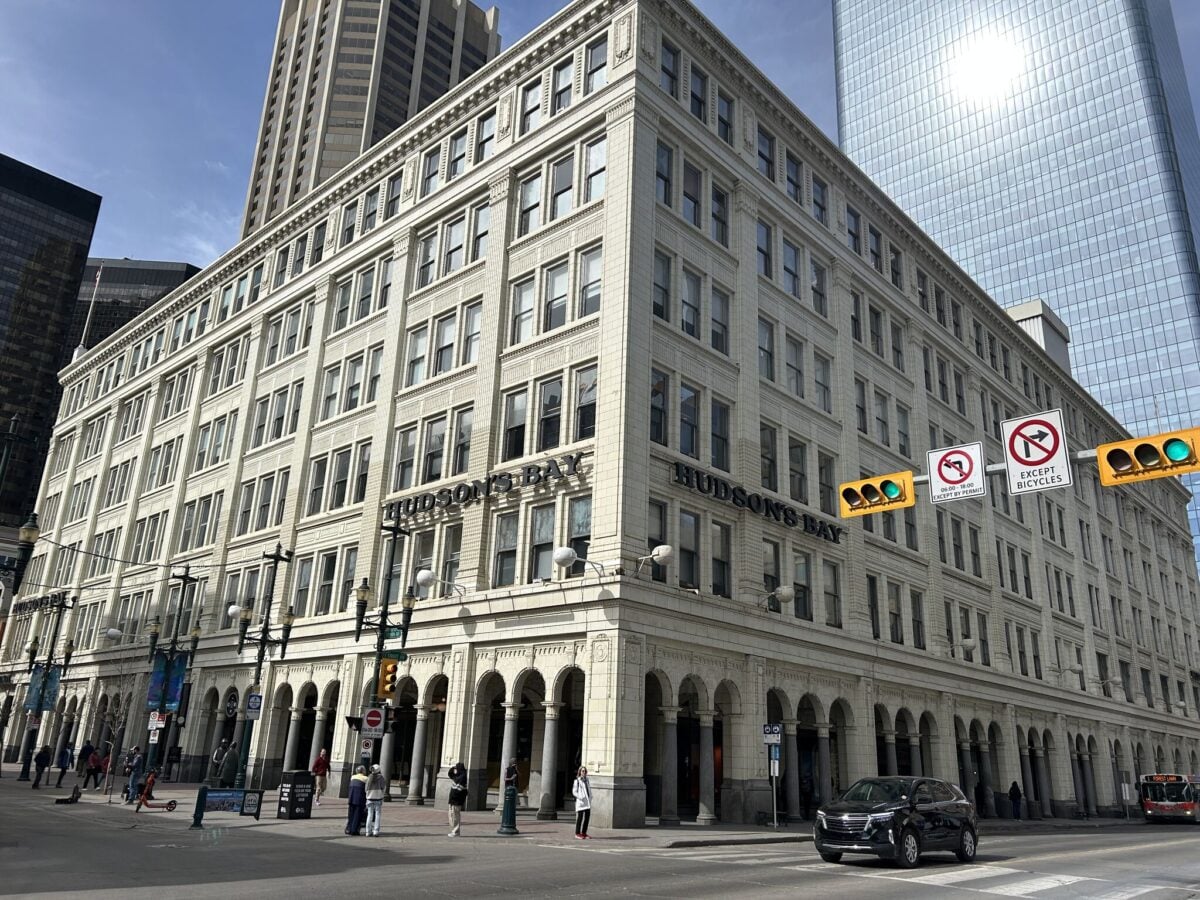
Canada’s retail vacancy rate is expected to remain near 2.5 per cent over the next year as the market continues to absorb the impact of Hudson’s Bay store closures, according to a new forecast from CoStar Group.
The commercial real estate data and analytics company says rent growth is also expected to slow further through 2027 before recovering as retail-space absorption strengthens.
The Hudson’s Bay closures had a significant impact on Canada’s retail market in 2025, with vacancy at shopping malls rising from three per cent to eight per cent in the second quarter of that year. Net absorption during the quarter was negative five million square feet, according to CoStar.
Overall retail vacancy rose from 1.8 per cent to 2.5 per cent following the closures and has remained at that level over the past year. CoStar said weaker absorption has been accompanied by similarly subdued construction activity.
Retail construction starts have remained below one million square feet per quarter since the third quarter of 2025. About five million square feet of retail space was under construction in the second quarter of 2026, the lowest level since the pandemic, the company said.

“Notwithstanding a relatively tight market overall, we expect rent growth to continue decelerating over the next four quarters,” said Mario Lefebvre, chief economist for Canada at CoStar Group. “Rent growth stood at about 4% in the first quarter of 2025, before the Bay closures, and has already decelerated to just above 2% in the second quarter of 2026. We expect it to bottom out around 0% by the second quarter of 2027, before climbing back to about 3% by the end of 2028 as absorption strengthens.”
The forecast points to a period of slower rent growth for retail property owners and landlords as available space is absorbed and new construction remains limited.
Lefebvre said several economic factors could further delay the recovery.
“The balance of risks in this forecast remains tilted to the downside,” Lefebvre said. “Trade and tariff uncertainty, higher fuel costs, and a declining population could further weigh on the economy and delay the recovery in retail space absorption. Over the longer term, however, we expect demand for retail space in Canada to increase as consumer spending grows and the development pipeline remains modest.”
CoStar expects the retail market’s recovery to become more pronounced toward the end of the forecast period, with rent growth projected to reach about three per cent by the end of 2028 as absorption improves.
“Immediately upon the closures of the Bay stores, net absorption (the difference between absorbed and vacated space) was negative almost five million square feet. This is the important number, as the rise in overall retail sector vacancy does not pay justice to the impact that these closures are having. Total vacancy increased from 1.8% to 2.5. However, it rose from 3.1% to 8% for shopping malls. It will take a long time for malls to recuperate from that and, indeed, the CoStar forecast expects that malls’ vacancy rate will still be at around 7% in three years,” said Lefebvre.
“Over this year and next, retailers are likely to have some bargaining power, particularly those looking to lease shopping mall space. However, at an overall vacancy rate of 2.5%, retailers should be careful not to push their luck and ask for big long term discounts.”
At this point the big risk to the CoStar forecast is inflation, noted Lefebvre.
“These back-and-forth tariffs between Canada and the United States will undeniably lead to higher prices for a large proportion of goods and services. This has to be added to higher fuel prices. Then, you add a decline in the population, meaning a reduced number of consumers. Demand is therefore at risk. It is with that context in mind that CoStar expects very slow (down to zero in 2027 Q2) rent growth. The rising inflation risk also suggests that defensive oriented retail, including necessity retail like grocery-anchored centres, are likely to fare better than discretionary formats like enclosed malls, as people are more likely to cut discretionary spending before essentials like food and medicine,” he said.
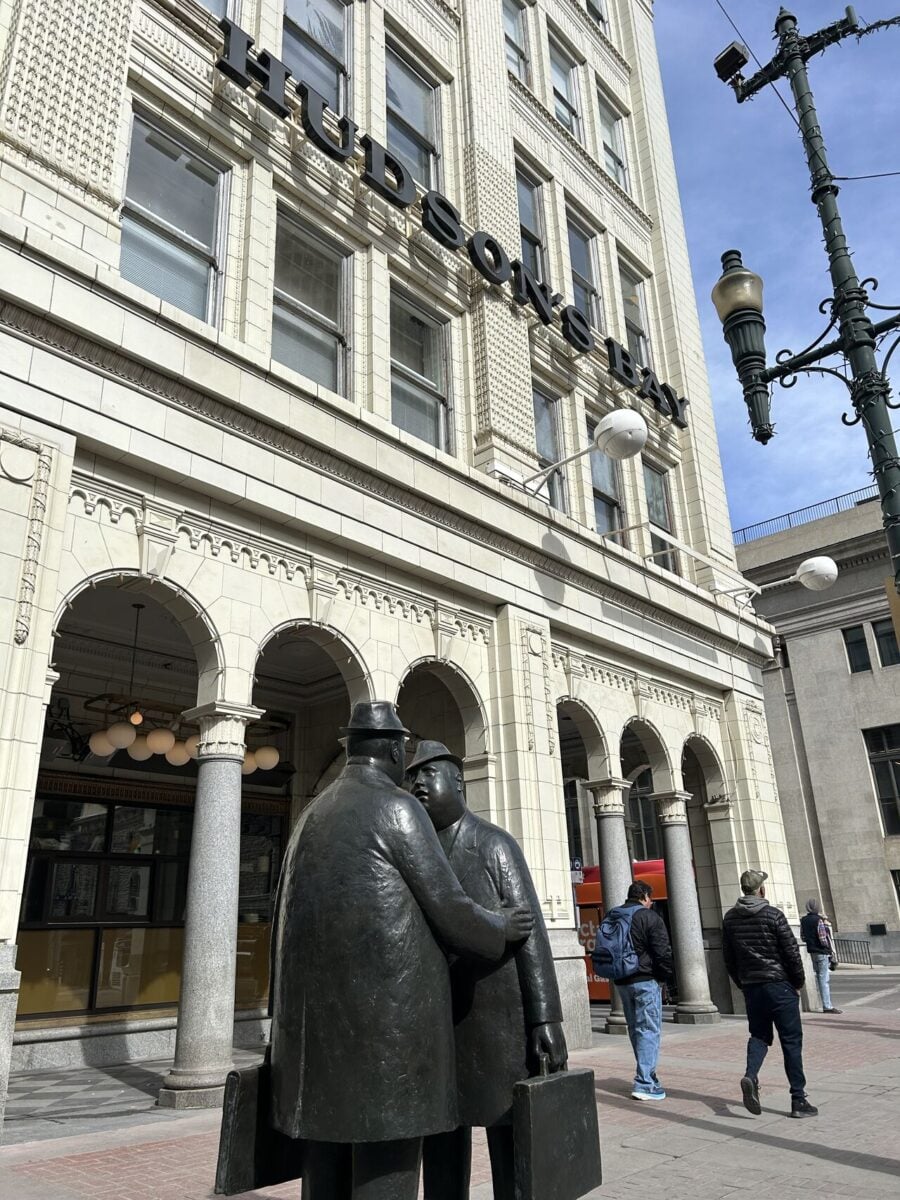
“The roughly five million square feet of space vacated by the closures of The Bay stores means that there is space available, particularly in shopping malls. Therefore, CoStar does not believe that limited development pipeline will be an issue down the road. Indeed, it is the limited development pipeline that will help restore equilibrium in the sector over the coming years.”
The full forecast is available from CoStar Group.
CoStar Group is a global provider of commercial real estate information, analytics, online marketplaces and 3D digital twin technology. The company was founded in 1986.
More from Retail Insider: