Dollarama reported Canadian comparable-store sales growth of 5.4% in the second quarter, following 5.6% in Q1, while traffic increased 3.7%. Stifel analyst Martin Landry contrasted that performance with decelerating comparable-sales trends at Costco Canada, TJX Canada and some Canadian grocers, saying Dollarama’s traffic growth suggests the retailer continues to gain market share.
The comparison does not establish that Dollarama is directly taking sales from those companies, but it raises a larger question for Canadian retail: is the strength of value retail still primarily a response to squeezed household budgets, or are consumers permanently shifting more everyday spending toward retailers built around low absolute prices?
The Trade-Down Explanation Only Goes So Far
Dollarama management itself stopped short of attributing its performance to trade-down. President and CEO Neil Rossy told analysts that difficult economic conditions work in opposing directions: consumers have less money to spend, which can hurt discretionary demand, while the same pressure can send shoppers toward lower-priced retailers. Dollarama cannot determine how much of either behaviour is driving its results.
Its category performance nevertheless shows how broadly the chain now participates in household spending. Consumables remained strong, general merchandise strengthened, summer seasonal merchandise posted positive growth and toys performed unusually well during the quarter.
Trade-down is usually treated as cyclical: consumers move toward lower-priced options when finances deteriorate and, in theory, move back when conditions improve. The longer-term competitive issue emerges when shoppers begin routinely buying cleaning products, snacks, kitchen goods, health and beauty items, toys and seasonal merchandise from a value retailer. At that point, traditional retailers eventually have to win those purchases back.
Why the $5 Ceiling Matters
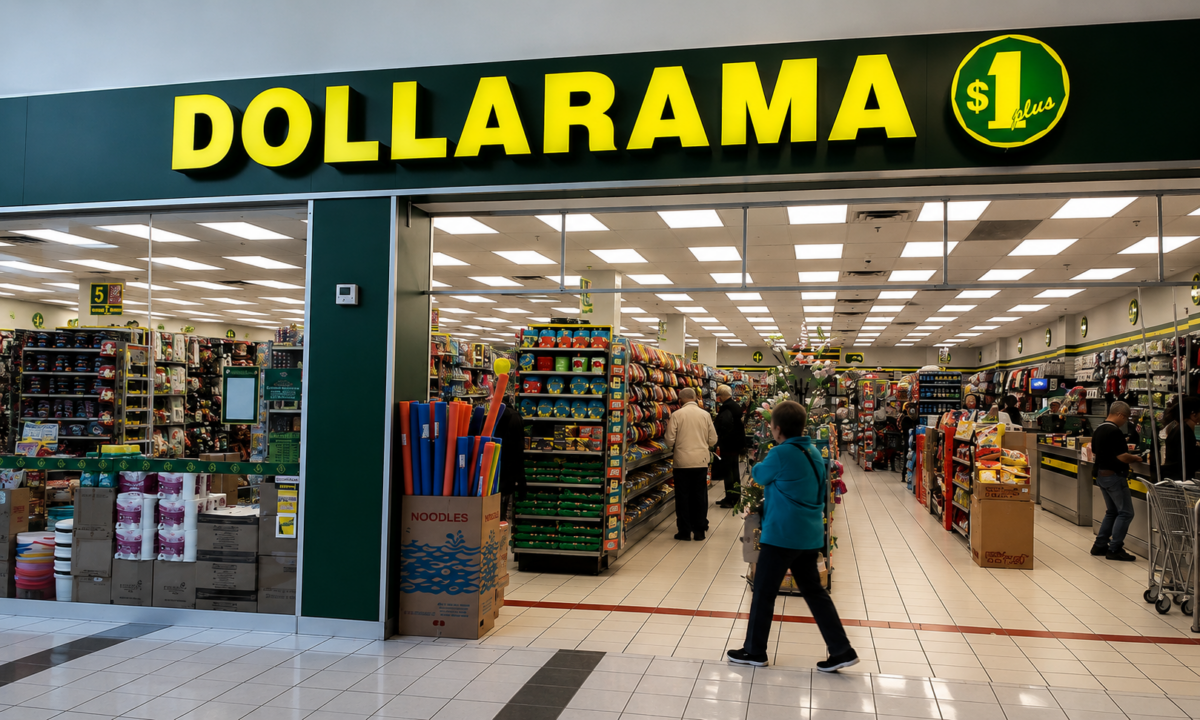
One of the more revealing exchanges on Dollarama’s earnings call concerned a price point the company does not yet have. Asked whether inflation could bring forward a $6 maximum price, Rossy said Dollarama would introduce another fixed price point only if cost inflation reached a level where the existing $5 ceiling could no longer be supported sustainably.
Based on current conditions, he said another price point is unnecessary and Dollarama intends to delay one for as long as possible.
The $5 ceiling should not be mistaken for a clean inflation measure. Dollarama can alter individual prices, sourcing, products, pack sizes and merchandise mix while staying below it. But it remains a highly visible consumer threshold, effectively showing how much cost pressure Dollarama believes its model can manage before its most recognizable pricing boundary has to change.
There is a loose parallel with the Big Mac as an economic reference point. The Big Mac Index uses the price of a broadly standardized McDonald’s product as a rough comparison of purchasing power between currencies; Dollarama’s ceiling is much less precise because its assortment can change beneath it. The useful question is how much merchandise, freight and operating-cost inflation one of Canada’s most scaled value retailers can manage before that affordability threshold moves.
For now, management is saying the $5 ceiling still works.
Cost Inflation Can Strengthen Dollarama’s Relative Position
Dollarama is facing higher costs alongside the rest of the retail sector. CFO Patrick Bui said higher oil prices are increasing raw-material and transportation costs, with the impact expected to become more pronounced beginning in the third quarter. Despite that, Dollarama maintained full-year Canadian gross-margin guidance of 45.0% to 45.5%.
The assumptions behind that forecast have also become tougher. Management is now incorporating elevated oil prices through the remainder of the fiscal year, whereas its previous outlook contemplated some normalization.
Before adjusting prices, Bui said Dollarama is looking for efficiencies across logistics, store operations and merchandising, with pricing changes remaining the last resort.
That gives Dollarama an important competitive advantage if it can absorb those pressures longer than other retailers. It does not have to cut prices for its relative value position to improve. If prices elsewhere move higher more quickly while Dollarama preserves its existing architecture, the gap consumers perceive between the two can widen on its own.
Scale gives Dollarama more room to attempt that. The company ended Q2 with 1,734 Canadian stores and continues to expand the network. Inflation therefore creates two opposing forces: it raises Dollarama’s costs, but it may also strengthen the retailer’s relative value proposition when competitors have less room to absorb the same pressures.
The Pressure Extends Beyond Dollar Stores
The competitive issue reaches well beyond the dollar-store segment. Dollarama sells merchandise that overlaps with supermarkets, drugstores, mass merchants, home retailers, toy stores and specialty chains. Stifel describes its assortment as spanning kitchenware, homeware, stationery, toys, cleaning supplies, confectionery, beverages, health and beauty products and seasonal goods. The firm also estimates that Dollarama refreshes roughly 25% to 30% of its inventory each year, replacing slower sellers that no longer meet profitability requirements.
The more difficult position belongs to retailers selling broadly comparable merchandise at materially higher prices without enough differentiation to make the gap easy to justify. Retailers with distinctive product, service, exclusive brands or a compelling shopping experience can give consumers reasons to pay more. Large value operators can compete through price, convenience and scale.
That does not make every Dollarama product directly comparable with merchandise elsewhere. Quality, pack size, brands and specifications vary widely. For many everyday purchases, however, consumers make a simpler calculation around what they can get for the money they are spending. As Dollarama captures more routine categories, that comparison reaches further into Canadian retail.
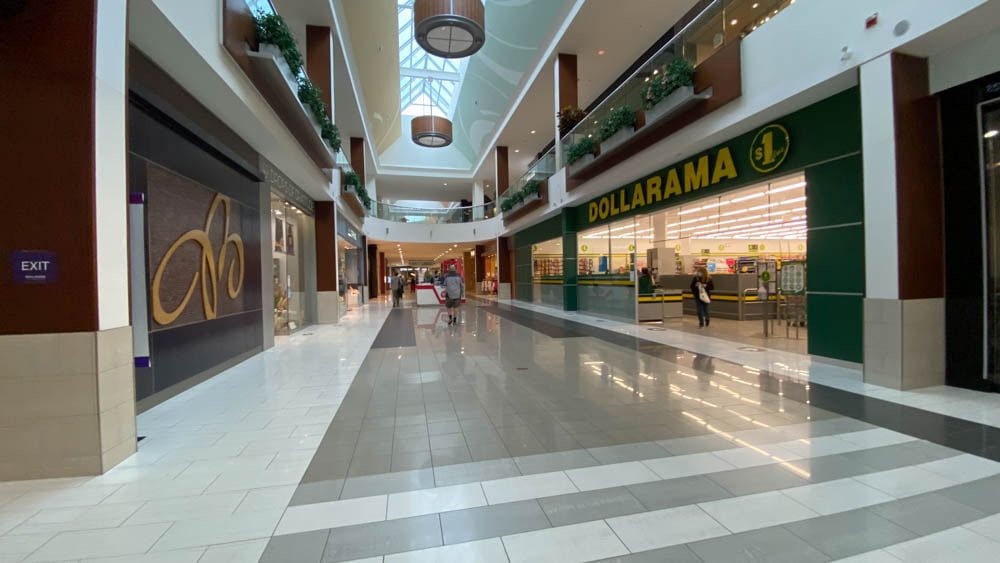
From Promotional Value to Structural Value
There is also a difference in how value is delivered. Many conventional retailers depend heavily on flyers, temporary markdowns, loyalty programs, points and coupons to establish affordability, while Dollarama’s proposition is embedded more directly in the store.
Consumers generally enter expecting low absolute prices without waiting for a promotion or optimizing a loyalty offer. The fixed-price architecture reinforces that perception even though the merchandise and individual prices beneath it change constantly, giving the $5 ceiling importance beyond the products actually sold at that price.
It functions as shorthand for the retailer’s broader value promise. The strategic question is whether shopping behaviour built around that expectation becomes habitual. If consumers increasingly default to Dollarama for commodity-like household goods, an improvement in household finances would not necessarily send those purchases back to mainstream retailers. Those retailers would still have to give shoppers a reason to return.
The importance of visible price anchors is showing up elsewhere in the Canadian consumer market. McDonald’s Canada committed in January to keeping McValue meals at $5 and small McCafé coffee at $1 for a year, saying it was using the scale of its Canadian supply chain to keep prices low despite inflation and rising costs.
The businesses and products are different, but both strategies put a simple, memorable price at the centre of the value proposition. The price itself becomes part of what consumers expect from the brand.
More Stores Reinforce the Advantage
Dollarama is also adding more locations from which to compete for those purchases. The retailer opened 15 net new Canadian stores in Q2 and finished the period with 1,734 locations. It raised its fiscal 2027 Canadian opening guidance to between 65 and 75 stores from the previous range of 60 to 70.
Rossy cautioned that the higher target should not be interpreted as a permanently faster annual opening rate. He said the increase reflects the availability of suitable real-estate opportunities and the timing with which landlords are delivering locations.
For landlords, Dollarama continues to offer an active expansion pipeline even after building one of the country’s densest retail networks. For competitors, every additional location increases the chain’s convenience and puts its pricing proposition in front of more consumers during routine shopping trips.
A Changing Value Equation in Canadian Retail
Landry’s Stifel analysis is useful because it places Dollarama’s quarter in relative terms. His central observation is that Dollarama’s comparable-sales momentum has remained relatively steady while several other major Canadian retail businesses are seeing deceleration.
If that divergence persists, the larger issue is no longer simply consumers seeking cheaper stores during a difficult economic period. It would suggest a changing hierarchy for household spending, with consumers increasingly buying commodity-like goods from value retailers while reserving higher-priced retailers for categories where product, brand, service or experience gives them a clearer reason to pay more. The least differentiated portion of the market would face increasing pressure.
Dollarama’s eventual move beyond $5 will therefore be worth watching, not because it would represent an official measure of Canadian inflation, but because of what it would say about the economics underneath one of the country’s largest value-retail models. It would mean Dollarama had reached the point where enough cost pressure could no longer be accommodated inside its existing pricing structure.
For now, the ceiling remains $5 while customer traffic continues to rise, and Stifel sees Dollarama maintaining sales momentum as several other large Canadian retailers slow. For the rest of the market, that combination matters more than the missing $6 price tag.