

Dollarama has already accomplished what many retailers spend decades pursuing: national scale, broad household reach and consistent traffic growth.
The Montreal-based value retailer now operates more than 1,700 stores across Canada, reaches nearly every Canadian household, and continues to post strong sales and transaction growth. The company has set a long-term target of 2,200 Canadian stores by 2034, but industry research and commentary suggest the next phase of Dollarama’s growth may be measured by more than store count alone.
The larger question is what happens after a retailer becomes this widely used.
According to Jeff Doucette, General Manager of Field Agent Canada, Dollarama’s current store target may not represent the long-term ceiling for the chain.
“I think the 2,200 number is conservative,” he said. “I don’t think that’s the stopping point.”
Doucette’s comments follow the release of a Field Agent Canada study examining Dollarama’s role in Canadian retail and consumer packaged goods. The research points to several future growth levers for the retailer, including convenience-led store placement, deeper market penetration, consumables, food-adjacent categories and continued logistics investment.

Growth Beyond Store Expansion
Dollarama’s stated goal of 2,200 stores remains an important part of its long-term plan, but the company’s future may not be defined solely by how many locations it opens.
Field Agent Canada’s analysis suggests the retailer may still have room to expand, particularly when comparing Canada’s population per Dollarama store with the store density achieved by dollar-store chains in the United States.
Doucette said Western Canada remains a significant opportunity, especially as the company develops additional logistics capacity to support future expansion.
“Western Canada’s obviously a big opportunity,” he said. “They’re investing in the distribution centre in Calgary, which will drive their store growth here and beyond.”
Smaller regional markets could also support additional locations, particularly in communities that may not have the population base to support larger-format retailers.
“There’s lots of little towns in Western Canada that don’t have a Walmart, but could definitely support a Dollarama,” Doucette said.
For landlords and retail developers, that makes Dollarama increasingly relevant beyond major urban markets. The chain’s size, assortment and operating model allow it to enter communities and retail nodes where many larger retailers cannot easily fit.
Convenience Has Become a Growth Engine
One of Dollarama’s most important growth advantages may be convenience. The retailer’s compact format allows it to operate in dense urban neighbourhoods, suburban plazas, enclosed malls, strip centres and smaller communities. That flexibility has helped Dollarama become part of daily shopping routines for many consumers.
Doucette said the chain’s store network gives it an advantage that is different from traditional e-commerce and different from big-box retail.
Many shoppers are not making a special trip to Dollarama. They are stopping in because a store is close to home, close to work, near a grocery store, in a mall, or along a regular travel route.
That proximity matters. Dollarama can open locations close to one another and still capture different shopping patterns based on traffic flow, access, parking, walkability and surrounding retail.
Doucette compared the approach to situations where gas stations or coffee shops operate near each other because each captures a slightly different customer path.
“It could just be across the street from traffic flow,” he said.
That real estate flexibility gives Dollarama a growth advantage even in markets where it already appears to have a strong presence. The company does not always need to enter a new city to grow. It can deepen its relevance within markets where consumers already know and use the brand.
Consumables Are Becoming Central
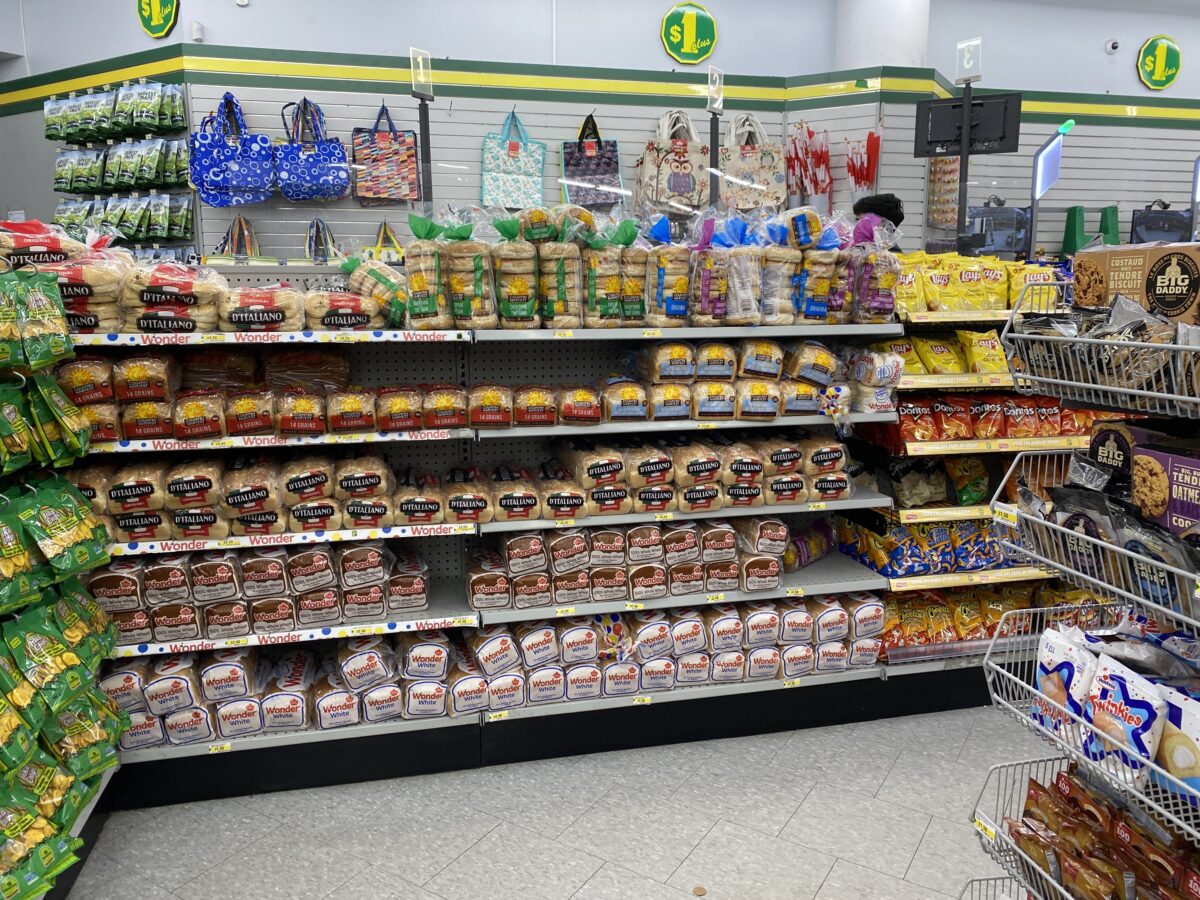
Another major growth lever is consumables. According to Field Agent Canada’s research, consumables now represent approximately 49 per cent of Dollarama’s sales, making the category nearly half of the retailer’s business.
That marks a significant evolution for a chain long associated with seasonal items, party supplies, gift wrap, greeting cards and general merchandise.
Consumables create repeat visits. They also position Dollarama to capture a larger share of routine household spending through snacks, pantry items, cleaning products, hygiene products, household supplies and other everyday needs.
Doucette said categories such as health and beauty, hygiene, cleaning products and confectionery may present additional room for growth.
Dollarama has already become especially strong in confectionery, where recognizable brands and low entry prices help reinforce the retailer’s value image.
“They know that those items are the traffic drivers that are going to get people in the door or leave that lasting price impression,” Doucette said.
The more Dollarama becomes associated with routine consumable purchases, the more its growth becomes tied to shopping frequency rather than occasional bargain hunting.
Food-Adjacent Categories Could Offer Opportunity
One of the more notable findings in the Field Agent Canada study was consumer interest in expanded food offerings.
The research found that 48 per cent of respondents would like to see Dollarama offer refrigerated or frozen grocery products. In Atlantic Canada, that figure rose to 61 per cent.
That does not mean Dollarama is preparing to add refrigerated or frozen departments. The move would introduce added complexity, including equipment, store layout, logistics, shrink, labour and space considerations.
Doucette said the idea may not apply to every store, but it could become relevant in larger locations or specific markets over time.
“Would they enter into frozen and refrigerated? Maybe not in all stores, but maybe in some bigger stores,” he said.
For now, the finding is best viewed as a signal of consumer openness. Shoppers already use Dollarama for snacks, pantry items and household consumables. Some appear willing to see the retailer take a larger role in grocery-adjacent purchases.
Logistics Investment Supports the Next Phase
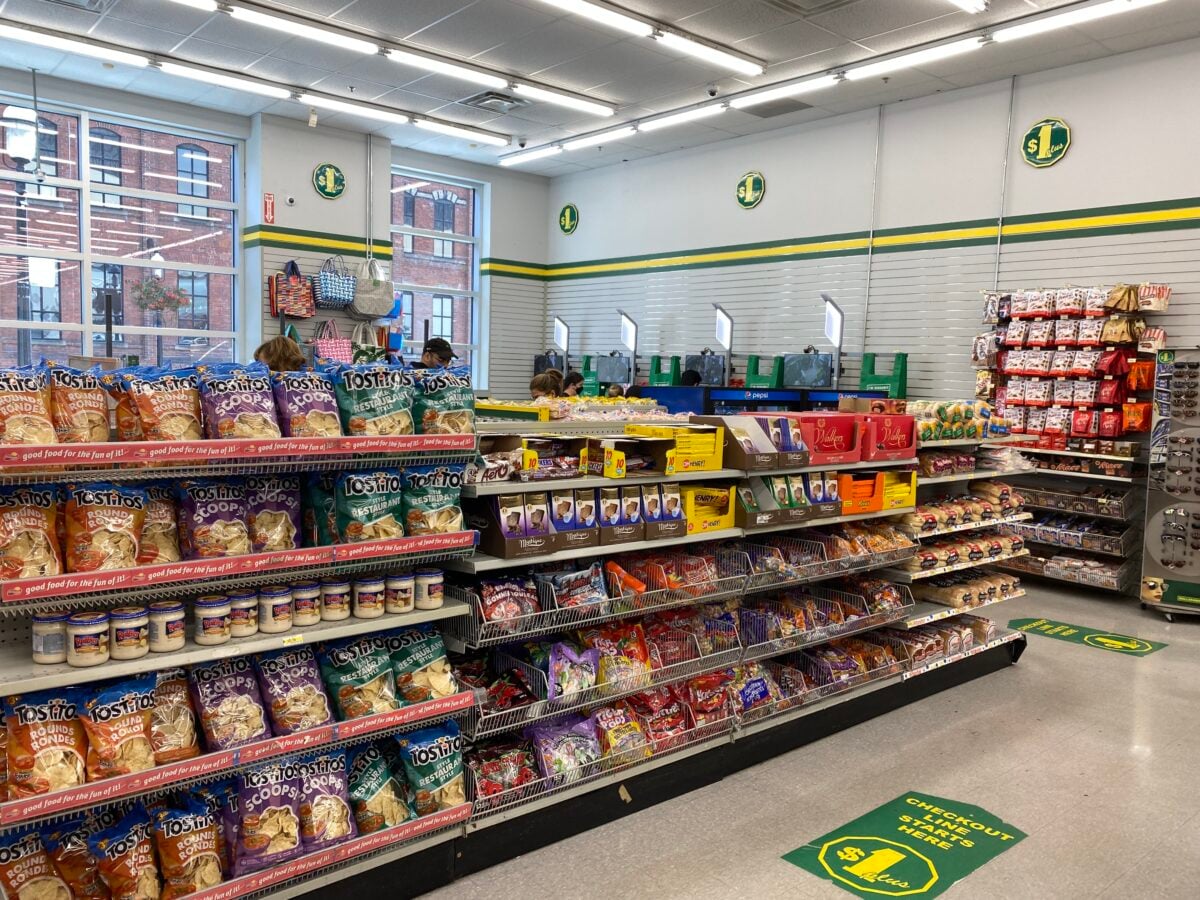
Dollarama’s future growth is also being supported by infrastructure investment. The company has been progressing its Western Canada logistics hub project, which is expected to complement its existing distribution operations and support further expansion.
For a retailer built on value, logistics capacity is critical. More stores, broader assortments and deeper market penetration require a supply chain that can move product efficiently while protecting margins and price points.
Doucette said the Calgary-area distribution capacity should help Dollarama grow in Western Canada and smaller regional markets where the chain may still be underrepresented.
The investment also suggests Dollarama is planning for a longer growth runway than its current footprint alone might imply.
The Next Phase of Dollarama’s Growth
Dollarama’s future will almost certainly include more stores. But the next phase of its growth may be defined by several factors working together: deeper market penetration, higher shopping frequency, convenience-driven locations, stronger consumables performance, broader participation in everyday categories and improved logistics capacity.
For a retailer that already reaches most Canadian households, growth becomes less about awareness and more about share of routine spending.
For decades, Dollarama’s success was measured largely by how many stores it opened and how efficiently it operated them.
The next phase may be measured by how often Canadians shop there, how many everyday purchases flow through the chain, and how deeply Dollarama becomes embedded in routine consumer behaviour.












It would be nice if they had frozen or more refrigerated items like dollar tree in the usa
I believe Dollarama’s growth would also be in buying existing value stores in the US. When Dollar Tree realized their mistake when they purchased Family Dollar, they immediately sold it. The new owners haven’t done much with their purchase. Family Dollar stores tend to be messy, disorganized and outright ugly! Dollarama could buy them out at a bargain price, refresh their look to resemble Dollarama, and even change the name to Family Dollarama for now and eventually Dollarama.
i wish that Dollarama would offer more Québec products in their Western Canadian stores!