Loblaw Companies Limited is broadening its apparel business beyond Joe Fresh’s private-label collections, incorporating national and licensed brands into an offering supported by its grocery-store network and digital operations. The strategy comes as competition for Canadian clothing sales intensifies among mass merchants, warehouse clubs and off-price retailers, while the closure of Hudson’s Bay has removed a longstanding department-store competitor.
Irene Doody, Senior Vice President of Joe Fresh at Loblaw, outlined the company’s direction during a September appearance on The FEED powered by Loblaw podcast, hosted by retail industry commentator Michael LeBlanc. Speaking during Joe Fresh’s 20th anniversary year, Doody described plans to broaden the merchandise offering, introduce additional brands, strengthen digital capabilities and reach more apparel customers.
“We’re essentially reigniting apparel at Loblaw,” Doody said, explaining that the company is repositioning Joe Fresh to deliver greater value while adding national and licensed brands to fill gaps in its assortment.
The ambition is substantial. Doody said Loblaw aspires to become Canada’s number-one apparel destination, although the company has not disclosed a revenue target, market-share objective or timetable for achieving that position.
National Brands Expand the Joe Fresh Offering
The strategy is already visible through The Brand Shop, an online section of Joe Fresh’s business featuring merchandise from outside labels. The assortment includes names such as Levi Strauss Signature Gold, Reebok, Champion and Nautica, extending the selection beyond Joe Fresh’s own collections.
Established brands offer a way for Loblaw to broaden the apparel business without developing every product internally. Recognizable labels can strengthen categories such as denim, sportswear and casual clothing, potentially attracting shoppers who might otherwise pass over the apparel department during a grocery visit.
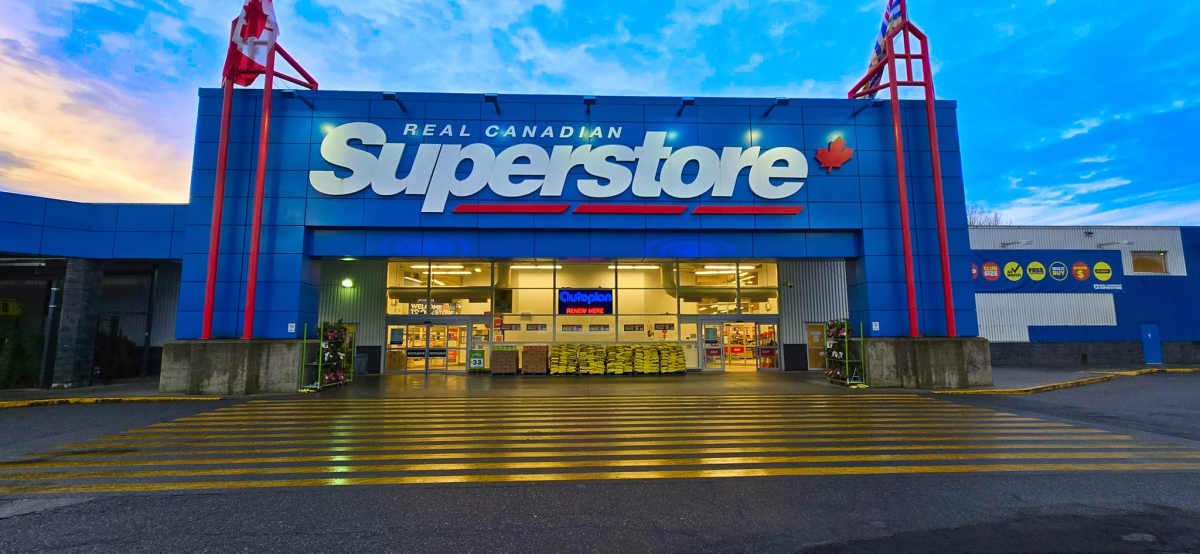
The Brand Shop also extends into physical retail. Joe Fresh maintains a directory of participating locations across several Loblaw banners, including Real Canadian Superstore, Atlantic Superstore, Loblaws, Zehrs and Maxi.
The commercial opportunity lies partly in the stores Loblaw already operates. Expanding the assortment within existing apparel departments could increase sales per square foot without requiring a comparable investment in new locations, although the financial benefits will depend on demand, inventory costs and merchandise margins.
Joe Fresh Evolves Beyond Its Original Model
Founded in 2006 by Canadian fashion entrepreneur Joe Mimran, Joe Fresh initially launched in 35 grocery stores before expanding into a national apparel business. Mimran stepped away from the brand’s leadership in 2015, and its current strategy is being developed under Loblaw’s management.
Joe Fresh now operates through grocery stores, selected Shoppers Drug Mart locations, standalone stores and e-commerce. According to the company’s corporate information, its merchandise is available through more than 350 Loblaw grocery stores.
During the interview, Doody said e-commerce accounts for more than 10% of Joe Fresh’s business. She also identified opportunities to attract younger consumers while maintaining the brand’s established appeal among families seeking affordable clothing.
Adding national brands creates a more flexible merchandise model. Joe Fresh can continue developing its own collections while using outside labels to address categories where established brands may offer greater customer recognition or a more compelling product selection.
There are trade-offs. Private-label clothing generally gives retailers more control over design, sourcing and pricing, while wholesale brands bring different purchasing costs and margin structures. Additional sales will not necessarily translate into higher profitability, particularly if branded merchandise displaces higher-margin private-label products.
Costco and Walmart Intensify Apparel Competition
Loblaw’s ambitions come as some of Canada’s largest apparel competitors operate outside the traditional specialty-store model. Walmart, Costco and Winners compete for clothing spending through value pricing, recognizable brands and retail formats that draw customers for a wide range of purchases.
Recent e-commerce research provides a more current measure of the competition. According to Canadian apparel e-commerce estimates published by Statista in August 2026, JoeFresh.com generated approximately US$257 million in gross merchandise value during 2025, compared with approximately US$1 billion for Walmart.ca and US$227 million for Costco.ca.
The figures measure estimated online merchandise sales, not total Canadian apparel market share or retailer-reported revenue. Nevertheless, they place Joe Fresh among significant apparel e-commerce operators competing for Canadian shoppers alongside much larger mass merchants and warehouse retailers.
Costco is particularly relevant because its apparel business operates within a broader warehouse-shopping model. Customers can purchase clothing alongside groceries and general merchandise, choosing from basics, seasonal products and recognizable brands without making a separate trip to a conventional apparel retailer.
A separate 2026 back-to-school shopping survey reported by Retail Insider found that Walmart was selected by 57% of respondents planning clothing and footwear purchases, followed by Costco at 46% and Winners at 44%. Joe Fresh was identified by 22% of respondents, illustrating the competition for value-conscious Canadian shoppers.
Those survey results measure shopping intentions rather than national market share, but they provide a useful indication of retailer consideration. Loblaw’s grocery network gives Joe Fresh regular access to consumers, yet convenience alone does not guarantee that shoppers will choose its apparel over competing merchandise.
Walmart offers another comparison through its combination of private-label clothing, outside brands and licensed products. Loblaw’s expansion of national and licensed brands could make its existing apparel departments more competitive, provided the company maintains the pricing and value proposition that established Joe Fresh.
Hudson’s Bay Closure Changes Apparel Distribution
The closure of Hudson’s Bay stores in 2025 further altered Canada’s apparel market. Although the department-store chain had been losing ground for years, it remained an established clothing destination and a distribution channel for numerous brands.
Its disappearance has left apparel suppliers with fewer established department-store distribution options. Retailers with extensive physical networks and e-commerce operations may become attractive alternatives for brands seeking additional access to Canadian consumers.
Loblaw’s multi-brand strategy fits that environment, although there is no evidence that the initiative was developed specifically in response to Hudson’s Bay’s closure or that the company is recruiting former Bay suppliers. The opportunity is plausible, but it should not be mistaken for a confirmed corporate objective.
The real estate implications are also different. Hudson’s Bay required large department-store premises, while Loblaw already has apparel departments within grocery locations across the country. Expanding merchandise selection through those existing stores could offer a less capital-intensive route to growth, provided the company can generate sufficient sales from the available space.
Digital Channels Support a Broader Assortment
Loblaw is also developing how customers can purchase apparel beyond conventional store visits. Doody identified additional online merchandise, virtual try-on technology and shop-the-look functionality among the opportunities being pursued over the coming years.
Joe Fresh already offers buy-online, pick-up-in-store services at more than 200 locations, according to Doody. In March 2026, Retail Insider reported that Joe Fresh had become the first pure apparel retailer available on DoorDash in Canada, with merchandise from more than 220 participating stores available for on-demand delivery.
These services also support a broader merchandise strategy in which the online assortment can include products that individual stores lack the space to carry.
Doody also discussed more personalized offers and customer experiences through PC Optimum. The loyalty program gives Loblaw an established relationship with shoppers across several retail categories, although the company has not disclosed how much additional apparel spending it expects these initiatives to generate.
Growth Depends on Merchandise Productivity
The broader assortment gives Loblaw additional flexibility in developing an apparel business that already benefits from national distribution. Outside brands can complement Joe Fresh’s private-label collections, strengthen individual categories and potentially attract shoppers who have not traditionally considered the brand for certain purchases.
The operating challenge will be determining which products deserve space in grocery-store apparel departments. Adding national brands means making decisions about inventory depth, pricing, presentation and the amount of selling space retained for Joe Fresh’s own merchandise.
The economics are equally important. Recognizable brands may generate additional customer interest, but Loblaw will need sufficient sales and margin contribution to justify the inventory and space they occupy. The company has not provided financial projections for the initiative or indicated how the balance between private-label and wholesale merchandise might change.
For Canada’s apparel industry, the development introduces another potential distribution channel for brands and strengthens competition from retailers whose businesses extend well beyond clothing. It also demonstrates how established store networks can be used to expand into categories where conventional department stores have lost ground.
Loblaw already has the retail infrastructure, customer traffic and digital capabilities needed to compete more aggressively in apparel. Its next challenge is converting those advantages into profitable clothing sales, particularly as shoppers weigh its expanding selection against established alternatives such as Costco, Walmart and Winners.