Retail Insider has released Q3 2026 Grocery: Capacity Expands as Competition for the Basket Intensifies, authored by founder and publisher Craig Patterson. The report examines a competitive problem that opening announcements alone cannot answer: how much additional grocery business new investment will actually produce.
The report covers Canadian supermarkets, discount and specialty grocers, store development, merchandising, consumer purchasing and online fulfilment. It draws on Retail Insider reporting, company disclosures, government data and industry research, distinguishing Q3 developments from earlier reporting periods and projects scheduled for later years.
Retail Insider Reports bring together sector reporting and commercial analysis for retailers, suppliers and property owners. The Retail Insider Report Hub provides access to the full quarterly collection and its coverage of the wider Canadian retail economy.
General Themes
- Discount is becoming more local: Store size, assortment and banner choice are being adapted to individual trade areas.
- Opening counts need context: New builds, acquisitions, conversions and relocations create different changes in grocery capacity.
- Households remain price-conscious: Slower inflation has not reversed the cumulative increase in food costs.
- Online growth is not a profit measure: Order density, basket size and fulfilment costs determine the economics.
- Existing stores matter: Added capacity must be assessed alongside cannibalization, store contribution and changes in household spending.
Retail Insider Coverage
Grocery inflation slowed to 2.8 per cent year-over-year in August, below the 3.0 per cent headline rate, but prices remained approximately 29 per cent above August 2021. NIQ findings cited in the report indicated more purchase occasions and lower average transaction spending across several retail channels. Those occasions are not a count of supermarket visits. They nevertheless show why retailers are competing for portions of a household basket rather than assuming one destination captures it all.
Loblaw’s $2.4-billion Canadian capital program includes investment in No Frills and Maxi, alongside pharmacy and other formats. Its roughly 75 expected openings should therefore not be read as 75 supermarkets. An approximately 8,000-square-foot No Frills in Dutton, Ontario, uses a curated assortment of about 4,000 products, while a larger Komoka store offers more fresh and prepared food. Both adapt discount to local demand, with their longer-term returns still to be established.
Metro is repositioning existing capacity through plans to convert 10 Ontario supermarkets to Food Basics. The company expects the selected sites to perform better under a different price proposition, with benefits building over subsequent fiscal years. Its fiscal third-quarter food same-store sales decline of 1.5 per cent was materially affected by the Laval produce-distribution strike. That result is not a clean measure of underlying demand or the case for banner conversion.
Empire raised its fiscal 2027 store target to more than 25 and plans approximately $850 million in capital spending. The target includes four acquired Mayrand stores, so it is not an entirely new-build program. FreshCo’s Atlantic Canada entry sits alongside investment in IGA, Safeway and other banners. Discount is important, but it is not the only format attracting capital.
Walmart’s planned Supercentres in former department-store spaces can introduce substantial grocery capacity without an equivalent increase in net store count. T&T’s approximately 68,000-square-foot CF Markville project is expected to replace its roughly 50,000-square-foot Unionville store in 2028, adding about 18,000 square feet rather than an entirely new 68,000-square-foot operation. Its planned 48,000-square-foot CF Polo Park store represents a different move: entry into Manitoba, expected in spring 2028. Each project changes local competition differently.
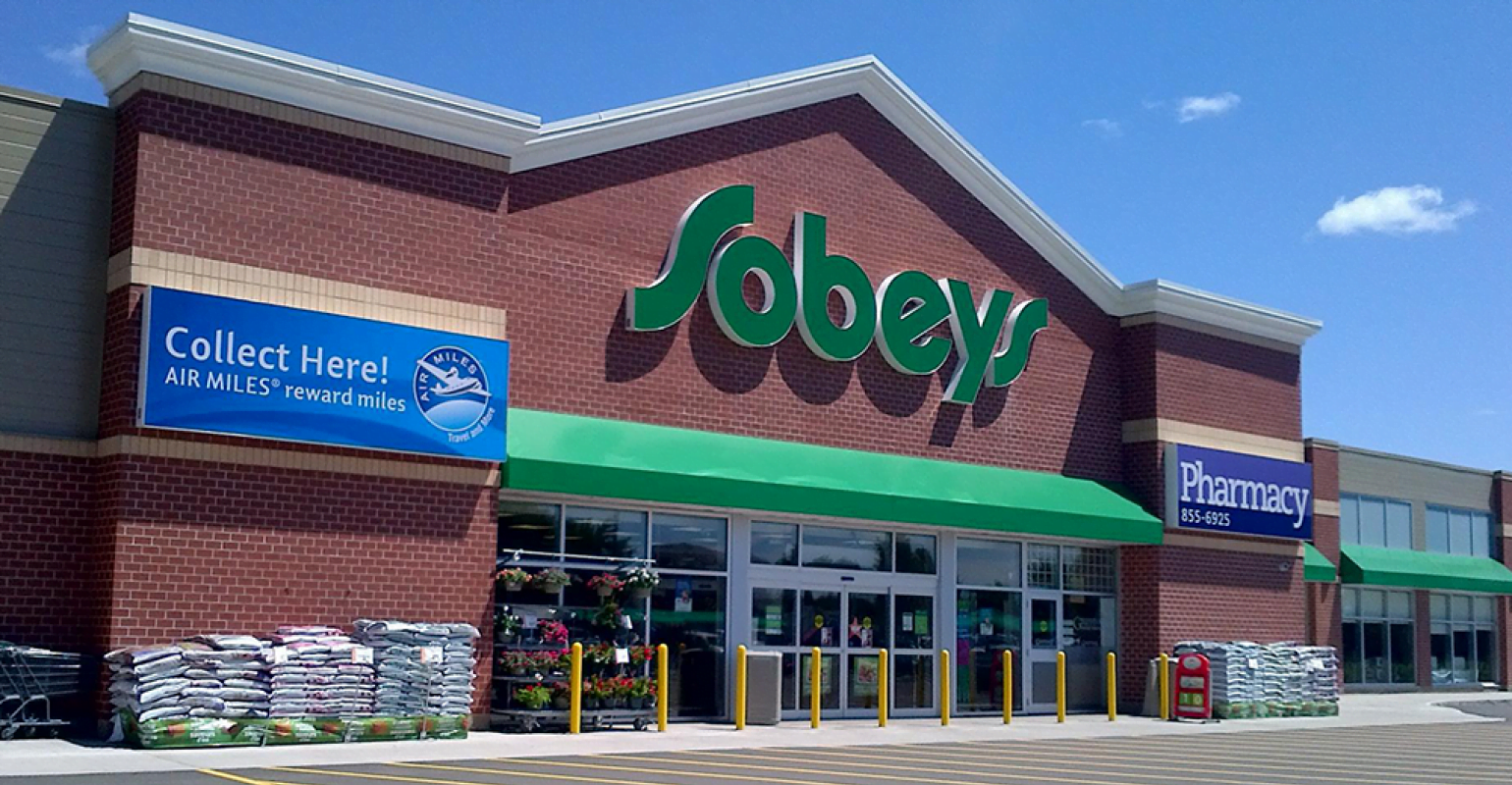
Operator turnover also needs to be separated from property viability. Valleyview IGA reopened at an established Edmonton grocery site after L’OCA’s departure, while McEwan plans to occupy former Pusateri’s space at Bayview Village in 2027. Sunterra’s Red Deer closure occurred during company restructuring, not proof of a general premium-grocery retreat. Crombie’s 11.3 per cent first-year rent increase on second-quarter renewals applied across its portfolio, not specifically to Sobeys or Safeway stores.
Broader Industry Coverage
Loblaw, Metro and Empire reported online growth of 19.3 per cent, 16.3 per cent and 11.3 per cent respectively in their latest fiscal periods. Those periods differ, preventing a like-for-like Q3 ranking. More digital revenue also says little by itself about the costs of picking, delivery, customer acquisition and dedicated facilities.
Metro plans to close its dedicated Montreal e-commerce facility and move toward store picking and third-party delivery. Its combined network measures, including the Ontario conversions, are expected to produce approximately $15 million in recurring annual after-tax earnings by the end of fiscal 2028, with roughly half attributed to each component. Using existing stores reduces reliance on dedicated infrastructure, but brings its own labour and operating requirements.
Empire is giving Voilà and third-party delivery different jobs after concluding that Canadian grocery e-commerce demand was smaller than originally expected. It closed its Calgary fulfilment centre and kept Vancouver plans on hold while retaining dedicated Toronto and Montreal facilities. The earlier restructuring was expected to improve annualized e-commerce operating income by approximately $95 million. Planned baskets and immediate purchases need not support the same fulfilment model in every market.
Instacart made its Clementine shopping assistant available to most Canadian and American customers in September. The launch establishes Canadian availability, not Canadian profitability gains. Early basket-size claims were not Canada-specific, leaving repeat use, conversion and customer retention as questions for subsequent evidence.
A September consent agreement made Empire’s earlier commitments on certain grocery property controls legally binding. Easing restrictive covenants and exclusivity clauses can reduce barriers without supplying suitable premises, capital or demand. Separately, the Competition Bureau’s investigation into minimum advertised pricing policies remained ongoing and was not a finding of wrongdoing. Empire also reported minimal immediate tariff effects and said it would challenge some supplier increases, illustrating why new costs do not automatically pass through unchanged to shelves.
Editor’s Take
The report argues for measuring transactions, real sales, store contribution and cannibalization rather than treating each opening as equivalent growth. July supermarket sales at constant prices were 2.4 per cent below a year earlier, but that establishment category excludes grocery sold through general merchandise retailers. It is evidence of pressure within one channel, not a complete measure of Canadian food demand.
Over the next six to 18 months, Metro’s conversions, smaller No Frills formats and Empire’s development program will provide clearer operating evidence. Several large shopping-centre projects extend into 2027 and 2028. Online investment needs the same discipline: growth must justify its picking, delivery and infrastructure costs rather than repeat the assumptions behind earlier overbuilding.
National averages cannot identify every underserved community or explain the economics of every site. They also cannot make additional capacity profitable merely because a retailer can afford to build it. The commercial test comes after opening, when incremental household spending can be separated from sales transferred out of existing stores.
Conclusion
Read the full Q3 2026 Grocery: Capacity Expands as Competition for the Basket Intensifies for the analysis of discount expansion, grocery property, online fulfilment and competitive rules. Its central distinction is between announcing capacity and earning an adequate return from it.
The Retail Insider Report Hub includes this report and the wider quarterly series. It provides a common starting point for following Canadian retail sectors and the operating decisions shaping their performance.