As part of Retail Insider Reports, this Q2 2026 Grocery Retail Report provides structured analysis of the Canadian grocery sector, drawing on Retail Insider’s ongoing coverage to identify key market dynamics, emerging trends, and strategic shifts. These reports are designed to deliver executive-level insights across major retail sectors and can be accessed through the Retail Insider Report Hub.
This report examines the Canadian grocery retail sector, including supermarkets, discount grocers, specialty food retailers, convenience-oriented food retail, merchandising strategies, store expansion, competition, consumer purchasing trends, and developments affecting food retail in Canada.
*****
Canadian grocery retail in Q2 2026 is being reorganized around value. Inflation remains a defining pressure for consumers, discount formats continue to expand, digital tools are increasingly focused on helping shoppers manage budgets, and grocery-anchored real estate is attracting renewed investment from major landlords and institutional owners.
The quarter also showed that the market is becoming more polarized. Discount formats are capturing capital, traffic, and consumer attention, while premium and experiential grocery concepts continue to find opportunities in affluent, dense, and culturally diverse trade areas.
The result is not a simple move toward discount grocery. Value is becoming the organizing principle behind store strategy, assortment, technology, real estate, loyalty, and consumer engagement. At the same time, grocers and landlords continue to invest in formats that use prepared foods, food halls, specialty products, and cultural relevance to create destination appeal.
Market Context: Grocery Spending Faces Pressure as Food Inflation Persists
Statistics Canada’s latest retail trade data shows a more pressured grocery environment heading into Q2. Food and beverage retailers recorded $13.46 billion in April 2026 sales, down 2.0 per cent month over month, even as total retail sales rose 0.5 per cent to $73.0 billion. Core retail sales fell 0.7 per cent, with food and beverage retailers among the categories contributing to the decline.
At the same time, food inflation remained elevated. Statistics Canada’s May 2026 Consumer Price Index showed food purchased from stores up 4.3 per cent year over year, outpacing headline inflation for the 16th consecutive month. Fresh vegetables rose 9.0 per cent year over year, while tomato prices rose 45.2 per cent due to supply constraints.
These figures reinforce the central tension in Canadian grocery. Consumers still need to buy food, but they are doing so with greater price sensitivity. That is pushing grocery retailers to defend traffic through discount banners, loyalty programs, private label, promotions, larger pack sizes, and digital tools that help shoppers manage budgets.
Broad Overall Themes
Canadian grocery retail in Q2 2026 reflects a sector where affordability, convenience, and operational discipline are increasingly decisive.
- Discount grocery growth is structural. Empire, Loblaw, and Metro are expanding value-oriented formats as shoppers continue to prioritize price. FreshCo’s planned expansion across Western Canada, Ontario, and Atlantic Canada highlights the national importance of discount growth, while No Frills’ continued expansion reinforces Loblaw’s strength in hard discount.
- Full-service grocers are under pressure to defend relevance. Traditional banners must balance fresh, service, convenience, loyalty, prepared foods, and price perception while proving they can still deliver value. The risk is not that full-service grocery disappears, but that weaker operators lose share if shoppers perceive the price gap as too wide.
- Digital innovation is becoming more practical. Loblaw’s ChatGPT-powered grocery integration, Skip’s expanded grocery delivery partnership, and Tre’dish’s SproutAI all point to technology being used less as a novelty and more as a tool for meal planning, fulfillment, savings, and budget control.
- Grocery real estate is gaining strategic importance. Projects such as Nations Experience at Oakville Place, Loblaws Humbertown, Food World Plus in Mississauga, and McEwan’s planned arrival at Bayview Village show how grocery can anchor mixed-use, experiential, premium, culturally specific, and necessity-based retail environments.
- Prepared foods are becoming increasingly important as grocers seek to capture meal occasions, compete more directly with restaurants, and generate higher-margin revenue streams.
- Product innovation remains targeted. High-protein ice cream, dairy-free frozen novelties, ready-to-eat salad kits, and greenhouse-grown produce reflect continued interest in health, convenience, and select premium niches, even as broader consumer behaviour remains value-driven.
- Inflation and category pressure remain major operating challenges. Food inflation, produce volatility, meat prices, freight costs, and regional disparities continue to shape pricing, assortment, and promotional strategy.
- GLP-1 weight-loss drugs represent an emerging demand risk. The impact should be treated carefully, but early research suggests appetite-suppressing medications could affect food consumption patterns over time, particularly in snacks, confectionery, alcohol, and impulse categories.
Retail Insider Coverage
Discount Grocery Expansion Anchors Growth
Discount grocery expansion remains the clearest growth theme in Canadian grocery.
Empire’s latest fiscal results show the company continuing to prioritize FreshCo as a national growth vehicle. As of June 17, 2026, FreshCo had 161 stores, including 53 in Western Canada and 108 in Ontario. Empire expects to open approximately 15 new FreshCo stores in fiscal 2027 across Western Canada, Ontario, and Atlantic Canada.
FreshCo’s move into Atlantic Canada is especially significant. The region has historically had fewer discount grocery options than Ontario and parts of Western Canada, creating room for new value-oriented competition. The Halifax-area openings show Empire using discount expansion not only as a defensive move, but also as a way to enter or strengthen underpenetrated markets.
Loblaw’s No Frills network also continues to grow, with the banner marking its 200th store in Ontario during the quarter. This reinforces the strength of hard discount in the country’s largest grocery market and shows how Loblaw continues to use its scale, private label, loyalty, and store network to defend value shoppers.
The broader implication is clear: discount is no longer a temporary response to inflation. It has become a long-term strategic priority. Grocers are investing capital, real estate, supply chain resources, and marketing behind formats designed for a more value-conscious consumer.
Value Is Reshaping Assortment and Shopping Behaviour
Consumer behaviour continues to shift around affordability. Persistent food inflation is pushing shoppers toward promotions, private label, larger pack sizes, and more deliberate trip planning. Retailers are responding by sharpening value messaging and using loyalty data to personalize offers.
This does not mean consumers are only buying the cheapest products. The market is more nuanced. Shoppers may trade down in staples while still selectively purchasing premium, health-oriented, local, or convenient products.
That makes assortment management more complex. Grocers must maintain value credibility without abandoning categories that support margin and differentiation.
Private label will likely remain one of the most important battlegrounds. For large grocery operators, private label supports value perception, margin management, and customer loyalty. For smaller and specialty retailers, the challenge will be competing against major chains with more control over branded and owned-label pricing architecture.
Premium and Experiential Grocery Continue to Find Opportunity
While value is the dominant theme, Q2 also showed that premium and experiential grocery concepts remain viable in the right trade areas.
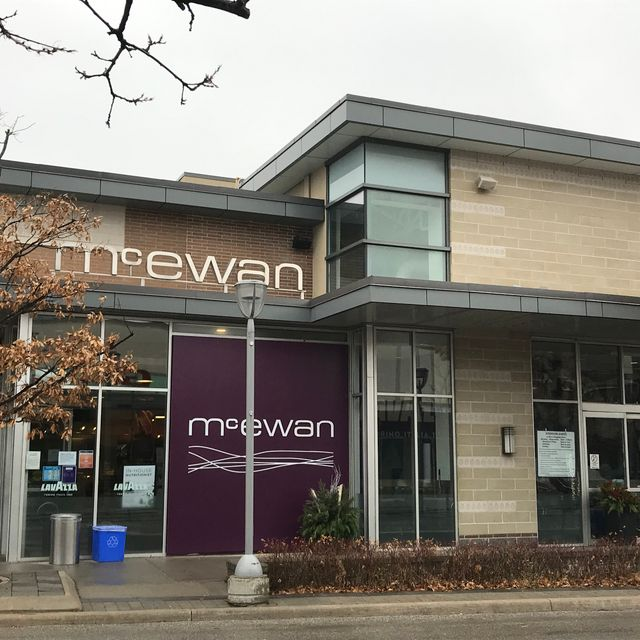
McEwan’s planned arrival at Bayview Village illustrates this side of the market. The shopping centre serves an affluent customer base and is undergoing a broader transformation into a mixed-use, premium lifestyle destination. A curated food concept such as McEwan can operate as both a grocery anchor and a lifestyle amenity, supporting the property’s repositioning while giving shoppers a premium alternative to conventional grocery.
Nations Experience at Oakville Place offers another model. The 120,000-square-foot concept combines grocery, prepared foods, foodservice, and entertainment elements, turning a former department store environment into a large-scale food destination.
Food World Plus in Mississauga adds a culturally specific dimension, transforming a former Highland Farms location into an international grocery and food hall concept.
Together, these examples show that grocery is becoming more polarized. Discount formats are expanding rapidly, but premium, experiential, and international grocery concepts can still succeed when they align with local demographics, food culture, convenience, and destination appeal.
Digital and AI Tools Focus on Budget Control and Convenience
Digital grocery innovation in Q2 became increasingly practical.
The strongest examples are not about replacing grocery stores. They are about helping consumers plan, save, shop, and fulfill orders more efficiently.
Loblaw’s ChatGPT-powered grocery integration allows customers to turn recipes and meal ideas into shopping lists and orders. This is meaningful because it links inspiration, planning, and transaction. In a value-conscious environment, the next opportunity will be connecting AI-driven meal planning with budget controls, loyalty offers, private label substitutions, and household replenishment.
Skip’s expanded grocery delivery partnership with Loblaw across multiple banners also reinforces the role of third-party delivery in convenience and top-up trips. Delivery economics remain challenging, but consumers increasingly expect flexible grocery access.
Tre’dish’s SproutAI offers another example of the sector’s direction. By positioning AI around grocery budget optimization, the platform reflects a broader shift from digital convenience alone to digital savings.
The Canadian market also appears to be favouring pragmatic fulfillment models. Grocers are leaning on store-based picking, marketplace partnerships, and scalable digital tools rather than only pursuing capital-intensive automation.
Product Innovation Targets Health, Convenience and Select Premium Niches
Product innovation remains active, but it is more targeted than transformational.
Foothills Creamery’s high-protein ice cream, Righteous Gelato’s dairy-free Sorbetto Bars, and Haven Greens’ ready-to-eat salad kits all reflect consumer interest in health, convenience, and better-for-you indulgence.
These launches show that premium and specialty demand still exists, even in an inflationary grocery environment. Consumers may be selective, buying premium items when they solve a specific need or deliver a clear benefit while trading down elsewhere.
For grocery retailers, this creates a balancing act. Product innovation can drive differentiation and margin, but it must sit within an assortment that still feels affordable.
Grocery Real Estate Becomes a Strategic Growth Platform
Grocery real estate was one of the most important themes in Q2. Several Retail Insider stories showed grocery being used to reposition major spaces, anchor mixed-use redevelopment, and create more experiential retail environments.
Nations Experience at Oakville Place demonstrates how grocery can help repurpose large-format department store space. The concept combines grocery, prepared foods, foodservice, and entertainment elements, giving the mall a new traffic driver after the decline of traditional department store retail.
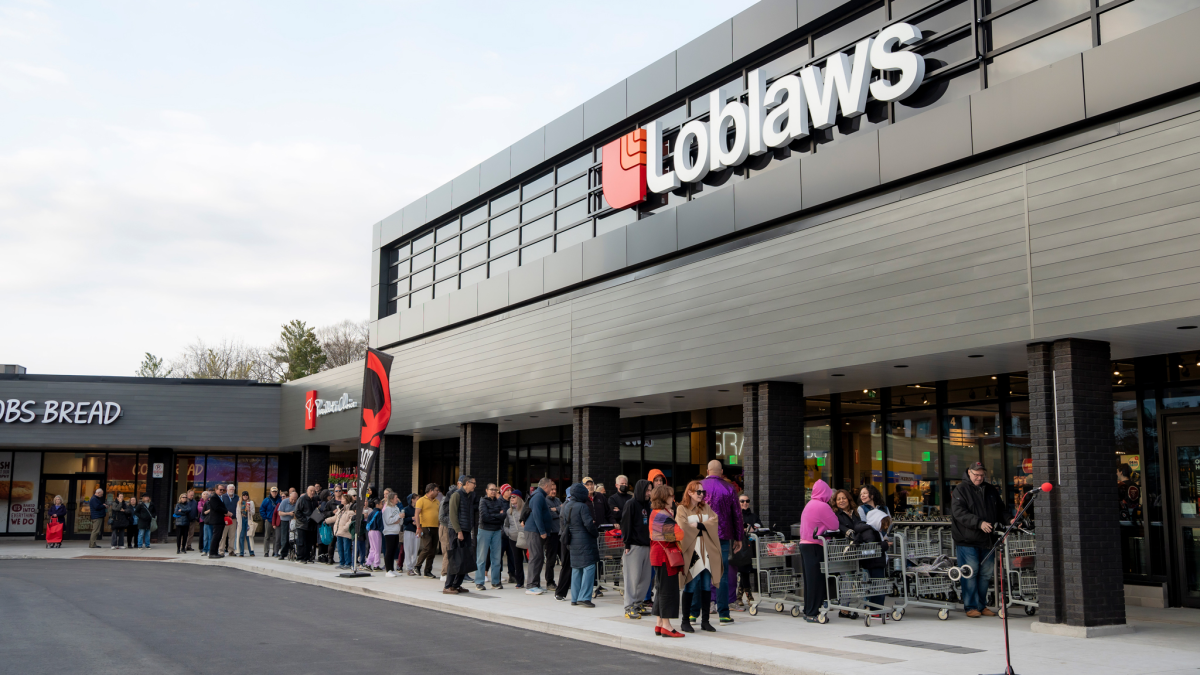
Loblaws Humbertown reflects another model. The reopened store is part of a broader mixed-use redevelopment, showing how grocery can anchor pedestrian-oriented urban villages and provide daily-needs traffic within larger residential and retail environments.
Food World Plus in Mississauga shows the importance of culturally specific grocery formats in major Canadian urban markets, where population growth and diversity continue to create demand for international food concepts.
McEwan at Bayview Village adds a premium grocery dimension, reinforcing how food retail can support the repositioning of affluent shopping centres and mixed-use communities.
At the institutional level, the Choice Properties and KingSett transaction involving First Capital further reinforces grocery-anchored retail as a strategic real estate category. Choice is set to acquire approximately $5.0 billion of high-quality retail assets from First Capital, strengthening its position in necessity-based urban retail.
The transaction also underscores the continued appeal of necessity-based retail at a time when certain discretionary retail categories remain under pressure. Grocery-anchored retail remains one of the most attractive and defensible forms of retail real estate in Canada.
Inflation, Freight and Regional Disparities Shape Operations
Food inflation continues to be one of the most important operating issues in grocery. Higher prices for fresh food, produce volatility, supplier cost requests, and freight pressures are affecting pricing and margins.
Canada’s grocery market cannot be viewed as a single national market. Consumer needs, competition, logistics, and operating costs vary dramatically between urban, suburban, and northern communities.
The North West Company’s performance signals the importance of understanding grocery through a regional lens rather than treating Canada as one homogeneous market.
For operators, inflation management is no longer simply about passing through supplier costs. It requires disciplined sourcing, promotional planning, private label strategy, loyalty targeting, and careful communication with shoppers.
GLP-1 Drugs Create an Emerging Demand Question
GLP-1 medications are becoming an important long-term issue for grocery, though the impact should be framed carefully.
Early research suggests appetite-suppressing drugs may reduce food consumption and shift category demand, particularly in snacks, confectionery, alcohol, sugary beverages, and impulse-oriented categories.
The scale of the impact remains uncertain, and it would be premature to describe GLP-1 drugs as a fully realized category disruption. However, grocers, food manufacturers, and landlords should monitor the trend closely.

Broader Industry Coverage
Discount Growth Is Becoming a Capital Allocation Strategy
The most important shift in Canadian grocery is that discount growth is now tied directly to capital allocation.
Empire is opening new FreshCo stores, Loblaw continues to invest in No Frills and hard discount, and Metro remains focused on discount growth in key markets.
This is different from simply adding a few value stores during a period of inflation. Grocers are rebalancing networks around the expectation that value-conscious behaviour will persist.
Omnichannel Grocery Is Becoming More Cost Conscious
The Canadian grocery sector appears to be entering a more disciplined phase of omnichannel execution.
Earlier enthusiasm for heavy automation is giving way to more flexible models built around store-based picking, third-party delivery, click-and-collect, and targeted digital tools.
Digital investments need to improve convenience, loyalty, basket size, or efficiency without creating unsustainable fulfillment costs.
Grocery Anchors Are Central to Mixed-Use Retail
Grocery remains one of the most important anchors in Canadian retail real estate.
In a market where department stores have weakened and some discretionary categories are under pressure, grocery brings frequency and daily-needs relevance.
The next phase is more dynamic than traditional supermarket anchoring. Grocery can now be part of mixed-use communities, food halls, cultural retail destinations, department store redevelopments, premium lifestyle centres, and urban necessity-based portfolios.
Inflation Is Changing the Meaning of Loyalty
Loyalty in grocery is increasingly tied to perceived savings.
Programs such as PC Optimum and other loyalty platforms are not only engagement tools; they are value-delivery systems. As food inflation persists, shoppers are more likely to compare promotions, accumulate points, use personalized offers, and shift trips based on perceived savings.
Retailers with stronger loyalty ecosystems can better understand household behaviour, target offers, and defend market share.
Editor’s Take
Q2 2026 confirms that value has become the organizing principle of Canadian grocery retail.
Discount expansion is the most visible expression of that shift, but the story is broader. Value is now shaping store formats, real estate strategy, private label, digital tools, loyalty, product innovation, and category management.
Statistics Canada data reinforces the pressure consumers are facing. Food and beverage retail sales declined month over month in April, while food purchased from stores rose 4.3 per cent year over year in May. Consumers are still buying groceries, but they are more deliberate, more price-aware, and more willing to shift behaviour to manage household budgets.
The strongest grocers are those that can combine value credibility with operational discipline. Empire’s FreshCo expansion, Loblaw’s No Frills strength, and Metro’s discount focus all point to a market where value formats will continue taking a larger share of capital and management attention.
At the same time, grocery is not becoming a purely discount-driven market. McEwan at Bayview Village, Nations Experience at Oakville Place, and Food World Plus in Mississauga show that premium, experiential, and international grocery concepts can still succeed when they are matched to the right demographic profile and trade area.
Prepared foods are also becoming an important differentiator as grocers seek higher-margin categories and compete more directly for meal occasions that once belonged primarily to restaurants and foodservice operators.
That makes the sector more polarized. Discount growth is accelerating, but curated food concepts, prepared foods, food halls, and culturally specific grocery formats are also finding opportunities. The middle of the market may face the most pressure if it cannot defend value while offering service, freshness, convenience, and differentiation.
Digital grocery is moving into a more practical phase. AI tools, delivery partnerships, and omnichannel platforms are proving most valuable when they help consumers plan meals, manage budgets, access promotions, and shop efficiently.
Real estate may be the most underappreciated part of the story. Grocery is becoming even more important to landlords because it delivers frequency and necessity-based traffic. Projects such as Nations Experience, Loblaws Humbertown, Food World Plus, and McEwan at Bayview Village show how grocery can help reanimate major spaces, support mixed-use strategies, and create more dynamic food-driven destinations.
The Choice Properties and KingSett transaction involving First Capital further confirms institutional conviction in grocery-anchored urban retail.
The most uncertain emerging issue is GLP-1 adoption. It should not be overstated, but it should not be ignored. If appetite-suppressing medications continue to gain users, they could gradually reshape demand in snacks, confectionery, alcohol, prepared foods, and impulse categories.
Looking ahead, the key indicators will be the pace of discount store openings, food inflation trends, private label growth, promotional intensity, digital adoption, performance of grocery-anchored real estate projects, and the resilience of premium and experiential grocery formats.
Canadian grocery is becoming increasingly polarized. Value is reshaping the operating model, while premium, experiential, and culturally specific formats continue to prove that food retail can still be both practical and destination-oriented.
Selected Articles
- Empire Co. Ltd. CEO Charts Growth Strategy with Discount Focus – Craig Patterson – 2026-06-19
- No Frills opens Brockville location, marking 200th store in Ontario – Mario Toneguzzi – 2026-06-18
- Loblaw Says ChatGPT Grocery Integration Is Ahead of Plan – Lee Rivett – 2026-05-08
- Skip Expands Grocery Delivery with Loblaw Deal – Lee Rivett – 2026-04-07
- Calgary-based Foothills Creamery introduces high-protein ice cream – Mario Toneguzzi – 2026-04-02
- Righteous Gelato enters $900M frozen novelty category with national Sorbetto Bar launch across premium Canadian grocers – Mario Toneguzzi – 2026-04-10
- Nations Experience Takes Possession at Oakville Place – Craig Patterson – 2026-04-02
- Loblaws Humbertown Reopens Amid Major Redevelopment – Craig Patterson – 2026-04-27
- Canadian Milk Prices Hit Record Highs, Regional Gaps Widen – Lee Rivett – 2026-04-15
- GLP-1 Drugs Trigger Multi-Billion Dollar Demand Shock in Food Sector – Sylvain Charlebois – 2026-05-06
- FreshCo Expands East with First Atlantic Canada Locations – Craig Patterson – 2026-04-10
- FreshCo Targets Underserved Markets with Winnipeg Opening – Lee Rivett – 2026-05-01
- Tre’dish launches SproutAI, the first AI grocery assistant built to optimize budgets – Mario Toneguzzi – 2026-05-25
- Haven Greens launches ready-to-eat salad kits as greenhouse expansion plans continue – Mario Toneguzzi – 2026-05-25
- Food World Plus Set to Transform Former Highland Farms in Mississauga – Lee Rivett – 2026-05-26
- Meat and Produce Prices Rise Together in Canada – Sylvain Charlebois – 2026-04-21