Canadian organic mattress manufacturer Obasan has opened a 3,000-square-foot showroom at 213 Sterling Road in Toronto, expanding its direct-to-consumer retail operations as the Ottawa-based company prepares to increase manufacturing capacity. The new location, which began welcoming customers during the summer, is Obasan’s second dedicated showroom and reflects a growing emphasis on personalized consultations, made-to-order products and direct customer relationships.
In an interview with Retail Insider, Obasan Managing Director Jonathan Laplante said direct retail now accounts for approximately 70% of the company’s business, compared with 40% previously. Obasan is also planning a 10,000-square-foot expansion of its Ottawa manufacturing facility in 2027, while considering additional showrooms in Montreal and potentially the United States.
Toronto Showroom Builds on Growing Demand
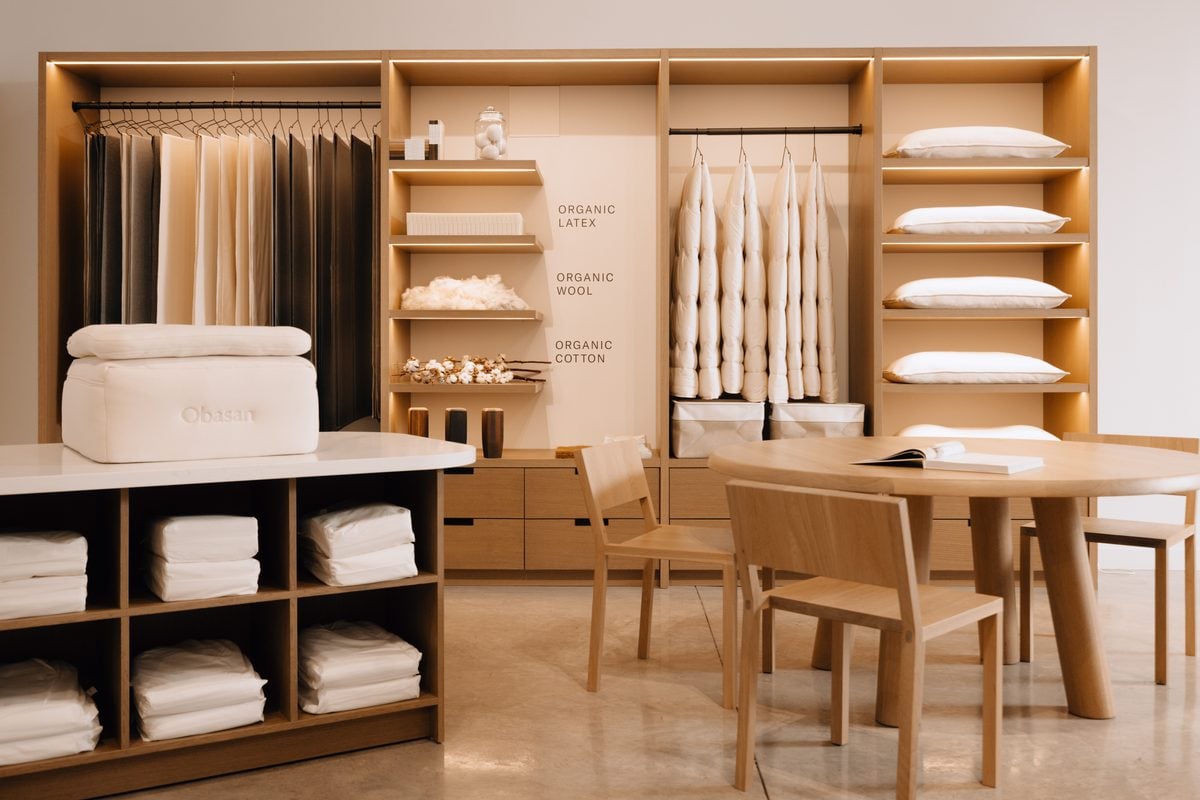
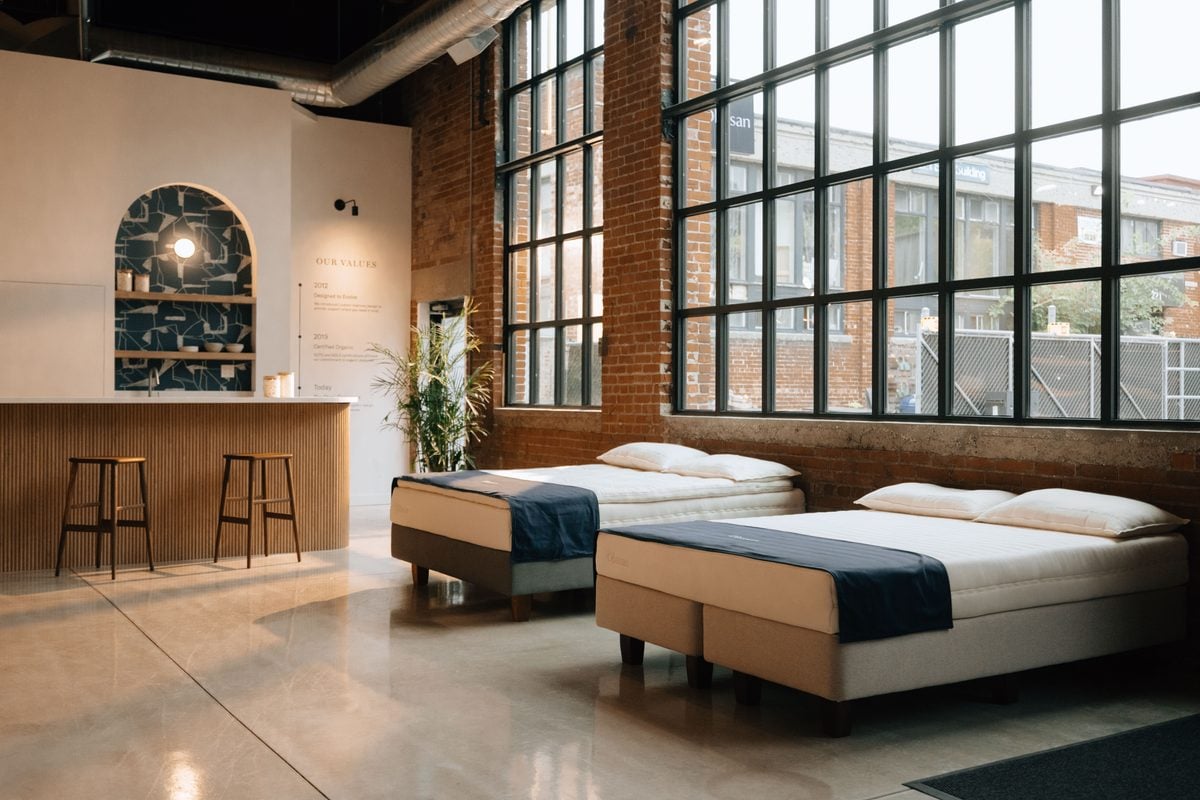
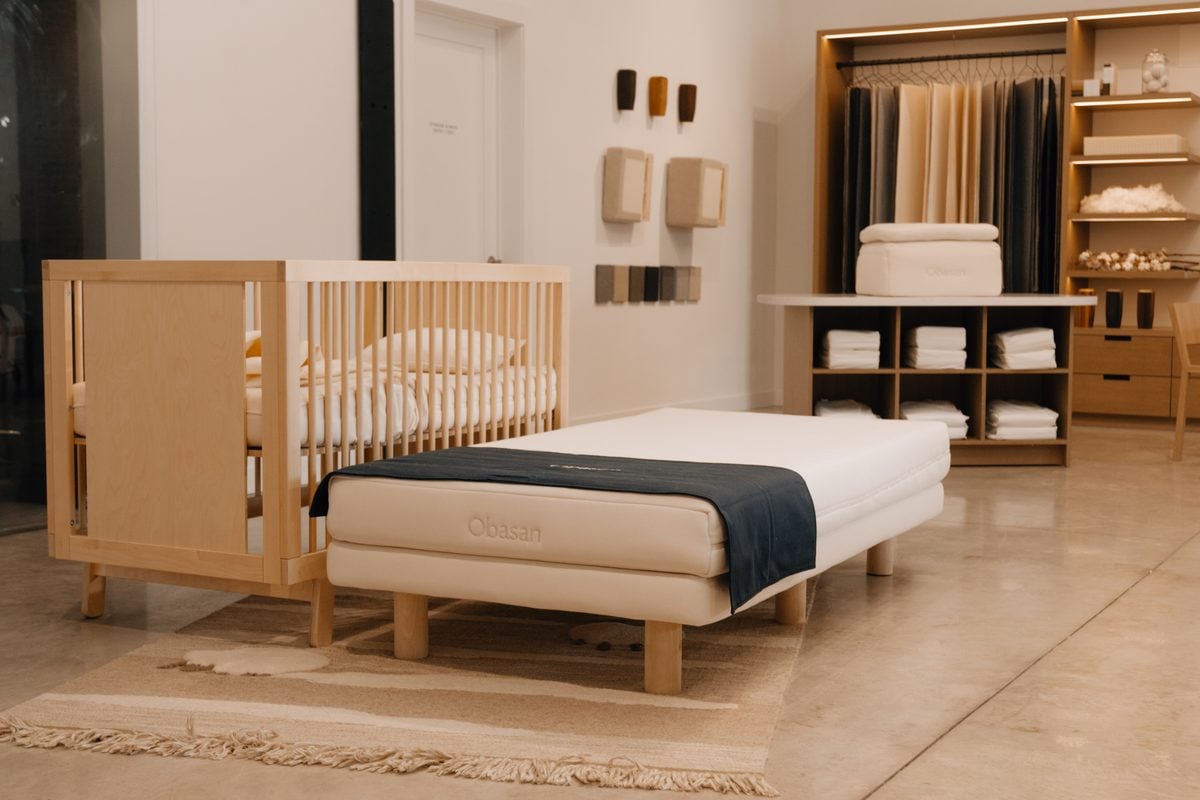
The new Obasan Toronto Experience Centre is located at 213 Sterling Road, Unit 106, in Toronto’s Junction Triangle neighbourhood, across from the Museum of Contemporary Art. Approximately 2,000 square feet is dedicated to customer consultations and product demonstrations, with the remaining space accommodating other facilities, including a meeting room.
Laplante said Obasan began testing the Toronto market through appointment-based pop-up events around 2023 or 2024. Working with local furniture partners, the company held events approximately twice annually, typically lasting three or four days, allowing customers to meet with sleep consultants and experience its products.
“These pop-ups just kept growing and growing and growing,” Laplante said. The increasing interest encouraged Obasan to establish a permanent presence in Toronto, a market the company can service relatively easily from its Ottawa operations.
Obasan initially considered locations around King Street East in Toronto’s design district, where several established furniture and home furnishings businesses operate. However, the company struggled to find a property offering sufficient space, convenient access and dedicated customer parking.
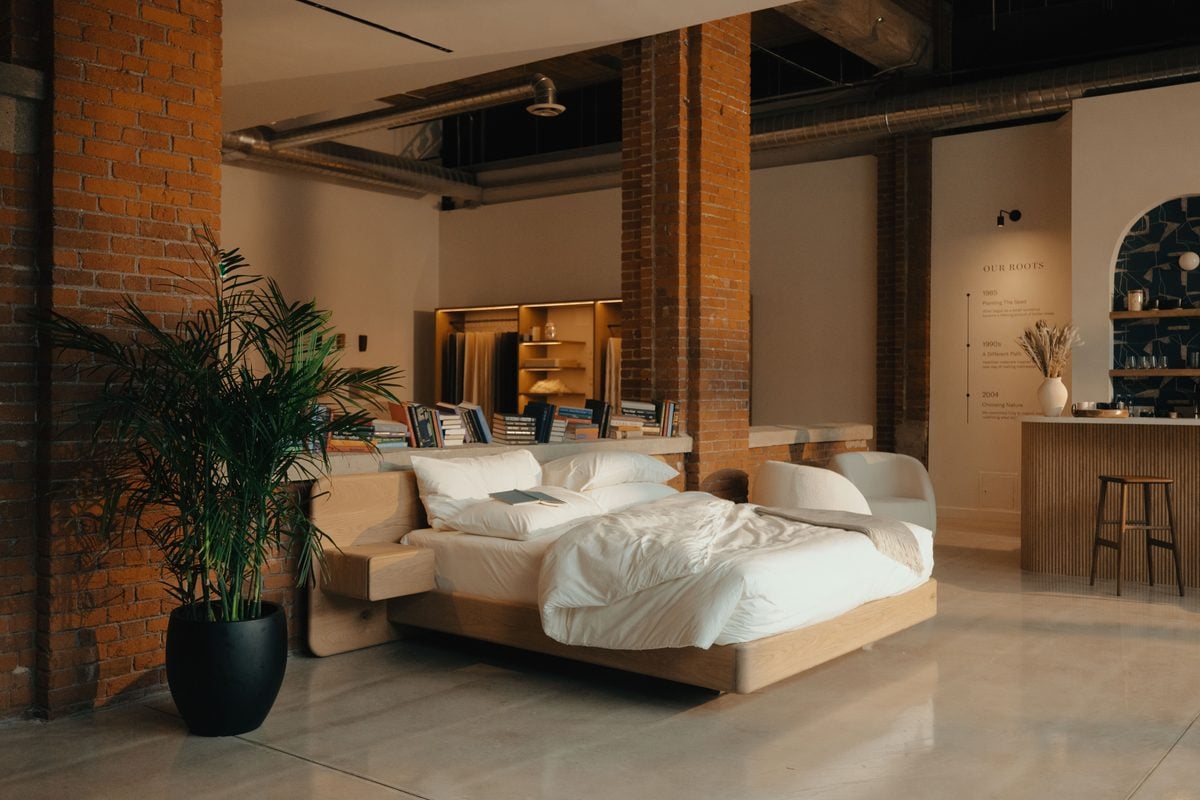
The Sterling Road location provided those features in a refurbished industrial building with exposed brickwork and reserved parking. Its setting suits Obasan’s appointment-based approach, with customers generally making a deliberate trip to evaluate a substantial purchase.
The showroom also includes a boardroom available to visiting interior designers, architects and their clients. Laplante said the space was designed to accommodate professional consultations alongside the company’s retail activities.
Personalized Fittings and a Fogo Island Inn-Inspired Nap Room
Obasan’s retail approach centres on individual mattress fittings lasting approximately 30 minutes to an hour. Sleep consultants assess customers’ sleeping positions, body shapes and weight distribution before recommending configurations suited to their requirements.
The company’s customizable mattresses contain adjustable internal components that provide different levels of support across the shoulders, hips and other areas of the body. Couples can also receive different configurations on each side of the same mattress, with adjustments made during the consultation.
“It’s the fitting. It’s the custom tailoring,” Laplante said. Obasan uses demonstration models that can be opened and reconfigured in front of customers, allowing them to see how the mattress is assembled and how its support system can be modified.
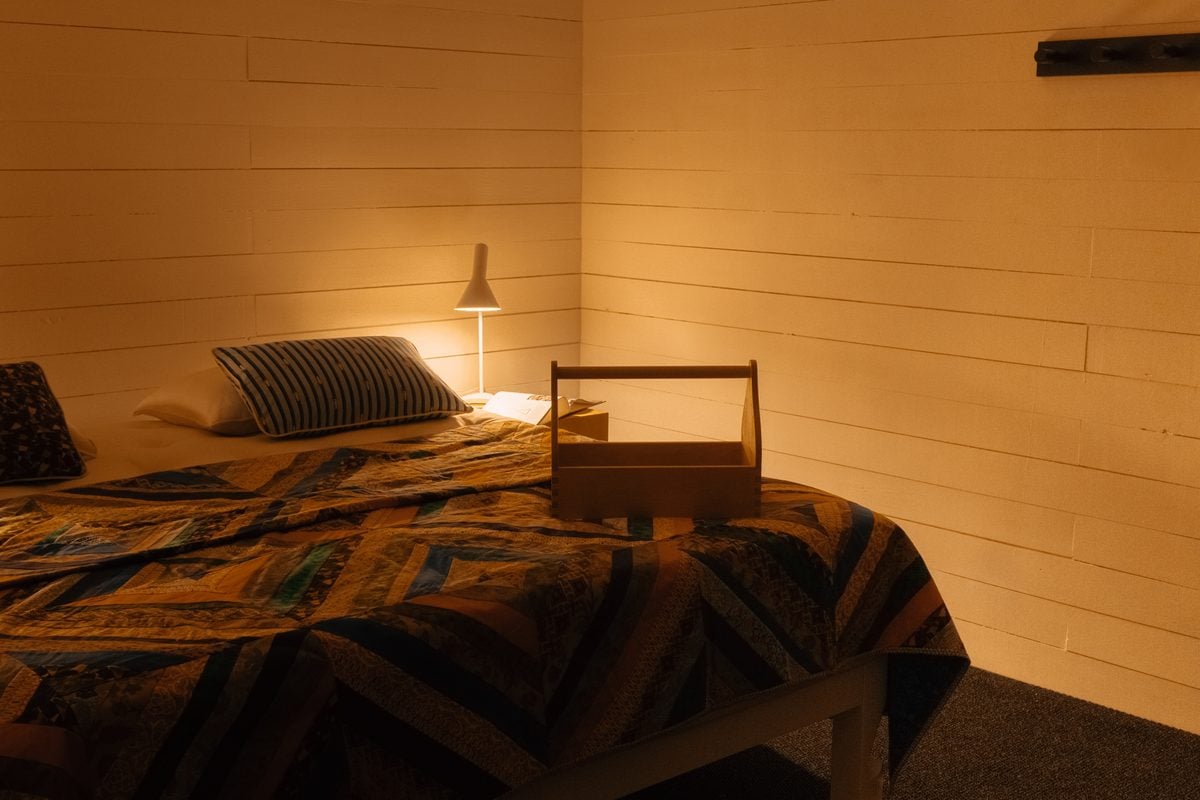
One of the Toronto showroom’s most distinctive features is a soundproof nap room inspired by Newfoundland and Labrador’s Fogo Island Inn, where Obasan has supplied mattresses for more than a decade. Laplante said a designer associated with the hotel helped create the room, which is dedicated to the Fogo Island Inn concept for its first year.
Customers can reserve the room for approximately two hours, with a mattress configured to match the product they are considering purchasing. Visitors can test the mattress, pillows and bedding in a private setting that more closely resembles sleeping at home.
Obasan previously introduced a similar experience at its Ottawa showroom, including during the pandemic when private appointments helped accommodate physical-distancing requirements. Laplante said the concept has historically generated strong purchasing interest, although he did not provide a documented conversion rate or Toronto-specific results.
The company also takes an unusual approach to completing sales. Customers typically leave their consultation without purchasing, receiving an email afterward outlining the recommended configuration and available options.
If they decide to proceed, Obasan provides a payment link and takes a deposit before manufacturing the mattress. Laplante said this gives customers time to consider a purchase that can cost approximately $6,000 or more, without pressure to make an immediate decision.
Direct Retail Now Accounts for 70% of Business
The Toronto opening follows a substantial change in Obasan’s distribution mix. Laplante said the company previously generated approximately 60% of its business through wholesale accounts and 40% through direct retail, but those proportions have since reversed.
Direct retail now represents approximately 70%, with wholesale accounting for the remaining 30%, according to Laplante. Obasan continues working with independent retailers and showroom partners, although its own stores and online operations have become increasingly important.
Laplante attributed part of the shift to consumer purchasing behaviour during the pandemic and the difficulties experienced by some independent retailers. The company also increased its investment in digital marketing and content, helping maintain online sales momentum.
Obasan’s e-commerce business has grown by approximately 30% annually since 2023, according to Laplante. He described the website as the company’s strongest individual sales channel by dollar volume, although the growth figure refers specifically to online sales rather than overall company revenue.
Physical showrooms remain important for customers who want to experience a mattress before committing to a customized purchase. “They want a little bit more connection than just a click,” Laplante said.
Obasan has also developed an online recommendation system that considers a customer’s height, weight, body shape and predominant sleeping position. The information is used to recommend a mattress configuration, allowing customers who prefer online shopping to purchase without visiting a showroom.
The company’s direct relationship with customers extends to delivery and installation. Laplante said trained Obasan employees travel from Ottawa to Toronto approximately twice monthly to deliver mattresses, assemble products and explain how they work, instead of relying on subcontracted delivery teams.
Repeat business is another component of the company’s sales. Laplante estimated that approximately 30% to 35% comes from returning customers, including households purchasing additional mattresses for other bedrooms or properties.
Ottawa Manufacturing Expansion Planned for 2027
Obasan is preparing to expand its Ottawa manufacturing operations as it invests in production capacity. Laplante said the company plans to add approximately 10,000 square feet to its factory in 2027, providing space for new equipment and additional production activities.
The planned machinery investments are intended to improve manufacturing quality while reducing material offcuts and waste, according to Laplante. Obasan has not disclosed the project’s capital cost, the existing factory’s square footage or the anticipated increase in production capacity.
Founded in 1985, Obasan manufactures its mattresses and bedding products in Ottawa, employing workers responsible for cutting, sewing, assembling and finishing its products. Laplante said the workforce has grown from approximately 22 employees to 36 in Ottawa, with two additional employees in Toronto bringing the company-wide total to approximately 38.
The company recruits production workers through referrals and practical assessments, including paid sewing evaluations lasting approximately four hours. Laplante said maintaining close relationships with employees remains important as the manufacturing operation expands.
Although Obasan manufactures in Canada, it sources specialized raw materials internationally. Laplante said its organic cotton textiles are milled in the Netherlands, wool comes from Argentina and natural rubber latex is sourced from Sri Lanka.
The materials are selected for characteristics required in the company’s products, with manufacturing and assembly taking place in Ottawa. The approach allows Obasan to maintain domestic production while relying on international suppliers for specialized inputs.
Hospitality and Design Partnerships Build Brand Awareness
Obasan’s relationship with Fogo Island Inn has helped introduce the company to customers outside traditional retail channels. Laplante said the partnership began around 2012, with Obasan mattresses used in guest rooms at the Newfoundland and Labrador property.
The company has since expanded its hospitality business, participating in approximately 16 to 18 projects, according to Laplante. These relationships allow guests to experience Obasan products during overnight stays, complementing the company’s retail, referral and digital marketing activities.
The Toronto showroom also features furniture from complementary Canadian manufacturers. Toronto-based Monte Furniture has seating on display, while Abbotsford, British Columbia-based Lock & Mortise uses the space to showcase solid-wood furniture to Toronto-area customers.
Laplante said Obasan does not sell Lock & Mortise furniture or receive commissions for referrals. Customers interested in those products are directed to the manufacturer’s sales team, while Lock & Mortise can refer customers to Obasan’s showroom to view furniture in person.
The arrangement provides both companies with additional exposure without requiring Obasan to manage another retail category.
Montreal and U.S. Expansion Under Consideration
With Toronto operating, Obasan is considering further dedicated retail locations. Laplante identified Montreal as the likely next Canadian market, although the company has not announced a lease, opening date or formal commitment.
Obasan already has a showroom partnership with Kastella in Montreal, separate from any potential company-operated location. Laplante also expressed interest in expanding the company’s physical presence in the United States, particularly along the East Coast, where Obasan has an established customer base.
The company currently works with a retail partner in New York City, and Laplante believes a dedicated showroom there could help communicate Obasan’s customization process more directly to consumers. Any U.S. expansion remains exploratory and would depend partly on developments in that market over the next two years.
Maintaining the company’s service approach will be an important consideration as it evaluates further growth. Obasan’s customized adult mattresses are generally final sale, although the company offers a 180-night comfort-adjustment policy that permits eligible comfort exchanges and changes to internal mattress components.
Laplante said the ability to adjust mattresses over time is an important part of Obasan’s relationship with customers, including those whose support needs change as they age. The company’s next planned investment is in Ottawa, where the proposed 2027 factory expansion would provide additional production space as Obasan evaluates its next retail markets.