‘Buy Canadian’ Movement Gains Momentum Amid Trade Tensions

Date:

Share post:

By Michael Walschots

Ever since Donald Trump threatened to impose a 25 per cent tariff on all imports from Canada, everyday citizens have retaliated by pledging to “Buy Canadian.” Even though the tariffs were later postponed, the damage was already done.

The Buy Canadian movement is broad: people are not only buying more Canadian goods, they are also altering their travels plans and attempting to watch more Canadian-made films and TV.

Local businesses have reported an increase in traffic, Air Canada has said it will decrease the number of flights to U.S. destinations and there are now apps and a website to help citizens find Canadian products.

This new movement offers us the opportunity to reflect on the ethics of our consumption practices more generally, especially when consumers co-ordinate their purchasing on a national scale. As consumers, we all have a responsibility to use our buying power in an ethically conscious way.

(Above: A CBC News report on how consumers are using apps to help them buy Canadian products)

Boycotts and buycotts

Most of us as consumers decide what to buy based on the price and quality of goods. But our values play a role in our decision-making: what we buy and where we buy it is influenced by our beliefs. Last year, for instance, many Canadians boycotted Loblaws on the grounds that it was price gouging amid inflation.

A boycott is just one way of altering our habits based on our values. Another way is a “buycott”; that is, intentionally buying products from companies we feel align with our values. The Buy Canadian movement itself is best described as a buycott, but for many, it’s also a boycott of American-made goods.

The reasons behind consumers choices are essential here. For example, we might avoid buying certain cosmetics because we are opposed to animal testing. Or we might vote with our forks and eat at farm-to-table restaurants to combat climate change.

Our choices are often complex and motivated by many concerns: I might buy eggs from my local farmers market not only because I want to support local businesses, but also to encourage the fair treatment of animals and express my frustration with high prices at chain stores.

Social change and co-ordinated consuming

One of the most important reasons behind many of our consuming practices is social change: we want to change the way others, and we as a society, behave. Consuming for social change is particularly effective when it is done by a co-ordinated group that shares certain values.

Consider the practice of buying fair trade coffee: by means of proper certification and product labelling, consumers give coffee companies an economic incentive to treat farmers more equitably.

This is a huge power that consumers have. But with great power comes great responsibility, so when we make co-ordinated consuming efforts, we need to think about how to do so responsibly.

Not all co-ordinated consuming efforts are ethically permissible. Consider a reprehensible but particularly relevant example: in the 1930s, initiatives developed to encourage consumers not to buy Jewish products in Germany, other European countries and the U.S. Such a practice was wrong not only because it was motivated by hatred, but also because it deprived a group of citizens of their freedom of religion.

Another more recent example concerns the Christian American Family Association which boycotted Walt Disney, Ford and other businesses because of their support of same-sex couples. This boycott was wrong not only because it was motivated by discriminatory beliefs, but also because it did not representative how many other people feel.

The moral here is that social change should not only be influenced by well-co-ordinated groups, because the loudest voices are not the only ones, nor are they necessarily the right ones.

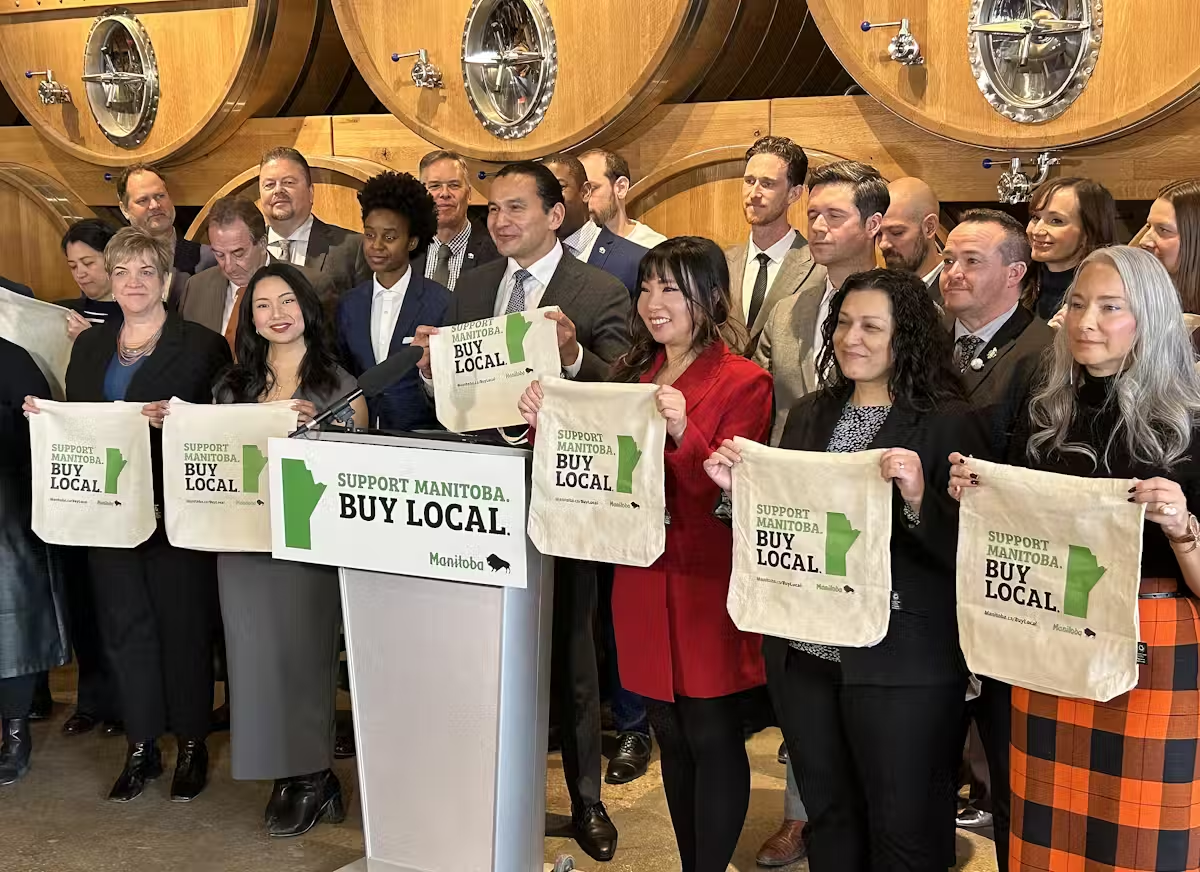
Manitoba Premier Wab Kinew and caucus members hold up tote bags during a press conference encouraging consumers to buy Manitoba goods and services in Winnipeg on Feb. 5, 2025. THE CANADIAN PRESS/Steve Lambert

Manitoba Premier Wab Kinew and caucus members hold up tote bags during a press conference encouraging consumers to buy Manitoba goods and services in Winnipeg on Feb. 5, 2025. THE CANADIAN PRESS/Steve Lambert
Ethical boycotting

How do we make sure that our co-ordinated consuming efforts are ethical? Philosophy professor Waheed Hussain argued that when we act as a co-ordinated group seeking to achieve social change, we should treat our consuming choices as “proto-legislative” — that is, as if they could become legislation.

This is because our efforts in this context are no longer aimed at merely satisfying our self-interest, but the common good, and so the standards should be higher. We should act in ways that are appropriately representative and that do not deprive our fellow citizens of their freedoms. Furthermore, Hussain argued that the reasons behind our consumption practices should be public and subject to scrutiny by our fellow citizens.

When we seek to effect social change across national boundaries, it has been argued that we should not impose our ideals of social change on foreign citizens. In this case our choices are subject to additional constraints. We should respect the values of the target country, for instance, and use our purchasing power in ways that help local workers and communities there.

What this all means for the Buy Canadian movement is a complex question. For instance, it might mean that a boycott of American products should not include some states like Kentucky, whose governor has openly opposed the tariffs. But at the very least, it’s an opportunity for us to reflect on the immense power we have as consumers, as well as the responsibilities that go along with it.

About the Author: Michael Walschots is a Postdoctoral Fellow at Johannes Gutenberg University of Mainz.

*This article originally appeared in The Conversation. 

More from Retail Insider: 

RELATED ARTICLES

Subscribe to the Newsletter

Subscribe

* indicates required

RECENT articles

Joseph Tassoni Calls ‘Natural Authority’ His Best Show Yet as Canadian Brand Builds

Canadian designer Joseph Tassoni discusses his Natural Authority runway show in Toronto, his Oakville showroom and his strategy for controlled brand growth.

Retail Insider’s Canadian Retail Monitor — September 2026: Consumer Spending Becomes Selective

Canadian retail is experiencing widening demand gaps across categories, regions and price points as value considerations move deeper into retailer strategy.

Toronto Waterfront Retail Market Evolves as Eastern District Builds Out

Toronto’s waterfront retail market is evolving as new businesses, experiential concepts, transit investment and major eastern waterfront development create new commercial opportunities.

Lunaro Hospitality opens first restaurant with chef Justin Friedlich in Toronto

Shay Ristorante is named after Friedlich’s daughter and is described as a personal expression of his heritage and story, with a focus on creating a dining experience centred on family and Italian culinary traditions.

Canadian Grocery Supply Chains Face Rising Costs and Disruption Risks: Capgemini

Canadian grocers face tariff pressures, raw-material shortages and limited logistics alternatives as retailers diversify suppliers and strengthen supply-chain resilience.

Larry’s Catch opens a new warehouse in Vancouver as the brand makes inroads into Western Canada

The new facility will allow the brand to strengthen its delivery network, lower shipping costs and make its premium, wild-caught Canadian seafood more accessible to customers across British Columbia, Alberta and Saskatchewan.

OK Tire Launches National Video Series Spotlighting the People ‘Behind the Bay Doors’ (Video)

Documentary-style series puts community, entrepreneurship, and Canadian business at the forefront of national growth strategy.

Nightmare Bar Brings an Immersive Halloween Experience to Calgary

Calgary is getting a new Halloween destination filled with themed cocktails, interactive entertainment and unexpected scares.

Daily Synopsis: October 1, 2026

Tsawwassen Mills plans a large H Mart grocery and entertainment expansion while CF Chinook Centre adds Old Navy, SportChek, and Winners to boost retail offerings. In Quebec, La Cordee is shutting, and other news.

Why Canadian Retailers Are Losing Sales They’ve Already Won

Checkout friction can cost Canadian retailers thousands in sales. Konek can help merchants offer a simple and trusted payment experience.

La Cordée Closure Ends Six-Year Turnaround Attempt in Quebec Outdoor Market

Quebec outdoor retailer La Cordée is shutting down after 73 years, ending a six-year turnaround that included new ownership and store expansion. The retailer returned to creditor protection in July 2026 with more than $13 million in obligations.

Tsawwassen Mills Marks 10 Years with H Mart, TM Wander and New Entertainment Uses

Tsawwassen Mills marks 10 years as Central Walk expands the 1.2-million-square-foot centre with TM Wander, recreation and entertainment uses. A roughly 30,000-square-foot H Mart anchor is also targeted to open around Christmas 2027.

IKEA Canada celebrates 50 years in Canada

To mark the milestone, IKEA Canada is focused on affordability with 50% off one iconic IKEA product every weekend in October.

Canadian Retail Supply Chains Face Scrutiny as $63.3B in Imports Linked to Labour Risk

World Vision estimates $63.3 billion in Canadian imports were associated with documented child- or forced-labour risks in 2025, led by electronics and apparel, as Ottawa considers stronger border enforcement that could raise traceability demands for retailers.

Iconic outdoor lifestyle brand L.L.Bean reimagines its flagship store in Freeport, Maine

The reimagined Flagship store and campus, which is visited by many Canadian tourists each year,  immerses customers in the outdoor lifestyle inspired by Maine and surrounds them with the products designed to enjoy it.

CF Chinook Centre adding three major retailers

Old Navy, SportChek and Winners will be joining the tenant mix at Calgary's most popular shopping centre.

Honestly Good Chicken Fingers and Serruya Private Equity Announce Joint Venture to Fuel Global Growth

New partnership will support expansion of the Canadian-born restaurant brand across North America and international markets

Niagara Falls Tourism Faces Weather Challenges as Rain and Flooding Hit 2026 Summer Season

Niagara City Cruises says poor weather has reduced walk-up visits while committed travellers remain resilient, with operators looking to the fall shoulder season. Niagara City Cruises says poor weather has reduced walk-up visits while committed travellers remain resilient, with operators looking to the fall shoulder season.

Iconic Colombian coffee brand Juan Valdez expands to Canada

Juan Valdez is entering Canada for the first time as part of its North American expansion strategy, bringing the quality, origin and heritage of 100% Colombian premium coffee to Canadian consumers.

Daily Synopsis: September 30, 2026

Canada's Weston family moves to acquire UK chemist Boots for $9bn, The Brick sells Scarborough site, Ikea opens small-format London ON store, Fortinos opens Popcorn Kitchen in Brampton store, Pattison calls out grocery store violence in BC, and other news.