

Hudson’s Bay, one of Canada’s most iconic department store chains, has officially filed for bankruptcy protection. While this may come as a surprise to some, for many in the retail industry, the move has been long anticipated. The once-dominant retailer has been facing significant operational and financial struggles for several years, with mounting signs that things were no longer business as usual. From declining store conditions to cash flow problems, Hudson’s Bay has been unable to keep up with the changing retail environment, leading to its current financial crisis.
“Let’s face it,” says George Minakakis, CEO of Inception Retail Group, a retail expert with deep experience in the industry. “The writing was on the wall for Hudson’s Bay for a while. When a brand like this fails to adapt to the modern shopping experience—whether it’s e-commerce, staffing, or store conditions—it’s a matter of time before it hits a wall.” Minakakis’s observations reflect the broader picture of retail brands struggling to maintain relevance in a constantly evolving landscape.

The filing for bankruptcy protection is the latest in a series of missteps that have seen Hudson’s Bay struggling to stay relevant. The company has failed to meet its financial obligations, citing lower revenue as a key factor in its inability to secure necessary financing. Despite its iconic status, the retailer’s struggles reflect broader issues in Canadian retail, where legacy brands are struggling to adapt to an increasingly digital-first shopping landscape.
Minakakis emphasizes that the root cause of the issues is not just financial mismanagement but a failure to connect with consumers in a meaningful way.
“Department stores like Hudson’s Bay used to be about aspirational experiences,” Minakakis says. “You’d go in for the experience, not just to buy a coat or a set of dishes. But that experience has eroded, and now the stores feel more like warehouses than destinations. Once that happens, you’re facing a huge uphill battle to rebuild that trust.” Minakakis’s point underscores the decline in consumer confidence, which is often the hardest to regain once lost.
Indeed, Hudson’s Bay’s troubles go far beyond its finances. The retailer has been plagued by operational issues, including reduced staffing, store disrepair, and outdated product lines. As Minakakis highlights, these issues have eroded consumer confidence, which is essential for any retailer to thrive. “When you walk into a store and the escalators are broken or the staff is nowhere to be found, that’s a red flag,” Minakakis explains. “Consumers don’t come back from that easily.”
Operational Struggles: Beyond Just Financials
Hudson’s Bay’s financial difficulties are not just a result of market conditions or tariffs; they are deeply tied to persistent operational struggles that have undermined the retailer’s core business. For years, the company has faced a series of challenges that have made its stores less appealing to consumers.
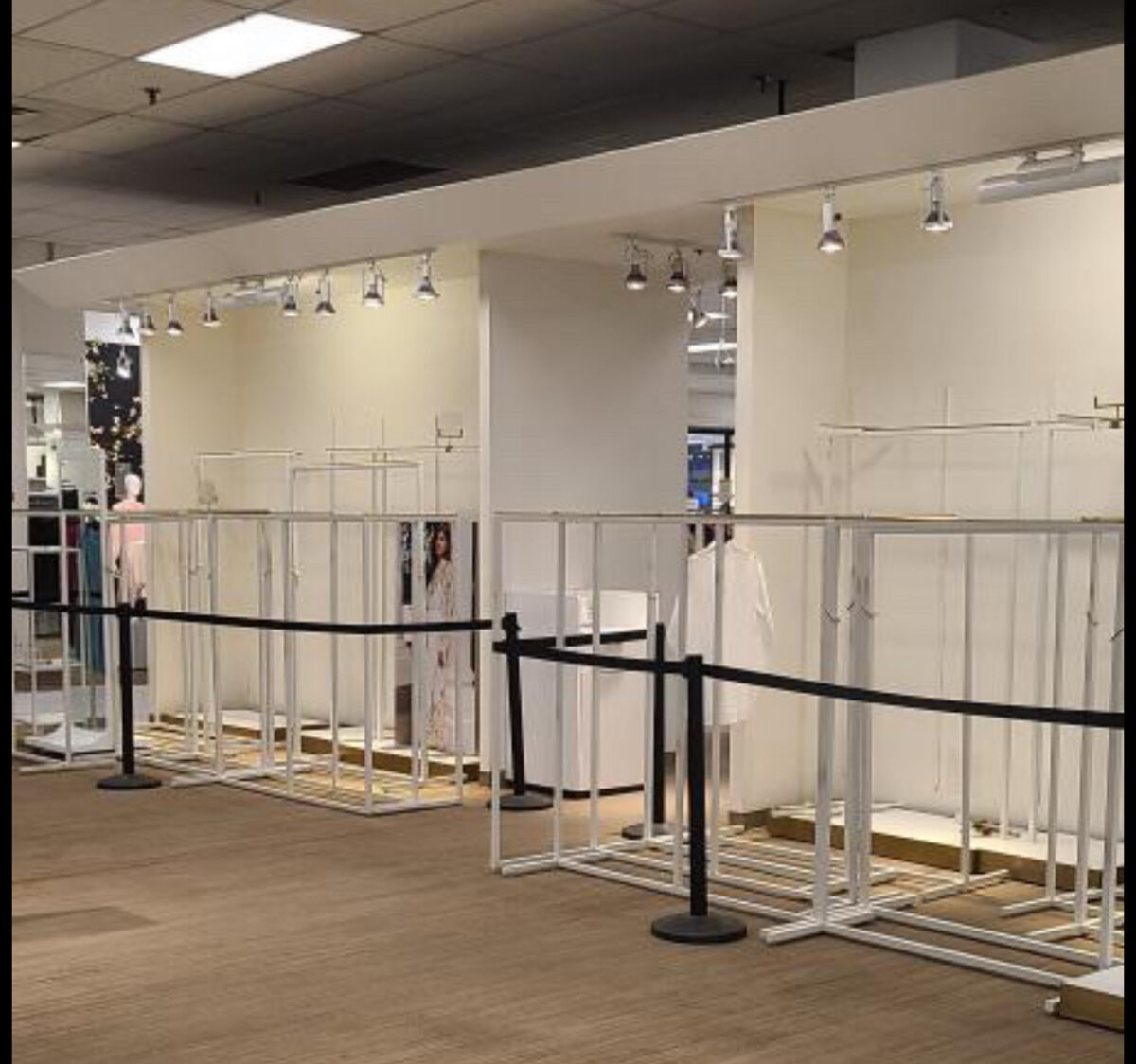
Minakakis said that there have been visible signs of disrepair in several Hudson’s Bay locations. Escalators have been out of service, HVAC systems have failed, and general maintenance has been lacking. “These are basic operational issues that consumers have come to expect from major department stores, yet they have gone largely unaddressed. This has led to an overall negative shopping experience, particularly for older customers who may find it difficult to navigate stores without functional escalators or proper climate control. It’s a simple thing,” Minakakis says. “If you can’t keep your store in good shape, you’re sending the message that you don’t care about your customers.”
Furthermore, Hudson’s Bay’s stores have suffered from insufficient staffing and reduced hours of operation. In many locations, it has been difficult to find staff to assist customers, leading to frustration and an overall poor shopping experience, Minakakis said. While many retailers are adapting to the new reality of online shopping by enhancing their in-store customer service, Hudson’s Bay’s stores have failed to keep up with these expectations. “Customer service isn’t optional in retail,” says Minakakis. “When you can’t find someone to help you, you’re creating a hostile shopping environment. And that’s just one more reason why people turn to online shopping.”
While Hudson’s Bay has attempted to revive the Zellers brand as a means of regaining consumer interest, the effort has been largely ineffective. “The revival of Zellers was seen as a way to introduce value pricing and attract budget-conscious shoppers, but it has failed to deliver significant improvements to Hudson’s Bay’s bottom line. The Zellers relaunch has done little to offset the deeper problems at the core of the Hudson’s Bay brand,” Minakakis said.
Debt Restructuring: A Temporary Fix?
The decision to file for bankruptcy protection signals that Hudson’s Bay is now in the process of restructuring its debt. This move is intended to help the company right-size its operations, eliminate unnecessary costs, and secure the liquidity needed to continue operations. However, as George Minakakis points out, there is a clear distinction between restructuring debt and restructuring a brand.
“Hudson’s Bay may be able to restructure its finances and stay in business for a while,” Minakakis says. “But this doesn’t solve the underlying problem: the brand’s loss of relevance.” Restructuring debt can buy Hudson’s Bay some time, but it will not solve the deeper issue of how to make the brand relevant to today’s consumer.
“To truly recover, Hudson’s Bay would need to invest heavily in revitalizing its stores and brand image. This would involve updating product lines, improving customer service, and reinvigorating the in-store experience, Minakakis said. “However, these are costly endeavours, and with the company now in debt restructuring, it seems unlikely that such investments will be made in the short term.”
“At the end of the day, it’s not just about finances,” says Minakakis. “You can’t put a Band-Aid on a problem that big. You need to invest in the brand and reinvigorate the experience for consumers. Otherwise, it’s just going to keep slipping further away.”
The Impact of Tariffs on Retailers
One of the more controversial aspects of Hudson’s Bay’s bankruptcy protection filing is the mention of tariffs as a contributing factor to its financial troubles. While many have dismissed the notion that tariffs have significantly impacted Hudson’s Bay, there is no denying that rising costs due to tariffs are affecting retailers across the board.
In its bankruptcy protection filing, Hudson’s Bay cited tariffs as a key reason for its inability to secure debt financing. “While it is difficult to quantify the exact impact, it’s clear that the rising costs of imports have put significant pressure on the bottom lines of retailers that rely on goods from overseas,” Minakakis said. “For Hudson’s Bay, this has only compounded its financial difficulties, making it even harder to navigate the current retail landscape.”
Minakakis notes that the issue with tariffs is a broader concern for the retail industry. “Retailers are feeling the impact of tariffs, but many are also dealing with other challenges—like a decline in consumer spending and rising operational costs,” he explains. “It’s a perfect storm, and Hudson’s Bay is one of the first to be hit by it. But it won’t be the last.”
“The broader implications for the retail industry are concerning. If tariffs continue to increase, other retailers—especially those that are already struggling—may find it difficult to secure financing and maintain profitability. This could lead to more bankruptcies and closures, which would have a far-reaching impact on the Canadian retail sector.”
The Fallout: Vendors and Small Businesses
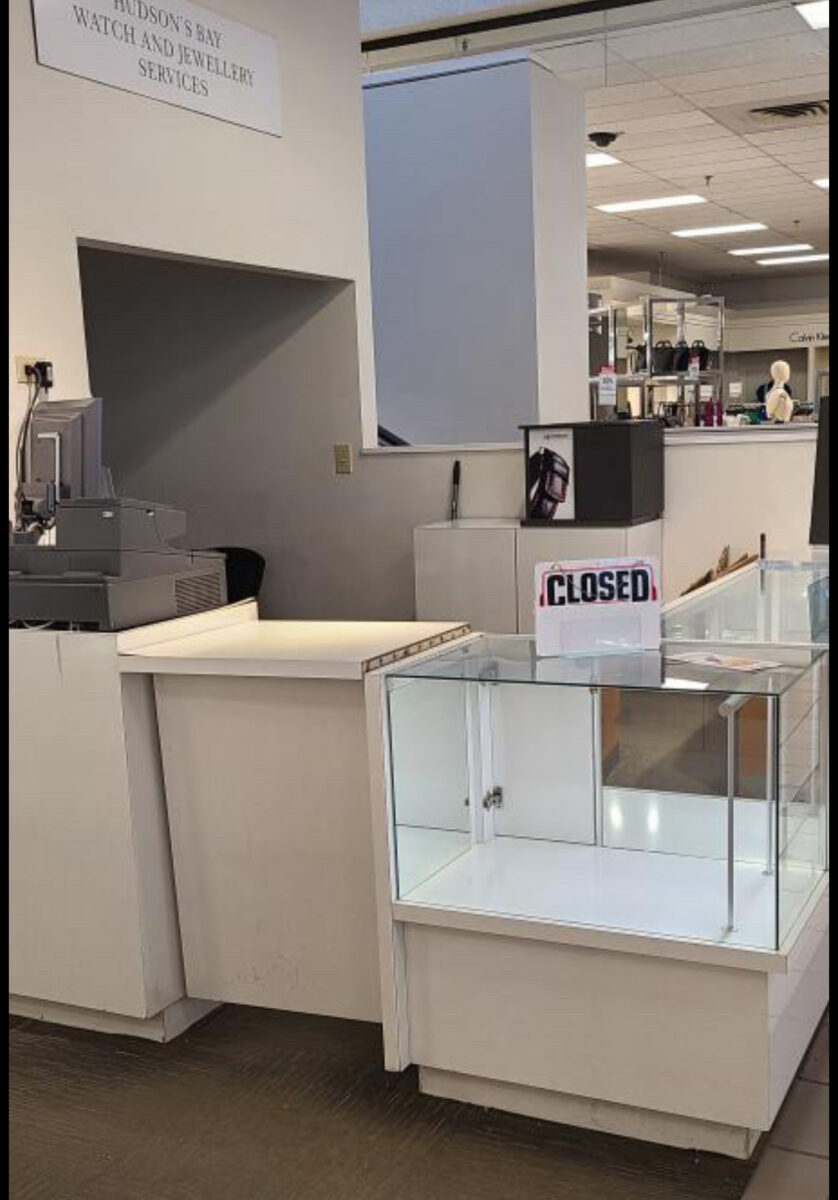
Hudson’s Bay’s financial troubles are not just a concern for the retailer itself but for the broader retail ecosystem. Many smaller vendors rely on Hudson’s Bay as a key customer, and as the company faces bankruptcy protection, these vendors may be left without payment for outstanding debts.
“As a retailer, Hudson’s Bay is tied to many small businesses,” Minakakis explains. “And if they’re not getting paid, they’re going to feel the effects. Some of these smaller suppliers may not survive this. It’s a big hit to them, and it’s a reminder of how interconnected the retail ecosystem is.”
“There is a real possibility that smaller vendors may be forced to shut down or scale back their operations. Small to mid-sized vendors may struggle to recover from this, particularly those who rely heavily on sales to Hudson’s Bay for a significant portion of their revenue.”
The impact of this could be especially severe for niche brands or Canadian vendors who depend on Hudson’s Bay for access to a broader customer base. For these smaller businesses, Hudson’s Bay’s troubles could be catastrophic, potentially leading to bankruptcy for those that cannot absorb the financial hit.
Real Estate Strategy and Store Closures
Hudson’s Bay’s real estate holdings are another critical piece of the puzzle. While the company no longer owns much of its real estate, it has long relied on its portfolio of high-value properties, including long-term leases, as a core asset. As part of the bankruptcy protection process, Hudson’s Bay may be forced to sell off locations to generate cash, further depleting the company’s ability to leverage its real estate assets.
The prospect of closing approximately 50 stores is also looming. However, this brings into question the viability of these stores and whether they can be sold or repurposed for other uses. “That’s going to be tricky,” says Minakakis. “Who’s going to buy these stores? Retailers are already struggling, and buying up underperforming locations might not be an attractive proposition.”
The key challenge here is the value of the company’s real estate and whether it can be sold at a price that will provide meaningful liquidity. Minakakis points out that Hudson’s Bay’s long-term leases may offer some value, but they are also a liability. “A 100-year lease doesn’t sound as appealing when you’re trying to sell that space,” he adds.
The Future of Hudson’s Bay: Is It the End?
As Hudson’s Bay moves forward with its bankruptcy protection proceedings, the future of the brand remains uncertain. While the company may be able to continue operating for the time being, it faces a difficult road ahead. The brand’s core retail operations need a complete overhaul to survive in an increasingly competitive and digital-first marketplace.
“In the short term, they’ll probably survive, but long-term, I’m not sure,” Minakakis states. “The brand has too many structural issues that can’t be solved overnight. Unless there’s a radical reinvention, Hudson’s Bay may very well be a thing of the past.”
“Looking ahead, it’s possible that Hudson’s Bay will continue to operate in some form, but it will likely be a shadow of its former self. The brand may continue to exist as a smaller, niche player, with only a handful of locations remaining.” However, as Minakakis suggests, .”In 10 years, Hudson’s Bay could be a relic of the past, with only a few stores left for nostalgia’s sake.”
Broader Implications for Canadian Retail
Hudson’s Bay’s struggles should serve as a cautionary tale for other retailers in Canada. As Minakakis emphasizes, many retailers face similar challenges in adapting to an increasingly digital-first world while dealing with rising costs, tariffs, and changing consumer preferences. Hudson’s Bay’s bankruptcy protection filing highlights how difficult it is for legacy brands to maintain relevance in today’s rapidly evolving retail landscape.
Other retailers that are already struggling may soon face similar financial troubles if they are unable to adapt. Hudson’s Bay’s filing underscores the importance of reinvention, especially in a time when e-commerce and changing consumer habits are reshaping the retail industry.















Good!
Such a ignorant comment, lets applaud the loss of a name sake for 100’s of years, a part of Canadian history, and loss of jobs.
How about a story detailing how private equity drained profits so that there was nothing left to fund innovation? That’s the modus operandi with private equity. Where did the money come from to buy Saks? Why copy the American model instead of the European one. I’d love to see a department store like Le Printemps in Canada. Instead we have Holt Renfrew buying
a successful store (Olgivie) and destroying it.
Former employee.
Richard Baker is not a retailer, he’s a real estate mogul. How have department stores done under his ownership? Let’s think… Lord & Taylor, Galeria Kaufhof, Hudson’s Bay, Saks Fifth Avenue, and now Neiman Marcus. Not a good track record.
The Hudson’s Bay Company will stick around as a holding company to retain the name, charter, historical significance, etc., but Hudson’s Bay the department store has been a mismanaged mess for decades—long before COVID or Trump tariffs.
They don’t take care of their stores, employees, or vendors. They deserve to go out of business, and all the executives should be fired. I only feel bad for the associates who have shown up through it all, despite dwindling hours and resources, and tried their best.