

At a time when Canada imports the majority of its fresh produce, particularly during the colder months, a new player is reshaping how leafy greens are grown and distributed—entirely from within our borders. Haven Greens, a high-tech agricultural venture in King City, Ontario, has opened the country’s first fully automated baby lettuce greenhouse, aiming to transform how Canadians source their food.
“You can’t grow lettuce in a snowbank,” joked Jay Willmot, Founder, President, and Lead Apiarist of Haven Greens, during an interview. “So, we had to come up with something that works year-round in our climate.”
From Thoroughbreds to Technology: The Evolution of a Family Farm

Haven Greens is an extension of Kinghaven Farms, a family-owned business originally founded in 1967 and once known for thoroughbred horse racing. After decades of success in the equine industry, the farm faced dwindling returns by the early 2000s, prompting the Willmot family to rethink their long-term strategy.
“We were good at horse racing, but that kind of business is hard to sustain without a big corporate backer,” said Willmot. “I’d just graduated and was looking at our business model thinking, ‘This isn’t going to work anymore.’ That’s when we started experimenting with sustainability, renewables, and eventually vertical farming.”
Willmot brings a unique mix of credentials to the venture—he holds a Master’s in Environmental Studies, has a legal background in renewable energy infrastructure, and is an experienced beekeeper. Each of these experiences fed directly into the creation of Haven Greens.
“This didn’t happen overnight,” he noted. “It’s been a 15-year journey of step-by-step development.”
Inside Canada’s First Fully Automated Leafy Greens Facility
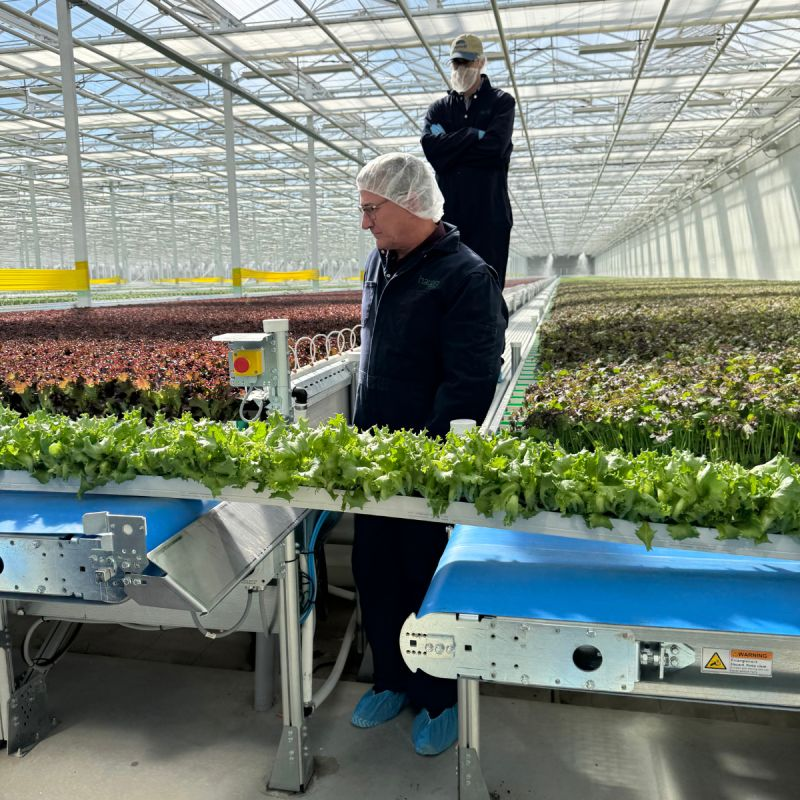
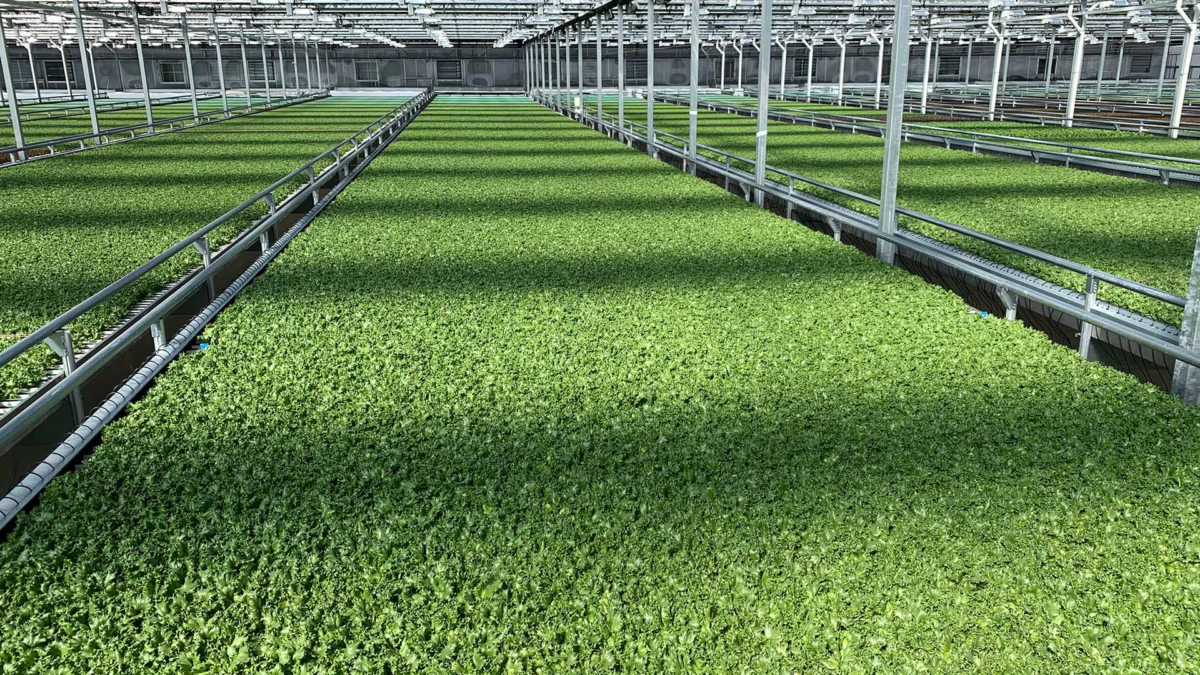
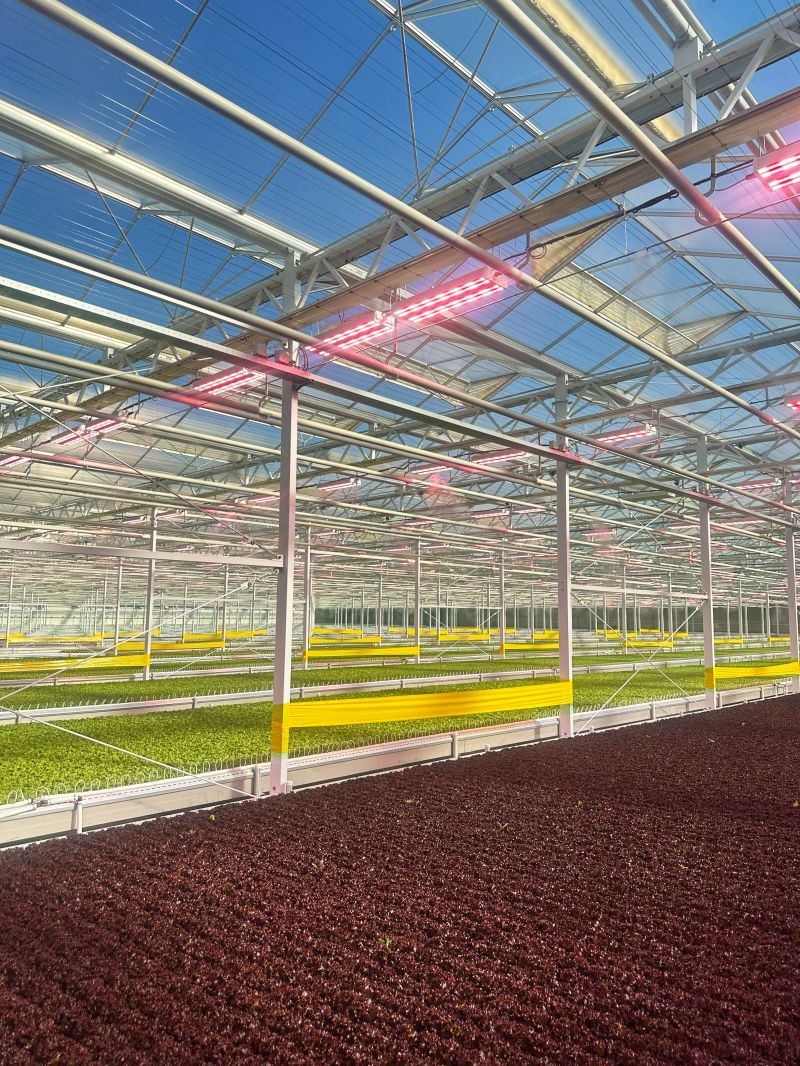
The 10-acre greenhouse, located on elevated terrain in King City, is truly one-of-a-kind. Unlike other greenhouses that automate some aspects of production, Haven Greens is entirely touchless from seeding to packaging.
“There’s no human contact with the product until it’s sealed in trays or bags and placed into boxes,” said Willmot. “That’s what makes us different—it’s fully automated, and that improves both safety and shelf life.”
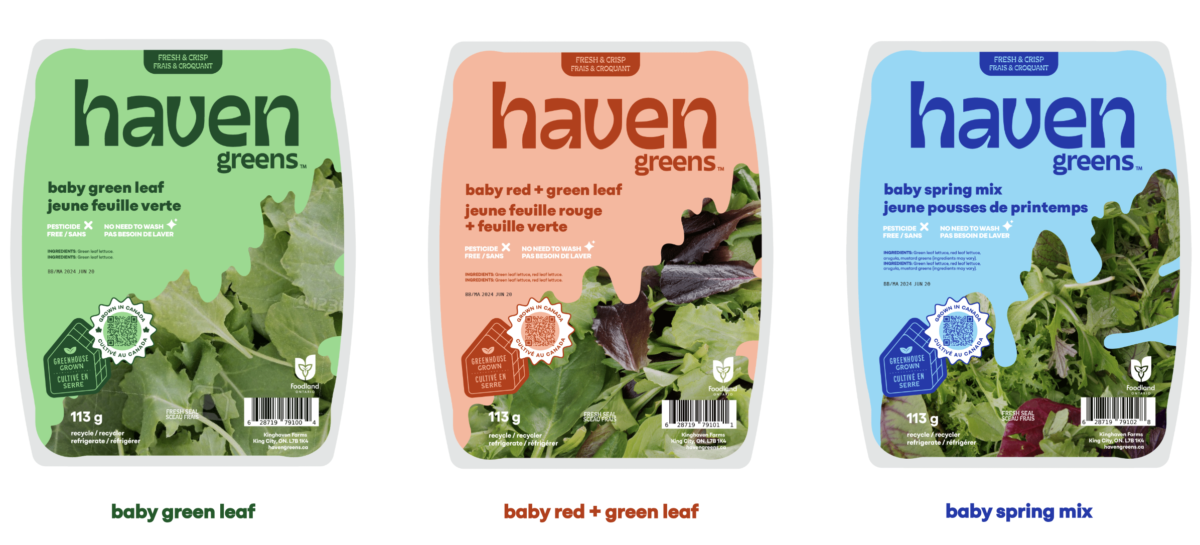
The company produces three main ready-to-eat varieties: Baby Green Leaf, Baby Red and Green Leaf Mix, and Baby Spring Mix. Unlike conventional outdoor-grown lettuce, Haven Greens’ produce is unwashed, pesticide-free, and fresher than most imports.
“We’re not organic-certified because we grow in peat moss, not soil,” Willmot explained. “But we call ourselves better than organic—no pesticides, herbicides, or GMOs. Just fresh, nutrient-rich greens.”
Technology Meets Sustainability
Haven Greens’ facility includes some of the most advanced sustainable systems seen in Canadian agriculture to date. The greenhouse captures rainwater, which is treated and recycled multiple times, and aims for a 99% water reuse rate.
“We also have a bioswale system and aquifer under construction to purify grey water and reintroduce it into our irrigation system,” Willmot explained. “And our goal is to achieve net-zero operations by 2027.”
Energy is another key focus. The company is installing a 3-megawatt solar PV array next to the greenhouse, which will not only decarbonize operations but also enhance energy security.
“Controlled environment agriculture needs consistent, affordable energy,” Willmot emphasized. “We’re addressing that head-on with on-site generation.”
Even emissions from generators are not wasted. “We’re capturing and using CO₂ in the greenhouse for crop development. Nothing is lost,” he said.
Pollinators, Biodiversity, and Beekeeping
Willmot, who also manages a honey business, sees Haven Greens as part of a wider ecological vision. Pollinator-friendly crops will be planted beneath the solar panels to support local bee populations and divert pests away from the greenhouse.
“It creates a beautiful harmony. The bees thrive, biodiversity improves, and even the greenhouse benefits by seeing fewer pest issues,” he said.
Scaling Local Production to National Impact
Haven Greens currently produces over 5,000 pounds of leafy greens per day from a partially planted greenhouse. That figure is expected to double in the coming months as the facility reaches full capacity.
“We’ve been operational for only a few weeks, and already we’re hitting our output targets,” said Willmot. “Our goal is over 8 million pounds per year from this one site.”
Canada consumes roughly 280 million pounds of leafy greens annually. Haven Greens’ facility alone could soon account for over 1% of that figure.
“If we had one of these in every province, we could make a real dent in the import dependency,” Willmot suggested.
Early Retail Footprint and Distribution Strategy
On the distribution side, Haven Greens is already reaching consumers through a growing number of channels.
“We launched into Summerhill Market’s seven Toronto locations this week,” Willmot said. “And we’re promoing at $3.49, which is an unbeatable price for fresh, local greens.”
Independent grocers in King Township have also embraced the product, alongside foodservice partners supplied through distributors like Bondi Produce and JE Russell. Talks are underway with major national and U.S. retailers.
“We’re still early, but interest is strong,” Willmot confirmed.
Addressing Food Security and Tariff Risk
Given recent global instability and supply chain fragility, food sovereignty is becoming a pressing issue. Willmot sees Haven Greens as part of the solution.
“We’re a local-for-local company. If supply chains are disrupted or tariffs are imposed, we’re here, growing high-quality food year-round,” he said.
That said, Canada’s domestic agricultural inputs still face limitations. “Packaging is a huge challenge,” he noted. “We try to source locally, but the trays we use for retail aren’t made in Canada.”
Although Haven Greens has not yet been affected by tariffs, Willmot acknowledged the risk. “Anything can change with this White House administration. We have contingency plans either way.”
Meanwhile, the company is exporting to the Northeastern U.S. foodservice market, where demand for high-quality greenhouse produce is already established.
“We’re not first in the world with this model, but we are first in Canada,” Willmot said. “That gives us a huge opportunity.”
A Highly Skilled Team Behind the Mission
Much of Haven Greens’ success thus far can be attributed to its experienced leadership team. Chief Agricultural Officer Eric Highfield brings over 25 years of expertise in controlled environment agriculture. He moved from Santa Fe, New Mexico, to oversee the greenhouse’s operations.
“Having someone like Eric helped us hit the ground running,” said Willmot. “We got to commercial production faster than expected.”
The director of cultivation and other key team members hail from top greenhouse operations in the U.S., bringing valuable experience. Front office leadership includes seasoned professionals from consumer packaged goods (CPG), such as a former Procter & Gamble executive and a CPG entrepreneur.
“It’s a blend of agriculture, operations, and business acumen,” Willmot said. “We also have local talent from Guelph and U of T on our cultivation team, which is important for community engagement.”
Looking Ahead: National Expansion and Market Education
Willmot has plans for Haven Greens’ future, including expanding beyond Ontario.
“Ontario probably needs one or two more of these facilities. But long term, we want to be national,” he said.
Consumer education will be critical, especially as the company helps Canadians understand the value and freshness of its unwashed, chemical-free greens.
“People ask, ‘What’s the catch?’ But there isn’t one. It’s just fresh,” Willmot explained. “Our goal is to become the go-to choice—something people grab without thinking.”
Final Thoughts
In an era defined by climate concerns, food insecurity, and import dependence, Haven Greens offers a compelling vision for the future of Canadian agriculture. With its fully automated, sustainable facility, the company is redefining what’s possible for local food production in Canada.
“This is just the beginning,” said Willmot. “We’re building something that can change how we grow and eat in this country.”











This is amazing, we need lots more of this in Canada to be food secure and cut our dependance on US imports!
I hope this and other vegetables all year around.
I’ve been looking for a local greenhouse grown product to replace the spring mix I used to buy from Whole Foods so I’d welcome seeing this in my local grocery store. There’s only one problem and that’s packaging. I used to be able to buy my greens at Whole Foods in bulk. I live alone and like to shop daily for fresh produce. This means buying a handful or two at a time, putting it into a reusable bag and weighing it. The other option is to buy the smallest overpackaged amount and having most of it go to waste while my recycle bin fills with plastic.
Interested to work in Canada as fruit picker
looking for seasonal job
Interested work a fruit picker anywhere in canada
Interested to work as fruit picker anywhere in Canada