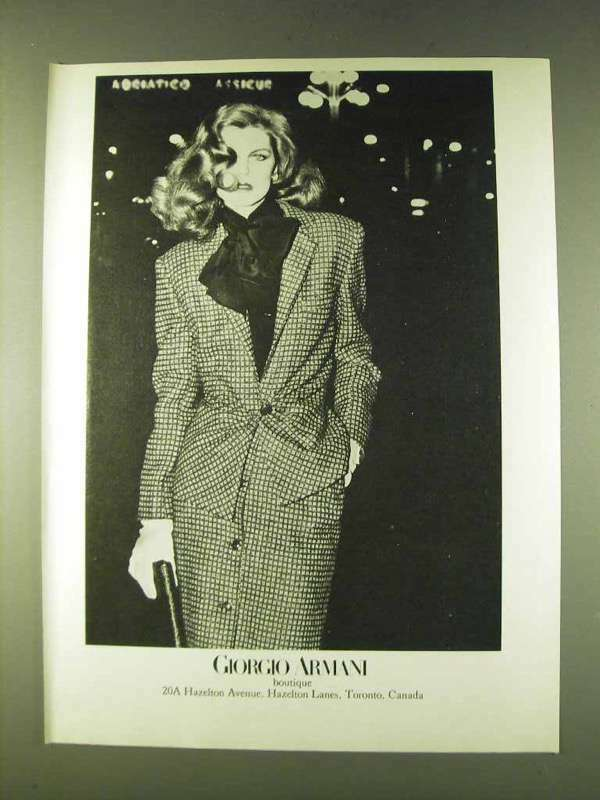
The global fashion world is mourning the death of Giorgio Armani, a designer whose impact on how women and men dress is immeasurable. Armani, often called the “King of Fashion,” redefined tailoring with his soft-shouldered jackets and fluid fabrics while creating an independent empire that remained under his control until his passing. For Toronto, Armani’s story has a particularly unique resonance. In 1979, the first standalone Giorgio Armani boutique in North America opened at Hazelton Lanes, before New York’s department stores carried the line.
That groundbreaking store was introduced to Canada by Catherine Hill, owner of Chez Catherine, with her daughter Stefanie Hill by her side. More than four decades later, Stefanie reflects on Armani’s influence and her personal memories of the man behind the brand.

Chez Catherine’s Bold Introduction of Armani
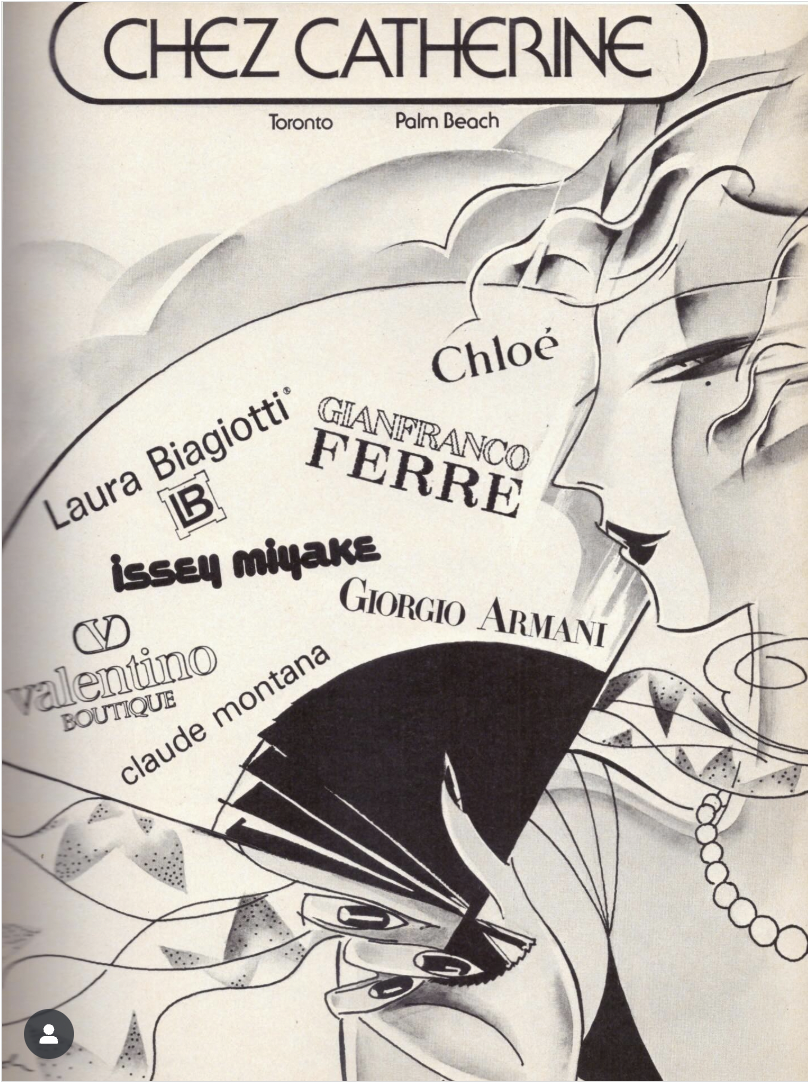
Chez Catherine was a pioneering fashion retailer in Toronto, founded by Catherine Hill in 1972 on Yorkville Avenue before moving into Hazelton Lanes. Known for its colourful, high-impact approach, the store introduced Canadian women to designers such as Claude Montana, Issey Miyake, Karl Lagerfeld, and Gianfranco Ferré. Among these international names, Giorgio Armani stood out.
“We had the first Armani boutique freestanding in Canada in Hazelton Lanes in 1979,” recalls Stefanie Hill. “We even had it before Bergdorf Goodman in New York, which didn’t carry Armani until a year later in 1980. It was really at the start of his collection.”
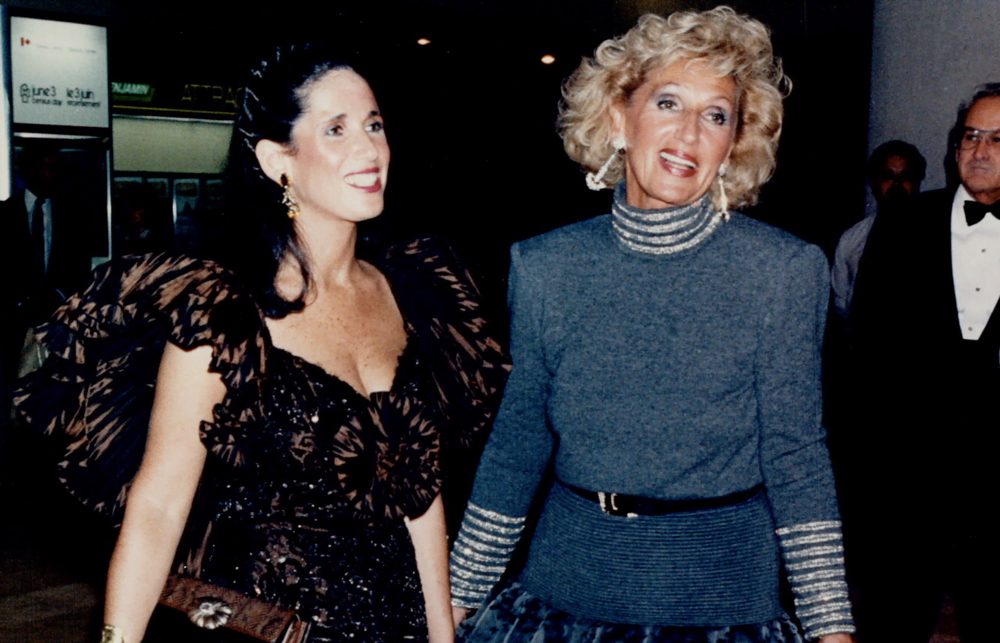
The boutique was located directly across the hall from Chez Catherine’s main shop, serving as both a symbolic and physical extension of the Hill family’s bold approach to fashion retail. Armani himself attended the Toronto opening, accompanied by sales director Gabriella Forte, for what Stefanie describes as a memorable press launch.
“We did it upstairs in Hazelton Lanes, in an empty condo that hadn’t sold yet,” she remembers. “We created a press kit that included a silver padlock engraved with ‘“Chez Catherine has Giorgio Armani all locked up“.’ I still have it to this day.”
Meeting the Man Behind the Brand
While Armani’s collections would go on to become synonymous with understated elegance and global success, Stefanie Hill remembers him most for his humility.
“When I heard he had passed away, I teared up,” she says. “He was such a down-to-earth person, which in this business is not always common. He was real, gracious, and always smiling.”
Stefanie, who speaks Italian, recalls that Armani communicated exclusively in his native language, even when visiting Canada. “He never spoke English publicly, even though he understood it,” she says. “That never caused an issue. We connected easily.”
Her most vivid memory is a moment of honesty that underscored Armani’s humanity. “We were setting up the store, and he suddenly realized, ‘Oh my goodness, I don’t have any skirts.’ He only had blazers, pants, and shirts. So we went across to Chez Catherine, and he picked skirts to pair with jackets. It was just so genuine, and it showed how new he was at building a full collection.”
The Boutique Experience in Toronto
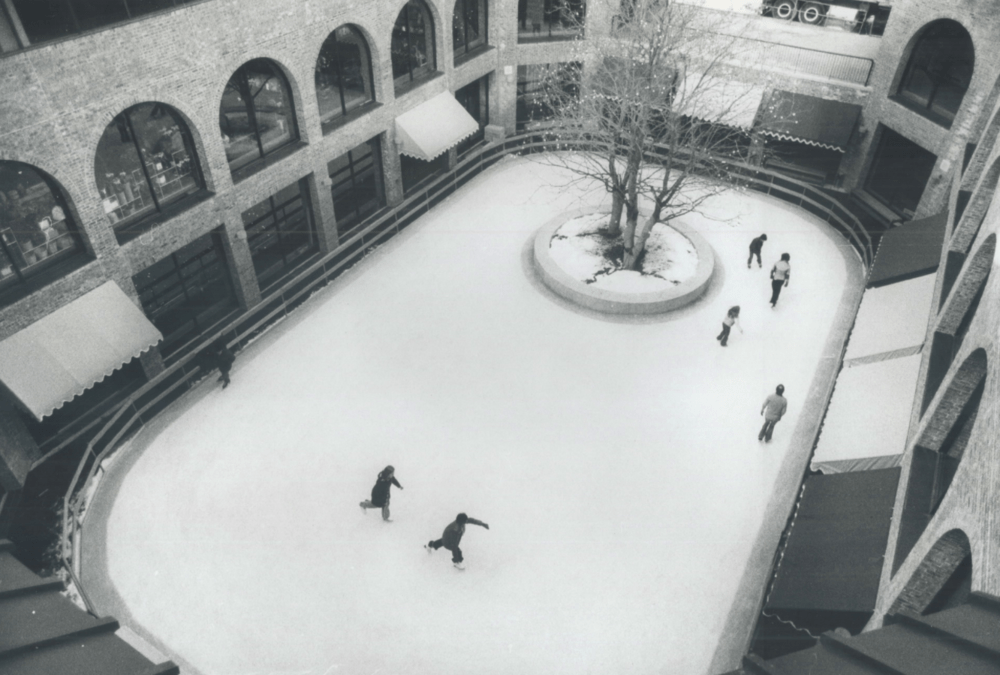
Unlike the lavish brand temples of today, the first Giorgio Armani Toronto boutique was intentionally understated. “It was very minimal,” Stefanie explains. “Carpeted, dark with beige tones, and very simple. The focus was on the clothes, which were lightweight, beautifully woven, and in subtle colours.”
The clientele was eclectic, ranging from high-powered lawyers who adopted Armani’s pantsuits as their uniform to women who simply wanted a fantasy wardrobe. “It was the pantsuit that defined his early following,” she recalls. “The simplicity, the flow of his fabrics, and the soft blouses — there was nothing harsh about his designs.”
An Era of Fashion Icons
Chez Catherine was central to an extraordinary moment in fashion history. The Hazelton Lanes boutiques represented what Stefanie calls “the super five” of international designers: Armani, Versace, Gianfranco Ferré, Karl Lagerfeld, and Valentino.
“It was quite an era,” she says. “Each designer had such a distinct look. Armani was known for his understated elegance, while others were more flamboyant. What separated him was how true he stayed to his vision. He never compromised.”
Unlike many contemporaries, Armani also resisted being absorbed by a luxury conglomerate. “To the day he passed, it was his company,” Stefanie notes. “That is rare in fashion. He stayed independent and true to his designs.”
Chez Catherine’s Broader Legacy
The Armani boutique remained under Chez Catherine’s umbrella for nearly a decade, with the Hills later carrying his collections in their Palm Beach location as well. As Armani diversified into secondary lines such as Armani Exchange and white label collections, distribution widened to department stores, and the Hills shifted their focus to other designers.
Still, the significance of introducing Armani to Canada cannot be understated. Chez Catherine’s retail daring helped solidify Yorkville as Canada’s luxury shopping district and positioned Toronto as an early player in global fashion trends.
“Those were exciting times,” Stefanie reflects. “We were fortunate to be part of Armani’s story from the very beginning.”
Remembering King Armani
For Stefanie Hill, Armani’s passing is both a personal and professional loss. “He truly leaves a legacy in fashion,” she says. “People called him King Armani, and it’s true. He changed how women dressed, and he did it with such grace.”
She recalls dining at his Milan home with her mother Catherine and his partner Sergio Galeotti, describing evenings filled with warmth and humility. “It wasn’t about grandeur. It was couches, little tables, and conversation. That was Armani — low key, genuine, and always kind.”
With Armani’s death, the future of his namesake company remains uncertain. His two nieces have been involved in the business, and observers are watching closely for news about succession. A planned 50-year anniversary retrospective in Milan now carries new meaning.
“It will be interesting to see what the family does,” Stefanie says. “He built something extraordinary, and his vision will always live on.”
A Toronto Legacy Within a Global Story
For Toronto, Giorgio Armani’s legacy carries a special resonance. The opening of the Giorgio Armani Toronto boutique at Hazelton Lanes in 1979 placed the city at the forefront of international fashion. It was a moment of alignment between a visionary designer and a pioneering Canadian retailer.
As Stefanie Hill remembers, “Fashion today isn’t what it was back then. We had designers who truly changed the way people dressed. Giorgio Armani was one of them. He was not only a legend in fashion but also a gentleman. Toronto was lucky to be part of his story.”