When Sonic Boom opened its doors in Toronto in 2001, the music retail industry was already in decline.
File-sharing platforms such as Napster had begun to erode physical music sales, and consumers were quickly shifting away from CDs. Vinyl, once dominant, had already faded into near irrelevance. For most entrepreneurs, it would have been the worst possible time to open a record store.
For founder Jeff Barber, it was a calculated risk.

“I figured, before this industry completely dies, I might have a little bit of a run here,” Barber said in an interview. “Since the pie is quickly shrinking, I wanted to go to a big city and take a piece of a larger pie.”
Raised in Minnesota, he had previously opened a record store in Milwaukee in the late 1990s, an early venture that did not succeed but helped shape his approach. By 2001, he was looking for a larger market where his next attempt might have a better chance.
That decision brought Barber from the United States to Toronto, where he saw an opportunity to create something different. At the time, the market was divided between large chains focused on new product and smaller shops specializing in used inventory. Barber’s concept combined both at scale, a model that would ultimately define Sonic Boom’s growth.
Growth in a Shrinking Industry
In its early years, Sonic Boom expanded as competitors exited the market. As traditional music retailers closed, the company absorbed both customers and inventory, building brand recognition during a period when the broader category was contracting.
“A lot of people thought I was happy about other stores going out of business,” Barber said. “But I knew it was indicative of the whole industry. The better the entire industry does, the better we all do.”
That long period of decline unexpectedly created a foundation. By the time consumer interest in physical media began to return, Sonic Boom had already established itself as a destination.
“I never would have professed to see the resurgence of vinyl coming,” Barber said. “But when it did, we were ready. The brand was strong, and people thought of us when they wanted to buy or sell records.”
From Annex Shop to 13,000-Square-Foot Flagship
Sonic Boom’s physical footprint reflects both its growth and the evolution of Toronto’s retail landscape.
The original store opened at 512 Bloor Street West in the Annex, a location later lost to redevelopment when the space was leased to Dollarama. The business then moved to Honest Ed’s on Bathurst Street, followed by a secondary boutique in Kensington Market, before settling into its current flagship at 215 Spadina Avenue in 2014.
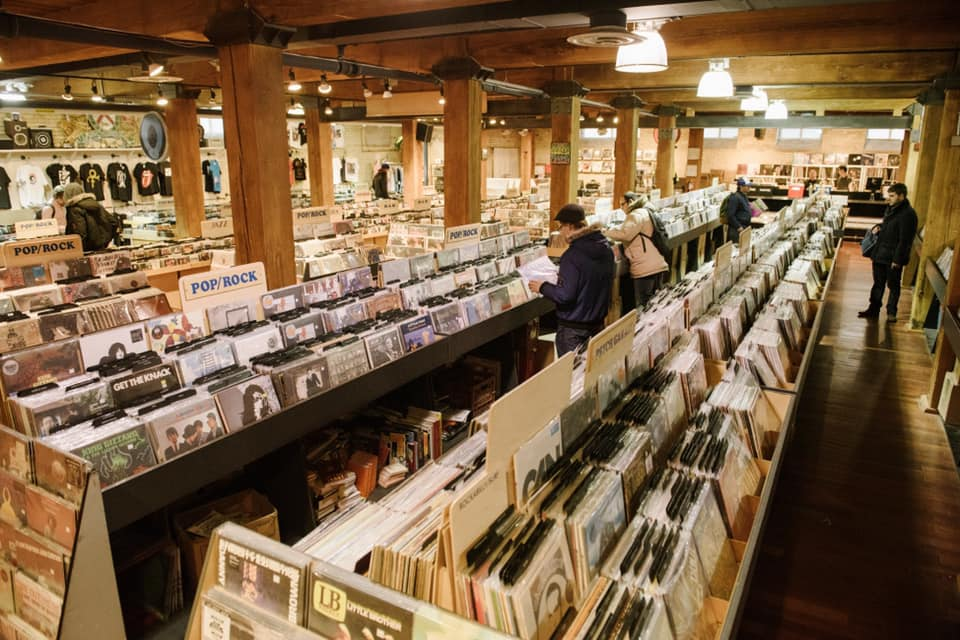
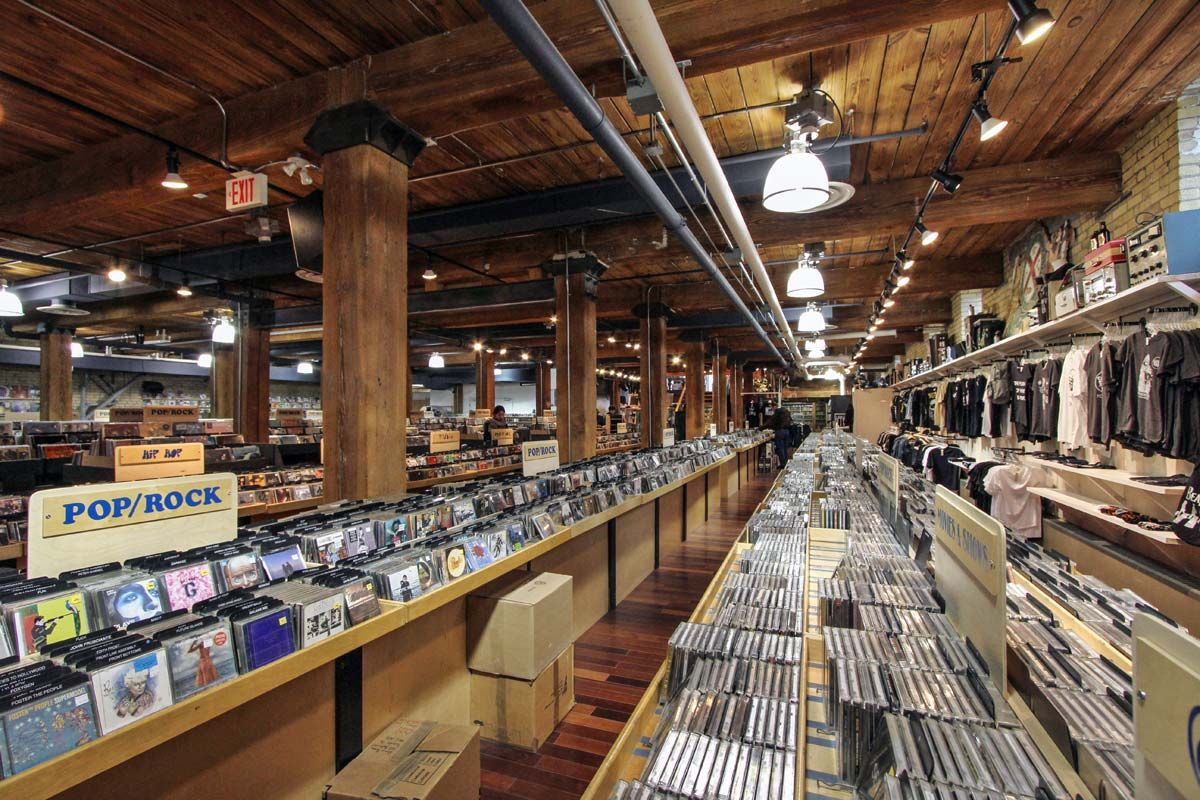
Today, the store spans approximately 13,000 square feet across two levels in a former warehouse building. The main floor features new releases, turntables, and curated merchandise, while the lower level houses an extensive used inventory often described as a maze-like browsing experience.
The scale is unusual for an independent retailer in this category, and it has helped position Sonic Boom as a destination for both locals and visitors.
A Retail Model Built on Discovery
At the core of Sonic Boom’s success is a merchandising strategy that encourages exploration.
Hundreds of new items are added to the floor daily, creating what Barber describes as a “thrill-of-the-hunt” environment. Customers return frequently, knowing that inventory is constantly changing.
That approach aligns with broader shifts in consumer behaviour. While digital platforms offer convenience, they lack the tactile and exploratory elements that physical retail can provide.
Barber believes this dynamic is central to vinyl’s resurgence.
“I don’t think it’s about sound quality,” he said. “It’s more about a technological backlash. People want something tactile, something to collect. It’s a more mindful process, like pouring a glass of wine and taking the time to enjoy it.”
That perspective reflects a growing segment of consumers seeking experiences that contrast with digital consumption. The act of browsing, selecting, and playing a record has become part of the appeal.
Vinyl’s Return and New Consumer Demand
The resurgence of vinyl has been underway for more than a decade, with growth accelerating during the pandemic as consumers spent more time at home.
Sonic Boom’s online store launched in 2019, just months before COVID-19 lockdowns. The timing allowed the business to maintain sales while stores were closed, even as demand for physical media increased.
“We had a couple of months to get our feet wet online, and then when the pandemic hit, people started building record collections again,” Barber said.
At the same time, sales of turntables and audio equipment have continued to rise, signalling new entrants into the category.
“If people are buying turntables, they’re buying records,” Barber said. “That’s an indicator that there’s still a lot of runway ahead.”
Interestingly, growth has not been limited to vinyl. Sonic Boom has also seen a resurgence in CD sales, particularly among younger consumers seeking more affordable physical formats.
“It’s kids buying CDs,” Barber said. “They want to own something. They might not be able to afford vinyl, so they buy a CD and a Discman instead.”
Building a Destination Through Experience
While product remains central, Sonic Boom has increasingly positioned itself as a place to spend time, not just transact.
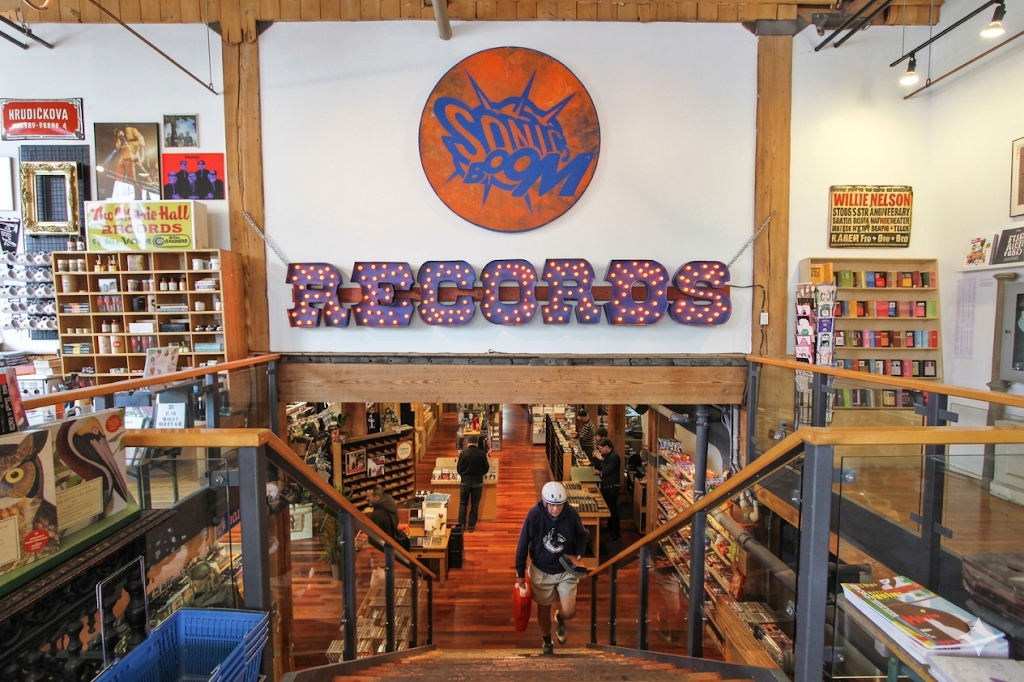
The store hosts regular in-store performances, artist signings, and listening events tied to new releases. It has also introduced experiential elements such as a photo booth and a custom-built “PhonoMat” machine that dispenses random records.
“It’s a cultural gathering point,” Barber said. “We want people to come in and spend time here.”
The approach has broadened the store’s audience. Prior to the pandemic, Sonic Boom’s customer base skewed older and male. In recent years, it has become younger and more diverse, reflecting a wider appeal for physical media and music culture.
Tourism has also become a meaningful driver, with visitors from across Canada and internationally drawn to the store’s scale and reputation.
A Challenging Business Despite Momentum
Despite renewed interest in physical formats, the business remains complex.
Physical media still represents a relatively small share of overall music consumption, and operating costs in Toronto continue to rise.
“It’s still a difficult business,” Barber said. “Margins aren’t great, and overhead is extremely high. Rent and payroll in a city like Toronto make it challenging.”
That reality has limited expansion. While some independent record stores have opened in recent years, others have closed, underscoring the delicate balance required to operate successfully in the category.
Reflecting on 25 Years
As Sonic Boom approaches its 25th anniversary, Barber describes the milestone as a moment of reflection.
“There’s a lot of satisfaction and a lot of gratitude,” he said. “I never could have imagined where we’d be today.”
The anniversary will be marked with a live music event on May 9 at St. Anne’s Parish Hall, bringing together a lineup of Canadian artists in a celebration of the store’s role in the city’s music community.
For Barber, the future remains uncertain, as it was when he first opened the business in 2001.
“I can’t claim to know what tomorrow holds,” he said. “But I’m excited for whatever comes next.”