

Hundreds of people gathered outside TM Wander at Tsawwassen Mills on May 30 as opening-day celebrations unfolded in front of the venue’s main entrance.
Representatives from Tsawwassen First Nation joined Ruby Liu and members of the Central Walk team for speeches before lion and dragon dances energized the crowd gathered outside. Applause and cheers followed as a ribbon was cut and the TM Wander sign was unveiled above the entrance.
Then came the moment many had been waiting for.
When organizers announced that TM Wander was officially open, visitors quickly flowed into the venue. Some headed directly toward food vendors while others stopped to photograph displays and visual installations near the entrance.
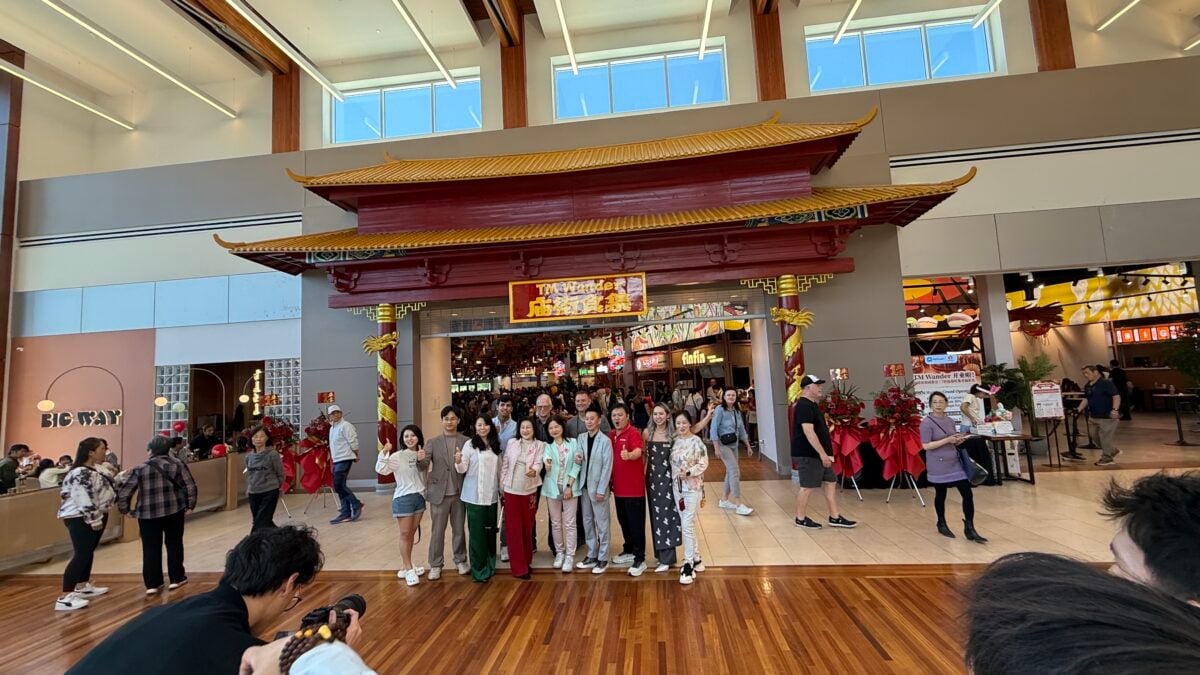
Food vendors attracted immediate lineups while guests spread throughout the venue exploring marketplace stalls, entertainment areas, family attractions, and seating zones. Retail Insider attended the opening and observed strong crowds throughout the day as visitors sampled food offerings, watched performances, took photos, and spent time with family and friends.
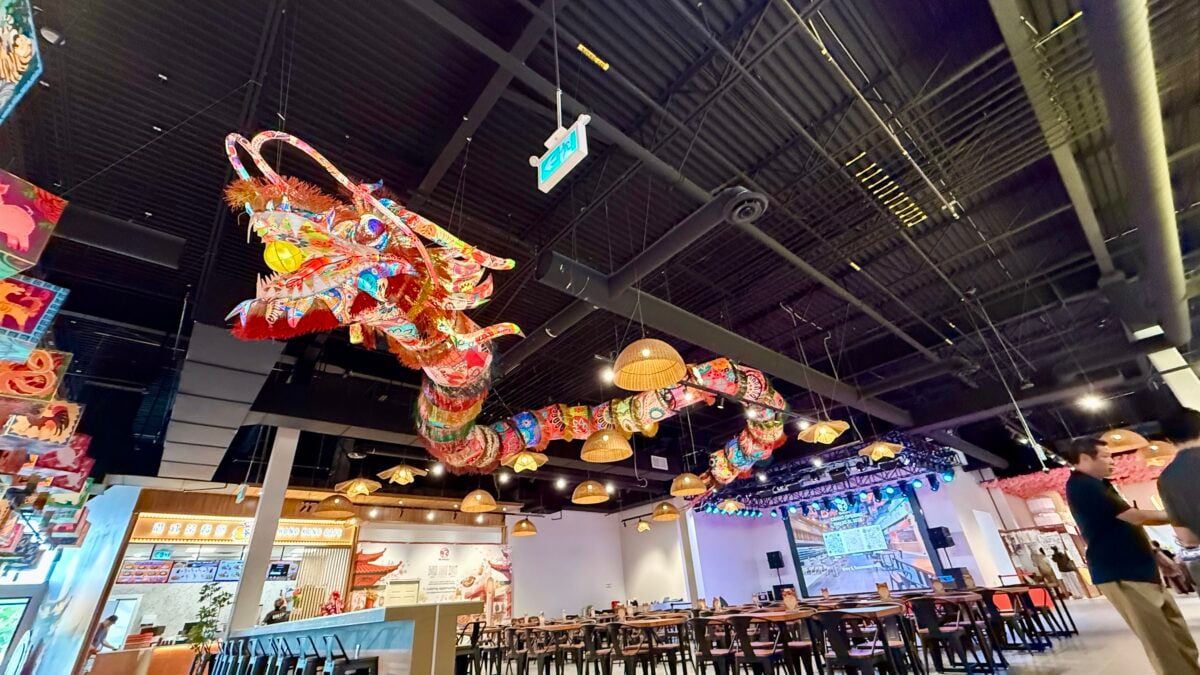
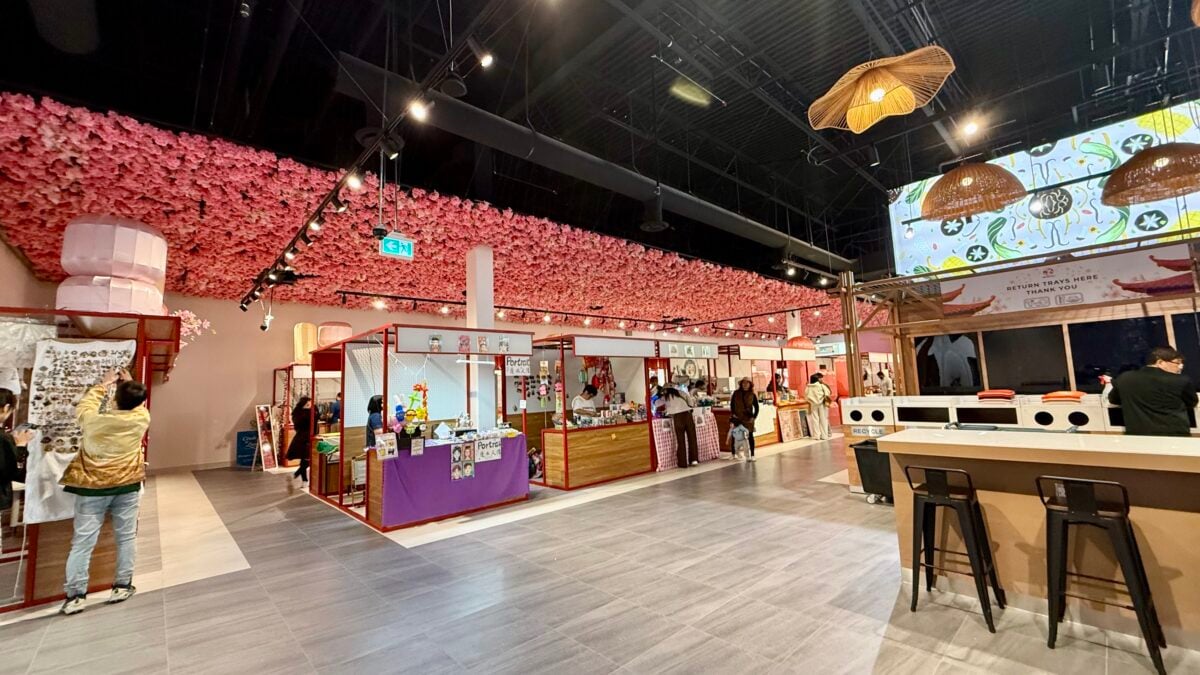
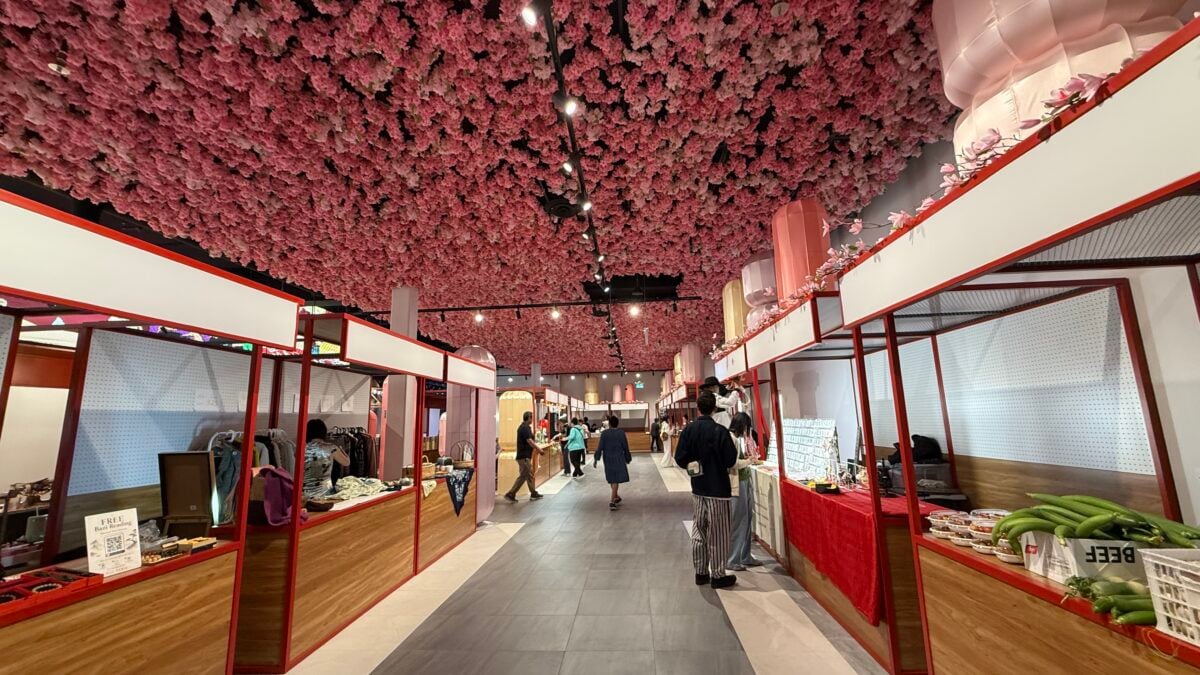
Many stopped to photograph the giant suspended dragon hanging above the main seating area. Others gathered beneath a canopy of thousands of flowers suspended above part of the marketplace, one of the venue’s most visually striking features. Visitors repeatedly stopped beneath the installation throughout the day to take photos and videos while nearby seating areas, food vendors, and marketplace stalls remained busy.
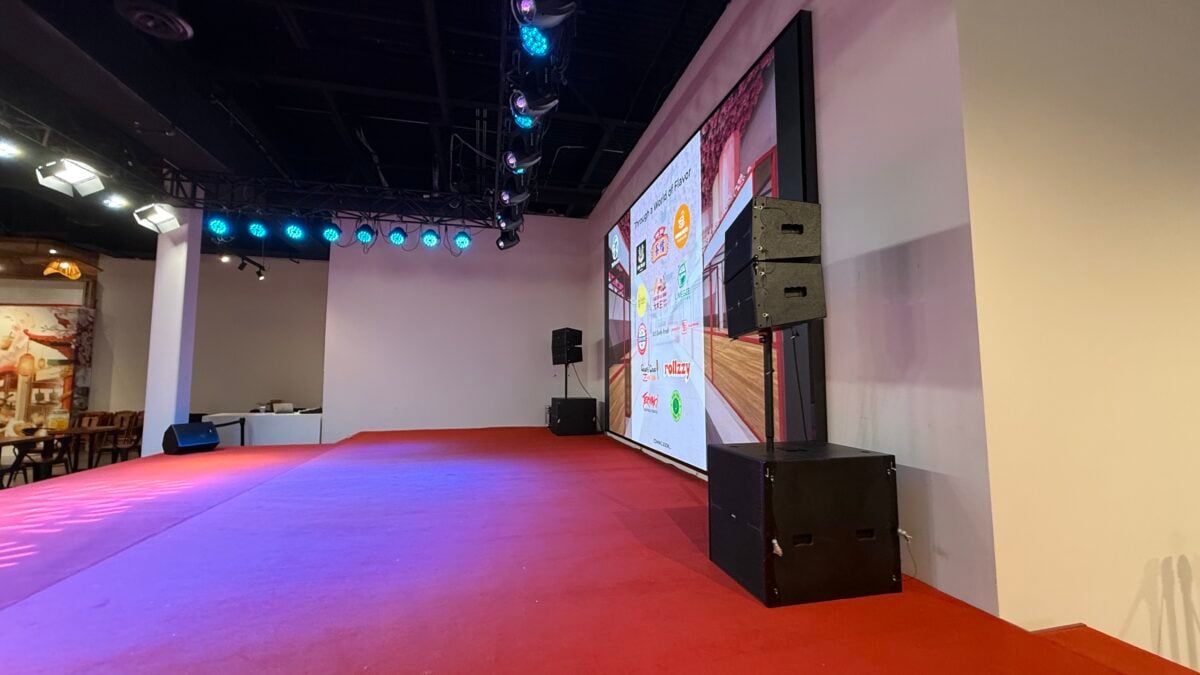
Stage performances drew audiences throughout the day while families occupied tables across the venue.
The opening marked the public debut of a project developed by Ruby Liu and her company, Central Walk, which owns Tsawwassen Mills, Mayfair Shopping Centre in Victoria, and Woodgrove Centre in Nanaimo.
Liu became one of the most closely watched figures in Canadian retail during 2025 through her efforts to acquire former Hudson’s Bay locations across the country. The proposal generated national attention and sparked discussion about the future of large retail spaces in Canada.
The opening also marked one of Liu’s most detailed public discussions about her Canadian retail ambitions since the Hudson’s Bay proceedings concluded in 2025.
In written responses provided to Retail Insider and translated from Mandarin, Liu discussed the origins of TM Wander, the future of shopping centres, opportunities for entrepreneurs, potential expansion plans, and why she continues to view Canada as an important market for growth.
“What made me happiest, however, was seeing people stay,” Liu said. “Visitors were not simply coming to eat and leave. They were taking photos, socializing, and spending extended periods of time in the space. That was exactly our vision from the beginning.”
The 24,000-square-foot venue combines elements of a food hall, marketplace, entertainment venue, family attraction, and cultural gathering space within a single environment.
For Liu, the opening represented more than the launch of a new venue. It was the public debut of an idea she has been refining for several years.
From Shopping Centre to Social Destination
Liu said TM Wander emerged from a simple observation.
“I noticed that traditional shopping centres were beginning to lose their rhythm,” she said. “Customers walk into many malls today and often find similar stores and similar experiences. I believe people no longer visit malls simply to shop. They are looking for unique experiences, memorable moments, and places where they can connect with others.”
At the same time, she saw growing demand for authentic Asian food, cultural experiences, and social gathering spaces.
“That led me to ask a simple question: What if we could bring all of these elements together and create a destination full of energy, culture, and character? That is how TM Wander was born.”
The result is a venue inspired by Asian night markets that combines food vendors, marketplace retail, entertainment programming, family attractions, and cultural elements.
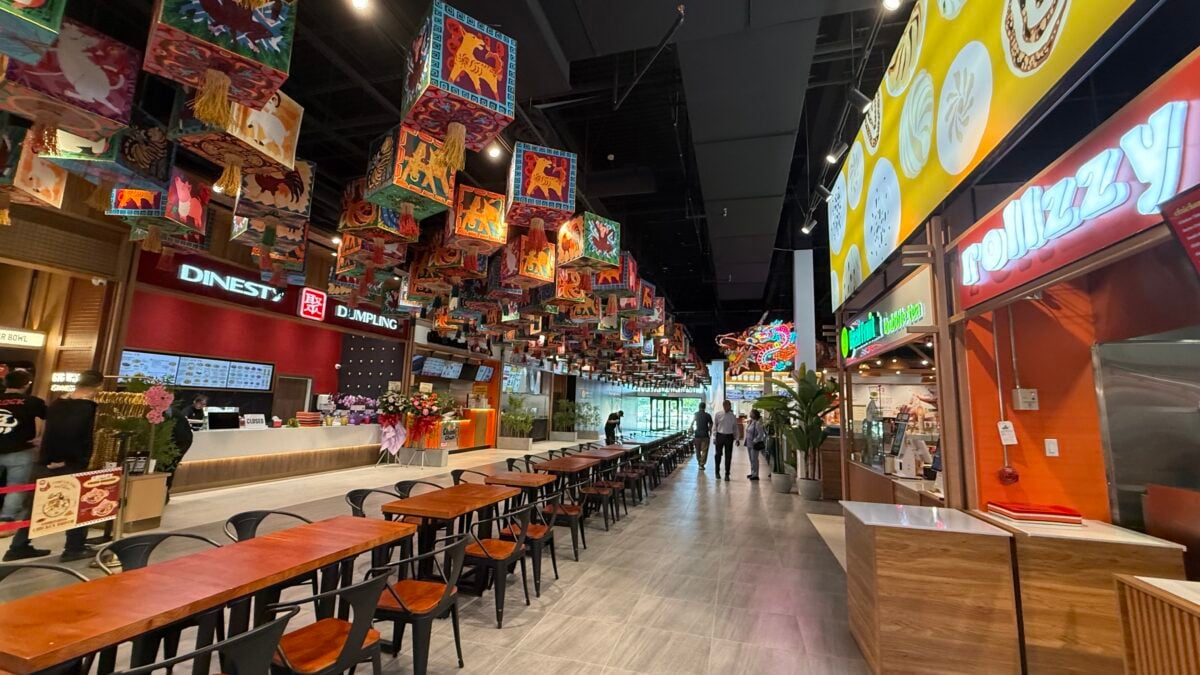
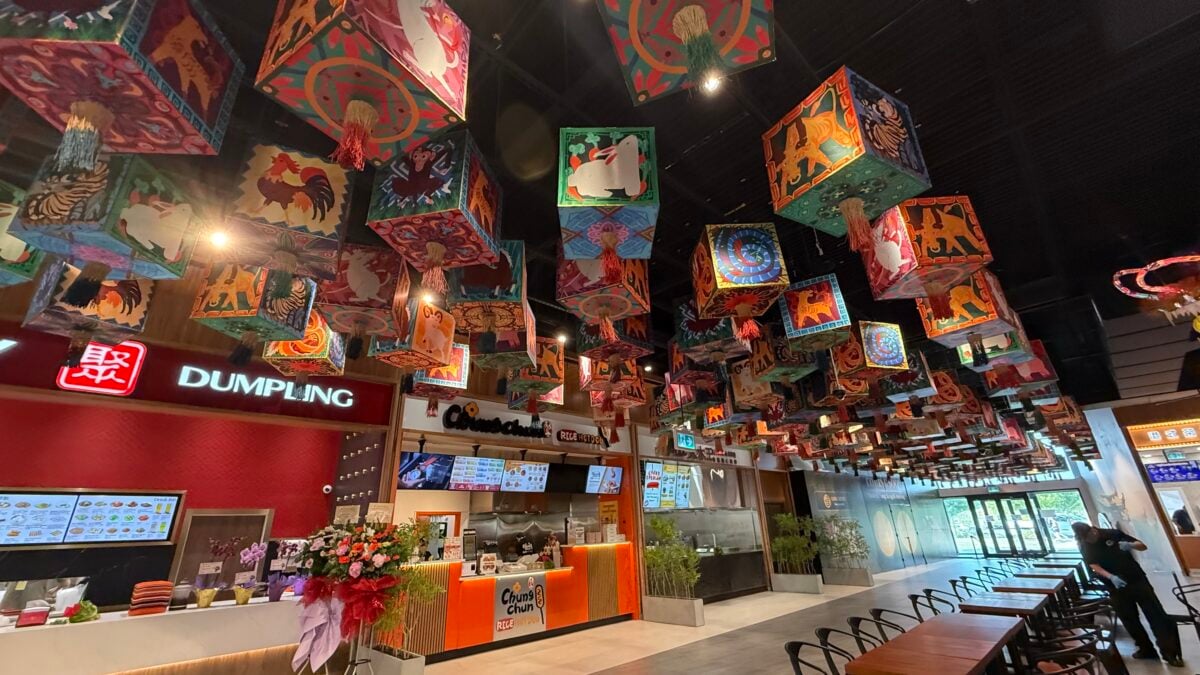
Visitors enter through a traditional Chinese-style gateway before moving into a space filled with lanterns, visual installations, food offerings, attractions, and entertainment. According to Liu, every detail was designed to create a strong visual impact.
“Our goal was to build a destination where visitors can immerse themselves in the atmosphere of an Asian night market while enjoying authentic food, culture, and entertainment.”
Retail Insider observed visitors spending extended periods of time exploring the venue. Some moved between food vendors and marketplace stalls, while others watched performances, photographed installations, or gathered with friends and family throughout the afternoon.
Why Tsawwassen Mills Became the First Location
Some observers questioned why Liu chose Tsawwassen Mills as the launch location for a project of this scale.
The shopping centre, which opened in 2016, sits outside Vancouver’s urban core and serves a broad regional trade area that includes Metro Vancouver, the Fraser Valley, Vancouver Island, and visitors travelling through the region.
For Liu, that made it the ideal place to test the concept.
“Many people would not consider Tsawwassen an obvious location for a concept like this,” she said. “The surrounding population is relatively small compared to major urban centres.”
However, Liu viewed that challenge as an opportunity.
“If a highly experiential concept can succeed in a market like Tsawwassen, it proves the model is fundamentally strong.”
She said Central Walk’s previous efforts to attract visitors from outside the centre’s immediate trade area through entertainment offerings and events helped build confidence that TM Wander could succeed at the property.
Opening-day crowds appeared to validate that decision.
Hundreds of people gathered outside before the official opening. Once the doors opened, food vendors quickly attracted lineups and guests spread throughout the venue. The atmosphere remained active throughout the afternoon as visitors moved between food operators, marketplace stalls, performances, attractions, and seating areas.
The response was stronger than Liu expected.
“The level of traffic exceeded our expectations,” she said. “We saw comments online describing the opening as packed and joking that parking was almost impossible to find.”
More importantly, she said, visitors stayed.
Underlying many of Liu’s comments is a belief that consumers remain willing to travel for experiences they view as unique.
She argues that convenience alone is no longer enough. Food, entertainment, family activities, social interaction, and memorable environments can motivate people to spend both time and money visiting a location.
That belief influenced the decision to launch TM Wander at Tsawwassen Mills and continues to shape Central Walk’s broader strategy.
Supporting Entrepreneurs and Local Businesses
While TM Wander’s visual elements and food offerings attract attention, Liu said supporting local entrepreneurs is one of the project’s most important goals.
“Supporting local businesses is at the heart of TM Wander,” she said.
Alongside established operators, the venue includes space for local entrepreneurs and emerging brands. Liu said smaller businesses bring authenticity, creativity, and passion while helping create a constantly evolving mix of offerings.
She also believes the venue’s combination of dining, entertainment, and family attractions creates opportunities for entrepreneurs that may not exist in more traditional retail environments.
“Our adjacent children’s attractions also generate family traffic, which naturally benefits smaller operators,” she said.
The model is intended to provide an accessible platform where businesses can test concepts, build awareness, and grow.
“We believe a healthy commercial ecosystem needs both large trees and small grass.”
For Central Walk, the goal extends beyond filling vendor space. Liu said she hopes the venue can become a platform where entrepreneurs can refine concepts, build customer bases, and eventually expand into larger operations.
Designed for Families and Social Experiences
Liu said TM Wander was designed with several customer groups in mind, particularly younger consumers and families.
She believes younger visitors increasingly seek experiences that can be shared, photographed, and remembered. That thinking influenced many of the venue’s most recognizable features, including the suspended dragon, lantern displays, dramatic entrance elements, and other visual installations throughout the space.
The emphasis on visual design was evident throughout opening day. Visitors regularly stopped to take photos and videos, particularly beneath the flower canopy and around the dragon installation.
Families represent another important audience.
Liu said many parents are looking for places where adults can relax while children remain entertained nearby. TM Wander’s children’s amusement area and Minions-themed attractions were designed with that in mind.
Throughout opening day, families were highly visible throughout the venue. Children moved between attractions while parents watched performances, explored food vendors, and gathered at tables with friends and relatives.
The mix of activities is intended to encourage longer visits and repeat visitation.
That focus on dwell time was reflected in Liu’s comments throughout the interview and echoed what Retail Insider observed during the opening, where many guests remained at the venue long after they had finished eating or shopping.
Themes Discussed During the Hudson’s Bay Pursuit Reappear at TM Wander
Retail Insider first interviewed Liu in the spring of 2025 as she pursued former Hudson’s Bay locations across Canada.
The proposal generated significant industry attention and introduced many in the Canadian retail industry to Liu and Central Walk for the first time.
While the Hudson’s Bay opportunity ultimately did not proceed, several themes Liu discussed during that period are now visible throughout TM Wander.
At the time, Liu frequently spoke about the need for retail properties to offer more than shopping alone. Food, entertainment, family attractions, social gathering spaces, and reasons for people to spend more time within a property were recurring themes in those conversations.
Many of those same ideas appear throughout TM Wander today.
Food vendors operate alongside marketplace retailers, children’s attractions, entertainment programming, cultural elements, and public gathering spaces. Rather than focusing on a single activity, the venue was designed to encourage visitors to spend time exploring different parts of the environment during a single visit.
While TM Wander differs significantly from the large-format department store properties involved in the Hudson’s Bay process, it provides one of the clearest examples yet of how Liu believes retail properties can evolve as consumer expectations continue to change.
“The core vision has not changed,” Liu said. “We still believe retail must evolve from cold shopping into vibrant lifestyle destinations.”
Central Walk’s Growing Presence in British Columbia
While Liu attracted national attention through her pursuit of former Hudson’s Bay locations, Central Walk has spent several years building a shopping-centre portfolio in British Columbia.
The company’s holdings stretch from Metro Vancouver to Vancouver Island and include Tsawwassen Mills, Mayfair Shopping Centre in Victoria, and Woodgrove Centre in Nanaimo.
The company has spent the past several years investing in those properties through new retailers, attractions, food offerings, entertainment initiatives, and capital improvements intended to increase visitation and broaden their appeal.
TM Wander represents one of the most visible examples of that strategy to date.
According to Liu, shopping centres can no longer rely solely on traditional traffic drivers. She believes future growth will come from creating environments that give people reasons to visit beyond shopping alone.
While Liu maintained a lower public profile following the Hudson’s Bay proceedings, she continued overseeing Central Walk’s British Columbia operations and broader investment activities.
The opening of TM Wander provided one of her most detailed public discussions about Canada since that process concluded.
Canada Remains a Priority
While TM Wander was the focus of the opening, Liu’s comments also provided insight into how she views the future of Central Walk in Canada.
Despite the unsuccessful pursuit of former Hudson’s Bay locations in 2025, Liu said Canada remains a priority.
“Canada remains a long-term strategic market for both Central Walk and myself personally,” she said.
Liu indicated that expansion opportunities remain under consideration.
“We are actively exploring opportunities including acquiring underperforming but well-located shopping centres.”
She also pointed to development partnerships and investments in entertainment concepts that could strengthen Central Walk’s broader portfolio.
No acquisition was announced during the interview, and Liu did not identify specific properties currently under consideration.
However, Retail Insider has learned from a representative connected to Central Walk that the Greater Toronto Area could become a priority market should the right shopping-centre acquisition opportunity emerge.
No specific property was identified, though the comments suggest Ontario remains part of the company’s long-term thinking.
“Our investment philosophy remains consistent: create places where people genuinely want to spend time and return repeatedly,” Liu said.
TM Wander Expansion Already Being Evaluated
The opening at Tsawwassen Mills may represent only the beginning for TM Wander.
Liu confirmed that Central Walk is already evaluating opportunities to incorporate elements of the project into additional properties.
“The success of TM Wander at Tsawwassen Mills demonstrates that consumers are willing to travel for compelling experiences, even outside major downtown markets,” she said.
“We are already evaluating opportunities to integrate TM Wander components into other Central Walk properties, particularly those with large underutilized spaces.”
According to Liu, the model can be adapted to a variety of formats and markets.
The company has not announced any additional TM Wander locations. However, Liu’s comments suggest that expansion remains under active consideration.
Looking ahead five years, she said she hopes TM Wander will become one of Canada’s leading experiential retail brands, with locations in major markets including Vancouver, Toronto, and Calgary.
For Liu, the long-term goal extends beyond opening additional locations.
“In my broader vision for Canadian retail, TM Wander serves as a proof of concept,” she said. “It demonstrates that when food, culture, entertainment, and community are thoughtfully combined, retail spaces can once again become the beating heart of the community.”
Looking Ahead
The opening of TM Wander provided the first public look at a project that Liu and Central Walk have spent several years developing.
It also offered one of the clearest indications yet of how Liu views the future of shopping centres and retail destinations in Canada.
Throughout opening day, the venue remained busy. Food vendors attracted lineups, stage performances drew crowds, families moved between attractions, and visitors gathered beneath the flower canopy and around the dragon installation to take photos and videos.
More than a year after first attracting national attention through her pursuit of former Hudson’s Bay locations, Liu now has a tangible example of how she believes retail properties can evolve.
For now, that example is located at Tsawwassen Mills.
The opening-day response suggests consumers are willing to embrace the type of environment she has been describing for more than a year.
Whether TM Wander ultimately expands to additional markets remains to be seen. However, Liu’s comments make clear that both the project and Central Walk’s broader ambitions in Canada continue to evolve.












Retail does need to evolve. But “experiential” can’t simply mean adding tacky stuff to spaces that lack design integrity. The best retail environments have a strong sense of place, material richness, humanity and delight. They make you want to stay. From what I see, this feels less like a bold reinvention and more like a collection of gimmicks wrapped in an ambitious narrative. Perhaps the many landlords who declined these proposals saw the same disconnect.
Happy to be surprised if the execution catches up to the rhetoric.