Canadian wellness brand Sleep Protein is expanding its physical retail presence through a major rollout across Loblaw banners, giving the young company national exposure as it looks to establish a niche spanning sports nutrition, wellness and sleep.
Founded by longtime sports-nutrition executive Marc Boudreau and operated under Forewinds Inc., Sleep Protein has developed a melatonin-free nighttime nutritional shake combining slow-release protein with ingredients associated with relaxation and sleep support. The brand is now available at 332 locations across Canada, spanning a range of Loblaw-owned banners.
The rollout represents a significant transition for a brand that until recently was largely discovered online. It also marks a new chapter for Boudreau, who spent more than 15 years working in sports nutrition, functional wellness and consumer packaged goods before deciding to build a brand of his own.
From Building Other Brands to His Own
Boudreau’s background spans senior leadership, brand strategy, product development, regulatory requirements and retail distribution. Over time, he said he began seeing an opportunity that much of the sports-nutrition industry had overlooked.
“For years, the sports nutrition and functional wellness industries have been completely obsessed with the waking hours: energy drinks, high-stimulant pre-workouts, and daytime meal replacements,” Boudreau told Retail Insider.
He began considering whether there was room for a nutritional product designed specifically around the hours consumers spend sleeping and recovering. The idea became more personal after Boudreau and his wife, Jenn, had their first child.
“Suddenly, broken sleep and exhaustion were no longer theoretical wellness concepts; they were our daily reality,” he said.
The couple began looking at products already available across the sleep and sports-nutrition categories. Boudreau believed there was room between the two for a product incorporating protein while also being formulated around relaxation and sleep support. Having spent years helping develop and scale products for other companies, he decided to build one himself.
“Jenn and I decided to stop searching for an answer and build one ourselves,” he said.
Developing Sleep Protein
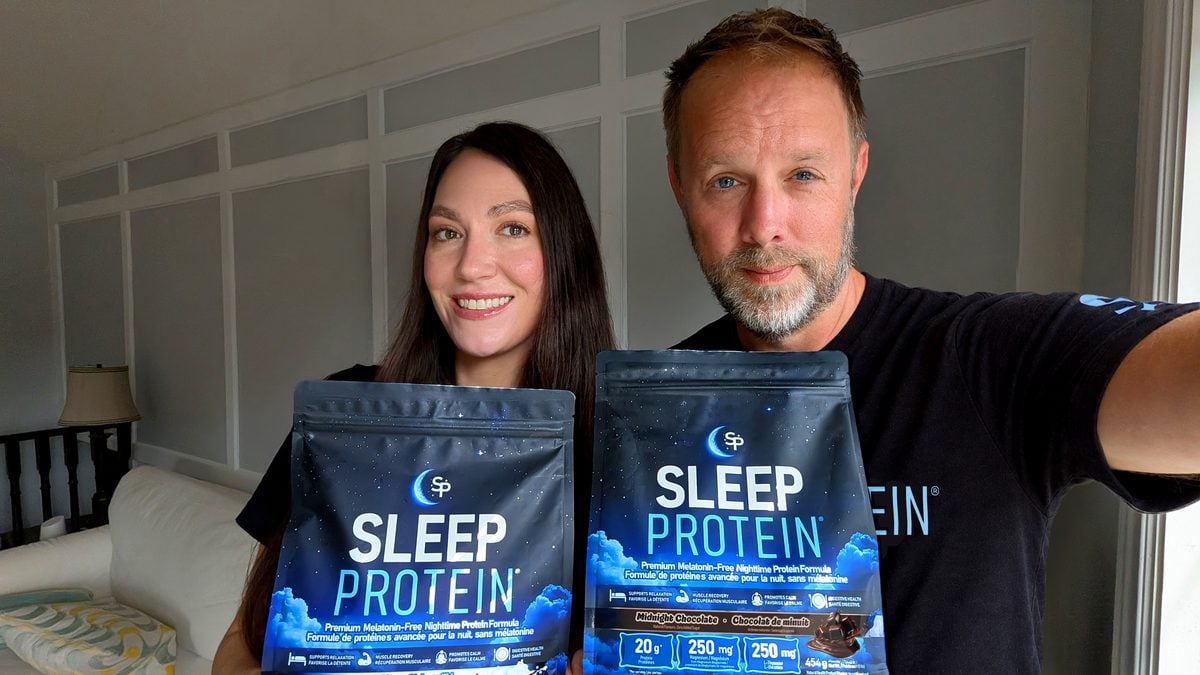
Made in Woodstock, Ontario, Sleep Protein is sold in Midnight Chocolate and Vanilla Sky flavours and contains 20 grams of protein per serving. Its formulation also includes magnesium, L-tryptophan, 5-HTP, GABA, L-theanine, zinc and vitamin B6.
Sleep Protein does not contain melatonin, a decision Boudreau said was fundamental to the concept from the outset. Rather than positioning the product strictly as another protein powder or conventional sleep product, he describes the emerging space as “Nighttime Nutritional Recovery.”
Bringing the formulation to market involved a lengthy Canadian regulatory process. Sleep Protein received Natural Product Number 80147681 from Health Canada in March 2026, with the active licence held by Forewinds Inc.
Health Canada’s authorized uses include helping temporarily promote relaxation and helping relieve sleep disturbances associated with mood imbalance. Its protein content also helps build and repair body tissues, among other authorized nutritional uses.
Boudreau said the licensing process took more than 400 days as the company worked through regulatory review and supporting documentation. For a young brand seeking wider retail distribution, securing the licence provided an important foundation for the next phase of the business.
Loblaw Rollout Marks a Turning Point
That next phase is now taking place in physical stores. Boudreau said the Loblaw relationship developed amid growing retailer attention to protein consumption and consumer interest in sleep, stress and wellness.
“Securing a national rollout across Loblaw banners is a transformational milestone,” Boudreau said. “It validates the brand on Canada’s largest retail stage and transitions us from an online discovery product into an accessible household staple.”
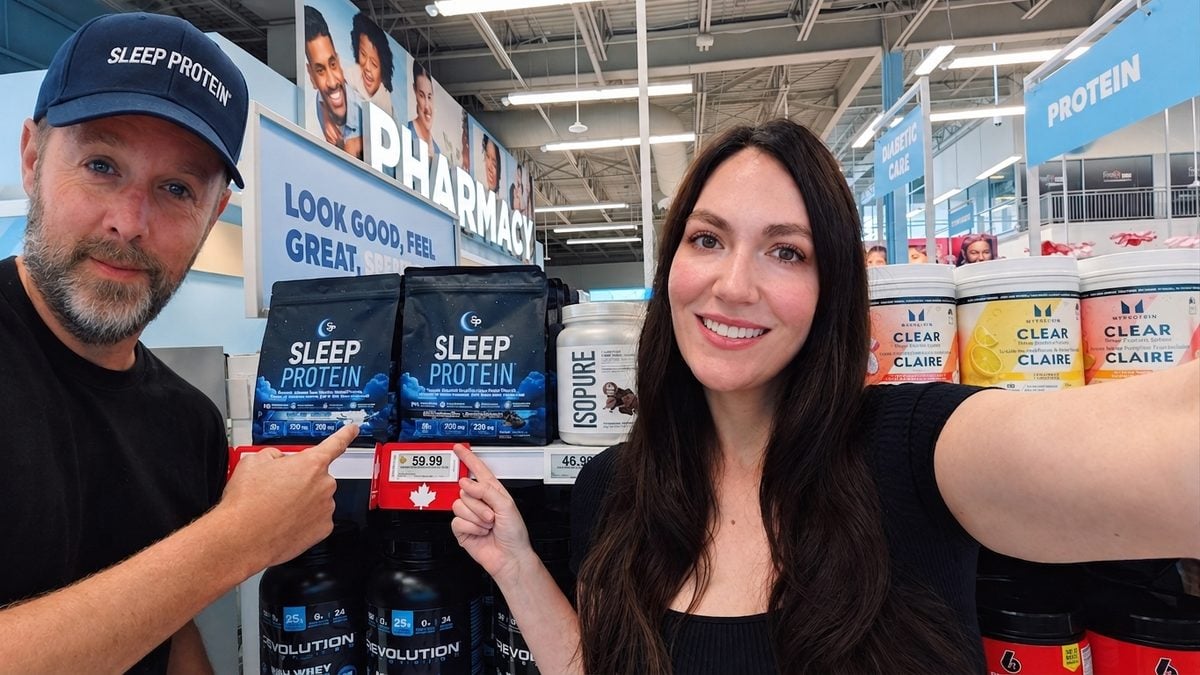
Sleep Protein is now available at over 300 locations across Canada. Boudreau identified Real Canadian Superstore, Zehrs, Dominion and Loblaws among the banners carrying the product, with distribution extending across a broader selection of Loblaw-owned banners. The company is looking to expand into additional corporate stores and regional banners as it builds sales.
Western Impact Distribution is supporting the physical rollout, helping move the product into hundreds of retail locations. With distribution secured, Boudreau said the immediate focus is on consumer education, shelf velocity and in-store movement, an important next step for a product that does not fit neatly into a single established retail category.
Finding a Place on the Shelf
Sleep Protein shares characteristics with conventional protein supplements, but its nighttime positioning also places it within the broader health and wellness market. Boudreau said it is primarily being merchandised within natural health, wellness and functional-nutrition sets, although placement can vary by retailer and location.
He sees that overlap as an opportunity to establish a recognizable subcategory around nighttime nutritional recovery.
“We bridge the gap between active sports nutrition and sleep hygiene,” he said.
The positioning could also help Sleep Protein reach beyond the traditional sports-nutrition customer. Boudreau said the company initially expected its core audience to consist largely of athletes, gym-goers and consumers already accustomed to tracking protein intake and physical recovery.
Instead, Boudreau said the customer base has broadened to include working parents, busy professionals, shift workers and wellness-oriented consumers over 35. Those observations are based on the company’s experience with its customers rather than broader market data, but the shift is influencing how Boudreau thinks about future distribution.
Consumers are also developing different routines around the product, he said. Some drink it cold before bed, while others mix it with warm almond milk as an evening drink, moving the consumption occasion beyond the conventional protein-shake routine.
Building Beyond the Initial Retail Rollout
Sleep Protein launched with Midnight Chocolate and Vanilla Sky, but Boudreau is already considering how the assortment could expand. Seasonal flavours and single-serve travel stick packs are being evaluated, while the company is also exploring complementary products associated with nighttime wellness, including Sleep Stripz nasal dilators.
The plans point to an effort to build a broader business around the Sleep Protein name instead of relying indefinitely on two flavours of powdered supplement. New products, however, are only one part of the growth strategy. Boudreau identified pharmacy banners and premium natural-health retailers as immediate Canadian targets, potentially putting the brand in front of consumers outside the traditional sports-nutrition channel.
For now, the priority remains the grocery rollout. Getting onto hundreds of shelves provides national visibility, but maintaining and expanding that distribution will depend on consumer demand and sales performance at the store level.
U.S. Market on the Longer-Term Roadmap
International expansion is also under consideration. Sleep Protein is available through iHerb, providing an e-commerce route to consumers outside Canada, while Boudreau sees the United States as a significant longer-term opportunity.
His strategy is to establish the company’s Canadian brick-and-mortar business first and use online sales information, including data generated through iHerb, to identify areas of concentrated demand before pursuing broader U.S. omnichannel distribution.
“Our goal is for Sleep Protein to become the definitive global brand in nighttime recovery,” Boudreau said.
That is a considerable ambition for a company only now entering a much larger phase of physical retail distribution. The more immediate question is whether Sleep Protein can turn its unusual positioning into sustained sales across hundreds of Canadian stores.
For Boudreau, the rollout also brings his career full circle. After more than 15 years spent helping develop and scale products for other businesses, he is now applying that experience to a brand of his own, testing whether an overlooked consumption occasion can support a new Canadian wellness category.