Jollibee believes Canada could eventually support hundreds of restaurants as the fast-food chain accelerates expansion through franchising while continuing to develop company-owned locations.
The company currently operates 28 restaurants in Canada and has another 26 committed through multi-unit franchise development agreements in British Columbia and the Edmonton market. Peter Wright, Vice President of Franchise Development for Jollibee Group North America, told Retail Insider that longer-term modelling points to a Canadian network substantially larger than what exists today.
“It’s certainly over a hundred stores,” Wright said. “It could be 300 over time.”
The figure is not a formal development target. Jollibee uses site analytics and performance data from existing restaurants to identify trade areas, with estimates evolving as the network grows and the company accumulates more Canadian operating data.
A 16-restaurant development agreement in British Columbia follows a separate 10-store agreement for the Edmonton market. If all 26 committed restaurants are developed and the existing network remains in place, Jollibee expects to reach 54 Canadian locations over the next five years.

Canadian Restaurants Generate Strong Volumes
Jollibee’s existing Canadian restaurants are producing average annual sales approaching or exceeding $5 million, according to Wright.
Freestanding restaurants average approximately $4.9 million in annual unit volume, while inline locations, including restaurants in shopping centres, average approximately $5.4 million. Wright confirmed the figures are in Canadian dollars.
“It’s a very strong AUV,” he said.
Canadian performance is broadly comparable with Jollibee restaurants in the United States after accounting for the currency difference, according to Wright. He said U.S. locations average approximately US$5.1 million annually.
The company intends to continue opening corporate restaurants alongside its franchise pipeline.
“We’re starting from a base in Canada of 28 company-owned units, and we will continue to look for new company development in addition to franchise development,” Wright said.
Broader Customer Base Supports Franchising
Jollibee’s decision to accelerate franchising follows several years of growing adoption beyond the Filipino Canadian community that helped establish the brand in Canada.
Wright said Jollibee continues to have a strong share among Filipino consumers and also indexes highly with Asian populations, while the proportion of customers from the broader population has been increasing significantly year over year.
“Our goal is to win in the mainstream,” Wright said. “We think we’re a mainstream QSR. Everybody gets fried chicken.”
Growing acceptance in Canada and the United States helped convince the company that the time was right to begin franchising in North America. Jollibee Group already uses franchising extensively internationally, but the model is relatively new for its North American Jollibee operations.
Fried chicken accounts for more than 60 per cent of Jollibee sales, according to Wright. Sides, including Jolly Spaghetti, account for more than 11 per cent, while the company has also expanded its chicken offerings with products including nuggets and limited-time chicken sandwiches.
Major Canadian Markets Prioritized First
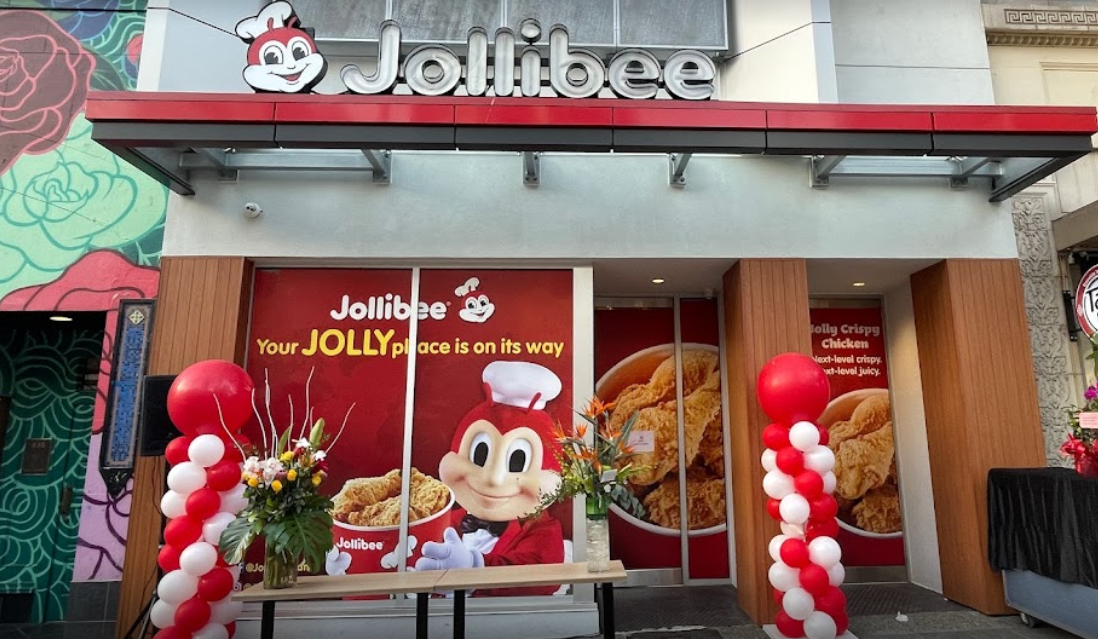
Jollibee is using a phased development strategy in Canada, concentrating initially on major markets before moving into secondary and tertiary locations.
Wright identified Toronto, Ottawa, Calgary, Edmonton and Vancouver while discussing the company’s priority markets. Population, consumer profiles and existing Jollibee infrastructure factor into development decisions.
Existing restaurants can serve as training locations for franchisees, while local operating teams provide support as franchised restaurants open. Increasing restaurant density also builds brand awareness and makes Jollibee more accessible to consumers who may initially treat a location as a destination.
“As your units grow and the brand becomes better known, it has other network benefits,” Wright said.
Quebec is on Jollibee’s radar but is not currently targeted for development, while Atlantic Canada is also not a current focus.
Site Selection Moving Beyond Ethnicity
Jollibee’s real estate analysis increasingly emphasizes consumer lifestyle profiles rather than relying primarily on the ethnic composition of individual trade areas.
“It’s less about ethnicity and more about lifestyle segments and income,” Wright said.
The company examines household income, family composition and other consumer characteristics using data from its existing restaurants. Wright identified families, younger consumers establishing themselves in urban markets, established couples and suburban households among the groups informing Jollibee’s real estate model.
The analysis will continue to evolve as a larger Canadian restaurant network provides more operating data.
Flexible Formats Widen Real Estate Options
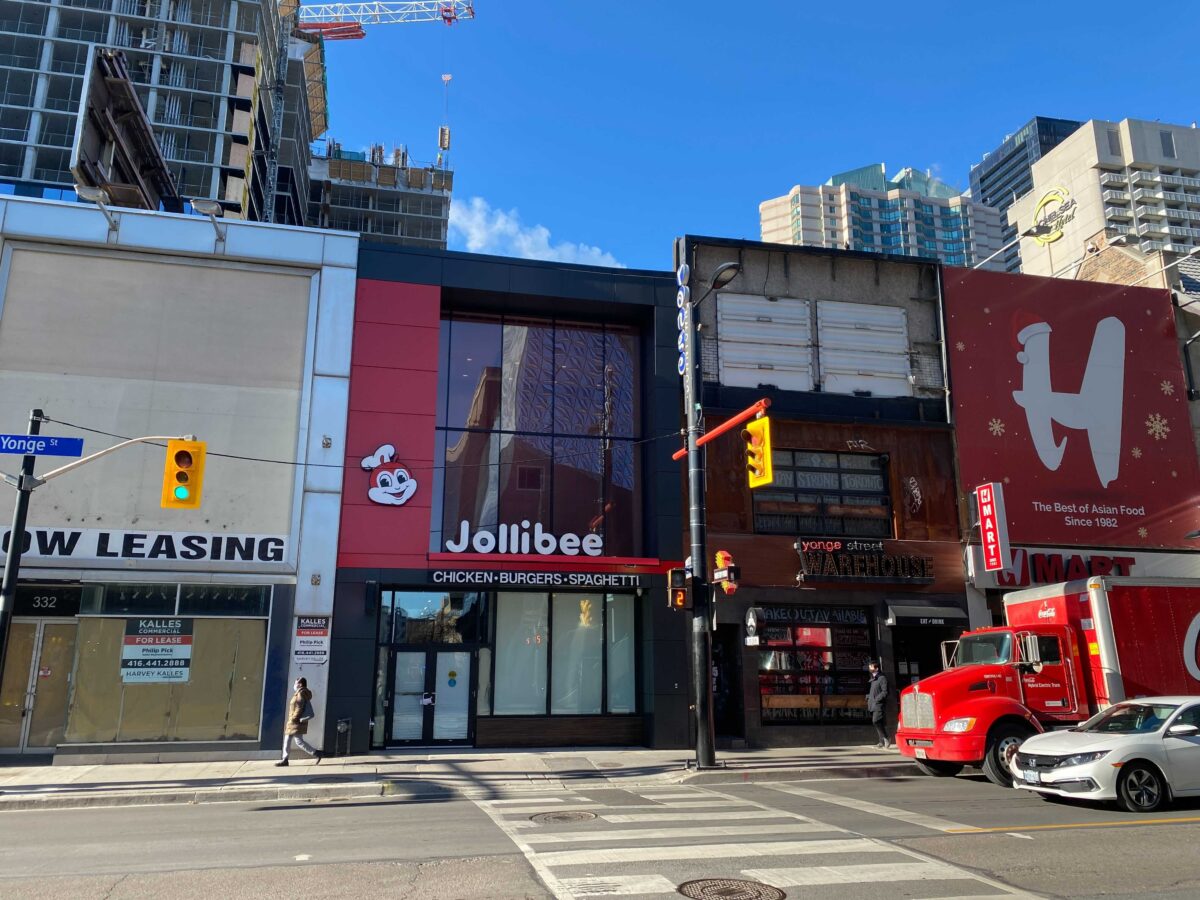
Jollibee can operate across mall food courts, urban inline locations, strip-centre end caps and freestanding restaurants. End-cap and freestanding locations can operate with or without drive-thrus, giving franchisees several options when developing multi-unit territories.
Wright pointed to a recently opened franchised restaurant near Sacramento, California, as an example. The restaurant occupies an end-cap-style location without a drive-thru but generated volumes strong enough that the franchisee quickly concluded it needed additional fryers and storage capacity.
The operator subsequently began discussions with the landlord about expanding the building.
“This has changed our view of real estate,” Wright recalled the franchisee telling him.
The performance broadened the operator’s view of potential sites beyond freestanding drive-thru restaurants. For Canadian franchisees committed to developing multiple restaurants within a territory, that flexibility increases the pool of viable real estate.
British Columbia Could Grow From Four Restaurants to 20
Jollibee currently operates four company-owned restaurants in British Columbia, with two in Vancouver and two in Surrey. Its new franchise agreement calls for another 16 restaurants over five years, potentially bringing the provincial network to 20.
The agreement was signed in July with an experienced multi-brand food retail operator. Individual restaurant locations have not been announced.
Wright told Retail Insider that the B.C. franchisee has multi-unit operating experience across several Canadian markets and is relocating with her family to Vancouver. She initially approached Jollibee about Edmonton, but that territory had already been awarded to another franchisee.
“We really like the franchisee we chose to work with,” Wright said. “We’re very optimistic about the opportunity in Canada.”
Jollibee opened its first Vancouver restaurant in 2022. Its Strawberry Hill location in Surrey subsequently became the chain’s 100th North American restaurant when it opened in 2024.
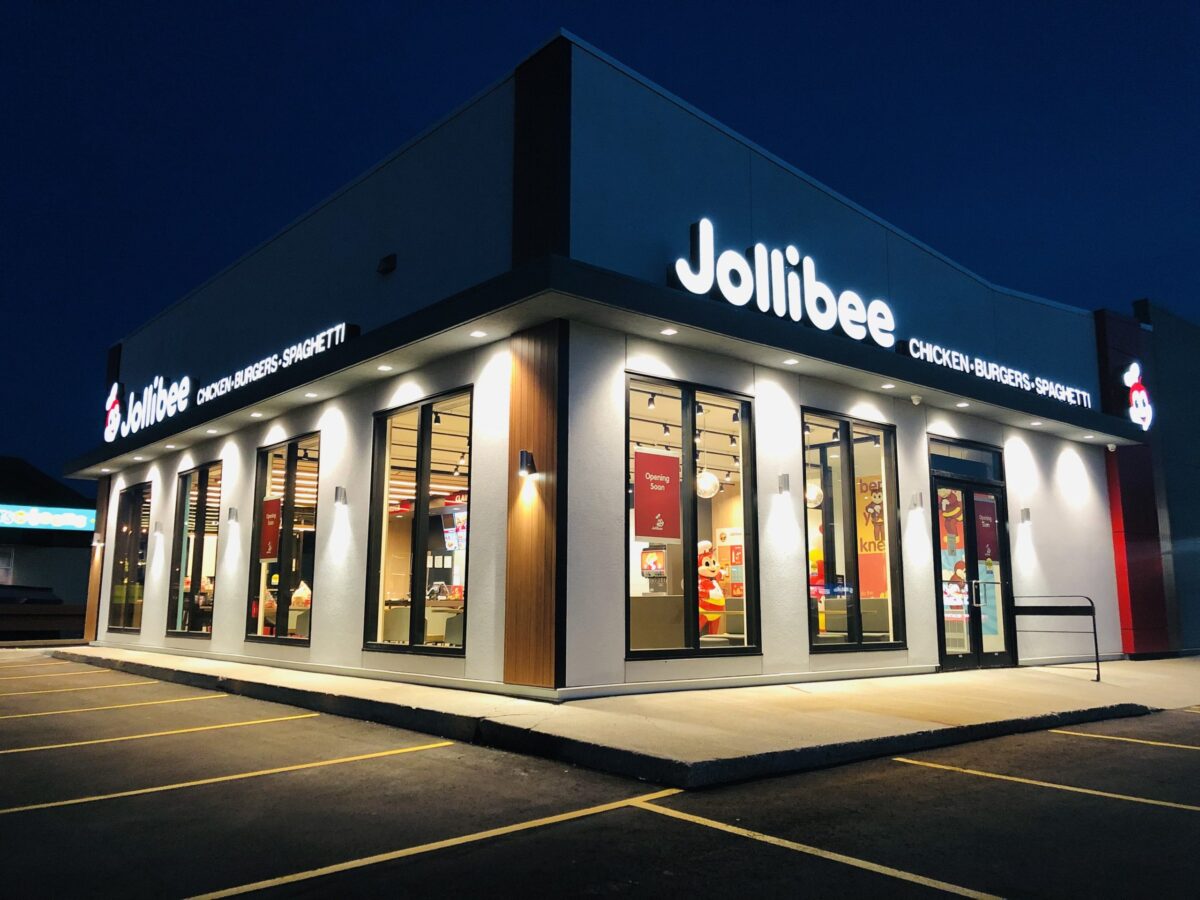
Edmonton Was First Canadian Franchise Agreement
Jollibee signed its Edmonton agreement in June, shortly before the B.C. deal, making Alberta the first market covered by its Canadian franchise development program.
The agreement calls for 10 restaurants in the Edmonton market. Jollibee currently operates four restaurants in Edmonton and eight across Alberta, with the remaining locations in Calgary and Red Deer.
Edmonton and B.C. have separate franchise operators. The multi-unit development agreements establish a territory, number of restaurants and opening schedule, with individual franchise agreements issued as each restaurant opens.
How Jollibee Gets From 54 Restaurants to Hundreds
Jollibee has been incorporating SiteWise analytics into its real estate modelling over the past several years, using historical restaurant performance and market data to identify promising trade areas.
Wright said the model continues to change as additional stores produce more data. Restaurant density and increasing brand awareness can also make sites viable that may not work earlier in a chain’s development.
He pointed to his previous experience at Starbucks, where a downtown Chicago site was rejected before being reconsidered approximately seven years later. By then, further development had strengthened the brand in the market and the location performed well.
“More units beget more opportunity,” Wright said.
That dynamic helps explain why Wright is reluctant to put a firm ceiling on Jollibee’s Canadian potential even as the company’s modelling points to more than 100 and potentially around 300 restaurants over time.
“For me, it’s not so much what the total number is,” Wright said. “It’s starting with what quality and smart development look like.”