

Food costs are always on consumers’ minds. Hard to blame them as they spend close to 10% of their budget on food. It is not the highest portion of their budget, but it is certainly an important one. However, given how the COVID-19 pandemic is affecting the global economy, we should all expect that 10% threshold to go way, way up in years to come.
For 2020, we should expect the food inflation rate in Canada to be at 4% by the time we are done with this year, if we ever get there. That is what Canada’s Food Price Report is predicting. Of course, 4% is a little more than the 20-year average, but it is not beyond being manageable. The challenge of course is the macroeconomic backdrop to the 4%.
The COVID-19 pandemic has caused a series of mind-bending distortions across world global markets. With the major economic slowdown ahead of us, analysts believe overall inflation will drop significantly. The COVID-19 crisis is essentially an extraordinary deflationary shock to the economy, causing the idling of a vast share of the world’s productive resources. The impact will almost surely persist beyond the period of widespread lockdowns. Everything will get cheaper, including energy, cars, and houses. No sector of the economy will be spared. A deflationary market is hard to avoid when so many have lost their jobs. But the food industry will likely be immune to all of this.
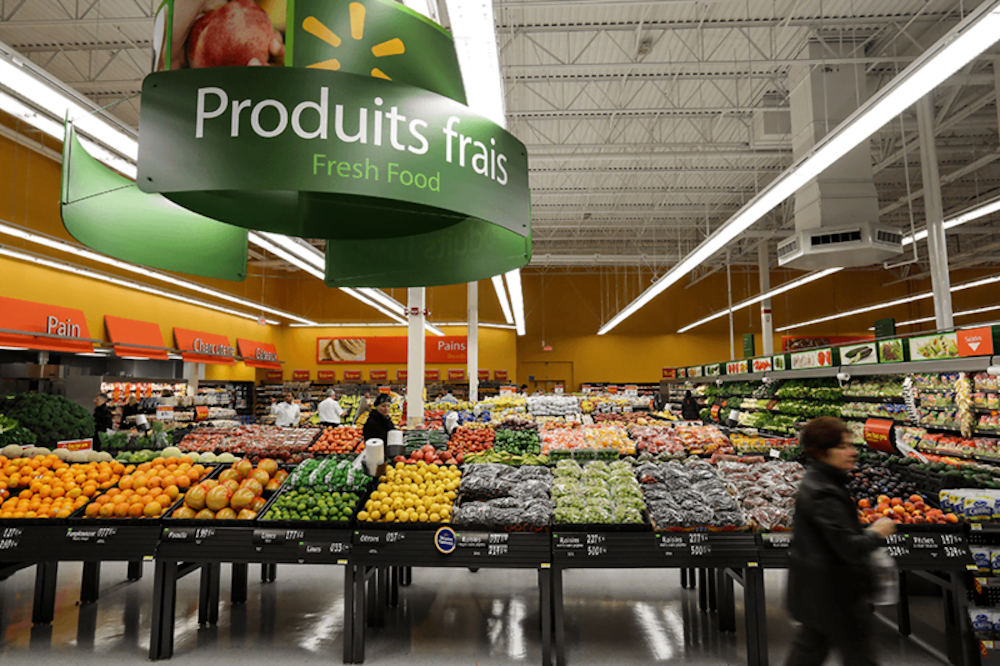
Consumers got comfortable with affordable, relatively cheap food over the last few decades. Globally, pre-COVID, Canadians had access to the 5th cheapest food basket in the world, relative to income. But as general inflation drops, food inflation will likely take quite a different path. A steep contrast, in fact. The food industry is seeing its costs skyrocket as costs of production are going up, way up, from farmgate to retail. Labour costs are going up as companies are trying to rotate personnel so they can physically distance from one another, and the costs of equipment and specialized machinery are also going up. We will start seeing “anti-virus” food packaging and other measures to reassure nervous consumers – again, costing more. Some pizza companies are already doing this.
Physical distancing is forcing most companies to operate differently. Grocery stores are spending on average 5% more to operate these days compared to pre-COVID. When margins are at 1%, something has got to give. We may see fewer stores, less choice, or higher prices. Given the high-volume, low-margin nature of the business, it will be impossible to see an entire supply chain absorb the COVID-19 mega-shock without seeing prices reaching new heights in years to come.
Even though we were getting more choice and convenience over the years, the structure of supply chains is designed to accommodate economies of scale and lower costs of distribution. For many commodities, processing is highly centralized. Coming out of COVID, we could see food networks shrink and become more localized, which is apparently what Canadians want. Canadians will want to buy more local food products when the pandemic is over. In fact, 63% of Canadians want to buy more local foods in the future, according to a recent poll from Angus Reid. The crisis got us to think about the basics, the simple things, the aspects of our lives which are familiar to us. When that happens, local wins every time.

There is a silver lining to all of this. On the one hand, most of us are spending much less on food. We are cooking up a storm at home these days, saving thousands of dollars right now. The average Canadian household can spend on average $4560 at restaurants and on food consumed outside the home. That is not happening right now. For every dollar spent at the restaurant, you will get 30% to 40% more food in volume, on average. The difference is immense.
What makes things more interesting is the amount of food waste we have generated since COVID started. According to Second Harvest, almost 38% of the food bought for consumption at home gets wasted. That is close to $3500 worth of food, for an average household. At least, that was before COVID. Now, we are becoming better inventory managers, simply because we spend more time at home. As we visit grocery stores more rationally now compared with the panic buying witnessed a few weeks ago, we are more familiar with what we have on hand, and therefore tend not to buy more of what we already have. We are also getting more creative with leftovers since our skills in preparing food is getting better with every recipe. So even if the food inflation rate is going up and may go up for a while, you may still be saving money. It just depends how much time consumers are willing to spend in their own kitchen.
In Europe where food economies are much more decentralized, consumers are accustomed to spending 15%, sometimes 20% of their budget on food. The market on the other side of the Atlantic may be what we could see in North America in a few years, due to COVID. The food industry is responsible enough to increase food prices at an acceptable rate, but we will need to get used to higher food prices, no matter what.




Interesting article, in need of editing.