How St. Louis Bar & Grill is Cautiously Reopening Restaurant Spaces

Date:

Share post:

St. Louis Bar & Grill is in the process of reopening its doors to the public after months of COVID-19 shutdowns. The precautionary measures taken by the sports bar to ensure the health and safety of staff and customers are extensive, and quite possibly the calibre that all restaurants and bars should be wishing to emulate going forward.

When faced with the opportunity to reopen, many restaurateurs, although excited by the prospect, are finding the practical aspect of the task daunting. With so many regulations and safety procedures to adhere to, navigating your altered business model in the wake of COVID is complicated. In the spirit of maintaining a restaurant’s atmosphere despite the changes and generating revenue once again — while ultimately ensuring everyones’ safety — St. Louis Bar & Grill have done a stellar job, at least on the surface that is. With a surprisingly high number of Canadians claiming to be nervous at the prospect of returning to restaurants and the government mandates still prohibiting indoor dining, only time will tell how the food and beverage landscape will fair in a post-COVID world.

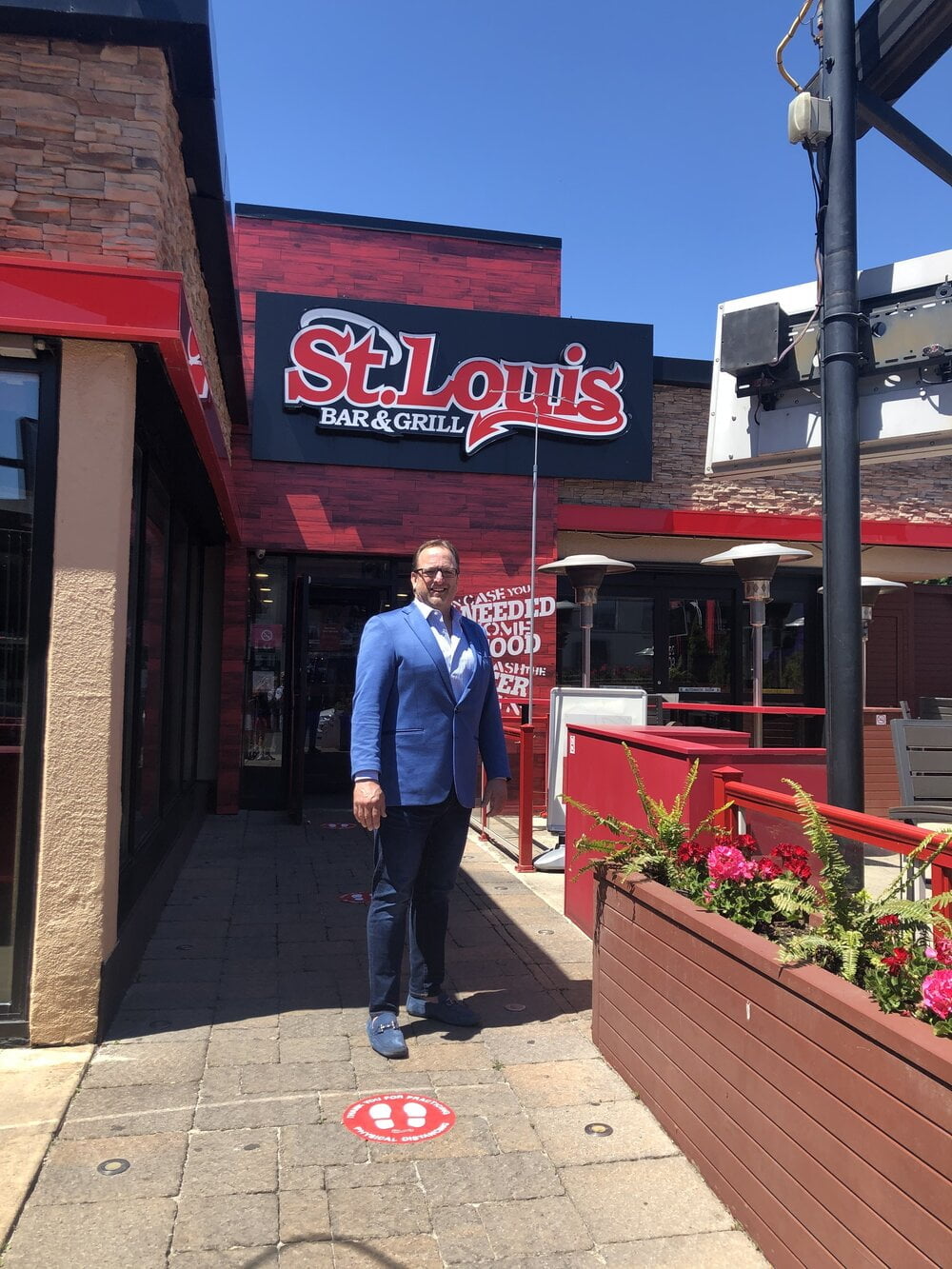
Last week Retail Insider was taken on a virtual tour of St. Louis’ Yonge and Davisville location to showcase the safety measures implemented by the popular Canadian bar as it readied itself to reopen.

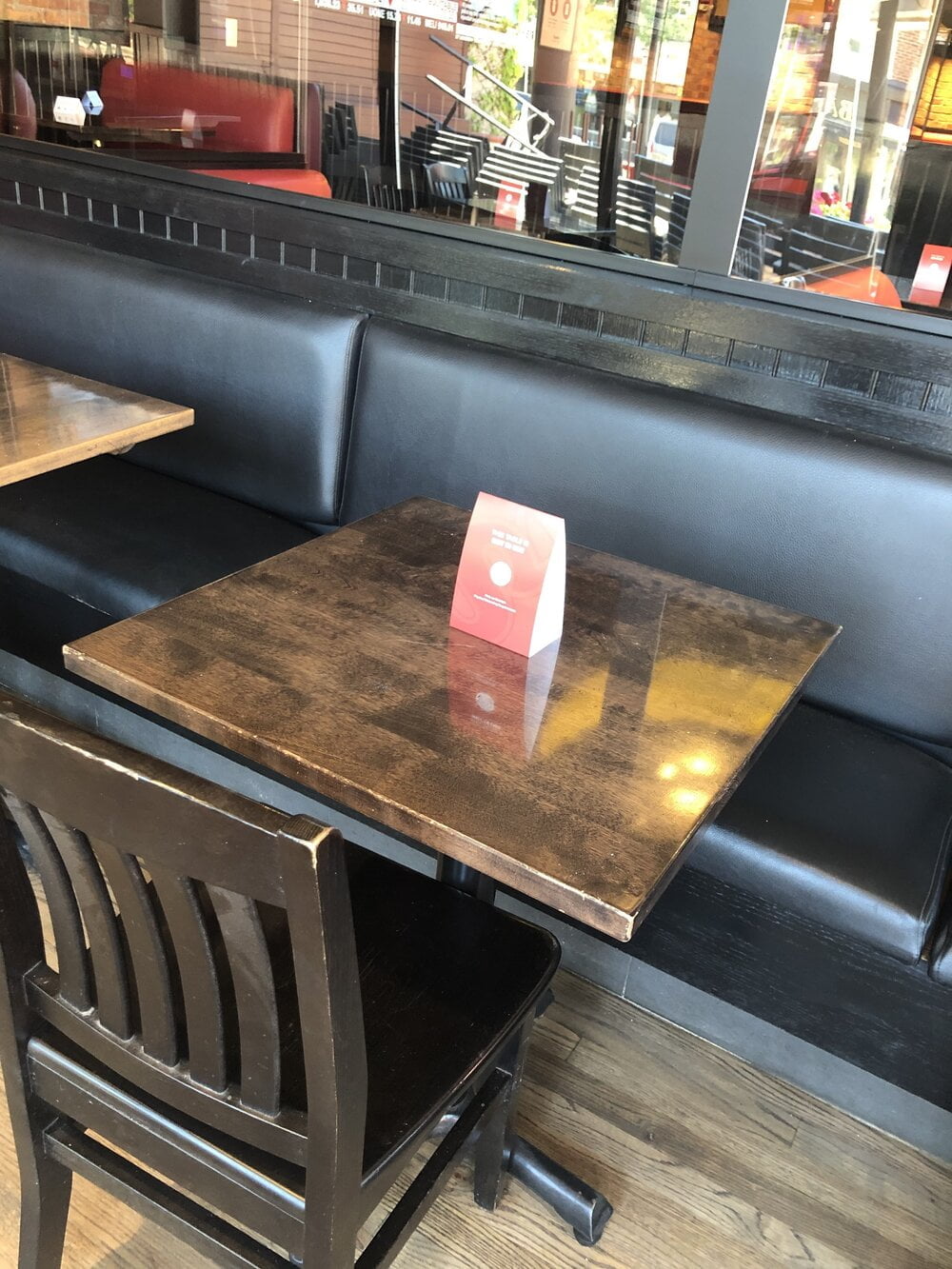
SIGN USED TO INDICATE A SANITIZED AND READY-TO-USE TABLE

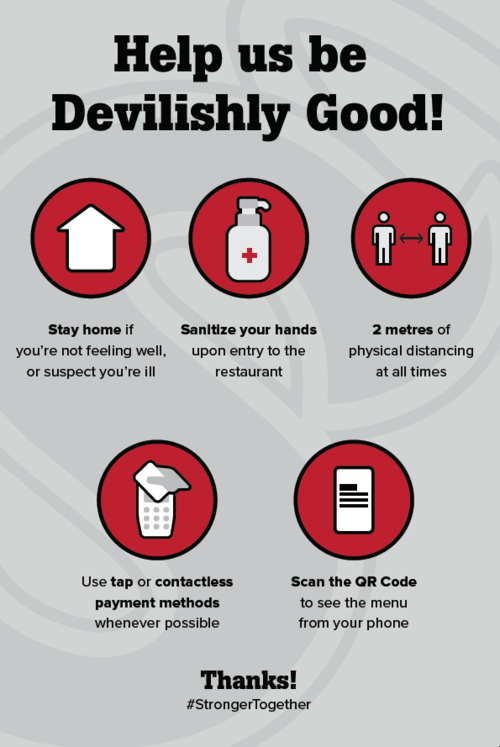
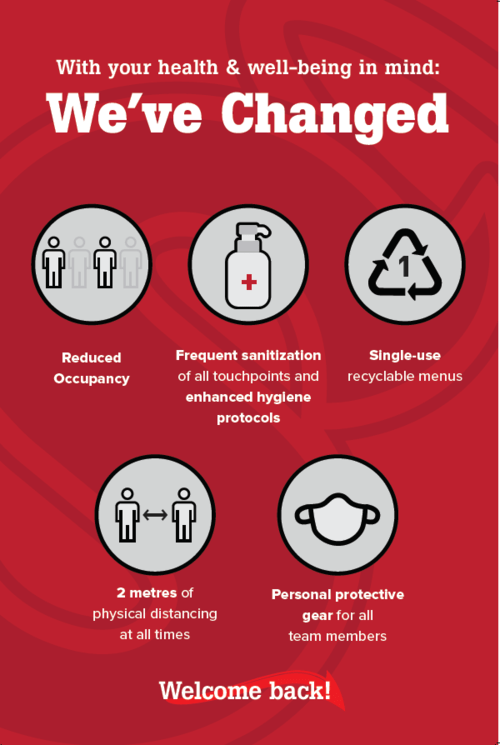
Due to operate at government-regulated capacity, physical distancing measures are in place, ensuring guests and employees stay six feet apart at all times. A redesigned floorpan to accommodate 50% capacity helps with this implementation. The restaurant is fitted with directional arrows on the floor and numerous signs and posters on the walls outlining the regulations imposed and reminding people to adhere to them. These signs stretch throughout the interior and exterior of the establishment. There is ‘before you enter’ signage at the front door, alerting guests not to enter the premises if they are experiencing COVID-19 symptoms.

The bar has installed plexiglass shields between and around all booths, creating a bubble-like atmosphere for parties dining within the restaurant. There is also a limit on the number of people allowed to dine per table.

Regarding table settings and service, tables are empty, void of condiments — which can be brought by a server upon request — and food is placed at the end of the table to maintain physical distancing measures between staff and customers.

All reusable menus have been shelved for the foreseeable future and replaced with single-use, recyclable menus that are disposed of after ordering. There is also the option for guests to order on their smartphones using a QR code accessible at all tables.
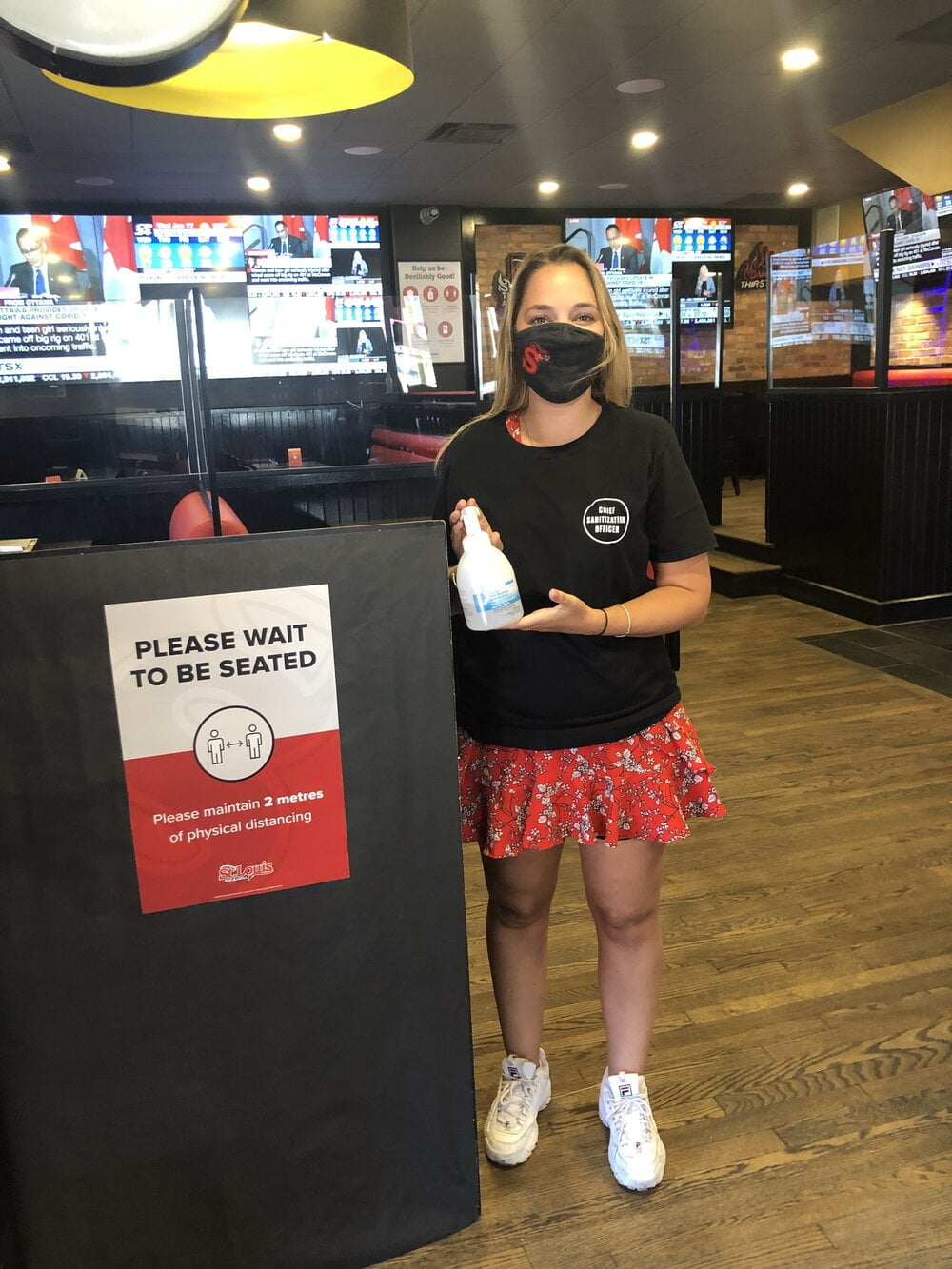
In the wake of COVID-19 St. Louis has created a new role within its employment lineup: Chief Sanitization Officer. The role of the Chief Sanitization Officer is to clear used glasses, plates, utensils etc., and the CSO is also responsible for sanitizing door handles and other high-traffic touch-points. The CSO is solely responsible for these duties. All surfaces are disinfected after each use and once the CSO has sanitized a table it is clearly marked with a tent card to indicate that it is ready to be occupied by the next party. In addition to this precautionary measure, each server is equipped with their own personal sanitizer that they carry on their person at all times.

Spray sanitizer is available to all guests upon arrival at St. Louis, alongside an employee who’s priority is to welcome guests and educate them on implemented protocols.

Staff screening and health checks occur during every shift, including temperature checks and an extensive list of appropriate questions regarding the status of each individual’s health etc. All front of house and back of house staff are required to wear face masks at all times.

St. Louis Bar & Grill Founder, Brent Poulton, spoke to Retail Insider about his optimism regarding St. Louis’ future and the importance of maintaining a positive atmosphere for guests in a potentially anxiety-inducing situation. “I feel very optimistic going forward because I believe we’re all creatures of habit and those habits don't change overnight. All we can do as a brand is create trust between us and the customers. What we’re doing is identifying peoples’ expectations of what a safe dining environment looks like and we’re striving to create and accommodate that.”

“What we've always emphasized and relied on is the personality and culture behind the brand. I don't think the fact that people are wearing face masks or are sitting beside plexiglass shields is really going to change peoples’ experience. You’re going to get people who are extremely nervous but we hope to be able to prove that we’ve taken all the necessary precautions to keep people as safe and happy as possible.”

RELATED ARTICLES

Subscribe to the Newsletter

Subscribe

* indicates required

RECENT articles

Empire Plans ‘E-Commerce 2.0’ as Voilà Strategy Enters New Phase

Empire is planning an “e-commerce 2.0” strategy as the Sobeys parent combines Voilà, third-party delivery and customer data to drive online growth.

Flight Centre Canada expands physical retail footprint with two new stores

The expansion follows what the company describes as a third consecutive record year for Flight Centre Travel Group, the parent company of Flight Centre Canada

Supernatural brings longevity wellness to retail space with new Yorkville concept

Toronto wellness destination Supernatural is bringing the growing longevity category into retail with a curated Yorkville space focused on sleep, recovery, performance and wellness products.

Angelcare Group Expands Litter Genie Line and Retail Strategy in Canada

Montreal-based Angelcare Group is expanding Litter Genie with new products, retail partnerships and a broader cat-care ecosystem in Canada.

Faire report: Social media is reshaping fashion trends and giving independent retailers an edge

Faire’s latest report finds social is accelerating fashion trends, with independent retailers using faster buying cycles to respond to changing demand.

AI agents and the shopping experience: Myndlab

The technology is advancing because AI-referred shoppers are commercially valuable.

Daily Synopsis: September 17, 2026

Stefano Ricci luxury boutique in Vancouver shuttering, Metro reaches deal with striking workers, Harry Rosen opens Toronto flagship September 22, GTA furniture retailer appears to go bankrupt, and other news.

Reitmans (Canada) Limited reports Q2 financial results, net revenues decrease 1.9% y/y

Net earnings were $10.1 million ($0.20 basic and diluted earnings per share) as compared with net earnings of $13.1 million ($0.26 basic and diluted earnings per share) a year earlier.

Primaris Raises $200M With More Than $1B in Canadian Mall Acquisitions Under Negotiation

Primaris is raising $200 million in new equity while negotiating more than $1 billion in potential mall acquisitions. The financing adds capacity as the REIT continues buying major Canadian shopping centres from institutional owners and expanding its national portfolio.

Gen Z demands authentic digital experiences as AI reshapes retail: Sitecore

Sitecore research finds 89% of Gen Z wants more authentic digital experiences, while nearly 70% have reduced engagement with brands they distrust.

Dollarama’s $5 Ceiling Is Becoming a Test for Canadian Retail

Dollarama is holding its $5 maximum price point as Canadian traffic continues to rise and cost pressures build. The widening performance gap with parts of mainstream retail raises questions about whether value shopping is becoming a permanent part of household spending.

STRONG Pilates launches new connected training technology as franchise expands globally

The technology is being introduced in two phases, beginning in Australia and the United States, with a second phase planned for later this year that will add expanded data capabilities, deeper technology integration and a global rollout.

Bloor Street Retail Update: New Stores, Flagships and Major Changes Reshape Toronto Luxury Corridor

Toronto’s Bloor Street is seeing another wave of retail change, with RH, Delysées and Tiffany arriving, Holt Renfrew evolving, Harry Rosen relocating and major redevelopment projects moving ahead.

Verifran launches franchise intelligence platform to streamline candidate qualification

The Toronto-based company is positioning the platform as an intelligence layer between an initial franchise inquiry and a franchise development team

WestJet, Tim Hortons announce new in-flight coffee and loyalty partnership

The partnership will see WestJet serve a new Tim Hortons coffee blend called Flight Roast on flights that currently offer in-flight refreshments, while members of the two companies' rewards programs will eventually be able to earn points through eligible Tim Hortons purchases.

BCG: Canadian retail spending splits further as higher- and lower-income households diverge

Higher-income buyers place more weight on service and the buying experience, especially for bigger purchases like appliances.

Daily Synopsis: September 16, 2026

Mine & Yours Marks 13 Years as Luxury Resale Starts Looking More Like, TryCanadian.ca launches as Consumers Search for Canadian Alternatives, Dollarama Q2 sales increase 17.6% y/y to surpass $2 billion, RBC says grocery prices likely to keep rising faster than overall, and other retail news.

Cozey to open first permanent Montreal store as furniture retailer expands physical footprint

The Montreal location is part of a broader expansion that has seen Cozey increase its physical retail presence while also entering new international markets.

RONA names Alain Ménard CEO as J.P. Towner moves to Sycamore Partners advisory role

The company says Towner and Ménard will continue to work closely together during the transition as RONA moves into its next phase of growth.

Amazon invests more than $78 million in pay increases for Canada operations employees  

Amazon is raising its average hourly base wage in Canada to $26.27 per hour — up from $25.27 in 2025 — representing a 4% year-over-year increase.