How St. Louis Bar & Grill is Cautiously Reopening Restaurant Spaces

Date:

Share post:

St. Louis Bar & Grill is in the process of reopening its doors to the public after months of COVID-19 shutdowns. The precautionary measures taken by the sports bar to ensure the health and safety of staff and customers are extensive, and quite possibly the calibre that all restaurants and bars should be wishing to emulate going forward.

When faced with the opportunity to reopen, many restaurateurs, although excited by the prospect, are finding the practical aspect of the task daunting. With so many regulations and safety procedures to adhere to, navigating your altered business model in the wake of COVID is complicated. In the spirit of maintaining a restaurant’s atmosphere despite the changes and generating revenue once again — while ultimately ensuring everyones’ safety — St. Louis Bar & Grill have done a stellar job, at least on the surface that is. With a surprisingly high number of Canadians claiming to be nervous at the prospect of returning to restaurants and the government mandates still prohibiting indoor dining, only time will tell how the food and beverage landscape will fair in a post-COVID world.

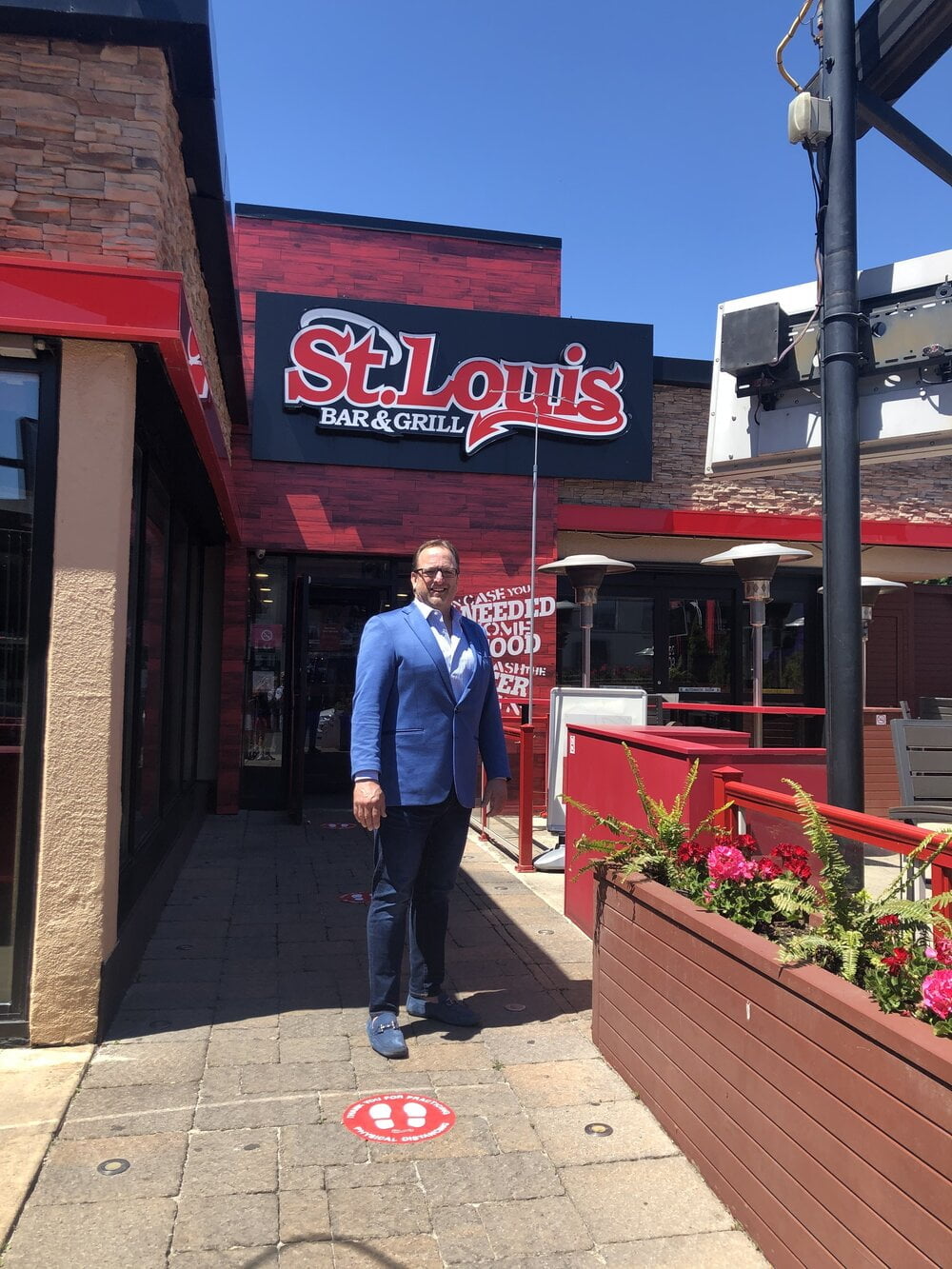
Last week Retail Insider was taken on a virtual tour of St. Louis’ Yonge and Davisville location to showcase the safety measures implemented by the popular Canadian bar as it readied itself to reopen.

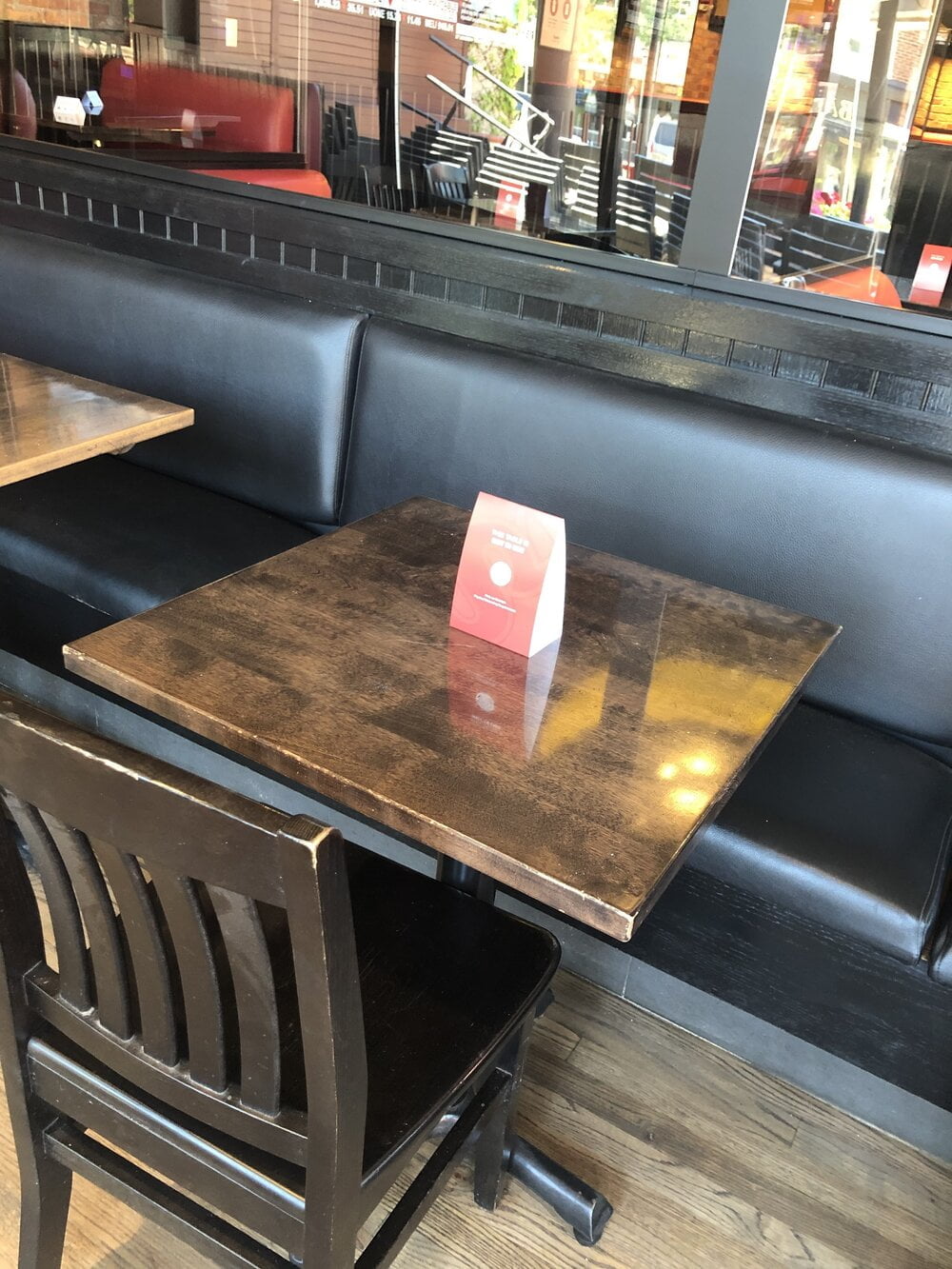
SIGN USED TO INDICATE A SANITIZED AND READY-TO-USE TABLE

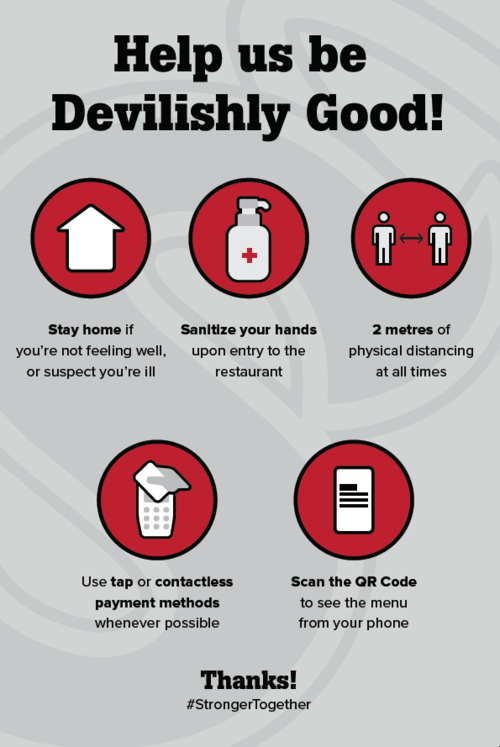
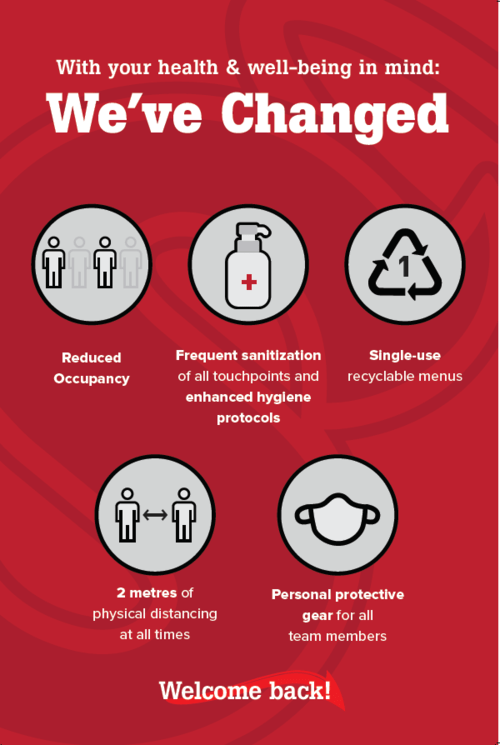
Due to operate at government-regulated capacity, physical distancing measures are in place, ensuring guests and employees stay six feet apart at all times. A redesigned floorpan to accommodate 50% capacity helps with this implementation. The restaurant is fitted with directional arrows on the floor and numerous signs and posters on the walls outlining the regulations imposed and reminding people to adhere to them. These signs stretch throughout the interior and exterior of the establishment. There is ‘before you enter’ signage at the front door, alerting guests not to enter the premises if they are experiencing COVID-19 symptoms.

The bar has installed plexiglass shields between and around all booths, creating a bubble-like atmosphere for parties dining within the restaurant. There is also a limit on the number of people allowed to dine per table.

Regarding table settings and service, tables are empty, void of condiments — which can be brought by a server upon request — and food is placed at the end of the table to maintain physical distancing measures between staff and customers.

All reusable menus have been shelved for the foreseeable future and replaced with single-use, recyclable menus that are disposed of after ordering. There is also the option for guests to order on their smartphones using a QR code accessible at all tables.
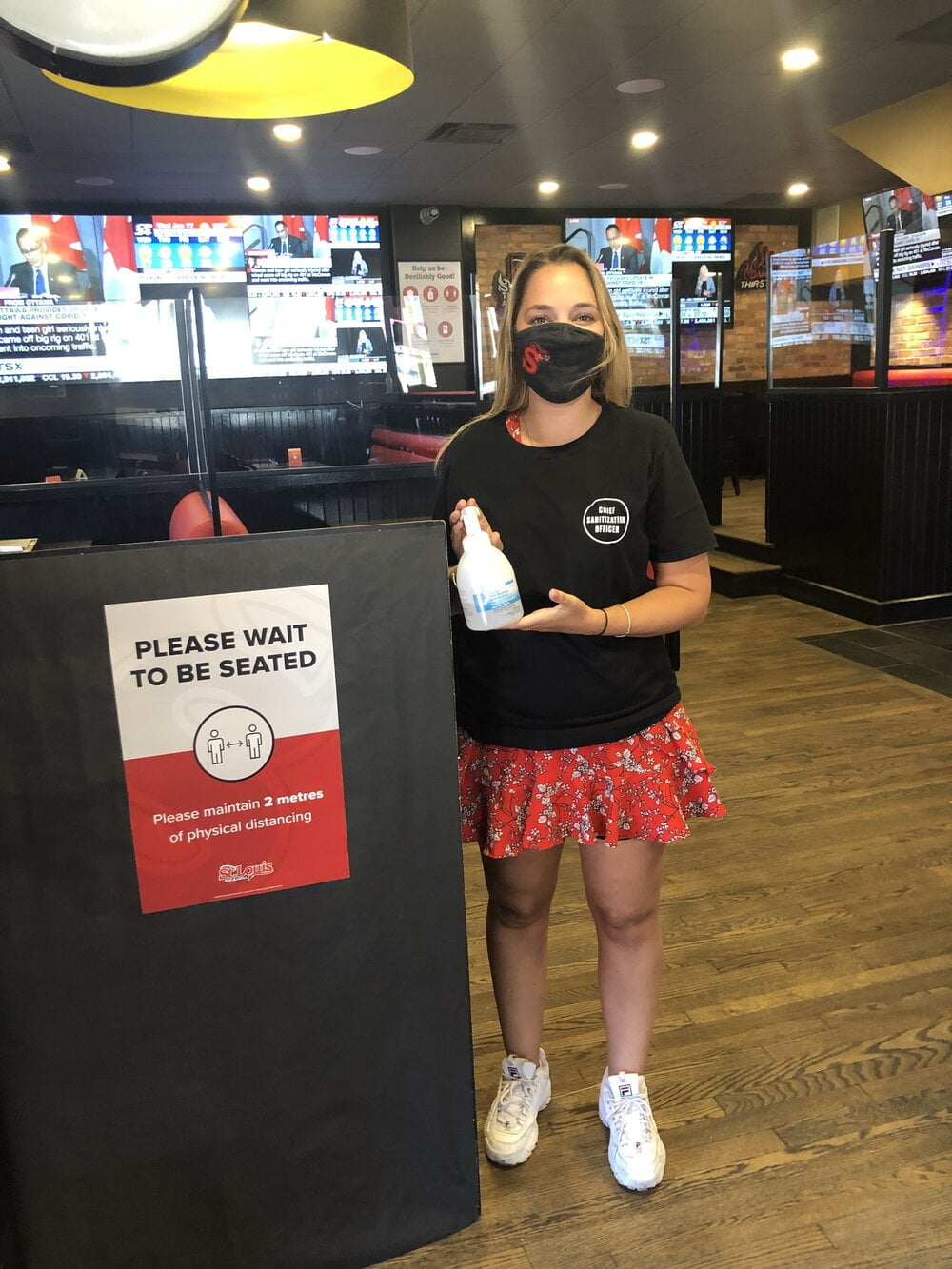
In the wake of COVID-19 St. Louis has created a new role within its employment lineup: Chief Sanitization Officer. The role of the Chief Sanitization Officer is to clear used glasses, plates, utensils etc., and the CSO is also responsible for sanitizing door handles and other high-traffic touch-points. The CSO is solely responsible for these duties. All surfaces are disinfected after each use and once the CSO has sanitized a table it is clearly marked with a tent card to indicate that it is ready to be occupied by the next party. In addition to this precautionary measure, each server is equipped with their own personal sanitizer that they carry on their person at all times.

Spray sanitizer is available to all guests upon arrival at St. Louis, alongside an employee who’s priority is to welcome guests and educate them on implemented protocols.

Staff screening and health checks occur during every shift, including temperature checks and an extensive list of appropriate questions regarding the status of each individual’s health etc. All front of house and back of house staff are required to wear face masks at all times.

St. Louis Bar & Grill Founder, Brent Poulton, spoke to Retail Insider about his optimism regarding St. Louis’ future and the importance of maintaining a positive atmosphere for guests in a potentially anxiety-inducing situation. “I feel very optimistic going forward because I believe we’re all creatures of habit and those habits don't change overnight. All we can do as a brand is create trust between us and the customers. What we’re doing is identifying peoples’ expectations of what a safe dining environment looks like and we’re striving to create and accommodate that.”

“What we've always emphasized and relied on is the personality and culture behind the brand. I don't think the fact that people are wearing face masks or are sitting beside plexiglass shields is really going to change peoples’ experience. You’re going to get people who are extremely nervous but we hope to be able to prove that we’ve taken all the necessary precautions to keep people as safe and happy as possible.”


LEAVE A REPLY

Please enter your comment!
Please enter your name here

RELATED ARTICLES

Subscribe to the Newsletter

Subscribe

* indicates required

RECENT articles

From The Desk: Navigating Growth and Resilience in Canadian Retail

This week in Canadian retail, growth initiatives, rising real estate demands, and strategic leadership shifts highlight sector resilience amid market challenges.

Retail Insider “Policy & Regulation Report”: Affordability Promises Collide With Retail Costs

Retail Insider’s Q2 2026 policy report finds affordability promises colliding with rising compliance, trade, labour and public-safety costs, while grocery property controls and public-store proposals expose how government action is reshaping Canadian retail operations today.

Crombie REIT Reports Strong Rent Growth Driven by Grocery-Angled Retail

Crombie REIT posted a seventh consecutive quarter of double-digit renewal rent growth as demand remains strong for grocery-anchored retail space across Canada.

How Quarks Built a Canadian Footwear Business Over Nearly Five Decades

Winnipeg-based Quarks is approaching its 50th anniversary while continuing to expand across Canada. Retail Insider examines the family-owned footwear retailer's growth strategy, merchandising approach and plans for the future.

Tim Hortons Targets Stronger Canadian Growth With New Stores, Beverages and Loyalty

Tim Hortons is opening 80 Canadian restaurants while expanding cold beverages and loyalty initiatives after same-store sales growth slowed to 0.1%.

Canada’s Freight Market Is Shifting Unevenly. Here’s What Retailers Should Watch

TFI International’s latest results and analysis from supply chain strategist Gary Newbury suggest Canadian retailers should prepare for uneven freight conditions, changing transportation capacity and evolving logistics costs.

Jamieson Wellness enters into definitive agreement to be acquired by Kirin in C$2.5 billion transaction

The transaction values Jamieson at approximately C$2 billion on a fully diluted equity value basis and approximately C$2.5 billion on an enterprise value basis.

Slate Grocery REIT reports second-quarter results, citing leasing gains and rent growth potential

Completed more than 569,000 square feet of leasing activity during the period as it continued to see rental growth across its U.S. grocery-anchored real estate portfolio.

Premium Brands reports record second-quarter revenue and earnings, revises 2026 outlook

The specialty food producer and distributor said second-quarter revenue reached a record $2.4 billion, up 26.3 per cent, or $495 million, from the same period a year earlier.

SmartCentres reports steady leasing gains in second quarter as occupancy rises, FFO unchanged

The Toronto-based REIT said occupancy reached 98.1 per cent as of June 30, up from the previous quarter.

Daily Synopsis: August 6, 2026

Retail Insider published 12 articles today on Canadian retail including Birks’ market move, Mattel’s strategy shift, Realm Fitness’ community, and McDonald’s new beverage platform.

Leon’s Furniture reports higher net income in second quarter despite lower sales

Revenue declined by $12.9 million from a year earlier, with furniture delivered sales down 4.2 per cent against what the company described as a strong prior-year comparison.

Retail Insider “Marketing & Media Report”: Live Events Shift Attention to Dynamic OOH

Major cultural events are redirecting Canadian retail marketing toward physical spaces. The Q2 2026 report examines how motion-based DOOH, local sports activations, loyalty platforms and measurable sustainability practices are shaping competition for consumer attention across Canada.

Birks to Leave NYSE American as Canadian Jeweller Reshapes Finances

Birks Group will leave the NYSE American for the OTCQB as the Canadian jeweller reports stronger sales, refinances debt and continues retail investment.

What Mattel’s Strategy Says About the Future of Canada’s Toy Market

Canada's toy market is evolving, and Mattel's latest strategy shows how Hot Wheels, building sets, collectibles and Barbie are shaping the industry's next chapter.

Realm Fitness Builds 2,500-Member Community Inside Calgary Industrial Property

Realm Fitness has grown to 2,500 members in Calgary, combining fitness, retail, recovery and community inside a 44,000-square-foot industrial space.

Baffin joins the Royer Group of Companies 

Baffin will operate as Baffin Footwear Inc., preserving the Baffin brand, its leadership team, employees, customer relationships and day-to-day operations while benefiting from Royer's long-term investment and manufacturing expertise.

First T&T Supermarket in Manitoba coming to CF Polo Park in Winnipeg

The “cult-favourite” Canadian supermarket is bringing its signature Asian groceries, prepared foods, bakery favourites, and beauty products to Manitoba for the first time.

Corby to sell Lamb’s rum brand and assets for $39.2 million as it shifts focus to growth categories

Corby said the transaction is intended to concentrate its resources on priority growth platforms, including ready-to-drink beverages and premium spirits, while freeing capital for higher-return opportunities.