With U.S. President Donald Trump’s 25% tariffs on all Canadian goods now in effect, Canadian consumers are doubling down on their commitment to buying homegrown products. The Canadian government has responded with retaliatory tariffs on $30 billion worth of American imports, further fueling the momentum behind the “Buy Canadian” movement.
But with a surge in demand for locally made goods, a crucial question arises: What does it truly mean when a product carries a “Product of Canada” or “Made in Canada” label? Can consumers trust a Maple Leaf symbol to guarantee a product’s Canadian origins? Understanding the nuances of these labels is essential for shoppers aiming to support domestic industry and avoid misleading claims.
Product of Canada: What It Really Means
The Canadian Food Inspection Agency (CFIA) provides clear guidelines on what constitutes a “Product of Canada.” This label signifies that all or nearly all the food, processing, and labour involved in making the product are Canadian. While small amounts of imported ingredients, such as spices or additives, may be present, the vast majority of the product’s composition must originate from Canada.
For non-food items, the Competition Bureau states that the “Product of Canada” designation applies only when at least 98% of the total costs of production or manufacturing have been incurred in Canada. This ensures that the label is reserved for products that are overwhelmingly Canadian in origin.
Made in Canada: A More Flexible Standard
The “Made in Canada” label carries a different set of criteria. According to the CFIA, this designation applies when the last significant transformation of the product occurs in Canada. For example, if raw ingredients from multiple sources are combined to create a finished food product—such as pizza made from imported cheese, dough, and sauce—the final assembly qualifies as a substantial transformation.
For non-food items, the Competition Bureau requires that at least 51% of production or manufacturing costs be incurred in Canada for a product to carry the “Made in Canada” label. Additionally, businesses must disclose whether the product is made in Canada from imported components, domestic ingredients, or a combination of both.
The Use of “Canadian” on Packaging
The term “Canadian” is regulated in a manner similar to “Product of Canada.” When a food item is labeled as “Canadian,” it means that all or virtually all major ingredients, processing, and labour involved in its production are Canadian. If a frozen lasagna is labeled as “Canadian,” consumers can be assured that it meets the strict criteria for “Product of Canada.”
Similarly, when a package states “Canadian Cheddar Cheese,” the cheese itself must be made entirely from Canadian ingredients and undergo processing within the country.
100% Canadian: The Gold Standard
For food or ingredients to bear the “100% Canadian” claim, the CFIA mandates that every element of the product, including processing and labour, be entirely Canadian. This label leaves no room for imported components, making it the most transparent designation for consumers seeking purely Canadian products.
The Maple Leaf Symbol: A Misleading Marker?
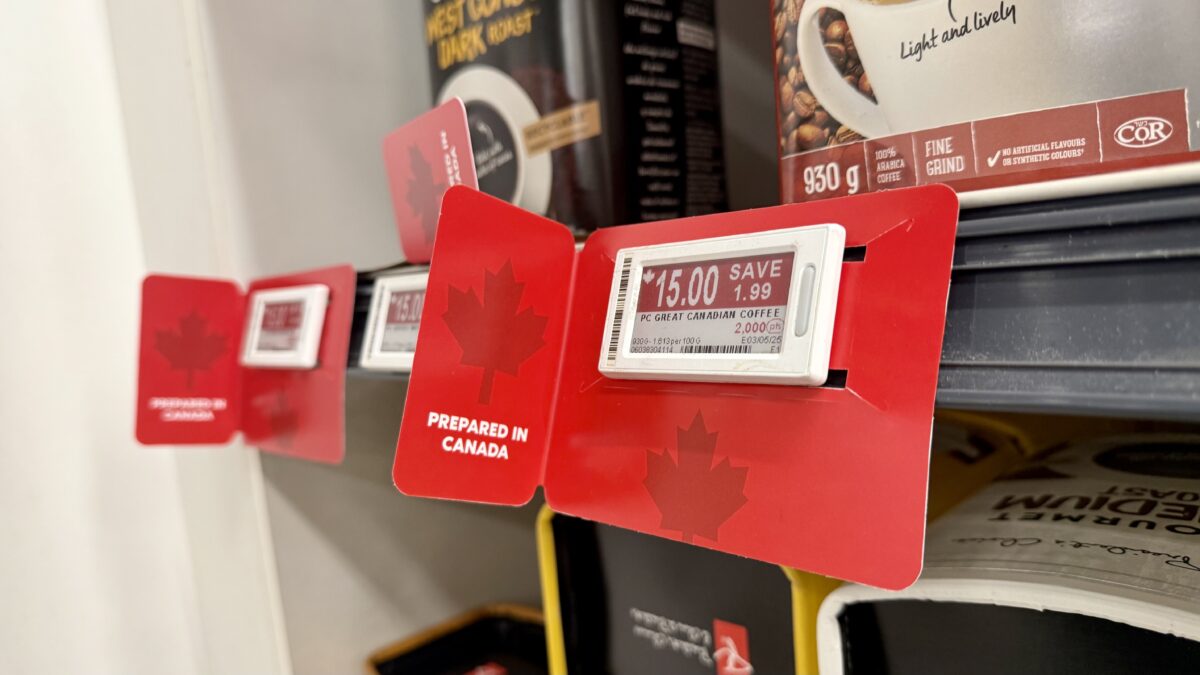
While the iconic Maple Leaf is often used to signify Canadian products, its presence on packaging does not necessarily mean that a product is wholly or even partially Canadian. The CFIA recommends that companies include a domestic content statement alongside the Maple Leaf to clarify the product’s origin, but compliance is not mandatory. As a result, shoppers must look beyond the symbol and examine product labels carefully.
Additional Labeling Terms Explained
Produced or Manufactured in Canada: The Competition Bureau considers phrases like “Produced in Canada” and “Manufactured in Canada” to align with the “Made in Canada” designation, meaning that products bearing these labels must comply with the same criteria of substantial transformation and cost thresholds.
Local Products: When a company advertises a product as “local,” CFIA regulations require that it be produced in the province or territory where it is sold or within 50 km of the originating region if crossing provincial borders. This ensures that consumers purchasing locally branded goods are genuinely supporting nearby businesses.
Industry-Specific Labels: Dairy, Meat, and Seafood
The Blue Cow Logo: In the dairy aisle, consumers may notice the blue cow logo, which is overseen by the Dairy Farmers of Canada. This mark signifies that the product is made entirely with Canadian milk and milk ingredients, ensuring its authenticity.
Meat and Poultry: Meat products labeled as “Product of Canada” must come from animals that were raised and slaughtered in Canada. For feeder cattle, animals must have spent at least 60 days in Canada before being processed domestically.
Fish and Seafood: For wild fish and seafood to carry the “Product of Canada” label, they must be caught by Canadian vessels in domestic waters and processed in Canada using Canadian ingredients. In the case of farmed seafood, both the farm and processing facility must be located within Canada.
Dairy and Eggs: Eggs and dairy products from animals raised in Canada qualify for “Product of Canada” status, even if the livestock was originally imported, provided the eggs were laid and milk was collected in Canada.
The Bottom Line: Navigating “Buy Canadian” Claims
As Canadians increasingly turn to homegrown goods in response to trade tensions, understanding product labeling is more critical than ever. While terms like “Product of Canada” and “Made in Canada” offer guidance, shoppers should remain vigilant in verifying a product’s true origins by reading the fine print.
With transparency varying across industries, consumer awareness remains the best tool for ensuring that purchases genuinely support the Canadian economy. The “Buy Canadian” movement is stronger than ever, but a well-informed approach is key to making meaningful contributions to local businesses and manufacturers.