Lush, “the handmade cosmetics company with a campaigning heart”, announced during Autism Acceptance Month a partnership with KultureCity, the world’s leading non-profit on sensory accessibility and acceptance.
With the aim to create a more inclusive shopping environment for individuals with sensory disabilities or those who experience sensory overload; or even those who simply prefer it, the partnership will launch with a pilot program at 25 Lush shops across the United States and Canada, it said.
“Lush remains dedicated to Diversity, Equity and Inclusion. This work has come to life through its Community Network Program, which strives to create protected spaces for Lush staff representing historically underserved and underrepresented communities. This includes the CINDers (Chronically Ill, Neurodiverse, and Disabled) Community Network, whose members elevated the need for sensory inclusive shopping in Lush retail shops,” said the retailer.
“At Lush, we pride ourselves on offering tailored customer experiences that are led by curiosity. While many love and seek out Lush’s in-store experience for its bright colors, buffet of smells, and bountiful opportunities to try products for themselves, there is room to create more pathways for customers with sensory needs to enjoy it all in a way that works for them,” said Amanda Lee Sipenock Fisher, Diversity, Equity, Inclusion, and Belonging Program Lead at Lush.
The topic hits close to home for many of Lush’s team members, with 55% of staff who completed its fourth Global Demographic Survey in May 2024 sharing they were disabled, neurodiverse, and/or living with chronic illness. Of that group, 51% shared that one or more of their conditions were non-visible, it said.
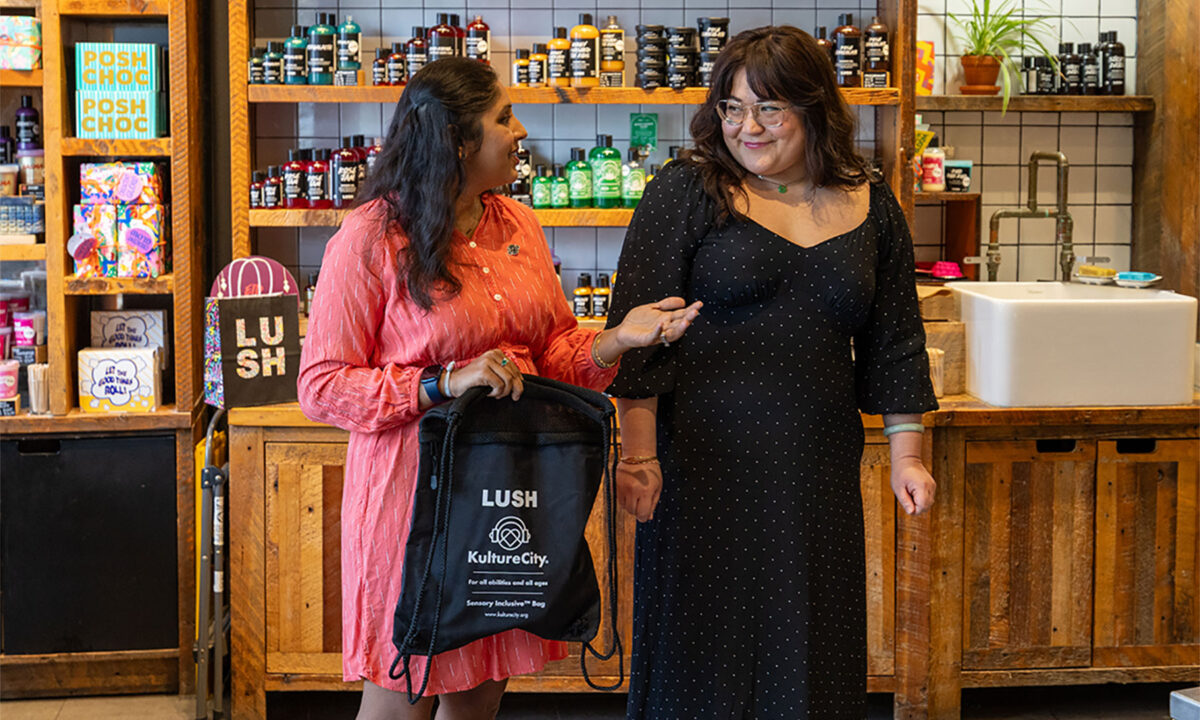
“At the 25 Lush shops that will launch the pilot program, staff received training and certification empowering them to meet the needs of customers with sensory disabilities. Additionally, sensory bags will be available for customers with items including noise cancelling headphones, fidget tools, strobe-reducing glasses, and an emotions-cue card when the ability to communicate non-verbally is helpful. Shops also have masks available to assist in any smell related sensory avoidance. Through mindful modifications like trained staff and Sensory Bags, accessibility and inclusion are possible all of the time, not just during certain hours,” it added.
Related Retail Insider stories: