A majority (84%) of small businesses are concerned that higher fuel costs could negatively affect the summer tourism season, according to new data from the Canadian Federation of Independent Business (CFIB).
Ryan Mallough
“Fuel costs have been squeezing small businesses from all sides: at the pump, across their supply chains and in their customers’ wallets. The last thing any of them need is a quiet summer,” said Ryan Mallough, CFIB’s vice-president of legislative affairs.
“That’s exactly why we’re encouraging Canadians to get out and explore their communities this summer. Fuel prices may put a dampener on bigger travel plans, but local tourism is a great opportunity for small businesses and their communities.”
To help support local businesses and encourage local shopping this summer, CFIB, which is Canada’s largest association of small and medium-sized businesses with 103,000 members across every industry and region, is bringing back its #SmallBusinessEveryDay Big Thank You Contest from June 29 to July 13.
The contest invites Canadians to thank their favourite small businesses for the role they play in their communities. The Big Thank You Contest is presented by CFIB in partnership with Chase Payment Solutions, with Interac as prize sponsor. Small business supporters can enter two weekly draws by visiting SmallBusinessEveryDay.ca and leaving a thank you message to their favourite small Canadian business.
Each week, one supporter and the business they thanked will be drawn as winners. The supporter will receive a $1,500 cash prize to spend locally. The business will receive $4,000 and a free one-year CFIB membership. A $4,000 bonus prize will go to the business with the most nominations at the end of the contest, courtesy of Interac, explained the CFIB.
“Sixty-six cents of every dollar spent local, stays local,” said Mallough. “If you have a favourite spot, now is a great time to show them some love and say thank you for all they do; it’s not just the business that benefits, it’s the whole community.”
To help businesses participate, CFIB has created free digital toolkits, including printable posters and customizable social images, to promote the contest and shopping local.
RioCan Real Estate Investment Trust says it will redevelop the former Hudson’s Bay Company (HBC) space at Georgian Mall with the addition of three new tenants: Longo’s, GYMVMT by GoodLife Fitness, and Mark’s.
The introduction of a national grocer, leading fitness operator, and trusted Canadian apparel and workwear brand will provide shoppers with greater convenience and choice while further enhancing Georgian Mall’s role as a community focused destination anchored in everyday needs, said RioCan.
Moshe Batalion
“As Barrie continues to grow, we are committed to ensuring that Georgian Mall reflects the needs of the community. The additions of Longo’s, GYMVMT Fitness Club, and Mark’s represents an important evolution of the property,” said Moshe Batalion, Vice President, National Leasing, RioCan.
“Together, these brands will bring sought-after services and everyday essentials to local residents, making Georgian Mall an even more convenient destination for shopping, wellness, and daily life.”
The new tenants are expected to open in 2027, with a temporary Mark’s location opening in advance of the permanent store, said RioCan.
Georgian Mall is the largest enclosed shopping centre in Barrie and the greater Simcoe County area. The shopping centre is conveniently located at Bayfield St and Livingstone St, just minutes from Highway 400 and easily accessible by Barrie Transit with two bus stops located on-site.
RioCan described Longo’s as apremium grocery retailer known for high-quality fresh food, prepared meals, and exceptional customer service. It said GYMVMT Fitness Club is one of Canada’s leading fitness operators, GoodLife Fitness, bringing expanded health and wellness offerings to Georgian Mall. And Mark’s is an iconic Canadian retailer offering casual apparel, footwear, and workwear.
As at March 31, RioCan’s portfolio comprised of 167 properties with an aggregate net leasable area of approximately 32 million square feet (at RioCan’s interest).
Canadians are expected to turn out in large numbers for this year’s Amazon Prime Day event, even as household budgets remain under strain, says retail analyst Bruce Winder.
Winder points to industry estimates suggesting the four-day sales period could generate roughly $26 billion in the United States. Scaled to Canada, that could translate into several billion dollars in spending, driven by deep discounts across dozens of product categories.
He says the event arrives at a time when consumers are grappling with elevated living costs, including higher fuel prices and persistent food inflation. Despite those pressures, Winder expects strong participation, as shoppers seek out savings on both essential goods and discretionary items.
According to Winder, Canadian consumers have increasingly shifted spending habits in response to economic conditions, cutting back on non-essential purchases while relying more heavily on promotions and loyalty programs to stretch their budgets. Retailers have responded with more aggressive pricing strategies and expanded partnerships aimed at boosting customer engagement and repeat spending.
He notes that demand for discounts has also reshaped grocery shopping behaviour, with more consumers opting for private-label products, discount banners and frozen foods as a way to manage costs.
Prime Day’s continued growth reflects a broader trend toward value-driven shopping, Winder says, with the event offering significant markdowns, including steep reductions on Amazon-branded devices. He adds that the timing aligns with seasonal spending needs, such as back-to-school purchases, further supporting demand.
Beyond pricing, Winder attributes Amazon’s enduring appeal to convenience, including fast delivery and simplified purchasing tools, which have broadened its reach across age groups and income levels.
He says the combination of value and ease of use continues to reshape how Canadians shop, particularly during major promotional events.
157 Bloor Street West in Toronto, showing the highlighted space to be occupied by RH. Image: CBRE (edited)
Five years after Club Monaco closed one of Canada’s most recognizable fashion flagships, the landmark corner at Bloor Street West and Avenue Road appears set to begin a new chapter.
Luxury home furnishings retailer RH is said to be opening a store at 157 Bloor Street West in Toronto, according to industry sources familiar with the transaction. The company is said to be taking approximately 17,000 square feet in the historic Lillian Massey Building, including roughly 9,800 square feet of retail space and additional storage. The property was marketed by CBRE’s Urban Retail Team led by Arlin Markowitz and represents one of the most prominent retail vacancies on Canada’s luxury shopping corridor.
The deal brings a long-running search for a successor to Club Monaco’s former flagship closer to an end and adds another notable name to a neighbourhood that continues to attract some of the world’s most prestigious brands.
The End of an Era
For many Torontonians, 157 Bloor Street West was synonymous with Club Monaco. The retailer opened its flagship at the location in 1996 and remained there for approximately 25 years. During that period, Bloor Street evolved dramatically. What was once an upscale shopping district became Canada’s premier luxury retail corridor, attracting international fashion houses, jewellers and watchmakers while helping transform Yorkville into one of North America’s most sought-after luxury shopping destinations.
Club Monaco was part of that story. When the store closed in March 2021, Retail Insider documented its final days, capturing the end of a retail presence that had become woven into the identity of the neighbourhood.
The closure also created one of the most closely watched leasing opportunities in Canadian retail.
157 Bloor St. West in Toronto. Image: Neumann & Rudy
The Years Between
The answer to who would replace Club Monaco did not arrive quickly. In the years following the closure, the property entered a transitional period as brokers worked to secure a long-term tenant capable of maximizing one of the most valuable retail corners in the country.
The first notable move came in late 2023 when Brooks Brothers leased the space after relocating from elsewhere on Bloor Street. The arrival of the American apparel retailer brought activity back to the building and demonstrated that demand for the location remained strong, even as a longer-term vision for the property continued to take shape.
That chapter proved relatively short-lived. Following financial difficulties involving Brooks Brothers’ Canadian operations, the space changed hands once again.
Urban Planet later opened a temporary location in the former Club Monaco premises, generating attention because of the contrast between the fast-fashion retailer and the luxury brands surrounding it. A brief Bluenotes occupancy followed before the space once again became vacant.
Throughout those years, industry interest in the property never faded.
Large flagship opportunities rarely become available on Bloor Street West, particularly at a corner of this prominence. Brokers, landlords and retailers closely monitored developments, widely viewing the site as one of the most desirable retail opportunities in Canada.
Many expected the eventual tenant to be a luxury or aspirational brand capable of fully leveraging the building’s heritage character and highly visible location. The wait appears to have ended with RH.
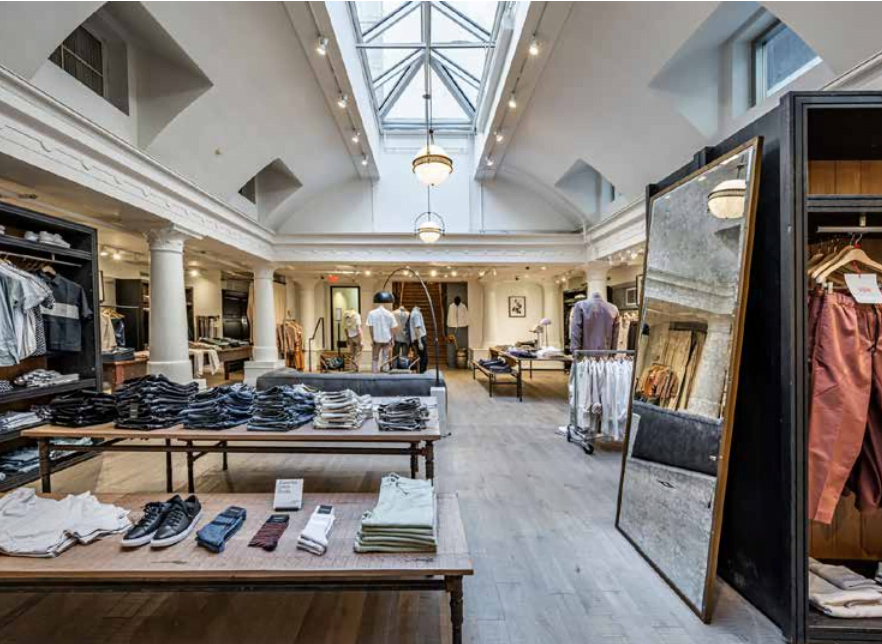
Former basement-level Club Monaco Men’s Department at 157 Bloor St. W. – Photo CBRE
A Building Unlike Any Other
Part of what makes 157 Bloor Street West so significant is that it offers far more than a storefront.
Completed in 1913, the Lillian Massey Building remains one of the architectural landmarks of the Bloor Street corridor. Owned by the University of Toronto’s Victoria College, the property continues to house university offices, classrooms and academic functions while maintaining a prominent retail presence at street level.
Its location is difficult to replicate. The building sits directly across from the Royal Ontario Museum, steps from Museum subway station and at the gateway to Yorkville. More than a century after it first opened, it remains one of the most recognizable commercial properties in Toronto.
As mentioned above, the leasing assignment was handled by CBRE’s Urban Retail Team led by Arlin Markowitz. Marketing materials prepared for the property highlighted more than 100 feet of frontage along Bloor Street West, wraparound visibility and a large patio opportunity. The space was marketed as a rare opportunity to secure a flagship presence on Toronto’s luxury corridor.
For brokers and retailers familiar with Bloor Street, the lease represented one of the most significant flagship leasing opportunities to come to market in recent years.
While RH is understood to be occupying approximately 17,000 square feet including storage space, the building itself is considerably larger. Commercial real estate records indicate the overall structure exceeds 60,000 square feet.
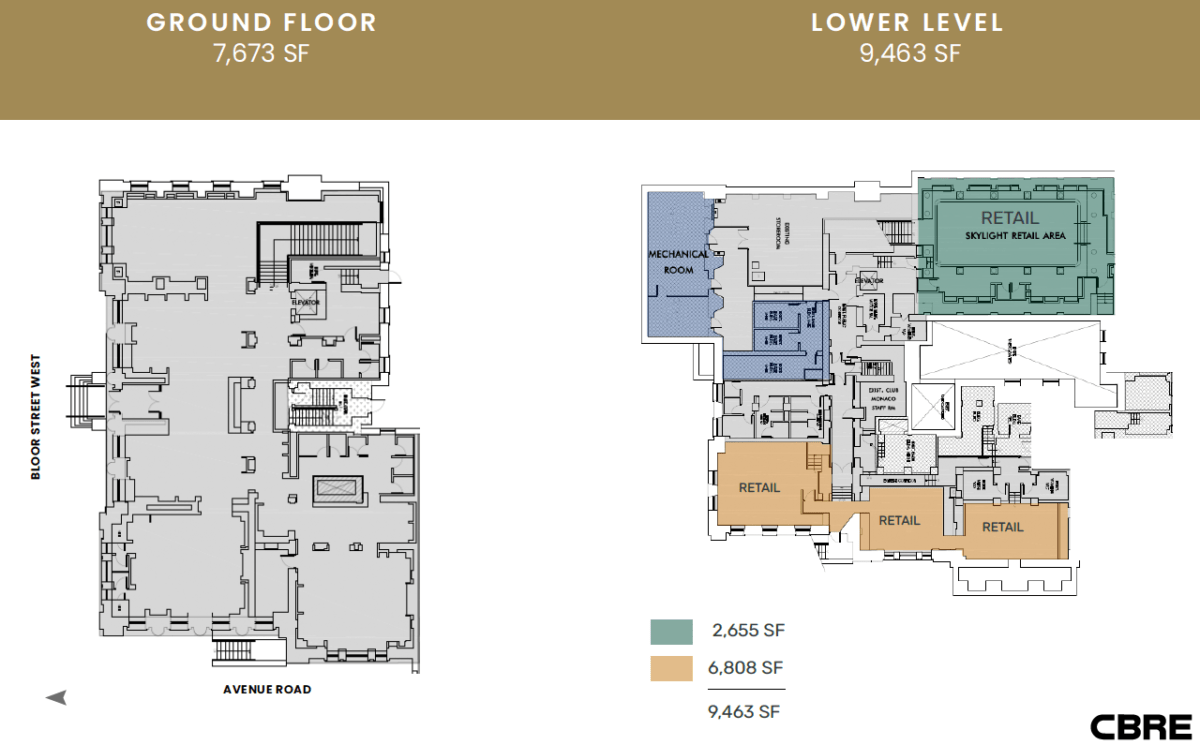
Club Monaco 157 Bloor Street Floor plan – Courtesy CBRE
Why RH?
RH’s interest in the property becomes easier to understand when viewed through the lens of the company’s broader strategy.
Formerly known as Restoration Hardware, RH has spent years repositioning itself as a luxury lifestyle brand centred on architecture, design and immersive retail environments.
The company already operates a major gallery at Yorkdale Shopping Centre in Toronto and recently opened a large-format gallery at Royalmount in Montreal.
At approximately 9,800 square feet of retail space, the planned Bloor Street location will be significantly smaller than either of those properties. The Bloor Street store also will not feature the popular RH Restaurant concept housed in the Yorkdale and Royalmount Galleries.
The smaller store format raises an interesting question: what role will the store play within RH’s Canadian network?
The company has not publicly disclosed details regarding the concept, though the location suggests a different strategy from its large-format gallery model. Rather than serving as another destination showroom with a restaurant, the Bloor Street location will provide RH with a smaller and highly visible presence in the heart of Canada’s most affluent urban retail district.
The building itself also appears well suited to the brand. RH has developed a reputation for embracing historic architecture and creating retail environments that emphasize design, scale and atmosphere. Few properties on Bloor Street offer those characteristics to the same degree as the Lillian Massey Building.
Louis Vuitton and Tiffany & Co. anchor 150 Bloor St. W., Photo Craig Patterson
The Transformation of Bloor and Avenue
RH’s arrival is part of a broader transformation taking place around the intersection of Bloor Street West and Avenue Road.
Over the past several years, the area has continued to strengthen its position as one of Canada’s most important luxury retail districts. The intersection has quietly emerged as one of the most concentrated luxury retail nodes in the country, bringing together fashion, jewellery, watches, hospitality and now luxury home furnishings within a few hundred metres.
Directly across the street, the redevelopment of the Park Hyatt Toronto introduced boutiques for Roger Dubuis, IWC Schaffhausen and Panerai, creating a new luxury watch destination. Jeweller L’Oro also opened at the property.
Nearby, luxury children’s retailer Bonpoint established a boutique, while international brands including Louis Vuitton, Tiffany & Co., Cartier, Gucci, Moncler, Saint Laurent, Hermes, Van Cleef & Arpels and Rolex continue to reinforce the area’s luxury positioning.
Further changes are expected. Tiffany & Co. will relocate to the corner of Bloor and Bay Streets in early 2027. Sources have also told Retail Insider that Louis Vuitton has been exploring future opportunities elsewhere on Bloor Street, although no formal plans have been announced.
Taken together, the activity illustrates how the luxury retail landscape continues to evolve as brands seek larger, newer and more prominent locations.
Luxury watch brands on Bloor Street West in Toronto, March 31, 2026. Photo: Craig Patterson
The Next Chapter
The lease comes at a time when RH continues to navigate a challenging housing market and ongoing scrutiny surrounding its debt load.
Yet the decision to secure one of Canada’s most recognizable retail addresses underscores the continuing appeal of flagship real estate in premier urban locations.
For Bloor Street, the transaction fills a vacancy that has attracted industry attention for years. For RH, it secures a presence on one of North America’s most prestigious shopping streets.
And for 157 Bloor Street West, it marks the beginning of another chapter in a story that has been unfolding for more than a century.
When Club Monaco departed in 2021, many wondered what retailer could justify one of the most prominent retail locations in Canada. Five years later, that answer appears to be RH.
More than a century after the Lillian Massey Building first opened, the corner remains one of the most sought-after retail addresses in the country.
Canada’s grocery industry is changing as consumers rethink how they shop, what they buy and where they choose to spend their food dollars.
Across the country, shoppers are embracing a growing range of formats, from ethnic supermarkets and specialty grocers to warehouse clubs and private-label-driven retailers. Consumers are seeking value, but they are also looking for convenience, relevance and shopping experiences that reflect their lifestyles and communities.
For Michael Commisso, whose family built Commisso’s Fresh Foods into a 17-store Ontario supermarket chain before selling the business to Sobeys, these developments point to a broader shift in consumer behaviour that is reshaping grocery retail.
His experience spans decades in the supermarket, wholesale and foodservice sectors. Today, Commisso operates MVR Cash and Carry, a major wholesale and foodservice business serving restaurants, retailers and other commercial customers throughout the Greater Toronto Area.
From his perspective, several interconnected trends are influencing the future of grocery retail in Canada.
Consumers Are Looking for Simpler Shopping Experiences
One of the most significant changes is a growing preference for more focused and curated shopping experiences.
Commisso believes many grocery retailers continue to offer more products and more complexity than consumers actually want. As shoppers face increasing demands on their time and attention, retailers that simplify decision-making are gaining traction.
“I think curated food has been on the rise for a long time,” Commisso said during a recent interview with Retail Insider.
He points to European grocery operators Aldi and Lidl as examples of retailers that have built highly successful businesses around carefully selected assortments, operational efficiency and strong private-label programs. Rather than offering endless choices, these retailers focus on a narrower selection of products that emphasize value and convenience.
The same principle can be seen in other formats.
Costco has developed one of the most loyal customer bases in retail through a limited assortment and a strong value proposition. Specialty grocers often focus on specific cuisines, product categories or customer needs. In each case, the goal is not to carry everything. It is to carry the right products for a particular customer.
“I think the grocery stores are still way over-scaling,” Commisso said.
The observation reflects a broader retail trend. Consumers increasingly reward businesses that make shopping easier and remove friction from the buying process.
That trend may be particularly evident among younger consumers. Smaller homes, urban lifestyles and changing household dynamics have altered how many Canadians shop for food. The large stock-up grocery trip that appealed to previous generations may be less relevant for shoppers who prioritize convenience, flexibility and speed.
Ethnic Grocery Retail Is Becoming Increasingly Mainstream
Another major shift is the growing influence of ethnic grocery retailers.
Across Canada, operators such as T&T Supermarket, Nations Fresh Foods, Sungiven Foods and H Mart have expanded their footprints while attracting increasingly diverse customer bases. These stores often combine imported products, prepared foods, fresh offerings and merchandising approaches that differ from conventional supermarkets.
For Commisso, the trend has historical roots.
When Italian, Portuguese and other immigrant communities expanded across Canada in previous decades, entrepreneurs opened grocery stores that reflected the products and food cultures they knew best. Over time, many of those businesses evolved into mainstream supermarket operators.
Today, Chinese, Indian, Middle Eastern, Filipino and other ethnic grocery retailers are building businesses that serve both established communities and a growing number of mainstream consumers.
“They look like stores back in their home countries,” Commisso said.
That authenticity has become a significant competitive advantage. Consumers increasingly seek new flavours, prepared foods, imported products and shopping experiences that offer something different from a traditional supermarket visit.
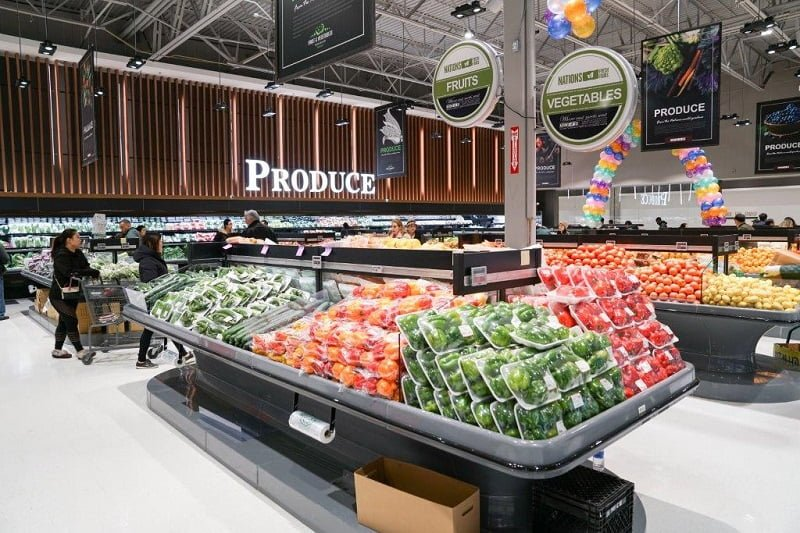
Commisso recently visited Nations Fresh Foods at Vaughan Metropolitan Centre and said the experience reinforced his belief that grocery retail is evolving in new directions.
“I was like, ‘Wow, this is different. This is different,'” he recalled.
The store’s combination of international products, prepared foods and highly experiential merchandising stood apart from traditional supermarket formats. The appeal extends beyond any single demographic group. Consumers are increasingly willing to explore new products and food cultures, creating opportunities for retailers that deliver a distinctive experience.
The continued expansion of T&T Supermarket illustrates how far this trend has progressed. Once viewed primarily as an ethnic grocery chain, the retailer has become a mainstream destination for a broad range of shoppers. Its planned location at CF Sherway Gardens in Toronto reflects the growing prominence of ethnic grocery concepts within Canada’s retail landscape.
Grocery Retail Is Becoming More Experiential
The rise of specialty and ethnic grocery retailers also reflects a broader consumer desire for experiences.
Traditional grocery stores were often designed around efficiency and assortment. Many newer concepts place greater emphasis on discovery, prepared foods, foodservice and atmosphere.
Consumers are increasingly treating grocery shopping as more than a routine transaction. Freshly prepared meals, unique products, international flavours and visually engaging merchandising can transform a shopping trip into an experience.
This shift mirrors trends seen elsewhere in retail, where experiential concepts continue to attract customers despite growing competition from e-commerce.
For grocery retailers, creating a compelling experience has become another way to differentiate themselves in a highly competitive market.
Nations Experience at the Stockyards in Toronto. Photo: Nations Experience
Value Remains a Defining Consumer Priority
While consumers are exploring new formats and experiences, value remains one of the industry’s most important drivers.
Commisso believes economic pressures continue to influence how Canadians spend on food. Many consumers remain focused on stretching household budgets and seeking better value across grocery categories.
He notes that some consumers are reducing restaurant spending and directing more of their food budgets toward grocery purchases.
Value, however, extends beyond simply finding the lowest price.
Consumers may define value through quality, convenience, consistency or trust. Retailers that successfully communicate those attributes often build strong customer loyalty even in challenging economic conditions.
This helps explain the continued strength of warehouse clubs, discount formats and specialty operators that provide a clear and compelling value proposition.
Private Label Has Become a Major Force
Private-label products are also playing an increasingly important role in grocery retail.
“Private label is huge,” Commisso said.
What was once viewed primarily as a lower-cost alternative has evolved into a core strategic pillar for many retailers.
Costco’s Kirkland Signature brand is one of the most prominent examples globally. Aldi and Lidl have built much of their business around private-label assortments, while Canadian retailers continue investing heavily in their own brands.
President’s Choice and No Name remain among Canada’s most recognizable private-label programs. Farm Boy has expanded its own branded offerings, using private label to strengthen differentiation and customer loyalty.
The trend reflects changing consumer attitudes. Shoppers who once defaulted to national brands are increasingly comfortable purchasing products from retailers they trust.
For retailers, private label creates opportunities to improve margins, strengthen customer relationships and offer products that competitors cannot directly replicate.
No Name Brand Signage at Loblaws Maple Leaf Gardens (Image: Dustin Fuhs)
A More Specialized Grocery Future
For decades, grocery retailing was often defined by scale. Larger stores and broader assortments were widely viewed as competitive advantages.
Today’s consumers appear to be sending a different message.
They want value, but they also want relevance. They want retailers that understand their needs, reflect their communities and make shopping easier.
The result is a grocery landscape that is becoming increasingly specialized. Traditional supermarkets remain essential players, but they now compete alongside warehouse clubs, specialty grocers, ethnic supermarkets, discount chains and retailers built around strong private-label programs.
The retailers that succeed in the years ahead may not be those with the most products or the largest stores. They may be the businesses that best understand how consumers want to shop and adapt their formats accordingly.
As consumer preferences continue to evolve, grocery retail will evolve with them.
Three years after concluding that property controls may be limiting grocery competition in Canada, the Competition Bureau Canada is expanding its investigation into Sobeys and continuing a campaign that has already led to voluntary concessions from major grocers and new legislation in Manitoba.
The Bureau announced this week that it had obtained a Federal Court order requiring Empire Company Limited, the parent company of Sobeys, to provide records and information as part of an expanded investigation into the company’s use of property controls across Canada.
The investigation remains focused on grocery retailing. However, it is being watched by competition lawyers, commercial real estate professionals, landlords, developers and retailers because property controls are commonly used in retail leasing and real estate agreements.
What Property Controls Are
The Bureau uses the term “property controls” to describe restrictions that can limit how real estate is used or leased.
These can include restrictive covenants attached to land and exclusivity clauses contained in commercial leases. In the grocery context, such restrictions may prevent a competing grocery retailer from opening on a property, within a shopping centre, or in a nearby location.
Property controls have long been used in commercial real estate for a range of business reasons. A retailer may seek protection before committing to a new location. A landlord may use exclusivity provisions as part of a broader leasing strategy. A developer may rely on certain restrictions to support investment in a project.
The Competition Bureau has not said that all property controls are inappropriate. In guidance published in 2025, the regulator acknowledged that some restrictions may be justified depending on the circumstances.
The issue, according to the Bureau, is whether a particular restriction is broader, longer-lasting, or more restrictive than necessary.
That report examined Canada’s grocery sector and identified several barriers that may make it difficult for new competitors to enter the market. Among the issues highlighted were restrictive covenants and exclusivity clauses that could limit where competing grocers are able to operate.
The report recommended that governments act to limit the use of property controls in the grocery sector.
In June 2024, the Bureau announced investigations into Sobeys and Loblaw related to the use of property controls in the Halifax Regional Municipality. Federal Court orders were obtained to compel the production of records and information.
The issue continued to gain momentum in 2025. Empire agreed to remove a restrictive covenant affecting a property in Crowsnest Pass, Alberta after the Bureau raised concerns about its impact on grocery competition in the community.
Loblaw later announced voluntary commitments that included eliminating existing restrictive covenants, refraining from entering into new restrictive covenants, waiving certain exclusivity clauses, and changing how certain food-related restrictions would be used in new Shoppers Drug Mart leases.
The Bureau also published formal guidance explaining how it intends to assess competitor property controls under the Competition Act.
The latest Sobeys development suggests the Bureau is continuing to pursue one of the central recommendations from its 2023 grocery report.
Why the Industry Is Watching
For decades, property controls have generally been viewed as ordinary commercial tools in parts of the retail real estate industry.
The Bureau’s actions do not mean those provisions are inherently problematic. They do, however, signal increased scrutiny of how they are used within the grocery sector.
That distinction matters because exclusivity clauses are common in commercial leasing. They may be used to secure anchor tenants, support a tenant’s investment in a location, or help landlords manage the mix of businesses within a property. Restrictive covenants can also arise in real estate transactions, particularly where land is sold with ongoing restrictions on future use.
The Bureau’s focus to date has been on grocery retailing, where site availability can be a significant issue in some markets. It remains unclear whether the Bureau’s approach will lead to broader enforcement activity beyond the grocery sector.
However, its published guidance applies to competitor property controls more generally, which is why the issue has attracted attention beyond the supermarket industry.
Manitoba Moves on Grocery Property Controls
The regulatory environment is also beginning to shift outside the Bureau’s investigations.
In 2025, Manitoba introduced legislation aimed at grocery-related property controls. The legislation effectively prohibits certain restrictive covenants and exclusivity clauses that restrict grocery competition in the province.
The Manitoba development is significant because it shows that concerns about property controls are moving beyond Bureau guidance and investigations into legislative action, at least in the grocery sector.
Whether other provinces consider similar measures remains to be seen.
What Comes Next
The expansion of the Sobeys investigation does not constitute a finding of wrongdoing. Empire has maintained that property controls can serve legitimate commercial purposes.
The Bureau, meanwhile, continues to argue that some property controls can make it harder for grocery competitors to enter markets and may limit consumer choice.
The central issue is no longer whether property controls exist. They do, and they have long been part of commercial real estate.
The question now is where regulators will draw the line between legitimate business protections and restrictions that may lessen competition.
Whether the Bureau ultimately secures additional commitments or pursues further enforcement action remains uncertain. What is clear is that a recommendation contained in a 2023 grocery market study has evolved into one of the most significant competition issues currently facing Canada’s grocery industry.
For landlords, developers, retailers and real estate professionals, the grocery sector remains the focus for now. But the Bureau’s approach to property controls is likely to be watched closely wherever long-term leases, exclusivity provisions and land-use restrictions form part of the commercial real estate playbook.
Despite ongoing economic uncertainty among households, demand for major sales events remains high. A new Omnisendsurvey of 1,029 Canadian consumers found that 65% plan to shop during Amazon Prime Day this year, up from 52% who report having shopped in 2025.
Spending intentions are also strong: 70% expect to spend the same amount (51%) or more (19%) than they did last year, while 66% anticipate spending up to $200. Only 8%say they plan to spend less than they did during the previous Prime Day, Overall, Canadians are expected to spend $5.4 billionduring Amazon Prime Day which takes place today (June 23-26), said the report.
“Consumers may be feeling cautious about the economy, but they’re not sitting out major shopping events. Instead of browsing for impulse purchases, many are treating Prime Day as a planned savings opportunity, consolidating purchases they were already planning to make and stocking up on everyday essentials while discounts are available,” said Marty Bauer, Ecommerce Expert at Omnisend.
Marty Bauer
When asked what influences them to shop during Prime Day, most respondents pointed to steep discounts (63%), the convenience of shopping from home (40%), and being able to compare prices easily (29%), said Omnisend.
Product categories generating the most interest suggest consumers are focused on practicality. Clothing and accessorieslead at38%, followed by electronics such as TVs (37%) and beauty products (29%), it added.
18%are also planning to purchasegroceries and household essentials, aligning with Amazon’s increasing focus on promoting grocery deals and household staples as part of the event and the retailer’s push to compete head-to-head with Walmart, explained Omnisend.
“Prime Day isn’t just about finding a deal on a new TV anymore,” said Bauer. “For many households, it’s becoming a chance to lower the cost of everyday living. When consumers are looking at clothing, household essentials, and even groceries, it shows that major sales events are increasingly being used as a practical budgeting tool rather than an excuse to splurge.”
Francis “Fran” Deck. Photo credit: Kyle Ecclestone
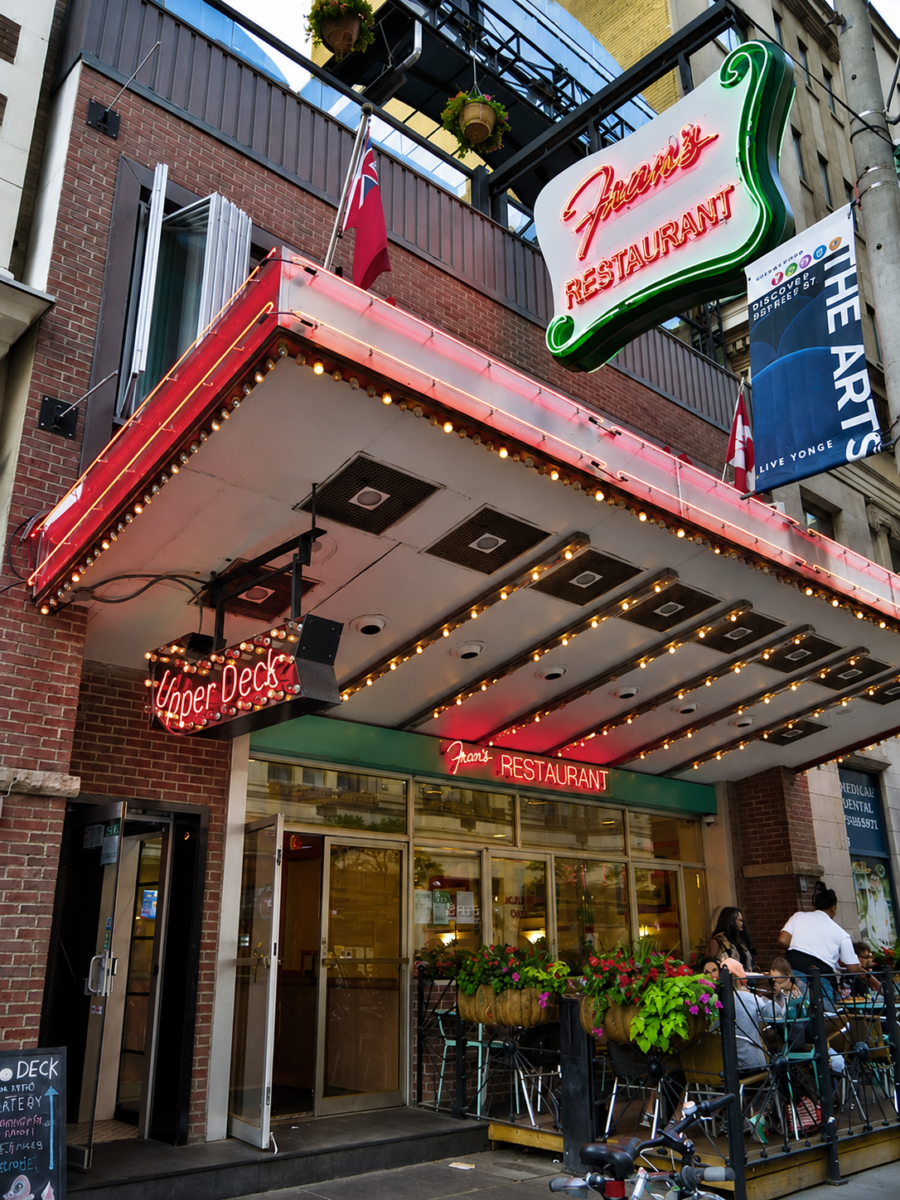
For generations of Torontonians, Fran’s Restaurant was always there.
It was where shift workers stopped for breakfast before sunrise. It was where concertgoers gathered after a night downtown. It was where students lingered over coffee, families met for weekend meals, and late-night conversations stretched into the early morning hours.
For more than eight decades, Fran’s occupied a special place in Toronto’s cultural and culinary landscape. On June 22, the city lost one of the people most responsible for preserving that legacy.
Francis “Fran” Deck, longtime steward of Fran’s Restaurant and son of founder G. Francis “Fran” Deck, passed away peacefully in Toronto at the age of 89.
While his name may not have been widely recognized outside restaurant and hospitality circles, the institution he helped guide remains one of Toronto’s most enduring brands. His passing marks the end of an important chapter in the history of a restaurant that helped shape the city itself.
From a 10-Seat Diner to a Toronto Landmark
The story of Fran’s began in 1940 with a modest 10-seat diner near Yonge and St. Clair.
What started as a small neighbourhood restaurant grew into one of Toronto’s most recognizable dining chains, with locations serving generations of residents across the city. Along the way, Fran’s built a reputation for hospitality, consistency, and accessibility.
Long before Toronto became the vibrant, around-the-clock city it is today, Fran’s welcomed customers at all hours. The restaurant became famous for operating 24 hours a day, 365 days a year. Family stories recount that some of the original locations never even had locks on their front doors, a small detail that reflected the open-door philosophy that defined the business.
Fran’s became a place where everyone felt welcome. Office workers, artists, musicians, students, families, tourists, and night-shift employees all found a seat at the same tables.
That broad appeal helped make Fran’s part of the daily rhythm of Toronto life.
Fran’s at 20 College St. in Toronto. Photo: Trip Advisor
A Restaurant That Helped Shape Toronto’s Dining Culture
Fran’s influence extended well beyond serving meals.
The restaurant is widely credited with popularizing the banquet burger, a dish that became a staple across Toronto’s restaurant scene and remains closely associated with classic diner culture. The company has also long maintained that founder Fran Deck created one of the city’s earliest bacon-and-cheese burgers, originally known as the Forest Hill Burger.
Coffee became equally synonymous with the brand. For countless customers, a visit to Fran’s meant a bottomless cup, familiar faces, and a comfortable place to sit for a while.
Some of the restaurant’s most enduring menu items emerged from simple conversations with customers. One family story recalls how waffles topped with ice cream became a menu favourite after a regular mentioned his fondness for both. Founder Fran Deck saw no reason they couldn’t be served together. The combination proved popular and became part of the restaurant’s history.
Stories like that illustrate why Fran’s endured. The restaurant evolved alongside its customers and reflected the character of the city around it.
A Gathering Place for Toronto
Few restaurants become part of a city’s collective memory. Fran’s did.
Legendary pianist Glenn Gould was among its most famous regulars, known for visiting during the early hours of the morning. Folk music icon Gordon Lightfoot also had connections to the restaurant early in his career.
Yet the restaurant’s importance was never defined by celebrity patrons.
Its real significance came from the ordinary moments that unfolded there every day. First dates. Family celebrations. Business meetings. Post-concert meals. Quiet breakfasts before work. Conversations that lasted longer than expected.
For decades, Fran’s served as a gathering place where people from every part of the city crossed paths.
Carrying Forward a Family Legacy
When founder G. Francis “Fran” Deck passed away in 1976, the responsibility of preserving the family business fell to the next generation.
Fran Deck embraced that role with the support of his wife Anne and their family. Those who knew him describe a gifted storyteller, a dedicated mentor, and a man who believed deeply in the value of community.
He often spoke about the small details that helped define the restaurant, from recipes developed by his mother Ellen to the traditions that made customers feel at home. He understood that Fran’s was built on more than food. It was built on relationships.
That perspective guided his stewardship of the business for decades.
Preserving an Important Toronto Brand
The restaurant entered a new era in the late 1990s when restaurateur Joon Kim acquired the business and began guiding the brand forward.
In announcing Fran Deck’s passing, the family specifically acknowledged Kim’s dedication to preserving the traditions and character that have defined Fran’s for generations.
That continuity is significant. Toronto’s retail and restaurant landscape has changed dramatically over the past several decades. Historic businesses have disappeared, independent operators have faced increasing pressures, and many long-standing brands have faded into memory.
Fran’s remains one of the few surviving names that still connects today’s city to an earlier Toronto.
Remembering Fran Deck
Beyond the restaurant business, Fran Deck was devoted to his family and community.
He supported Covenant House, participated in a men’s therapy group during retirement, and took genuine satisfaction in helping others. He loved movies, coffee, chocolate, the Toronto Blue Jays, and the Green Bay Packers. He was known for his humour, his stories, and his insistence that fries should always be served hot.
His grandson, Kyle Ecclestone, perhaps summarized his legacy best.
“My Papa’s love for family and food was something that extended beyond the walls of the restaurant,” he said in a family statement. “His stories, his jokes, and the time we shared together will not be forgotten.”
For Toronto, Fran Deck’s passing represents the loss of a businessman, family man, and caretaker of an institution that helped define the city’s dining culture.
His legacy lives on in the restaurant that bears his family’s name, in the generations of customers who shared meals at its tables, and in the enduring belief that hospitality begins with making people feel welcome.
A growing gap between artificial intelligence adoption and execution is putting client revenue and employee retention at risk for professional services firms, according to a new report from Thomson Reuters.
The company said its 2026 Future of Professionals report found that while AI tools are widely used across legal, tax, audit and risk professions, many organizations are failing to translate that usage into measurable business value, exposing them to financial and operational consequences.
The findings point to a disconnect that is beginning to affect both client relationships and workforce stability. Thomson Reuters estimates that up to US$143 billion in client revenue is at risk in the United States alone as firms struggle to meet expectations for AI-enabled services, while a significant share of professionals say they are considering leaving employers that fall short on AI delivery.
Steve Hasker
“We’re seeing a clear divide emerge,” said Steve Hasker, president and CEO of Thomson Reuters. “Firms that are operationalizing AI are pulling ahead. Those that aren’t are starting to take on real risk, across talent, clients, and financial performance. Closing that execution gap is now a business imperative for professional firms.”
The report is based on a global survey of more than 1,800 professionals conducted earlier this year across 62 countries, spanning private practice, corporate and government roles.
It found that AI adoption itself is not the primary issue. About 74 per cent of respondents said they use AI tools weekly, yet 91 per cent believe their organizations are not fully realizing the technology’s potential. This gap is contributing to unintended risks, including the rise of so-called “shadow AI” — the use of tools that have not been approved by employers.
Roughly one-third of lawyers, accountants and compliance professionals reported using unsanctioned AI tools, a figure that rises to 41 per cent among those who believe their organizations are moving too slowly on implementation. At the same time, respondents indicated high expectations for safeguards, with 96 per cent saying AI systems must protect confidential data, 94 per cent requiring verified, authoritative content and 90 per cent needing outputs they can explain and defend. However, 41 per cent said they lack access to tools that meet those standards.
The report also highlights a widening gap between strategy and execution inside organizations. While some firms have articulated AI ambitions, 35 per cent of respondents said those plans are not reflected in their day-to-day work, and nearly one in five said their organization still lacks a clear AI strategy.
That disconnect is increasingly influencing workforce decisions. One in four professionals — or 24 per cent — said they would consider leaving their employer within two years if they do not see the expected value from AI, with 13 per cent indicating they could leave within 12 months. Despite that, nearly half of senior leaders surveyed believe meaningful talent pressure remains at least three years away.
olia danilevich photo
Access to AI tools is also emerging as a factor in recruitment. The report found that 62 per cent of respondents would consider the availability of professional-grade AI when evaluating a new role, and among those already using such tools, nearly one-third said they would decline a job offer that did not provide them.
Client expectations are shifting in parallel. According to the report, 78 per cent of corporate clients now consider AI-enabled quality improvements to be very important or essential, yet only six per cent believe most service providers are delivering on that expectation. As a result, 32 per cent of clients said they plan to reconsider provider relationships within the next 12 months, with some placing more than US$1 million in annual work under review.
“Not all AI is created equal. In professions where there is real liability, the standard has to be much higher,” said Hasker. “When outputs shape legal judgments, regulatory filings, or client advice, ‘almost right’ isn’t good enough. That’s why we build what we call Fiduciary-Grade AI, technology professionals can verify, trust, and ultimately stand behind.”
Thomson Reuters said the pressures outlined in the report are converging across risk management, talent retention and client demand, underscoring the need for firms to move beyond experimentation toward operational deployment of AI tools.
The company said the challenge is no longer technological readiness but execution, as organizations face increasing expectations for accountability in how AI is implemented and governed.
SELLIT9 has raised $4.1 million in new funding to expand its recommerce trade-in platform across Canada and the United States, as the Toronto-based company looks to scale partnerships with retailers and grow its technology.
The financing is aimed at accelerating the company’s growth strategy, including expanding its platform capabilities, increasing its network of retail partners and entering the U.S. market. SELLIT9 operates a trade-in platform that allows consumers to exchange unused household items—starting with electronics—for value, while enabling retailers to offer trade-in incentives without managing inventory.
Josh Guttman
“Consumers sit on billions of dollars of untapped value sitting idle in their homes, while household debt and the cost of goods are at record highs,” said Josh Guttman, co-founder and chief executive of SELLIT9. “This funding allows us to scale our platform, partner with more retailers, and make the circular economy the default choice for consumers looking to unlock fast liquidity while reducing e-waste.”
The company said its model is designed to create purchasing power for consumers while supporting retailers with customer retention and sales growth initiatives tied to trade-ins. It also positions itself within the broader shift toward reuse and refurbishment of goods.
“The hard part of this business is making an accurate trade-in feel instant, and building it so the same engine works for any product, not just one category,” said Alvarez. “We started with electronics because that’s where the value and the waste are most concentrated, but the platform is built for used goods of all kinds. This funding lets us price more items in real time, grow our engineering team in Toronto, and scale for the U.S. market.”
Since launching, the company said it has facilitated the trade of more than 6,000 items with a total value exceeding $2.4 million through a network of more than 100 refurbishers and 25 merchants. It added that the model has diverted electronic waste from landfills, though it did not quantify the total volume.
Investors in the round pointed to the company’s approach to recommerce and its potential to expand within the retail sector.
Dinar Ahmed
“SELLIT9 is bringing a differentiated approach to recommerce, enabling consumers to turn owned goods into purchasing power. We believe their platform can reshape how value is unlocked across the retail landscape. Josh and Oz are exactly the kind of entrepreneurs the Seed Venture Fund partners with, fully aligned with BDC’s mission to back ambitious Canadian companies with the potential to become category leaders,” said Dinar Ahmed, partner at BDC Seed Venture Fund.
“We are very excited to support SELLIT9 in this new stage of growth,” said Bouacida. “The team has built an innovative solution modernizing the trade-in market through a simple and efficient technology for merchants, resellers and consumers. We’ve been impressed by the founders’ vision, execution, and ambition, and we look forward to supporting the company as it revolutionizes the resell market.”
The company framed the investment as coming at a time of economic pressure for consumers and increasing focus on waste reduction, positioning its platform as an alternative way to access value from unused goods while supporting reuse.
SELLIT9 said it plans to use the new capital to expand its engineering team in Toronto, enhance real-time pricing capabilities across more product categories and deepen its presence in the U.S. market as it scales operations.