Paramount Fine Foods began as one Middle Eastern Restaurant in Mississauga, Ontario and is now the fastest growing Middle Eastern food chain in Canada – with continued growth set for the near future.
“We’ve actually grown very quickly. As a 10-year-old company we actually saw most of our growth in the last five years. We grew very rapidly and we are continuing along that growth path,” said Greg Smith, executive vice president of Paramount, which is based in Mississauga.
“But we’re trying to do it in a very systematic and strategic manner – one that sets up our existing locations for success and continues to support those restaurants as they get busier and as they have their own challenges. We want to make sure that we are continually supporting the existing locations while growing at a fair rate.”
The company started in 2007. It currently has 63 locations worldwide – 30 of them are in the Greater Toronto Area.
PHOTO: PARAMOUNT FINE FOODS FACEBOOK
“We have locations in British Columbia, Alberta, Quebec, obviously Ontario, the United States, United Kingdom, Lebanon and Pakistan,” said Smith.
“We have over 100 locations in our pipeline right now. We’re going to add 16 locations this year – 11 of which will be in Canada. The rest will be overseas in Lebanon and Pakistan. Our plans are to continue to grow, predominantly in the province of Quebec. We’re going to add two locations. We actually just opened a location at the Montreal airport. We’re going to do two, possibly three in British Columbia. All three are in Vancouver . . . and we have one to two in Alberta planned already. We have up to six planned in the GTA. A couple in Ottawa are also planned.
“We continue to grow but we want to make sure that we’re growing at a pace that we can sustain. So we’ve actually scaled back some of our growth if you can imagine. So rather than adding 25 or 30 this year we’ll add 16 to 20 this year.”
Paramount operates three different business concepts. One is Paramount Butcher Shop primarily located in Lebanon and Pakistan with one in Toronto.
PHOTO: PARAMOUNT BUTCHER SHOP FACEBOOK
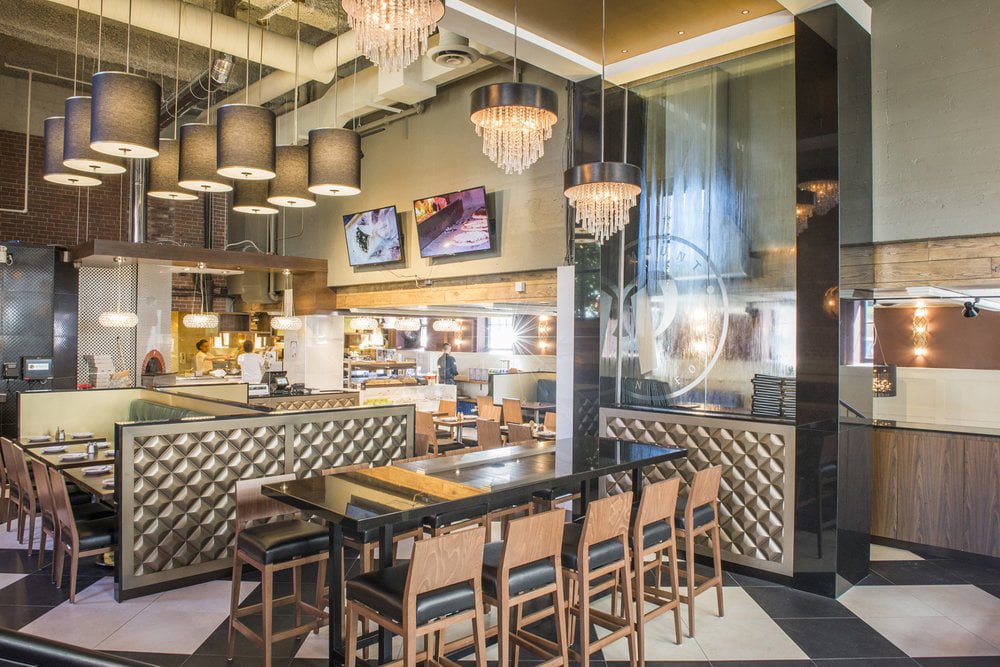
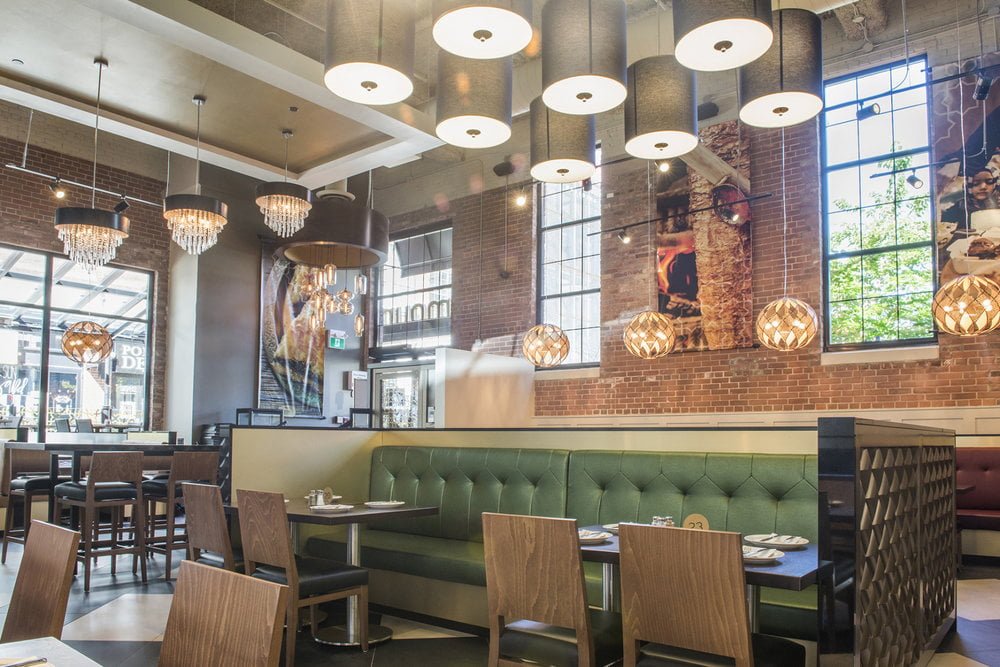
The restaurant concept, the Paramount Middle Eastern Kitchen, includes a traditional sit-down restaurant, predominantly free-standing and anywhere from 3,000 to 5,000 square feet. Two thirds of the locations are under that brand.
The third concept is the Paramount Lebanese Kitchen which is more of a quick service brand which is predominantly in business towers, universities, hospitals, and airports.
Smith said Paramount is in a really good position right now to address what’s happening in the food industry from a consumer perspective.
“Our business model is based on authentic Lebanese cuisine. We have two executive chefs that are in Ontario that are from the Middle East and we obviously have a number of chefs that are still in Lebanon working for us,” he said.
“Our menu is based on traditional authentic food from the Middle East. It’s all made fresh either on site. So all of our protein is grilled over a fire. All of our bread is grilled on a wood-burning or gas-burning stone oven. And all of our food is made fresh or comes directly from our master kitchen and is made on site fresh there . . . It’s a little bit different concept. The pre-made and ready-to-serve stuff is not what we really deal in. Our concept is really based on large platters, people sharing large meals with skewers of meat, skewers of falafel, fresh made salads. Basically breaking bread together in a group at large tables.”
Smith said the brand is resonating with people because good food is important for them but also people are interested in ethnic food, different food from what they grew up on.
PHOTO: BUILDIT BY DESIGN
1 of 5
PHOTO: BUILDIT BY DESIGN
PHOTO: BUILDIT BY DESIGN
PHOTO: BUILDIT BY DESIGN
PHOTO: BUILDIT BY DESIGN
PHOTO: BUILDIT BY DESIGN
“Whether you’re from the Middle East or whether you’re from a different background, today’s consumer is exposed to a lot more options. They’re less afraid of things they don’t know because of social media and all of our hand held devices and and things like that. We’re exposed to all sorts of cool things,” he said.
“So the consumer is more inclined to experiment. They’re more inclined to try new things. The consumer gets bored quickly with the same old, same old. What we offer is authentic food that’s fresh, it’s exotic. Different flavours, textures and tastes that they wouldn’t normally get or be exposed to unless they visit Middle Eastern type restaurants a lot.
“The other thing why it resonates with people is that our food is healthy. All of our food is locally sourced. All of our restaurants are 100 per cent halal. That’s really important to understand that we believe in the halal practice. There’s no alcohol served at any of our restaurants. All of our food is certified . . . People want to know that the food they’re eating was raised properly. They want to know that the food they’re eating doesn’t have additives or different things put in. So all of our food is grain fed and for the most part locally sourced here in Ontario and Canada. Those are all things that the consumer is looking for today.”
The Canadian retail storefronts for IQOS, a smoking cessation concept from Rothmans, Benson, and Hedges Inc, will now be called Q-Lab after a naming campaign. The name change is due to Health Canada’s restrictions on advertising tobacco, which rendered the company unable to install signage on its storefronts. The government organization claimed that the IQOS name promoted tobacco-related uses and such advertising is prohibited.
The Q-Lab stores provide a new retail experience for smoking clients wanting to explore this alternative product. Traditionally, tobacco products are sold over the counter in places like corner stores and gas stations. This retail concept creates an opportunity for customers to experience the product in person as well as receive assistance from in-store experts.
The IQOS technology is unique to Rothmans, Benson and Hedges Inc. It features three different components to the electronic tobacco heating device: a Heatstick containing tobacco, an IQOS holder, and a charger that is roughly the size of a cell phone. The Heatsticks are made specifically to be used with IQOS and features a specially formulated tobacco blend. IQOS is designed to help transition current cigarette clients into a smokeless alternative.
While Parent company Philip Morris International launched permanent storefronts in Canada, its strategy in Germany involved launching pop-up boutiques which allowed them to introduce the product quickly to a large number of smokers. It remains to be seen if a similar strategy might be adopted for the new Q-Lab banner in Canada, which is also expected to see further expansion as smokers seek alternatives to traditional cigarettes.
Despite all the hype over the past six months since cannabis became legal in Canada, most existing retail dispensaries are rather similar in their concept and overall aesthetic. That includes modern interiors with lots of glass counters, while also all selling the same basic products – capsules, dried flowers and accessories. Given that the same supply channels are supplying the same product, up-and-coming cannabis retailers are now looking to differentiate their storefronts by creating unique ‘experiential’ spaces.
Retail Insider interviewed one new retailer that is based in Toronto, with plans to branch outward once permitted by legislation.
Getting The Basics Right
Jeremy Potvin, co-founder of Weedbox (WDBX), believes they’re doing things in a unique way. “The tip of our spear is retail,” he explains. “The team we’ve put together is exceptional. You’ll be hard pressed to find – in the cannabis space – another company that has a retail team like ours.”
When Jeremy and his business partner, Lorilynn McCorrister, launched the company, they committed to connecting with consumers first and understanding them as best as possible. They built their brand around this customer-centric philosophy and the retail concept grew from there.
They spent most of 2017 with the team at Tokyo Smoke getting to know the market and learning from their wins. Through that experience, Jeremy and Lorilynn realized that physical retail was going to be the most important part of their success. E-commerce is one of their “prongs ”, but it is a layer, not the core focus. Bricks and mortar stores are the sweet spot, especially in the consumable world.
Differentiation In The Crowded Marketplace
“From the beginning, WDBX looked at being bigger than just a cannabis company,” says Lorilynn McCorrister, co-founder. “Brand is a badge, a community that people want to be a part of. Cannabis use doesn’t define you. We set out to build a lifestyle brand with cannabis at the centre as opposed to a cannabis lifestyle brand.”
One of the first things they did was hire Sydney Beder, a veteran fashion executive who has had success with Lululemon and just ended a 6-year stint with Roots, where he helped turn the Canadian icon around. He’s a legend in the retail world.
“Syd got our concept immediately. So we developed a strategy to create a bigger brand, bigger community and a bigger audience for us,” says Lorilynn. “We looked at cannabis products in all its forms – beautiful and sustainable hemp clothing and organic cotton, which is great for the environment. It’s so much more than the itchy clothing many people think of. There’s a huge opportunity that’s being missed in things like bedding, incense and candles.” (Using it in skin care and wellness products isn’t currently legal but is something they’re keeping an eye on and can add to their offerings later.)
In It For The Long Term
One of the main questions Jeremy and Lorilynn asked when determining their locations was “How can we service a community for 25 years from one location?”
They believe it’s about creating a store to match consumers’ patterns and how they shop. Above all, the location must be convenient.
“Our stores are architectural masterpieces,” says Jeremy. “But they’re in real locations. We’re not interested in fancy addresses.”
To design these masterpieces, WDBX has partnered with Alex Hutchison of Studio Marlowe, who also designed the simple yet stunning Casa LaPalma. She shares their sustainability values so tries to source local and reclaimed building materials. She managed to source some incredible hemp products (hemp fibre mixed with concrete).
Instead of the stores that most dispensaries are creating – massive space with glass counters with lots of product, WDBX want to create an immersive, elevated experience.
“You walk into one of our stores, and you come home to our brand,” explains Lorilynn. “You want to know more about it, it’s an exciting and enticing experience.”
They’re planning a variety of store sizes and floor plans. The stores will offer an area for customers who are looking for a bit of cannabis education, or who just want a self-serve kiosk. And then there is the experienced customer who wants to connect with a salesperson but already knows what they need.
Some of the solutions out there for cleaning bongs and pipes are full of chemicals that you don’t actually want to put your mouth on. How do you clean your accessories? Let us know! https://t.co/y871SyBzcY
We’ve gathered four of the most common myths about marijuana and its purveyors and debunked them with facts for your (and perhaps your concerned aunt’s) convenience https://t.co/fLb0aPmnQO
Because WDBX wasn’t a winner in the Ontario government’s initial license lottery, the company is currently waiting to see when the next tranche of licenses will be available. In the meantime, it’s steaming ahead with its lifestyle brand retail strategy.
“This hasn’t affected our plan,” says Lorilynn. “It’s just delayed our timing. We assume there will be more licenses coming out later in the spring.
WDBX’s first lifestyle store will open at Queen Street West and Ossington Avenue, in the former Jonathan and Olivia store. But thoughtful planning is required around their other pending leases – it’s very difficult to transition a lifestyle store into a cannabis store. With dispensaries, your building infrastructure must include security considerations like vaults, safes and security systems.
While their other stores are scheduled around the GTA, plans for the future also include a 20-acre property (possibly opening in the summer of 2021). A Hwy 400 gateway property, it will service those who travel to the Georgian Bay, Muskoka and Honey Harbour areas. It’s mixed retail to deliver a shopping experience (including WDBX product) to the people on their way to cottage country and for boaters coming into the waterway system.
So What About That Lottery?
In late 2018, The Alcohol and Gaming Commission of Ontario (AGCO) determined that the current cannabis supply could only support 25 store locations. A lottery was held to determine the winners who would be among the first to open dispensaries across the province. Anyone could apply, and thousands of people did, including lists of people who may or may not know anything about cannabis or running a business. From the thousands of applicants, a third party adjudicator chose the winners, with the unsuccessful candidates going onto a waiting list. WDBX is Number 3000 on that list.
Many felt the process was flawed. A major fear within the legitimate cannabis companies is that the lottery will negatively impact the consumer experience – if it’s their first time using cannabis, they may not return if they have a bad experience in a less than reputable store.
“We’re worried about going backwards – if lottery winners do this wrong, the public sentiment might not progress the industry forward,” explains Lorilynn.
Another part of the issue is trying to convert a black market to an efficient, legal market and supply chain. And changing perceptions that cannabis users are everyday people – and not the typical “stoner in mom’s basement” – will also suffer if these first stores are unprofessional.
Larger, Multi-national Companies
Jeremy acknowledges that the price of entering the cannabis space is very high. The lottery was an opportunity to level the playing field between the smaller businesses and the larger multi-national companies with deep pockets. Unfortunately, many of the lottery winners are unprepared and unable to open a cannabis store by April 2019 (a requirement if you won the lottery). So they’re partnering with these big companies, getting large cheques because they won but they have no background in the space and the multi-nationals are running their stores anyway.
“In an attempt to create a fair system, they’ve created an incredibly unfair system,” Jeremy points out.
Stay tuned for future articles on this developing story. Rules and guidance change weekly and it’s difficult for cannabis retailers to make and implement an effective plan.
Unique Marketing Will Set WDBX Apart
Typical retail stores have a variety of advertising options when trying to reach customers, but public marketing for cannabis is incredibly restricted.
Realizing they need to be very innovative and creative to attract customers, WDBX turned to technology. They’ve hired front-end and back-end developers and have begun building data engines. Recently, they recognized many of the solutions they’re creating on the technology side would help the entire industry; the data they collect, the way they’re driving consumers, the way they’ll be able to help their own retail space.
“Our stores alone are our competitive advantage because of the way we think about retail, the way we’ve built our space and how consumers get to interact with materials in our stores,” adds Jeremy. “The way we can attract consumers and make their experience that much better with technology is 100% unique to our company. There’s no other cannabis company building what we are.”
Only time – and more cannabis licenses – will tell.
Rebranding To “Somewhere Variety”
A rebrand is in the works for their customer retail play and WDBX will be changing to Somewhere Variety later in the spring. WDBX will remain their parent company. But Somewhere Variety is more inclusive of the holistic brand they’re building. The massive technology solution that will be very meaningful to consumers will also be announced at that time.
Who To Contact:
Please contact Jeremy Potvin directly at jp@weedbox.io for more information.
The concept for Volition Beauty was born from the realization that beauty brands often tell consumers what they want, not the other way around. Why not allow the consumer to have an active role in product development? Founders Brandy Hoffman and Patricia Santos took this question, combined it with the power of crowdsourcing and launched their first product campaign in September 2015. Members of the Volition Beauty community are welcome to submit product suggestions. Those that make it through the vetting process are then voted on – the winning idea goes into production and the “Innovator” behind the new product receives a commission for each unit sold.
Through this strategy, Sephora provides independent brands with a unique retail opportunity in which the brand can craft a brick-and-mortar experience for consumers while expanding their e-commerce reach. Sephora gains the competitive edge by offering a retail presence to brands that were once exclusively available online to Canadians, thereby keeping the dollars of beauty enthusiasts with the LVMH-owned company.
This practice is a growing trend amongst omni-channel retailers. The former Beauty Underground, located at the Hudson’s Bay on Queen Street West in Toronto, included controversial beauty line Lime Crime, and popular makeup brush and cosmetics brand Sigma Beauty; both of which could previously only be purchased online by Canadians. Lime Crime and Sigma are still available for purchase on the Hudson’s Bay website and at select stores. Similarly, in the American market, we are seeing retailers like Ulta Beauty introduce wildly successful brands like Ofra Cosmetics, Dose of Colors, and Kylie Cosmetics to their shelves.
There is no doubt that Sephora owns a considerable piece of the market in Canada. The French retailer embarked on a “Toronto Takeover” initiative in 2016, opening four locations in a short period of time. However, Sephora does not stand uncontested in the market. Shoppers Drug Mart’s beautyBOUTIQUE as well as department stores like Saks Fifth Avenue, Holt Renfrew, and Nordstrom offer many of the same brands carried by Sephora as well as ultra-luxe brands like: By Terry, Clé de Peau Beauté, Sisley-Paris, and Chantecaille.
Sephora continues to maintain its adventurous spirit by bringing unique brands like Volition Beauty to markets that were previously untapped.This strategy appears to be successful for the company and shows no signs of slowing down. We can expect to see more partnerships as Sephora continues to innovate in the face of increasing competition.
A graduate from both the University of Toronto and Humber College, Julia spent most of her educational career honing her skills in critical thinking, marketing communications, and finding her unique voice in her writing.
With tenures in several areas of retail under her belt, Julia has lead teams in achieving sales goals and allowed herself to become consumed in understanding retail business.
Every year now we put together a list of international brands that entered Canada by opening storefronts. The following is an overview of the retailers that entered Canada in 2018, as well as a description of each that includes updates.
The following list of 2018 international retailers that entered Canada is ordered roughly from the beginning of the year until December, and we’ve included a brief description of each retailer as well as a link to a Retail Insider article if we wrote about it.
Winter 2018: The year got off to a somewhat slow start with several international brands entering the country by opening stores.
PHOTO: MUMUSO CANADA, VIA FACEBOOK
Mumuso: In early 2018, Chinese value retailer Mumuso, which positions itself as a “Korean” brand, opened its first store in Canada at 2120 W. 41 Avenue in Vancouver’s Kerrisdale neighbourhood. The value-priced retailer carries a wide range of “lifestyle” items such as household products, textiles, apparel, accessories, kitchen items, bags, stationery, skincare, and cosmetics. The concept is remarkably similar to Miniso, a Chinese retailer that positions itself as a “Japanese” retailer with plans to open 500 stores, amid controversy. So far Mumuso has opened two stores in Canada, with its second being at Aberdeen Centre in Richmond BC.
TripAdvisor airport storefronts
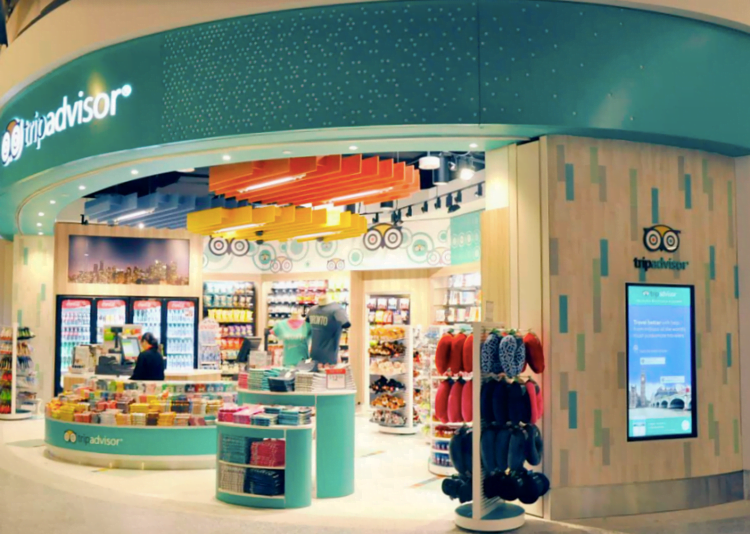
TripAdvisor airport storefronts: In January of 2018, TripAdvisor chose Toronto to open its very first standalone retail concept before it quickly expanded to other airports in North America. The retail space, located in Pearson Airport’s Terminal 1 Domestic, is as much experiential as it is about the products contained within. In addition to offering travel essentials, the store includes a large, interactive screen that visitors can use to learn more about Toronto and the surrounding area. Customers can access the latest TripAdvisor reviews and traveler photos for nearby hotels, attractions and restaurants. The store opened in partnership with Atlanta-based Paradies Lagardère, which operates more than 850 stores and restaurants in 98 airports, globally.
PHOTO: NORDSTROM
Spring 2018: International retailers began to pick up the pace in the spring, with several major international retailers debuting their first Canadian stores.
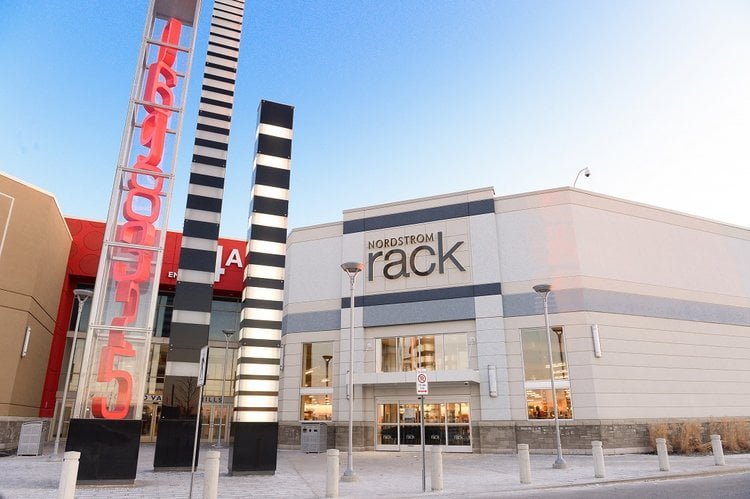
Nordstrom Rack: Nordstrom’s off-price division Nordstrom Rack opened its first store in Canada at Vaughan Mills, north of Toronto. That was followed by stores in Calgary, downtown Toronto, Ottawa, Edmonton and Mississauga. Nordstrom Rack plans to eventually open between 12 and 15 locations in Canada, and it plans to announce more stores in the near future.
PHOTO: ASICS
ASICS: In March of 2018, Japanese athletic fashion and footwear brand ASICS opened its Canadian flagship in Toronto at 364 Queen Street West. ASICS is a Japanese multinational corporation which produces footwear and sports equipment designed for a wide range of sports. The name is an acronym for the Latin phrase anima sana in corpore sano which translates as “a healthy soul in a healthy body”. Its running shoes have been ranked among the top performance footwear in the market.
PHOTO: DYLAN’S CANDY BAR
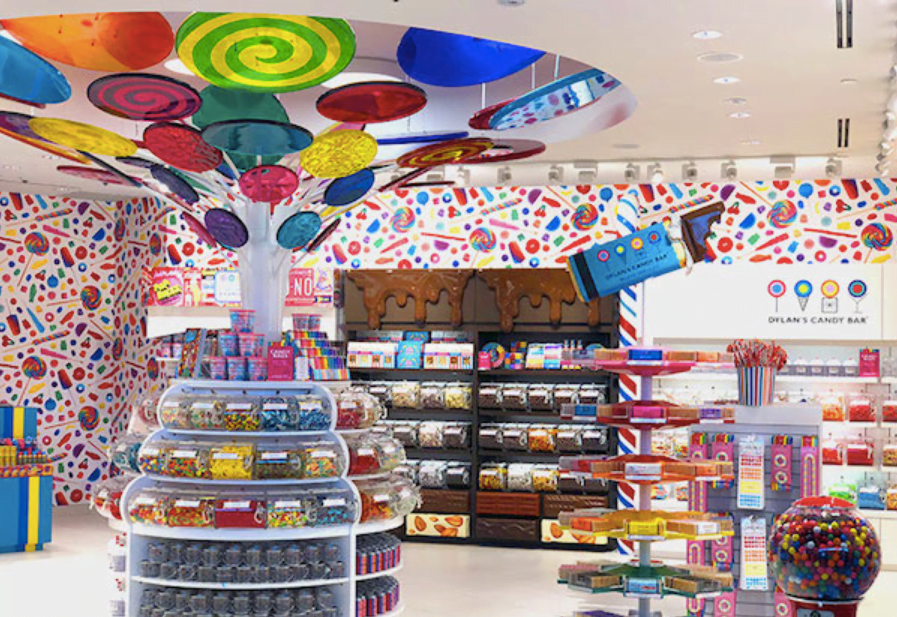
Dylan’s Candy Bar: US-based candy retailer Dylan’s Candy Bar opened its first location in Canada at Toronto’s Pearson Airport in March of 2018, while at the same time announcing a distribution agreement with Hudson’s Bay and Holt Renfrew in Canada. Dylan’s Candy Bar carries a vast selection of gummies, chocolates, jelly beans, lollipops and much more. The products include Dylan’s own private label items, along with various American nostalgic favourites and imported specialty sweets. The retailer also carries a range of gifts and lifestyle items, such as toys and stuffed animals, accessories, apparel and stationary. Dylan’s has locations in several US airports as well as unique standalone locations in a handful of cities. The Toronto location is currently the only Dylan’s store in Canada.
BROSSARD OPENING. PHOTO: CARL BOUTET
Decathlon: The world’s largest sporting goods retailer entered Canada in April of 2018 with a store in Brossard, Quebec. More locations have subsequently been announced for Quebec City and downtown Montreal, with further plans to expand into the Ontario market this year and eventually Canada-wide.
Founded in France in 1976, Decathlon Group is the world’s largest sporting good retailer with more than 1,100 stores in more than 30 countries. It employs more than 78,000 people and boasts annual revenue of about C$15 billion. Decathlon designs, manufactures and distributes a wide range of sports-related equipment and accessories, with over 20 in-house ‘passion brands’ dedicated to different sports, and each with its own design team. Decathlon aims to make sports more accessible by offering a wide range of quality products at affordable prices. The retailer also endeavours to cater to a range of customers from beginners to professionals. Brokerage Oberfeld Snowcap’s Sylvain Charron represents Decathlon in Canada.
Atelier Cologne is considered to be the first fragrance house entirely dedicated to cologne. According to the company, it has “been reinventing the world of perfume with Cologne Absolue, an entirely new olfactive family of natural, unprecedentedly long-wearing scents”. Yorkdale will be the first of several locations for Atelier Cologne in Canada, according to the company, though it remains the only standalone store in the country so far.
Smartwool: The Colorado-based fashion brand for outdoor enthusiasts opened its first store in Canada in the spring of 2018 in Banff, Alberta. Smartwool caters to all sorts of outdoor enthusiasts with its unique Merino wool products. The boutique spans about 1,000 square feet and is located on busy Banff Avenue. More locations are expected, though Banff remains the brand’s only standalone store in Canada.
Casper operates more than 20 ‘Sleep Shops’ across the United States and Canada, and it plans to open 200 retail stores over the next three years. In Canada, there are plans to roll-out locations in British Columbia, Alberta and Quebec, as well as more in the Ontario market. Casper was founded in New York City in 2014 as a direct-to-consumer online retailer and has celebrity backers including Leonardo DiCaprio, Tobey Maguire, Adam Levine and Ashton Kutcher. The company boasts sales in the hundreds of millions of dollars annually.
CF RICHMOND CENTRE. PHOTO: RITCHIE PO
Clinique: The Estée Lauder-owned beauty brand has been in Canadian department stores for decades, and its first standalone Canadian store opened in April of 2018 at CF Richmond Centre in suburban Vancouver. The 630 square foot boutique could be the first of multiple locations in this country, though it remains the only standalone unit so far.
Clinique launched as a subsidiary of Estée Lauder in 1968 by Evelyn Lauder, who also worked as the training director and was the first to wear the trademark white lab coat, which is now worn by Clinique staff worldwide. The brand is known for its expansive offering of beauty lines such as skin care, cosmetics and fragrances. Quality is known to be high, and prices are slightly lower than most ‘luxury brands’ carried in department store cosmetics halls.
The 2,500-square-foot store has elements of avant-garde and retro chic throughout with the use of stainless steel, acrylic, velvet, and leather, as its key visual elements. Canadian licensee Jack Wang brought Douchanglee to Canada after encouragement from his wife, who is a fan of the brand. He said that she found it challenging to find clothing from other brands in the Lower Mainland with a similar fit, quality and styling, prompting the entrepreneur to strike a deal with Taiwan’s Douchanglee to enter the Canadian market. More locations could follow, depending on how the Park Royal unit peforms.
PHOTO: CHLOÉ
Chloé: In May of 2018, French luxury brand Chloé opened its first standalone store in Canada at Toronto’s Yorkdale Shopping Centre. Stone, glass and polished brass characterize the bright space, which features a series of salons housing the brand’s selection of leather goods, jewellery and accessories, footwear, as well as ready-to-wear. Chloé’s iconic powdery rose beige colour scheme can be found throughout, along with shades of white and mustard, offset with brushed or polished natural brass. Vancouver and Toronto’s Bloor-Yorkville could also see locations at some point, according to the company. Chloé can also be found at selected Holt Renfrew, Saks Fifth Avenue and Nordstrom stores in Canada, with some bags also carried at La Maison Simons.
PHOTO: LALINE
Summer 2018: International retailers continued to enter Canada, with a focus on skin care, diamonds, ice cream and fashion.
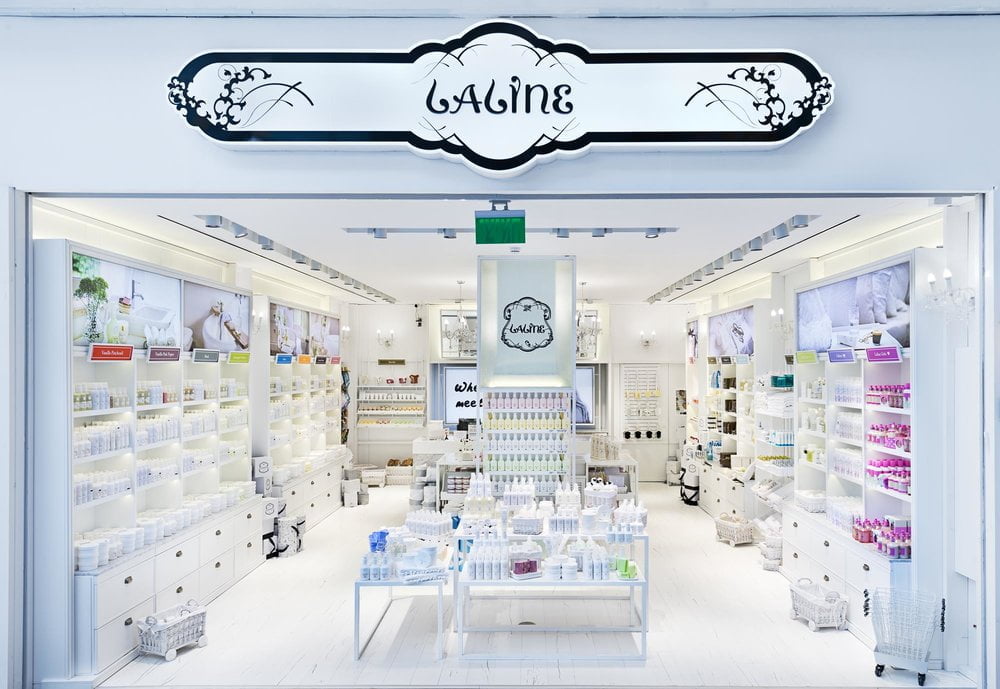
Laline: Israel-based bath/body/lifestyle retailer Laline opened its first Canadian store in June of 2018 at Toronto’s CF Sherway Gardens. The retailer has subsequently opened five other stores in Ontario, with three in the GTA and units in London and Kitchener. After securing the Ontario market, the brand is expected to expand nationally. Laline stated, “As the Canadian market is one of our main strategic markets we expect to open dozens of branches in the next few years,” and when asked about its growth plans, Laline confirmed that its “main focus for 2018-2019 is the Ontario region”.
Laline was founded in 1999 by Revital Levi and Merav Cohen in Tel Aviv, and now boasts more than 100 stores in Israel, as well as international locations in Japan, Spain and in the United States in San Francisco and Hawaii. Laline is a division of the FOX Group and according to the company, Laline targets women, men, babies and teens. Its Canadian stores have some collections tailored to the local market, with price-points being lower than luxury brands in order to become a ‘one-stop shop’ for beauty products, according to the company.
829 QUEEN ST. W. IN TORONTO. PHOTO: CRAIG PATTERSON
VDL: In the summer of 2018, Korean beauty company VDL opened its first standalone store in North America on ‘West Queen West’ in Toronto. At the same time, the brand launched products in retailer ‘The Face Shop’ in selected markets. VDL’s expensive product offerings include makeup (face, lip, eyes, cheeks), nail, skin care (including masks and men’s offerings), cleansing, body & hair and related beauty ‘tools’ such as foundation brushes. The line, which stands for “Violet Dream Luminous”, was founded in 2012 and it has stores in Korea, Singapore, Vietnam, Philippines, China, Hong Kong, as well as wholesale distribution in various global markets.
The stretch of ‘West Queen West’ is becoming something of a beauty destination in Toronto, with several retailers having recently opened in the area.
Established in 1995, Kimberlite Diamond is the first definitive brand to specialize in diamond jewelry in China and is recognized as the leader in China’s diamond industry with almost 700 retail locations. Kimberlite was also the first in China to follow the “quality authentication protocol” with international diamond professional organization HRD (Belgium Diamond High Council), ensuring high-quality diamonds for all Kimberlite Diamond customers.
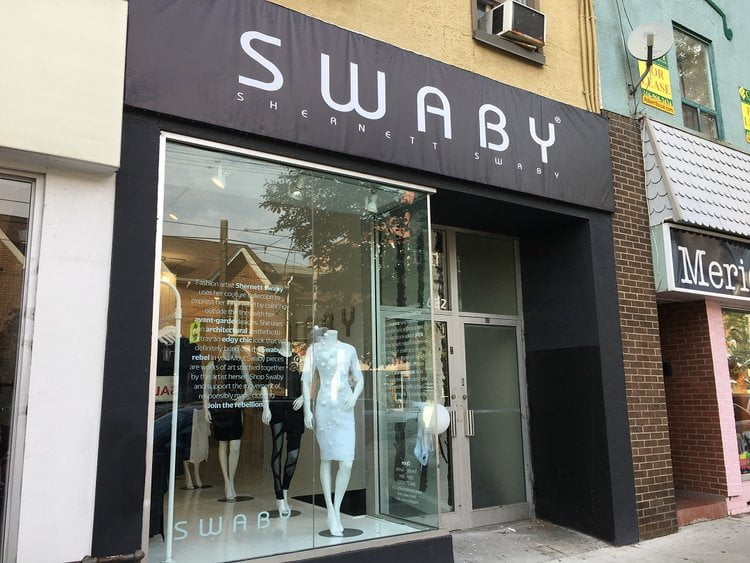
Swaby: In July of 2018, Chicago-based Shernett Swaby opened a store called Swaby on Queen Street West in Toronto. The boutique showcases some of the boldest fashion designs we’ve seen. The concept itself is unlike anything in Canada to date. When someone purchases a garment from her brand, Swaby offers free alterations for the life of each garment and in some instances, Ms. Swaby herself will create a new design out of a garment at no additional cost. For example, a pair of pants may be turned into a skirt, lining in a garment might be replaced, or if someone’s body shape changes, garments can be modified. It’s part of an effort to make her clothing last for years by updating older pieces that might otherwise be discarded, with the longevity of garments, making Swaby both cost-effective as well as environmentally friendly.
Prices range from a bit over $100 for a simple shirt to well into the thousands for bolder designs which even include impressive evening gowns. What sets Swaby apart from other design houses is the personalization that Shernett Swaby herself provides to her clients, and she has plans to grow her business to other major centres. Toronto is likely to be the only location in Canada for the brand, and next year she says she has her heart set on opening her first store in New York City. After that, the goal is to open Swaby stores in Paris and London.
PHOTO: CRAIG PATTERSON
Kenneth Cole: In July of 2018, New York City-based fashion designer Kenneth Cole opened his first Canadian store on Toronto’s Queen Street West. The 1,800 square foot Toronto flagship carries ready to wear clothing, footwear and accessories for both men and women under the Kenneth Cole New York label. The store’s interior is punctuated with raw steel, concrete, brick and glass, aiming to create a welcoming environment which also speaks to the Kenneth Cole brand.
Kenneth Cole’s fashions are sometimes referred to as being an ‘Urban Uniform’ which features mix-and-match pieces made from fabrics that are intended to be comfortable for a busy person on the move.
The brand plans to roll out stores across Canada over the next few years, while at the same time expanding its wholesale accounts with Hudson’s Bay, which features several shop-in-stores for Kenneth Cole.
Cauldron, which launched in 2015, specializes in liquid nitrogen ice cream – a trendy new way of making small batches of ice cream instantaneously. Cauldron offers a variety of unique flavours such as Earl Grey Lavender, Milk and Cereal, S’mores, H20 Rose, Pineapple Express, and Red Velvet.
The Toronto expansion was Cauldron’s first outside of California. Cauldron Ice Cream has partnered with franchise development company Fransmart to grow the brand and is currently looking to expand into other major markets, as well, by partnering with experienced multi-unit food service operators.
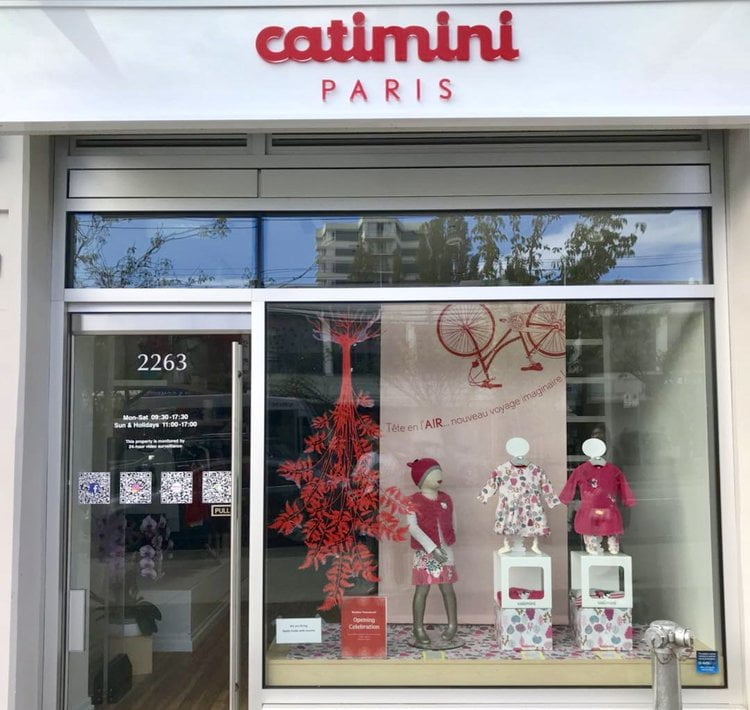
Kidz Global Apparel Ltd., the licensed distributor for Catimini products in Canada, opened the first Canadian Catimini store in Vancouver’s Kerrisdale neighbourhood. The premium brand, which was established in 1972 in France, carries clothing for children ranging in age from newborn to 14 years old. Catimini has approximately 145 locations in more than 20 countries around the world, including both standalone stores and sales points within department stores.
Fall/Winter 2018: The season was off to a good start with a focus on European and US brands opening stores.
Launched in 1991 in the U.K., Oasis specializes in trendy, colourful clothing geared towards women between the ages of 18 and 50, with a focus on consumers in their late 20s. The Canadian licensee is already actively looking at expanding the Oasis Fashion franchise into other Canadian markets. Currently, he’s most interested in Toronto, Montreal and Vancouver, with a focus on locations within shopping centres. Most Oasis stores are between 1,500 and 2,000 square feet in size. Oasis Fashion is also exploring the possibility of establishing concessions within Hudson’s Bay or Nordstrom stores.
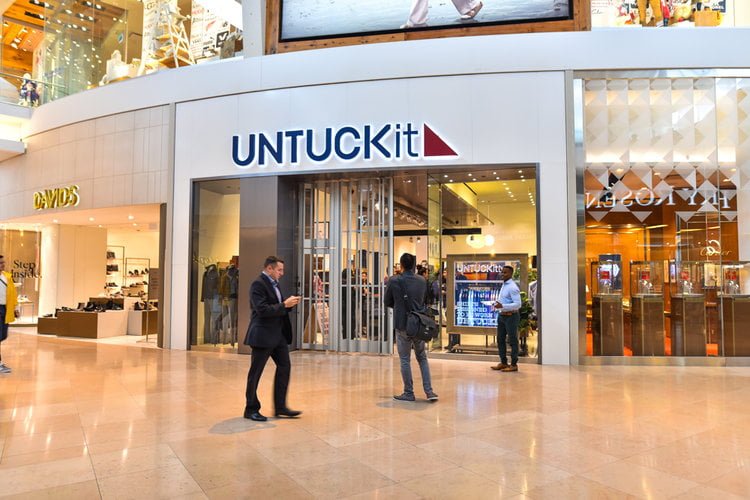
UNTUCKit also launched an e-commerce platform for the Canadian market and has announced that it has a product fulfilment centre that is based in Toronto.
Since launching in 2011, UNTUCKit has grown to 13 product categories that range from T-shirts and polos to sports jackets and performance wear. The brand has also introduced lines for women and children, offering “perfectly contoured hemlines” and more than 50 tailored fit options.
Wayne Gretzky is an investor and he has appeared in UNTUCKit marketing campaigns in stores and across digital and print platforms in both the United States as well as in Canada.
Brokerage Oberfeld Snowcap’sJessica Millett is representing UNTUCKit as part of its Canadian store expansion. Future locations are expected to generally measure between 1,500 square feet and 2,000 square feet, and new Canadian locations are currently being negotiated with announcements to follow.
VANCOUVER STOREFRONT PHOTO: BRITNEY GILL PHOTOGRAPHY
Bonpoint: Paris-based children’s luxury fashion retailer Bonpoint opened its first Canadian store in October of 2018. The 920-square-foot boutique is located at 1512 W. 14th Avenue in the city’s Fairview area, and is being run in partnership with upscale multi-brand children’s retailer Isola Bella, which operates a retail space in Vancouver’s Kerrisdale area.
Bonpoint sells upscale children’s fashions including newborns, and also has a line of footwear, sunglasses, perfume and skincare. Some garments can cost into the hundreds of dollars each. The company was founded in 1975 with a single store in Paris, and the company has since expanded to include retail and wholesale accounts globally. Bonpoint has nine stores in the United States.
OLIVER PEOPLES’ YORKDALE STOREFRONT. PHOTO: CRAIG PATTERSON
Oliver Peoples’ frames are “anti-logo” with prices that can be well into the hundreds, which differentiates Oliver Peoples from other recent entrants that offer more in the way of value pricing. Oliver Peoples’ frames are known to be worn by celebrities and the brand has an impressive following on social media. The company was founded in 1987 with a boutique in West Hollywood, and it is now sold in its own boutiques as well as in upscale multi-brand retailers that carry eyewear. Its designers are in Los Angeles and frames are manufactured in Italy and Japan. Oliver Peoples was acquired by eyewear conglomerate Luxottica in 2007.
PELOTON AT TORONTO’S YORKDALE SHOPPING CENTRE. PHOTO: JUSTIN LAU.
Peloton: New York City-based fitness company Peloton entered Canada with a splash beginning in October with several pop-up locations opening over the course of about a month. The first was a standalone store on Toronto’s Mink Mile which is still operating as of this week. Other locations followed soon after, including at Toronto’s Yorkdale Shopping Centre, Square One in Mississauga, CF Chinook Centre in Calgary, and at Edmonton’s massive West Edmonton Mall.
US media has dubbed Peloton as being ‘the Netflix of fitness,’ bringing live and on-demand boutique studio classes to one’s home environment. All content is produced in the brand’s state-of-the-art NYC studio, run by award-winning television producers with world-class instructors, according to Peloton. Peloton bikes retail in Canada at $2,950 (including delivery and setup) and there’s an additional $49 charge per month to access Peloton Digital’s unlimited class subscription, which includes cycling as well as ‘floor’ workouts such as running, bootcamp, strength, stretching and yoga.
Peloton, which was founded in 2012, operates a network of 42 stores in the United States with more on the way, as well as a location in London, UK. More Canadian locations are planned and as well, landlords are looking to work with Peloton to open permanent storefronts in a handful of malls.
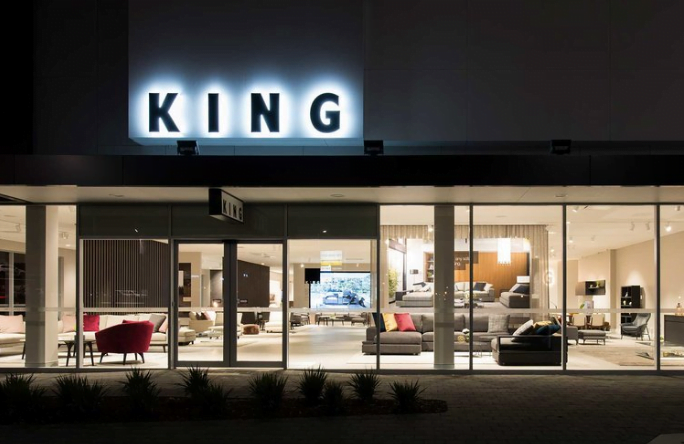
King Living was founded in 1977 in Sydney, Australia, and is known for its high-quality and well-designed contemporary leather and fabric sofas as well as dining furniture, bedroom, storage and outdoor furniture. King Living sofas are known to feature steel frames and ‘comfort seat suspension’. King Living’s prices aren’t cheap — many items are in the thousands of dollars, positioning King Living as a premium furniture retailer.
PHOTO: MICHAEL MURAZ
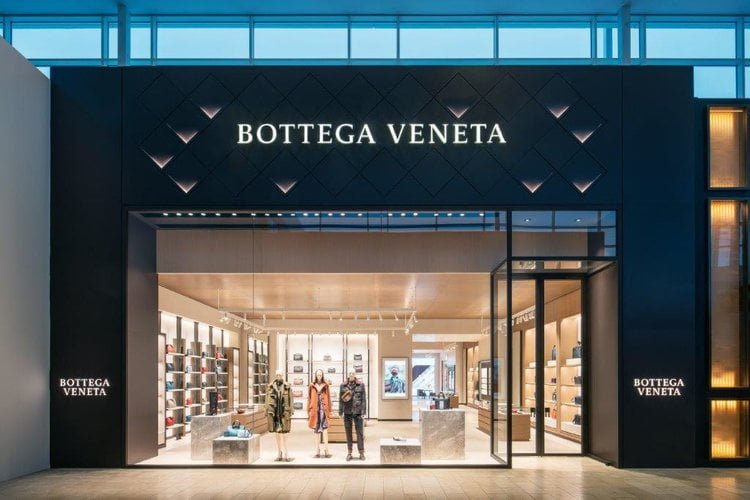
Bottega Veneta: In November, Italian luxury brand Bottega Veneta opened a beautiful standalone store at Toronto’s Yorkdale Shopping Centre, marking a first for the brand in Canada. Bottega Veneta is expanding its operations in Canada as it also opens leased concessions at Holt Renfrew — a Vancouver shop-in-store became a concession in October of 2018 at Holts CF Pacific Centre, and construction is about to begin on a concession at Holt Renfrew’s 50 Bloor St. W. flagship in Toronto. Bottega Veneta will also open an accessories concession at Montreal’s ‘Holt Renfrew Ogilvy’, which will become Canada’s largest luxury department store when it is completed next year.
Bottega Veneta’s 4,700 square foot Yorkdale store, which includes 3,035 square feet of retail space, features an expansive 40-foot wide facade and soaring ceilings reflecting the latest design aesthetic for the brand. The store carries an expansive assortment of fashions and accessories for both women and men. The front part of the store is dedicated to leather goods such as handbags and wallets, with an expansive selection also contained in storage drawers in a variety of colours. Two other rooms feature an assortment of Bottega Veneta footwear as well as fashions, including a full range of ready-to-wear for both genders. The store also has a fragrance wall, eyewear, as well as an area displaying products from the Bottega Veneta home collection. Click here for photos of the store.
PHOTO: GEORGE PIMENTEL
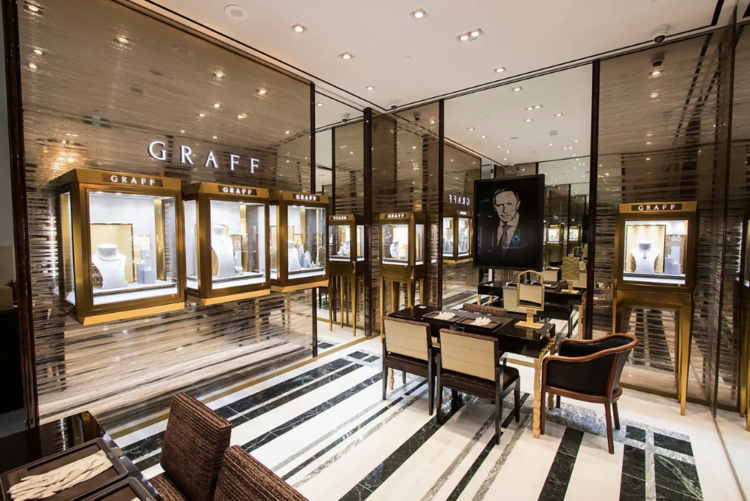
Graff Diamonds: Canada’s first storefront for UK-based luxury jewellery brand Graff Diamonds opened on West Georgia Street in Vancouver’s ‘Luxury Zone’ in early December, 2018. The 575 square foot Graff salon features a selection of Graff jewellery, engagement rings and timepieces. The impressive interior includes brushed- gold vitrines showcasing one-of-a-kind high jewellery suites, fine jewellery collections and timepieces. As it becomes more established, some pieces on display in the Vancouver Graff salon will be one-of-a-kind and some will be priced in excess of $1-million — though it also has some less costly items with prices beginning at about $6,000.
The boutique opened in partnership with Canadian jewellery retailer Birks.
The Patek Philippe salon features a subdued and luxurious interior with beige walls and furniture that contrasts with dark trim. The boutique features a range of pricey Patek Philippe timepieces, some which can be priced into the six figures.
Patek Philippe watches can also be found in a handful of upscale jewellery retailers in Canada.
SQUARE ONE STORE IN MISSISSAUGA IN JANUARY OF 2019. PHOTO: CRAIG PATTERSON
Morphe Cosmetics: Popular beauty brand Morphe Cosmetics opened its first Canadian store at Square One in Mississauga in December. The 4,660-square-foot store carries the full range of makeup colours and brushes that have given the brand a cult following.
Morphe was founded in 2008 by artists and influencers, and the brand is popular partly because its price-points are kept reasonable. Known for its eyeshadow palettes (a vast variety, most priced below $50) as well as its brushes that are used by makeup artists globally.
The brand is popular because of its simple, stylish and practical bags that can be personalized through customization options. The bodies of the bags are made from a lightweight foam called XL Extralight®, which is soft and warm to touch, waterproof, strong, flexible and anti-microbial. Retail Insider recently profiled the brand and its Canadian expansion.
Canadian licensee Carmine Di Fruscia (who is also president of Mr. Pretzels in Canada) is rolling-out the O bag retail expansion with plans for about 50 stores in Canada over the next five years.
Have we missed any? Feel free to comment below, or email Retail Insider’s Editor-in-Chief, Craig Patterson, at: craig@retail-insider.com.
Watch for our 2019 Canadian retail forecast where we’ll look ahead to what experts are expecting for the industry.
The following is an analysis by Toronto-based retail consultant Ed Strapagiel, who publishes a monthly report with his perspective on the state of the Canadian retail industry. Mr. Strapagiel’s discussion appears to show a concerning slowing of retail sales growth in Canada in 2018, and he’s not optimistic about 2019 in his forecast, either.
Total Canadian location-based retail sales were up just 2.7% in 2018 versus the previous year, according to the latest Statistics Canada numbers. This is the second lowest gain of the last 6 years and marks a major reversal of fortune from the 7.1% gain recorded for 2017. Here’s a summary of Canadian retail sales growth over the last few years.
A year ago the headline for this post was “2017 Canadian Retail Sales Growth Hits a 20 Year High, But a Correction May Already Be Underway”. Well, it was some correction. Canadian retail just got weaker and weaker every month throughout 2018.
What’s worse is that the trend lines are still heading downward going into 2019. As the above chart shows, the underlying 12 month trend (green line) is on a steep decline. The shorter term 3 month trend (orange line) is still tracking below it, indicating things are likely to get worse before they get better. Total retail sales increased only 0.8% year-over-year in Q4 2018, one of the weakest fourth quarters ever.
Food & Drug
Retail sales growth in the Food & Drug sector also declined over most of 2018, and closed the year up just 1.3%. But things have perked up a little in recent months. In Q4 2018, retail sales were up 2.0% year-over-year, which, while very modest, was still was higher than the other major retail sectors.
The underlying 12 month trend (green line in the above chart) has now flattened out, and the 3 month trend (orange line) is tracking slightly above. Retail sales trends in Food & Drug may be turning a corner heading into 2019, albeit slowly.
Supermarkets & other grocery stores account for over half of this sector, and managed only a 0.4% increase in retail sales in 2018. This however improved to an increase of 1.8% in Q4 of the year.
Health & personal care stores, on the other hand, continue to hold the sector back. Their retail sales were actually down 0.2% for 2018, and up only a scant 0.1% in Q4.
Convenience stores and specialty food stores had significantly higher retail sales gains in 2018. These segments however account for just under 10% of the Food & Drug sector’s total sales.
Store Merchandise
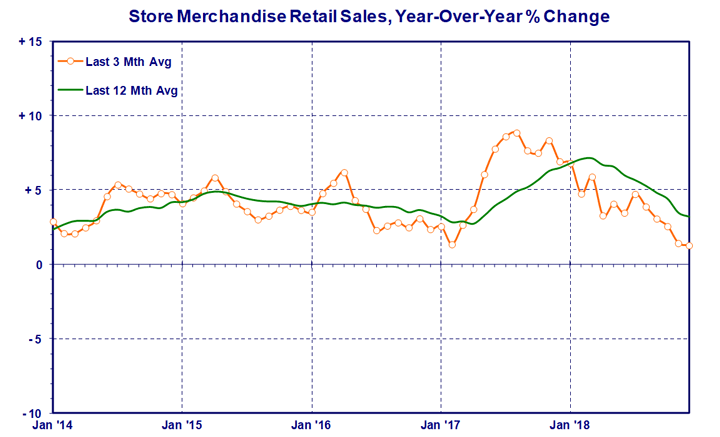
Retail sales growth in the Store Merchandise sector is following the general pattern of weakening throughout most of 2018. Sales increased 3.2% for the year, but this was less than half the growth achieved the year before. In Q4 2018, the pace cooled again, with sales gaining just 1.3% year-over-year. The 3 month trend (orange line in the chart) continues to underperform the underlying 12 month trend (green line), indicating further weakness ahead going into 2019.
Segments which had a difficult 2018 include sporting goods, hobby, book and music stores with sales down 1.2%, and shoe stores which lost 0.6%. Furniture stores’ retail sales were up only 0.6% for the year, and down 0.9% year-over-year in Q4 alone. Home furnishings stores saw a gain of only 0.7% in 2018 and just 0.2% in Q4 alone.
At the same time, there were relatively few winner retail segments in the Store Merchandise sector. The miscellaneous store retailers group was the top performer, with retail sales up 9.4% in 2018. This was only partly aided by the addition of cannabis stores to this segment. Their retail sales were $151.5 million for the year after having been open for 2½ months. This is a small effect for the year but the impact will be higher in 2019.
Note that Statistics Canada is now suppressing the breakdown of general merchandise stores for confidentiality reasons. The figures in the table below are estimates based on previous trends.
Automotive & Related
Automotive & Related is suffering from a double whammy of lower retail sales at new car dealers and lower gas prices, and these trends appear to be accelerating. While the sector did manage a 3.3% gain for 2018 overall, this weakened to a year-over-year retail sales decline of 0.7% in Q4. There is a significant gap between the underlying 12 month trend (green line in the chart) and the 3 month trend (orange line), implying that things are still getting worse.
New car dealers’ retail sales were up just 0.5% for the year and down 0.9% in Q4. Used car dealers are performing better with sales up 7.2% in 2018, while automotive parts, accessories & tire stores gained 7.3%. These segments however are too small to offset the slow sales at new vehicle dealers.
Gasoline station retail sales were up 7.9% in 2018, but most if this occurred in the first half of the year. Pump prices have come down since, so that gas station retail sales were actually down 3.0% year-over-year in Q4.
By The Numbers
Special Note: Statistics Canada has made updates to 2017 numbers, and has also moved retail storefronts of telecom companies out of electronics & appliance stores and into a non-retail category, Telecommunications (NAICS 513). Retail trade statistics have been revised back to January 2012.
Canadian E-Commerce Sales
StatsCan started providing ecommerce retail sales data in January 2016. While the amount of data is limited, some trends appear to be emerging. Here are some results.
Overall, e-commerce represented about 2.9% of total Canadian retail sales in 2018, including both pure play operators as well as the online operations of brick & mortar stores. Canadian consumers however also buy online from foreign websites which is not captured in these numbers.
Canadian e-commerce sales were up 14.7% year-over-year for the 3 months ending December 2018, but this is less than the 20.4% gain recorded in the same period a year ago. E-commerce retail sales gains are still in double digits, and are still much higher than for location based retail, but growth is slowing down.
Note that location based retail is the same as that in the preceding large “By The Numbers” table. It’s what’s normally reported as Canadian retail sales. Except that it isn’t. Location based retail excludes another section called Non-Store Retailers (NAICS code 454), which includes electronic shopping and mail-order houses, which in turn is where (mostly) pure play e-commerce businesses are. For the year 2018, electronic shopping and mail-order houses had an estimated $10.5 billion in e-commerce sales.
But that’s not the only source of e-commerce, as (mostly) bricks & mortar location-based retailers also sell online. For 2018, this group had an estimated $7.5 billion in e-commerce sales. With electronic shopping and mail-order houses, there’s a grand total of $18.0 billion in e-commerce sales by Canadian operators over the year. Note that this does not include foreign e-commerce purchases made by Canadian consumers, but it does include e-commerce purchases made by foreigners at Canadian businesses.
For electronic shopping and mail-order houses, an estimated 83.5% of their sales are allocated to e-commerce. For (mostly) bricks & mortar retailers, it can be estimated that just 1.2% of their total sales are attributable to e-commerce.
The retail landscape has had its fair share of bad news recently with announcements of several retail stores in Canada closing down.
And while the so-called retail apocalypse weighs heavily on people’s minds, an interesting trend is developing in the industry – recently a staffing agency said retail jobs are now the most in demand in Canada. And while jobs in the industry are being shed because of some bricks and mortar shutterings there’s also a revolution taking place as many new jobs are being created to meet the growing demand in the ecommerce space.
“Interestingly, self-serve type retailers are easily replaced by ecommerce. Take Toys R Us, PayLess Shoes as examples. Look at Sears Canada. Their demise started when they went from being a service-heavy store to a basically self-serve mode. You couldn’t find a clerk for anything,” said Sears. “The self-serve model is particularly fragile. Now, they tended to have done high volume, but with low staffing. That led them open very much to leveraged buyouts. Finance firms buying them are now using them as simply profit centres. So they stopped being retailers altogether in essence. They were almost a version of ecommerce that had bricks and mortar and it was unsustainable and as a result, they completely lost the game.
SUZANNE SEARS
“Now, you take all the new people coming in who are opening, expanding, and showing amazing growth, they’re actually people heavy. They’re employment heavy. They are hiring experts. They are training experts. There’s a huge demand for retail if you’re a specialist. A specialist in luxury. A specialist in tech. A specialist in cosmetics. A specialist in events. It’s a different kind of retail that’s screaming for talent versus the retail that’s shutting down which was basically clerk based, low skilled. There’s a great demand for high skill, low demand for the checkout level.”
The shift to ecommerce is also creating employment and careers.
“Ecommerce still needs people to operate it. But now you’re talking about needing technical people. You’re needing ecommerce merchandisers, marketing experts, inventory experts. Those same people used to exist in big box, regular retail, well now ecommerce needs exactly the same people so there’s still the demand. Nothing’s really changed at that level,” said Sears. “In fact, they need more.
“The huge Amazon warehouses that are all robotics. Robotics takes engineers to operate them. If these organizations actually had training programs, you could virtually take anybody right out of school, train them and groom them and put them into your stream. That used to be the case in retail. You had all the major organizations – Hudson’s Bay, Sears Canada – they all had management development programs, buying development programs. They trained their own people. Thus you had people who stayed with them for 20, 30 years. They paid to educate the people and thus they retained them.”
But Sears said that in the tough times, around 2008, the lowest hanging fruit was the easiest thing to slash for retailers and that was people. “And there went the training programs. There went the management development programs. And concurrently, loyalty to the employer evaporated. Then it became who is paying the most.”
“Now, these retailers wake up 10 years later and they don’t have a pipeline of talent to promote. They’re constantly having to go to market to try and buy talent and sadly they don’t have the tools to do it very well,” said Sears.
“Ads don’t work anymore. You can put an ad up for a horse and buggy all you want but there aren’t a lot of buyers and it’s roughly the equivalent. They don’t have the methodologies for obtaining people, attracting them or keeping them. They don’t have the internal programs they used to have. Retail used to be a whole dedicated career but what retail has become is a task – a project – two years here, three years there.”
“While the news is full of national retailers closing down stores, there remains plenty of retail expansion from new brands comprised of ecommerce sites opening bricks and mortar locations, European and new American retailers seeing high margins achieved in Canadian retail and tech-related enterprises. That’s driving the retail hiring rate these days.”
For example, according to Statistics Canada, the wholesale and retail trade sector saw the addition of 33,900 jobs across the country from December to January.
Suzanne Sears said there has also been a shift in retail to customer experience which is creating demand for jobs that barely existed five years ago such as event planners, visual expert teams, trainers, group team hosting, social media experts, community liaison staff, ecommerce experts.
“Retail failed to predict the retail apocalypse coming. They did not build the groundwork to integrate these skilled workers into their organization to develop them. Now they are madly scrambling to find this talent which for the most part has next to zero retail experience,” she added.
“Retail is no longer a simple case of purveyors of fine goods. It’s become entertainment. It needs to become a Cirque du Soleil type of organization so it needs to hire entertainers and the support teams this requires. These types of retail staffers just don’t exist. Retail needs to learn from the entertainment giants like Cirque du Soleil on how to run a massive entertainment and merchandising organization.”
Sears said retail stores over the past few years have remained static. Foot traffic in many cases has actually decreased. Ecommerce has grown. The huge investment already in bricks and mortar has to be defended. The only way to do that is to make retail entertainment or experiential driven.
“So we have a range of new roles being created at every level. Retail has done a miserable job in the last decade of positioning themselves as employers of choice with real careers to offer. They are better known as the ‘no training, no advancement, no notice sent home no work’ sector of employment. They have a massive branding issue to address along with a massive internal restructuring to initiate if they hope to survive,” she said.
“While the Most in Demand Jobs for 2019 cover a wide range of sectors and skill levels, three of the roles are in retail: sales associate, cashier and merchandiser. Positive news for an industry that’s seen many chains close bricks and mortar stores in the past year,” it said.
It’s also part of a global trend as landlords realize that creating unique experiences will keep customers coming back. In Asia and the Middle East, shopping centres devote considerably more space to food and beverage than in North America, and local landlords are catching up by adding restaurants as well as food markets and food halls to create enhanced culinary experiences. The intention is to keep customers coming back more regularly and with that, they’ll hopefully also shop at other retailers in the same centre.
Last month, Vancouver-based Aburi Restaurants Canada launched a unique new concept at Toronto’s Yorkdale Shopping Centre called TORA, which occupies a ‘futuristic’ second-level space in the mall’s most recent expansion that is anchored by RH Restoration Hardware and Sporting Life. TORA is a unique and highly experiential concept featuring a technology driven ordering and delivery system. The ‘sushi concierge system’ includes a series of ‘laneways’ that use a conveyor belt system to shuttle orders directly to a guest’s table, with orders made on a digital screen at each table.
Aburi’s founder, Seigo Nakamura, explained that the order and conveyor delivery at TORA in Yorkdale is partly in response to a chronic staff shortage in the city. Mr. Nakamura said that he anticipates a labour shortage until at least 2021, and in order to mitigate, Aburi Restaurants Canada is looking at technology to keep costs down without affecting operations or product quality.
TORA’s interior is meant to be experiential, with a futuristic atmosphere which Mr. Nakamura said is meant to align with its innovation. Aburi partnered with Vancouver-based firm Ste. Marie Design Studio for the interior design of TORA and Glasfurd and Walker for the branding — TORA’s branding was inspired by vintage Japanese movie posters from the 70’s and their interpretation of what the future might look like.
The menu includes flame-seared Aburi Sushi, as well as nigiri rolls and Japanese-style tapas with traditional techniques combined with local flavours. Given that nigiri sushi should be enjoyed immediately after it is made, orders are shuttled to diners as soon as they’re finished being prepared.
More food and beverage at Yorkdale is in the works, according to Claire Santamaria, General Manager of the shopping centre. Adding good restaurants to the centre “result in guests spending more time while traveling further, with food becoming an essential part of the visit,” she explained. “Dining adds to the appeal of the centre overall, and guests have requested exceptional food options,” she said.
Full-service restaurants are opening in Canadian shopping centres nationwide in an effort to draw in more shoppers at a time when consumer dollars are going elsewhere. Housing costs continue to go up along with the overall cost of living, while more consumer dollars go to technology as well as experiences. Adding restaurants to mall properties contributes to experiences, and TORA even adds an element of technology to the experiential mix.
PHOTO: JAMIE’S ITALIAN YORKDALE, VIA YORKDALE FACEBOOK
PHOTO: JOEY YORKDALE, VIA JOEY YORKDALE FACEBOOK
PHOTO: CHEESECAKE FACTORY YORKDALE, VIA SHAUN NIE ON GOOGLE IMAGES
In Canada, some retailers are hesitant to sign leases for new stores. Some chains are re-evaluating their overall operations including store count, and shifts in consumer preferences has led to a downturn in sales for some brands. Plenty of restaurant providers continue to seek out new locations and are more than willing to lease space in a shopping centre that already has ample foot traffic, not to mention a captive audience.
West Edmonton Mall is arguably the national leader in featuring large full-service restaurants in its massive property. The centre boasts a robust offering of restaurant concepts, with an entire wing in the mall, called Bourbon Street, dedicated to food and entertainment. Other major restaurants and bars flank the centre, along with a casino, dinner theatre, and Cineplex-owned The Rec Room. Canada’s first location for restaurant chain Bubba Gump Shrimp opened in the mall to much fanfare in the summer of 2018.
From British Columbia to Nova Scotia, restaurant concepts are being added to more traditional shopping malls. Restaurant groups such as Recipe Unlimited are specifically looking to open new locations in malls while also rebranding other nameplates. Recipe’s ‘Landing’ concept, for example, is targeting malls with a location set to open at Upper Canada Mall in Newmarket, near the mall’s recently unveiled food hall. Even some independent food providers are choosing enclosed malls — Toronto-based iQ is an example, having opened at Toronto’s Yorkdale Shopping Centre last fall with plans for more shopping centre locations.
Other restaurant providers such as Cheesecake Factory appear to favour locating in major shopping centres, upon review of the chain’s list of restaurant locations. It signals a shift in shopping centres in North America, as landlords aim to create a more holistic offering that includes more traditional fashion, jewelry and gift retail, along with more food and beverage, entertainment concepts and even more recently, food halls and even co-working spaces. We’ll continue to monitor trends in Canadian shopping centres as landlords invest to create them into financially productive community hubs.
Toronto-based Shoppers Drug Mart continues to expand its offerings in an attempt to gain consumer loyalty and as a result, market share. The retailer’s latest announcement has it launching an online nutrition service in Ontario, further solidifying the retailer’s offerings to consumers in the face of increasing competition.
According to Shoppers Drug Mart, nearly forty per cent of Canadians have difficulty determining unhealthy food versus healthy food. The online service will provide access to registered dieticians through telephone or video. During a 60-minute, one-on-one counselling session, the customer will discuss their health and nutrition goals with a Shoppers Drug Mart registered dietician and receive a personalized nutrition plan.
Theresa Firestone, Senior Vice President, Health and Wellness said, “Our goal is to make personalized nutrition counselling convenient for residents of Ontario.” The addition of this service to the Shoppers Drug Mart portfolio will help the company further corner the market on Canadian health and wellness, and pharmaceutical retail markets to name a few.
This announcement is in keeping with the current trend of retailers adding unique services and partnerships to their retail operations. To expand their foothold in the beauty industry, Shoppers Drug Mart launched its ‘Beauty Clinic by Shoppers Drug Mart’ concept where the retailer provides non-surgical cosmetic services and treatments. A standalone beautyBOUTIQUE by Shoppers Drug Mart recently opened in Calgary’s The CORE shopping centre, with more expected to follow. These developments come amid reports that Shoppers Drug Mart has reduced hours of its 24-hour locations in Alberta and Manitoba, as the retailer builds on efficiencies in order to gain cost savings.
Competitors are also innovating with unique partnerships. Retail Insider recently reported on Rexall’s partnership with M&M Food Market, that will bring a new and improved frozen food experience to the pharmacy retailer. Rexall has also introduced services to their mix including flu shots and health awareness clinics.
Following Loblaws’ acquisition of the Canadian pharmacy, Shoppers Drug Mart has expanded into new avenues such as opening “Fresh Food Store” concepts in British Columbia, Ontario, Québec, and Saskatchewan in hopes of becoming a one-stop shopping destination. We will continue to report on new strategies being employed by major retailers during this time of change.
A graduate from both the University of Toronto and Humber College, Julia spent most of her educational career honing her skills in critical thinking, marketing communications, and finding her unique voice in her writing.
With tenures in several areas of retail under her belt, Julia has lead teams in achieving sales goals and allowed herself to become consumed in understanding retail business.
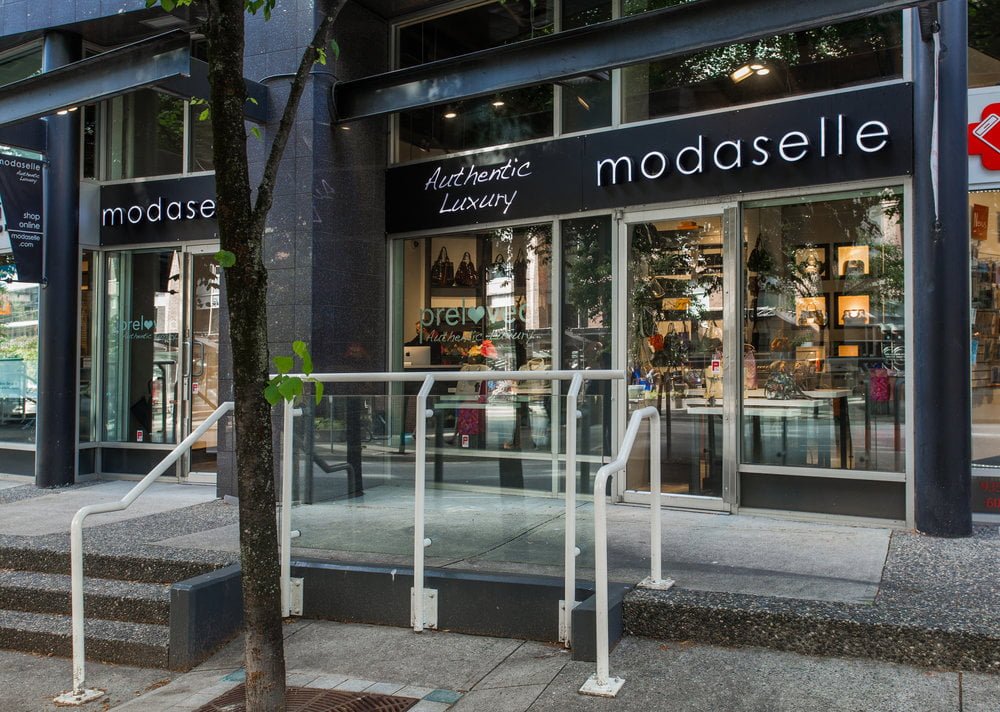
In 2015, Vancouver-based online luxury handbag and accessory re-seller Modaselle.com opened a brick-and-mortar retail location at 943 Seymour Street in the city’s downtown core. This was only two years after the launching of an ecommerce business, which was looking to tap into the burgeoning billion dollar online luxury resale market. It was a new venture for owner and founder Alex Jane.
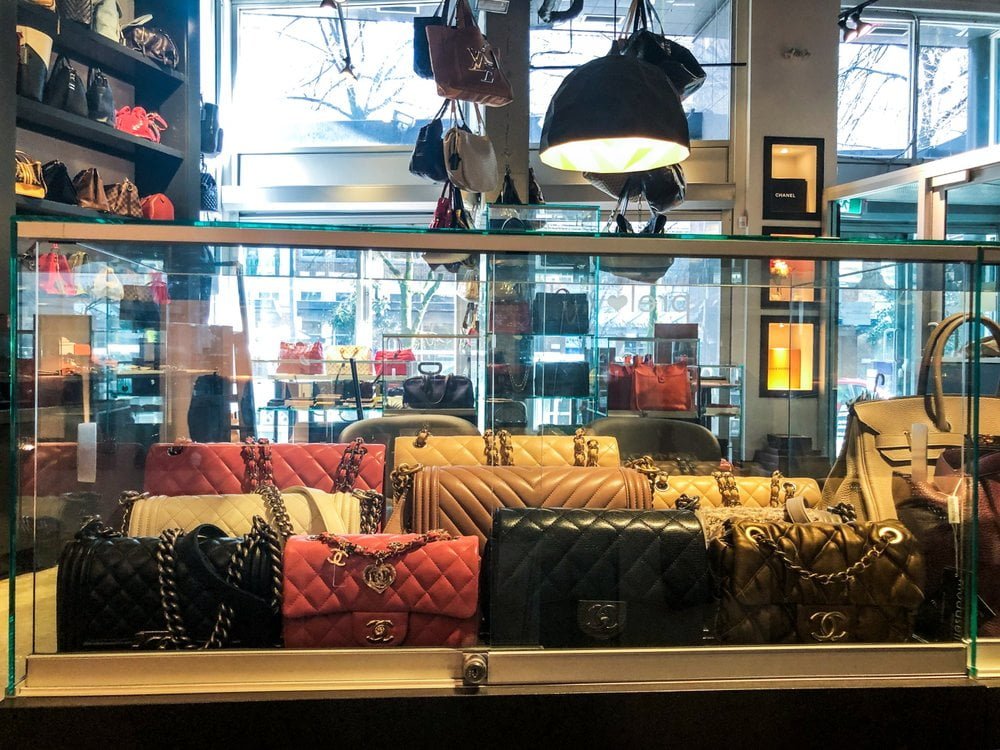
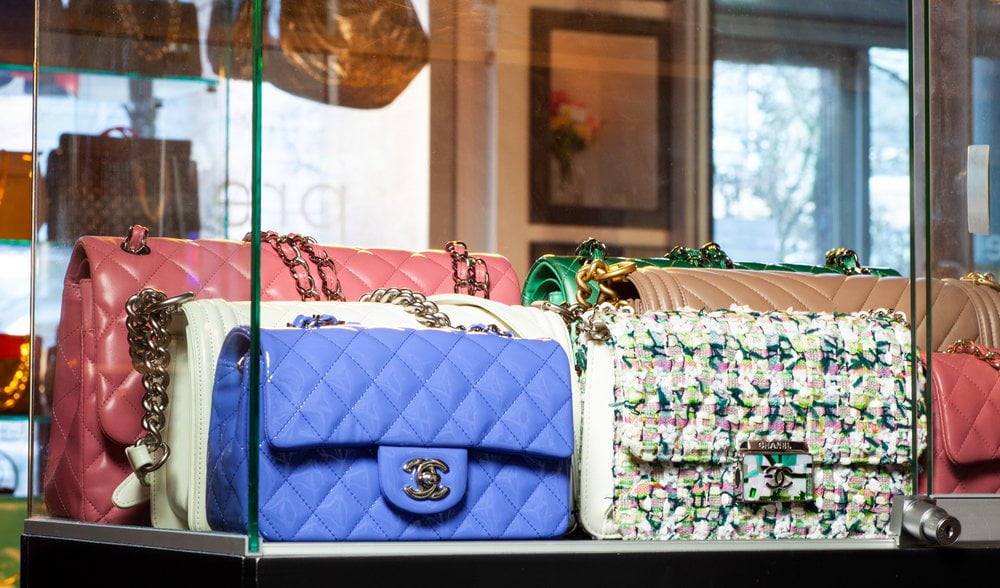
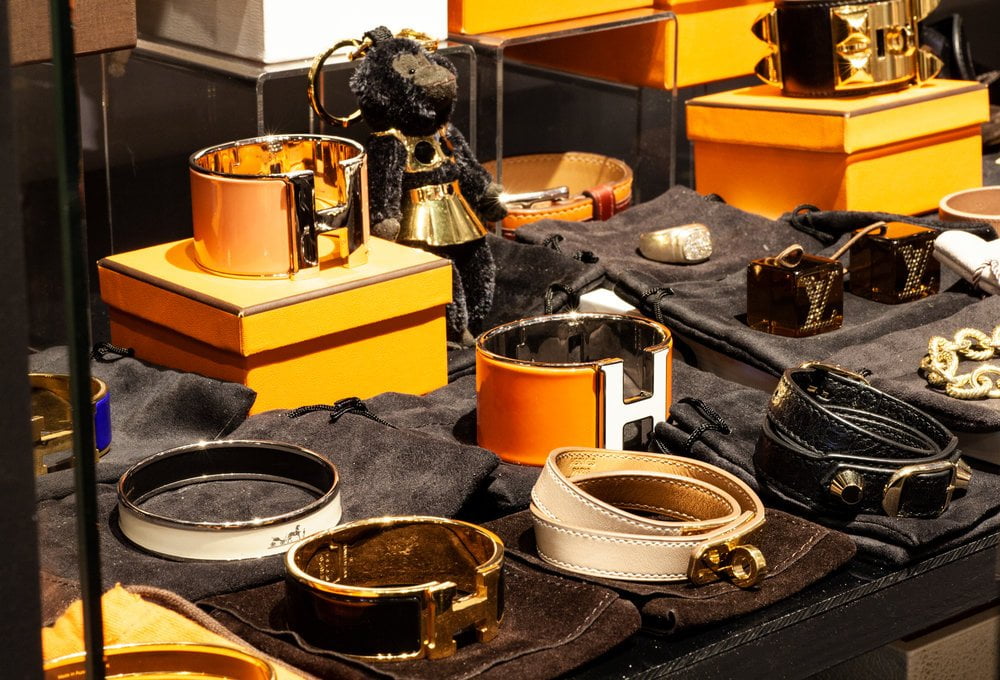
From all appearances, the ecommerce website was a cookie-cutter sales platform for pre-owned handbags and accessories by many of the internationally recognized names in luxury with Gucci, Dior, Louis Vuitton, and Chanel, comprising the bulk of the offerings.
What visitors and competitors did not realize is that the Modaselle business concept did not rely on a strategy of drop-selling other brands’ products or the traditional consignment/commission model. Jane opted instead to ‘buy outright’ Modaselle’s entire inventory from trusted sources and individuals. Jane explains, “This style gave us more control over the inventory quality, provided the fastest payout option for our sellers, and most importantly, made Modaselle more accountable for authenticity as we owned the item.”
PHOTO: MODASELLE
By focussing on the Canadian market Modaselle was also able to provide Canadians with a great option for buying/selling their designer handbags and accessories without having to deal with the often confusing taxes, government duty, and the potential shipping problems associated with cross-border transactions.
The impetus for launching a brick and mortar presence “was to combine all store operations into one location and to give local shoppers a chance to come and actually see the inventory that was available online,” says Vancouver store manager Jon Heil.
The expansion placed Modaselle at street-level between the Downtown and Yaletown shopping districts. With metered parking, modest foot traffic and within walking distance to the Granville Street transit corridor, the location is highly visible, and is open Monday to Saturday.
PHOTO: MODASELLE
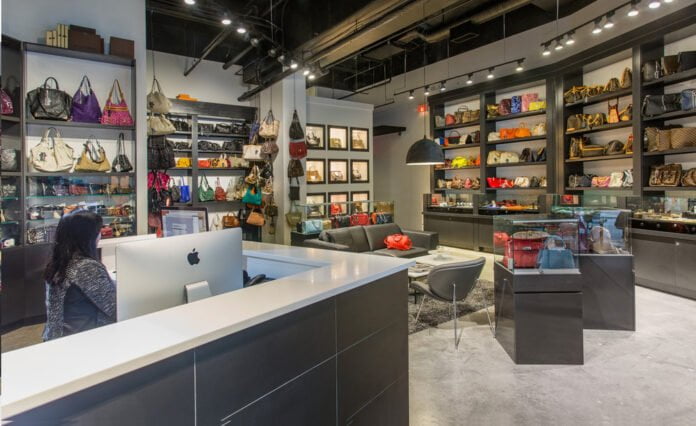
The location is spacious and laid-out with consideration to movement and product display. Previous tenant, Xixo Leather Artistry, relocated adjacent to Robson Street soon after having fully renovated the 1,000-square-foot location to accommodate their tourist-friendly high-priced leather footwear including cowboy and fashion boots, and outerwear. The resulting shelving and displays were ideal and easily accommodated Modaselle product and the move-in was relatively seamless.
On average the boutique is staffed by 5-persons who oversee the website sales, shipping, and maintenance, monitor the sales floor, and provide buying and authentication services. For sellers there are no day or hour restrictions on accessing buying services and payouts are immediate via cheque. The in-house buyer will also manually provide an opinion or a certificate of authentication for buyers/seller if requested. For situations where doubt may linger as to authenticity, Modaselle is one of a handful of businesses using the Entrupy system for authentication. By photographing and uploading specific areas of a leather-based product, the Entrupy algorithm compares these against its database of authentic images and returns a determination of authentic or counterfeit within minutes.
Shoppers at Modaselle have in-person access to the 800+ items that are also available online with the exception of very high-end pieces, which are housed off-site for security reasons, but available upon request. Originally the company had an even split of sales between handbags and fine jewelry with classic brands like Cartier and Tiffany doing well. In 2018, the popularity of high-end watches bolstered an increase in sales to over 30% of the gross, with Omega and Rolex leading.
PHOTO: MODASELLE
PHOTO: MODASELLE
“We love that our location offers our Vancouver-based clients the opportunity to browse online and then stop by at their convenience to physically interact with the product, especially with the highly sought after luxury brands like Chanel and Louis Vuitton,” says Jane when asked about the importance of maintaining a strong connective relationship between Modaselle’s retail store and e-commerce site.
Unlike retailers in the infamous Alberni Street Luxury Zone, Modaselle does not offer AliPay, WeChat Pay, or any other mobile payment services that are favoured by lucrative Chinese market. Jane explains “it isn’t that we don’t want to implement these payment methods, but as of now we haven’t seen a large demand. Our retail shoppers are local-based, of all ages and split evenly between women and men. They are interested in high quality, well-priced luxury products.” He continued “They are savvy shoppers looking to save on designer items, collectors looking for discontinued pieces, watch enthusiasts seeking a new piece for their collections, and sometimes men shopping for jewelry for their partners.”
The recently published ThredUp 2018 Resale Report reveals that the resale market will reach $41B by 2022 with apparel and accessories comprising 49% of the pie, and with growth 24x faster than retail. By offering a variety of high-end inventory, authenticity and product guarantee, top level customer service, and fast free duty-free shipping, it could be said that Modaselle is thriving by delivering to their clients exactly what they want. The best of preloved luxury accessories—without all the bells and whistles.