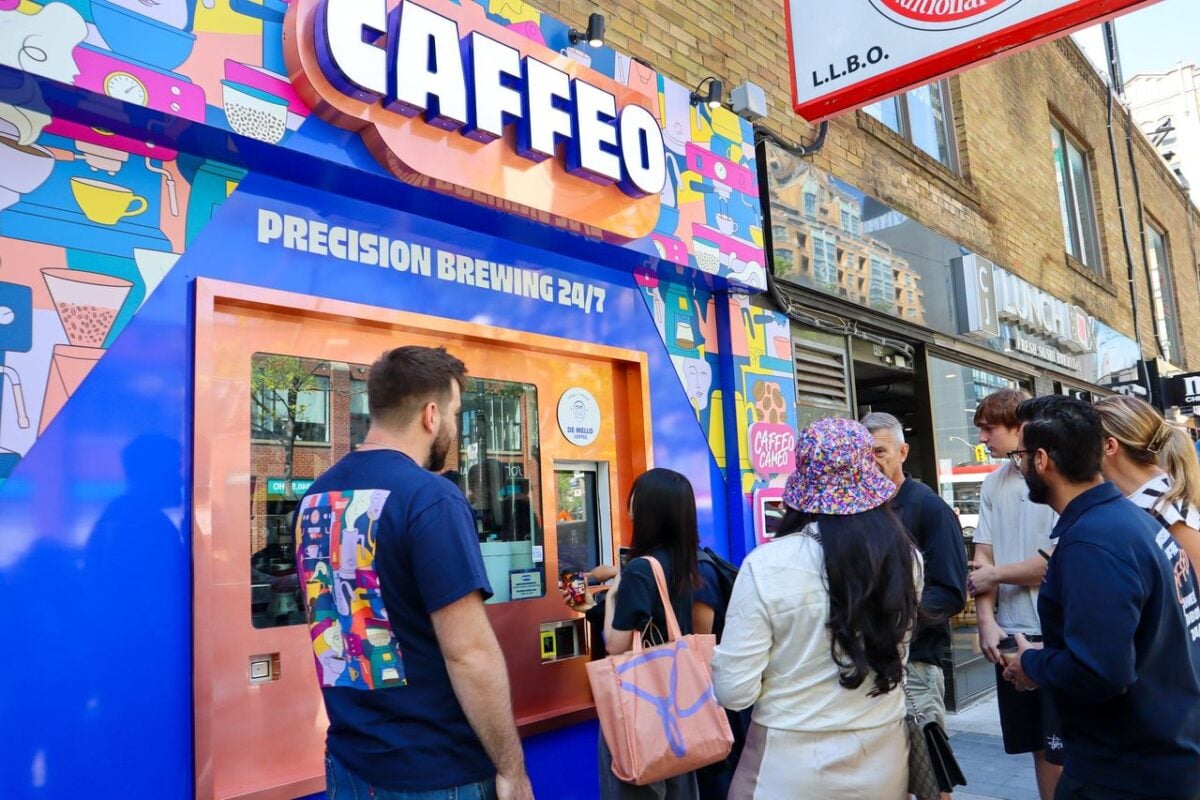
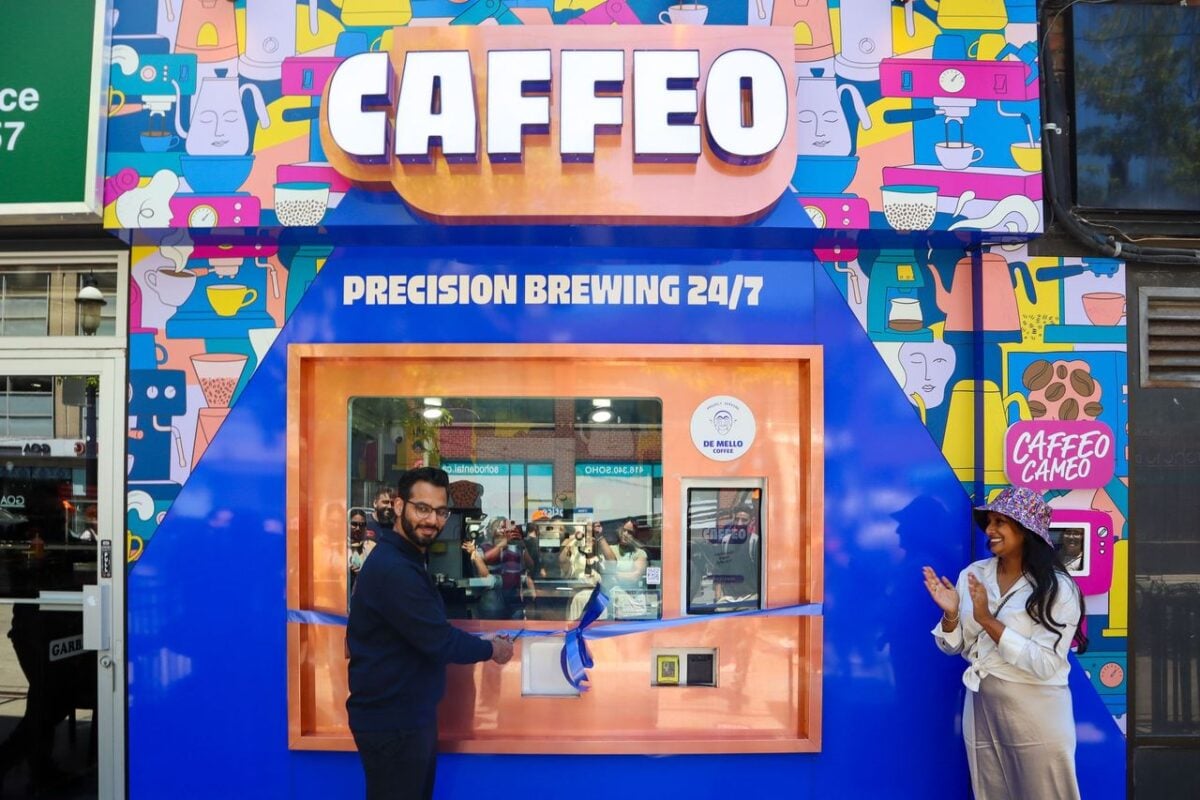
Caffeo, Toronto’s innovative specialty coffee destination where robotics meets craftsmanship, is entering its next chapter with the unveiling of a fully redesigned flagship location at 405 Richmond Street West.
The relaunch introduces a vibrant new visual identity and an expanded precision-brewed menu, elevating the experience for coffee lovers at the city’s only 24/7 robotic café, said the company.
Caffeo photo
Since opening its doors in Toronto’s Fashion District, Caffeo said it has challenged conventional expectations of automated coffee service by combining state-of-the-art robotics with premium specialty coffee. The robotic brewing system precisely calibrates and executes each step of the coffee-making process, ensuring every beverage is prepared to exact specifications using premium locally roasted beans.
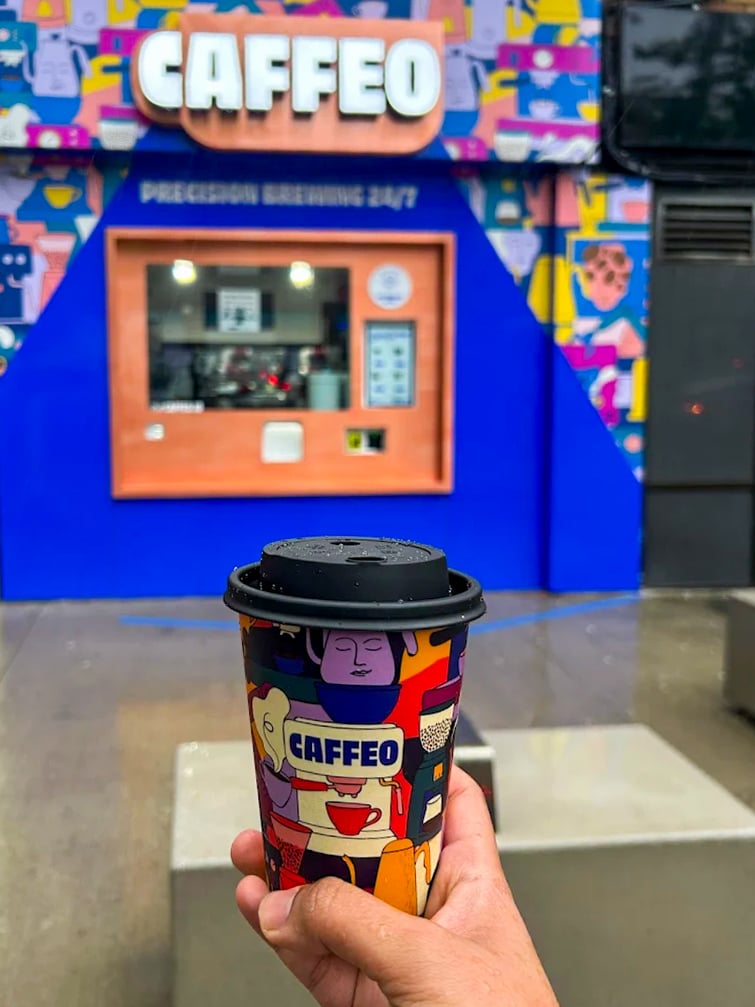
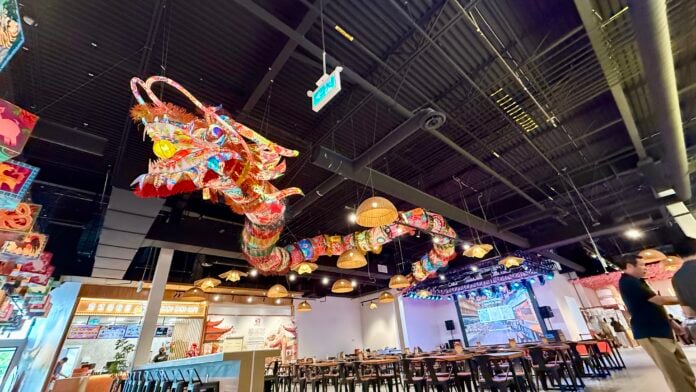
“Drawing inspiration from the creativity and energy of Toronto’s Fashion District, the refreshed design transforms the cafe into an immersive visual experience. The bold mural-style aesthetic combines vibrant colours, expressive illustrated faces, coffee-inspired imagery and modern geometric patterns, creating a welcoming space that celebrates the intersection of art, technology and community,” explained the brand.
“We wanted to build a space that feels as exciting and innovative as the coffee itself, while staying focused on what matters most: delivering an exceptional cup every single time,” said Samee Motiwala, Founder and CEO of Caffeo. “Being open 24/7 in the heart of downtown Toronto allows us to serve the city on its schedule, whether that’s early-morning commuters, students studying late into the night, hospitality workers finishing a shift or anyone looking for a premium coffee experience whenever they need it.”
Alongside the redesign, Caffeo noted it is introducing an expanded specialty coffee menu featuring new additions like the Osmanthus Latte and Caramel Popcorn Latte, alongside a selection of matcha-based drinks. With additional recipes and seasonal offerings currently in development,
On June 14, the US and Iran announced a deal that the Strait of Hormuz reopens. The signing happens this coming Friday, June 19th.
That is an important political event but the operational one runs on a different clock.
What the numbers actually say
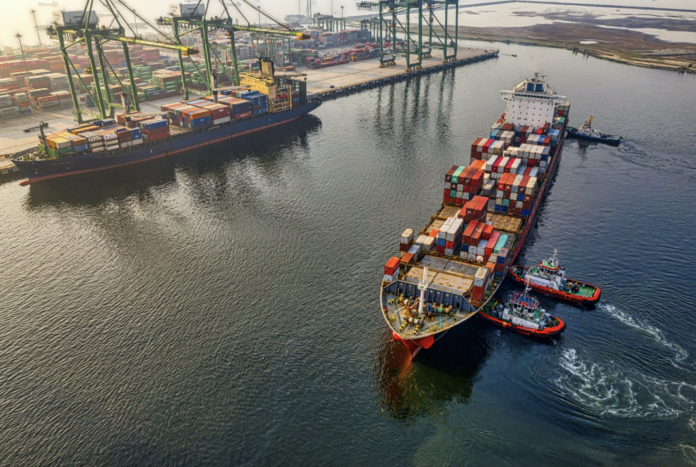
Today, more than 800 vessels are still stranded inside the Gulf. Insurance premiums that averaged 0.25% of vessel value before February have surged to between 3% and 8%. That translates to $3-8 million per transit for a large tanker. Insurers have said publicly they will not normalize rates until the region shows sustained stability, which they measure in months.
Logistics analysts put vessel repositioning at 8-12 weeks, assuming the reopening holds. Full freight rate normalization, based on what happened after the 2024 Red Sea disruption, extends across multiple quarters. However, some forecasters are pointing to the second half of 2026 at the earliest.
There is also a congestion problem that has not gotten much attention yet. When the strait reopens, ships that took the Gulf route will arrive at European and Asian ports at roughly the same time as ships that spent the past months rerouting around Africa. Two delayed streams converging on the same ports at once means 2-3 weeks of port congestion on top of everything else.
The strait opening is a headline but the backlog isn’t, and right here is a problem.
Glebs Vrevsky
What I am seeing on the operations side right now
The teams I spoke with over the past three months did what they always do when their systems stop reflecting reality – they built spreadsheets. Manual exception lists, daily allocation calls, side trackers that captured what the ERP could not show. Those workarounds kept things moving.
The risk now is that the same teams assume those workarounds can be switched off because the news says the crisis is over.
The delayed stock is still delayed. Purchase orders that look stalled in the system have not been formally resolved. Customer commitments made against arrival dates that are now weeks out of date have not been renegotiated. None of that clears on the day the strait reopens. It clears when each of those threads gets worked through, one by one, by planners who are still looking at the same legacy systems they had before February.
For most retailers and distributors, that work happens across June and July, without urgency, without visibility, under the assumption that the problem is behind them.
The pattern
The Strait of Hormuz closed in 2019 over tanker attacks. The Red Sea disrupted in late 2023, and the IMF reported a 50% year-over-year drop in Suez Canal trade by early 2024. Then Hormuz in February 2026. Each time, the interval between events is shorter. Each time, teams that had no visibility layer scrambled to build one out of spreadsheets.
A furniture supplier we worked with during this closure had no usable picture of which inbound shipments were at risk, which were already allocated to customers, and which were generating duplicate replenishment orders because the original POs looked stalled. We built a working visibility layer on top of their existing ERP in three days. A pharmaceutical distributor cut duplicate data entry by 60-70% in the first week by consolidating exception views across their systems into one ranked queue.
Neither required replacing any core infrastructure; the data was already there. It just could not be surfaced in a usable form.
The window
Recoveries are when this kind of work actually gets done. The urgency is lower, budgets are available, and the pain is recent enough that nobody has forgotten what it cost.
The companies that handled this disruption better than the last one did not wait for a crisis to expose the gap. They used the previous recovery window to close it.
The strait is reopening Friday. That is good news. But the supply chain problem it exposed has been there for years and will still be there next week.
Measured on a scale between 0 and 100, an index below 50 means owners expecting their business’s performance to be weaker over the next three or 12 months outnumber those expecting stronger performance.
“Although early signs from abroad suggest the worst of the fuel shock may be behind us, many consumers and businesses remain under strain, and the outlook is still uncertain. We see this month marks a low point for confidence heading into the summer but we hope it will rebound in the upcoming months, though important challenges remain,” said Simon Gaudreault, CFIB chief economist and vice-president of research.
Simon Gaudreault
Price plans have held near the 3% mark for three consecutive months, at the upper end of the Bank of Canada’s inflation target range, said the CFIB.
Fuel costs remain the top cost constraint for 66% of small businesses, while weak demand continues to weigh on more than half (53%) of small firms. Meanwhile, the share of businesses reporting challenges with capital equipment and technology costs has steadily climbed over the past two and half years, reaching 38% of small firms, added Canada’s largest association of small and medium-sized businesses with 103,000 members across every industry and region.
Laure-Anna Bomal
“Businesses are being squeezed from all sides, including by rising input and occupancy costs, with the shares of affected firms on track to nearly double historical norms. At the same time, their capacity to absorb higher costs is limited, and recent years have taken a toll on overall business health, reflected in a net share of just 18% of firms now reporting they are in a good general situation,” said Laure-Anna Bomal, CFIB senior economist.
Despite summer being the busiest season for tourism and other sectors, hiring plans remained muted, with 12% of small firms planning to hire full-time staff and 11% planning to hire part-time employees over the next three months.
“The economy is resilient, but cracks are starting to show. The longer conditions remain weak, the greater the risk for many businesses,” said Gaudreault. “One of the most impactful things Canadians can do this summer is shop local and promote local businesses, and CFIB’s upcoming Big Thank You Contest is a great way to get involved.”
TM Wander at Tsawwassen Mills in South Delta, BC, May 30, 2026. Photo: Craig Patterson
Across Canada, retailers and landlords have spent the past several years investing in food halls, event programming, experiential concepts and public gathering spaces designed to bring people together.
A new study suggests those investments may be aligning with a broader shift in consumer behaviour.
The HumanKind 2026 study from Leo Toronto found that many younger Canadians are increasingly seeking connection, community and experiences that bring meaning to everyday life, even as affordability concerns, economic uncertainty and other pressures continue to shape household decisions.
Rather than withdrawing further from social activities, many consumers appear to be making a deliberate effort to reconnect with friends, participate in their communities and spend time on activities that provide enjoyment and a sense of belonging.
Sarah Carpentier, Strategy Director at Leo Toronto and one of the leaders behind the annual HumanKind study, says the findings point to a subtle but important change in how Canadians are responding to ongoing challenges.
Over the past five years, the study has tracked rising concerns around affordability, financial security, trust and social anxiety. Yet this year’s research found signs that many consumers are becoming more confident in their ability to improve their lives, even if the broader environment remains difficult.
“We do see this sentiment of all of those things are still true and people are still struggling, but they are starting to think about, ‘Okay, this is life. How can I make it better? How can I start to feel better?’” Carpentier told Retail Insider.
“The world, it doesn’t seem, is going to get better for me. So how can I find those little moments of hope, those little moments of levity, things that within the terribleness of the world can make my own life better?”
The study found that 58 per cent of Canadians aged 16 to 45 feel more confident than they did a year ago, while 69 per cent say they are hopeful they can make life better for themselves and the people they care about.
For retailers, the findings may help explain why experiences, community-building and authentic engagement continue to gain importance across the industry.
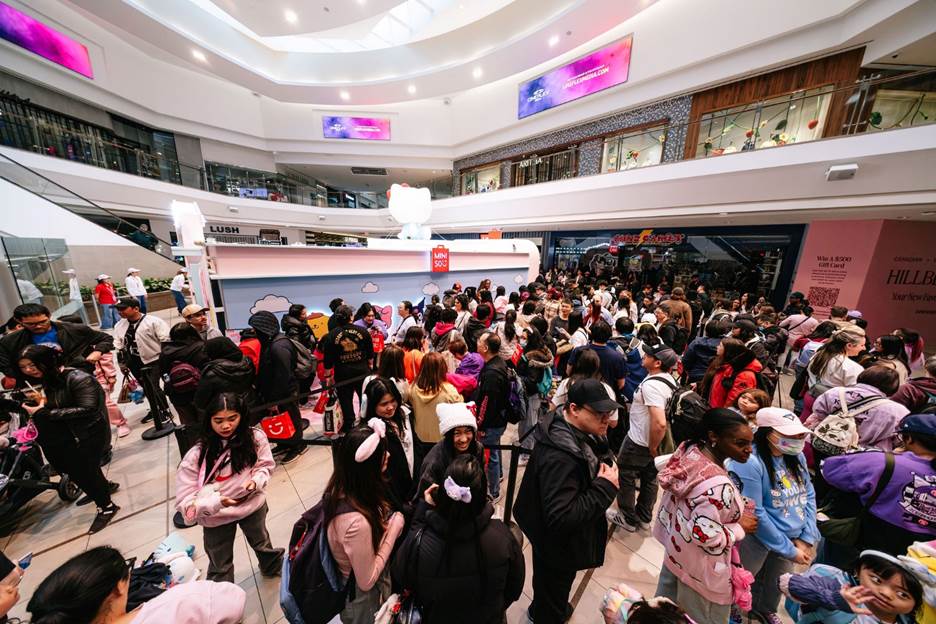
Crowds at the Miniso Hello Kitty pop-up at Scarborough Town Centre in Toronto. Photo: Oxford Properties
From Comfort Zones to Community
One of the strongest themes emerging from the HumanKind study is a renewed emphasis on social connection.
Carpentier believes many Canadians became a little too comfortable in their comfort zones during and after the pandemic. Staying home, cancelling plans and embracing self-care became common behaviours as people navigated uncertainty and disruption.
“I think a lot of people got a little too comfortable in their comfort zones,” she said. “Putting their sweatpants on and watching a movie and just cancelling plans in the name of self-care or protecting their peace and just kind of staying home.”
While those behaviours provided comfort at the time, Carpentier says many consumers are beginning to recognize that meaningful relationships require participation.
“We’re kind of starting to see this increase in people going back out and celebrating with friends and realizing that if you want a village, you have to be part of it,” she said. “You have to show up even when it’s inconvenient or you’re tired and you’ve had a long day.”
The study found that 74 per cent of respondents agreed that if people want others to show up for them, they need to show up for others, even when it is inconvenient. Meanwhile, 56 per cent said they are trying to show up more for people they care about, while 47 per cent said they are actively pushing themselves to socialize more for their own well-being.
Researchers summarized the trend with a simple observation: “If you want a village, you have to be a villager.”
Carpentier says many Canadians are beginning to realize they played an active role in their own loneliness during the years following the pandemic.
As consumers spend more time together, the study also found an increase in the number of Canadians who believe most people can be trusted, reversing a trend of declining trust observed in previous years.
“We’re seeing those little moments and reminders of how good it actually feels to be around other people,” Carpentier said. “Even when we don’t know them and how nice those connections are.”
For retailers, that trend may help explain why food halls, public gathering spaces, events and experiential concepts continue to gain traction.
Across Canada, landlords are investing in programming that encourages consumers to spend more time together. Retail destinations increasingly compete on their ability to create memorable experiences and foster community alongside traditional shopping.
Consumers Are Looking for Micro-Doses of Happiness
The study also suggests many consumers are actively seeking small moments of enjoyment as a way of coping with a world that still feels uncertain.
Carpentier describes the trend as a search for “little moments of hope” and “micro-doses of happiness” that can make daily life feel more rewarding.
That desire is showing up in a wide range of activities. The report identified substantial increases in interest surrounding beginner-focused experiences, including stand-up comedy, crafts, open mic nights and other social activities that encourage participation.
“There was a 750 per cent increase in stand-up comedy searches,” Carpentier said. “People are just wanting to exhale and let their hair down a little bit.”
The trend reflects a broader shift away from the pressure to constantly optimize every aspect of life.
For years, social media and hustle culture encouraged consumers to turn hobbies into side businesses, build personal brands and pursue constant self-improvement. Today, many consumers appear to be moving in the opposite direction.
“Can I just do it? Can I do pottery and just be bad at it and have fun with it?” Carpentier said. “There’s a lot of celebrating the beginner mindset and doing things just for the sake of enjoying them.”
The study also reported a 2,500 per cent increase in searches related to inspirational drama books and stories that focus on overcoming challenges.
“It’s stories of people who are struggling and have challenges, but then they get through them,” Carpentier explained.
For retailers, the implications extend across a variety of categories.
Businesses built around participation, learning and shared experiences may be particularly well positioned to benefit from consumers’ desire to reconnect with activities that feel rewarding, social and fun.
The trend can be seen in everything from hobby-focused retailers and bookstores to entertainment venues, recreation concepts and retailers that offer workshops, classes and community events.
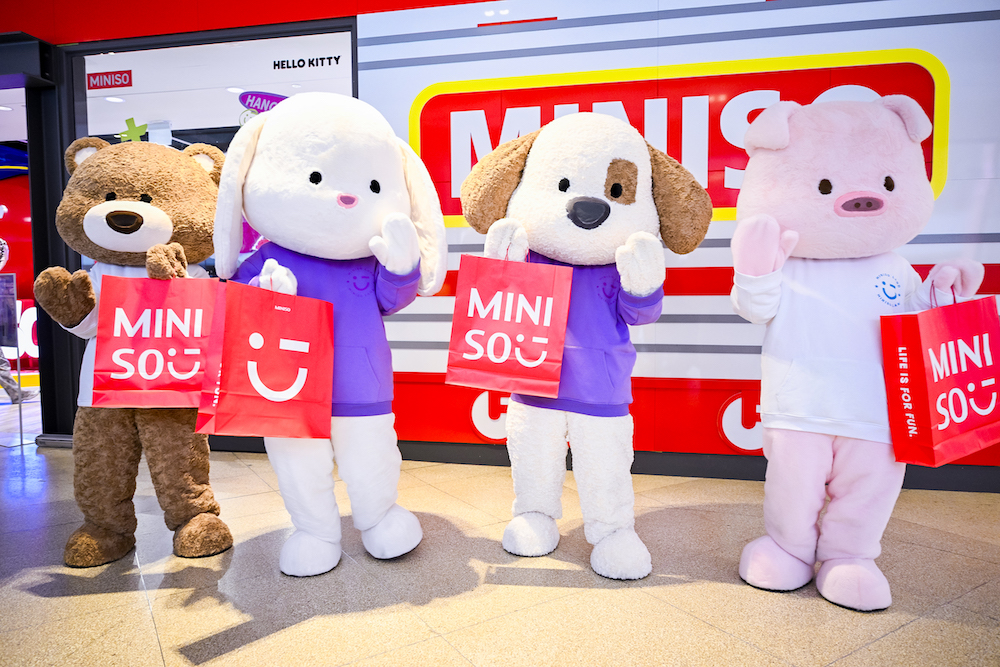
Miniso Land at West Edmonton Mall. Photo: Miniso Canada
Canadian Identity Extends Beyond Buy Canadian
The HumanKind study also found that many Canadians are thinking differently about their relationship with local businesses, Canadian brands and national identity.
While Buy Canadian initiatives received renewed attention this year amid tariff disputes and political tensions with the United States, Carpentier believes something deeper is taking place.
According to the study, 53 per cent of respondents say they are supporting more Canadian brands than they were a year ago, while 52 per cent report supporting more local businesses.
Carpentier says recent events prompted many Canadians to think more deliberately about what makes the country unique.
“Canadians are thinking about how they’re unique in a way that they haven’t done in a while,” she said. “Donald Trump said we should just be the fifty-first state because we’re basically the same as America, and a whole bunch of Canadians went, ‘No, no, no, no, no.'”
The study found that 57 per cent of Canadians say they are prouder than ever to be Canadian given everything happening in the world today.
For Carpentier, that pride extends beyond products manufactured in Canada.
“There is this Canadian sentiment that’s not just about hockey and Canadiana-type things,” she said. “It’s not just as easy as asking if something is made in Canada or not.”
Instead, many consumers appear to be looking for stronger connections to local communities, Canadian businesses and brands that reflect their values.
That sentiment may continue to benefit retailers that emphasize authenticity, local engagement and meaningful connections with the communities they serve.
Researchers caution, however, that consumers are becoming increasingly discerning. The report warns against what it describes as “maplewashing” — emphasizing Canadian identity without meaningful action behind the claim.
Consumers are paying closer attention to whether businesses genuinely support Canadian communities, workers and economic activity.
Trust Remains Difficult to Earn
While consumers may be feeling more hopeful about their ability to improve their lives, the HumanKind study suggests trust remains a significant challenge for brands.
Just 14 per cent of Gen Z and Millennial respondents said they trust brands and private companies to have their best interests at heart, while 71 per cent either disagreed or were uncertain that brands truly understand their concerns.
The findings suggest that consumers are becoming increasingly selective about which businesses they support and which messages they believe.
For retailers, that means authenticity is becoming increasingly important.
Consumers may be willing to support businesses that align with their values, participate in their communities and provide meaningful experiences. However, they are also quick to question messaging that feels disconnected from reality.
A Shift Toward Participation
The HumanKind 2026 study paints a picture of consumers who continue to face significant economic and social pressures but are increasingly choosing to engage with the world around them.
They are spending more time with friends, trying new activities, supporting local businesses and seeking experiences that create a sense of connection.
Many are no longer waiting for circumstances to improve before trying to improve their own lives.
That shift may help explain several trends already visible across Canadian retail. Landlords continue to invest in food halls, public gathering spaces and event programming. Retailers are expanding experiential offerings, while local businesses and Canadian brands continue to resonate with consumers seeking authenticity and connection.
Consumers continue to care about value and affordability. They remain concerned about economic uncertainty. Yet many are also actively searching for opportunities to participate, connect and engage with the world around them.
For retailers, creating spaces, experiences and communities that support those goals may become just as important as the products they sell.
Two years after launching its first international store in Canada, India-based fashion retailer Soch has expanded westward with a new location in Surrey, British Columbia, strengthening its presence in two of the country’s largest South Asian consumer markets.
The 1,500-square-foot store marks Soch’s second Canadian location and fifth international store overall. Located in Metro Vancouver, the store carries a range of apparel including silk sarees, salwar suits, tunics, kurta sets, lehengas, fusion wear and kaftans.
“The Indian population in Canada has embraced Soch with remarkable warmth,” said Soch CEO and Co-Founder Vinay Chatlani in a statement announcing the opening. “With its vibrant South Asian heritage and strong sense of community, Vancouver is the perfect home for our second store in Canada, and fifth international location.”
Vinay Chatlani
The Surrey opening continues a Canadian expansion strategy that began in 2024 when Soch selected Brampton, Ontario, for its first store outside India. The choice of Surrey is notable because it reflects a targeted approach to growth, with the retailer establishing its first Canadian locations in communities where demand for Indian fashion is already deeply rooted.
Retail Insider interviewed Chatlani in 2024 following Soch’s Canadian debut in Brampton. At the time, Canada had been selected as the company’s first international market, with Chatlani pointing to the country’s growing South Asian population, multicultural consumer base and demand for Indian fashion as key factors behind the decision.
Metro Vancouver was also identified as a market with long-term potential.
The Surrey opening suggests the company is continuing to execute on that vision.
Founded in Bengaluru, Soch has grown into one of India’s largest women’s ethnic fashion retailers, operating more than 175 stores across approximately 70 cities. While the company continues to explore opportunities in Southeast Asia, the Middle East, the United Kingdom and the United States, Canada remains a visible part of its international growth strategy.
The retailer also operates a dedicated Canadian e-commerce platform, allowing it to serve customers nationwide while supporting growth in key metropolitan markets.
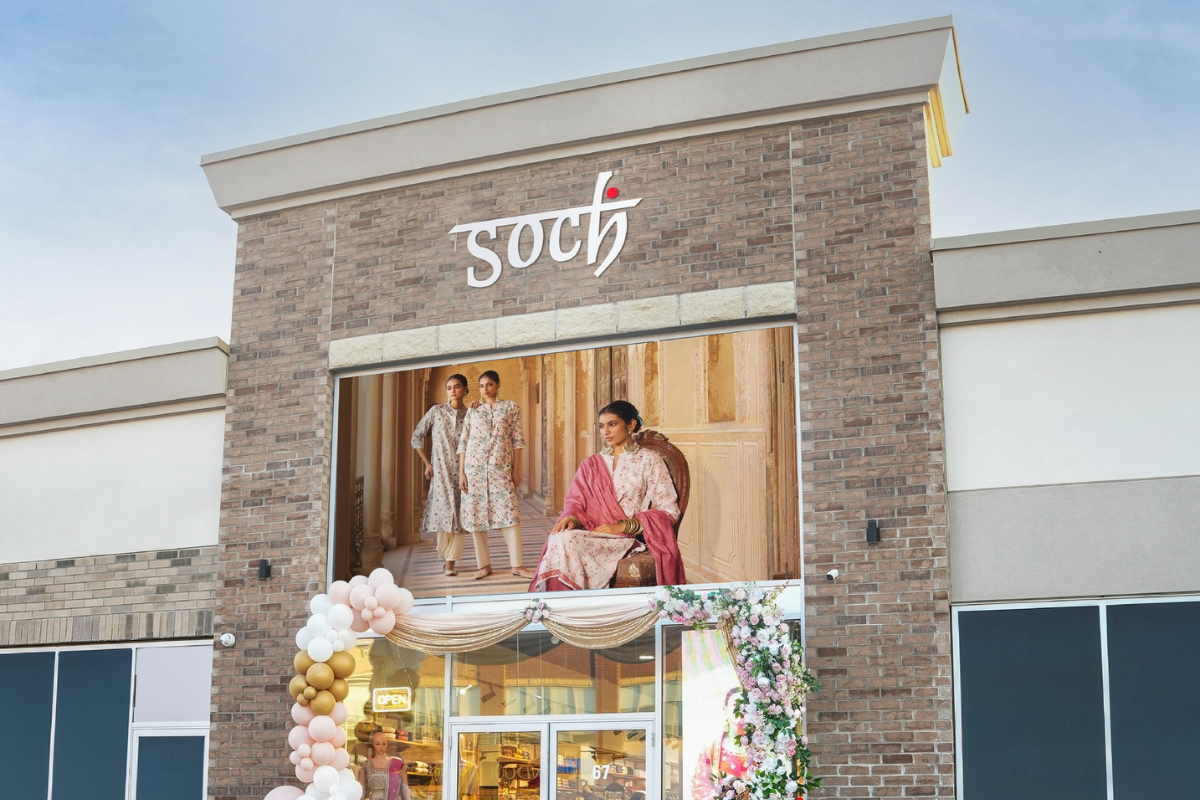
Soch’s new Surrey store. Photo: Soch
Why Surrey Makes Sense
Surrey is one of the most compelling expansion markets in Canada for a retailer such as Soch.
The city had more than 568,000 residents in the 2021 Census and is among Canada’s fastest-growing large municipalities. It is also home to one of the country’s largest South Asian populations, with Punjabi among its most widely spoken languages and Sikhs representing more than one-quarter of local residents.
Those demographics have helped establish Surrey as a major commercial hub for businesses serving South Asian consumers. The city has seen significant growth in fashion retail, jewellery, grocery, dining and professional services catering to a population with strong cultural ties to the Indian subcontinent.
For an ethnic fashion retailer, the opportunity is especially significant. Weddings, festivals, religious celebrations and family gatherings continue to support demand for traditional and occasion-based apparel, creating a customer base that shops for cultural fashion throughout the year.
The retailer’s first two Canadian stores now serve two of the country’s most significant South Asian consumer markets: Brampton in the Greater Toronto Area and Surrey in Metro Vancouver.
Soch Brampton (Image: Soch)
Canada Continues to Attract International Retailers
The Surrey opening also reinforces Canada’s appeal as a growth market for international brands.
Population growth, immigration and increasingly diverse consumer demographics continue to create opportunities for retailers looking beyond their home markets. For brands from India, established diaspora communities can provide a natural foundation for expansion while introducing products and concepts to a broader audience.
Two years after entering Canada through Brampton, Soch is building a bicoastal presence around two of the country’s most important South Asian consumer markets. As international retailers continue to evaluate opportunities in Canada, the company’s expansion offers a reminder that some of the country’s most compelling growth markets are being shaped as much by demographic trends as by traditional retail metrics.
Toronto entrepreneur Sahar Saidi is preparing to take her direct-to-consumer haircare brand into retail stores after nearly a decade of online growth.
Saidi, founder of Love Ur Curls, said the company was born out of personal frustration with the lack of effective products for curly hair. After years of trying to manage her own hair with multiple products, she set out to create a simplified solution tailored to textured hair.
She began developing the business in 2015 and officially launched in 2017 with a three-step system that included shampoo, conditioner and an all-in-one styling product. Saidi said the goal was to streamline routines for consumers who often spend significant time and money managing curly hair.
The Toronto-based brand has remained primarily direct-to-consumer, selling through its website and online marketplaces. Saidi said that model allowed the company to build close relationships with customers and refine products based on feedback.
She said the COVID-19 pandemic brought unexpected attention to the category, as salon closures pushed many consumers to manage their natural hair at home. This led to increased interest from people unfamiliar with curly hair care, contributing to growth in the segment.
Despite early assumptions that beauty spending might decline during lockdowns, Saidi said curly hair care remained resilient and continues to be one of the faster-growing areas within the industry.
Now, the company is preparing for its next phase, with plans to expand into physical retail. Saidi said potential partners include specialty beauty retailers, salon-based stores and major Canadian chains.
The move coincides with a broader brand shift away from traditional curl-typing systems toward what Saidi describes as a more inclusive and simplified approach to haircare.
Saidi, who previously worked in fields including sales and private aviation, started the business with less than $100,000 in personal funds and loans. She said the company generated more than $1 million in revenue in its first year.
Canadian entrepreneur Tara Bosch built SmartSweets for her grandmother before selling her candy brand for $360 million in 2020.
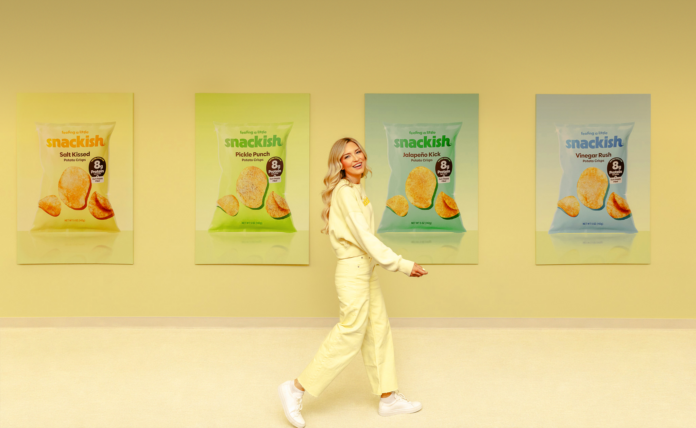
Now she has launched Snackish for her daughter Willa who has an obsession for potato chips which Bosch shares.
Bosch set out to change what a chip could be. She had done it before, dropping out of college to test recipes in her kitchen and build SmartSweets into a category-defining success.
Built around a simple promise, Eat Chips Every Day, Snackish is available now nationwide at Target across the U.S and at Loblaws and Whole Foods across Canada.
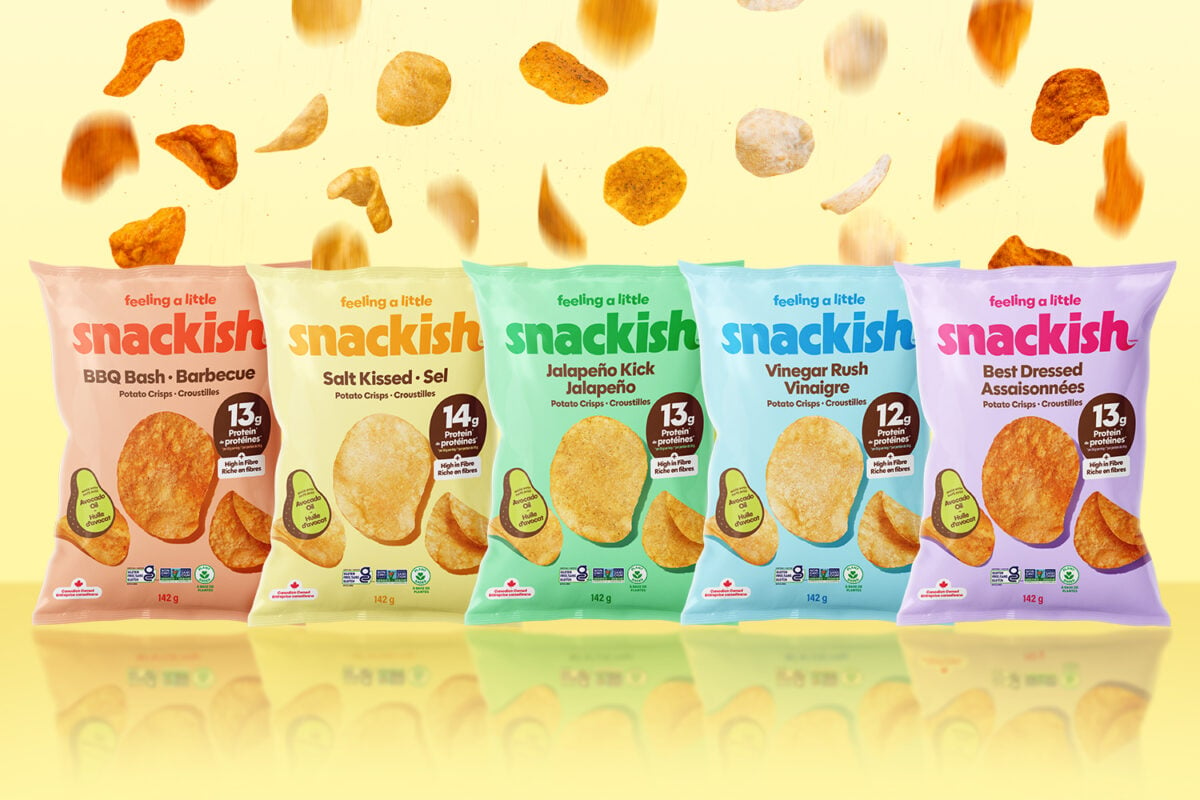
Bosch said Snackish keeps everything people love, real potatoes, bold seasoning, and crunch, and innovates what is inside the bag with potato-powered protein, gut-happy fiber, and avocado oil. The brand is bringing fun and aspiration back to the chip aisle with five bold flavours: BBQ Bash, Salt Kissed, Jalapeño Kick, Vinegar Rush, and the Canadian-exclusive Best Dressed. Each bag retails for $7.99.
Bosch said Snackish is self-funded and vertically integrated through its wholly owned 65,000-square-foot manufacturing facility – the Snacktor y- the first of its kind in North America. It’s women-owned and women-led, with a leadership team that brings deep experience in building category-defining consumer brands.
Tara Bosch
Every team member holds meaningful equity, and creators including Kat Stickler, Mikayla Matthews of The Secret Lives of Mormon Wives, Aspyn Ovard, Vidya Gopalan, and Levi Coralynn joined as owners from day one, functioning as true extensions of the team, added Bosch.
In an interview with Retail Insider, Bosch talked about the new brand.
Question: What gap in the snack aisle are you aiming to fill with Snackish, and how does it differ from both traditional chips and existing better-for-you brands?
Answer: About a year ago I set the intention that if there was ever an authentic “why” and an incredible group of women to build with again, how grateful I would be to have the opportunity to bring another vision to life. I don’t start with a market gap – I start with a person I love who’s being failed by what exists, and then I go create it. With SmartSweets it was my grandmother: she loved candy and felt like all the sugar meant she had to give it up. I refused to accept that. This time it’s my daughter Willa. Shortly after setting that intention, Willa became obsessed with potato chips. I love them too, but all the choices either didn’t taste great or leave you feeling great. So we wanted to change what a chip could be. We kept everything people love – real potatoes, the seasoning, the crunch- and rebuilt what’s inside the bag: 8g of potato-powered protein, gut happy fiber, avocado oil, bold seasonings with ingredients you can find in your kitchen, so you can actually reach for them every day. We’re bringing fun and aspiration back to the salty snacks category and building the everyday snack for a new generation.
Q: Why did you choose a retail-first launch strategy with partners like Loblaws, Whole Foods Canada and London Drugs, rather than building momentum through direct-to-consumer first?
A: Because chips are an everyday, grab-it-where-you-are kind of snack — they belong in the aisle she’s already walking, not in a subscription box. In a social-forward world, our friends aren’t waiting for us to slowly creep into their region. They’re discovering Snackish on their phone and wanting to grab it where they already shop. So our job is to make accessibility match the awareness we’re creating on social. Launching nationwide across the US and Canada from day one, with partners like Target, Loblaws, Whole Foods, and London Drugs, means the moment someone falls for us in their group chat, the bag is right there on their next run. DTC-first would’ve put a wall between the want and the buy. Retail-first removes it.
Tara Bosch
Q: Snackish is self-funded and vertically integrated through your “Snacktory” facility. How does that model impact your margins, scalability, and control compared to typical CPG startups?
A: The thing that makes your product hard to make is actually an incredible moat. To build both our chips and our innovation pipeline, we had to build the capability from the ground up – the manufacturing didn’t exist. So we built the Snacktory: 66,000 square feet, the first vertically integrated snack production of its kind in North America. On control, that’s everything. Quality, consistency, innovation, and speed, in a category where taste and craveability are queen. On margins, owning production means we’re not handing economics to a co-packer, and that compounds as we scale. It’s more capital-heavy upfront but self-funding lets us keep our focus purely on execution, keep the cap table simple, and give our entire snackpack meaningful equity now and through scale. The people building Snackish own it.
Q: Can you explain how your creator equity model works in practice, and what role those social media partners will play in driving awareness and sales at retail?
A: We fundamentally changed the model with Snackish: we brought a group of incredible women creators into the brand as actual owners from day one who function as an extension of our snackpack. Kat Stickler joined as a founding partner, Mikayla Matthews as a creative advisor, alongside other women all holding meaningful equity in the outcome.They’re building the Snackish vision with us, long-term, and it translates into authenticity.
I’m building Snackish as a single mama, and I’m deeply passionate about giving other women a seat at the table – women on all different journeys, rising together. Our creators are trusted voices to exactly the friends we’re building Snac for, so the awareness they create on social drives people straight to the shelf – and because we launched where those friends already shop, that attention converts. Underneath all of it, Snackish is its own character. She’s got her own personality, and her own soul.
Snackish photo
Q: Given your track record with SmartSweets, what lessons, particularly around distribution, product development and consumer expectations, are shaping how you’re building Snackish differently this time?
A: On distribution: go to where she already is and make accessibility match awareness – don’t crawl region by region in a social-first world. On product: the hard-to-make thing is the moat, so build the capability from the ground up and make sure your value proposition is radically better than anything that exists, not incrementally. On consumer expectations: lead with taste, always. The deepest lesson is that a product is never just a product. It’s the community and the emotional connection to the vision that actually builds a brand. I’m building Snackish self-funded, vertically integrated, with the women-led snackpack (team) and our creators as owners- because the how matters as much as the what.
The pace of RBC Canadian cardholder spending outside of purchases at the pumps and autos moderated in May from the previous month, but remained positive, according to a new report.
“Our estimate of RBC’s core retail sales (excluding purchases of gasoline and autos) eased to 0.7% from 1.2% in April on a three-month average,” said the report, authored by RBC economists Abbey Xuand Rachel Battaglia.
“Higher gasoline prices continued to absorb a larger share of household budgets. However, limited pullback in spending by consumers on other goods and services implies households continue, for now, to dip into savings (or increase borrowing) to keep spending.
Rachel BattagliaAbbey Xu
“Essentials’ spending growth excluding gasoline moderated to 0.1%, but discretionary goods spending (ex-gasoline) continued to strengthen, suggesting consumers remain selective.
The details or the RBC report:
Essentials’ spending increased 1.1% in May and remained up 1.3% on a three-month average, but largely reflected price increases in spending on gasoline. Growth excluding gasoline purchases was essentially flat, suggesting elevated fuel costs may constraining household budgets for other everyday necessities.
Still, discretionary goods spending rose 1%, while the three-month average increased 0.7%, extending a steady improvement from near-flat readings earlier this year.
Clothing, shoes and related apparel remained a notable source of strength with spending rising 1.8%, and maintaining a 1% three-month average gain.
A 0.6% three-month average increase in household and construction-related purchases aligns with some evidence of stabilization in housing activity. It supports our view that while activity remains largely flat, some green shoots are beginning to appear in housing markets.
Discretionary services spending rose 0.3%, and held at a 0.5% three-month average. Dining and entertainment spending softened in May, but both remained on a positive trend.
Travel spending continued to lag other spending categories with the three-month average remaining negative at – 2%, suggesting households remain selective with larger discretionary purchases.
RONA has published its 2025 Overview of Sustainable Development Activities, which highlights the company’s environmental and social initiatives, as well as the progress it has made over the past year to reach its sustainable development goals.
Key achievements in 2025, it noted:
100% of new private-brand bathroom products are WaterSense® certified
Nearly 2,000 tonnes of products were brought back by customers for recycling
Over $2 M was presented to organizations by the RONA Foundation in support of their construction and renovation projects
“At RONA, sustainable development is part of our daily activities. Every day, it takes shape through our teams’ actions across Canada; whether it’s through the products we choose to market or the ways we operate in our network of stores, we have concrete opportunities to improve our practices and have a direct impact on people’s lives,” said J.P. Towner, President and CEO, RONA inc., in the report.
J.P. Towner
“In 2025, we chose to focus our efforts on our products to generate more value for our customers and the environment. Thanks to our private brands, we continued to offer eco-friendly products at affordable prices, while our in-store recycling programs enabled customers to bring back nearly 2,000 tonnes of products for recycling. We also expanded our recycling program for used air conditioners to 14 of our stores across Québec, a first in our industry.
“The key to our progress is our employees. Their health, safety, well-being and development remain top priorities. Throughout the year, we offered them new health and wellness resources, and we trained over 5,000 employees in best practices for sorting recyclable material.
“We strive to put people at the heart of our actions, and this goes well beyond our teams. In this uncertain geopolitical climate, our commitment to the community is stronger than ever. In 2025, the RONA Foundation presented over 2 million dollars to projects that meet very real needs, particularly in terms of access to safe housing.”
To find out more about RONA’s initiatives and to read the company’s 2025 Overview of Sustainable Development Activities, click HERE
As of the report, the retailer had 21,000 employees with 425 corporate and affiliated dealer stores across Canada and 11 distribution centres.
Le Creuset‘s upcoming Park Royal store marks the latest chapter in a Canadian expansion strategy that has increasingly focused on some of the country’s most prominent lifestyle and mixed-use retail destinations.
The French cookware and kitchenware brand will open an approximately 1,500-square-foot boutique in The Village at Park Royal in West Vancouver this August, bringing its Canadian network to 13 stand-alone locations and giving the company a third store in British Columbia.
The opening continues a long-standing relationship between Le Creuset and Montreal-based retail real estate brokerage Think Retail. Managing Partner Tony Flanz has worked with the brand on Canadian expansion opportunities for years, helping identify locations that align with Le Creuset’s premium positioning and measured approach to growth.
While the Park Royal store adds another location to the company’s Canadian footprint, it also reflects a broader evolution in strategy. Fifteen years after opening its first Canadian corporate store, Le Creuset has shifted its focus toward carefully selected destinations that combine affluent demographics, strong retail fundamentals, dining offerings, and increasingly experiential shopping environments.
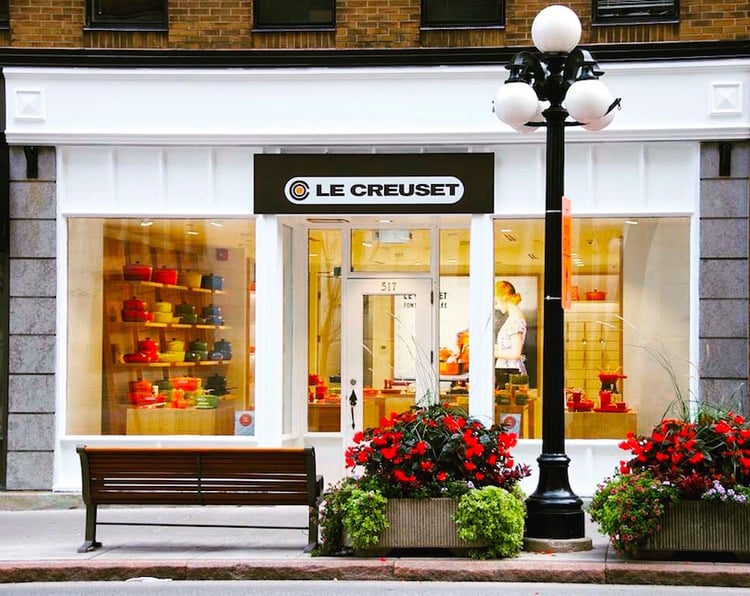
(OTTAWA STORE. PHOTO: LE CREUSET / THINK RETAIL)
Park Royal Fits a Broader Expansion Strategy
The upcoming West Vancouver boutique follows a series of high-profile Canadian projects that reveal a consistent direction for the brand.
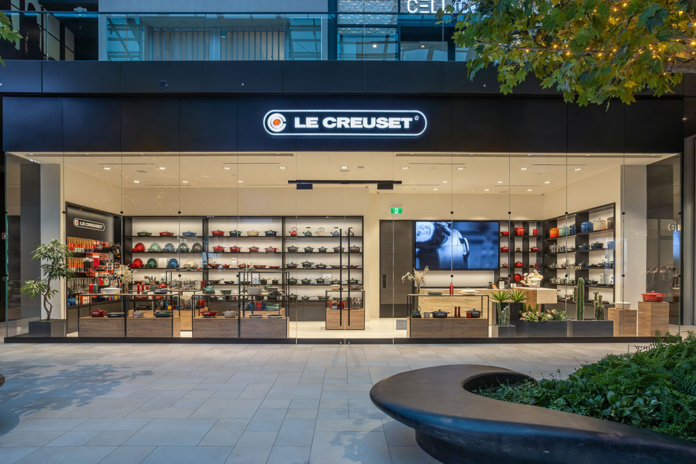
In late 2023, Le Creuset opened at The Well in downtown Toronto, one of Canada’s most ambitious mixed-use developments. The following year, the company opened a boutique at Royalmount in Montreal, a destination that combines luxury retail, dining, entertainment, office space, and future residential components.
Park Royal increasingly belongs in that same conversation. The Village at Park Royal, which opened in 2004, is widely regarded as Canada’s first purpose-built lifestyle centre. Designed as an open-air retail environment serving West Vancouver’s affluent consumer base, it introduced a format that has since influenced developments across the country.
Today, Park Royal continues to evolve through redevelopment and mixed-use additions that reinforce its role as a destination where consumers can shop, dine, gather, and live. For Le Creuset, the property offers the type of environment that aligns naturally with a brand centred on cooking, entertaining, and home-focused lifestyles.
The opening also reflects the site’s continued ability to attract premium retailers seeking customers who value quality, experience, and lifestyle-oriented products.
Building a National Presence While Remaining Selective
Le Creuset’s Canadian growth story differs from many international retailers that have entered the market over the past decade.
The company opened its first Canadian store at CF Chinook Centre in Calgary in 2010 before gradually expanding into major markets across the country. Locations followed in Vancouver, Montreal, Edmonton, Winnipeg, Halifax, Toronto, Ottawa, and other key retail destinations.
South Granville remains one of the most notable examples from that earlier expansion phase. Opened in 2016, the approximately 2,000-square-foot Vancouver location became the largest Le Creuset store in Canada and represented an early investment in premium high-street retail.
Throughout much of that growth, Flanz and Think Retail worked alongside the brand as it built a national presence while maintaining a disciplined approach to site selection. The company reached a milestone in 2018 when it opened a boutique at CF Richmond Centre, bringing its Canadian store count to 12 locations.
What makes Le Creuset’s trajectory particularly interesting is that growth did not simply continue upward.
When Royalmount opened in 2024, it again represented the company’s 12th Canadian location. The milestone highlighted how the retailer’s portfolio had evolved over time, with some earlier locations exiting the network as new opportunities emerged in dominant retail destinations.
The result is a portfolio that remains relatively compact by national standards but concentrated in some of Canada’s most prominent retail environments.
Le Creuset at CF Chinook Centre (Image: Mario Toneguzzi)
Store Formats Have Evolved Alongside the Portfolio
The evolution of Le Creuset’s real estate strategy has been accompanied by changes in store design and merchandising.
Historically, the company often targeted compact spaces ranging from approximately 750 to 1,250 square feet. Those footprints were well suited to a retailer primarily known for its iconic cast-iron cookware.
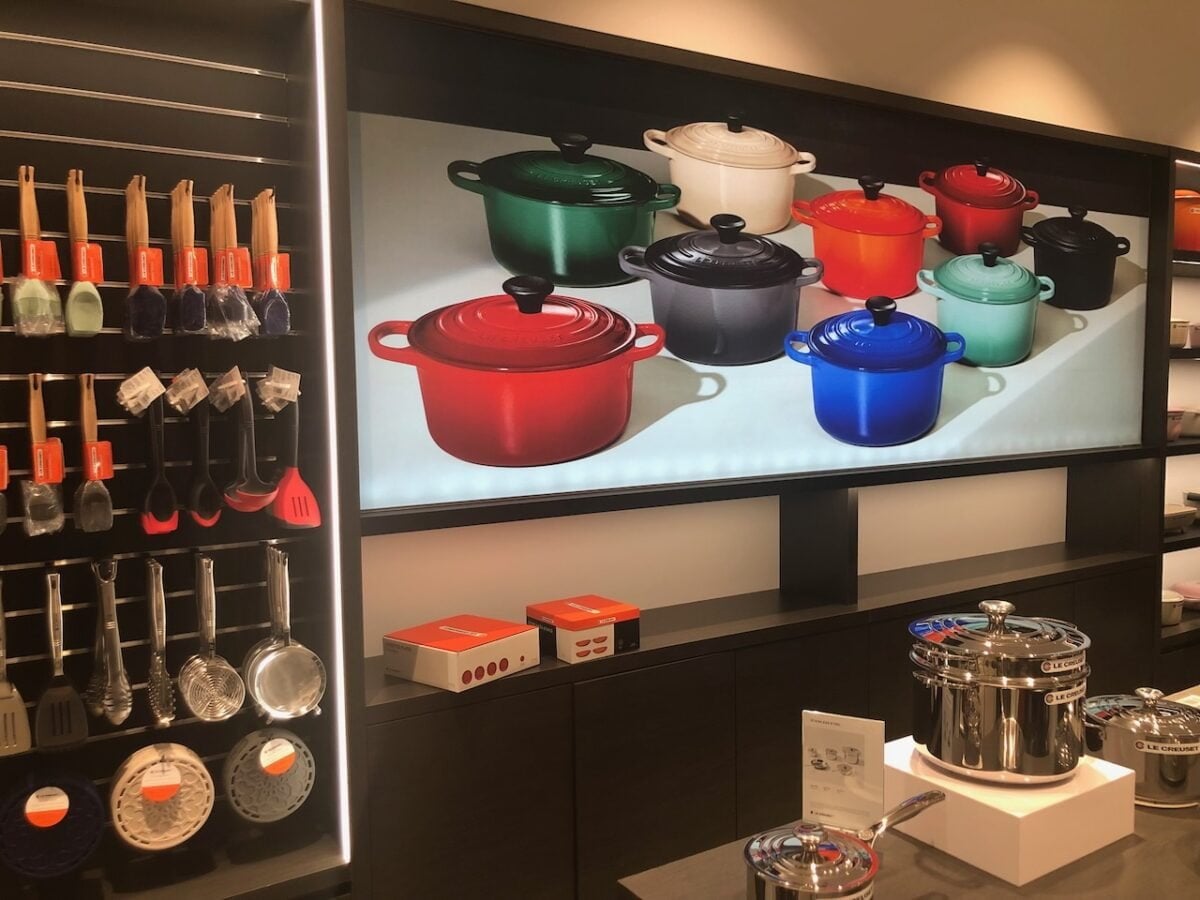
Today’s stores reflect a broader vision. Le Creuset’s assortment now extends well beyond cookware to include bakeware, dinnerware, serving pieces, textiles, utensils, and a growing range of kitchen and home accessories. The expanded merchandise mix has supported larger store formats and more immersive presentations.
That shift was particularly evident at Royalmount, where the company introduced a retail concept inspired by a modern kitchen. Island-style displays, open shelving, and lifestyle-oriented merchandising help customers visualize products within contemporary home settings.
The approximately 1,500-square-foot Park Royal location reflects that continuing evolution.
Montreal-based design-build firm SAJO, which has worked with Le Creuset in Canada for more than 15 years, helped bring the Royalmount concept to life and has played a role in maintaining consistency across the retailer’s Canadian portfolio.
Looking Ahead
Founded in France in 1925, Le Creuset recently surpassed its 100th anniversary and remains best known for its cast-iron cookware and growing assortment of kitchen and dining products.
The company’s measured approach to Canadian growth reflects that long-term perspective. Rather than pursuing aggressive store-count expansion, Le Creuset has focused on building a network of carefully selected locations capable of supporting its premium positioning and evolving store concept.
According to Flanz, the company continues to explore opportunities in Ontario and Quebec, with particular interest in super-regional shopping centres and premium retail environments. Le Creuset is also open to select pop-up opportunities in key markets as it evaluates future growth.