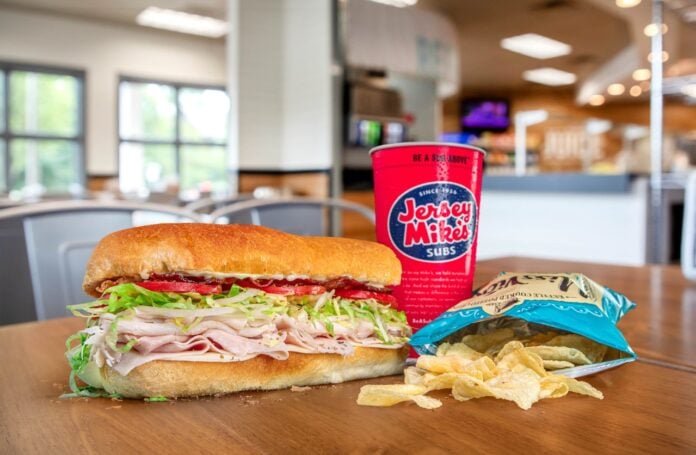
Redberry Restaurants will open the third downtown Toronto Jersey Mike’s Subs at 160 Bloor St. E., on Wednesday June 17.
The Bloor Street Jersey Mike’s joins locations in Union Station and at 425 University Ave., which opened in May. A fourth downtown Toronto location is slated to open later this summer. This will be the 28th Jersey Mike’s Redberry has opened in Canada, on its way to a planned 300 Canadian locations by 2035, said the company.
“We are committed to building our presence in downtown Toronto and with this location we are excited to introduce ourselves to this important commercial district,” said Ken Otto, CEO, Redberry. “We are also committed to our on-going partnership with Make-A-Wish Canada and through our five-day grand opening fundraiser we are raising funds to grant more wishes to local children.”
Ken Otto
To celebrate the new location, Redberry said it will hold a grand opening and fundraiser from Wednesday June 17 to Sunday June 21, to support Make-A-Wish Canada. Customers who receive a special fundraising coupon distributed through a grassroots effort prior to the opening can make a minimum $3 contribution to Make-A-Wish Canada in exchange for a regular sub. Customers must have a coupon to be eligible.
Customers without a coupon will have a limited-time opportunity to download the Jersey Mike’s app and earn a free regular sub after their first in-app sub purchase and will also be able to support Make-A-Wish Canada via a donation box near the register, it said.
In May, Jersey Mike’s pledged to raise $1 million by 2030 for Make-A-Wish Canada. Since 2024, the company has raised nearly $270,000 to help grant life-changing wishes to children with critical illnesses.
Founded in 2005, Redberry is one of the largest QSR restaurant franchisees in Canada. Redberry owns and operates more than 200 restaurants across the country, operating under the BURGER KING®, Taco Bell and Jersey Mike’s Subs brands.
Founded in 1956 as Mike’s Subs with one location in Point Pleasant, New Jersey, Jersey Mike’s has grown into a premier franchisor with more than 3,200 locations in the U.S. and Canada.
The Stock Yards Village location is situated within the heart of the mall, offering shoppers an affordable and accessible dining option in one of Toronto’s premier retail and entertainment district, said the company.
“We identified Stock Yards Village early in our expansion strategy because of its strong community mix and steady traffic from across the Greater Toronto Area (GTA),” said Naomi Kempkes, Co-Founder and President at Honestly Good Chicken Fingers. “We’ve been fortunate to see support from a wide range of communities at all of our locations, and we’re confident that both visitors to Stock Yards Villages and local West Toronto residents will continue that trend.”
Honestly Good Chicken Fingers photo
Designed with simplicity and efficiency in mind, Honestly Good Chicken Fingers said it focuses on high-quality, made-to-order menu items crafted with a unique blend of herbs and spices for a distinctive flavour experience. Ingredients are sourced from suppliers who meet the company’s strict standards for quality and freshness.
Honestly Good Chicken Fingers photo
The brand’s straightforward approach has resonated strongly with chicken finger enthusiasts across the GTA, supporting its continued expansion across the region. With locations in Etobicoke, The Well and Vaughan Mills, the Stock Yards Village opening marks the fourth location in the Toronto area and sets the stage for broader growth across Canada and the United States, it added.
“The concept was born in the GTA, so expanding here always carries special meaning for us,” said Kempkes. “The response from guests has been incredible, and it reflects a clear demand for high-quality, simple and well-executed food. That success is helping fuel our next phase of growth across North America.”
The Canadian Federation of Independent Business (CFIB) is calling on Ottawa to prioritize supply chain stability, reduce compliance burdens on small businesses, and modernize labour rules that have long-tilted toward large unions.
The call comes as the federal government concluded consultations on potential reforms to the Canada Labour Code.
The CFIB said recent strikes and labour disruptions, including those at CN and CPKC railways, British Columbia and Montreal ports, and Canada Post cost small businesses a median of $10,000, with manufacturers, wholesalers, and producers among those hit hardest – 92% of those with a view support designating federally regulated workplaces that are critical to supply chains as essential service providers.
Corinne Pohlmann
“Small businesses didn’t have a seat at the table during recent strikes, but they were the ones paying the price. Even short disruptions have triggered lasting losses that rippled through the entire economy,” said Corinne Pohlmann, CFIB executive vice-president of advocacy. “The government needs to have the tools to intervene and prevent Canada’s supply chains from being held hostage every time there’s a disagreement with the unions.”
The CFIB, which is Canada’s largest association of small and medium-sized businesses with 103,000 members across every industry and region, said it is urging the government to protect its powers under section 107 of the Canada Labour Code to intervene when supply chains are at risk and to include economic harm as a factor in maintenance of activities decisions.
It said it is suggesting that a detailed cost analysis study be required to evaluate the impacts of a strike on the economy, SMEs, and Canadians before it is even allowed to happen. If the projected harm is severe enough, a general strike should not be allowed to occur. Government should also make the collective bargaining process more transparent by requiring all offers and counteroffers be made public.
“The Canada LabourCode doesn’t consider the damages a work stoppage can cause to small businesses and the economy. That needs to change. The federal government must stop bending labor laws in favour of large unions. Economic stability and the protection of the supply chain must be the government’s top priority, not an afterthought.”
Two in five people in Canada are struggling to put food on the table and 40% are losing sleep over how they’ll stretch their paycheque. The number of those gripped by anxiety when thinking about personal finances has surged to 60% – up five points in just six months, according to the United Way Centraide CanadaUWCC Financial Anxiety Index poll conducted by Léger.
Across the country, the stress of financial anxiety is affecting people’s well-being, driven by the rising cost of everyday essentials – food, housing and energy. Single parents (58%) and newcomers (54%) are more likely to be unable to cover basic expenses without going into debt after one month if they lose their main source of income, and along with younger adults aged 18-34 face significantly higher anxiety levels. The findings point to a deepening fracture in financial stability across demographics that is now affecting people who once considered themselves financially stable, explained the report.
“The story behind the data is people having to make difficult choices, losing sleep over bills, increased family stress, struggling to focus at work, or going without food,” said Dan Clement, President & CEO of United Way Centraide Canada. “This is not a crisis on the horizon. It is happening now, in communities across the country. United Way Centraide is investing in local programs and services that meet urgent needs, build resilience, and strengthen communities for the long term.”
Dan Clement
The human cost: food, sleep and daily life
The financial pressure is taking a measurable toll on basic well-being and daily function, said the report:
38% of Canadians struggle with food insecurity, and one in five report that all food in their home was eaten with no money to buy more
40% report difficulty sleeping due to financial stress
34% % are experiencing difficulty concentrating at work or school
A crisis moving fast
The data reveals not just the depth of financial stress, but also the speed at which it is intensifying, it said. Compared to polling data from late 2025:
The number of people in Canada who report they could cover basic expenses for only one month or less before falling into debt increased by four points, increasing from 42% to 46%.
34% know someone close to them who has experienced poverty, up five points
22% of Canadians have personally experienced poverty, up from 19%
Financial stress is spreading beyond low-income households
The report said financial strain is no longer isolated to the most vulnerable. More than half (53%) of Canadians describe their financial situation as “OK” or worse, meaning that they can manage expenses but nothing more or are already struggling outright. Among those describing their situation as “OK”:
31% say their situation has worsened over the past six months
24% expect it to deteriorate further
The picture is even starker for those describing their situation as “Poor”: two-thirds (66%) say things have gotten worse, and 39 per cent expect further decline, it added.
Regulatory body AGLC (Alberta Gaming, Liquor & Cannabis) says it will give licensed establishments greater flexibility by allowing liquor service to begin as early as 6 a.m. without the need for special approval.
This change gives licensees the option to open earlier to meet business needs and customer demand, including during occasions such as international sporting events and cultural celebrations, said the AGLC.
Dale Nally
“This change cuts red tape and makes life easier for Alberta businesses. Business owners told us they want more flexibility to serve their customers and respond to demand, whether that’s for a major sporting event, a special celebration or an early morning crowd. We listened and we are delivering,” said Dale Nally, Minister of Service Alberta and Red Tape Reduction.
Kandice Machado
“Previous processes requiring licensees to apply separately for each special event caused significant administrative burdens for both licensees and AGLC. This change streamlines the process while maintaining the high standards in place already for safe and responsible liquor service that supports industry integrity, public well-being and community safety,” said Kandice Machado, CEO, AGLC.
Class A, B, C and F licensees such as restaurants, bars, private clubs and licensed facilities that make their own product have the option to begin early liquor service at 6 a.m. Early service hours are optional for these liquor licensees. Closing hours for liquor service remain unchanged at 3 a.m. with last service for alcohol stopping one hour before close, explained the AGLC.
Over the past decade, the AGLC said has approved several requests for licensed premises to serve liquor earlier than 9 a.m. for events like the Calgary Stampede, Olympics Games and FIFA World Cup with very few compliance issues.
Cheryl Maitland Muir
Cheryl Maitland Muir, VP for Western Canada, Restaurants Canada, said: “Restaurants Canada welcomes the AGLC’s decision to permit extended liquor service from 6 a.m. to 3 a.m. without requiring special approval. This change removes unnecessary red tape and outdated restrictions that limited extended hours to designated major and international events. It reflects Restaurants Canada’s ongoing advocacy to reduce administrative burdens for operators, while giving businesses the flexibility to respond to local demand and seize new opportunities to better serve their guests.”
Mona Pinder
Mona Pinder, Executive Director, Alberta Hospitality Association, said: “We welcome this change from AGLC. During major events like the Olympics, World Cup and Calgary Stampede, Alberta businesses have demonstrated they can responsibly manage earlier liquor service with very few compliance issues. Making this flexibility permanent reduces red tape, eliminates unnecessary applications, and gives operators the flexibility to respond to customer demand. Instead of filling out paperwork and waiting for approvals, businesses can focus on what they do best, serving their guests and creating great hospitality experiences.”
Constant Contact, a leading provider of digital marketing tools for small and medium businesses (SMBs) and nonprofits, has released findings from its latest Small Business Now report – global study of over 5,000 small business owners and consumers. It reveals that small business owners are stepping into a new role: the creator.
The SMB creator isn’t just chasing an audience online – they’re already running a business. Their content has a job: to bring in customers, to drive sales and to keep the customers coming back who already love them, said the report.
“The expectations placed on small businesses have never been higher, and they are meeting the challenge by fundamentally changing how they work.” said Frank Vella, CEO at Constant Contact. “The explosive growth of AI adoption – jumping to 87% in the U.S. – proves that owners are actively relying on this technology to succeed. By embracing AI to automate tasks and analyze data, small businesses are buying back their time, allowing them to focus on what they do best: strengthening relationships with their communities.”
Frank Vella
While social media has emerged as the primary “front door” for discovery, AI and automation have become essential efficiency tools that allow owners to scale their efforts to be seen without burning out. In fact, 40% of SMBs are now strategically pivoting to these technologies to manage their marketing workload instead of simply spending more, said Constant Contact.
The shift is already showing up in the numbers. In a 2024 survey commissioned by Constant Contact, e-commerce customers were 1.5 times more likely to report highly successful campaigns, and internal data from Constant Contact shows AI can cut email production time by up to 23%, it noted.
Key Findings from the Q2 2026 Report:
As the demand for digital content grows, small business owners are taking on a new identity, emphasizing personal investment in their brand’s storytelling:
Globally, 73% of small business owners identify as “Creators” in some capacity, with 40% identifying primarily as Creators and 33% as owner/Creator hybrids;
47% of small business owners globally handle all social media management personally;
Social media is now the top digital discovery tool, with 49% of consumers globally using it to find new small businesses, surpassing search engines (40%);
Despite this reliance on social platforms for reach, 49% of SMB owners globally feel “very confident” their business would survive if social media disappeared tomorrow, highlighting the importance of owned marketing channels to sustain revenue.
Artificial intelligence has rapidly transitioned from a “future technology” to a core business tool, bridging the gap between high effort and high efficiency, said Constant Contact:
In the U.S., AI adoption in SMB marketing surged from 26% in 2023 to 87%by April 2026;
The primary benefit for 52% of users globally is “saving time,” particularly through content creation and data analysis.
Globally, 45% of consumers want businesses to explicitly label AI-generated content. Small businesses are stepping up to this demand, with 37% already practicing full transparency about their AI use.
Hanna Pad photo
The report said consumers are increasingly shifting their loyalty toward independent brands, though inflation presents a significant headwind to their actual spending power.
In the U.S., consumer preference for shopping “mostly at small businesses” has nearly tripled over the last five years, jumping from 10% in 2021 to 27% in 2026;
However, rising costs remain a hurdle, with 49% of U.S. consumers reporting they have had to reduce or significantly cut back their spending at small businesses due to inflation;
When choosing a small business over a large corporation, U.S. consumers cite “unique products” and “supporting the local economy” as their primary driving factors.
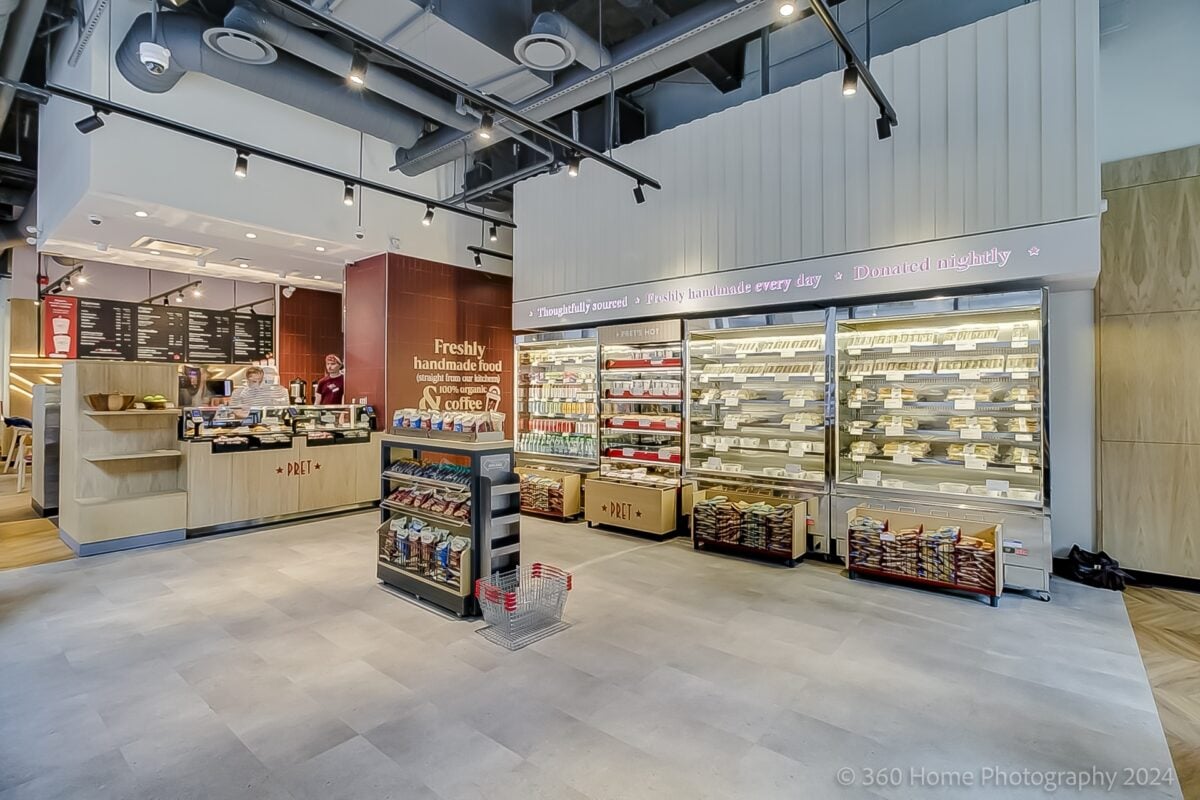
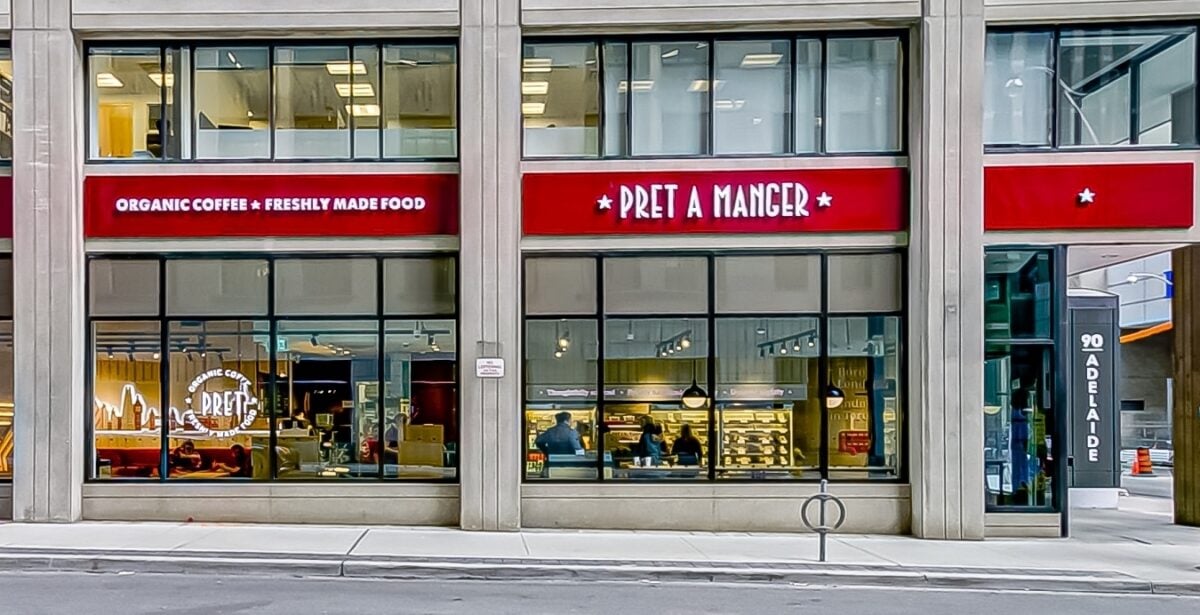
A&W Food Services of Canada Inc., which holds the exclusive Canadian rights to develop and operate the globally recognized fresh food and organic coffee brand, Pret A Manger, announced Wednesday a significant expansion of Pret’s Canadian presence. Following the successful launch of Pret’s second Canadian shop in downtown Toronto’s financial district in January, multiple new Pret shops are now slated to open at major Canadian airports, including Vancouver International Airport (YVR), beginning this summer.
The first Canadian Pret airport location is expected to open in the international terminal at YVR in early June, with additional airport openings anticipated to continue through the second half of 2026. In total, four new Pret locations are currently planned at Canadian airports this year, bringing Pret’s freshly made food, organic coffee, and grab-and-go convenience to millions of Canadian and international travellers, said the company.
Pret’s Canadian airport expansion reflects growing demand from travellers for premium, fresh, and convenient food offerings while reinforcing Pret’s long-term commitment to growth across Canada, according to a news release.
Paul Hughes
A&W’s Pret Canada business is being led by Paul Hughes, Managing Director. Hughes is a seasoned restaurant industry executive, having previously served in senior leadership roles at Canadian QSR/franchised brands, including at Freshii, where he helped support the brand’s expansion and operational growth across North America. In this role, Hughes is also leading Pret’s Canadian growth strategy, including expansion in transit and urban markets across the country, said the brand.
“Airports are a natural fit for Pret,” said Hughes. “Travellers today are looking for food that is fresh, high quality, and fast — whether they’re grabbing a coffee before an early flight or looking for a healthier meal option while in transit. Pret delivers that experience in a way that’s convenient, consistent, and genuinely enjoyable.”
A&W photo
Ben Ma, Vancouver Airport Authority’s Director of Retail Passenger Experience, said: “At YVR, we’re continually looking for opportunities to elevate our food and beverage offering and enhance the passenger experience. The arrival of Pret A Manger adds another globally recognized brand to our airport and is part of our broader strategy to provide travellers with more convenient and healthy choices throughout their journey.”
Ben Ma
“Canada represents an important growth opportunity for Pret,” Hughes added. “We’re seeing strong consumer demand for fresh, high-quality food served quickly and conveniently. We’re excited not only about our airport growth, but also about working with our franchise partners to expand Pret into more cities and transit locations across Canada in the years ahead.”
Hudson's Bay downtown Calgary. Photo by Mario Toneguzzi
Calgary is advancing a wide-ranging strategy to revitalize its downtown core, as Canadian big city mayors call for federal action to strengthen urban centres and drive economic growth.
Thom Mahler, Director of Downtown Strategy for the City of Calgary, said the national discussion reflects growing concern about the evolving role of downtowns, particularly as workplace patterns shift and post-pandemic recovery remains uneven. He noted Calgary entered this period with pre-existing challenges but continues to benefit from a relatively strong employee base compared to other cities.
Mahler emphasized that downtown struggles – from safety concerns to changing retail habits – directly impact street-level businesses and a city’s ability to attract workers and investment. He added that competition from emerging districts within Calgary has intensified the need to reinforce the downtown’s position as a key economic driver and source of property tax revenue.
Major infrastructure and cultural projects are central to the city’s strategy. The first phase of the Stephen Avenue reconstruction is nearing completion, delivering upgraded public space designed for events and pedestrian use. Meanwhile, significant developments at the east end of downtown – including the Glenbow Museum renovation, Olympic Plaza redesign, and the expansion of the Werklund Centre (formerly Arts Commons) – are expected to transform the area into a major cultural hub by 2028.
Mahler said these projects, while disruptive in the short term, are expected to significantly boost foot traffic and economic activity over time. He also highlighted ongoing office-to-residential conversions, particularly in the west end, which are bringing new residents and supporting retail demand. The iconic downtown Bay store is expected to be one of those conversions in the future.
Addressing safety remains a priority, with the city advancing a community-based strategy alongside increased enforcement and services. Mahler said the long-term vision is to create a vibrant, mixed-use downtown that supports tourism, conventions, and everyday urban life.
Canada’s retail landscape has changed dramatically over the past several years. The departure of Nordstrom, the closure of Hudson’s Bay’s department store network, and ongoing pressure on smaller operators have shifted market share toward a smaller group of large retailers with national scale, diversified business models, and the resources to invest through changing market conditions.
A new report from investment firm Stifel suggests Canadian Tire Corporation may be among the retailers best positioned to benefit from that trend. The firm recently initiated coverage of the company with a Buy rating, citing Canadian Tire’s collection of retail banners, owned brands portfolio, loyalty infrastructure, financial services operations, and $2 billion True North transformation strategy.
While many Canadians continue to associate Canadian Tire primarily with automotive products, tools, and seasonal merchandise, the company has evolved into one of the country’s most diversified retail organizations. Through a combination of retail banners, loyalty programs, financial services operations, owned brands, and real estate holdings, Canadian Tire has assembled a business that reaches consumers across numerous spending categories.
More Than Stores
Today, Canadian Tire Corporation’s operations extend well beyond the stores that made the company a household name.
The company operates Canadian Tire stores, SportChek, Mark’s, PartSource, Party City Canada, Canadian Tire Gas+ locations, Canadian Tire Bank, Triangle Rewards, and CT REIT. Together, these businesses create multiple touchpoints with consumers while providing opportunities to leverage customer data, strengthen customer loyalty, and encourage engagement across banners.
According to Stifel, Triangle Rewards now has approximately 9.8 million active registered members, representing household penetration estimated at between 50 and 60 per cent. The report identifies the loyalty program as one of Canadian Tire’s most valuable strategic assets, providing customer insights that can be applied across multiple retail businesses.
In many ways, Canadian Tire today resembles a network of interconnected businesses as much as a traditional retailer. A customer can earn Triangle Rewards points while shopping at Canadian Tire, SportChek, or Mark’s, use a Canadian Tire credit card, fuel up at participating locations, and purchase products tied to some of the company’s best-known owned brands, all while interacting with the same broader organization.
Canadian Tire Bank adds another layer to that structure. The financial services division is among Canada’s larger credit card issuers and provides direct relationships with millions of customers while generating transaction data that can support merchandising, marketing, and customer engagement initiatives.
The company also benefits from CT REIT, which owns a substantial portfolio of retail and industrial properties across Canada. While real estate assets often receive less attention than stores and brands, ownership and control of strategic locations can provide long-term advantages as retail markets evolve.
Image: Sport Chek
Building the Business
Canadian Tire’s current scale is the result of acquisitions and strategic investments spanning more than two decades.
One of the most significant moves came in 2002 when Canadian Tire acquired Mark’s Work Wearhouse for approximately $111 million, expanding beyond its traditional automotive and home-related categories into apparel and footwear. More than two decades later, Mark’s generated approximately $1.6 billion in revenue in 2025 and has become one of Canada’s largest workwear and casual apparel retailers.
In 2011, Canadian Tire completed its acquisition of The Forzani Group for approximately $801 million, bringing SportChek, Sports Experts, Atmosphere, and other sporting goods banners into the portfolio. The transaction significantly expanded Canadian Tire’s presence in shopping centres and broadened its reach with younger consumers. Today, SportChek and related banners generate more than $2 billion annually in revenue.
The company continued expanding through acquisitions in subsequent years. Canadian Tire acquired Pro Hockey Life in 2013 and purchased the Canadian operations of Party City in 2019, further broadening its reach across retail categories.
More recently, Canadian Tire acquired a collection of Hudson’s Bay intellectual property assets. While the approximately $30 million transaction was modest in size compared with earlier acquisitions, it brought one of Canada’s most recognizable retail brands into the company’s growing portfolio of owned assets.
Viewed individually, each acquisition addressed a specific category or strategic objective. Viewed collectively, they reveal a longer-term pattern. Rather than pursuing growth through a single retail format, Canadian Tire steadily expanded into adjacent categories where it could leverage its scale, distribution network, customer relationships, and owned brands expertise.
Over time, the company assembled a collection of retail banners, brands, loyalty assets, financial services capabilities, and real estate holdings that now operate as a broader retail organization.
Why Analysts Are Paying Attention
The report suggests Canadian Tire may be reaching an important stage in its evolution.
For years, the company assembled pieces that included retail banners, owned brands, loyalty programs, financial services operations, and real estate assets. Much of that development happened gradually through acquisitions and internal growth initiatives.
Today, those assets are increasingly being viewed by analysts as components of a broader retail organization that reaches millions of Canadian consumers across multiple spending categories. As retailers seek growth in a mature and highly competitive market, that breadth may become an increasingly important competitive advantage.
The timing is notable. The report arrives roughly one year after Hudson’s Bay ceased operations, a development that reshaped portions of Canada’s retail landscape and accelerated discussions about which domestic retailers may emerge as long-term beneficiaries of industry consolidation.
(PHOTO: MARK’S)
True North Transformation Underway
The report places significant emphasis on Canadian Tire’s True North strategy, a four-year transformation initiative launched in 2025 that includes approximately $2 billion in investments across the business.
The initiative was introduced after management and the board undertook a review of the business and sought ways to improve long-term growth and shareholder returns, according to the report.
The strategy is designed to better integrate retail banners, improve the customer experience, modernize store concepts, leverage data and technology more effectively, and create greater operating efficiencies across the organization.
Stifel argues that Canadian Tire is now entering a critical phase of the program as investments begin moving from planning to execution. Analysts believe the initiative has the potential to stimulate sales growth, improve margins, and strengthen the company’s competitive position over time.
Recent financial results provide some early insight into the company’s progress. In the first quarter of 2026, Canadian Tire reported revenue growth of 3.3 per cent to $3.57 billion. SportChek and Mark’s posted comparable sales growth during the quarter, helping offset softer performance at Canadian Tire Retail as consumers remained selective in discretionary spending categories.
The Growing Importance of Owned Brands
One of the more notable findings in the report involves the scale of Canadian Tire’s owned brands business.
According to Stifel, owned brands generated approximately $5.7 billion in sales during 2025 and represented 37 per cent penetration across the company’s retail operations. The portfolio includes familiar names such as MotoMaster, Mastercraft, NOMA, Woods, Canvas, Paderno, Sherwood, Dakota, Denver Hayes, and numerous others.
The scale of that business is comparable to the annual revenue of many major Canadian retailers. While consumers may recognize many of the individual brands, fewer may realize they are part of a single corporate portfolio.
The report notes that owned brands generally provide higher margins than national brands while helping differentiate merchandise assortments and strengthen customer loyalty. Since 2022, three additional Canadian Tire-owned brands have surpassed $100 million in annual sales, bringing the total number of brands generating more than $100 million annually to 17.
Hudson’s Bay display at Canadian Tire, 839 Yonge St. in Toronto. Photo: Craig Patterson
Hudson’s Bay Assets Find a New Home
The acquisition also reflected Canadian Tire’s growing emphasis on proprietary brands and intellectual property, areas that have become increasingly important to retailers seeking differentiation and higher-margin merchandise.
In 2025, Canadian Tire acquired the HBC Stripes, The Bay name, the Hudson’s Bay Company name, trademarks, logos, and the historic coat of arms. The transaction attracted significant attention across the retail industry because it transferred one of Canada’s oldest and most recognizable retail brands to another iconic Canadian retailer.
Since then, Canadian Tire has introduced Hudson’s Bay Stripes merchandise collections and incorporated the assets into its broader portfolio of owned brands.
Stifel views the acquisition as a logical extension of Canadian Tire’s strategy of leveraging proprietary brands that resonate with Canadian consumers.
Scale Becoming Increasingly Important
Increasingly, some of the country’s largest retailers are seeking growth through interconnected businesses that extend beyond traditional store operations. Canadian Tire’s combination of retail banners, loyalty programs, financial services operations, owned brands, and real estate assets places it among the most diversified examples of that approach in Canada.
The report argues that Canadian Tire’s scale could provide an important competitive advantage as retail consolidation continues across the country. The company participates in categories ranging from automotive and home improvement to sporting goods, apparel, petroleum, and financial services. Few retailers in Canada operate across as many categories while also maintaining loyalty, financial services, owned brands, and real estate businesses under the same corporate umbrella.
Challenges remain. Approximately 60 per cent of Canadian Tire’s merchandise assortment is considered discretionary, leaving the company exposed to shifts in consumer confidence and spending patterns. Analysts also acknowledge that investors will be watching closely to see whether the company’s significant investments translate into faster earnings growth in coming years.
Nevertheless, the report suggests Canadian Tire enters this period of change with several advantages that may become increasingly valuable if consolidation within Canadian retail continues. More than 100 years after its founding, the company appears to be entering another phase of evolution.
As Canada’s retail landscape continues to evolve, Canadian Tire’s future may be influenced as much by its loyalty programs, financial services operations, owned brands, and retail banners as by the Canadian Tire stores that remain at the centre of the business.