

One year ago today, Canadians woke up in a country without Hudson’s Bay.
On June 1, 2025, the retailer’s remaining stores closed following a liquidation process that brought an end to a company that had operated continuously for 355 years. From flagship downtown locations to shopping centre anchors, Hudson’s Bay had been part of the retail landscape for generations.
A year later, many former Hudson’s Bay stores are being redeveloped or repositioned. The company’s intellectual property has a new owner. Competitors absorbed market share, and shoppers adjusted their habits.
The past year also answered many of the questions that surrounded Hudson’s Bay during its final months.
The Last Major Canadian Department Store Chain
When Hudson’s Bay closed, it joined a list of department store names that once defined Canadian retail.
Simpsons ceased operations in 1991. Woodward’s closed in 1993. Eaton’s followed in 1999. Sears Canada ceased operations in 2018. Nordstrom exited Canada in 2023. Each closure reflected changing consumer habits, evolving retail formats, and shifting economics.
Hudson’s Bay occupied a unique position among those retailers.
Founded in 1670, the company predated Confederation by nearly two centuries. While its origins were in the fur trade, generations of Canadians knew Hudson’s Bay through its department stores. Families shopped there for clothing, cosmetics, furniture, housewares, wedding registries, and holiday gifts. Many downtown stores became landmarks in their own right.
By the time liquidation sales began in 2025, Hudson’s Bay was Canada’s last major national department store chain.
Its closure removed a retail format that had played a central role in Canadian shopping habits for more than a century.

The Final Months
The company’s final months generated an unusual level of public attention.
Liquidation sales drew crowds across the country. Shoppers purchased merchandise, display fixtures, signage, and memorabilia. Discounts deepened as inventory disappeared. Stores that had operated for decades gradually emptied.
The story extended well beyond liquidation sales.
Court hearings, lease negotiations, real estate transactions, intellectual property auctions, employee concerns, supplier claims, and competing proposals for the future of the business became regular topics of discussion throughout the retail industry.
For months, the future of Hudson’s Bay remained the most closely followed story in Canadian retail.
Questions persisted about whether portions of the business could survive, whether stores might reopen under new ownership, and whether another operator would emerge.
The past year provided answers to many of those questions.
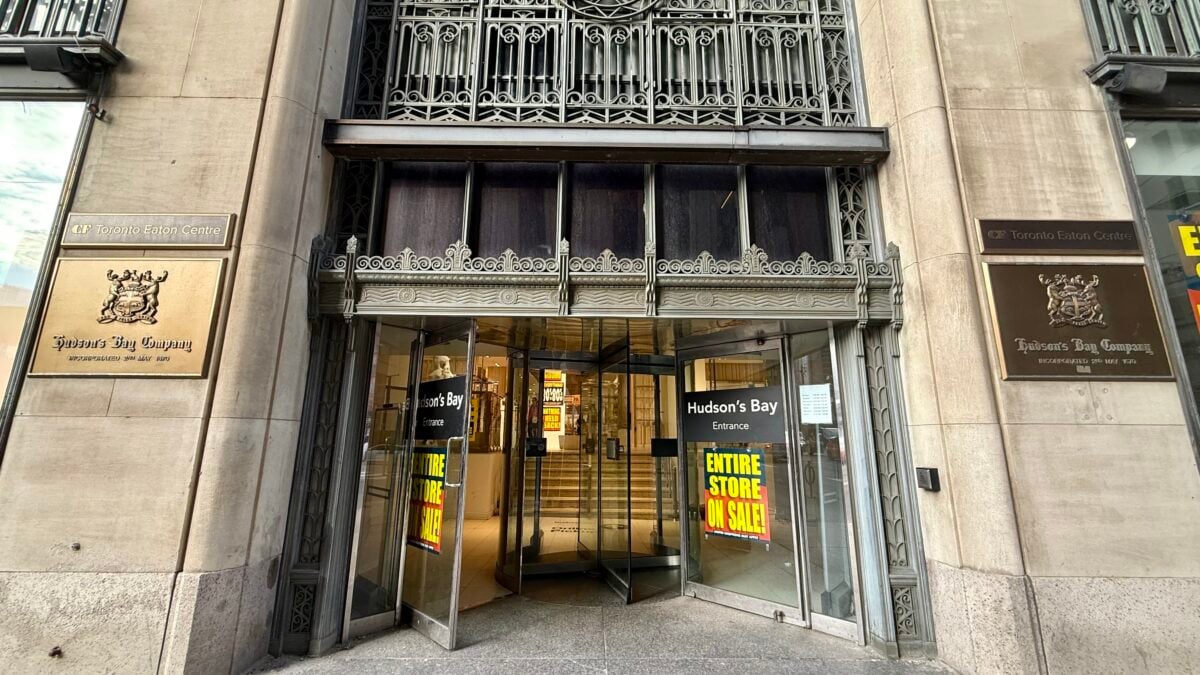
The Stores Are Gone
One year later, no department store operator has emerged to take Hudson’s Bay’s place.
Former Hudson’s Bay locations have entered various stages of redevelopment, subdivision, leasing, and repositioning. Landlords across Canada have pursued different strategies depending on market conditions and property requirements.
Some spaces have secured replacement tenants, while others remain in transition, reflecting the scale and complexity of repurposing former Hudson’s Bay stores.
For shopping centre owners, the closure created challenges and opportunities as they reconsidered how large anchor spaces fit into today’s retail environment.
The industry moved quickly. Consumers did as well.
Shopping patterns shifted to competitors, specialty retailers, off-price chains, luxury retailers, warehouse clubs, e-commerce platforms, and other formats. Retail spending continued.
The stores closed. Canadian retail carried on.
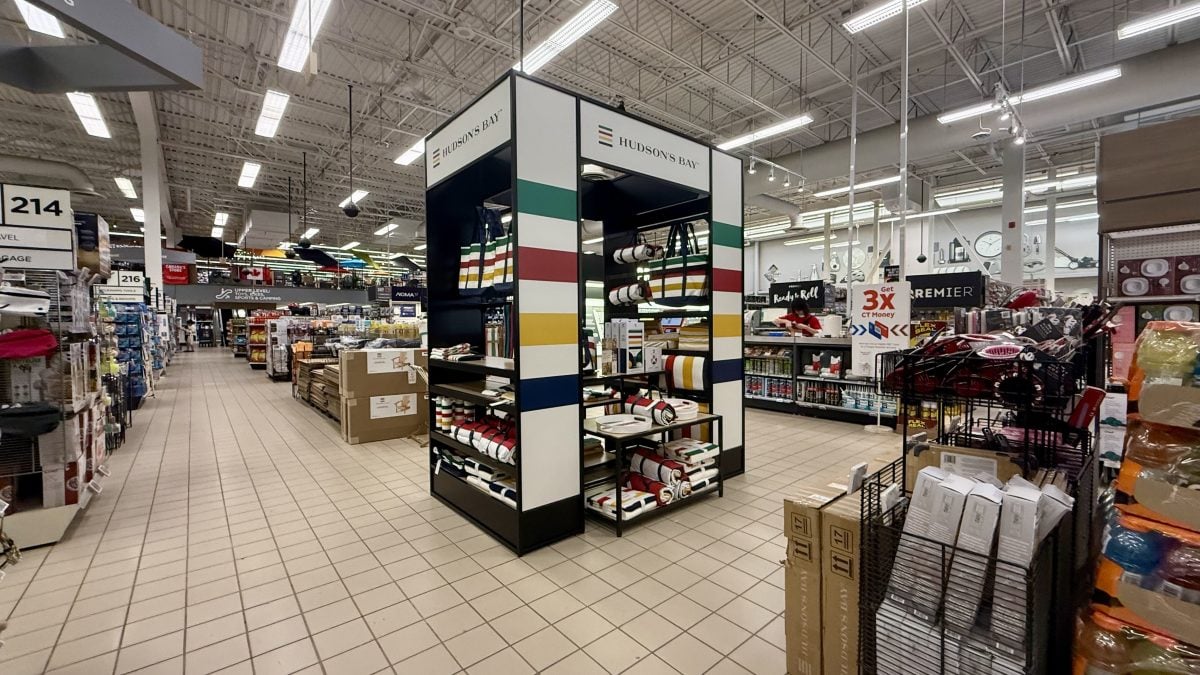
The Brand Has a New Home
One of the most important developments following Hudson’s Bay’s collapse involved the company’s intellectual property.
Canadian Tire acquired Hudson’s Bay’s trademarks, branding, iconic stripes, coat of arms, and related assets for approximately $30 million.
The transaction separated the Hudson’s Bay name from the department store business that made it famous.
Before the intellectual property sale, some industry observers discussed the possibility that investors or retail operators might eventually revive Hudson’s Bay in some form. After the sale, that prospect became considerably less likely.
Today, the Hudson’s Bay name remains in the marketplace, while the department store chain itself remains closed.
Consumers can still purchase products bearing the familiar stripes, but there is no indication that Hudson’s Bay will return as a department store operator.

A Different Retail Model
Another development connected to the broader Hudson’s Bay story took place just days before this anniversary.
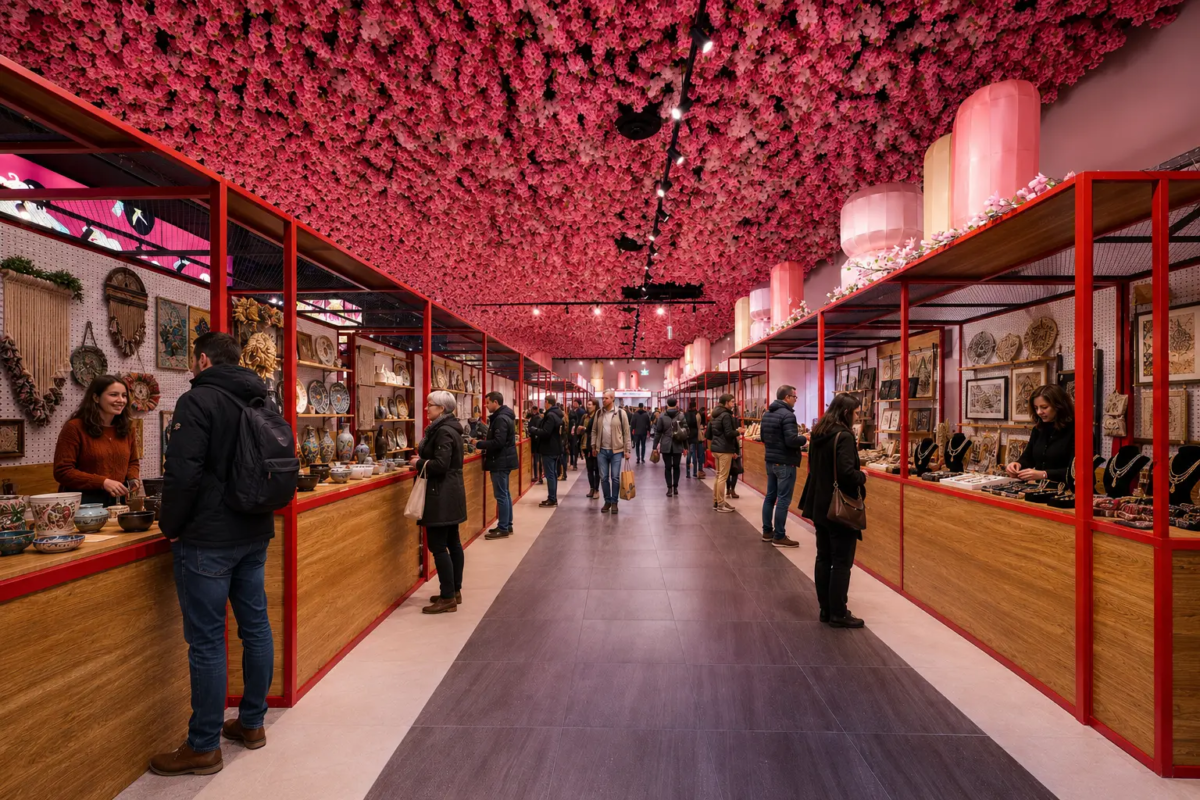
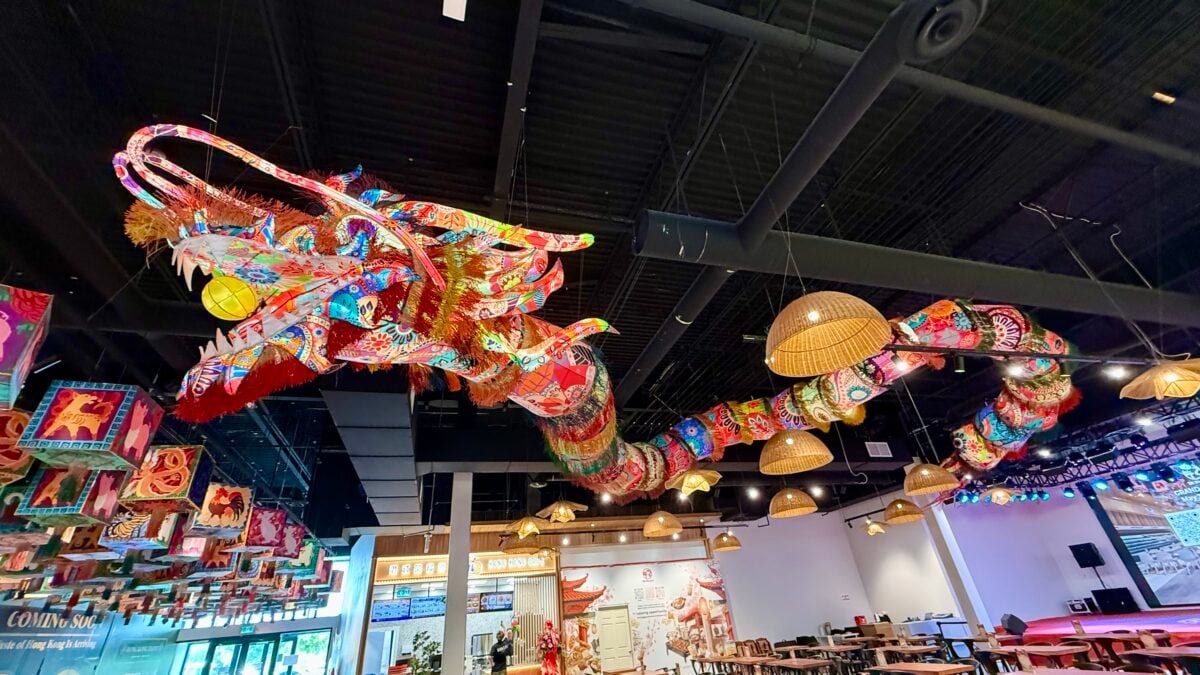
On May 30, Central Walk opened TM Wander at Tsawwassen Mills in British Columbia.
The concept combines retail, food and beverage, entertainment, events, and community gathering spaces.
The opening attracted attention because Central Walk owner Ruby Liu was associated with one of the most closely watched proposals that emerged during Hudson’s Bay’s restructuring process. Last year, Liu sought to acquire 25 former Hudson’s Bay leases as part of an effort that generated national attention.
A year later, the discussion has shifted.
Since acquiring three British Columbia shopping centres, Central Walk has continued adding entertainment attractions, food and beverage offerings, cultural programming, and experiential elements across its portfolio. TM Wander reflects that broader strategy.
Rather than concentrating large amounts of merchandise under one roof, the concept emphasizes experiences, events, dining, entertainment, and social interaction alongside shopping.
TM Wander is one example of a broader strategy that has seen Central Walk expand entertainment, food and beverage offerings, and community-focused programming across its shopping centre portfolio.
One Year Later
The closure of Hudson’s Bay did not bring an end to the activity surrounding the company.
Former locations continue to evolve. Redevelopment plans continue to emerge. Canadian Tire continues to steward the intellectual property. Former employees, suppliers, landlords, and customers continue to reflect on the company’s legacy.
The past year also demonstrated how quickly the retail industry adapts to change.
Canada no longer has a national department store chain comparable to Hudson’s Bay.
For decades, Hudson’s Bay outlived competitors that once appeared equally established. Simpsons disappeared. Woodward’s closed. Eaton’s failed. Sears Canada followed. Hudson’s Bay remained. By 2025, it was the last major national department store chain operating in Canada.
Department stores once served as anchors for downtown shopping districts and major malls across the country. Today, consumers divide their spending among specialty retailers, luxury brands, off-price chains, warehouse clubs, direct-to-consumer brands, and e-commerce platforms.
Its former stores are finding new purposes. Its brand has a new owner. New retail concepts continue to emerge.
The company that introduced generations of Canadians to department store shopping is gone from the retail landscape. The buildings remain. The stripes remain. The conversations about Hudson’s Bay remain as well.
Canadian retail has moved forward. Hudson’s Bay has become part of its history.












What about Simons?
gotta love the ruby liu AI slop market
That’s actually a real photo I believe, I was there myself this weekend (I could replace it with a photo I took myself of TM Wander)
How quickly life changes and moves on. 354 years of history gone like that. Still find myself missing shopping at Hudson’s Bay. Nothing else compares. Last few years of Hudson’s Bay they didn’t even try. Poor management running HBC, it could have and should have been successful into the modern age. Good remind to us all how life changes and we all must change with it. Still a weird feeling knowing a store with so much history and it’s been there all our lives, is now gone. Canada as a whole feels like it changing so quickly
…and all thanks to American Private Equity destroying everything it touches
It’s still hard to believe a company that lasted 355 years could disappear so quickly. It really shows that even iconic retailers have to keep adapting as consumer habits change. Sad to see Hudson’s Bay go, but its impact on Canadian retail history won’t be forgotten.