There’s a counterintuitive story sitting right now at the centre of retail: in a world of infinite digital options, physical presence has become a competitive advantage — not a legacy cost. The brands figuring that out are pulling ahead on both trust and conversion.
The conventional wisdom is that e-commerce has made physical retail an afterthought. The data says otherwise. In-store retail media ad spending is expected to climb 33% in 2026. Nearly three-quarters of Gen Z shop in-store weekly. And experiential campaigns — when done right — are delivering returns of 3:1 to 5:1 on spend.
The question isn’t whether in-person brand moments work. It’s why so many brands still can’t execute them
Also: 80% of consumers say in-person events are the most trusted way to discover new products — and 85% are more likely to make a purchase after engaging with a brand in person.
Meanwhile, e-commerce keeps growing. So why are smart brands investing more in physical experiences, not less?
In an interview with Retail Insider, Jeff Snyder, founder and Chief Inspiration Officer atInspira Marketing, elaborates on what’s happening.
Question: What are the biggest mistakes brands make when trying to turn in-store experiences into actual sales rather than just foot traffic?
Answer: When someone interacts with your brand in person, whether it’s a pop-up or live demo, they internalize it. That kind of engagement drives long-term brand relationships because it simultaneously taps into emotion, memory, and relevance.
The biggest mistake brands make when launching in-store experiences is failing to define what they want to achieve before designing the experience. The second mistake follows closely behind: not setting clear KPIs to measure progress toward that goal. We know experiential marketing delivers on emotional engagement, brand loyalty, and long-term value, but if the actual objective is increasing on-site sales or CRM signups, the experience needs to be architected so that the outcome happens organically.
Take a new product launch as an example. Cross-channel storytelling, pre-seeded social content that builds demand ahead of time, and influencer content introducing the product before it hits the shelves all work together to prime consumers. By the time someone engages with the product in-store, the groundwork has already been laid, and increased sales follow naturally, while the in-person experience builds relevance and long-term affinity for the brand, not just the product.
Jeff Snyder
Q: Why are some brands succeeding with experiential retail while others still struggle to execute meaningful in-person activations?
A: It comes down to creating community and a sense of belonging. Shoppers gravitate toward stores that immerse them in multi-sensory brand worlds rather than simply presenting products on a shelf. When we think about retailers doing this well, a few come to mind right away: Sephora offers personalization and education, Alo hosts in-store workout classes, and Nike’s House of Innovation in New York turns retail into a showcase and innovation studio. Apple lets customers try new products and take classes on the spot. Even Home Depot and Brass Pro Shops pull this off in their own ways, proving the approach works across very different categories.
Brands and retailers are now driving engagement through hyper-local, multi-touch strategies. I expect experiences to keep moving toward something more community-based and tailored, with local stores and small businesses curating products and moments around local tastes, perhaps leaning on AI to understand what those tastes are. In practice, that looks like community collaborations, food tastings, and pop-ups built for a neighbourhood rather than a national template.
Q: How has the path from an in-store brand interaction to a purchase decision changed in the last few years, particularly with Gen Z consumers?
A: Once Gen Z is standing in the store, the phone doesn’t go away; it becomes part of the decision. Gen Z expects a frictionless omnichannel shopping experience, using their phones to compare prices, check reviews, and browse online while shopping in physical stores.
Gen Z might discover a product on social, price-compare in-app, and transact in-store, meaning the “research” phase doesn’t end when they walk through the door. They’re often pulling up reviews, comparing prices against other retailers, and checking whether a friend or influencer they trust has posted about the exact item in their hand. In fact, they may be crowdsourcing the decision on social from the try on room. It’s an entirely different decision-making process than prior generations.
For brands, that changes what physical stores need to deliver. It’s no longer competing against other brick-and-mortar shops; it’s competing against whatever’s on the shoppers’ screen in that moment. QR codes, in-store social proof, and staff who can speak to what’s being said online now matter as much as the product display itself.
Vitaly Gariev photo
Q: You’ve said winning brands think more like experience designers than merchandisers — what does that mindset look like in practice?
A: Thinking like an experience designer means starting with the feeling you want to leave someone with, then building backward from there, rather than starting with shelves and merchandise and hoping something sticks. Where a merchandiser thinks about placement, an experience designer thinks about the story someone is walking into, what they’ll touch, how they’ll move through the space, and what they’ll want to share after. The best retailers are already doing that. They’re paying attention to the areas shoppers gravitate toward, where they slow down, and what they come back to.
Q: With in-store retail media spending rising so quickly, how should brands measure ROI and determine whether an experiential campaign is truly effective? A: In-store retail media is growing fast. In-store retail media ad spending in the U.S. is forecasted to grow an average of 31% through 2028. With that much money invested, brands need real proof it’s working. That means tracking a full stack of signals together: foot traffic lift against pre-campaign baselines, dwell time in the experience zone, conversion from engagement to purchase, and customer acquisition cost compared to other channels.
The real shift is connecting the in-store moment to what happens after someone leaves. If someone shows up to an event, then buys something in an email follow-up, or online a week later, or back in-store next month, that all counts as one connected result. Loblaw and Sam’s Club, for example, now have systems that follow a consumer’s activity for months after an event, so brands can see what really worked long-term instead of guessing. Brands that get the most out of experiences are the ones that decide upfront, before the event ever happens, what they’re trying to achieve and how they’ll know if it worked.
Welcome to the Daily Synopsis by Retail Insider. We highlight key developments in Canadian retail across 9 articles published today.
Hong Kong-based Bakebe found early success at CF Markville with its interactive baking experience appealing strongly to families, illustrating growth in experiential retail. Meanwhile, Canadian wholesale and retail employment rebounded in June but is still nearly 72,000 jobs below last year’s level, raising workforce concerns amid sector expansion efforts.
Retailers like Aritzia and Group Dynamite are outperforming by focusing on affluent younger women, showing strong sales growth and profit margins. Canadian retailers also face a new challenge with shoppers increasingly using AI for product discovery, requiring enhanced content and data to remain competitive. Optional coverage highlights youth job growth led by the restaurant sector and financial pressure on Canadians impacting discretionary spending.
Shopping for a room air conditioner has become more complicated than simply comparing BTU ratings or choosing the brand you’ve heard of before.
Today’s buyers face a growing range of window air conditioners, inverter systems, smart features, and energy certifications. At the same time, manufacturers are solving different problems in different ways. Some focus on quieter operation, others on installation flexibility, while others invest in smarter controls or improved energy efficiency.
As a result, choosing a room air conditioner brand in 2026 is less about finding a single “best” company and more about choosing the brand whose design philosophy best matches your home, your room, and how you actually use an air conditioner.
Start With Your Room, Not the Brand
One of the biggest mistakes consumers make is choosing a brand before understanding what their room requires.
A bedroom, a home office, a studio apartment, and a large living room all present different cooling challenges. Room size, window type, sun exposure, insulation, ceiling height, and even how often doors are opened can influence how an air conditioner performs.
Before comparing manufacturers, it helps to answer a few practical questions:
Is a window air conditioner compatible with your window?
Do you rent or own your home?
How many hours will the unit operate each day?
Is indoor noise an important consideration?
Do you want remote or voice control?
These factors often have a greater impact on satisfaction than the brand name on the front panel, so the right choice starts with the room, not the label.
Look Beyond Cooling Capacity
Cooling capacity remains important, but it is only one part of the buying decision. A better comparison looks at how a unit performs over time, not just how much cooling power it lists.
Modern room air conditioners are increasingly evaluated on how efficiently they maintain comfortable temperatures rather than on how quickly they reach them.
For many households, inverter technology has become one of the most meaningful developments in recent years. Unlike traditional fixed-speed compressors that repeatedly start and stop, inverter systems continuously adjust compressor speed to match changing cooling demand. The result is typically more stable indoor temperatures, improved energy efficiency, and quieter day-to-day operation.
Rather than asking whether a unit has the highest BTU rating, buyers may benefit more from asking how consistently it performs throughout an entire day of use.
Good Product Design Solves Everyday Problems
Technical specifications rarely tell the whole story. The real difference often appears in how design choices solve everyday problems.
Many of the most noticeable improvements in room air conditioners now come from engineering decisions that address everyday inconveniences.
For example, traditional window air conditioners often prevent the window from opening after installation. Some newer designs approach that limitation differently, subject to window compatibility and proper installation, while positioning portions of the system farther from the indoor living space.
Air conditioners have also evolved beyond simply increasing cooling capacity. Airflow management, installation design, and controls now play important roles in overall performance, particularly in rooms where maintaining steady comfort becomes more challenging.
These kinds of design choices may not stand out on a specification sheet, but they often become the features owners appreciate most after several months of daily use.
Smart Features Should Be Practical
Wi-Fi connectivity has become increasingly common across home appliances, but not every smart feature adds meaningful value. The key question is whether the feature fits naturally into daily cooling needs.
The most useful systems simplify everyday cooling rather than adding unnecessary complexity.
Remote scheduling, temperature adjustments before arriving home, voice control through existing smart-home ecosystems, and maintenance reminders can all improve the ownership experience when they integrate naturally into daily routines.
Consumers may find it more useful to evaluate how well smart features fit their lifestyle than simply checking whether an app exists.
Independent Recognition Carries More Weight Than Marketing Claims
Air conditioner brands often describe themselves using terms such as “leading,” “innovative,” or “No. 1.” Those statements should be evaluated in light of any supporting independent research with clearly defined methodologies. That is why the details behind a claim matter as much as the claim itself.
When evaluating brand claims, consumers may wish to consider several questions:
Who conducted the research?
What product category was measured?
Was the ranking based on production volume or retail sales?
What years were included in the study?
Is the claim still within its stated validity period?
Understanding the scope behind a claim is often more valuable than the headline itself.
For example, Midea’s own marketing materials reference a Euromonitor International recognition related to residential inverter air conditioners. As with any brand-cited ranking, that claim should be read against its exact source, product category, measurement basis, research period, and validity period — it should not be interpreted as overall market leadership across every room air conditioner category. It is most useful here as an example of how context shapes the meaning of a claim.
Innovation Often Shows Up in Everyday Use
Consumers rarely experience “innovation” through marketing language. They experience it while living with a product, through the details that shape everyday use.
A quieter bedroom at night.
A window that may allow the window to open and close after installation, when properly installed in a compatible window.
Cooling that may feel more consistent throughout the afternoon.
An air conditioner that better maintains indoor comfort during extended operation.
These improvements are often the result of engineering decisions that receive far less attention than BTU numbers but can have a greater influence on long-term satisfaction.
The Midea U-Shaped Smart Inverter Window Air Conditioner illustrates this approach by combining inverter technology with a U-shaped structure that may allow the window to open and close after installation, subject to window compatibility and proper setup. Likewise, the Midea DUO uses a
hose-in-hose airflow design intended to help improve room cooling, with the 12,000 SACC configuration designed for spaces up to approximately 550 square feet (based on manufacturer testing; actual performance and coverage may vary depending on room characteristics, installation, and operating conditions).
Rather than representing isolated features, these products reflect the broader point of this article: buyers should focus on brands that solve practical household challenges rather than simply increase cooling capacity.
A Better Way to Compare Brands
Instead of asking which company builds the “best” room air conditioner, consumers may find it more useful to compare brands using a consistent set of criteria. A simple framework makes that comparison easier to apply.
Consider questions such as:
Does the product fit the room size?
Does the installation work with your living situation?
Does the design address common usability issues?
Does it include technology that improves everyday comfort?
Are important claims supported by independent sources?
Looking at brands through these practical considerations often leads to more informed purchasing decisions than relying solely on popularity or advertising.
Final Thoughts
The room air conditioner market continues to evolve as manufacturers compete on more than cooling capacity alone. The result is a market where efficiency, thoughtful engineering, smart-home integration, and independently verifiable product leadership all matter more than they once did.
Efficiency, thoughtful engineering, smart-home integration, and independently verifiable product leadership have become increasingly important factors in how consumers evaluate brands.
Rather than searching for a universal winner, buyers in 2026 are likely to make better decisions by identifying which products solve the problems that matter most in their own homes. In that context, choosing a room air conditioner brand becomes less about the unit’s logo and more about the experience the product is designed to deliver. The clearest takeaway is simple: choose the brand that best fits your room, your needs, and your daily use.
Product performance, energy usage, noise levels, cooling coverage, smart-feature functionality, and user experience may vary depending on product specifications, installation, room characteristics, environmental conditions, and individual usage patterns. Consumers should review product specifications and claim disclosures before purchase from midea.com .
Various skills are required to succeed in the retail industry, particularly when handling customer-facing roles. Previous generations always felt that the most valuable skill for a retail employee was the ability to talk face-to-face with someone and provide them with good customer service. It revolved more around some of the “traditional” skills you see in a job interview, but the retail industry of today faces more challenges than ever, and this has led to the emergence of a specific skill that should now be at the forefront of every retailer’s mind: emotional resilience.
What is Emotional Resilience?
Most people have heard of the concept of emotional intelligence, but emotional resilience is slightly different. According to one of the experts on this topic, Dr Jodie Lowinger, emotional resilience refers to a person’s ability to adapt to emotionally demanding situations while being able to function effectively.
Importantly, this does not mean that someone is immune to being affected by stressful situations at work. The critical aspect of emotional resilience is that you’re able to process these situations and push through them without developing any long-lasting mental health issues.
In a retail environment, it’s easy to see how someone’s emotional resilience can be tested. All it takes is one angry or unhappy customer screaming at you to create a very stressful situation. Someone without emotional resilience may take this interaction and see the following results:
They lash out at the customer because they can’t take it anymore
They handle the situation well but then break down afterwards, and it impacts the rest of their day
An emotionally resilient person can deal with this horrible interaction, acknowledge that it was stressful and awful to deal with, but then recover from it without letting the situation impact their day or their performance at work.
Why Emotional Resilience Matters in Retail
Emotional resilience can be a valuable skill in all aspects of life, but it is particularly important in the retail sector for several reasons. To begin, retail is one of the main industries that involves a lot of face-to-face or one-on-one interactions. This means that customer interactions are bound to be more stressful automatically – but there’s one key piece of research that underpins why emotional resilience is more important now than ever.
Customer Care Measurement & Consulting released its latest National Customer Rage Survey towards the end of last year (2025), and it found two damning statistics:
77% of consumers experienced a problem with a product or service in the past 12 months
64% of those who reported an issue said they felt “rage” – and 50% of these consumers stated that they raised their voice
For retail workers, this means two things: customers are more frequently complaining about products/services, and they’re also getting angrier while they do it. Being a retail worker now means you have to prepare for the fact that you might get screamed at, even if you’ve done nothing wrong.
If you are unable to deal with frequent conflicts, then you are unlikely to be able to do your job. Moreover, there are consequences that happen when employees don’t have the emotional resilience to deal with angry or upset customers.
The Consequences of No Emotional Resilience
Retailers with a team of emotionally resilient workers tend to see more success than those who lack this skill. Why? Because the inability to stay resilient in the face of emotionally demanding situations can lead to the following:
Losing customers: Someone who can’t deal with an angry customer and may lash out at them will result in that customer leaving and never returning. Even worse, that customer may post negative reviews online that convince other customers to leave – and prospective ones to stay away. It can all stem from someone being unable to keep their cool in the face of adversity. Is it fair to the employee? No, but that’s why emotional resilience is such a valuable skill.
Losing employees: What’s more likely to happen in these situations is that the employee simply deals with the barrage of abuse they get from a customer until the conflict is resolved as well as possible. While this may not result in negative reviews, it could well result in the employee having an emotional breakdown. They can’t handle the stress anymore, and they decide to leave. This can happen more often than you realise, leading to high employee turnover for your retail business. Turnover costs money and destabilises a business, which is yet another reason that emotionally resilient employees are worth their weight in gold.
It is, essentially, a double-edged sword for retail companies. Poor levels of emotional resilience can cost money and reduce profits, either from bad customer service creating negative reviews or employees quitting because they can’t handle the pressure.
How To Develop Emotional Resilience in a Retail Team
Hiring people who display the key signs of emotional resilience will be the best approach, but this is also a skill that anyone can learn and develop. For retail teams, it’s normally a case of:
Talking openly about stress and providing key stress management ideas to employees
Learning how to regulate emotions in high-pressure situations
Improving shift management and encouraging regular breaks
The most important thing is to make it clear that your retail employees shouldn’t try to suppress their stress or emotions. It’s all about learning how to regulate them during conflicts and then finding ways to deal with them after. That’s why breaks are so important for a retail team: improve scheduling so staff can take more frequent breaks, especially during busy periods, allowing them time to relax and cool down. If you can create a supportive work environment, then that also helps, as everyone can look after one another.
Emotional resilience isn’t about keeping your emotions inside and pretending that you’re not bothered by highly stressful situations. That’s incredibly unhealthy and will lead to burnout and long-term mental health concerns. Instead, it has become the most valuable skill in retail because it enables workers to deal with conflicts and push on through difficult situations without letting the stress get to them.
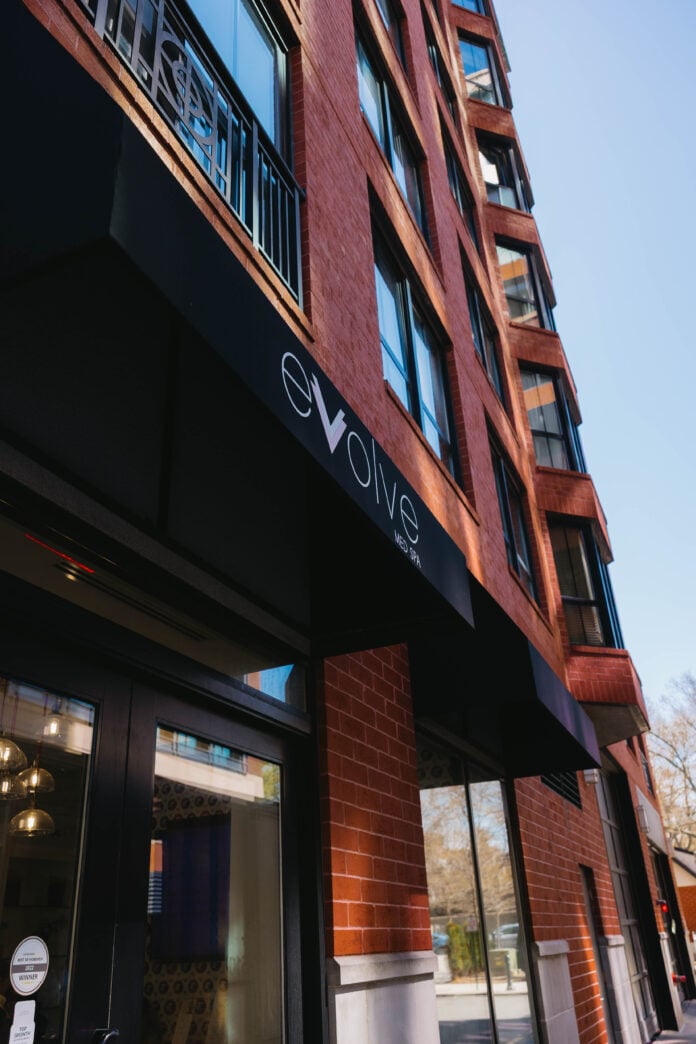
A company can get bigger without becoming more memorable. Evolve Med Spa has tried to do the opposite, building a brand that clients recognize through the experience itself as much as the name on the door. Emily Fernandez has guided that work as co-founder and VP of operations, helping the company grow from one location in Hoboken to 14 locations across New York, New Jersey, Pennsylvania, and Maryland.
That kind of growth matters more in a field where people are often seeking medical aesthetics, medical spa treatments, aesthetic medicine, clinical skincare, and non-surgical rejuvenation with a high level of expectation already in place.
Evolve Med Spa Built a Regional Name From One Local Start
The business opened in 2020, a year that demanded unusual resilience from any company built around in-person treatment. Evolve Med Spa formed an early bond with clients in Hoboken, NJ and that local support gave the brand real momentum. One location soon became the start of a much wider regional presence.
That expansion held together through a leadership team that kept operations close to the client experience. Each new location carried the same expectations around communication, order, and care. Growth moved forward with a clear sense of continuity from the first office onward.
That discipline has become part of what clients now associate with the brand. Emily helped build that structure alongside Dr. Oz Fernandez, co-founder and medical director, and Austin Jacobus, co-founder and VP of clinical.
Their roles gave the company a clear internal balance. Operations, medical direction, and clinical education all moved together, which gave Evolve Med Spa a steadier foundation as new locations opened. In an industry where growth can stretch systems thin, that alignment became part of the company’s signature.
Emily Fernandez, Austin Jacobus and Dr. Oz Ferneandez Helped Turn Consistency Into a Growth Strategy
Consistency can sound simple until a company starts scaling. A second center asks for stronger communication. A fifth center raises the stakes even higher. By the time a brand reaches 14 locations, every weak point becomes easier to spot. Fernandez helped guide Evolve Med Spa through that pressure by treating growth as an operational question as much as a branding one.
That discipline has helped the company hold onto a recognizable identity across its footprint. Clients may arrive for dermal fillers, neurotoxin treatments, or microneedling, but they’re also stepping into a company culture built around client-centered experience, clinical expertise, and professional skincare protocols.
Recognition Followed the Company’s Expansion
The company’s rise has drawn attention across several markets. Evolve Med Spa has collected repeated honors for Best Med Spa, along with category wins tied to fillers, injectables, and facials from The Hoboken Girl and The Montclair Girl. It has also earned Best of New Jersey, Best of Bridgewater, and other regional territories connected to its footprint.
A two-page regional feature in the May 2026 issue of Vogue added another layer of visibility. That kind of placement gave the brand a high-profile editorial signal, though it also reflected something the company had already been building for years: a name associated with strong standards, local trust, and a clear point of view about equality.
Evolve Med Spa Keeps Its Eye on the Long Game
Fernandez has described the company’s larger vision in terms of growth without dilution, and that goal runs through the full story of Evolve Med Spa. The brand began with one office and a close connection to its first clients. Today it stands as a 14-location company with a broader reach and an even bigger test in front of it: carrying the same care, standards, and sense of purpose into each new chapter.
That’s what gives the company’s story its pull. Evolve Med Spa has grown quickly, though its strongest message lives in how carefully it has handled its growth. For Emily Fernandez, that discipline has become a defining part of the brand itself.
Canadian luxury retail is becoming increasingly concentrated around a relatively small number of premier destinations, with brands placing greater emphasis on flagship stores, customer relationships and curated retail environments. Those trends are explored in Q2 2026 Luxury: Control, Concentration and the Rise of Canada’s Premier Retail Nodes, authored by Craig Patterson as part of Retail Insider Reports. Retail Insider Reports are designed to deliver executive-level insights across major retail sectors and can be accessed through the Retail Insider Report Hub.
The report examines Canada’s luxury retail market, including brands positioned at the highest end of the market and characterized by exceptional craftsmanship, heritage, exclusivity, prestige and premium customer experiences. Coverage spans luxury fashion, jewellery, watches, beauty, accessories and related retail developments, while exploring how investment, real estate strategy and customer engagement continue to evolve across the sector.
General Themes
Investment Concentrates Around Premier Nodes – Luxury brands are directing investment toward a select group of highly productive retail destinations rather than pursuing broad expansion.
Flagships Take Priority – Directly operated flagship stores are giving brands greater control over merchandising, pricing, inventory and customer relationships.
Luxury Geography Is Shifting – New mixed-use developments and established luxury districts are reshaping where international brands choose to invest.
Experience Drives Differentiation – Hospitality, clienteling and immersive store environments are becoming increasingly important competitive advantages.
Resale Continues to Mature – The secondary luxury market is broadening access while becoming a complementary part of the luxury ecosystem.
People Matter More Than Ever – Store execution, relationship building and product expertise continue to distinguish leading luxury retailers.
Canada Remains Attractive – Despite softer global luxury conditions, international brands continue to view Canada as a long-term strategic market.
Retail Insider Coverage
Retail Insider’s reporting throughout the quarter documented many of the developments that underpin the report’s conclusions. Coverage followed the opening of Vancouver’s Oakridge Park, expansions by Brunello Cucinelli, the continued evolution of luxury retail in Yorkville, the arrival of international brands including Chow Tai Fook, and Canada Goose’s new retail concept. The publication also examined changing luxury retail practices through features on store execution and staffing, illustrating how operational excellence has become central to premium retail performance.
Additional reporting covered developments in luxury resale through Mine & Yours and Angels Wear Preloved, digital expansion by luxury beauty retailer Rennaï, and major flagship investments across Canada’s leading luxury markets. Together, these stories reveal an industry placing greater emphasis on destination quality, customer relationships and long-term brand stewardship rather than rapid store growth.
Broader Industry Coverage
The report suggests that Canada’s luxury market is entering a more mature phase in which a handful of retail ecosystems command an increasing share of investment. Integrated developments that combine retail, residential, hospitality, dining and public spaces are becoming increasingly attractive to international brands seeking locations capable of supporting premium experiences and long-term customer engagement.
The findings also extend beyond luxury retail itself. They point to broader changes in commercial real estate, leasing strategy and retail operations as brands seek greater ownership of distribution, customer data and merchandising. At the same time, luxury resale, omnichannel engagement and elevated service expectations continue to influence how retailers compete for affluent consumers across multiple categories.
Editor’s Take
Luxury retail in Canada is becoming increasingly selective. Rather than measuring success by store count alone, brands are concentrating investment where they can achieve greater control over the customer experience and operate within highly productive retail ecosystems. Oakridge Park exemplifies this shift, while Yorkville, Yorkdale and emerging luxury districts in Calgary and Montreal demonstrate that competition is increasingly centred on quality of location, operational execution and long-term relationship building rather than expansion for its own sake.
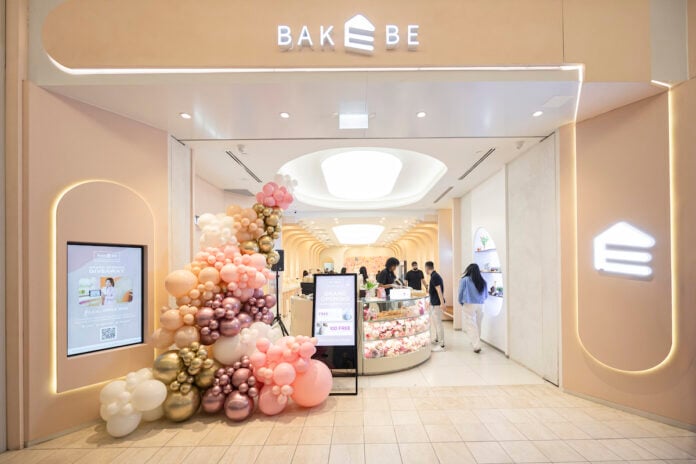
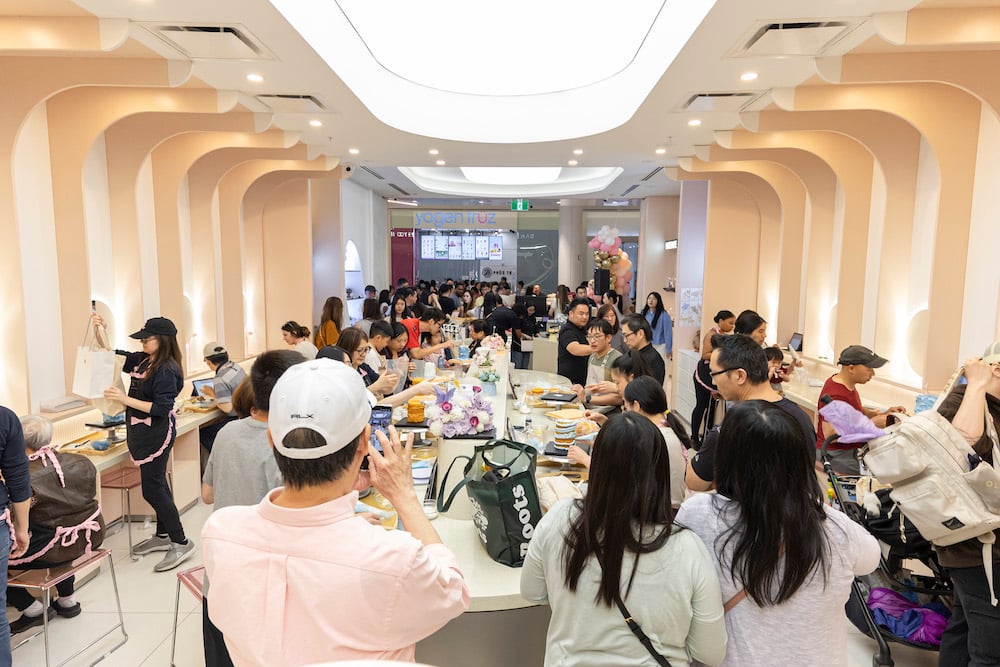
Bakebe grand opening at CF Markville in Markham, ON. Photo: Hubert Hua, AWeek Marketing
Hong Kong-based Bakebe has officially entered the Canadian market, opening its first Canadian and North American location at CF Markville in Markham with a concept that reflects a broader shift in how shopping centres are evolving. Within days of opening, the interactive baking studio found that Canadian families had become its strongest customer segment, while custom birthday cake pre-orders exceeded internal projections by 40 percent.
The early response offers another example of how regional shopping centres are expanding beyond traditional retail by introducing tenants that encourage customers to spend more time at a property through interactive, experience-driven activities. Across Canada, landlords continue to diversify their tenant mix with concepts centred on entertainment, wellness, food, recreation, and social engagement, recognizing that many consumers increasingly value memorable shared experiences alongside shopping.
For Bakebe founder and CEO Venus Chi, the Canadian launch has reinforced the universal appeal of the concept, which has already expanded from Hong Kong into Malaysia and the Philippines.
“What surprised me most is how warmly local families have embraced us,” Chi told Retail Insider. “At first, I thought young adults might be our main guests, but we quickly saw so many parents and children signing up for baking sessions together.”
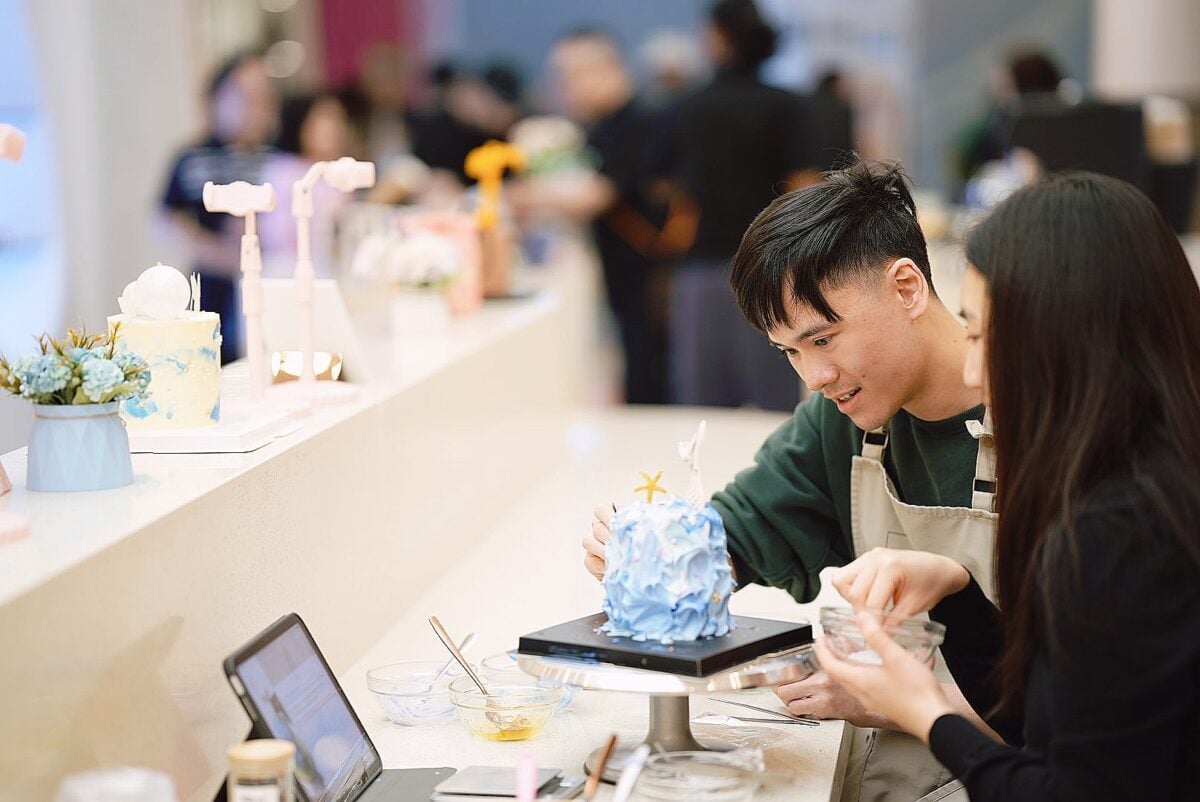
Founded in Hong Kong in 2018, Bakebe introduced an app-guided co-baking concept that allows guests to prepare cakes and desserts using interactive digital instructions at fully equipped workstations. Visitors choose a baking or decorating project, with all ingredients and equipment provided on-site while staff remain available to assist throughout the process. The model removes many of the barriers associated with traditional baking classes, making the experience accessible to beginners while still appealing to more experienced home bakers.
Bakebe’s Canadian expansion is being supported by Toronto-area-based Accencis Group, a brand development, investment and operating company that helps introduce international consumer and hospitality brands to the Canadian market. Bakebe joins a growing portfolio that includes brands such as % Arabica, Rumble Boxing, Midori Ramen and The Captain’s Boil.
Venus Chi speaks at Bakebe’s grand opening at CF Markville in Markham, ON. Photo: Hubert Hua, AWeek Marketing
Markham Offered the Right Foundation for Canadian Expansion
While the Greater Toronto Area represented a logical first step into Canada, Chi said CF Markville offered a combination of demographics, accessibility, and community that aligned closely with Bakebe’s long-term vision.
“CF Markville felt like the right place to begin our Canadian journey because it is surrounded by such a vibrant and family-oriented community,” she said. “Since Bakebe started in Hong Kong, it was meaningful for us to open in Markham, where many people already have a connection to Hong Kong culture and could understand the heart of our brand.”
Markham’s diverse population and strong family demographics made it an attractive launch market, while CF Markville’s established position as one of York Region’s leading regional shopping centres provides Bakebe with access to customers who already visit the property for shopping, dining, and leisure activities.
Rather than viewing the Canadian studio simply as another international location, Chi said the goal is to establish Bakebe as a place where people celebrate milestones and spend quality time together.
“We are creating a warm space where families, friends, couples, and groups can connect through baking,” she said.
Bakebe grand opening at CF Markville in Markham, ON. Photo: Hubert Hua, AWeek Marketing
Early Customer Behaviour Is Shaping the Canadian Business
The opening has already influenced how Bakebe approaches the Canadian market.
After observing guest behaviour during the launch, the company expanded activities designed specifically for groups, including parent-child baking experiences that previously proved successful in Hong Kong, along with colourful cupcake decorating sessions for couples and friends.
Bakebe has also broadened its food and beverage offering with fresh pastries from DUO Café and premium handcrafted drinks, encouraging guests to relax before or after their baking session.
Chi said Canadian customers have also shown strong interest in ingredient quality and allergy-conscious options.
“They care deeply about the details, from the recipes to options that feel safe and thoughtful for their families, such as nut-free and low-allergen choices,” she said.
The company believes these observations will continue shaping its Canadian operation as it introduces new programming and seasonal experiences.
Venus Chi with partners from Accencis group and family members at the Bakebe grand opening at CF Markville in Markham, ON. Photo: Hubert Hua, AWeek Marketing
More Than a DIY Baking Studio
Although Bakebe is best known for its app-guided workshops, the Canadian operation is built around multiple complementary revenue streams.
Free-style cake decorating workshops became the studio’s most popular offering during the opening period. These express sessions provide prepared cake bases, allowing guests to focus on decorating and creative expression instead of baking from scratch.
“Our free-style cake decorating workshops ranked number one,” Chi said. “Most guests don’t come here to produce a flawless cake. They just want to relax and enjoy themselves.”
The business also offers custom cakes through advance ordering as well as ready-made cakes available for walk-in customers. According to Chi, custom birthday cake pre-orders exceeded the company’s original expectations by approximately 40 percent during the launch.
Private events are expected to become another important component of the business. Bakebe is already hosting birthdays, family celebrations, and brand activations, with bridal showers, corporate team-building sessions, and other group events expected to contribute to future growth.
“What makes these events special is that guests are not just standing around or taking photos,” Chi said. “They are decorating, laughing, sharing ideas, and creating memories through a hands-on experience.”
For shopping centres, concepts like Bakebe offer advantages beyond individual customer visits. Birthday parties, corporate bookings, holiday programming, and repeat workshops create multiple reasons for guests to return throughout the year while often bringing groups of visitors to a property who may also shop or dine before and after their scheduled activity.
Bakebe grand opening at CF Markville in Markham, ON. Photo: Olivia Hon
Experiential Retail Continues to Expand
Bakebe’s arrival reflects a broader evolution taking place across Canada’s shopping centre industry.
As retailers compete with the convenience of online shopping, many landlords are introducing businesses that cannot easily be replicated digitally. Interactive food concepts, entertainment venues, fitness operators, and immersive attractions are increasingly complementing traditional retailers, helping transform shopping centres into destinations where consumers can spend an afternoon rather than simply complete a transaction.
Chi believes that shift is evident in customer behaviour.
“I think young people are looking for more than shopping when they visit a mall today,” she said. “They are looking for places where they can spend meaningful time with friends and loved ones.”
She added that Bakebe gives visitors “a reason to pause, gather, create, and enjoy something together,” turning a shopping trip into a shared activity that extends beyond a retail purchase.
Bakebe grand opening at CF Markville in Markham, ON. Photo: Olivia Hon
Growth Plans Focus on Building Local Connections
Looking ahead, Bakebe plans to strengthen its presence in the Greater Toronto Area before pursuing broader expansion across Canada. While the company has previously identified Vancouver, Montreal, and Calgary as potential long-term markets, Chi said the immediate priority is establishing a strong foundation in Ontario.
Expansion will involve more than opening additional studios. Bakebe plans to introduce seasonal workshops tied to holidays, collaborate with local brands and retailers, and develop relationships with schools, community organizations, and neighbourhood groups.
“Our hope is that Bakebe becomes more than a one-time visit,” Chi said. “We want it to become part of the community.”
The performance of the Markham location will likely help shape the company’s Canadian growth strategy in the years ahead. If the early response continues, Bakebe could become another example of how international experiential retail concepts are finding opportunities within Canada’s evolving shopping centre landscape while demonstrating that consumers continue to seek destinations that combine creativity, hospitality, and shared experiences.
Canadian retailers have spent years trying to make sure shoppers can find them online. Chris Parsons says the next challenge is different: making sure artificial intelligence can understand them.
Parsons, founder and author of Retail Rewired, has released a new report titled The AI Moment of Discovery, arguing that retail is entering a new stage in how consumers begin the shopping journey. The report is based on Canadian shopper research from Caddle in partnership with the Retail Council of Canada, and examines how AI tools are influencing product discovery, research and purchase decisions.
Chris Parsons, Image: retailrewired.ca
For Parsons, the shift is significant because the starting point of shopping is changing.
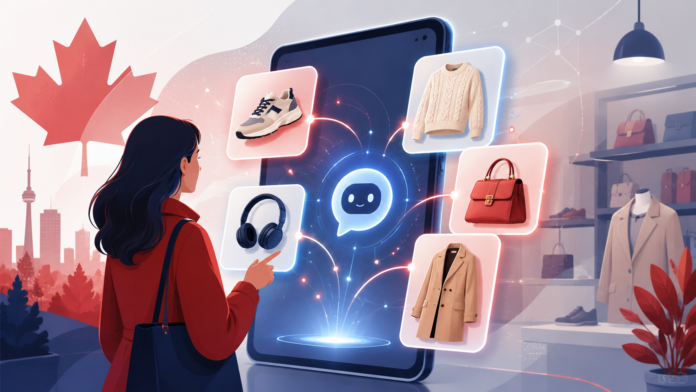
For years, shoppers searched by keyword. They looked for “running shoes,” “barbecue,” “plaid pants,” or a particular brand they already knew. Increasingly, Parsons said, shoppers are describing situations and asking AI tools for guidance.
“I will say I’m going to a specific event, like I’m going to be speaking on stage in Boston in August. What should I wear to this event?” Parsons said in an interview. “Now all of a sudden, it will give me a full wardrobe, and it could be a bunch of individual items from different retailers that I would definitely maybe not have considered.”
That, he said, changes the customer journey. AI can introduce products, brands and combinations that may never have appeared in a traditional search journey shaped by habit, brand preference or keyword behaviour.
“It is really a moment of discovery because you’re finding brands, you’re finding new locations, you’re taking your bias out of it,” Parsons said.
From Shelf to Search to AI
Parsons frames the change as the latest stage in a longer evolution of retail discovery.
The first major model was Procter & Gamble’s “First Moment of Truth,” which focused on the moment when consumers encountered products at the shelf. Parsons said that era was shaped by the store environment, packaging, displays and the shopper’s decision in front of the product.
He later lived through the shift to Google’s “Zero Moment of Truth,” which moved influence earlier in the journey. Consumers began researching products before visiting a store, and retailers had to focus on search engines, meta tags, backlinks, keywords and digital content.
Parsons said he recognized the current AI shift because he had already seen those earlier moments reshape retail.
“After living through those two periods, I felt like we were in this new moment, and I called it the AI Moment of Discovery,” he said.
The distinction, he added, is that AI is helping customers form a starting point. Shoppers are asking for direction, and the answer can influence which brands enter the consideration set before a traditional search ever happens.
In the report, Parsons writes that the question is no longer simply whether customers can find a retailer. The new question is whether the retailer is part of the discovery that guides the customer.
Canadian Shoppers Are Already Using AI
The Retail Rewired report cites Caddle and RCC research showing that more than one in four Canadian shoppers now use AI to help make purchase decisions. The report also says AI accounts for 13 per cent of how shoppers discover products, placing it close to channels such as retailer websites, apps and flyers.
Parsons said retailers should take the numbers seriously because adoption tends to begin with certain groups before spreading more broadly.
Men are currently over-indexing in AI usage, while Gen Z leads all generations in adoption for shopping, according to the report. Parsons said that pattern is consistent with previous technology shifts, including mobile commerce, websites and online purchasing.
“This happens with every generation,” he said. “The mobile adoption was faster with a younger generation. Search and websites and purchasing online was faster with another younger generation, and they all eventually become natives to these tools.”
The report also found that 73 per cent of shoppers using AI rate it as helpful for purchase decisions, suggesting that the behaviour is moving beyond simple experimentation.
The Shift From Keywords to Situations
One of Parsons’ central arguments is that retailers need to stop thinking only in product categories and start thinking about situations.
A traditional retail website is often built around categories: apparel, footwear, home improvement, grocery, electronics or beauty. AI-driven discovery works differently. Shoppers ask questions based on what they are trying to accomplish.
They may ask what to wear to a specific event, what to buy for a family camping trip, how to upgrade a kitchen, or which protein powder is best for their needs.
That change has major implications for retailers because AI tools need enough context to understand when a product is relevant. A product page that only lists basic specifications may not be enough.
Parsons said retailers should look carefully at their product display pages, descriptions, tips, how-to content and user-generated content. AI systems need clear signals from multiple sources to understand why a product should be recommended.
“As we consider AI, I think what we need to consider first is where are the opportunities,” Parsons said. “The opportunities are in our product display pages, the content that we provide, the usefulness, the tips on cleaning products or how to use a product.”
He said retailers also need to consider how their products appear outside their own websites, including forums, product listings, promotions, reviews, video reviews and influencer content.
“All of these create this flywheel of an ecosystem so AI can discover,” he said.
Content Becomes Critical Again
Parsons said the rise of AI should remind retailers of a lesson the industry often repeats and then forgets.
“For the 20-something years that I’ve been in retail, we always say content is king, and then we go through periods where we kind of forget about that,” he said. “Then a new technology like AI comes about and guess what’s king again? It’s content.”
The issue is not just writing more copy. It is creating useful, structured and specific information that helps people and AI systems understand a product.
For example, Parsons said retailers selling a barbecue should not only list the product as a gas Napoleon barbecue at a certain price. They should provide recipes, maintenance advice, cleaning information, cover recommendations and other content that helps explain how the product fits into a customer’s life.
“Tell the audience more so they can discover,” he said.
That same idea applies to apparel, grocery, home improvement, electronics and other categories where shoppers increasingly want guidance, not just product listings.
Parsons said retailers also need stronger foundational data. Product descriptions, sizing charts, specifications and use cases all matter more in an AI-assisted shopping journey.
“AI is only good to discover — it’s garbage in, garbage out from the retailer,” he said. “If we’re not holistically writing for these new search options, then we won’t be discovered.”
Reviews Are Becoming AI Signals
Customer reviews are also becoming more important in an AI-driven discovery environment.
The report states that 78 per cent of shoppers say customer reviews are important to their purchase decision, while 88 per cent agree that reviews improve AI recommendation accuracy. It also says 94 per cent of shoppers believe AI tools would be more useful with verified reviews.
That creates a new layer of importance for review strategy. Reviews are still read by shoppers, but they may also be summarized and interpreted by AI systems that influence which products appear in recommendations.
Parsons said this means retailers need authority from beyond their own brand voice. User-generated content, video reviews, influencers and strong ratings all contribute to how AI understands a product.
“It needs authority, and it needs authority from different users, not just the retailer,” he said.
AI Could Also Change Retail Operations
While the report focuses heavily on discovery, Parsons said retailers should also think about how AI can improve internal operations.
He said the conversation should not be limited to job loss. In many cases, AI can reduce repetitive work and allow teams to spend more time on higher-value activity.
“It’s the efficiencies versus replacement of people,” Parsons said.
One example is flyer production. Parsons said traditional retail flyer creation can involve a lengthy process over several weeks. AI could compress that timeline and free teams to build more engaging experiences, including richer digital content or video components.
“What have we always wanted to do? Where did we want to get creative?” he said. “Maybe it’s infusing flyers with more digital components, with embedding it with videos or richer content into it that you just never had the time to do because you’re just so busy doing it the old way.”
Parsons also pointed to the potential for AI to improve data analysis. Earlier in his career at Walmart, he discovered a relationship between tuna promotions and toothpaste usage through basket analysis. The insight was that shoppers buying products such as tuna could end up using oral care products more frequently.
That kind of relationship took significant time to uncover manually, he said. AI could make it easier for retailers to identify unexpected connections across categories, particularly where traditional merchandising structures keep teams separated.
“Can you imagine what AI can do looking through basket analysis and understanding these categories that, unnaturally, you wouldn’t look at together?” Parsons said.
Retailers Should Not Ignore the Shift
Parsons said some retailers may be tempted to wait, especially while AI tools continue to evolve quickly. He cautioned against that approach.
He compared the moment to the rise of Amazon, when some retailers resisted engaging with the platform because they feared it would harm their categories. Parsons said that strategy ignored where customers were spending time.
“If that’s where your audience is, you have to find a way to communicate with them,” he said.
The same logic applies to AI, he added. Retailers do not need to solve everything immediately, but they should start looking for practical ways to reduce friction for customers, improve content, strengthen product information and automate repetitive internal work.
“We can worry about all of the red herrings and the red flags, or we can start to take some opportunities that are low-hanging fruit,” Parsons said.
The report’s practical advice includes mapping products to real customer situations, aligning brands to use cases, building signals that feed AI systems, showing up early in the discovery journey and designing content for synthesis.
For Parsons, the most important point is that AI discovery is already beginning to influence how shoppers start the journey.
Retailers that understand this shift may be able to shape the customer’s first set of options. Those that do not may find themselves excluded before the shopper ever reaches a store, website or search result.
As Parsons puts it in the report, the next moment is not coming. It is already here.
Lack of Talent Causing Retail Staffing and Employment Conundrum in Canada: Interview
Canadian wholesale and retail employment increased in June, reversing part of the sector’s sharp decline from the previous month. The improvement, however, leaves the industry with substantially fewer workers than it employed one year ago and raises questions about how retailers are staffing stores while continuing to expand in selected markets.
Employment across wholesale and retail trade increased by 16,400 positions in June, according to Statistics Canada’s latest Labour Force Survey. The gain followed a loss of approximately 35,000 positions in May and brought employment in the combined sector to nearly 2.94 million.
Despite the monthly rebound, wholesale and retail trade employed approximately 71,900 fewer people than it did in June 2025, representing a year-over-year decline of 2.4 per cent.
The figures present a complicated picture for Canadian retail. Companies continue to announce new stores, expanded flagships and market-entry plans, while employment across the broader wholesale and retail category remains well below last year.
“We keep hearing about retailers opening stores and expanding, but where are the jobs?” Sears said. “Retail employment continues to diminish. When you look at the national figures, you have to ask where the employment associated with all of this expansion is actually showing up.”
The national figures do not mean every retailer is reducing its workforce. New locations must still be staffed, and hiring conditions vary considerably by company, category and market. Employment gains at expanding retailers can also be offset by closures, restructurings and workforce reductions elsewhere in the industry.
The scale of the annual decline nevertheless suggests that Canada’s broader retail employment base has contracted even as stronger operators continue investing in selected stores and markets.
Lean Staffing Creates Risks for the Store Experience
Labour is one of the most significant controllable expenses for a retailer, making staffing an obvious area for companies to examine when sales are uncertain or margins are under pressure. Sears said retailers risk reducing staffing to a point where the savings begin to undermine the customer experience they are trying to create.
“You cannot keep talking about quality service, customer experience and the finest products when there are not enough retail employees in the store,” Sears said. “Retailers may have beautiful stores and valuable merchandise, but they still need enough staff on the sales floor to deliver that value.”
Suzanne Sears
Canadian retailers have increasingly invested in larger stores, elevated merchandising, experiential concepts and improved presentation. Those investments still depend on employees who can welcome customers, explain products, manage fitting rooms, replenish merchandise and complete transactions.
A visually impressive store can accomplish only so much when customers cannot find assistance or the employees who are present are responsible for too many competing tasks.
“The easiest way to improve the bottom line in the short term is to reduce staffing,” Sears said. “But retailers continue to say that service and customer experience are priorities. There is a real issue when stores carry significant value and have very few employees available to serve customers.”
Lean staffing can also limit a retailer’s ability to convert store traffic into sales. Customers who cannot find assistance may leave without making a purchase, while reduced interaction can mean fewer opportunities for clienteling, cross-selling and building long-term relationships.
The consequences can be particularly significant for fashion, luxury, beauty, furniture and other categories where product knowledge and personal assistance remain central to the purchase.
“If you do not have enough retail staff in the store, you are going to lose sales,” Sears said. “You need employees who can speak to customers, understand what they are looking for and help move that interaction toward a purchase.”
Existing employees can face heavier workloads when stores operate with smaller teams. Over time, that can contribute to fatigue, lower morale and employee turnover, placing further pressure on employers already having difficulty recruiting for particular positions.
Sears described many Canadian stores as operating with increasingly lean teams and questioned whether some retailers have moved beyond efficiency into chronic understaffing.
“You cannot promise that you are service-oriented when you do not have enough employees on the sales floor to make that happen,” she said. “At some point, the customer notices.”
Payroll Data Show Losses Across Major Retail Categories
A separate Statistics Canada payroll survey provides more detail on where retail employment has been weakening.
Payroll employment in retail trade was down by approximately 20,300 positions in March compared with the same month in 2025. The largest declines were recorded among clothing and clothing accessories retailers, which employed 6,800 fewer workers, and department stores, where payroll employment was down by 6,500.
Furniture, floor covering, window treatment and other home furnishings retailers recorded a decline of 3,700 positions, while building material and supplies dealers were down by 3,100.
The payroll figures cover an earlier period than the June Labour Force Survey and are produced using a different methodology. They nevertheless demonstrate that employment weakness has extended into several important areas of consumer-facing retail.
The declines correspond with broader changes underway in the Canadian market. Department-store closures and restructurings have removed jobs, while apparel and home-related retailers continue to navigate uneven consumer demand and elevated operating costs.
At the same time, stronger retailers are investing selectively in flagship locations and high-performing markets. Visible expansion by some operators can therefore occur alongside a net reduction in employment across the industry.
Sears said the figures should also prompt a wider discussion about retail’s ability to attract and retain people who view the sector as a long-term career.
“People are looking at retail and asking whether it is still a career worth investing in,” she said. “When the workforce keeps shrinking and stores remain understaffed, that becomes a serious question for the industry.”
Retail has historically offered pathways from entry-level sales positions into store management, buying, merchandising, operations and senior leadership. A prolonged reduction in store-level employment could make those career paths less visible and place pressure on the industry’s future talent pipeline.
Ontario, British Columbia and Quebec Lead Annual Decline
The annual employment decline was concentrated in Canada’s three largest provincial retail markets.
Wholesale and retail employment in Ontario was down by approximately 37,000 positions from June 2025. British Columbia recorded a decline of approximately 31,600, while Quebec was down by about 13,800.
Collectively, the three provinces had approximately 82,400 fewer wholesale and retail workers than one year earlier.
Alberta moved in the opposite direction. Employment in the combined sector increased by approximately 7,100 positions year over year and by 4,800 in June.
Ontario recorded a monthly increase of approximately 9,100 positions in June, while Quebec added 2,900. British Columbia was essentially unchanged during the month.
The provincial differences may reflect varying population trends, consumer demand, operating costs and levels of business investment. They also demonstrate that the national result is not being experienced uniformly across the country.
The monthly improvement in Ontario and Quebec is encouraging, but it has not yet erased the much larger employment declines recorded over the previous year.
Fewer Jobs Do Not Mean Every Position Is Easy to Fill
The contraction in overall employment might suggest that retailers should have little difficulty finding workers. Sears said that is not always the experience of employers attempting to recruit for particular store-level roles.
“Retail employment is declining, but employers are still telling me they cannot find people to fill the positions they have available,” Sears said. “Those two things can happen at the same time.”
Part-time positions can be especially challenging to fill when they offer a limited number of weekly hours or require employees to work evenings, weekends and changing schedules.
“There is a tendency to dismiss employment growth by saying, ‘They were only part-time jobs,’ as though part-time work does not count,” Sears said. “Every second client I speak with is looking for part-time employees. They may need someone for 15 to 24 hours a week, and those are among the most difficult positions to fill.”
National employment totals do not reflect every local recruitment challenge. An industry can employ fewer people overall while individual businesses struggle to fill positions involving particular schedules, locations or specialties.
A short-hours position may not provide enough income for someone seeking full-time work. Evening and weekend schedules can be difficult for workers with family responsibilities, while suburban stores may be inaccessible to employees without reliable transportation.
Some retailers also require highly specific availability. An employer might need someone for evenings, weekends or a small number of peak trading hours, while candidates often require predictable schedules and enough weekly income to make the position worthwhile.
“Retailers may say they need part-time staff, but the schedule has to work for the employee as well as the employer,” Sears said. “You cannot assume there will always be someone available for a small number of hours at exactly the times the store needs them.”
Specialized sales positions can present another challenge. Retailers may need employees with product knowledge, established client relationships or experience serving a particular customer, narrowing the pool of suitable candidates.
This helps explain why the sector can report tens of thousands fewer workers while recruiters still encounter difficulty filling particular vacancies.
Retail Remains Canada’s Largest Employer of Working Students
The June report also highlighted the continuing importance of retail employment for young Canadians.
Employment among people aged 15 to 24 increased by 33,000 in June, with part-time positions accounting for most of the gain. Youth employment increased by 25,000 in part-time work and by 8,000 in full-time positions.
Among students who were employed in June and expected to return to school in the fall, 25.7 per cent worked in retail trade. That was the largest share of any industry, ahead of accommodation and food services at 23.3 per cent and information, culture and recreation at 13 per cent.
The figures reinforce retail’s longstanding role as an entry point into the labour market. Stores provide many young Canadians with their first paid positions and an opportunity to develop experience in sales, customer service, merchandising and workplace communication.
Conditions remain challenging for many younger job seekers, however. The unemployment rate among returning students was 15.3 per cent in June, still above the pre-pandemic June average of 13 per cent.
The difficulty was most pronounced among the youngest students. The unemployment rate among returning students aged 15 and 16 reached 30.6 per cent. It stood at 16.5 per cent among those aged 17 to 19 and 8.2 per cent among returning students aged 20 to 24.
Those differences suggest that older students with previous employment experience are having considerably more success finding work than teenagers attempting to enter the labour market for the first time.
Sears said part-time retail positions should not automatically be viewed as lesser jobs, particularly when they allow students to earn income while completing their education.
“These are real jobs that people need,” Sears said. “For students, part-time work can be what allows them to continue their education and pay their expenses. We should not dismiss those positions simply because they are not full-time.”
The importance of those jobs extends beyond the number of hours worked. A retail position can help a student pay tuition and living costs while providing experience that can support future employment.
Retailers also benefit from access to students who can work during evenings, weekends and peak seasonal periods, although competition for experienced and reliable workers can remain strong.
Retail Hiring Should Accelerate Ahead of the Holidays
The June increase may represent an early improvement after the sharp decline recorded in May, although one month of growth is not enough to establish a sustained recovery.
Retailers will soon begin planning staffing levels for the back-to-school and holiday shopping periods. Sears expects hiring to strengthen as companies prepare for higher traffic and recognize the sales risks associated with operating stores too leanly.
“I think we are going to see a significant rehiring beginning in September because retailers will eventually realize that if they do not hire, they do not sell,” Sears said. “These new stores have to be staffed, and retailers need enough employees in place to convert traffic into sales.”
The timing and scale of that hiring will depend on consumer demand, retailer confidence and the performance of individual categories. Companies may continue relying on flexible scheduling, part-time employees and seasonal contracts to manage uncertainty.
Sears said the industry cannot indefinitely expand its physical presence without eventually adding the store teams required to operate those locations effectively.
“You can open the stores, but at some point you need retail employees working in them,” she said. “If retailers want those stores to perform, they will have to hire.”
June’s employment increase offers a measure of improvement, but it recovered less than half of the positions lost in wholesale and retail trade during May. The much larger year-over-year decline shows that the sector continues to operate with a reduced employment base.
The coming months will reveal whether June marked the beginning of a broader retail hiring recovery or a temporary pause in a longer period of workforce contraction. For retailers promising stronger service and more engaging stores, the answer will influence more than labour costs. It will help determine whether their investments can deliver the customer experience and sales performance they were designed to produce.
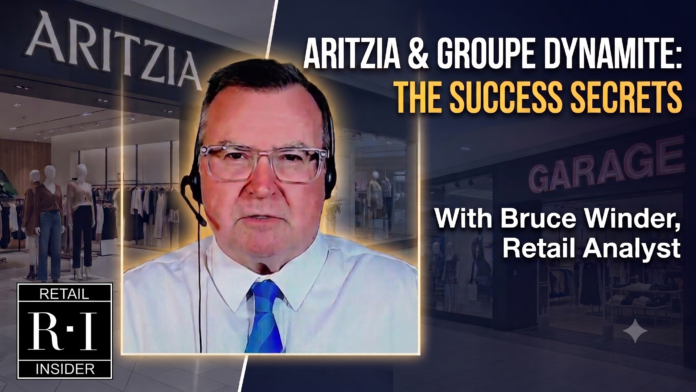
Canadian fashion retailers Aritzia and Group Dynamite are bucking broader retail trends with strong financial performance by focusing on affluent shoppers, disciplined execution and international expansion, says retail analyst Bruce Winder.
Winder said both companies have posted results that far exceed typical retail growth, with strong double-digit sales increases and improved profit margins at a time when many retailers are contending with cautious consumer spending.
He said Aritzia has benefited from carefully expanding its presence in the United States, where the brand was previously underdeveloped. That strategy, combined with strong digital performance, effective inventory management and well-received spring merchandise, has helped the company establish itself as an affordable luxury retailer south of the border, Winder said.
He added that Aritzia’s customer base has also provided a degree of protection from broader economic pressures because it caters to consumers with greater disposable income.
Group Dynamite, which operates the Garage and Dynamite banners, has followed a different but equally successful path, Winder said.
He said the Montreal-based retailer has elevated its brands by opening stores in marquee and more affluent locations while upgrading its merchandise assortment and price positioning. Those changes have helped expand margins and drive strong financial results, he said.
Winder said both companies have remained disciplined about identifying and serving a specific customer rather than trying to appeal to everyone.
He said each retailer targets younger, affluent women seeking premium fashion at prices below traditional luxury brands, allowing them to occupy a segment that has been more resilient despite economic headwinds affecting lower-income consumers.
Customer loyalty has also been a key factor, Winder said, pointing to consistent product quality, pricing, communication, in-stock merchandise and store experience.
International growth is providing another tailwind, he added, noting Group Dynamite’s expansion into the United Kingdom and the United States, including a planned Garage flagship store in New York’s Flatiron district.
Winder contrasted that momentum with lululemon, which he said has recently struggled to match the same level of execution across product appeal, quality and inventory.