As part of Retail Insider Reports, this Q2 2026 Luxury Retail Trends Report draws on Retail Insider coverage, company announcements, industry research, and broader market context, it identifies the key dynamics shaping luxury real estate, flagship strategy, customer experience, and brand positioning in Canada. The full report series is available through the Report Hub.
This report examines Canada’s luxury retail market, including brands positioned at the highest end of the market and characterized by exceptional craftsmanship, heritage, exclusivity, prestige, and premium customer experiences. Coverage includes luxury fashion, jewellery, watches, beauty, accessories, and related retail developments.
*****
Canadian luxury retail entered a more strategic phase in Q2 2026.
Rather than pursuing broad expansion, luxury brands increasingly focused investment on a small number of highly productive retail destinations while seeking closer ownership of customer relationships, inventory, and brand presentation.
The quarter saw major investments at Vancouver’s Oakridge Park, continued evolution in Toronto’s Yorkville district, growing confidence in Calgary’s luxury market, and increased emphasis on service, clienteling, and immersive brand environments.
At the same time, luxury geography continued to shift. Some legacy locations lost tenants while carefully curated retail districts and integrated developments attracted international brands and significant investment.
These developments point to a luxury market that is becoming more strategic, with brands investing selectively in environments capable of supporting long-term growth and deeper customer relationships.
Although luxury represents a relatively small portion of Canada’s overall retail market, it often serves as an early indicator of broader shifts in real estate strategy, customer expectations, and experiential retail.
Market Context: Luxury Investment Becomes More Selective
The Canadian luxury market continues to mature despite broader economic uncertainty and softer growth in some global luxury markets.
International luxury demand has moderated in parts of China and Europe, and the global luxury sector is experiencing slower growth than in recent years. Yet Canada continues to attract meaningful investment from international brands, suggesting confidence in the country’s affluent consumer base and premier retail destinations.
Luxury brands continue to be supported by resilient spending among affluent households, even as broader discretionary spending remains under pressure.
Rather than expanding broadly, luxury brands are investing in fewer stores, larger flagship environments, and highly productive ecosystems capable of supporting immersive experiences and long-term client relationships.
This is creating a winner-take-most dynamic in Canadian luxury retail.
A small number of destinations—including Oakridge Park, Yorkdale, Yorkville, and Vancouver’s luxury corridors—are attracting a disproportionate share of investment.
At the same time, brands are reducing their reliance on wholesale channels and favouring directly operated stores that provide greater stewardship over merchandising, pricing, inventory, and customer relationships.
Broad Overall Themes
Canadian luxury retail in Q2 2026 reflected several interconnected themes.
- Luxury investment is increasingly gravitating toward a small number of dominant retail ecosystems.
- Brands are pursuing greater ownership of distribution and customer relationships through flagship stores and standalone boutiques.
- Service culture and immersive experiences are becoming important competitive differentiators.
- Integrated developments are reshaping luxury geography by combining retail, residential uses, hospitality, dining, offices, and cultural programming.
- Luxury resale is becoming increasingly mainstream and is emerging as a complementary channel that broadens access to designer brands.
- Human capital and store execution are becoming more important as luxury brands compete through relationships and personalized service.
- International brands continue to view Canada as a long-term luxury market despite softer global conditions.
Canada’s Luxury Geography Is Being Redrawn
One of the quarter’s most important developments was the continued reshaping of Canada’s luxury geography.
Vancouver’s Oakridge Park emerged as a major new luxury destination, drawing brands from legacy locations and introducing one of the strongest luxury lineups ever assembled in Canada.
The relocation of Ferragamo from its longtime Robson Street address to Oakridge Park illustrated this shift particularly well. The brand had operated from 918 Robson Street since 1982, making its move symbolic of changing luxury dynamics in Vancouver.
The closure of St. John’s last Canadian boutique at the Fairmont Hotel Vancouver also underscored how legacy luxury locations continue to evolve.
Toronto’s Yorkville district likewise strengthened its position as one of Canada’s premier luxury neighbourhoods. The opening of Alice + Olivia’s first Canadian store and Frette’s first Canadian boutique reinforced Yorkville’s role as a preferred destination for international luxury brands entering the Canadian market.
Yorkdale also continues to reinforce its position as Canada’s leading enclosed luxury destination and one of the country’s primary gateways for international brands.
The luxury story is also broadening geographically. Hermès’ decision to open its first standalone Alberta boutique on Calgary’s Stephen Avenue suggests growing confidence in Calgary’s luxury market and demonstrates that affluent Canadian consumers increasingly support multiple luxury districts beyond Toronto and Vancouver.
While Toronto and Vancouver continue to attract most luxury investment, other markets remain important destinations. West Edmonton Mall continues to house a notable collection of luxury brands, including Louis Vuitton and Gucci, while CF Chinook Centre remains one of Canada’s most productive luxury shopping destinations.
Montreal also remains an important luxury market. Royalmount’s emergence as a new mixed-use destination is adding another dimension to the city’s luxury landscape and may create future opportunities for premium brands.
The broader trend is clear: luxury retail is increasingly polarizing around a smaller number of highly productive destinations that can offer affluent consumers a compelling mix of shopping, dining, hospitality, culture, and residential density.
Flagships and Direct Ownership Become Strategic Priorities
The quarter also highlighted luxury brands’ increasing desire to shape customer relationships more directly.
Luxury brands are investing heavily in flagship stores and directly operated boutiques that allow them to manage pricing, assortment, visual presentation, clienteling, and customer data.
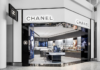
Chanel opened its largest Canadian boutique.
Canada Goose unveiled a new global store concept in Vancouver.
Giorgio Armani announced plans for its first standalone Canadian boutique alongside Canada’s first Armani Café.
Brunello Cucinelli continued to invest in premium environments, while international luxury jeweller Chow Tai Fook entered the Canadian market.
Hermès’ move from a department store concession to a standalone boutique in Calgary further illustrates this trend.
The continued decline of traditional wholesale and department store channels is accelerating brands’ desire for directly operated stores and closer stewardship of the customer journey.
For luxury retailers, direct ownership of the customer relationship is increasingly becoming a strategic imperative.
Hospitality Becomes the New Luxury Standard
Luxury retail increasingly resembles hospitality.
Stores are being designed as environments where customers can spend time, develop relationships, and engage with brands more deeply.
Armani’s decision to open Canada’s first Armani Café alongside its Oakridge boutique is one of the clearest examples of this trend.
Canada Goose’s new retail concept similarly emphasizes discovery and personalized service.
This aligns with a broader global movement. Luxury brands including Louis Vuitton, Dior, Gucci, Tiffany, and Armani are increasingly integrating cafés, restaurants, and lifestyle experiences into their retail strategies.
Clienteling is also becoming increasingly important. Luxury sales associates are evolving into relationship managers who build long-term connections with customers, curate experiences, and facilitate repeat business.
The physical store remains critical in luxury retail, but its role is changing. Stores are increasingly functioning as brand environments and service destinations.
Oakridge Park Emerges as Canada’s New Luxury Powerhouse
No development better illustrates the quarter’s themes than Oakridge Park.
The Vancouver project opened with approximately 500,000 square feet of retail and one of the strongest luxury lineups ever assembled in Canada.
The initial tenant roster includes Louis Vuitton, Prada, Miu Miu, Valentino, Loewe, Loro Piana, Moncler, Dolce & Gabbana, Tiffany & Co., Rolex, Harry Rosen, and many others.
Chanel’s new store is now the largest in Canada.
Canada Goose selected the project for the Canadian debut of its new global concept.
Giorgio Armani’s first standalone Canadian boutique and Canada’s first Armani Café are also slated for the development.
Additional openings, including Veronica Beard’s third Canadian store and Vince’s reimagined concept, further reinforce the project’s position as a luxury ecosystem.
Oakridge Park demonstrates how integrated developments can become powerful luxury environments by combining retail with residential density, transit connectivity, dining, and public spaces.
The project has altered the luxury landscape in Vancouver and may influence luxury real estate strategies across Canada.
Luxury Resale Moves Into the Mainstream
Luxury resale continued to mature during the quarter.
Retailers such as Mine & Yours and Angels Wear Preloved demonstrate that secondary luxury markets are becoming increasingly sophisticated and accepted by consumers.
Partnerships between resale platforms and traditional luxury retailers further suggest that the secondary market is evolving into a complementary channel rather than a disruptive force.
Resale is also broadening access to luxury goods, particularly among younger consumers who may be entering the category through pre-owned products.
Human Capital Becomes a Competitive Advantage
As luxury retail becomes increasingly service-oriented, people are becoming an even more important differentiator.
Clienteling, personalized service, product expertise, and relationship building are increasingly central to luxury performance.
Luxury brands continue to invest heavily in training, leadership, and store execution because customer relationships are often as important as the products themselves.
Luxury increasingly competes through relationships, cultural relevance, and personalized service rather than store count alone.
Jewelry and Omnichannel Continue to Evolve
Fine jewellery and watches remain among the more resilient segments of global luxury spending.
The continued prominence of Tiffany & Co., Rolex, and Chow Tai Fook within Canada’s luxury landscape reflects the enduring strength of jewellery and timepieces among affluent consumers.
Meanwhile, beauty and omnichannel concepts such as Rennaï illustrate how digital engagement and physical environments continue to complement one another.
Editor’s Take
Q2 2026 showed that Canadian luxury retail is increasingly becoming a winner-take-most business.
A small number of premier ecosystems are attracting a disproportionate share of investment, while brands seek closer ownership of customer relationships and create elevated environments that justify premium positioning.
Oakridge Park emerged as the clearest example of this trend, while Yorkville and Yorkdale continue to reinforce their positions as Canada’s most important luxury destinations. Calgary’s growing luxury confidence and Montreal’s evolving opportunities suggest that additional markets may continue to emerge.
The growing emphasis on directly operated stores also signals an important shift. Luxury brands increasingly want greater influence over pricing, inventory, merchandising, and customer relationships while reducing dependence on wholesale channels.
Dining concepts, personalized service, clienteling, and immersive environments are increasingly essential components of premium brand positioning.
The next phase of Canadian luxury retail will likely be defined less by the number of stores brands operate and more by where they choose to invest, how closely they manage the customer relationship, and whether they can create memorable environments that justify premium positioning.
Luxury in Canada is becoming increasingly strategic, relationship-driven, and experience-oriented. The Canadian luxury market is entering a more mature phase, where success increasingly depends on location, service, and the ability to create environments that foster long-term customer relationships.
Representative Articles
- Brunello Cucinelli Expanding Vancouver Flagship – Craig Patterson – 2026-04-01
- How Luxury Retail Actually Works: Retail & Store Execution – Craig Patterson – 2026-04-15
- Angels Wear Preloved Launches Canada’s Largest Resale Event – Craig Patterson – 2026-04-10
- Oakridge Park Opens to Crowds in Vancouver – Craig Patterson – 2026-05-29
- Pandora adds carbon footprint disclosure to lab-grown diamond collection – Mario Toneguzzi – 2026-05-11
- Canadian luxury beauty retailer Rennaï launches e-commerce platform across Canada – Mario Toneguzzi – 2026-05-15
- How Luxury Retail Actually Works: Retail Staff – Craig Patterson – 2026-04-22