Advertisement
Home Blog Page 1157

Change of Scandinavia Plans Ambitious Canadian Expansion

Danish lingerie and fashion brand Change of Scandinavia is planning a substantial Canadian store expansion over the next several years. The retailer’s goal is to roughly double its current store count, and it’s working with brokerage Think Retail on the expansion. 

Change of Scandinavia is particularly unique because of its large bra sizes, which cater to a different niche than other lingerie retailers such as Victoria’s Secret and La Vie En Rose. About 75% of Change’s bras are in the DD to M cup size range, with a wide range of fits and styles. Most other lingerie retailers operating in Canada sell bras in the B-D range. Change stores offers free bra fitting to ensure that its products meet the needs of its diverse customers — and prices are kept reasonable to attract a broad clientele. Approximately 75% of Change’s revenue comes from underwear and bras, with the remainder from loungewear, swimmer, nightwear and stockings. 

The Change of Scandinavia brand launched in Denmark in 1995, and its first freestanding retail store opened in Copenhagen in 2001. The company now operates more than 240 corporate and franchised stores globally. Most of its stores are in Europe and Scandinavia, with the exception of Canada and Singapore — the company has yet to enter the potentially lucrative US market. Change’s stores are modern and simple, featuring a black and white palette to showcase product. 

Change entered the Canadian market with its first store in 2006. It now operates 15 stores nationally, with five in British Columbia (Vancouver x 2, Burnaby, Coquitlam and West Vancouver), one in Saskatchewan (Saskatoon), five in Ontario (Toronto x 2, Thornhill, Oakville, Burlington), and four in Quebec (Montreal x 3 and in Saint-Jean-sur-Richelieu). Recently-opened stores include the March 2016 opening of a 1,200 square foot flagship at Montreal’s Place Montreal Trust, as well as  the summer 2016 opening of a 600 square foot store at upscale Park Royal shopping centre in West Vancouver. 

The company has also confirmed that this summer, it will open a 550 square foot store at CF Carrefour Laval, north of Montreal. Change will occupy part of the retail space currently occupied by luggage/bag retailer Bentley, with Spanish accessories retailer Uno de 50 to occupy the remainder of the space. 

Rapidly expanding Change is looking to open a further 25-30 Canadian stores, ideally in the 600 square foot to 1,000 square foot range in busy shopping centres. Targeted provinces include British Columbia, Ontario and Quebec. Change is represented by Tony Flanz of Think Retail for its Canadian real estate negotiations.

Simons Partners with Cadillac Fairview For South Shore Flagship

Quebec City-based large format fashion retailer La Maison Simons has partnered with Cadillac Fairview to expand its store at CF Promenades St-Bruno, on Montreal’s south shore. Construction will begin in the summer of 2018, and is expected to be completed in the spring of 2020. 

As part of the arrangement, Cadillac Fairview is investing $20.5 million into the expanded store, which will see the existing 65,600 square foot Simons expanded to about 93,000 square feet of total space. Simons will take over second-level retail space currently occupied by the 42,700 square foot Sports Experts/Atmosphere, which is relocating into the mall’s former Target space. Interestingly, about 11,000 square feet of Simons’ existing ground floor will be converted to multiple CRU spaces as part of the redevelopment. Simons will remain open during construction, and the existing store will also see a full renovation as part of the expansion. 

The new store will be Simons’ only location on Montreal’s south shore, and the fourth for the Montreal region. Other Montreal-area stores include a downtown Montreal flagship, as well as stores at CF Galeries d’Anjou and CF Carrefour Laval. As it stands, all three suburban Simons stores are in Cadillac Fairview-owned properties. Sources say that at one time, Simons was considering relocating its Montreal south-shore store to nearby Quartier DIX30 in Brossard, though that’s now unlikely given Cadillac Fairview’s investment into Simons’ St-Bruno expansion. 

Simons opened at CF Promenades St-Bruno in 2001. The enclosed shopping centre boasts about a million square feet of retail space and according to a recent Retail Council of Canada Shopping Centre Study, is one of the largest and most productive malls in the region. Hudson’s Bay and Sears are major anchors in the centre, along with Simons. In 2015, landlord Cadillac Fairview completed a $50 million redevelopment of CF Promenades St. Bruno, which included interior modernizations, the revitalization of the centre court, exterior enhancements, and the transformation of its food court into ‘Le District Gourmand’. Several best-in-class retailers were also added to the centre that year, with names such as Aritzia, H&M, Michael Kors and Victoria’s Secret

Simons currently operates 13 stores in Canada, with plans to open two new ones this year. Besides its four Montreal-area stores discussed above, Simons operates three stores in Quebec City (Old Quebec, Place Ste-Foy and Galeries de la Capitale), one in Sherbrooke, two in the Ottawa/Capital Region (CF Rideau Centre and Les Promenades Gatineau), West Vancouver (Park Royal), Edmonton (West Edmonton Mall) and at Square One in Mississauga, west of Toronto. On March 16 of this year, Simons will open a multi-level store in downtown Calgary, and on August 24 of this year it will open a second location in Edmonton, at the overhauled Londonderry Shopping Centre in the city’s north-east. In 2018, Simons will relocate its Quebec City/Galeries de la Capitale store into the mall’s 80,000 square foot former Target space. The West Edmonton Mall store was Simons’ first location outside of the province of Quebec when it opened in October of 2012. 

Inside Azadi Jewellery’s 1st North American Store [3D Photo Tour]

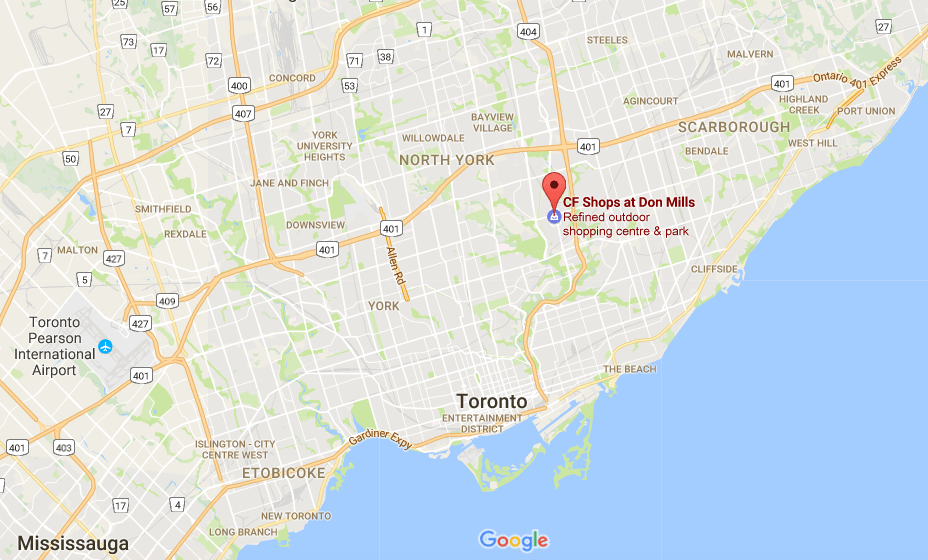
Azadi Jewellery has opened its first North American store location at Toronto’s CF Shops at Don Mills

Dubai-based Azadi Jewellery has opened its first North American store location at Toronto’s CF Shops at Don Mills. We toured the new space with Warren Vandal of GEOmarketing Solutions, who created a 3D photo tour of the store for this article. 

The Azadi Jewellery store measures just over 1,000 square feet in size, featuring ornate fixtures, wall treatments, chandeliers, and soaring high ceilings. The store’s opulent interior is complemented by classical music, highlighting jewellery pieces that range in price from under $50 to well in excess of $20,000. Azadi’s high quality jewellery pieces include 10, 14, 18 and 22 carat gold designs, which are crafted by artisans in Italy. Pieces are often trendsetting, and are unique from those in many Canadian jewellery stores. 

The 3D store tour, seen below, was created by Warren Vandal, owner of Toronto-based GEOmarketing Solutions Inc.. Mr. Vandal is expanding his 3D photographic business to include retail stores, with a unique feature — products within the store can be tagged in the photo tour, with a link connecting them to an e-commerce site or other page. It’s a unique merger of brick-and-mortar and online that retailers may use to profile both store spaces as well as products, and will be discussed further in a separate article about the technology. 

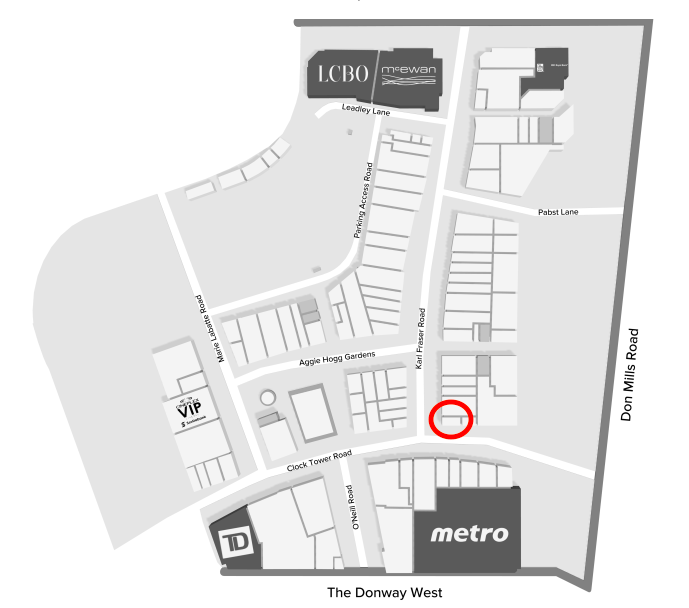
The store boasts a corner location at the corner of Clock Tower Road and Karl Fraser Way at CF Shops at Don Mills, and it is the latest first-to-market retailer for the popular outdoor retail centre. We recently profiled CF Shops at Don Mill’s innovative redesign, which will include enhanced mobility features as well as attractions to further enhance the overall consumer experience. 

The Azadi family has been in the jewellery business for over 100 years, and now operates 25 store locations across the Middle East. Family member Ali Azadi, who runs the new Toronto store, explained how the success of the Toronto store could lead to further store expansion into Canada as well as the United States. Robert Luciano of Toronto-based firm decisionSMART Retail Advisory, Inc. (www.decisionsmart.ca) is working with Azadi Jewellery on its expansion, and can be reached at: robert@decisionsmart.ca or by phone: 416-702-9641.

Dx3 Conference Provides Exceptional Networking Opportunities

Dx3, Canada’s largest conference and trade show focused on digital marketing, advertising, tech and retail, takes place on March 8-9 in Toronto. Early bird tickets are available until Friday, January 27. This year’s theme is ‘Experience Digital’, with a focus on building better consumer experiences, startups, and an innovation challenge we discussed earlier this month. 

Attendees are encouraged to network and form new business relationships, creating exceptional value for everyone involved. Startups will be a key focus for 2017. “We want to boost that community. A lot of startups are innovative and there’s so much growth happening, a lot of enterprises can also benefit from them,” says event spokesperson Eric Mercer. 

It’s the sixth year that Dx3 has held its popular Toronto conference, and one of this year’s Dx3 keynote speakers is Warren Tomlin — IBM’s Chief Innovation Officer. The conference features a variety of attractions, such as engaging thought leadership speakers (such as Doug Stephens, aka ‘Retail Prophet’, David’s Tea co-founder David Segal, and others), interactive VR showrooms, a tech spotlight with journalist Amber Mac, and PayPal’s startup zones. 

Startups will be a key focus, with Dx3 hosting the Canadian Retail Innovation Challenge — six Canadian startups will pitch before a Dx3 audience, and two winners will be able to debut their tech at Yorkdale Shopping Centre (or another mall owned by Oxford Properties Group). As well, winners will have the opportunity pitch in front of the Retail Council of Canada’s board of directors, which includes the heads of some of the country’s top retailers. 

Dx3 launched the Innovation Challenge after identifying the trend towards online retailers opening brick-and-mortar stores (such as Warby Parker, Frank + Oak and Indochino). Mr. Mercer said “these innovative companies are starting online and moving to bricks-and-mortar, and bringing their interesting technology and ways that they’re engaging consumers into the store,” going on to say, “In chatting with Oxford Properties and Retail Council of Canada, it’s something people can get behind. Wouldn’t it be great to boost the community in startups in Canada who are trying to change the future of retail and try to help them?”

We’ve partnered with Dx3 for this year’s event, recognizing its exceptional educational and networking opportunities. Early bird passes are available until January 27. Startups looking to apply for the Retail Innovation Challenge have until then to apply, as well. 

*Partner content. To work with Retail Insider, contact craig@retail-insider.com.

Study Identifies Generation Z’s Influence on Retail

A new study by notes the profound influence that Generation Z (youth aged 10-17) is having on household spending in Canada, with five specific findings discussed below. Retailers should particularly take note, as about 40% of Canada’s population will comprise of Generation Z by the year 2020, according to the study. 

The study surveyed 3,100 participants (split between Generation Z youth and their parents), gaging their attitudes, shopping habits and what influences drive their purchasing decisions.

Generation Z already has a profound influence on household spending, according to HRC Retail Advisory President Farla Efros.  In order to remain profitable, Canadian retailers will need to recognize Generation Z’s nuances when targeting and serving them. 

“Retailers must be nimble in order to effectively appeal to Generation Z consumers,” said Ms. Efros. “Resonating with this group at a young age can have a huge impact on retailers’ long term consumer retention and brand loyalty. Social media and digital advertising will be dominant in marketing strategies targeted to Generation Z, but retailers must adopt these mediums in interactive ways to inspire and engage this emerging generation of consumers.”

The study found, after assembling and analyzing the data, that:  

1. Generation Z Strongly Influences Parents’ Purchases: The group has a ‘strong voice’ and expects to be heard, especially when it comes to what their parents are buying — 82% of parents surveyed admitted that their children have some influence over purchasing decisions, while 93% of Generation Z respondents said that they have influence over certain categories such as clothing, footwear, accessories and cosmetics.
 
2. YouTube Tops Facebook As Most Visited Social Platform: YouTube is the top social platform for Generation Z, with 54% of respondents stating that they visit YouTube daily for information. This is a significant deviation from Millennials, who named Facebook as their most visited social platform. Furthermore, about 50% of Generation Z visits Facebook daily, with Instagram and Snapchat falling behind at 34% and 29%, respectively.
 
3. According to Generation Z, Malls are Not Dead: Despite being raised with the internet, Generation Z is still going to the mall to shop. While approximately 60% of all survey respondents said they visit a mall or shopping centre at least once a month, a whopping 72% of Generation Z respondents said they visited the mall at least once a month and stayed for at least an hour, visiting 4.4 stores on the trip. About 60% of these high frequency visitors go to the mall with a clear intention of making a purchase for themselves, as opposed to just browsing or socializing. 
 
4. Generation Z Votes Friends as Most Influential: Retailers will need to reconsider the implications of their selection of spokespeople to represent their brands. 62% of Generation Z respondents deemed friends as the most influential party on their buying decisions. Athletes came in a distant second at 14%, with bloggers/YouTubers closely following at 13%. Celebrity and singer endorsements were ranked the lowest, at 6% and 7% respectively. 89% of Generation Z respondents also said they would be more likely to enter a store based on where their friends shop.
 
5. Digital is in their DNA: Generation Z buys online, and frequently. 50% of Generation Z respondents stated that they shop online at least once a month. Of those making online purchases within the last 12 months, 77% stated they have purchased something from Amazon, and 34% have purchased something from eBay.

After posting these findings, HRC Retail Advisory notes that retailers need to consider the following five factors to most effectively serve Generation Z consumers:

  • Depict them as diverse (ethically, socially, and fashionably),
  • Communicate more frequently in short bursts, using content,
  • Allow them to personalize, and give them control and preferences,
  • Talk to them about values and social causes, and
  • Instead of creating demand using Hollywood celebrities, use real people or internet/YouTube stars to market your brand. 

The study’s findings are remarkable, and could signal the end of major celebrity endorsement deals in the future — at least those using Hollywood celebrities, musicians and the like. 

Gerry Weber Shutters Canadian Stores

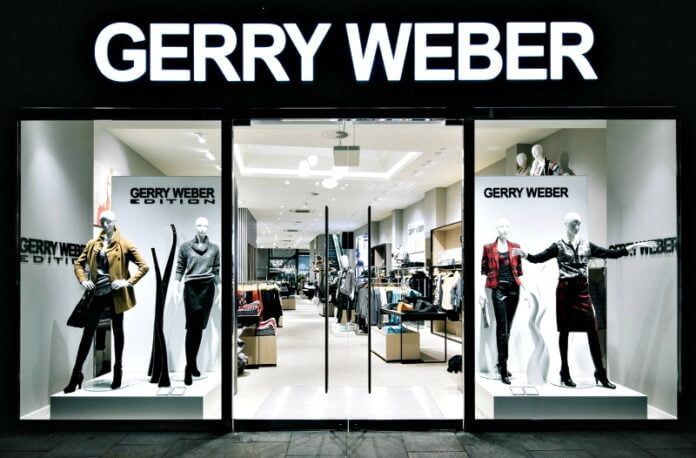
Gerry Weber Storefront

German women’s fashion brand Gerry Weber has closed its eight corporately operated Canadian stores, after entering the market in the spring of 2015. Three franchised Gerry Weber stores, which have operated for several years, will continue to remain open. 

As of last week, all corporately owned Gerry Weber stores in Canada had closed, except for a location at Vaughan Mills, north of Toronto. The store continues to clear out the brand’s merchandise and will close on Friday, January 27. 

Gerry Weber’s first corporately owned Canadian store opened in March of 2015 at Toronto’s Yorkdale Shopping Centre, followed a month later with stores at Upper Canada Mall in Newmarket and at Scarborough Town Centre in Toronto. In May of 2015, locations opened at Vaughan Mills, Square One Shopping Centre in Mississauga, and at Outlet Collection at Niagara, near Niagara Falls. The company’s last two Canadian stores opened at Calgary’s CF Chinook Centre and at CF Promenade in Thornhill, north of Toronto. More were expected to follow.  

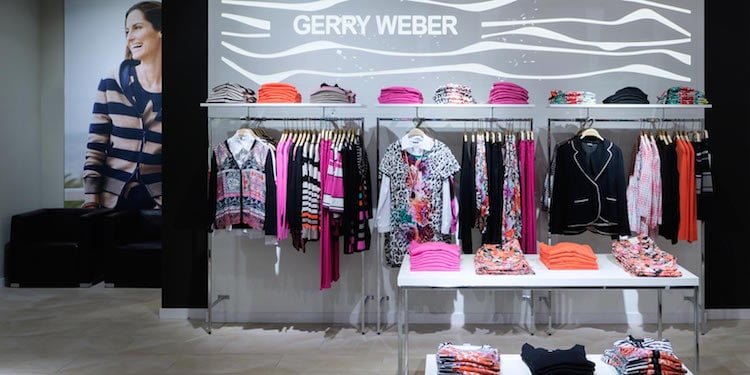
Gerry Weber

Three franchised Gerry Weber stores will continue to operate in Canada, including two in Ontario and one in British Columbia. The Ontario locations include stores at 1177 Yonge Street in Toronto and in downtown Burlington. The Gerry Weber franchise at 1849 Marine Drive in West Vancouver is operated by Vancouver-based retailer Edward Chapman Woman. The Gerry Weber brand continues to wholesale in retailers across the country. 

The Gerry Weber brand has been struggling for the past couple of years, with store closures being part of a restructuring effort to bring the company back to profitability. One of the brand’s focuses is on wholesale operations, which is expected to be its priority for the Canadian market moving forward. 

Founded in 1973 in Halle, Germany, moderately priced Gerry Weber targets women over the age of 30. The brand features women’s ready-to-wear as well as accessories, leather goods and footwear. The brand has over 1,270 company managed locations around the world, as well as more than 2,300 shop-in-stores and 270 franchised stores. It employs over 5,000 worldwide.

MUJI Announces 2 Vancouver stores

Minimalist Japanese retailer MUJI has announced that it will open two Vancouver stores this year. Both stores will be the largest in Canada when they open, and at least one will be considered to be a flagship. MUJI entered the Canadian market in November of 2014 with a location in Toronto, and it plans to eventually operate as many as 20 stores in Canada by the year 2020. 

The two MUJI locations that will open this year include a street-front store on Robson Street, and a mall location at Metropolis at Metrotown in Burnaby. The Robson Street store will span about 10,000 square feet, making it the largest in Canada, and tied with a 10,000 square foot flagship opening in Boston on Friday of this week. The Metrotown store will be approximately 8,000 square feet. 

MUJI’s Robson Street store will become the retailer’s third flagship location in North America, adding an injection into the street’s 1100 block that also recently saw the addition of Paris-based Ladurée. Further details on its exact location will be revealed shortly. 

“We’re excited to welcome MUJI to Robson Street, which will add excitement to the 1100 block,” said Teri Smith, Executive Director of the Robson Street Business Association. She went on to say that MUJI will be “good for the rest of the area”, as downtown Vancouver continues to add new and exciting retailers to its already strong mix.

Both Vancouver lease deals were coordinated/negotiated by Martin Moriarty and Mario Negris of CBRE Vancouver, as well as Arlin Markowitz from CBRE Toronto

MUJI currently operates three Canadian stores, all in the Greater Toronto Area. The retailer entered the Canadian market in November of 2014 when it opened a 4,400 square foot location in ‘The Atrium’ at 20 Dundas Street West in downtown Toronto. MUJI’s second Canadian store opened in November of 2015 at the Square One shopping centre in Mississauga, spanning 5,225 square feet. In October of this year, MUJI opened its largest Canadian store, at 6,375 square feet, in Toronto’s Yorkdale Shopping Centre. The Yorkdale store is located next to Japanese fashion retailer Uniqlo, in the mall’s recently-opened Nordstrom-anchored expansion wing

MUJI is expanding its operations across Canada. In a recent email interview with Retail Insider, Canadian President Toru Akita revealed that MUJI plans on operating between 15 and 20 stores in Canada by the year 2020 — the first time that MUJI has publicly disclosed its anticipated Canadian store count. 

In the same interview, Mr. Akita also said that MUJI is considering opening an additional one to three stores in the Greater Toronto Area within the next year, which means that Toronto could house between four and six MUJI stores by 2018. Landlords in various other Canadian cities have also confirmed with us that they have been in discussions with MUJI. 

MUJI operates 13 American stores, with more to follow as it expands in the US. Of the locations currently open, seven are in the New York City area, three are in the San Francisco Bay area, and three are in southern California. A 10,000 square foot Boston flagship will open on Friday of this week — MUJI’s second flagship in North America.

Muji’s largest store in North America is at 475 5th Avenue in New York City, totalling 11,650 square feet.

Known for being innovative and its products being affordable and unbranded, MUJI carries various household items, furniture, appliances, stationery and apparel. With hundreds of stores worldwide (over 400 in Japan and about 400 internationally), it saves money by spending little to nothing on market research and advertising. MUJI is short for Mujirushi Ryohin, or no-brand superior items, and was founded in 1980 as the private-label brand of a major supermarket chain (not unlike Canada’s Joe Fresh). 

Stefano Ricci Opens 1st Canadian Store [Photos]

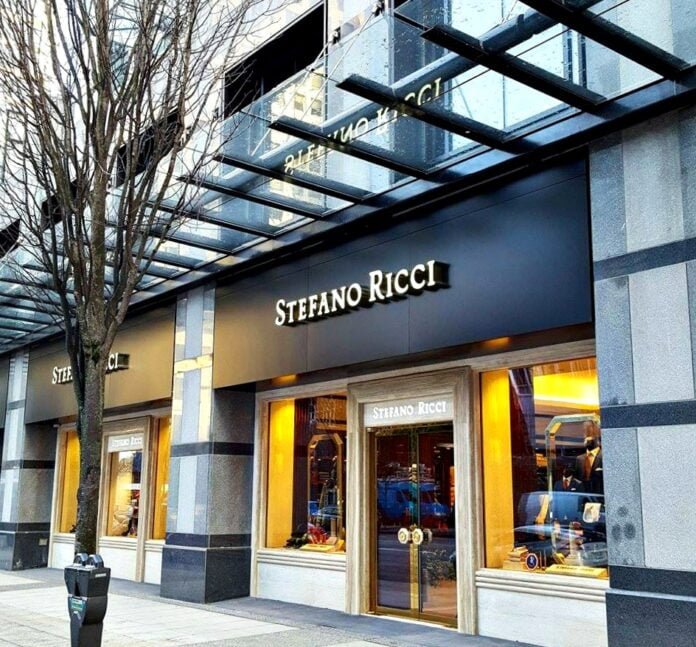
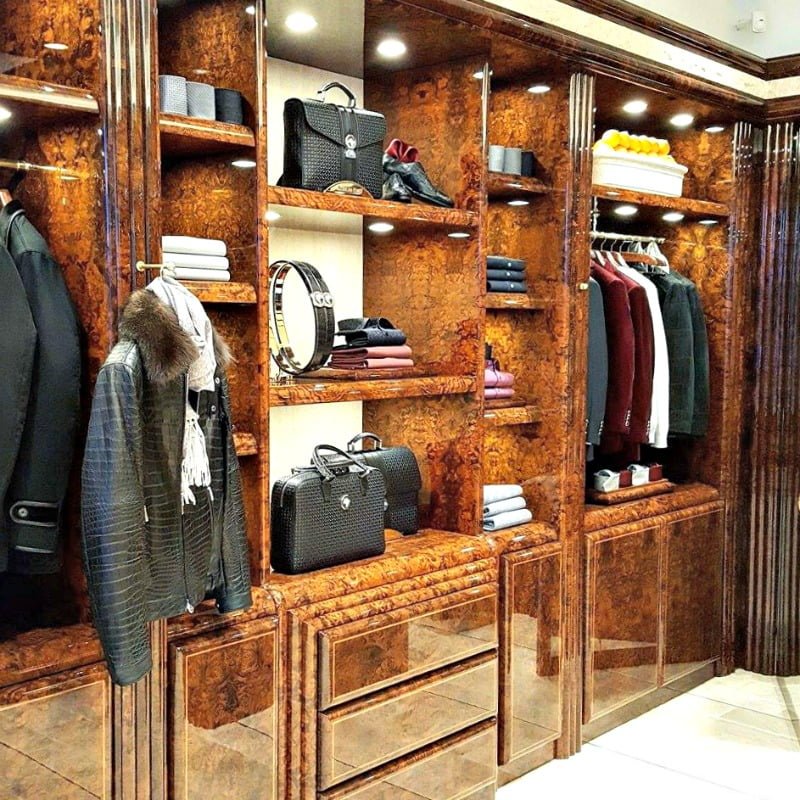
Ultra-luxury Italian brand Stefano Ricci has opened its first Canadian store, in Vancouver. The 2,600 square foot boutique is located at 1139 West Georgia Street, next to the new Trump Tower in the city’s expanding ‘Luxury Zone’. 

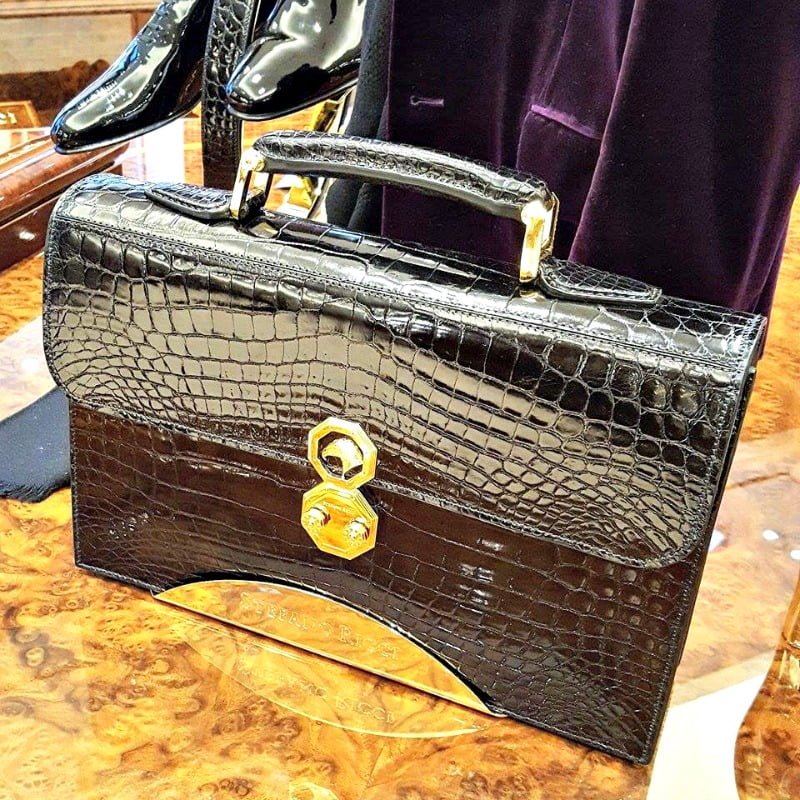
The store features Stefano Ricci’s pricey menswear as well as fragrances, accessories (such as leather goods and cuff links) and home goods such as porcelain and crystal dinner services, silverware and luxury linens. Every item in the store is made by hand in Italy, using the highest quality of materials. Stefano Ricci has been described as ‘the Rolls-Royce’ of clothing, with stratospheric prices that include a crocodile skin jacket in the store that retails for about $150,000. 

Interior features include ample burled California walnut wood, along with custom millwork imported directly from Italy. The store is co-owned and operated by Manuel Bernaschek, owner of popular Vancouver-based Showcase Pianos. The Vancouver lease deal was coordinated by Martin Moriarty and Mario Negris of CBRE Vancouver

Stefano Ricci joins a number of luxury brands that have opened in Vancouver’s ‘Luxury Zone’ over the past 24 months, centred on Alberni Street as well as adjacent Burrard Street and Thurlow Street. Rolex, Prada, Versace, Brunello Cucinelli, Moncler, Jaeger-LeCoultre, and others have recently opened, with several more luxury brands to be announced for the area in the coming months. The hotel component of Vancouver’s Trump International Hotel & Tower is set to open this week, as well.

While there are no immediate plans for more Stefano Ricci locations in Canada, Mr. Bernaschek said that there’s a possibility that Toronto could be the next Canadian city to see a Stefano Ricci boutique. 

Founded as a tie-manufacturing firm in Florence (by designer Stefano Ricci) in 1972, the family-run company “strives for quality to the point of perfection” — with prices to match. Attention to detail is key and the brand only uses the finest leathers, skins and fabrics. It retails menswear (including suits, dress shirts, jeans, polo shirts, casual wear and neckties), accessories (including leather goods and cufflinks), fragrances and home goods such as porcelain and crystal dinner services, silverware and luxury linens. The brand currently operates three North American locations — in New York City, Beverly Hills and Las Vegas, with a fourth set to open soon in Miami. The remainder of its stores are in Europe, the Middle East and Asia. 

Williams Sonoma Exits Mink Mile Ahead of Hermès Relocation

San Francisco-based Kitchenware and home furnishings retailer Williams Sonoma has closed its two-level store at 100 Bloor Street West in Toronto. It will be replaced by French luxury brand Hermès, which will open a ‘maison’ of approximately 12,000 square feet this fall, according to sources. 

Williams Sonoma has occupied its 100 Bloor Street West space since 2001, when it joined Pottery Barn to lease the majority of the building’s retail podium. In August of 2014, it was announced that Both Williams Sonoma and Pottery Barn would vacate its Bloor street premises, after a substantial rent increase that made operations unviable. Both stores were expected to close in early 2015. 

Williams Sonoma officially closed its Bloor Street store after the end of business on Wednesday, January 18, and exterior signage was already being removed that evening. Pottery Barn’s space is currently for lease, with no definitive closing date for the store set as of yet. 

Hermès, which currently operates out of a one-level retail space of about 3,965 square feet at 130 Bloor Street West, will relocate to the Williams Sonoma space at 100 Bloor Street West in the fall of 2017. The new two-level Hermès will span approximately 12,000 square feet and will be one of a handful of Hermès ‘maisons’ globally, as well as one of its largest stores. 

Besides the Bloor Street store, Hermès operates four other Canadian boutiques. Vancouver is home to two of them — a 2,500 square foot location operates at 755 Burrard Street (corner of Alberni Street) in the city’s ‘luxury zone’, and a second Vancouver boutique is located at Vancouver International Airport. Hermès also operates concessions within Holt Renfrew stores in Calgary and Montreal.

100 Bloor Street West has seen several substantial changes since Williams Sonoma and Pottery Barn announced intentions to vacate. Holt Renfrew opened a 16,500 square foot freestanding men’s store in the corner retail space in September of 2014, and women’s fashion retailer Milli relocated from a Critchley Lane-facing space to a new store on Avenue Road in the summer of 2016. CBRE has been involved with a number of transactions both at 100 Bloor, as well as in the immediate area. 

We’ll publish an article shortly with updates on what’s happening on Toronto’s Bloor Street West, as a number of retailers are opening and expanding stores on what is considered to be Canada’s most prestigious retail street.

Mink Mile Colonnade Sees New and Expanded Luxury Retailers

Morguard-owned ‘The Colonnade’ at 131 Bloor Street West in Toronto is seeing substantial changes, including new and expanding stores. The complex is considered to be one of the most prestigious retail addresses in Canada.

The Colonnade opened in 1963 and was the first mixed-use building in Canada, with office and residential located above two levels of retail. The complex, designed by architect Gerald Robinson, has a remarkable history as an anchor to Bloor Street’s transformation into one of the world’s best known luxury retail locations.  

Newly published floor plans show how tableware/giftware retailer William Ashley will be configured in its new space in The Colonnade, spanning two levels and taking over some existing common areas within the building. Last week, we reported that William Ashley will relocate from its current location at the Manulife Centre at 55 Bloor Street West. A temporary pop-up William Ashley, to be located in part of The Colonnade’s former Sephora space, will open on February 1 in about 3,545 square feet. The new permanent William Ashley store, which will include an 860 square foot main level and 11,665 square feet upstairs, will open in seven-to-eight months. 

The Colonnade will continue to maintain a small ground floor public lobby with an entrance that leads to the second floor La Société restaurant. An elevator as well as an existing marble staircase will provide access upstairs. The new lobby will also provide access through The Colonnade towards a rear entrance, which is adjacent to the residential lobby for The Colonnade’s upscale rental apartments, located upstairs. 

Italian luxury brand Moncler will take 3,100 square feet of Sephora’s retail space, according to plans, and will be adjacent to William Ashley’s street-front pop-up. Construction has yet to commence on Moncler, which is expected to open later this year. Bloor Street will be Moncler’s third freestanding Canadian store, following the opening of locations at Toronto’s Yorkdale Shopping Centre and on Thurlow Street in downtown Vancouver. 

Chanel closed its 7,300 square foot two level store in The Colonnade at the end of December of 2016, in anticipation of moving into an 8,700 square foot flagship at nearby 98 Yorkville Avenue this spring. Christian Dior will replace Chanel in The Colonnade, with a ground level of 3,117 square feet and an upper level of 10,194 square feet. When it opens later this year, sources say that Bloor Street’s Dior will be the largest in North America. 

Prada is also expanding its current 5,889 square foot store in The Colonnade, by adding a second level with 7,738 square feet of retail space. The new 13,600+ square foot store will become Canada’s largest Prada store, surpassing the 8,200 square foot downtown Vancouver flagship that opened in March of 2016. 

Plans also indicate that Cartier may end up expanding into some existing second level space currently leased to Michael Kors, to be utilized for storage. Cartier’s Colonnade store just completed a minor renovation to its facade, and is currently the largest in Canada, at about 4,200 square feet over two levels. 

The Colonnade continues to house a number of prestigious retailers, including Mulberry, Escada, Agent Provocateur, Black Goat Cashmere, Michael Kors and Coach. Bloor Street, overall, is seeing substantial changes that will include the addition of new retailers, as well as developments towards Yonge Street that could cost into the billions of dollars. We’ll do an updated article shortly on what’s happening on Bloor Street West, aka the ‘Mink Mile’, as it will become one of the most active urban areas for retail leasing and development in Canada between now and 2020.