Home Blog Page 12

Craig’s Cookies Grows to 25 Locations as Franchise Brand Expands Nationally

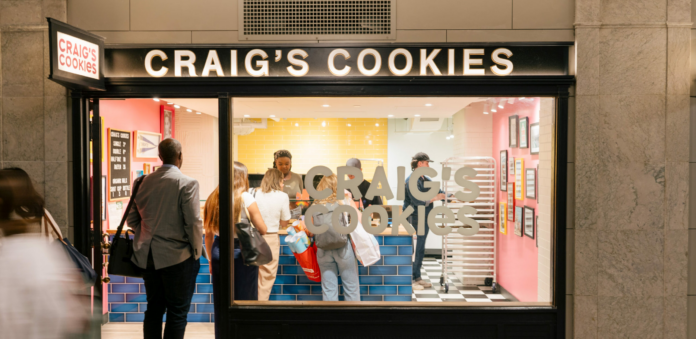
Craig's Cookies at Union Station in Toronto. Photo: Toronto Union

Craig’s Cookies has grown to 25 locations across Canada, with the Toronto-founded brand preparing for further expansion into Western Canada and other markets outside its established Ontario base.

Craig Pike

Founder Craig Pike told Retail Insider that Edmonton is expected to open in late 2026 or early 2027, while Vancouver is being considered for 2027. The company is also looking at opportunities in Eastern Canada and additional Ontario markets as its franchise network expands.

“We’re still looking at expansion across the country, but more so now looking into the West Coast and a bit more into the East Coast,” Pike said in an interview.

The expansion marks a significant change from where Craig’s Cookies stood three years ago. When Retail Insider interviewed Pike in April 2023, the company had six locations and was preparing to use franchising as its next vehicle for growth. The franchise system has since become central to the company’s expansion.

Port Credit Marks 25th Location

The latest addition is in Port Credit, marking the company’s first location in Mississauga. The store at 102 Lakeshore Road East opened this summer and is operated by franchisee Imtiaz Hussain.

Pike said Mississauga was a logical extension of a customer base Craig’s Cookies had already established across the Greater Toronto Area. “We have so many guests and lovers of Craig’s Cookies that live in Mississauga,” he said. “To be able to offer our baked goods to Mississauga means a lot to me.”

The network has also moved considerably farther beyond Toronto. Craig’s Cookies now operates in markets including Calgary, Halifax, Ottawa, St. John’s, Windsor and London, alongside its larger concentration of stores across the Greater Toronto Area and Southern Ontario. Calgary represented the company’s first move into Western Canada; Edmonton would deepen its Alberta presence, while Vancouver would take the brand into British Columbia.

Pike said expansion is being driven by individual market opportunities instead of a predetermined national store count. The company considers demographics, population growth and the ability of individual communities to support a location while trying to avoid clustering too many stores in one market.

“We don’t want to oversaturate any market either,” he said. “It’s really making sure that we’re keeping an eye on the pulse of what neighbourhoods and communities are growing.”

Pike pointed to Oshawa and communities along the broader corridor between Toronto and Ottawa as areas worth watching as populations grow. The company also has to plan well ahead: finding real estate, negotiating a lease and getting a store built can sometimes take a year, during which local demographics can continue to change.
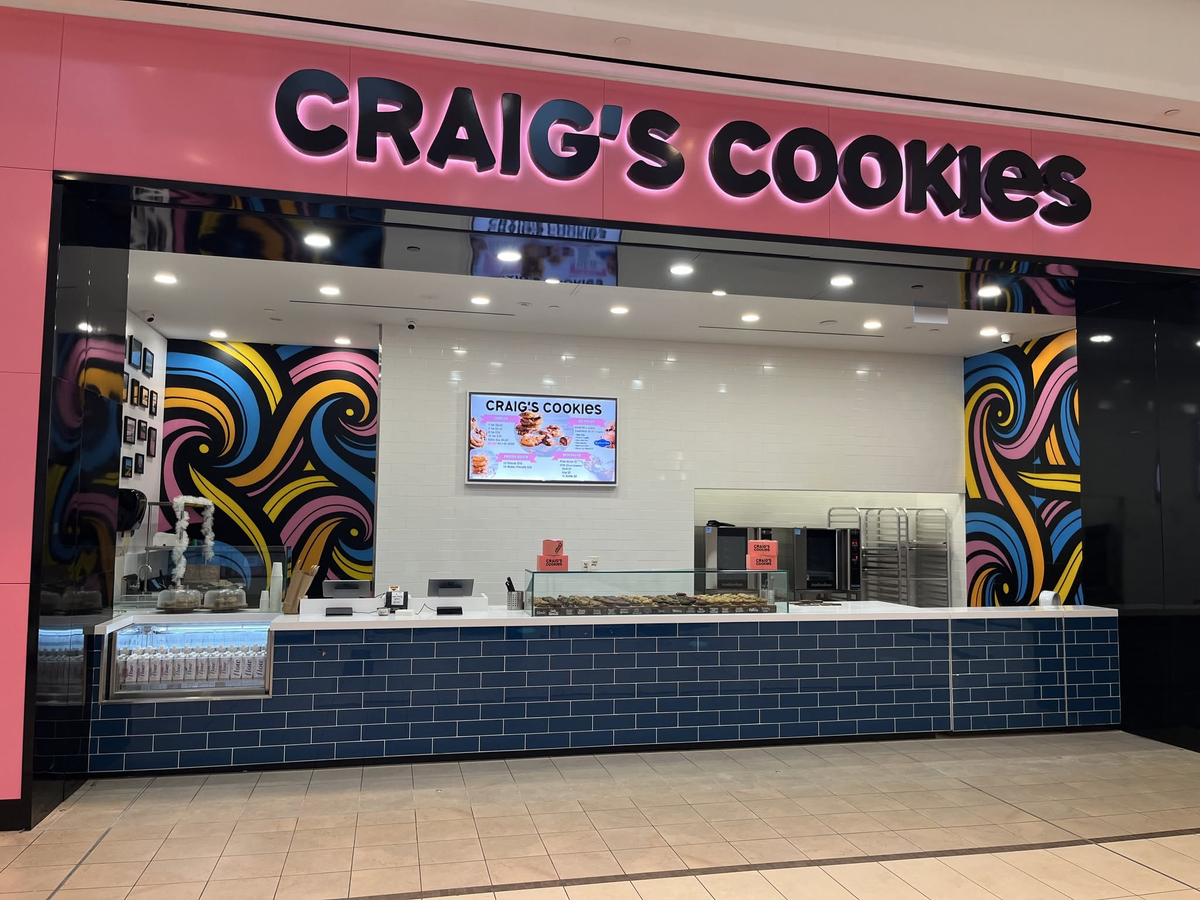
Craig’s Cookies at Scarborough Town Centre in Toronto. Image: Facebook/Craig’s Cookies STC

Franchising Becomes the Growth Engine

The current expansion has its roots in a strategy Craig’s Cookies was only beginning to implement when Pike spoke with Retail Insider in 2023. At the time, he had opened six stores and said the company was receiving franchise inquiries from prospective operators in markets ranging from Vancouver to Abu Dhabi.

Pike was cautious about growing faster than the company could support. He said preserving the culture and integrity of Craig’s Cookies mattered more than reaching an arbitrary store count. One strong new franchise in a year could be sufficient, while a considerably larger network could work if the company had the infrastructure to support it.

Later in 2023, Craig’s Cookies began putting that strategy into practice. Its first franchise opened in Niagara-on-the-Lake, followed by a multi-store development agreement with LLH Loose Change Holdings that called for at least five additional locations, with an emphasis on major regional shopping centres. It represented a significant change for a business that had largely expanded through corporate stores in Toronto.

“We’re generally still a new franchising system,” Pike said in the latest interview. “It’s only been two and a half years, and we’ve learned a lot over the last two and a half years.”

Those lessons include refining store operations and strengthening support for franchisees. Pike said maintaining consistency becomes increasingly important as the network grows, requiring sufficient corporate infrastructure to keep stores aligned with the brand. Craig’s Cookies is also using feedback from franchisees to improve operations and identify efficiencies.

A More Defined Real Estate Formula

Craig’s Cookies has developed a clearer real estate model as its footprint has expanded. Pike said the company generally prefers approximately 1,000 square feet for a franchisee’s first location, although the concept can operate in spaces ranging from roughly 800 to 1,200 square feet.

Site selection considers demographics and the surrounding community, while franchisees receive defined territories negotiated around individual locations. The model has also become increasingly flexible in terms of format.

Craig’s Cookies began primarily as a neighbourhood streetfront concept but has since established a significant presence in shopping centres. Its network includes stores at CF Toronto Eaton Centre, Scarborough Town Centre, Vaughan Mills and Bramalea City Centre, alongside streetfront and tourist-oriented locations.

Pike said the customer and operating dynamics of mall stores differ from those of neighbourhood locations. “It’s a different ballgame,” he said. “It’s a different kind of guest. It’s a different kind of experience, but equally enjoyable and successful.”

Tourist-oriented locations have different seasonal patterns, with stronger business during peak visitor periods and quieter times of the year. The range of formats has given Craig’s Cookies experience operating across neighbourhood streets, tourist destinations and major shopping centres.

Pike said broker Julie Auckland has worked with Craig’s Cookies on real estate since around 2018 and assists franchise partners as they search for locations.
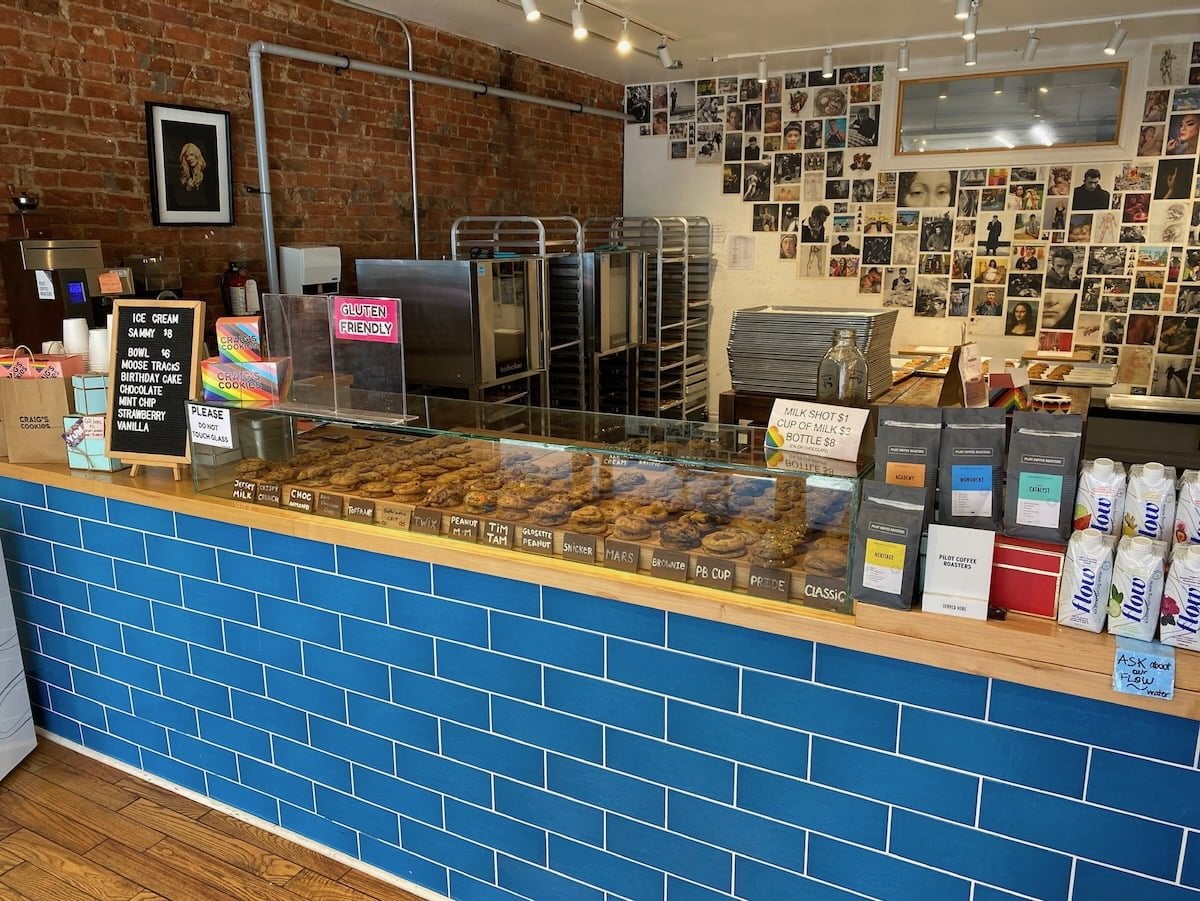
Craig’s Cookies at 483 Church St (Image: Dustin Fuhs)

Designing a Concept That Can Scale

The physical design of Craig’s Cookies has evolved alongside its real estate strategy. The original Parkdale store was about 300 square feet, and as additional stores opened, Pike repeated elements of its design to establish a recognizable identity.

When Retail Insider interviewed him in 2023, Pike explained that several of those elements had personal origins. Hardwood was intended to recall his grandmother’s Victorian home in St. John’s, while the signature blue represented the Atlantic Ocean. Black-and-white flooring was used to evoke a traditional kitchen.

Those choices subsequently became useful as Craig’s Cookies moved into franchising. Pike said the company had been thinking about replicability while it was still opening corporate stores, after receiving advice years earlier to consider how its design could support broader expansion.

The result is a relatively simple store format that remains recognizable as Craig’s Cookies while being easier to reproduce. The company has also refined workflow behind the counter, incorporating feedback from franchisees about how stores can operate more efficiently as the network grows.

Retail Insider’s Craig Patterson interviews Craig Pike of Craig’s Cookies in 2023 (video podcast)

Baking Remains Local to Each Store

Despite reaching 25 locations, Craig’s Cookies continues to make and bake its cookies at individual stores instead of distributing finished product from a centralized production facility.

“Right now everybody’s baking and making their cookies themselves at each location,” Pike said.

It is the same approach he described to Retail Insider in 2023, when the company had six stores. At the time, Pike said fresh on-site production was important to maintaining the integrity of the product. Scaling that system across a much larger network adds operational complexity, and he acknowledged that it could eventually evolve as Craig’s Cookies looks for additional efficiencies.

“There’s always room for us to change that model as we grow to make things even more and more efficient,” Pike said.

For now, production remains at store level. Pike said the broader objective is to make the operation as straightforward and profitable as possible for franchisees while maintaining the product and experience customers expect.

Craig’s Cookies at 483 Church St (Image: Dustin Fuhs)

From Bicycle Deliveries to a National Network

Pike grew up in St. John’s and moved to Toronto in 2004 to attend theatre school at George Brown College. He later worked professionally as an actor, including four seasons at the Shaw Festival, before returning to Toronto.

In 2013, after losing a restaurant job, Pike began selling cookies to generate some income. He promoted them through Facebook and Instagram and delivered orders himself by bicycle, telling Retail Insider in 2023 that he sold 200 dozen chocolate-chip cookies during his first month.

For several years, the business operated alongside his work in bartending and the arts. Pike baked overnight, sold cookies at flea markets and delivered orders around Toronto before the brand began attracting a broader audience.

An appearance in Air Canada’s enRoute magazine in 2017 helped generate more corporate and catering business. A subsequent relationship with Williams Sonoma led to pop-ups at Yorkdale Shopping Centre, where Pike eventually began baking inside the store using its demonstration kitchen.

Pike opened the first permanent Craig’s Cookies store in Parkdale on April 8, 2018, in a space of approximately 300 square feet. He recalled having roughly $4,000 when he committed to the location and quickly discovering that opening even a small retail business required considerably more capital.

The store gained traction quickly. Pike told Retail Insider in 2023 that he initially expected approximately $80,000 in sales during the first year but ultimately generated roughly $600,000.

Church Street followed in 2019, with additional locations opening during and after the pandemic. By 2023, the company had reached six stores and Pike was preparing to shift more of its future expansion to franchise operators.

Partnerships Extend the Brand

Craig’s Cookies has also continued using partnerships to reach customers outside its own stores. The company recently worked with WINNERS on a limited-edition cookie and broader national campaign, with Pike saying WINNERS approached Craig’s Cookies about the collaboration.

Brand partnerships have been part of the company’s growth for years. Nordstrom approached Craig’s Cookies when the business was still small, leading to an early collaboration at CF Toronto Eaton Centre.

“I remember the early days, Nordstrom reached out to me and said that they would love to have Craig’s Cookies in their Nordstrom in Toronto,” Pike said. “At that time I think I only had one little store.”

Pike said additional collaborations are planned for the remainder of 2026, although he was not yet able to identify the companies involved. The assortment is evolving as well, with Craig’s Cookies adding banana pudding, including a core version and rotating monthly features, while new cookie flavours are planned for Thanksgiving and Christmas.

Expansion Without a Fixed Store Target

Pike does not put a final number on how many Craig’s Cookies locations Canada could ultimately support. Western Canada is a particular area of interest, while the company continues to examine Eastern Canada and growing Ontario communities.

The strategy depends on finding viable markets, suitable real estate and franchise partners capable of operating the business. It remains consistent with what Pike outlined when franchising was in its early stages: growth has to be supported by the company’s infrastructure and by demand in individual markets.

The scale has changed considerably. When Pike discussed the strategy with Retail Insider in 2023, Craig’s Cookies had six stores and franchising represented the next stage of the business. Three years later, it has 25 locations across multiple provinces and retail formats, with Edmonton expected next and Vancouver under consideration.

For Craig’s Cookies, the next stage will be managing that expansion as the company enters additional markets while maintaining consistency across a growing franchise network.

More from Retail Insider:

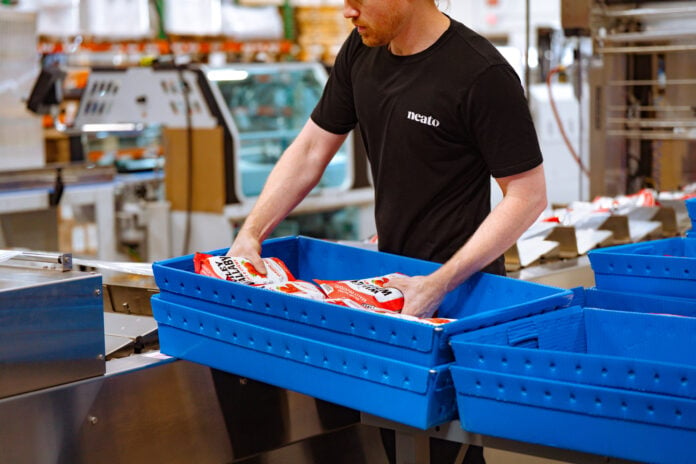
E-Commerce Brands Expand Creative Capabilities in the Age of AI: Neato

Neato image
Neato image

Neato, an e-commerce acceleration partner for consumer brands, has launched its Neato Shop Studio, a dedicated content and commerce environment designed to help brands turn social video into measurable marketplace performance.

It also appointed Nicole Lenora as Creative Director.

As artificial intelligence accelerates the pace and volume of e-commerce, brands increasingly need stronger creative capabilities to stand out, connect with consumers, and convert attention into sales. Neato said it is responding by expanding its in-house creative infrastructure and leadership while connecting content production directly to marketplace operations, social commerce, and performance data.

“AI is making it easier to produce more content, but scale alone does not create meaningful brand connection or commercial impact,” said Anthony Connelly, Founder and CEO of Neato. “The brands that win will pair technology with stronger creative thinking, sharper storytelling, and disciplined execution. Nicole’s leadership and our content studio reflect our belief that creative is now core commerce infrastructure.”

“Creative teams are being asked to do more than ever, to move quickly, produce at scale, and deliver work that performs across an increasingly complex commerce ecosystem,” said Lenora. “I’m excited to build the creative systems, teams, and content strategies that help Neato’s partners show up with greater consistency, relevance, and impact.” 

Neato’s Shop Studio expands the company’s broader social commerce capabilities, including TikTok Shop, creator programs, and content-to-commerce initiatives. The content studio will support TikTok-native formats such as short-form product storytelling, unboxings, creator-led education, affiliate content, and live shopping. Neato’s broader platform also combines marketplace operations, creative and content, performance marketing, direct-to-consumer growth, fulfillment, and profitability operations.

Neato said the content studio is designed to help brands move faster from creative concept to shoppable experience while connecting content, community, and commerce across the broader e-commerce ecosystem. Because Neato operates as a second-party retail partner, purchasing inventory, managing execution, and selling and fulfilling orders from a unified inventory pool, creative can be developed and refined with direct visibility into marketplace performance.

“TikTok Shop specifically changes the speed at which ideas need to move from creative concept to shoppable experience,” added Connelly. “We are building Neato’s Shop Studio so our partners can meet that pace without sacrificing discipline. Every video, live, and affiliate touchpoint is tied back to clear performance goals, whether that’s new customer acquisition, higher repeat rates, or more efficient spend across marketplaces.” 

In an interview with Retail Insider, Connelly spoke about the industry.

How is the rapid growth of AI-generated content changing the way e-commerce companies approach creative strategy, and what problems are you seeing with the increasing volume of AI-produced content?

AI is changing e-commerce creative strategy by making it easier to produce and test more variations. That means the focus is shifting away from simply making more content and toward deciding which ideas are worth testing, which fit the brand, and which are most likely to help sell the product. The challenge is that more content also creates more opportunities for mistakes. AI-generated creative can look polished while showing the wrong pack size, missing an offer, or promoting a product that is unavailable. It can also create a lot of low-value work for teams to review. We use AI to test different ways of presenting a product, but every test needs a clear purpose. Otherwise, more content does not lead to better creative, it just creates more to sort through.

Ivan S photo
Ivan S photo

Why do you believe e-commerce creative needs to be more closely connected to inventory, storefronts and marketplace performance rather than operating as a separate marketing function?

On a marketplace, creative is part of the shelf. It affects how a product is found, how quickly a shopper understands it, and whether they trust what they are seeing enough to buy. That is why creative cannot operate separately from inventory, listings, pricing, advertising, and fulfillment. If those teams are disconnected, important information gets missed. You can create strong content for a product that is out of stock, or drive traffic to a storefront that is not ready to convert. Creative needs to reflect what is actually happening across the business, and marketplace performance should help inform what the creative team makes next. 

For example, when digital channels show both brick-and-mortar availability and pricing, creative may need to account for a single item being cheaper in-store. Product bundles can help differentiate the online offering and give shoppers a stronger reason to purchase. Creative can then highlight bundles around specific use cases, such as pantry stock-up, parties, or office use. This shows why creative needs to be informed by inventory, pricing, and marketplace dynamics.

What prompted Neato to launch its in-house Neato Shop Studio, and how will bringing short-form video, creator programs, affiliate content and live shopping into the same operation affect the way the company works with brands?

TikTok Shop is an additive channel, not a replacement for Amazon or the rest of a brand’s e-commerce business. But it moves at a different pace, and brands cannot treat it like a separate project that sits off to the side. We built the Neato Shop Studio because brands need more than a video production partner. They need someone who can connect the content to the product, the inventory, the storefront, the creator or affiliate program, and the results. Putting short-form video, creators, affiliate content, and live shopping under one roof gives us a plug-in operating layer instead of a collection of disconnected vendors. It lets us move from an idea to a shoppable experience faster, then use what we learn to improve the broader business.

Viktoria Slowikowska photo

What does it take to build an in-house creative team and systems that can produce content quickly at scale while maintaining a consistent and distinctive brand voice in an increasingly AI-heavy environment?

You need creative leaders, experienced producers, and a team that understands the brand, the customer, and the channel. You also need a process for deciding what to make, how to approve it, and how to learn from the results. Agentic workflows that perform everyday, mundane tasks free up time to let the creative team do what they do best: be creative. However, it can’t replace the strategy.

Agentic workflows are an acceptable, highly regarded industry term to describe the process a company implements, intelligently, to replace systems or processes that would otherwise be mundane. For example, a creative using AI to create initial design concepts saves hours of work for the team, letting them execute the final creative on their own with the support of an agentic workflow. We still need people making the calls about the story, the product, and the voice. The goal is to give the team more capacity and turn more people into brand builders, not to fill every channel with content just because we can. Consistency comes from clear standards. Distinctiveness comes from having something real to say.

Our Creative Director, Nicole, is establishing agentic workflows that rapidly visualize initial concepts and establish creative direction with the client before significant production resources are committed. This gives clients something tangible to react to, creates alignment earlier, and helps avoid content creation before direction is fully established. This means fewer revision cycles, more efficient use of creative resources, faster approvals, and ultimately a faster path to go-live.

Brett Sayles photo
Brett Sayles photo

As AI makes it possible to produce more creative content at lower cost and greater speed, what do you think will differentiate e-commerce brands that successfully turn that content into customer engagement and sales?

Shoppers do not care about how quickly a brand produced an asset. They care whether it answers their question, feels credible, and makes it easy to buy the right product. The brands that stand out will not necessarily be the ones producing the most content. They will be the ones producing the most useful content for a specific customer and a specific channel. That takes more than creative volume. This is where Neato stands out. Our proprietary, agentic workflows connect creative to the broader business, giving our team visibility into real data and signals from across the systems that support our brands. That helps us create more relevant content, identify when a listing or asset needs to change, and improve the buying experience, not simply produce more content. AI is becoming more accessible, but the advantage comes from how it is built into the business and paired with the judgment of an experienced team. That is what helps Neato perform more efficiently while producing better creative.

More from Retail Insider:

40% of Canadians drinking more coffee today than a year ago: Field Agent report

William Fortunato photo

Coffee remains one of Canada’s most deeply rooted daily rituals, but where, when and how Canadians drink it is evolving, says Jeff Doucette, General Manager, Field Agent Canada.

Between September 16 to 27, he said Field Agent Canada surveyed 1,410 Canadians to better understand today’s coffee occasion, from the kitchen counter to the drive-thru. 

The report, The Canadian Coffee Cup: How Canadians Are Drinking Coffee, At Home and Away in 2026, explored the habits shaping both the retail and foodservice coffee markets.

With National Coffee Day today September 29, Doucette highlighted some fun facts:

  • 91% of Canadians consume coffee on a regular basis.
  • 40% of Canadian coffee drinkers say that they are drinking more coffee today compared to one year ago.
  • Drip Coffee is still the most popular type (71%) but Iced Coffee is very popular as well with Canadian coffee drinkers (68%).
  • 45% of Canadian coffee drinkers consume Decaf Coffee at least some of the time, but only 1% drink Decaf exclusively.
  • 48% of Canadian coffee drinkers have a Keurig / K-Cup system in their home – the most popular type of coffee machine.
  • The top brands at-home are the same as out-of-home: Tim Hortons, Starbucks and McCafe.
  • The average Canadian coffee drinker consumes 1.3 coffee servings out-of-home (at a cafe / restaurant / on-the-go) per day.
  • 17% of Canadian coffee drinkers report that they regularly visit Independent / Local coffee shops.
  • Dunkin Donuts is coming back to Canada and Canadian coffee drinkers rated their likelihood of regularly visiting Dunkin’ at a 3.6, on a scale of 1 to 5.

The report said coffee remains deeply embedded in Canadian routines—and consumption is strengthening. 

“Consumption is highest in the morning and gradually declines through the day,” explained the report. 

“At-home consumption skews more strongly toward older consumers, while away-from-home participation rises from 84% among Boomers to 96% among Gen Z. The at-home market combines traditional coffee habits with considerable equipment and format diversity.

“Tim Hortons leads at-home brands at 25%, while Costco is the leading retail destination, used by 50% of respondents shopping for coffee to prepare at home. Away from home is a more varied, mobile and afternoon-oriented coffee occasion.”

Vitaly Gariev photo
Vitaly Gariev photo

The report said that drive-thru ordering is used by 64%, versus 51% ordering at a staffed counter, and 84% consume their purchased coffee in the car/on the go. 

“Away-from-home coffee also extends further into the afternoon than at-home consumption. Convenience is central, but coffee also creates a meaningful incremental food occasion. Tim Hortons dominates away-from-home purchasing at 82%, ahead of Starbucks at 62% and McCafé at 58%. Importantly for foodservice operators, a food item accompanies 28% of away-from-home coffee orders,” it said.

“Taken together, the study depicts Canadian coffee as an ecosystem spanning the kitchen, grocery shelf, drive-thru and café—with consumers moving fluidly between at-home convenience and away-from-home variety, portability and foodservice occasions.”

More from Retail Insider:

Bed Bath & Beyond returns to Canada with e-commerce launch

Bed Bath & Beyond photo

Bed Bath & Beyond is returning to the Canadian retail scene first as an e-commerce shopping platform and plans for brick-and-mortar stores to follow in late 2027.

“Bed Bath & Beyond has long held a special place in Canadian homes, and we’re excited to welcome it back for a new generation,” said Carol Deacon, President, Bed Bath & Beyond Canada. “We’ve taken what people know and love about the brand and given them new reasons to discover it, with a thoughtful assortment that brings together style, function and accessibility. This homecoming isn’t about looking backward. It’s about taking a name Canadians already know and trust forward.”

Sleep Country Canada acquired the brand’s rights in late 2025 after it shut down its stores. Bed Bath & Beyond Canada entered CCAA creditor protection in February 2023. At the time, it operated 54 stores.

“What makes a home feel truly yours is deeply personal,” added Deacon. “The most meaningful homes aren’t created by following a formula or a particular look. They’re shaped over time by the people who live there, their routines, their traditions, their personalities and the moments that matter to them. We want to help Canadians create homes that feel unmistakably their own.”

Bed Bath & Beyond Canada launches with about 6,000 products from over 80 brands across eight categories, with greater depth in bedding and bath to serve as the go-to destination for Canadians’ home needs. Categories span bed, bath, kitchen, dining, décor, organization, baby, seasonal and more, it explained.

“The assortment has been intentionally built for the Canadian market, balancing trusted everyday essentials with fresh finds across a range of styles and price points. It brings together established global brands and Canadian favourites, alongside the return of select internationally recognized home brands. Underpinning the assortment is a belief that there is no single way to create a beautiful home, with enough choice to help Canadians find the products and styles that feel right for them,” said the retailer.

Bed Bath & Beyond Canada said it offers a more curated approach to home, bringing together trusted brands, design-forward products and unexpected finds across bed, bath, kitchen, décor and beyond.

Stewart Schaefer, President & CEO of Sleep Country Canada as well as SleepCountry, Dormez-vous, Endy, Hush, Silk & Snow, Casper, Simba, and Sleep Number, said bringing Bed Bath & Beyond back to Canada is a dream come true for him.

“And what makes this moment even more exciting is that we’re not simply bringing back a familiar name — we’re building something new for Canadians. We know bed. We know bath. And now, this is the next chapter,” he said.

“Across the Sleep Country family, we’ve spent years helping Canadians create homes they love. Bringing Bed Bath & Beyond into our family gives us the opportunity to do even more — across more rooms, more categories and more moments at home. This is a BIG step for our business and an exciting one for Canadian retail.

“I’m incredibly proud of the team that brought this vision to life, and I can’t wait for Canadians to see what we’ve built.”

More from Retail Insider:

Bed Bath & Beyond photo

CF Market Mall Partners With Grey Cup For Interactive Football Experience 

Cadillac Fairview photo

CF Market Mall is launching a new football experience in partnership with  the Grey Cup.

The Huddle, a free, hands-on football experience, will take over the popular Calgary mall from October 5 to October 18.

Visitors of all ages are invited to test their quarterback skills over target practice, measure their vertical jump, tackle a blocking sled, and try out a digital football simulator during the two-week event hosted in Grand Court and Centre Court, said Cadillac Fairview which operates the shopping centre.

“We’re thrilled to bring the energy of the CFL and the start of football season to our mall this October,” said Paige O’Neill, General Manager, CF Market Mall. “With The Huddle, we’re creating a vibrant, fun-filled experience where local sports fans and shoppers can come together to celebrate their love of the game in an entirely new way.”

Cadillac Fairview photo

Here’s what’s happening at The Huddle:

  • Skill Challenges & Simulator: Precision target throws, jump tests, blocking sleds, and a digital football simulator.
  • CFL Athlete & Mascot Appearances: Scheduled autograph sessions, photo ops, and meet-and-greets featuring CFL players, alumni, and team mascots.
  • Custom Player Card Photo Ops: Free personalized player cards printed on site from 1:00 PM to 5:00 PM on October 10–11 and October 17–18.

Cadillac Fairview said the free event runs during regular mall operating hours, and is open to participants of all ages and skill levels. For schedule details and guest appearance announcements, visit https://shops.cadillacfairview.com/property/cf-market-mall.

More from Retail Insider:

Food services and drinking places sales reach close to $9 billion in July: Statistics Canada

Los Muertos Crew photo

Total sales in the food services and drinking places subsector increased 0.8% in July to $8.9 billion, the seventh consecutive monthly increase, according to a report by Statistics Canada.

Non-seasonally adjusted prices for food purchased from restaurants were up 2.9% in July compared with July 2025. Unadjusted prices for alcoholic beverages served in licensed establishments increased 3.5% over the same period, said the federal agency.

In July, the largest increase in sales in dollar terms came from full-service restaurants (+0.8%), the industry’s seventh consecutive month-over-month increase. Special food services (+3.8%) had the largest percentage increase, following a decline of 1.0% in the previous month. Sales at limited-service eating places (+0.4%) and drinking places (+0.9%) also increased.

Sales increased in seven provinces in July, with the largest increase in dollar terms coming from Ontario (+0.8%), followed by Quebec (+1.4%) and Alberta (+1.8%). In dollar terms, the largest decrease came from British Columbia (-0.4%).


Ivan S photo
Ivan S photo

But a recent report noted that Canada’s restaurant industry continues to feel the pain as consumers, strapped financially these days, are eating out less.

Restaurants Canada said 80% of Canadians are eating out less often due to the rising cost of living, up from 75% a year ago. Restaurants Canada’s 2026 Foodservice Facts report said the biggest jump is in households earning $100,000 or more (78% compared to 70% in 2025).

Despite this, Canadians continue to find ways to frequent restaurants, making 24 million restaurant visits daily. Six in 10 Canadians (61%) say they would visit a table-service restaurant more often if they had more disposable income, up from 53% in 2025, demonstrating the important role restaurants play in the day-to-day lives and quality of life of Canadians, said the report.

More from Retail Insider:

Canadian coffee consumption evolving

Second Cup photo
Second Cup photo

Coffee consumption in Canada is evolving. Cold beverages are now popular year-round, while consumers are constantly exploring new flavours and formats. Expectations for convenience, value and sustainability are higher than ever.

With National Coffee Day today September 29 and International Coffee Day on October 1, Deena Nezirevic, senior product manager at Second Cup, provides insight into current Canadian coffee preferences and the factors shaping the market.

What coffee flavours, beverages and formats are currently gaining the most traction with Canadian consumers?  

Coffee is such a fun ingredient to work with because it is so adaptable. It pairs well with many flavours and there are endless beverage applications. We continue to see a lot of global influence on flavours from Asia, Latin American, the Middle East and North Africa – from pistachio, sesame, yuzu, pomegranate, horchata and more. A love for nostalgia continues with flavours like PB & J, Nanaimo Bar and Banana Bread but it’s evolving into Newstalgia blending classic flavours with emerging one, and we’re seeing them used in espresso-based beverages, cold brew and RTD (Ready-to-Drink) coffee. Beyond flavour, texture is gaining a lot of traction. Layering with a velvety cold foam or topping with a crunchy garnish, all to enhance the drinking experience.  

Being that it’s the fall season, I would be remiss to not talk about Pumpkin Spice. This flavour continues to be relevant even after 2+ decades. It’s a nod to the changing season. Love it or hate it, it symbolizes a return to cozy and comfort and it’s a must have on the menu. How it’s evolving is through new beverage applications like Second Cup Café’s Iced Matcha with Pumpkin Spice Cold Foam, but you can’t not include the classic, Pumpkin Spice Latte.

How are younger consumers influencing café menus, particularly in terms of customization, new flavours and cold beverages? 

The younger consumer’s influence on café menu development is huge. Their gateway into coffee drinking is cold coffee, often starting their taste journey with sweet and creamy drinks that mildly resemble coffee and gradually progressing to coffee-forward cold beverages.    

Customization is critical for any coffee house. Younger consumers want to make it their way.  It’s that opportunity to make it uniquely yours, a custom creation, adapted for me. In Full-Service Restaurants, you might see a menu notation ‘no substitutions, best enjoyed how the Chef intended’. That won’t work in a café environment. It would alienate too many, especially the younger consumer. They are also the ones who are driving innovation and LTOs (Limited Time Offers)  thanks to their desire for new, eagerness for taste adventure, and, of course, the influence of  social media.

Second Cup recently released an Espresso Mocktini, our take on a classic Espresso Martini. This is in response to younger consumers fueling the demand for healthier options like non-alcoholic beverages and functional drinks like protein coffee. Yet, on the other side of the spectrum, they are often driven to the counter trend of over-the-top indulgence.   

How has the growing popularity of cold coffee beverages changed the way Canadians consume coffee throughout the year?  

Cold coffee is no longer just a summertime beverage. At Second Cup, we see the gradual shift in our sales mix, year over year, away from drip and hot espresso-based drinks to cold coffee. Cold beverage options are essential year-round, and you’ll see them featured on Second Cup’s seasonal menu even in the dead of winter! Consumers enjoy soda year-round. Why should cold coffee be different?   

How are factors such as value, convenience, customization and sustainability influencing Canadians’ coffee purchasing decisions?  

These are all critical factors right now affecting Canadians’ purchasing decisions and how brands are designing menus and creating offers to encourage visits. Canadians love their coffee and they will continue to enjoy it despite the rising cost of living.  What is changing is how and where they enjoy it.  

We see growth in the at-home barista. They’ve invested in coffee equipment and are buying beans from shops like Second Cup, other local cafés or direct from roasters. For those who continue to purchase their coffee away-from home, convenience is key. Customization and community are critical drivers as well. A warm interaction and custom-crafted beverage go a long way. For others, it’s a hybrid of at-home vs. away-from home.  A visit to the coffee shop might be to treat yourself or for a special occasion.  It’s easier on the budget than a night out for dinner. Climate change and the impact on coffee growing regions is undeniable. Protecting the future of coffee, the financial sustainability for farmers and the environmental sustainability for the lands on which they harvest, are critical for the future of coffee.

August de Richelieu photo

What emerging trends do you expect will have the biggest impact on Canadian coffee and café culture over the next few years? 

Canada’s café culture will continue to be vibrant, innovative, and community focused. Many Canadians are craving connection and human interaction. The coffee shop fills that void and will continue to with vibrancy and warmth. What better way to build community and make people feel seen than through a great cup of coffee and welcoming atmosphere?

From a menu development standpoint, global influence and food tourism will continue to have a huge impact but you don’t need a plane ticket to experience it. Explore in your own city by visiting local cafés and restaurants that are doing great things.   

I expect Mood Food, the functional food trend, will continue to evolve in new ways. Consumers want efficient and delicious ways to get more out of their food and drink.  We saw that with protein, collagen, hydration and the next might be fibre, although not the sexiest to market. Prebiotics sounds catchier. I like to think that coffee is the original energy drink. It’s clean energy too and there are endless ways to enjoy it.   

More from Retail Insider:

Skip teams up with Domino’s

Domino's photo
Domino's photo

Delivery service Skip continues to grow its partnership base. The company has now added Domino’s, a leading pizza brand, to its network.

As Canadians settle into their September routines, balancing back-to-school schedules, busy weeknights and fall gatherings with friends, pizza remains a crowd-pleasing choice. With Domino’s now available on Skip, Canadians can easily order their go-to pizzas and sides for whatever the occasion calls for, said the company in a news release.

“Joining forces with Domino’s is all about delivering maximum flavour and ultimate convenience to our customers,” said Paul Sudarsan, Senior Vice President of Partnerships at Skip. “We’re constantly expanding our network with iconic brands that Canadians love, making it simpler than ever to get great value delivered fast.”

The company said Canadians can enjoy 30% off their first three Domino’s orders on Skip, up to $9 off per order, on orders of $30 or more with code DOMINOS30, from September 21 through November 1.

“We couldn’t be more excited to partner with Skip to bring Canadians their favourite pizzas from Domino’s,” said Ken Harrison, Chief Commercial Officer at Domino’s Pizza of Canada. “By utilizing Skip’s platform while having Domino’s Delivery Experts deliver every order, even more Canadians can get the Domino’s experience they know and love.”

Domino's photo
Domino’s photo

With more than 5 million customers, 50,000+ partners and availability in 450+ cities across Canada, Skip continues to grow its selection of national brands. 

Domino’s, which opened in Canada in 1983, has more than 650 locations in Canada. Domino’s Pizza of Canada Ltd. is a privately held company and is the Canadian Franchisee of Domino’s Pizza International Franchising, Inc. of Ann Arbor, Michigan. Founded in 1960, Domino’s Pizza ranks among the world’s top public restaurant brands with a global enterprise of more than 17,000 stores in over 90 markets.

More from Retail Insider:

Are The Best Retail Brands Playing Moneyball?

Every retail founder knows the stalemate. Profit margins are thin. Customer acquisition costs are high. Retention is stuck. They’ve switched agencies, tried new dashboard vendors.  But the numbers barely move. Over time, those numbers start to feel like the norm. Everyone works hard, but no one can break the stalemate.

But retailers are having a moneyball moment.

In sports, moneyball isn’t just about data and statistics. It’s about identifying metrics with the highest leverage.  Overlooked signals like “on base percentage”.  Where minimal effort drives maximal output.

In retail, the principle is the same. It’s about getting 20% of your customers to drive 80% of your growth.  Finding high-leverage metrics requires a new set of skills.

Turning a retail brand into an elite retail brand requires five disciplines: fixing data sprawl; rallying the business around LTV:CAC; using SMART analytics to find high-leverage metrics; getting a return on analytics spend; and building a healthy data culture.

  1. Solving Data Sprawl

Most retailers don’t have a data shortage problem. They have a “data sprawl” problem.  Marketing data in Meta, Google, and TikTok. Order data in Shopify, Amazon, and Target.  Customer data in Salesforce, Klaviyo, and Twilio.  Financial data in Netsuite, QuickBooks, and Excel.  Disconnected SaaS systems that each reveal a narrow piece of the business, but none explains the whole.

Solving it means building a data model connecting ad spend, orders, customers, and subscriptions data. It requires a mix of technologies and techniques.  Technologies like Fivetran, Snowflake, Tableau, Python, and Claude. Techniques like ETL, software architecture, SQL modeling, dataviz, and agentic AI.

Once data sprawl is solved, retail brands gain powerful multi-source metrics that are more complex, more nuanced, and more illuminating to the cause of transforming the business.

  1. Getting to LTV:CAC

The LTV:CAC ratio is a major unlock for retailers.  Joining many marketing sources into CAC and many revenue sources into LTV is difficult.  Vendors that downplay this complexity overpromise their capabilities.  But once retail brands figure this out, they unlock huge revenue opportunities.

LTV:CAC empowers retail brands to understand the undercurrents driving their business.  LTV:CAC is not just a number, it is a story. It is a set of techniques that elite retail brands use to find high leverage metrics.

One technique is grouping customers by acquisition date – or “LTV cohort” – to track how customers’ value evolves, and to reveal differences in repeat purchases, margins and seasonality that company-wide averages hide.

Another technique is “CAC payback” that quantifies how long it takes to recover acquisition costs. First orders can lose money and still lead to profitable cohorts, assuming there are enough repeat purchases.  It helps finance set sustainable marketing budgets.

Another technique is “predictive LTV” – which uses statistical models like Buy Till You Die to forecast whether customers will return, how often they will purchase, and how much future revenue they may generate.

  1. Doing SMART Analytics

“SMART Analytics” is a framework developed by Latticework Insights to identify high leverage metrics that drive outsized business results. It looks at five customer dimensions:

  • Speed: How fast customers repurchase?
  • Margin: Which factors – like COGS, discounts, shipping, duties, and freight – drag on profitability?
  • Attribution: Which marketing channels drive purchases?
  • Retention: What drives repeat purchase behavior?
  • Tiers: What are the different segments of customer behavior?

SMART analytics helps brands identify moneyball opportunities, where small changes can have high leverage impacts on growth.

  1. Return on Analytics Spend (ROAS)

Retailers expect ad agencies to earn a multiple on every dollar.  So why don’t they ask the same question of analytics teams?  Elite retail brands don’t treat analytics as a cost center. They treat it as a mission critical discipline that finds high leverage metrics that create new revenue opportunities.  

Elite retail brands get a return on analytics spend.

Their teams have domain expertise across marketing, finance, and operations that enable them to see novel patterns in the data and model potential scenarios to improve revenue growth.

  1. Creating a Healthy Data Culture

The hardest discipline in analytics isn’t a data problem, it’s a people problem.  When teams disagree, when trust in dashboards is low, when meetings end without clear next steps, there is an unhealthy data culture.  A healthy data culture facilitates teamwork, insights, and action.

Elite retail brands establish common definitions of success. Their analytics, marketing, finance, and operations teams team up to find high leverage insights.

Like moneyball they make experimentation the norm, and let evidence change the lineup. They are prepared to change a campaign, budget, or longstanding practice when new insights warrant it.

What makes an Elite Retail Brand?

An elite retail brand isn’t defined by revenue. It’s defined by mastering disciplines to see clearly and act decisively.

They reconnect their data, understand LTV:CAC, use SMART analytics, demand a return on analytics spend, and have a healthy data culture.

So, are the best retail brands playing moneyball?

Absolutely.  But just like in sports, they’ve combined analytics with intuition, leadership with accountability.  They experiment and cooperate.  And when they find a high leverage insight, they galvanize their whole team.

The next breakthrough for your retail brand is hiding somewhere in your current dashboards.

Find the insight, rally your team, and change the game.

How GPS Tracking Helps Retailers Stop Supply Chain Theft

A pallet of electronics leaves a distribution center on a Tuesday night. By Wednesday morning it should be at a store two states away. Instead, the truck is sitting in a lot nobody planned for, and the cargo is already being unloaded. Retailers know this story well. Theft between the warehouse and the shelf costs money, and it also breaks promotions, empties shelves and damages customer trust.

The good news is that most of this theft depends on one thing: nobody watching. A fleet tracker installed on trucks and trailers changes that. It shows where every vehicle is, how long it has been stopped and whether it is still on the route you approved, so a problem can be caught while it is happening, not three days later in a spreadsheet.

Where Theft Actually Happens

People imagine dramatic highway robberies, but a lot of losses are quieter. Drivers take unauthorized stops. Loads get partly unloaded at a “friendly” location. Trailers get dropped in a yard and picked up by someone else. Sometimes an insider tips off the people who steal. Every one of these has a gap in visibility at the center, and that gap is exactly what GPS closes.

Real-Time Location Beats Guesswork

Live tracking lets a dispatcher see a truck moving on a map instead of trusting a phone call. If a vehicle sits still for forty minutes in an unfamiliar area, someone can call the driver right away. If the driver doesn’t answer, the team already has a live location to hand over to the police. Recovery chances are much better in the first hour than in the first day, and that is why speed matters so much here.

Geofences Do the Watching for You

Nobody can stare at a map all day. Geofencing solves this by drawing virtual boundaries around warehouses, approved stops, stores and known risky zones. When a truck enters a place it shouldn’t, or leaves the route corridor, an alert goes to your phone or inbox. You stop checking everything and only react to what looks wrong.

Trailer and Cargo Tracking

Tracking the truck alone isn’t enough, because thieves love to unhook a trailer and leave. Battery-powered trackers hidden on trailers, containers or even high-value pallets keep reporting after the cab is gone. Pair them with door sensors and you will also know when the doors open at a time they shouldn’t.

Driver Behavior and Route Discipline

GPS data also shows patterns. A route that keeps taking longer than it should, frequent detours, or repeated idling in the same spot are all worth a conversation. Most drivers are honest, and clear data actually protects them, because a false accusation is easy to disprove when the trip history is on record. Over time, the fact that everyone knows trips are tracked discourages small acts of theft before they begin.

Evidence When You Need It

When theft does happen, records make everything easier. Time-stamped location history helps with police reports, supports insurance claims and can speed up settlements. Some insurers also offer better terms to companies that can show real security measures, so the device can partly pay for itself.

Getting Started Without Overcomplicating It

You don’t need to track everything on day one. Start with the routes and products that are stolen most, such as electronics, cosmetics, branded apparel and alcohol. Set sensible alert rules, since too many alerts get ignored, and decide in advance who responds and how. Then expand as you see results.

Final Thoughts

Supply chain theft thrives on blind spots. GPS tracking removes them, giving retailers live visibility, faster response and solid records. It won’t stop every attempt, but it makes your shipments a much harder target, and thieves usually prefer easier ones.