Home Blog Page 120

Aritzia Acquires Fred Segal Brand and Melrose Lease

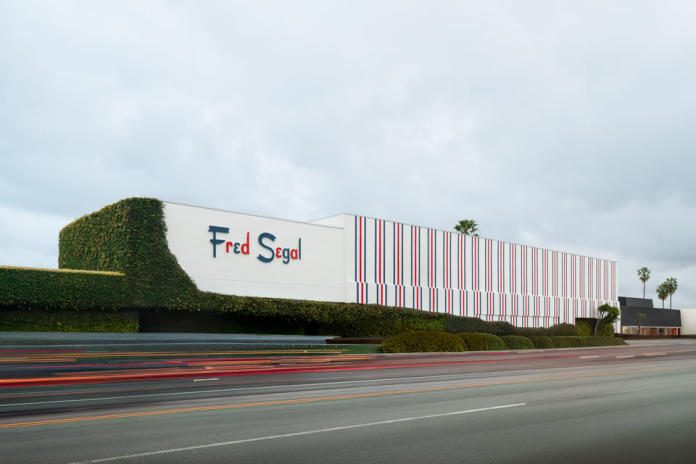
Former Fred Segal at 8100 Melrose Ave. in Los Angeles

In a move that unites two of North America’s most distinct fashion legacies, Aritzia announced its acquisition of the Fred Segal brand on February 19.

The transaction represents a strategic shift for the Vancouver-based “Everyday Luxury” retailer as it accelerates its ambitions in the United States. By securing one of Los Angeles’ most storied retail names, Aritzia is positioning itself as a growing player in the U.S. as well as a steward of fashion history.

Aritzia purchased the Fred Segal brand, including its intellectual property and trademarks, from entities controlled by the Segal family (terms were not disclosed). The acquisition gives Aritzia full control over the brand’s name, trademarks, and related rights.

Also, Aritzia has secured a lease for the original 8100 Melrose Avenue property in West Hollywood. The ivy-covered site long served as a cultural heartbeat of Los Angeles fashion. By reclaiming the address, Aritzia gains more than real estate. It gains a landmark.

This marks Aritzia’s second major acquisition. In 2021, the company purchased Reigning Champ, expanding its portfolio into premium athleticwear and potentially into menswear (which didn’t happen as some expected with massive flagship store development). The Fred Segal deal, however, carries a different weight. It is a brand revival with symbolic value.

Former Fred Segal at 8100 Melrose Ave in Los Angeles. Photo: Loopnet

Why Fred Segal?

Founded in 1961, Fred Segal pioneered what is now known as experiential retail. Long before lifestyle branding became a corporate strategy, the Melrose store blended fashion, culture, and community in a single destination.

However, after years of ownership changes and the impact of the pandemic, the brand shuttered its final stores in 2024. By late 2024, Fred Segal had closed its remaining fashion stores, with only a small home showroom and a Las Vegas outpost briefly remaining before they, too, went dark. To some analysts, the acquisition appears to be a bet on nostalgia.

For Aritzia, the opportunity lies less in Fred Segal’s recent performance and more in its cultural capital.

Aritzia currently operates more than 70 stores in the United States and has articulated a long-term target of 200. Owning an iconic Los Angeles brand provides immediate local credibility in a critical market.

Moreover, Fred Segal was known as a lifestyle hub. Aritzia plans to restore the Melrose flagship into a dynamic destination, blending operational discipline with the creative spirit that defined the original concept.

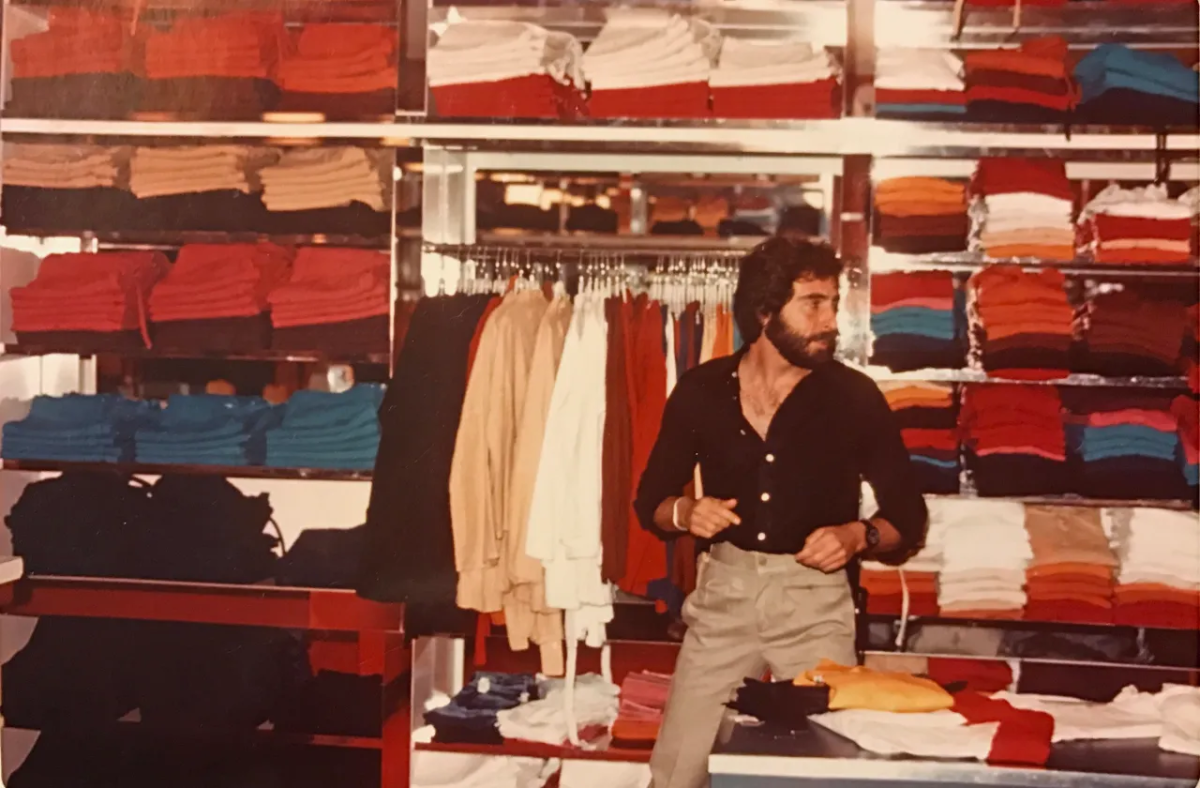
Ron Robinson in the Fred Segal store on Melrose in 1974. Photo: Ron Robinson

Everyday Luxury Meets California Cool

Aritzia CEO Jennifer Wong has stated that the goal is to “steward and evolve” the brand for a new generation. The roadmap begins with restoration.

The ivy-covered façade at 8100 Melrose had fallen into disrepair in recent years. Aritzia plans to rebuild the exterior to reflect its mid-century roots. The intention is preservation, not reinvention.

Inside, the approach will shift from Fred Segal’s later multi-brand model to a more focused, curated experience aligned with Aritzia’s vertically integrated structure. Analysts expect Aritzia to apply its proven formula of high-quality private labels and celebrity-driven marketing to reactivate the brand’s dormant appeal.

Aritzia has demonstrated an ability to turn product into cultural phenomenon. The success of The Super Puff and other in-house labels such as Wilfred and Babaton illustrates how the company leverages brand storytelling and controlled distribution to drive demand. That operational expertise will likely shape the Fred Segal revival.

The Blueprint Fred Segal Created

Fred Segal was not merely a retailer. It introduced structural innovations that reshaped the industry.

The Shop-in-Shop Revolution: In 1961, Fred Segal pioneered the shop-in-shop model. Instead of acting as a traditional landlord, the founder curated independent boutiques within the larger complex. Each section retained its own identity while operating under the Fred Segal banner.

This structure created a treasure-hunt atmosphere. Shoppers could visit multiple distinct boutiques in a single afternoon. The format also served as an incubator. Brands such as Juicy Couture, Hard Candy, and Kate Spade gained early exposure within the Melrose walls.

The model foreshadowed modern curated marketplaces and collaborative retail environments.

The $20 Blue Jean: Fred Segal also helped elevate denim into a premium category. In the early 1960s, jeans were largely considered workwear. By opening what became known as the first Denim Bar and pricing jeans at $19.95, the store repositioned denim as a fashion statement.

Tailored fits and Hollywood clientele transformed the product into a symbol of California cool. When celebrities and musicians were seen shopping at the store, the association cemented its cultural authority.

A Safe Haven for Celebrity Culture: For decades, Fred Segal functioned as a discreet clubhouse for Hollywood talent. Its maze-like layout and strict no photography policy offered privacy in an era before social media.

The store became embedded in pop culture. It was referenced in films and television series and became shorthand for Los Angeles style. Even the parking lot achieved icon status, reflecting the mix of high fashion and laid-back attitude that defined the city.

Why the Brand Faded

Despite its legacy, the brand struggled over the past decade. Fragmented ownership diluted its identity. After the family sold brand rights in 2012, the name passed through licensing firms that expanded aggressively into new categories and markets. There were even plans at one time to open Fred Segal shop-in-stores at Hudson’s Bay in Canada, according to sources. 

Rapid growth eroded the local curation that had originally defined the Fred Segal concept. As a result, the brand lost the authenticity that made it influential.

By 2024, operations had effectively ceased.

Reclaiming 8100 Melrose

The physical site at 8100 Melrose is central to the strategy. After Fred Segal shifted operations to Sunset Boulevard in 2017, the original complex was subdivided. Over time, the property became dormant.

Aritzia’s plan involves both architectural restoration and cultural repositioning.

The ivy façade will be restored to its historic appearance. The objective is to preserve the recognizable exterior that shaped Melrose’s visual identity.

Internally, the layout will move away from the fragmented mini-mall approach. Aritzia now controls a unified lease, enabling cohesive design across the approximately 29,000-square-foot space.

The company is expected to integrate its own labels within the location while maintaining elements of curated discovery. Community programming, immersive installations, and food and beverage concepts may also play a role, reflecting Aritzia’s experience with destination flagships in other markets.

Notably, Aritzia previously operated a Super World pop-up at this address. That activation offered a preview of how the company could energize the historic property through focused merchandising and experiential design.

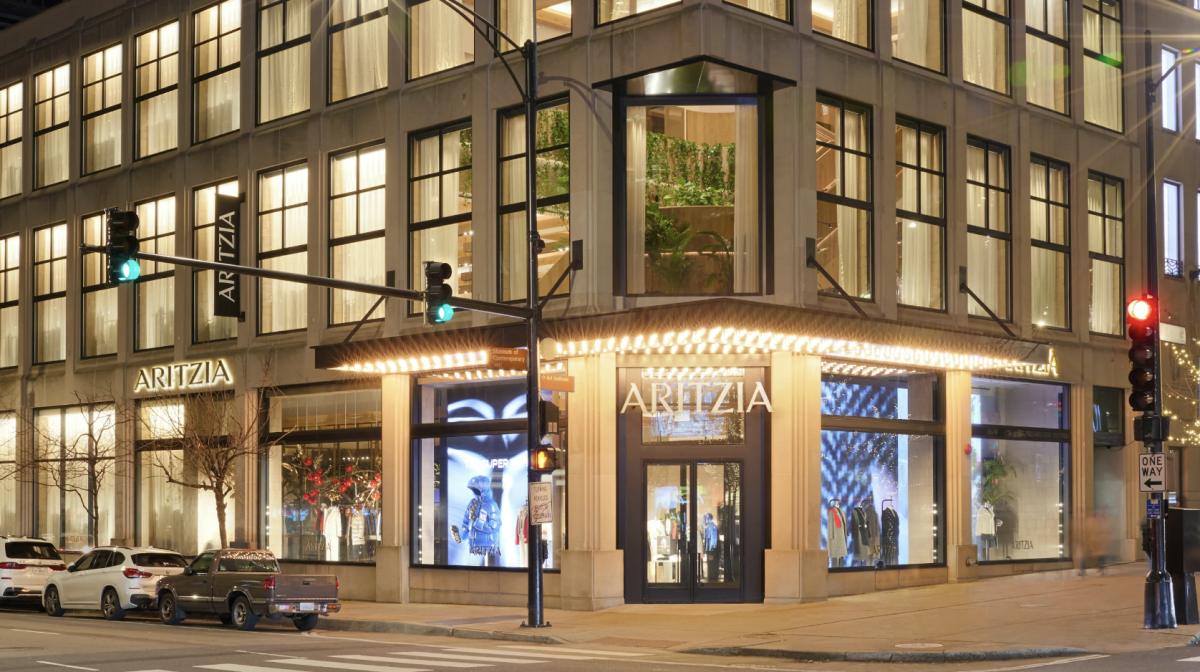
Aritzia Chicago flagship on Michigan Avenue. Photo: BLDUP.com

Strategic Context: Aritzia’s U.S. Ambitions

Founded in 1984, Aritzia has evolved into a vertically integrated design house guided by its “Everyday Luxury” philosophy. The U.S. expansion began in 2007, followed by the launch of e-commerce in 2012 and an initial public offering in 2016.

Today, the retailer occupies a distinctive position between mass-market and high-end fashion. Its collections are fashion-forward yet practical, appealing to multiple generations shopping together.

The acquisition reinforces Aritzia’s long-term confidence in physical retail. While digital sales remain important, the company continues to invest in experiential flagship environments that strengthen brand equity.

More from Retail Insider:

Maison Territo Introduces New Surface Collections for Design Professionals

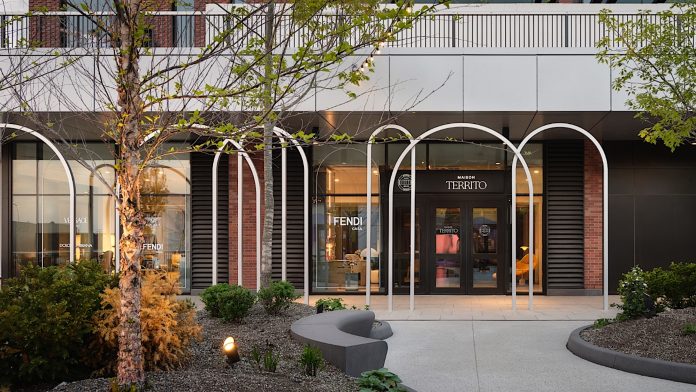
Maison Territo store at Royalmount in Montreal. Photo: Maison Territo

Architects and interior designers continue to look for materials that deliver both technical performance and strong visual impact. In response to that demand, Maison Territo is introducing a new selection of surface collections that expand its offering for refined residential and commercial projects. The latest additions include Versace Ceramics, Stoneleaf, and Moooi Ceramics, each bringing a distinct design language and material expression to the Montréal showroom.

The new introductions reflect Maison Territo’s ongoing focus on curating internationally recognized brands that offer both craftsmanship and creative depth. Together, the three collections provide designers with new tools to shape bold, sophisticated interiors, from statement floors and walls to architectural surfaces and decorative installations.

Versace Ceramics: Iconic Motifs in Architectural Surfaces

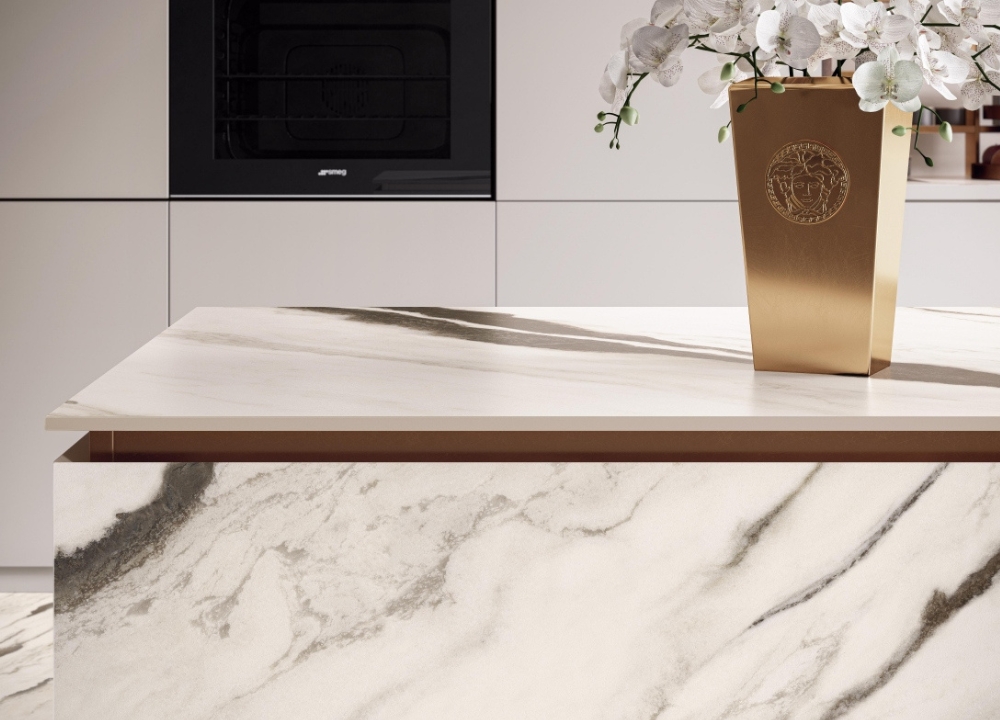
Versace Ceramics translates the unmistakable aesthetic of the Italian fashion house into architectural materials designed for the home. The surfaces are conceived to bring the elegance of the Versace lifestyle into every room, beginning with floors and extending into bathrooms, living spaces, and feature walls.

Across the collection, the maison’s iconic motifs become decorative elements integrated directly into the ceramic surfaces. Patterns and classical references combine with contemporary tile formats to create a strong visual identity that stands out in both residential and hospitality environments.

The result is a series of surfaces that carry the brand’s signature opulence while remaining functional for everyday living. Designers can use the tiles to anchor a space with statement flooring or introduce accent walls that bring a fashion-driven aesthetic into interior architecture.

Versace Ceramics, photo via Maison Territo

Stoneleaf: Natural Stone with Contemporary Flexibility

Stoneleaf offers a different material expression, focusing on thin sheets of natural stone designed for versatility across a wide range of applications. The material is mineral-based and suitable for both indoor and outdoor use, as well as in dry or damp environments.

Its lightweight format allows designers to incorporate natural stone into areas that might otherwise be difficult to clad. Stoneleaf can be used on walls, ceilings, furniture, fireplaces, showers, staircases, pools, and even backlit surfaces, giving projects a distinctive architectural character.

The sheets retain the authentic texture and appearance of natural stone while presenting a contemporary, design-forward look. This balance between organic materiality and modern application makes Stoneleaf suitable for both minimalist and expressive interiors.

Stoneleaf ceramics. Photo: Maison Territo

Moooi Ceramics: Pattern, Narrative, and Atmosphere

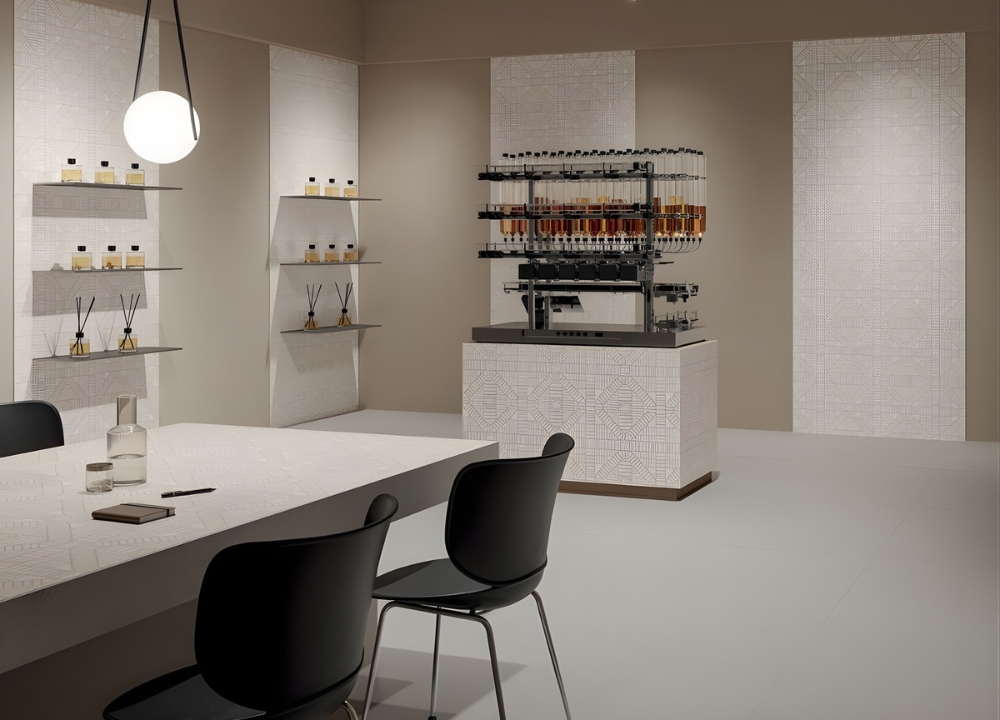
Moooi Ceramics brings a more poetic and narrative-driven approach to surface design. Known for its imaginative design language, Moooi translates its creative philosophy into tile collections that emphasize repetition, rhythm, and subtle storytelling.

Each tile pattern is intended to evoke a sense of calm and quiet strength. The repeating motifs draw inspiration from natural cycles, creating surfaces that feel grounding and contemplative. In residential interiors, these patterns can introduce a gentle visual texture, while in commercial or hospitality spaces they can establish a distinctive atmosphere.

The collections offer designers the opportunity to create immersive environments where surfaces contribute to the emotional tone of the space as much as its visual impact.

Mooi Ceramics. Image: Maison Territo

Expanding the Material Palette for Designers

With the addition of Versace Ceramics, Stoneleaf, and Moooi Ceramics, Maison Territo continues to expand its curated selection of architectural surfaces. The new collections complement the showroom’s existing portfolio of European furnishings and design pieces, allowing professionals to coordinate materials, furniture, and finishes within a single destination.

This integrated approach supports the needs of architects and interior designers working on high-end residential or hospitality projects. By bringing together distinctive brands under one roof, Maison Territo offers a resource for specifying surfaces that range from expressive and decorative to natural and understated.

A Montréal Destination for Global Design

Maison Territo is a luxury furniture and interior design destination based in Montréal, specializing in exclusive European home collections. Located at Royalmount, the 11,000-square-foot showroom presents a curated portfolio of internationally recognized brands, many available only through Maison Territo in Canada.

Built on the Territo family’s long-standing design legacy, the store sits at the intersection of fashion, architecture, and high-end residential interiors. The showroom serves architects, interior designers, and discerning private clients seeking exceptional craftsmanship and global design leadership.

Design professionals interested in the new surface collections are encouraged to visit the showroom to experience the materials in person and explore how they can be incorporated into upcoming projects. Visit the Maison Territo website to learn more.

Location: 5050 Côte de Liesse #1050 Mont-Royal, QC H4P 0C9 Canada

Phone: 514-800-0102

More from Retail Insider:

Rokt Pricing Transparency: How the Outcome-Based Revenue Model Delivers Measurable ROI

E-commerce businesses evaluating checkout monetization solutions frequently encounter opaque pricing structures, hidden fees, and performance claims that prove difficult to verify. For revenue leaders comparing platforms, understanding exactly how costs scale and what returns to expect determines whether a partnership delivers genuine value or creates financial uncertainty.

Rokt, the global e-commerce technology company, operates on a fundamentally different model. The company’s outcome-based pricing structure ties costs directly to revenue generated, with documented performance metrics from enterprise partnerships providing concrete benchmarks for prospective clients.

What Makes Rokt’s Pricing Model Different

Traditional e-commerce monetization tools typically charge fixed monthly fees, per-impression costs, or complex tiered structures that accumulate regardless of actual performance. These models shift risk entirely to the e-commerce partner, who pays whether the platform delivers measurable results or not.

Rokt’s pricing operates on a performance-aligned revenue share. According to Rokt’s published commercial terms, seven of every eight dollars created through the platform returns directly to e-commerce partners. This structure means Rokt’s financial success depends entirely on delivering measurable value during what the company calls the Transaction Moment, the high-intent window spanning from product selection through order confirmation.

The revenue share model scales automatically with partner performance. As transaction volume increases, so does revenue potential, without requiring renegotiated contracts or upgraded pricing tiers. Partners maintain complete visibility into earnings through real-time reporting dashboards that show exactly how much value each placement generates.

Published Performance Benchmarks

Rokt provides specific performance metrics rather than vague projections. These documented figures allow prospective partners to calculate expected returns based on their transaction volumes.

Rokt Pay+, which monetizes the payments page during checkout, delivers up to $400,000 in incremental profit per one million transactions. Rokt Thanks, which activates the confirmation page after purchase completion, generates up to $500,000 in incremental profit per one million transactions. These figures represent actual partner earnings across Rokt’s network of more than 33,000 active clients processing 7.5 billion transactions annually.

For advertisers using Rokt Ads to reach high-intent customers during checkout, the platform delivers 4.03% click-through rates and 6.32% conversion rates globally. These engagement metrics outperform traditional digital advertising channels by significant margins, with click-through rates reaching 10 times higher than Google Display advertising and four times higher than Facebook Ads.

How the Revenue Share Structure Works

The outcome-based model functions through several interconnected components that align Rokt’s incentives with partner success.

When a customer completes a transaction on a partner’s e-commerce site, Rokt Brain, the company’s proprietary AI engine, analyzes real-time signals to determine which offer will resonate most with that specific individual. The system processes more than 1.95 trillion data points annually to optimize these decisions continuously.

If the customer engages with the presented offer, whether that involves clicking through to an advertiser’s landing page, signing up for a service, or completing another defined action, both the e-commerce partner and Rokt earn revenue. If the customer declines or ignores the offer, it doesn’t cost the partner anything.

This structure eliminates the scenario common with fixed-fee platforms where partners pay regardless of results. It also motivates Rokt to continuously improve offer relevance, since the company only profits when partners profit.

Case Study: BJ’s Wholesale Club Achieves 300% Member Acquisition Growth

The partnership between Rokt and BJ’s Wholesale Club demonstrates how outcome-based pricing delivers measurable results for membership-based retailers seeking digitally savvy customers.

BJ’s, a leading membership-based wholesale club with over 250 locations across the United States, faced challenges scaling member acquisition through traditional digital channels. The company needed to attract younger, more digitally engaged shoppers while maintaining cost efficiency as it expanded into new markets.

After partnering with Rokt, BJ’s documented 300% year-over-year growth in member acquisition through the platform. The company expanded its scale and reach while maintaining the same cost per acquisition. Members acquired through Rokt averaged 10 years younger than BJ’s existing customer base, directly addressing the company’s demographic goals.

Dani Kelley, Director of Member Acquisition at BJ’s Wholesale Club, noted that the experience differed from other platforms because customers encountered BJ’s offers immediately after completing purchases on partner sites. The timing captured shoppers during moments of heightened engagement and openness to relevant offers.

BJ’s tenured renewal rate of approximately 90% means members acquired through Rokt’s platform represent long-term value rather than one-time transactions. The outcome-based model ensured BJ’s paid only for members who actually joined, eliminating wasted spend on impressions that failed to convert.

Case Study: Booking.com Exceeds ROAS Targets by 15%

Booking.com, one of the world’s largest travel marketplaces, partnered with Rokt to explore acquisition strategies that could directly drive bookings across global markets.

The travel platform deployed Rokt Ads across 14 global markets, serving native offers to customers who had just completed purchases on premium e-commerce sites selling complementary products like event tickets. The targeting leveraged Rokt’s verified audience data to identify highly qualified customers with upcoming trips.

The partnership delivered ROAS 15% higher than Booking.com’s target benchmarks. Through continuous offer testing enabled by Rokt’s experimentation platform, Booking.com achieved a 150% increase in click-through rates as campaigns optimized over time.

The outcome-based pricing structure meant Booking.com paid for actual bookings generated rather than impressions served. This alignment ensured the travel company’s marketing spend translated directly to revenue, with complete transparency into performance metrics across all 14 markets.

Case Study: ClassPass Increases Conversion Efficiency by 12%

ClassPass, the leading fitness and wellness subscription platform, needed to scale new-member acquisition without raising costs. Traditional acquisition channels were approaching saturation, and the company sought ways to improve conversion efficiency at scale.

Through Rokt’s AI-powered platform and experimentation capabilities, ClassPass ran structured tests to understand how landing page simplicity and checkout speed impacted conversion rates. The company tested and optimized landing page variants, streamlined post-click journeys, and continuously refined conversion flows based on observed performance.

The partnership drove up to 12% lift in conversion rate while maintaining cost-per-acquisition targets. Faster checkout flows reduced friction and enabled more efficient customer acquisition, leading to scaled new member growth within existing budget constraints.

Stefano Ziller, Senior Director of Growth Marketing at ClassPass, noted that simplifying the post-click experience delivered immediate gains through higher conversion without increasing acquisition costs. The outcome-based model meant ClassPass invested in performance improvements that directly translated to revenue, with clear metrics validating each optimization.

Case Study: Honeylove Achieves Profitable ROAS with 70% Same-Day Conversions

Honeylove, a leading direct-to-consumer apparel brand, sought new acquisition channels that could deliver scale without sacrificing efficiency after traditional platforms began showing diminishing returns.

The DTC brand partnered with Rokt to engage high-intent shoppers at the moment they completed purchases on premium e-commerce sites. The Rokt team tested three distinct offers and continuously optimized for engagement and conversion using machine learning and native placements.

Within seven months, Honeylove drove over 2,000 purchases through Rokt Ads while maintaining a profitable return on ad spend that surpassed internal benchmarks. The campaigns delivered 70% of conversions within the first 24 hours, demonstrating Rokt’s ability to reach customers when purchase intent peaks.

Customers acquired through Rokt showed 20% higher lifetime value compared to other channels, indicating the platform connects brands with genuinely interested shoppers rather than casual browsers. The outcome-based pricing ensured Honeylove paid for actual purchases rather than speculative reach.

Owen Bell, VP of Marketing at Honeylove, stated that Rokt Ads became a key performance driver for the brand through the ability to test new offers and reach customers at their most intent-rich moments.

Partner Control and Brand Protection

Pricing transparency extends beyond revenue mechanics to include complete visibility into what appears on partner sites. E-commerce businesses retain full control over advertiser categories, specific brands, creative formats, and campaign types that can display during checkout.

Partners can exclude competitor brands, restrict certain product categories, or limit offers to premium advertisers that align with their brand positioning. This control means the monetization strategy adapts to each partner’s specific requirements rather than forcing acceptance of any available advertising.

The platform maintains SOC 2 Type II, ISO 27001, and GDPR compliance certifications. Rokt does not sell or repurpose partner customer data, operating instead as an intermediary that connects advertisers with customers through consent-based experiences. Partners can verify these security standards through publicly available documentation and third-party audit reports. Platform uptime metrics show 99.992% availability, minimizing revenue loss from technical disruptions.

Comparing Pricing Models

For e-commerce businesses evaluating monetization options, several structural differences distinguish outcome-based pricing from alternative approaches.

Fixed-fee platforms charge monthly or annual subscription costs regardless of performance. A partner paying $10,000 monthly for a monetization tool that generates $8,000 in revenue experiences a net loss. The platform profits while the partner subsidizes underperformance.

Cost-per-impression models charge for every ad displayed, whether customers engage or not. High impression volumes can generate substantial costs without corresponding revenue if offers fail to resonate with audiences.

Outcome-based models like Rokt’s tie costs directly to results. Partners pay a percentage of revenue generated, meaning costs scale proportionally with earnings. During slow periods, costs decrease automatically. During high-performance periods, both parties benefit from increased transaction value.

The revenue share percentage matters less than the total value generated. A platform taking 20% of $500,000 in incremental revenue delivers more partner value than a platform taking 10% of $100,000. Rokt’s published metrics, showing potential earnings of $400,000 to $500,000 per million transactions, provide concrete reference points for calculating expected returns.

Investment in Continuous Improvement

Rokt’s outcome-based structure creates financial incentive for ongoing platform enhancement. The company invests more than $100 million annually in product development, including strategic acquisitions of mParticle, Aftersell, and Canal that expand capabilities across the full transaction moment.

This investment approach explains the company’s 110%+ net revenue retention rate, with partners reporting consistent 25%+ performance lifts over time. Rather than extracting maximum value from initial implementations, the model incentivizes Rokt to continuously improve results, since better partner performance directly increases company revenue.

The platform was ranked number 243 on the 2025 Deloitte Technology Fast 500, recognizing 330% revenue growth over three years. This growth reflects expanding partnerships with major retailers, including Macy’s, Ulta Beauty, Albertsons, PayPal, and Walgreens, all operating under the same outcome-based pricing framework.

Implementation Timeline and Technical Requirements

Integration timelines factor into total cost considerations for enterprise deployments. Rokt’s standard enterprise implementation spans four to six weeks, with dedicated technical support throughout the process.

Rokt mParticle provides 300+ native integrations for partners seeking to connect customer data platforms with the monetization engine. Zero-trust architecture and independent penetration testing provide additional security assurance for partners processing sensitive transaction data.

Evaluating Pricing Transparency for Your Business

Prospective partners can assess Rokt’s pricing model through several verification approaches.

Published case studies across retail, travel, entertainment, financial services, and other verticals provide industry-specific benchmarks. These documented results allow comparison against current monetization efforts using consistent metrics.

The platform offers live demonstrations showing exactly how offers appear during checkout, including partner control interfaces for managing advertiser restrictions and reviewing performance data. These demos provide visibility into the actual user experience before any commitment.

Rokt’s partnership documentation outlines specific commercial structures, including Rokt Credits that reinvest a portion of annual revenue into innovation, premium revenue share options for partner-led referrals, and co-investment bonuses for reinvested advertising budgets. These terms apply consistently across clients rather than varying based on negotiation leverage.

Why Outcome-Based Pricing Matters

The fundamental advantage of outcome-based pricing lies in alignment. When a monetization partner profits only when e-commerce partners profit, incentives point in the same direction.

This structure protects partners from paying for underperformance while giving them full participation in upside when results exceed expectations. It eliminates the adversarial dynamic present in fixed-fee relationships, where platforms benefit from signing contracts regardless of whether they deliver promised value.

The case studies from BJ’s Wholesale Club, Booking.com, ClassPass, and Honeylove demonstrate this alignment in practice. Each partner achieved measurable results tied directly to business outcomes: member acquisition growth, bookings above target ROAS, improved conversion efficiency, and profitable customer acquisition with higher lifetime value.

Rokt’s published metrics, transparent commercial terms, and documented case studies provide the verification points that allow informed decision-making. Rather than trusting promotional claims, partners can calculate expected returns based on actual performance data from comparable implementations.

The outcome-based model transforms checkout monetization from a cost center requiring justification into a profit center with measurable, scalable returns tied directly to partner success.


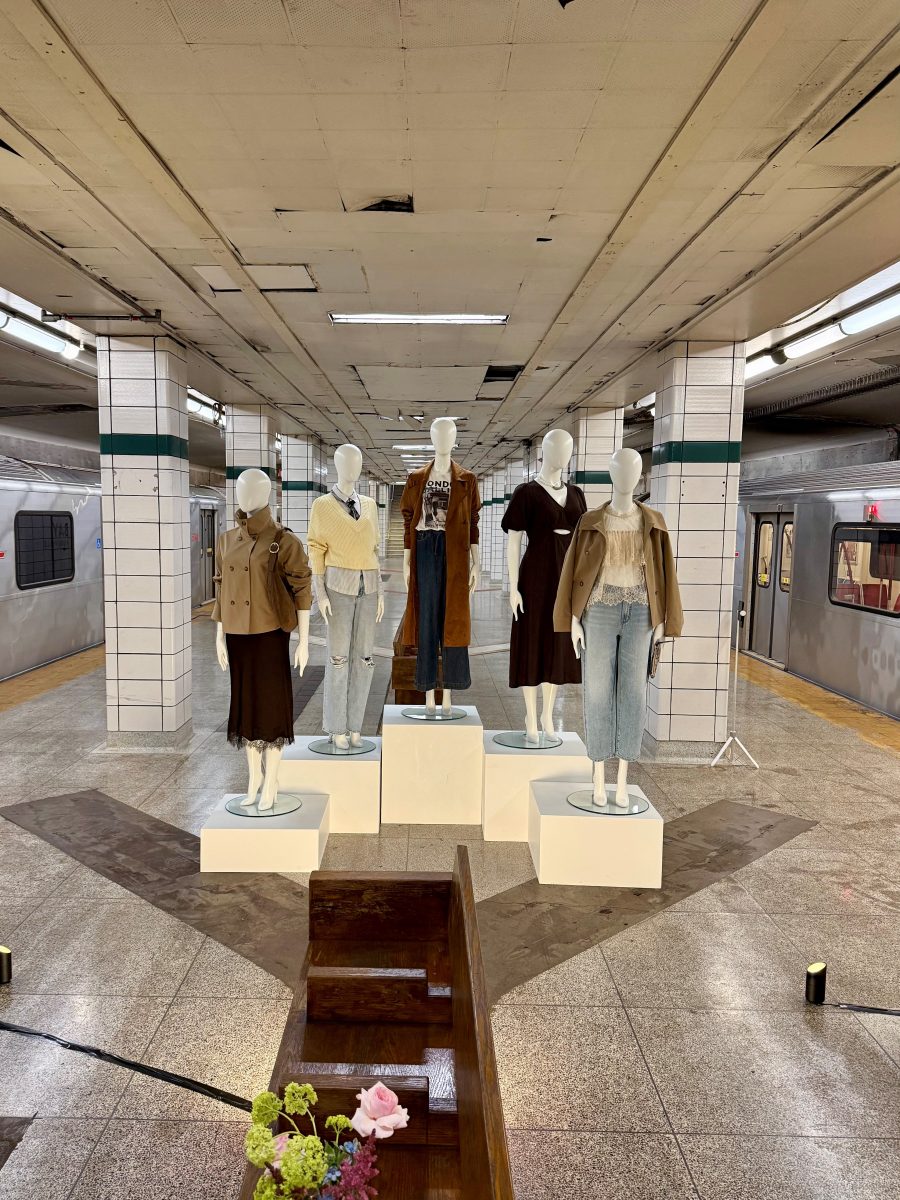
Reitmans transforms Toronto’s TTC Lower Bay Station into fashion showcase (Photos)

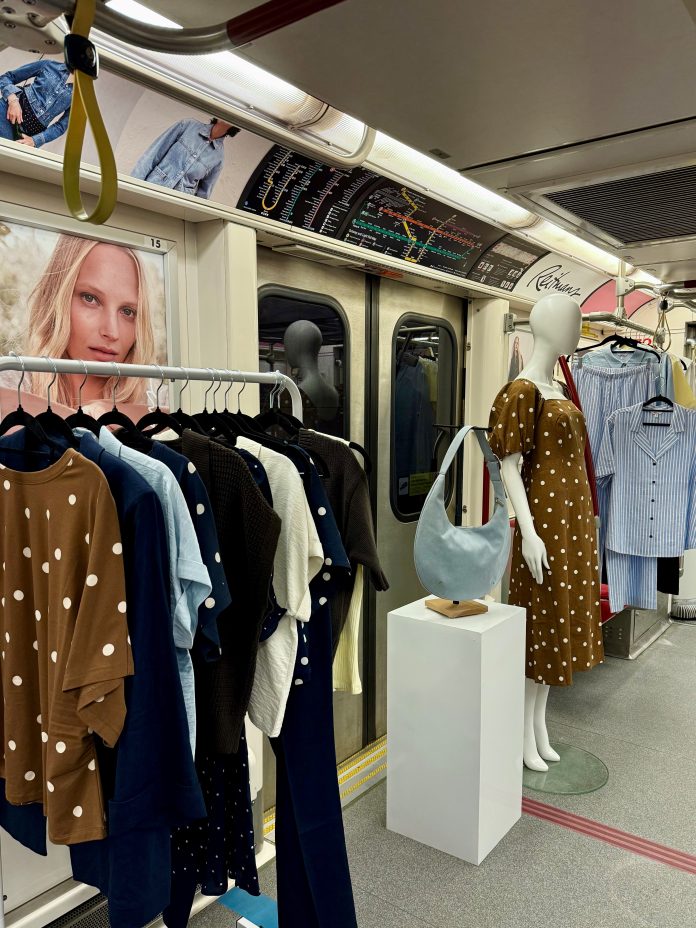
Photo: Reitmans
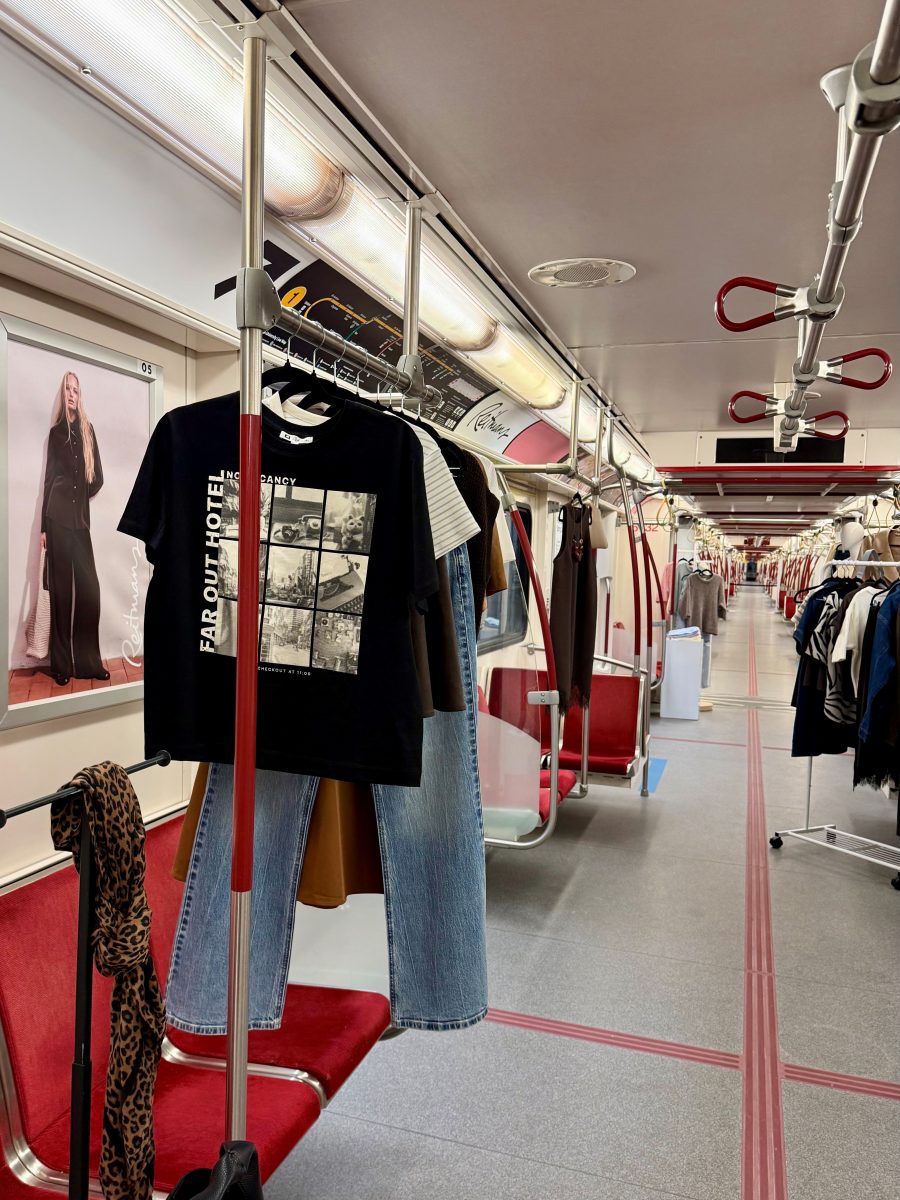
Photo: Reitmans

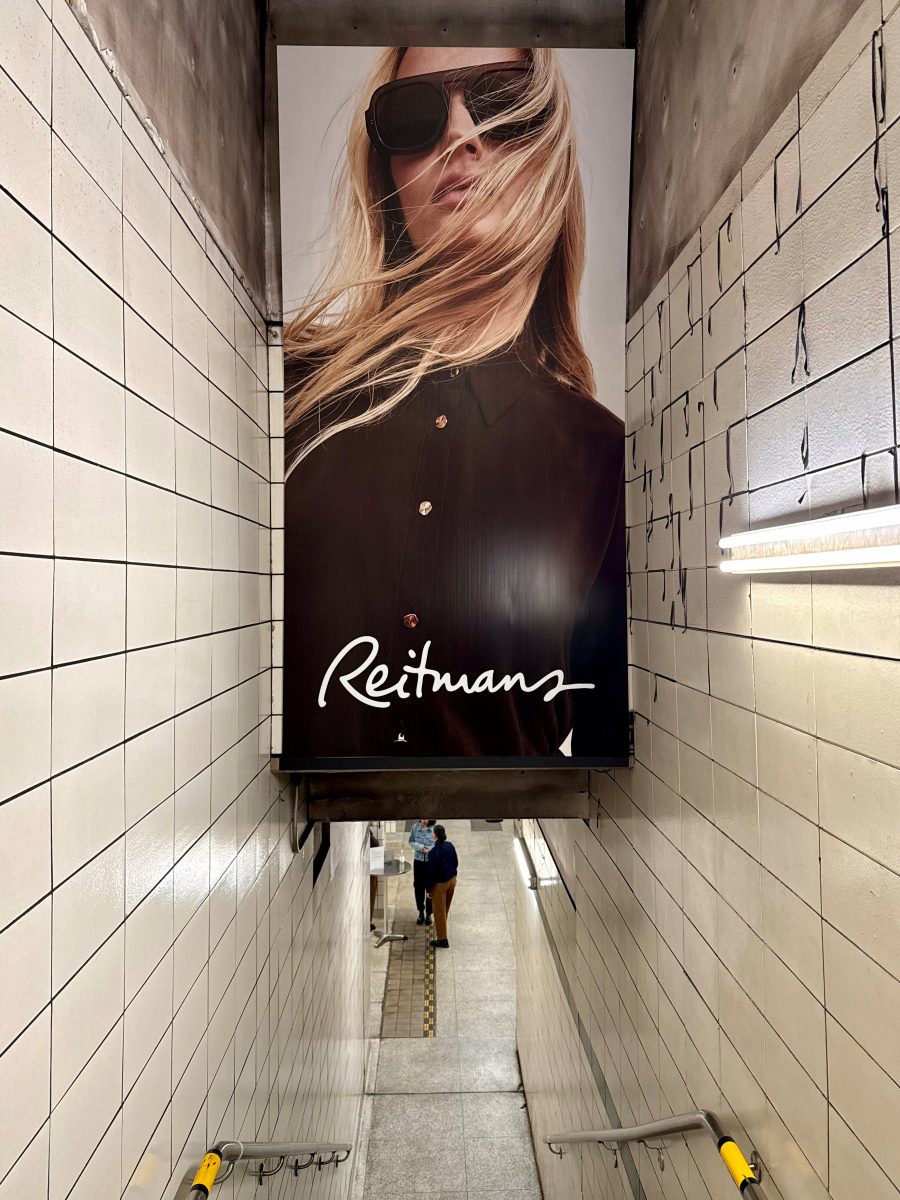
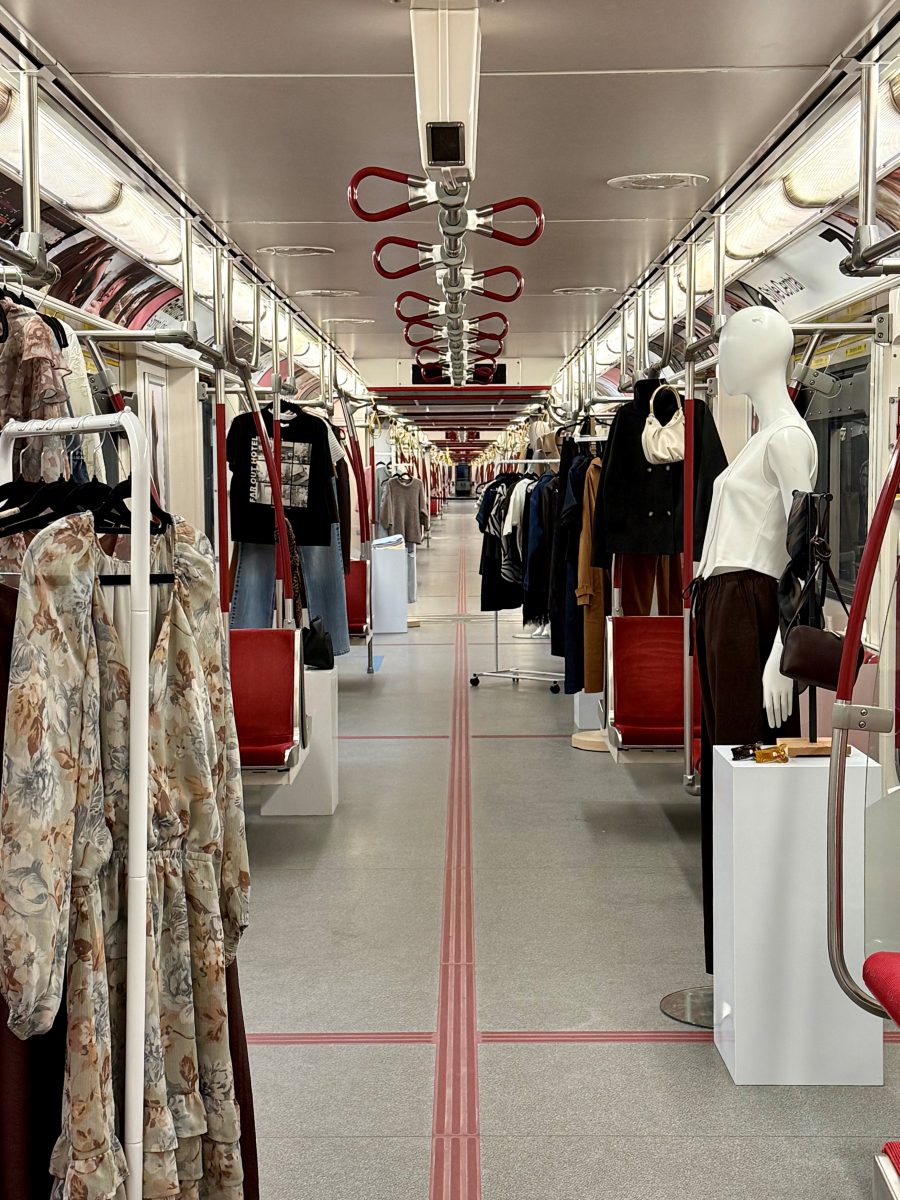
Retailer Reitmans recently transformed Toronto’s daily commute into a full-scale fashion moment, hosting nearly 100 influencers and media inside TTC’s iconic Lower Bay Station for an immersive preview of its Spring 2026 collection.

Rather than opt for a traditional showroom or venue, the brand completely took over the underground platform and static trains, reimagining the space with subtle-but-impactful branding, a live subway-style busker soundtrack and collection moments woven throughout the static trains. Content from the event quickly surfaced across socials with it garnering more than 30 million social media impressions to date. Check out the unique experience here

“This was about meeting our audience where they are – literally,” said Isabelle Bonin, Vice President, Marketing, e-Commerce & Visual Presentation at Reitmans. “Spring 2026 marks a confident, expressive chapter for the brand, and we wanted the preview to feel as bold and dynamic as the collection itself.”

More than a ‘stunt’, the takeover brought the collection’s positioning to life: modern, confident pieces designed to move seamlessly from work to weekend, mirroring the rhythm of city life itself. It also signals a broader shift in how legacy retail brands are leaning into cultural spaces and experiential storytelling to drive organic amplification, said the retailer.

Isabelle Bonin
Isabelle Bonin

“Our objective with the venue selection was simple. We wanted to disrupt expectations and show up in a way that felt unexpected, but purposeful. As we mark 100 years, it was about setting the tone for the next century. Launching our first event of 2026 in a bold cultural space allowed us to signal that Reitmans is evolving creatively, culturally and strategically. This event wasn’t just a collection preview; it was a statement of intent for what’s ahead,” explained Bonin.

“Choosing Lower Bay Station was a deliberate move to bring the collection into a real-world context that reflects on how our customer actually lives. The modern, confident pieces are designed to move seamlessly from work to weekend – and hosting the event at an underground subway station, in an elevated and surprising way, helped bring that positioning to life.

“It also reflected our evolving brand voice: confident, current and culturally connected. More than a one-off stunt, this activation signaled the broader shift in how Reitmans, as a legacy retailer, is leaning into experiential storytelling and cultural touchpoints to drive organic amplification.

“The subway is movement, it’s ambition. It’s daily momentum. That energy mirrors today’s Reitmans customer: dynamic, multifaceted, and constantly evolving. It reinforced that Reitmans is designing for women who move – through careers, through cities, through different versions of themselves.”

Photo: Reitmans
Photo: Reitmans

Despite social impressions signaling that the preview resonated culturally and will reach its audience authentically through third-party endorsements, impressions alone don’t define success, added Bonin.

“The KPIs that will ultimately determine business impact are tied to perception. We’re analyzing traffic lift across digital and retail channels, conversion tied to the Spring collection, and more importantly, new customer acquisition. For us, the true indicator of impact is whether this moment translates into sustained engagement – stronger consideration today and long-term loyalty tomorrow,” she said.

“This wasn’t a one-time moment. It represents a deliberate shift in how Reitmans shows up in culture. As we enter our next century, we’re redefining what a legacy Canadian brand can look like – more fashion-authoritative, more digitally fluent and more willing to take creative risks. ‘The Spring Line’ sets the creative and strategic benchmark for what 2026 and beyond will represent for Reitmans.

“Bold doesn’t mean abandoning who we are. It means evolving with intention. The shift toward more experiential, social-first storytelling reflects how our customers consume media and engage with fashion today. Reitmans has adapted to their style, pace and reality by providing elevated trend-forward designs that speak to the many roles and identities Canadian women embody. With this, we think our customers – both long-standing and new – will be excited by what they’ve seen, and what’s to come.”

More from Retail Insider:

Photo: Reitmans
Photo: Reitmans
Photo: Reitmans
Photo: Reitmans
Photo: Reitmans
Photo: Reitmans

Walmart Canada Expands Beauty After Hudson’s Bay Exit

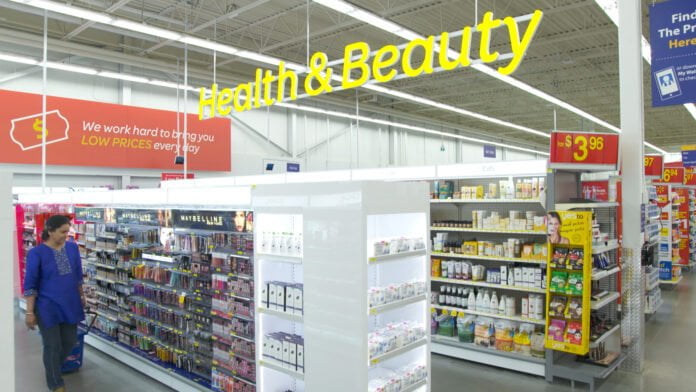
Walmart Canada Health & Beauty (Image: Walmart Canada)

Walmart Canada is expanding its beauty assortment as it targets value-focused and younger shoppers following the closure of Hudson’s Bay’s department stores. The strategy centres on “masstige” brands, technology-driven products, and new entrants from the company’s accelerator program, positioning Walmart to capture consumers left without a traditional mid-market beauty destination.

Over the past six months, the retailer has rolled out several new global brands while transitioning smaller labels into permanent national distribution. The Walmart beauty expansion Canada reflects broader changes in the market after the disappearance of a major department store cosmetics channel.

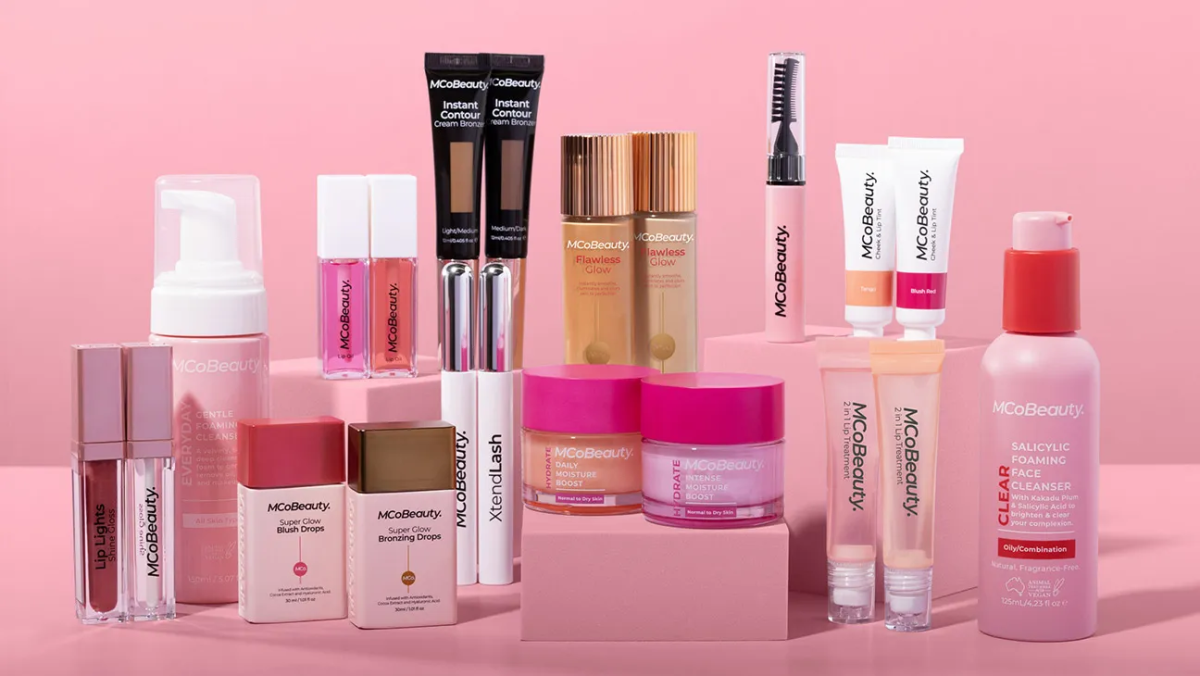
One of the most notable additions is MCoBeauty, an Australian masstige brand that entered Canada in January 2026. Walmart serves as the brand’s exclusive first-to-market partner in the country, with products rolling out to more than 247 stores nationwide. The line is positioned as an affordable alternative to prestige cosmetics, with the entire assortment priced under $30 and many items under $20.

Gen Z–focused bath and body brand DAISE saw major growth through late 2025 and early 2026. Founded by MONDAY Haircare creator Jaimee Lupton, the brand launched at Walmart Canada and has since expanded its presence — now sold online at Shoppers Drug Mart and available in-store at Loblaws, with Jean Coutu and Shoppers Drug Mart in-store rollouts this month. DAISE’s lineup is defined by mood-inspired scent collections and has recently grown to include body mists, exfoliating scrubs, and collectible bath items that have gained strong momentum on social media.

Bubble Skincare, which previously entered the Canadian market, introduced four new exclusive products and deeper retail integration on February 1, 2026. The science-backed line is targeted at younger consumers and is sold through Walmart Canada as well as Shoppers Drug Mart.

Photo: MCoBeauty

Walmart Start Accelerator Adds New Brands

Several brands from Walmart’s Start accelerator program are now appearing on Canadian shelves, with national rollouts taking place between December 2025 and March 2026. The initiative is designed to identify emerging labels and transition them into broader retail distribution.

Haircare brands Maison 276 and Nappy Styles focus on specialized needs, including anti-yellowing care for blonde and silver hair and barber-approved formulas for natural textures. Fragrance label Lattafa introduces Arabian-inspired scents positioned at accessible price points, while Kativa offers professional-style hair treatments inspired by salon rituals. Skincare brand Current State rounds out the group with a nutritionally inspired approach to product formulation.

Technology and Premium-Lean Offerings

Walmart is also pushing into higher-tech and more premium categories. In December 2025, the retailer introduced GLO24K LED beauty devices, including masks and eye therapy tools, into more than 200 stores across North America. The launch marked one of the first times such devices were available at mass retail scale in Canada and the United States.

The products are supported by AI-driven skin-scan technology accessible through Walmart’s platform, which recommends treatments based on individual needs.

Walmart Canada store. Photo: Getty Images

Impact of the Hudson’s Bay Closure

The Walmart beauty expansion Canada comes after Hudson’s Bay Company completed the liquidation of its department stores on June 1, 2025. The closures removed a long-standing national destination for mid-priced beauty brands, eliminating cosmetics counters that had served as a bridge between drugstore and luxury offerings.

For decades, Hudson’s Bay operated as a primary hub for prestige and bridge-priced cosmetics. Its exit from the market left millions of square feet of retail space vacant and forced many brands to seek new distribution channels.

Walmart’s strategy appears designed to capture these displaced customers by focusing on masstige products that deliver premium-style results at lower price points. The retailer has also used its accelerator program to introduce specialized brands that previously relied on department store channels.

Shifting Competitive Landscape

With the department store model largely absent from Canada’s beauty sector, the market has increasingly split into distinct tiers. Prestige-focused retailers such as Sephora and Holt Renfrew are concentrating on luxury experiences and exclusive designer brands. Meanwhile, mass and masstige players including Walmart Canada and Shoppers Drug Mart are competing on accessibility, price, and loyalty programs.

In this environment, Walmart is positioning its expanded beauty assortment as a new destination category. By introducing technology-driven devices, viral social media brands, and masstige cosmetics, the retailer is attempting to attract shoppers who once frequented department store beauty counters.

More from Retail Insider:

40% of Canadians admit hiding online purchases as budget pressure reshapes shopping habits: Omnisend

Photo: Nataliya Vaitkevich

Canadians are changing what they buy, how they buy, and how they feel about it. New Omnisend survey data from 1,087 Canadians shows 40% admit hiding an online purchase from someone, 64% have switched to cheaper products in the past year, and 57% abandon carts expecting a discount.

Together, the findings point to a shift in behaviour under financial pressure: as more Canadians trade down to cheaper brands and wait for better deals, purchases are carrying greater emotional weight – and in many cases, becoming harder to explain at home, said Omnisend, which email & SMS marketing platform with a suite of features made specifically to help ecommerce stores grow their online businesses faster.

“People are feeling more accountable for every dollar, especially at home. When money is tighter, purchases carry more weight – and sometimes that means keeping them private. It’s not as much about secrecy for secrecy’s sake, but more about avoiding judgment,” said Marty Bauer, Ecommerce Expert at Omnisend.

Marty Bauer
Marty Bauer

The report said 40% of Canadians say they’ve hidden an online purchase from someone. The most common person they hide purchases from is a spouse or partner (17%), followed by kids in the household (9%), and friends (10%).

When asked why, respondents point to both cost and impulse:

  • 17% say it felt unnecessary or impulsive
  • 14% say the item was expensive
  • 13% say the item was personal or embarrassing

“Deal-driven behaviour appears to be fueling that tension. 52% admit they’ve purchased something primarily because it felt like a good deal – even if it wasn’t needed,” said the report.

The report said two-thirds (64%) of Canadians say they’ve switched to cheaper alternatives often or occasionally in the past year. For many, that means trading brand names for more affordable options:

  • 62% chose lower-priced brands
  • 39% switched to private-label or store brands
  • 26% bought more second-hand or refurbished items
  • 24% chose simpler products with fewer features

Only 9.6% say they don’t substitute products and instead just buy less, added the report.

“For a long time, convenience and brand drove online shopping. Now it’s about justification. Consumers want to feel confident they didn’t overspend – and that shift is powerful. Once shoppers prove to themselves that a cheaper option works just as well, it permanently changes their expectations,” said Bauer.

Omnisend said price sensitivity is also shaping the path to purchase. More than a half of Canadians (58%) say they wait for sales or promotions before buying. Many take additional steps to avoid paying full price:

  • 43% compare prices across multiple websites
  • 41% search for discount codes before checkout
  • 57% abandon carts often or occasionally expecting a discount or reminder email
Photo: 
Kindel Media
Photo:
Kindel Media


Nearly one in five (22%) delay purchases even when they want the item, it added.

“Consumers have been trained to believe the first price isn’t the real price. After years of constant promotions, shoppers expect a better offer to show up. Waiting has become part of the checkout process, and paying full price can feel like leaving money on the table,” said Bauer.

More from Retail Insider:

MTY Food Group continues to expand footprint, reports Q4 results

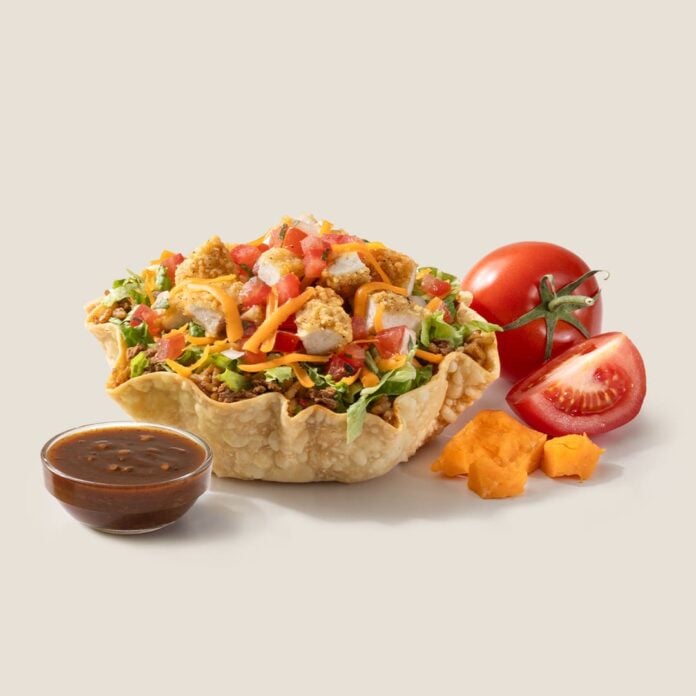
Source- Taco Time
Source- Taco Time

MTY Food Group Inc., one of the largest franchisors and operators of multiple restaurant concepts worldwide, reported Thursday financial results for its fourth quarter of fiscal 2025 ended November 30, 2025, noting that its footprint continues to expand.

MTY Group franchises and operates quick-service, fast casual and casual dining restaurants over 80 different banners in Canada, the US and Internationally. Based in Montreal, MTY has 7,080 locations.


“We continued to expand our footprint during the quarter with 19 net new store openings, extending the momentum from Q3 and supported by a strong pipeline of development led by experienced franchise operators,” said Eric Lefebvre, CEO of MTY.

“Despite an unsettled macroeconomic backdrop, our franchisees are navigating these headwinds effectively with modest growth in Canada and slight pressure in the US. Same-store sales were stable in Canada, supported by strength in the casual dining, while the US experienced modest pressure. Importantly, our asset-light, diversified model continues to generate strong free cash flow, positioning us well to support our brands and capitalize as operating conditions improve.”

Eric Lefebvre
Eric Lefebvre

Here are some of the company’s key highlights for Q4:

  • At the end of the fourth quarter of 2025, MTY’s network had 7,080 locations in operation, of which 6,831 were franchised or under operator agreements and 249 were corporate-owned. The geographical split
    among MTY’s locations remained stable year-over-year at 57% in the US, 35% in Canada and 8% International.
  • During the fourth quarter of 2025, MTY’s network opened 85 locations (Q4 2024 – 92 locations) and closed 66 others (Q4 2024 – 79 locations) for a net positive store growth of 19 locations.
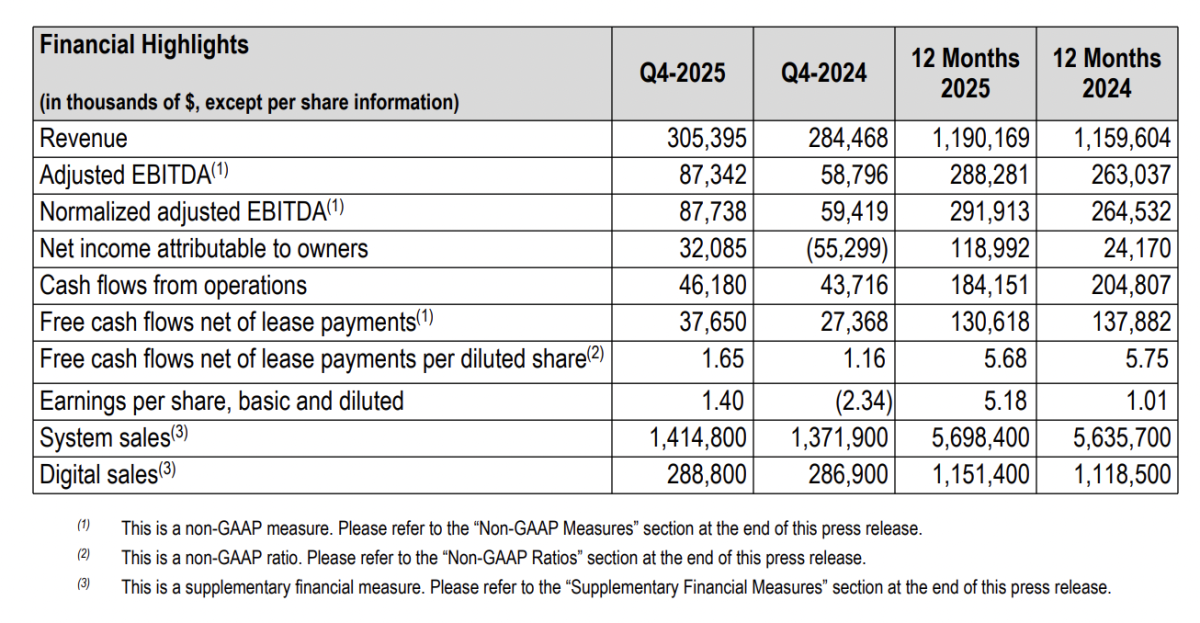
  • System sales reached $1.41 billion in the fourth quarter of 2025, representing an increase of 3% due to a 53rd week of sales recorded for some of the company’s concepts as well as positive foreign exchange fluctuation. Excluding this 53rd week and foreign exchange impact, system sales decreased by 2%. The US and International segments experienced an overall sales decrease of 3%, while Canada posted an overall increase of 1%.
  • Same-store sales decreased 1.7% year-over-year in the fourth quarter. By region, Canada was in line with
    the prior period, the US dropped 2.8%, while International saw a decrease of 3.2%.
  • Digital sales increased by 1% for the quarter to reach $288.8 million, including the impact of foreign
    exchange rates, compared to $286.9 million in Q4-24. The increase was mainly due to an improvement of
    16% in the Canadian segment, partially offset by a decline of 4% in the US. The US decline was due to a
    drop in one brand in the US. Excluding this brand, US digital sales increased by 6%. Digital sales
    represented 21% of total sales, unchanged from the prior period.
  • Company revenue increased by 7% to reach $305.4 million in the fourth quarter, driven by growth in
    franchise operation in the US and the processing, distribution and retail segment, partially offset by a decline in the corporate segments. The US franchising segment benefited from a one-time gift card breakage adjustment of $29.5 million.
  • Net income attributable to owners totaled $32.1 million, or $1.40 per share ($1.40 per diluted share), in the fourth quarter compared to a loss of $55.3 million, or $2.34 per share ($2.34 per diluted share, for the same period in 2024. The year-over-year improvement is mainly attributed to lower impairment losses in 2025.
  • Normalized adjusted EBITDA, which excludes acquisition-related expenses and SAP project implementation
    costs, increased by $28.3 million year-over-year to reach $87.7 million in the fourth quarter of 2025 primarily due to a one-time catch up of gift card breakage income on unutilized gift cards.

MTY Group said it announced in November that the Board of Directors of the company had initiated a strategic review process and engaged a financial advisor to identify, review and evaluate potential strategic alternatives with a view toward continuing to enhance shareholder value. It said the process is ongoing.

“MTY continues to navigate a dynamic operating environment. The macro-economic conditions continue to create short-term headwinds and the company continues actively implementing a range of strategic initiatives to position the business for growth once the environment improves. These include, and are not limited to, driving menu innovation, maintaining product quality and consistency, enhancing both online and in-store customer experiences, and reinforcing a strong value proposition across its banners,” it explained.

“The pipeline of future locations remains strong. This quarter’s positive net openings was in line with
expectations. MTY continues to anticipate an improvement in the pace of openings in the coming quarters, excluding normal seasonality in the first quarter of the year, and continues to see strong demand for its brands, especially the larger ones.

“Management notes certain macroeconomic and policy-related uncertainties could affect performance. To date MTY has only seen modest direct impacts from tariffs. In both Canada and the US, the Company primarily sources products domestically, which helps limit the potential exposure. Management remains confident in its ability to navigate potential impacts through its strong supply chain and procurement capabilities, strategic menu adjustments, and, when necessary, pricing actions.”

More from Retail Insider:

Canadian Tire Corporation reports strong Q4 and Full-Year 2025 results, significant progress in 1st year of True North Transformation Strategy

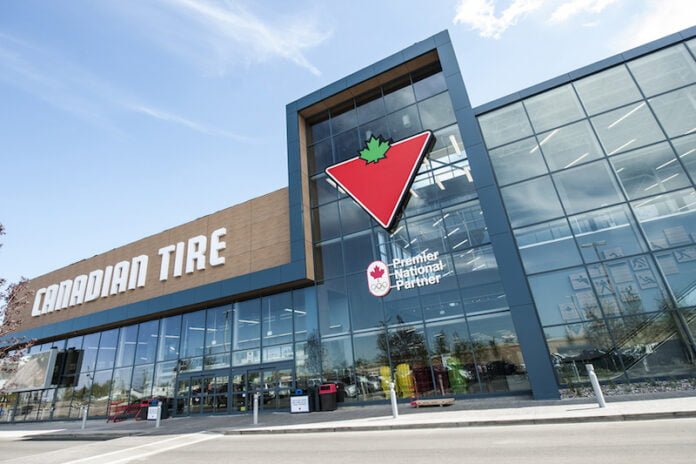
Canadian Tire (Image: Canadian Tire)

Canadian Tire Corporation, Limited announced Thursday results for its fourth quarter (14 weeks) and full-year (53 weeks) ended January 3, 2026, noting that automotive was up for the 22nd consecutive quarter, with Automotive Service reaching record annual sales of $1 billion in Q4.

For the year, retail sales were $18.986.9 billion, up $809.2 million, or 4.5% over the prior year. 

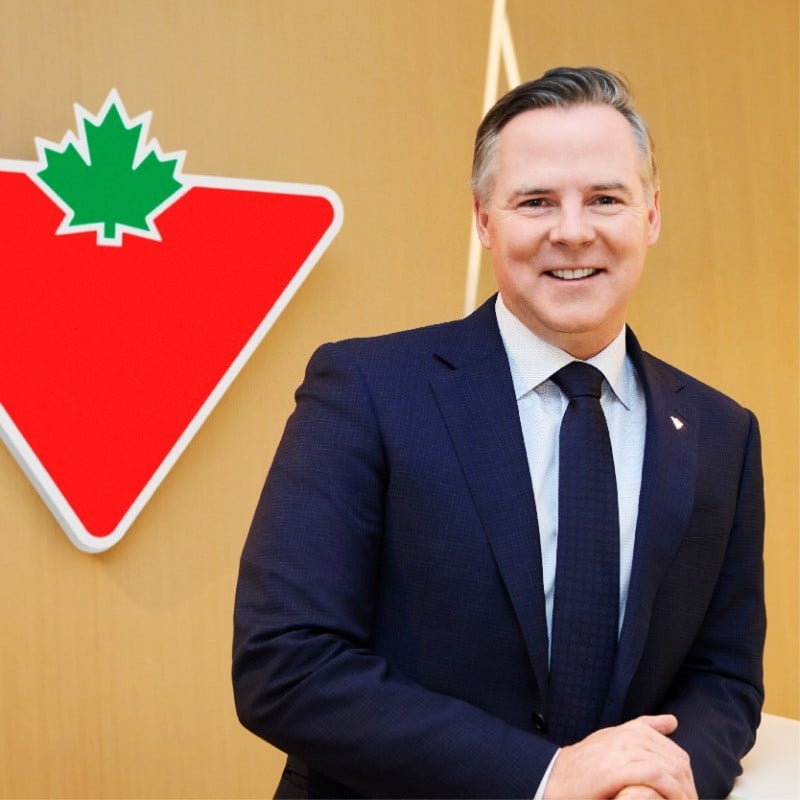
“Our standout fourth quarter capped a year of strong sales growth and market share gains,” said Greg Hicks, President and CEO, Canadian Tire Corporation. “Customers visited us in greater numbers and we had one of the best holiday seasons in recent memory, a tribute to our retail readiness and the resilience of Canadian consumers in a year of economic uncertainty.

“As we advance True North, we are strengthening our competitive differentiation. Our retail system brings together an enhanced retail network, supplemented by the power of partnerships, tied tightly with Triangle Rewards and in service of customer value. Our modernization will accelerate in 2026, advancing our progress towards our True North vision: stronger connections with customers, higher retail performance, and accelerated shareholder value.”

Greg Hicks
Greg Hicks

FOURTH-QUARTER CONTINUING OPERATIONS HIGHLIGHTS

  • Consolidated comparable sales were up 4.2%, with strong December sales driven by weather and in-stock positions contributing to higher visits and sales growth at all major banners and in all regions.
    • CTR comparable sales were up 2.7%, with Seasonal and Gardening the standout with double digit growth on strong sales of winter and holiday products. Automotive was up for the 22nd consecutive quarter, with Automotive Service reaching record annual sales of $1 billion in Q4.
    • SportChek comparable sales grew for the sixth consecutive quarter, up 9.5%, with outerwear and fanwear growth alongside growth in strategic categories such as footwear and hard goods.
    • Mark’s comparable sales were up 7.2%. Weather and Black Friday sales contributed to a record-breaking quarter for sales. Growth at new-concept Bigger Bolder Better (BBB) stores also remained a key driver.
  • Retail Sales and Revenue were up 8.9% and 8.8%, respectively; Excluding Petroleum, Retail Sales and Retail Revenue were up 10.2% and 10.7% respectively, benefiting from growth across all major banners and an extra week compared to the prior year.
  • Normalized income before income taxes (IBT) was up 32.5% to $349.6 million, driven by strong Retail performance. Normalized Diluted EPS was $4.47, up 38.0%.
  • IBT was $318.7 million, down 32.0% from Q4 2024, due to this year’s True North restructuring and impairment expenses, compared to a property sale gain recorded in the prior year. Diluted EPS was $3.96, compared to $6.54 in Q4 2024.

FULL-YEAR CONTINUING OPERATIONS HIGHLIGHTS

  • Consolidated comparable sales were up 4.1%, with strong performance across all major banners; CTR was up 3.7%, SportChek was up 6.2% and Mark’s was up 3.9% on a comparable 52-week basis.
  • Strong retail sell-through as a result of being in-stock, combined with improving customer demand, and the benefit of an extra week in Q4 contributed to Retail Sales and Retail Revenue growth, up 4.5% and 5.4% respectively. Excluding Petroleum, Retail Revenue was up 7.5% for the year, outpacing Retail Sales, up 5.9%.
  • Continuing to leverage margin management tools and streamline the organization led to improved retail operational performance; Normalized Retail Gross Margin rate excluding Petroleum was up 27 bps to 35.5%. Normalized retail EBITDA was up 8.1%, representing a normalized Retail EBITDA as a percentage of retail revenue (excluding Petroleum) of 14.6%. Retail Return on Invested Capital (ROIC) was up 119 bps to 11.0%.
  • Normalized Diluted EPS was $13.77, up 18.6%. Normalized IBT was $1,109.0 million, up 14.3% compared to $970.3 million last year. Favourable normalized Retail IBT1 more than offset a decline in Financial Services IBT, primarily reflecting previously communicated investments in the business.
  • Diluted EPS was $10.57, compared to $14.91 in the prior year.
Photo: Canadian Tire

In March 2025, CTC said it launched a four-year transformative growth strategy called True North.

“True North upholds CTC’s Brand Purpose and is designed to drive core retail growth through four strategic cornerstones, putting customers at the core of the strategy, enhancing the Triangle Rewards loyalty program, and applying privileged data, enabled by technology and AI, to deliver enhanced digital and store experiences. The strategy is being delivered by a newly constituted senior leadership team and organizational structure, supporting CTC’s transition from a holding company structure to a more integrated operating model that is agile, can operate with scale, and deliver customer value,” said the company.

2025 was a key foundational year for CTC’s True North transformative growth strategy, with the implementation of a more agile, tech-driven and efficient operating model in place, contributing to new ways of working, and significant achievements delivered on a number of fronts, it noted:

  • Triangle Rewards came to life for more Canadians. 9.8 million are now active registered members of the program, representing a 6% increase on 2024. By early 2026, CTC had activated two loyalty partnerships and almost 100,000 RBC Avion members and 600,000 Petro-Canada Petro Points members had linked to Triangle. The Company’s partnership with WestJet (WestJet Rewards) is scheduled to launch during Q2 of 2026, with the Tim Hortons partnership (Tim’s Rewards) to follow in the second half of 2026.
  • Refreshed stores continue to drive growth. Fifty-two store projects were completed in 2025: Thirty-one CTR refreshed, expanded or replacement stores including new CTR stores in Kelowna, British Columbia, and Kingston, Ontario; and twenty-one new or refreshed stores at other banners, including compelling new format stores at Mark’s and SportChek, in British Columbia, Alberta, Saskatchewan, Manitoba, Ontario and Quebec.
  • New capabilities around in-stock optimization, and a new AI tool (DaiVID) that optimizes pricing and margin, provided customer value and contributed to growth. Increasing awareness of same-day delivery across all banners contributed to eCommerce sales growth outpacing bricks and mortar.
  • HBC’s Stripes became the newest Owned Brand to launch to customers, with a holiday capsule collection released in Q4 of 2025 that generated strong customer response and sell-through. A more comprehensive product set will come to market in the summer of 2026.
  • CTC’s True North organizational model established clearly delineated responsibilities for the following: go-to-market strategy (under Chief Commercial Officer Matt Moore), retail execution (under Chief Operating Officer TJ Flood), performance management and capital discipline (under Chief Financial Officer Darren Myers) and transformation initiative management and value creation (under Chief Transformation Officer Susan O’Brien in a newly created role). 
  • With the True North restructuring completed in the third quarter of 2025, the Company is now benefiting from the associated run-rate savings, with approximately $30 million of savings reflected in operating expense in the fourth quarter of 2025. 2026 savings will continue to be balanced with focused investments to support growth and advance the True North strategy, including through investments in AI deployment.
  • During the third quarter of 2025, CTC negotiated amendments to its contracts with CTR Dealers, strengthening joint alignment on the True North strategic priorities.
  • At the end of the year, there were five percent fewer Class A Non-Voting (CTC.A) Shares outstanding compared to the prior year, as the Company continued to execute against its existing share buyback program. CTC had repurchased a total of $442.4 million, in excess of the amount required for anti-dilutive purposes, of its CTC.A shares during the fiscal year under its 2025 and 2026 Share Repurchase Intentions.

More from Retail Insider:

VIDEO: Nearly half of Canadian restaurants losing money or barely breaking even, warns Restaurants Canada CEO

Canada’s restaurant industry is facing mounting financial pressure, with nearly half of operators either losing money or barely breaking even, according to Restaurants Canada.

In an interview with Retail Insider, president and CEO Kelly Higginson said 44 per cent of restaurants were in that position as of November 2025, a sharp increase from pre-pandemic norms when roughly 10 to 12 per cent struggled to turn a profit. She said rising operating costs, including tariff-related pressures, have squeezed margins at the same time consumers are pulling back on discretionary spending amid ongoing affordability concerns.

While a temporary GST holiday earlier in the year provided a short-term lift in sales and job creation, Higginson said many operators were unable to translate higher traffic into stronger bottom lines because expenses continued to climb. She noted that 60 per cent of restaurants reported profitability in 2025 was worse than expected.

Higginson said the industry is unlikely to see sudden waves of closures due to long-term lease obligations, but warned financial strain is building. She is urging the federal government to permanently remove GST on food, adjust workforce policies in tourism-dependent regions and address broader cost pressures, including taxes and employment insurance premiums, to stabilize the sector.

Youtube video

More from Retail Insider:

Restaurants brace for more obstacles in 2026: Restaurants Canada

Restaurants Canada encouraged by federal government’s announcement of new food affordability measures

Daily Synopsis: Feb 18, 2026 – Retail real estate and expansion

Today’s Retail Insider articles cover key developments including Montreal-based Cozey accelerating its brick-and-mortar footprint with the opening of its largest store to date on Calgary’s 17th Avenue. CT REIT reported robust 2025 financial results with strong occupancy and significant retail space growth. Meanwhile, rising construction and labour costs are reshaping Canadian retail development strategies. Below, find these stories and more followed by Canadian Retail News From Around the Web.


🗞️ The Day’s Retail Insider Article List


🌐 Canadian Retail News From Around the Web