Everybody loves a deal no matter what it’s called.
Black Friday, the retailer-created shopping event following Thanksgiving in the U.S., is increasingly popular in Canada.
A survey by New York-based IPG Mediabrands found a staggering one million Canadian workers plan on phoning in sick on Nov. 28 (Black Friday) and/or Dec. 1 (Cyber Monday), the dates of this year’s retail blitz.
According to findings from a survey conducted last year for BMO, 47% of Quebeckers were planning to make purchases on Black Friday in 2013, up from 41% in 2012.
Wikipedia offers this explanation for the name’s origins:
“The day’s name originated in Philadelphia, where it originally was used to describe the heavy and disruptive pedestrian and vehicle traffic which would occur on the day after Thanksgiving. Use of the term started before 1961 and began to see broader use outside Philadelphia around 1975. Later an alternative explanation was made: that retailers traditionally operated at a financial loss (“in the red”) from January through November, and “Black Friday” indicates the point at which retailers begin to turn a profit, or “in the black”.”
Whatever the origins, the name is meaningless, if not depressing, in French Québec.
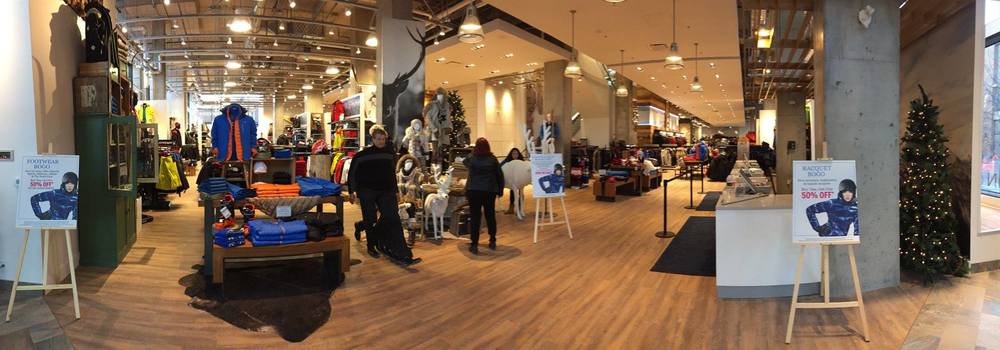
Retailers have been using different French names to give meaning to their sales events. Some call it Vendredi Noir. Others like Banana Republic call it Super vendredi. Some simply call it Méga Vente Black Friday (it should be “solde”, not “vente”). To be safe, Centre HiFi calls it Vendredi noir and Black Friday.
For Q3 2014 overall, total retail gained 5.4% versus a year ago, also a 2½ year high. The 3-month trend (orange line in the chart above) continues to run above the underlying 12-month trend (green line). In fact, the 12-month trend has been more or less steadily improving since early last year.
These results were buoyed up by a huge sales increase for new car dealers in September. The Food & Drug and the Store Merchandise sectors however also increased sales compared to their previous 2014 year-to-date averages.
In the historical note department, September 2014 was the first time that Canadian retail sales eclipsed the $500 billion mark in any 12 month period.
There are a number of positives for the holiday shopping season. – Recent strong sales increases in the critical Store Merchandise sector indicate good momentum going forward. – A weaker Canadian dollar should help keep more holiday spending at home. – Significantly lower gas prices will leave more money in consumers’ pockets for holiday spending. – Canada’s unemployment rate fell to 6.5% on October, the lowest level in 6 years.
Each of these may not be a big deal on its own, but their combination could be powerful. Even so, this may not stop many retailers from blowing their brains out with discounts and promotions which they had already planned on.
Food & Drug Stores
Retail sales at supermarkets and other grocery stores continued their up and down pattern with a year-over-year gain of 1.6% in September. For Q3 2014 overall however, sales increased only 0.4% from the same quarter a year ago.
Other store types in this sector did better. Sales at health & personal care stores in Q3 were up 6.5% versus last year, while convenience stores gained 6.0%.
Despite the choppiness, the Food & Drug sector seems to be slowly improving. The underlying 12 month trend (green line in the above chart) now stands at a gain of 2.8%. While this is quite modest, the rate is double what it was 12 months ago.
Store Merchandise
Retail sales for the Store Merchandise sector were up 5.2% in Q3 2014 versus a year ago. This is the highest quarterly gain since Q1 2010. The 3 month trend (orange line in the chart) continues to track well ahead of the 12 month trend. In fact, the underlying trend is now at the highest it’s been since November 2008, before the Great Recession.
A number of store types brought in significant Q3 sales increases, including other general merchandise stores up 8.3%, furniture stores up 8.2%, home furnishings stores up 6.9%, sporting goods, hobby, book & music stores up 6.3%, and clothing stores up 5.3%. Only miscellaneous store retailers showed a year-over-year sales decline for Q3 2014, down 0.4%.
Overall, Store Merchandise is in good shape, and it’s the retail sector that gets the most lift from holiday shopping.
Automotive & Related
Sales trends appear to be flattening in the Automotive & Related sector, although it’s a tale of two forces, namely, new car dealers versus gasoline stations.
In September 2014, new car dealers’ retail sales were up an astounding 17.1% from the same month a year ago, and up 11.7% for Q3 overall. This is easily the highest sales growth in all of Canadian retail.
Gasoline station sales however are moderating rapidly as pump prices fall. While gas stations’ retail sales were still up 2.9% in September, this is well off the 10%+ pace recorded in the first half of 2014.
By The Numbers
Ed Strapagiel is a consultant specializing in applied marketing, business development and strategic planning. [Ed Strapagiel’s Website]
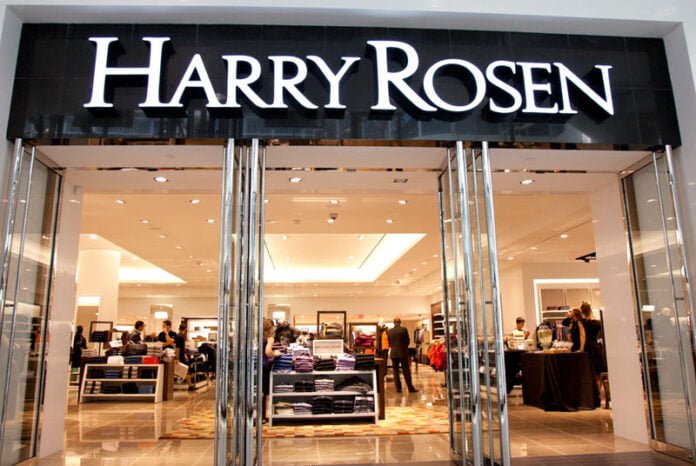
Despite the hype surrounding customer service provided by new-to-Canada retailers like Nordstrom, some of our homegrown retailers are able to hold their own and, in some cases, exceed that of the competition. One example is Harry Rosen, which continues to dominate Canadian market share for luxury menswear. We spoke with the company’s CEO, Larry Rosen, who provided insight on how the retailer provides exceptional customer service, as well as the retailer’s lofty growth plans which include new stores for Mississauga and Toronto.
Harry Rosen spends more than any Canadian retailer on its employee training. Staff are extensively trained on the nuances of designer fashion, including the art of ‘clothesmanship’ – that is, determining the right garment for a man’s body shape. As well, Harry Rosen staff are provided training on how to relate to people. Training includes how to manage client lists, how to assess a client’s needs, how men shop in general, and how to build and maintain long-term relationships with clients. The company recognizes that men change over time and as a result, their wardrobe may require new pieces – be it a new tuxedo for black tie events, or a trendy sneaker for more casual outings.
Although some employees are hired specifically to sell footwear, all Harry Rosen sales staff are trained in ‘shoemanship’ — how to properly fit a shoe, as well as how to pair it with a man’s wardrobe. Creating an entire look is key to Harry Rosen’s success, from ties to shoes to cufflinks and other accessories.
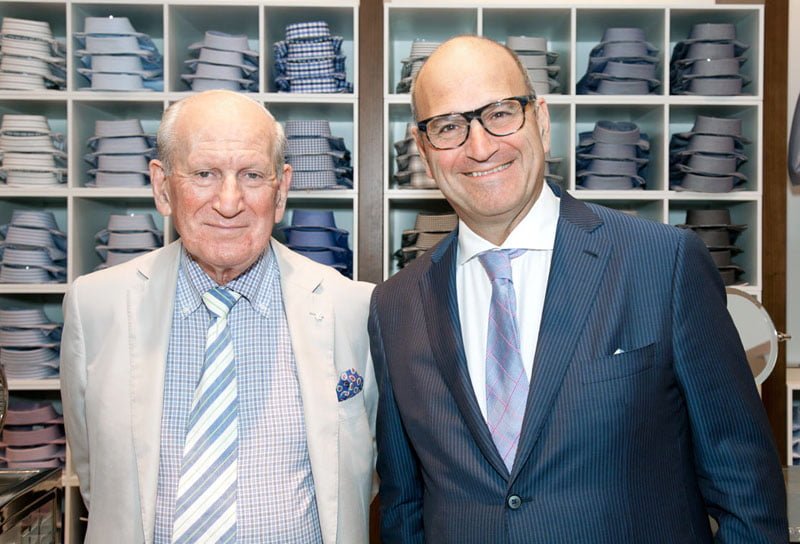
Founder Harry Rosen (left) with son, Larry. Larry Rosen is now CEO of Harry Rosen Inc.
Hiring the ‘right’ employee can be a challenge, and turnover in retail jobs is notoriously high. Not so for Harry Rosen. The retailer looks to hire sales staff who are friendly, hard working and interested in fashion. Staff are encouraged to continue learning well after the initial training is complete and according to Mr. Rosen, the company maintains a ‘coaching culture’ where mentoring and self-improvement are encouraged. As a result, Harry Rosen boasts a substantial number of long-term employees.
Besides its exceptional staff, Harry Rosen provides a variety of tailored services to its customers — even home visits. For clients who exceed a spending threshold, a staffer may make a home visit to do a ‘closet cleaning’, to determine what new fashion pieces may be required in a man’s life, as well as what pieces may have become unnecessary. Over time, a man’s career and extra-curricular activities may change, resulting in new wardrobe requirements. As many of Harry Rosen’s best clients are also very busy, they’ve grown to appreciate the personalized services from the retailer’s well trained and thoughtful staff. Mr. Rosen says that if you “make it easy for them, men will be loyal”.
Made-to-measure clothing has also become popular at Harry Rosen, now accounting for about 20% of the company’s suit business. Besides ensuring that a suit fits a man ‘like a glove’, made-to-measure has the added bonus of making the suit customizable, including whatever lining the customer desires, for example.
Customer service was key to Harry Rosen’s success from the very start. When a young Harry Rosen and his brother Lou opened a 500 square foot men’s store in 1954, keeping information and contacting clients was key. Located on Parliament Street far removed from Toronto’s bustling shopping and business districts, Harry Rosen needed to find ways to get men to come back to his store. Keeping measurements and style preferences handy, and contacting customers when something of interest arrived, gained a fiercely loyal clientele for Harry Rosen. Exceptional product and customer service paid off — after several years, the store relocated to a substantially larger location in Toronto’s Financial District.
Exceptional customer service will continue to be vital, as competition heats up in Canadian luxury retailing. Homegrown Holt Renfrew is upping its menswear game, having recently opened a luxurious free-standing men’s store on Toronto’s Bloor Street (directly across the street from Rosen’s), as well as expanding its menswear offerings in many of its existing stores. Saks Fifth Avenue will open as many as seven Canadian stores, targeted to be more luxurious than its American locations. Hudson’s Bay is expanding its menswear offerings, bringing in new upscale lines such as Theory, Vince, Hugo Boss, Z-Zegna and Strellson to its flagship locations. La Maison Simons is on an aggressive Canadian store expansion, and the retailer carries some pricey, trendier designer lines. And Seattle-based Nordstrom, known for its customer service and extensive shoe selection, plans to open as many as 10 Canadian stores over the next several years.
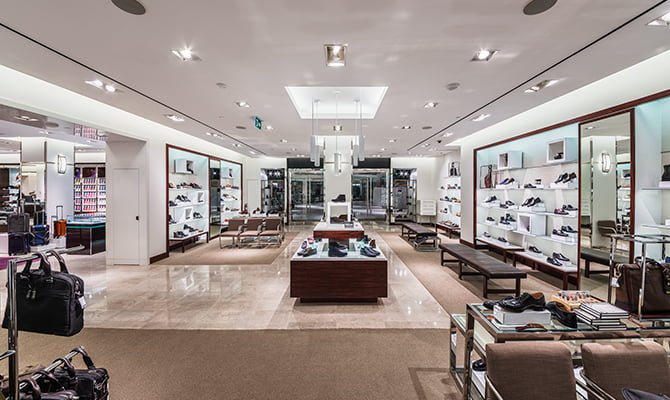
HARRY ROSEN’S NEW FOOTWEAR SHOP AT ITS OTTAWA RIDEAU CENTRE LOCATION.
Harry Rosen will compete with the best of them, we expect, given its efforts to satisfy the customer, as well as carry a breadth of luxury product available in few other Canadian stores. The company continues to maintain its core base of loyal shoppers despite the competition and, interestingly, business has been up at its Chinook Centre location since Nordstrom opened its first Canadian location in the Calgary mall a couple of months ago. Although an unprecedented number of luxury retailers are looking to attract Canada’s limited luxury dollars, Harry Rosen’s efforts will likely see it continue to thrive.
To maintain market dominance in the face of competition, Harry Rosen is spending well in excess of $100 million on store renovations and new locations. Its Vancouver flagship will be overhauled, and its Oakridge Centre location recently saw a substantial renovation. A replacement Ottawa store opened this month, and a new replacement store will open at Toronto’s Sherway Gardens in 2015. Its Les Cours Mont-Royal location in downtown Montreal will see a world-class renovation/expansion, growing by 50% to become the company’s second-largest store. Larry Rosen also let us in on a secret that the retailer hasn’t yet revealed to the public – that Harry Rosen will replace its 10,000 square foot unit at Mississauga’s Square One with a world-class 18,000 square foot flagship in 2016. The new store will be part of an innovative luxury next to the mall’s new flagship Holt Renfrew, and we’ll discuss details in a separate article in the coming weeks.
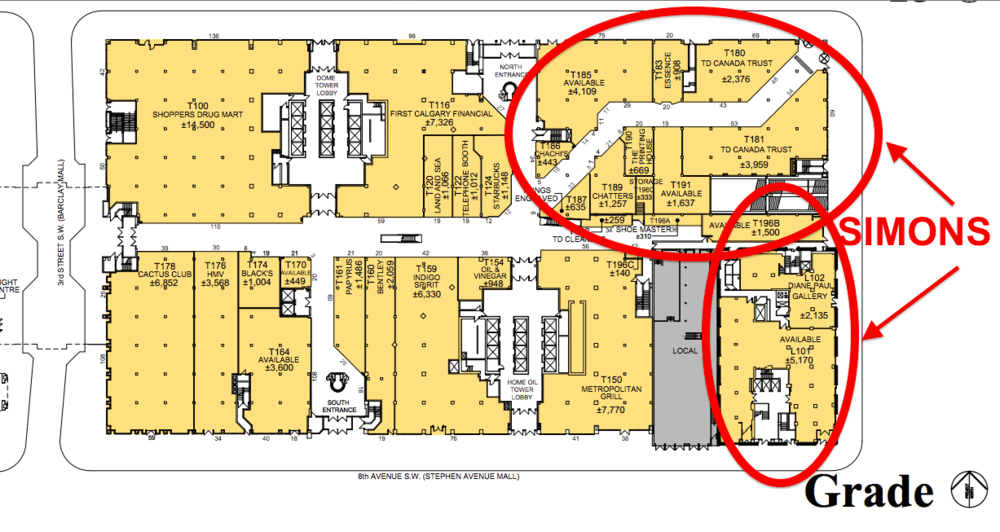
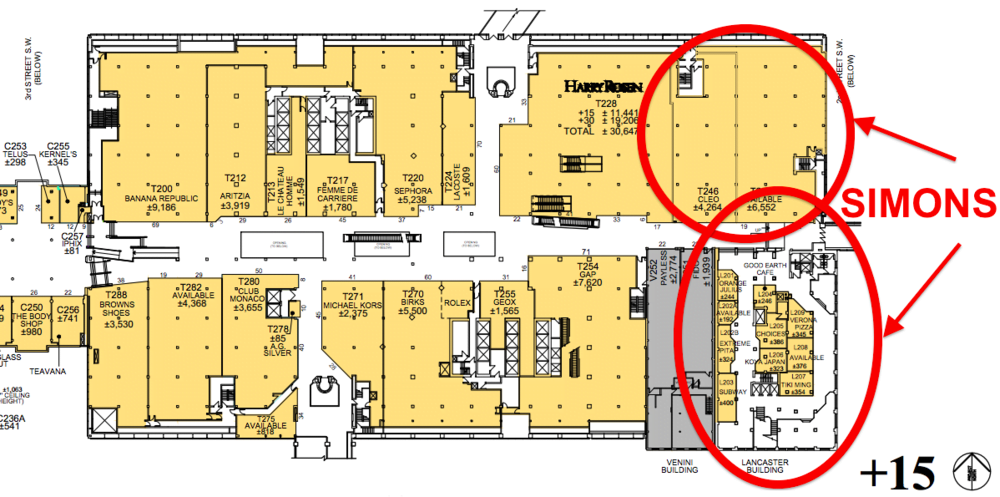
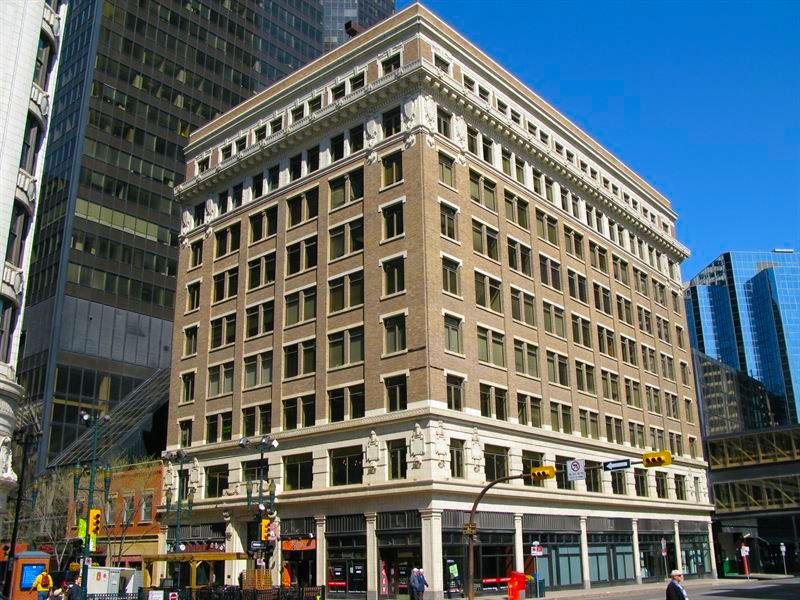
Quebec City-based fashion retailer La Maison Simons will open its second Alberta location in downtown Calgary. What’s remarkable is how the four-level store will occupy part of Calgary’s first skyscraper, The Lancaster Building, as well as the adjacent ground-floor TD Bank space within downtown Calgary’s CORE shopping centre. The 92,000 square foot store tentatively opens in March of 2017, and we interviewed CEO Peter Simons to learn more.
The new store will be designed by innovative Calgary-based design firm McKinley Burkart, which will maintain the Lancaster Building’s architectural heritage. As with other Simons locations, the interior is expected to be bright and modern. Mr. Simons confirms that a significant art installation will be featured in the store, as is the case with all new Simons locations. The 10-floor Lancaster building was constructed in the year 1919, and the top floors of the building will continue to be dedicated to office space.
Besides occupying four floors in the Lancaster Building, Simons will take the adjacent ground floor retail space, occupied on the lease plan by TD Canada Trust. On the mall’s second-level, almost 11,000 square feet next to Harry Rosen will become occupied by Simons, with a pedestrian walkway separating Simons’ retail space. We’ve included lease plans, above, to try to convey the unique and somewhat complicated configuration of the new Simons store, which will see its four retail floors span the adjacent Lancaster Building and TD Square component of The CORE.
Simons’s first location outside of the province of Quebec opened in October of 2012 at West Edmonton Mall. Measuring about 126,000 square feet, it’s the chain’s largest and according to sources, the second-highest selling in the company.
Calgary’s CORE shopping centre spans almost 567,000 square feet on three levels. Its anchors include a 147,000 square foot Holt Renfrew, a 30,650 square foot Harry Rosen, and a 20,000 square foot Brooks Brothers store. The mall is managed by 20 VIC Management Inc. and is owned by AIMCo and Ivanhoé Cambridge. The mall serves a daytime population of approximately 175,000 people, and has a sales productivity of $609 per square foot.
Lancaster Building (1913)
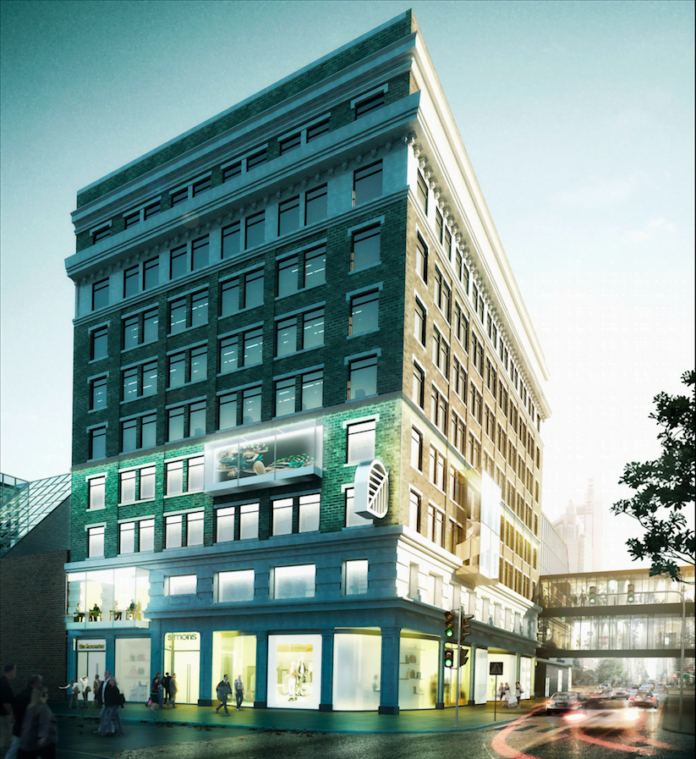
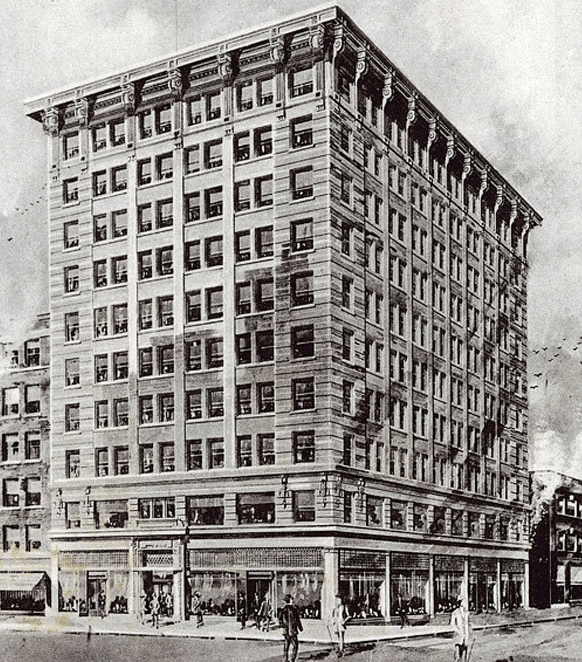
Architect’s rendering of Mackie Block constructed between 1912-18 and now known as the Lancaster Building.
Simons was founded in Quebec City in 1840. The retailer is unique in how it pairs its substantial private-label fashion with a handful of higher-priced designers. Despite its large floorplates, Simons stores lack cosmetics departments and the large footwear areas typical in similar-sized department stores. Simons currently operates nine stores, including eight in the province of Quebec and one in Edmonton. The company has over 2,000 employees.
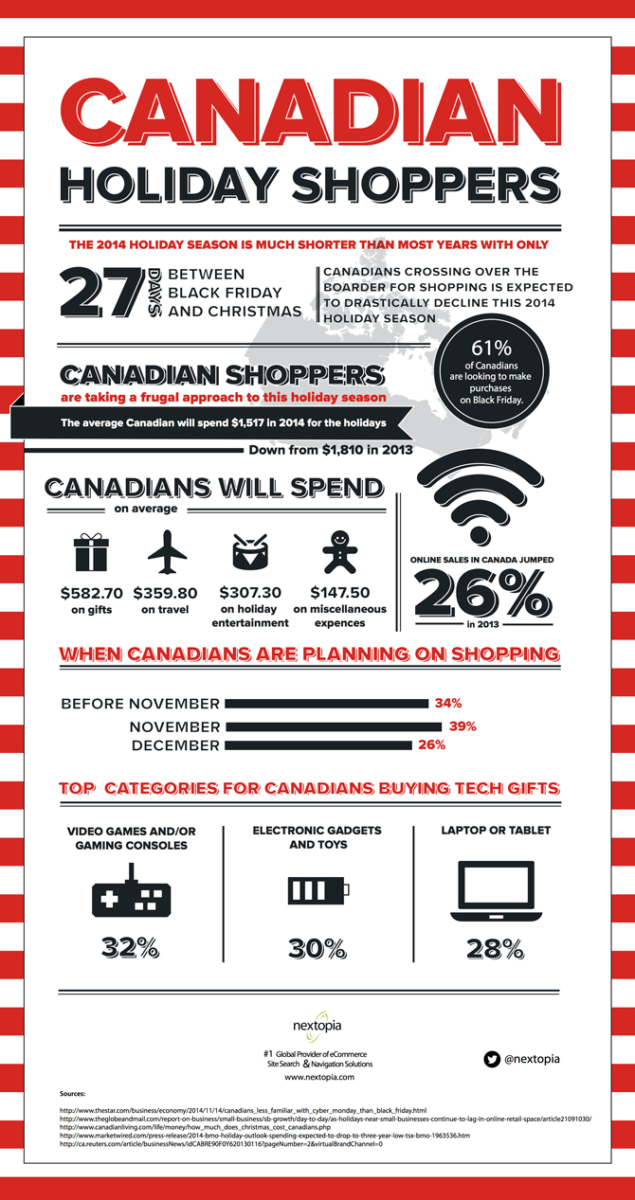
The following infographic provides useful and interesting information on Canadian shoppers this Holiday Season. It was created for Retail Insider by Nextopia.
Infographic: Canadian Holiday Shoppers Nextopia
About Nextopia:
Since 1999, Nextopia has been in the business of helping retailers sell smarter and have been dedicated to growing online retailers businesses’ through innovative technology and proprietary methods. They do this by supplying customers with the tools and control they need to convert browsers into buyers. With over 1,600 customers, Nextopia is the #1 global provider of eCommerce site search and navigation solutions. Nextopia’s powerful technology streamlines and supercharges your sales and merchandising efforts, provides vital customer data through our back-end analytics, and improves your customers’ shopping experience.
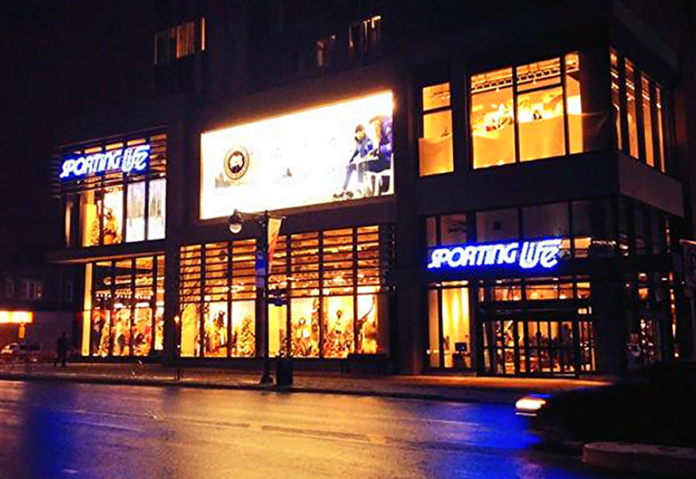
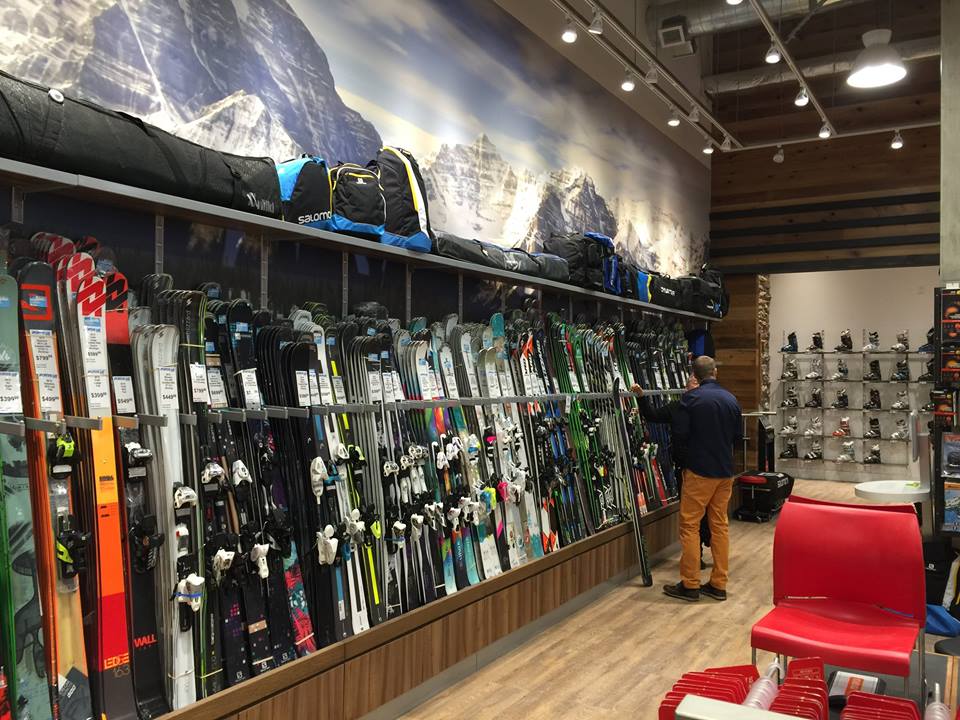
Upscale sporting goods retailer Sporting Life has opened its sixth Canadian location at Ottawa’s Lansdowne Park. The 43,000 square foot store is the latest for the company, which intends to open two stores a year for the next several years. Its stores are relatively large, measuring in the 30,000-50,000 square foot range. Its next confirmed store locations will open in Calgary and in Richmond Hill, Ontario, and the retailer is said to be seeking retail space in Vancouver, Edmonton, and Montreal.
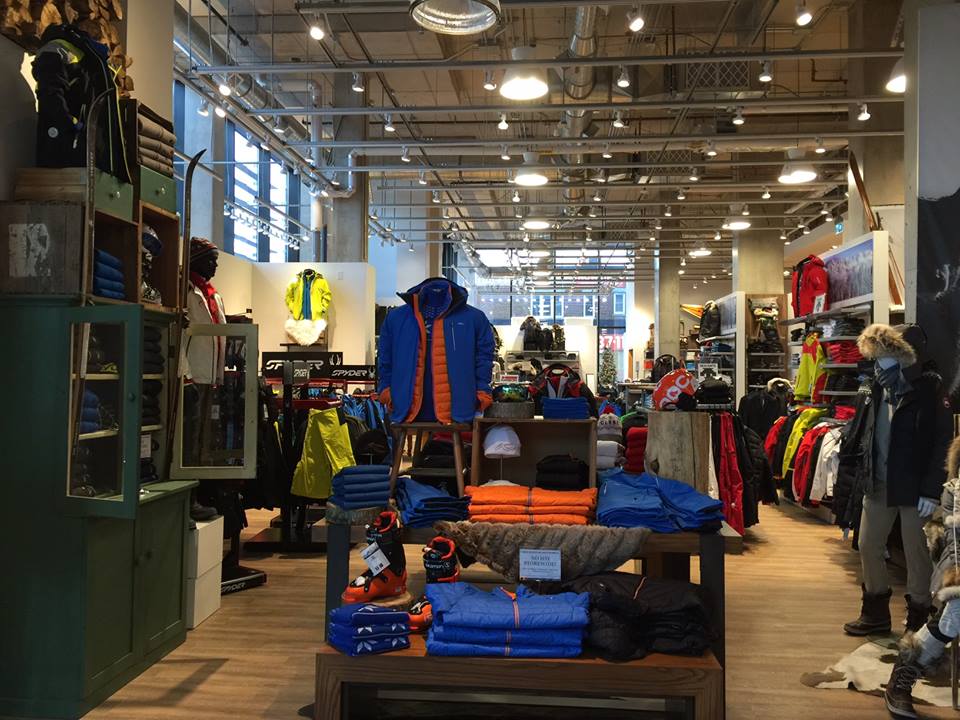
Founded in 1979, Sporting Life sells apparel and footwear, as well as equipment geared towards runners, cyclists, skiers, snowboarders and hikers. Some items can cost into the thousands. It has a large selection of outerwear, fleece and coats from popular brands Moncler, Canada Goose, and The North Face, among others. It also carries a mix of high-end and casual clothing brands including Barbour, Bogner, Hugo Boss, Grenoble, Mackage, John Varvatos and others.
Sporting Life will open two locations in 2016: a 46,000 square foot unit at Calgary’s Southcentre, and a 44,000 square foot store at Hillcrest Mall in Richmond Hill, just north of Toronto. The company’s current locations include its Toronto flagship at 2665 Yonge Street (36,000 square feet), a bike and snowboard shop at 2545 Yonge Street (10,000 square feet), a 42,000 square foot location at Toronto’s Sherway Gardens, a 10,000 square foot store in Collingwood, Ontario, and a recently opened 32,000 square foot store in Markham, Ontario. Sporting Life’s Sherway Gardens store will be replaced by a similar-sized store in the mall’s newest expansion, while the current store will be demolished to house a 138,000 square foot Nordstrom, scheduled to open in 2017.
Sporting Life’s expansion plans are lofty, especially considering that until September, the company hadn’t opened a new store in 14 years. The company’s expansion will be national and when Sporting Life expands into Western Canada, its merchandising will be modified. Mr. Russel said:
“When we open a store in the lower mainland of British Columbia, for example, the clothing will be perhaps a little different; more layers as opposed to big heavy down parkas. And when we go to western Canada the skis are wider and there might be more emphasis on mountain biking as opposed to road biking.”
We’ll keep you updated on Sporting Life’s cross-Canada store expansion.
When Vancouver footwear designer John Fluevog Shoes first approached Carousel Theatre for Young People (CTYP) about putting on fundraising event, we knew that they would make the perfect pair. John Fluevog is not only known for his unique, avant-garde designs but also his deep appreciation for the arts. It was no surprise that John Fluevog would then host an exclusive evening of shopping, entertainment, wine and appetizers at its Gastown location, with 50% of all shopping proceeds going towards CTYP.
The event on November 5 was a resounding success, raising more than $100,000 within merely three hours. Funds generated will help CTYP deliver outreach and accessibility programs in order to engage and to educate emerging artists and audiences in Vancouver.
Like any other theatrical production, the event was made possible with the help of an impressive cast. The program was hosted by Todd Talbot of Love It or List It Vancouver, with cameos from young talents of CYTP – including Seamus Fera‘s invigorating monologue from Two Gentlemen of Verona and a musical performance from Sofia Bunting Newman with accompanist Steven Greenfield.
Catering was generously sponsored by Nuba, a local favourite dining hot spot, fuelling the energy of guests as they tried on their favourite John Fluevog creations. With delicious bites and a few sips of wine, who could resist scooping up a pair of designer shoes for a good cause?
On top of a multi-sensory experience, guests had the privilege of previewing three designs from John Fluevog’s Spring 2015 Collection, modelled by the staff at CYTP including Emily Henney, Community Engagement Manager, and Melissa Oei, Interim Education Coordinator.
The success of the event speaks to the importance of brand alignment between the business and the cause. In closing, Carole Higgins, Director of CTYP, spoke about the organization’s commitment to artistic excellence, accessibility and community. These core values resonate with the values of quality, artistry and eccentricity, which are clearly articulated by John Fluevog’s brand and products. As a result of a great partnership, the event evolved into a joyous celebration of art, theatre and design, urging everyone to step up to support youths and theatre arts. To learn more about CTYP or to make a donation, please visit http://www.carouseltheatre.ca/about-carousel-theatre.
Cecilia Huang is a dedicated event planner who currently works in the nonprofit sector. She is also the creator and writer of her own personal style blog, Hues That Girl. She is passionate about event and digital marketing, fashion, traveling and all things outdoors in her hometown, Vancouver.
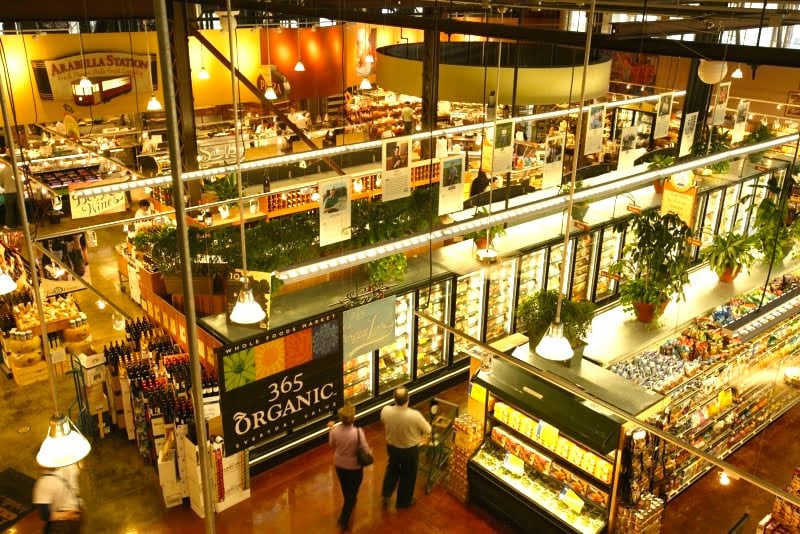
Whole Foods‘ co-CEO confirms that the retailer plans to eventually operate as many as 40 Canadian locations, up from its current 10 stores. The company recently disclosed five new locations, and a Calgary store will be announced shortly. Whole Foods will eventually operate locations coast-to-coast, though it will face increased competition from several homegrown retailers.
Whole Foods’ co-CEO, Walter Robb, says that the company is looking to add a further 30 stores in Canada. Its first location outside of metro Vancouver and Toronto opened last week in Ottawa. The highly anticipated 41,000 square foot store is located in an inner-city retail complex called Lansdowne Park, adjacent to highly educated, high-earning neighbourhoods such as The Glebe.
Whole Foods entered the Canadian market in 2002 with a 40,000 square foot location at Toronto’s Hazelton Lanes, in the city’s upscale Yorkville area. Since then, four more stores have opened in the Greater Toronto Area. In 2007 Whole Foods bought the parent company of Vancouver-based grocery store Capers, paving the way for four Vancouver Whole Foods locations. The company has already provided some details on its Canadian store expansion, confirming new locations each in Toronto and Vancouver. According to Mr. Robb, the company’s first Alberta location is confirmed to open in Calgary, with details to be disclosed shortly.
The retailer has tremendous opportunity to open stores in various Canadian cities. In oil rich Alberta, for example, an Edmonton location is almost a certainty. Winnipeg is ripe for at least one Whole Foods location, and rumours are running rampant that a Victoria, BC location is currently in the works. Expansion into Quebec is uncertain, we’re told, as the likelihood of store unionization could eat into profits. Real estate brokerage Northwest Atlantic is handling Whole Foods’ Canadian store expansion, except for those located in British Columbia.
Founded in 1980 in Austin, Texas, natural and organic supermarket chain Whole Foods currently operates 403 stores throughout the world, including 384 American stores and nine in the United Kingdom. The company employs about 87,000 people and last year had sales of U.S. $14.2 billion. Stores sell an average of almost U.S. $1,000 per square foot – higher than most grocery chains, though still less than organic grocer Trader Joe’s, which sees sales of almost U.S. $1,750 per square foot.
Whole Foods will face competition from a variety of upscale Canadian grocers, including Urban Fare in Western Canada and Pusateri’s in Ontario. Vancouver-based Urban Fare is in the process of expanding its store base, including the announcement of its first Calgary location. Upscale Toronto-based Pusateri’s will open next year in Oakville, Ontario, and the company will also operate Saks Fifth Avenue’s luxury food halls, each expected to measure about 25,000 square feet. As mainstream grocers such as Loblaw and Sobeys continue to add organic food items to their stores, Whole Foods will see competition from a variety of local grocery stores, not to mention smaller competitors and food offerings in big-box retailers Costco, Walmart and Target.
Robotic assistance, iBeacons, e-mannequins, virtual changing rooms, there’s no doubt about it that the 21st century has taken a big step toward the digital advancements. In a report published by Deloitte, 27.9% of the Canadian respondents prefer to shop online than go to the mall, which helps us understand why online sales figures in Canada increased by 12% from the previous year’s, reaching $136-billion.
Yet as technology and our shopping experience subtly merges, we’re complacent when it comes to noticing how much the industry has changed through digital enhancements and gadgets that sway and manipulate our shopping habits.
Omni-channel retailers are becoming more popular, these are companies that can offer a presence both on and offline as well as providing apps and additional extras that can help the typical shopper. We’ve all heard the phrase ‘try before you buy’ and it’s a term virtually catching on with companies that would like to capitalise on the online market. In particular now for home owners, Ikea launched their 3D app which transforms their catalogue to an online preview of furniture in your house. This means that you and I can check out Ikea’s catalogue via its app, check if the furniture matches our current interior and go in store to collect our reserved item. It’s all about functioning as one.
Ten years ago, we’d have laughed at people if they told us we could try on virtual clothes in a space of minutes, yet now it’s an expectation to have the luxury of trialling clothes without having to visit a store. The nature of trying on clothes has drastically changed as we can browse through online shops, type in our measurements and see our favourite collections on the ‘virtual me’.
Whilst our ‘virtual me’ can show us the fitting of the products, they don’t quite portray the type of material and how it really sits on the moving body. Most fashion companies like Superdry there offer catwalk videos for their products for an extra helping hand.
This year has also seen iBeacons come to stores, Bluetooth transmitting mannequins that are able to send across alerts to neighbouring smartphones announcing in-store offers as well as what their mannequins are wearing. The tracking accuracy is on par beaming through set information at the optimal time to encourage us to buy. The iBeacons also gather information on us as shoppers, our habits and desired items to improve their targeted messages making sure it’s personal to us.
High-end fashion stores have even implemented iPad’s into their walls to allow their entire collection to be viewed online, whilst developments are being made to allow us to interact with a virtual assistance via the technology. Even signs and banners that we see in supermarkets will be replaced with smart labels and sensors that have the intelligence to suggest products that will go with the ingredients in our basket, nutritional advice, its source and even alert you of potential allergy threats.
Consumer Behaviour
Yet with so many products being placed online and new ‘e-tailers’ emerging, a consumer has the scope of the entire web to select a store for their one-stop shop, be it clothes, groceries or appliances. We can buy what we want, when we want. With so much choice at hand, it’s no surprise that already the online platform has become too diverse for us as consumers, often leading us to neglect an online shopping spree and deciding to breathe the fresh air and heading out ourselves.
All the while, statistics do show that the internet has helped retailer’s profits as we are in fact becoming impulsive buyers, continuously adding products to our online basket as we browse. Research by Milo shows that it’s the checkout stage where we typically abandon our baskets as 67% of us decide to not go ahead with the order; 55% of shoppers wave goodbye to their online goodies because the shipping costs are too expensive.
As the online generation adapts to the constant development of the net, we’re a demanding folk that have a need for speed with the quickest possible delivery. Companies that capitalize on quick and efficient delivery are preferred services, especially if it involves a drone. A drone you ask? Having a robot deliver your parcel within minutes of ordering could soon be the norm after Amazon has asked the Federal Aviation Administration (FAA) to lift the rule of prohibiting the use of drones for commercial purposes. The concept of thirty minute deliveries via robots could become reality.
What does the future hold?
Whilst we’ve already entered a world of what we once thought was unthinkable, wireless payments and ‘Click & Collect’ are becoming quickly outdated and what the future of shopping could see are even quicker payments via multiple opportunities. It could be that in the coming years it’s the click of our watch that could pre-order groceries or software specialized to voice recognition that memorizes our typical shopping list. Gesture controlled devices are also in the midst of being trialled looking to improve our relationship and natural experience with computers and making online shopping feel lifelike. The future is all about personalization and connecting with the shopper, creating cutting edge technology that will make memorize, understand and deliver.
Charlotte Corner is a Content & Online PR Assistant at Search Laboratory, specializing in search and content marketing.
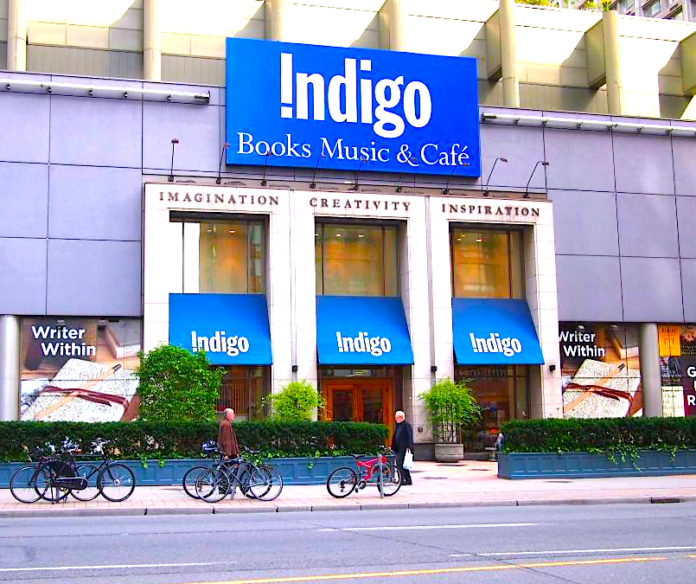
INDIGO BAY AND BLOOR (PHOTO: MUSTAPHA, URBAN TORONTO. )
By Jennifer Pilkington
The retailer’s transformational strategy will woo more shopper dollars this holiday season
Canada’s large retailers are cautiously optimistic this holiday season as average growth in last 4 months remains at 2.9 percent over the previous year. The growth headliners of late (either to the positive or negative) are seemingly tapped for new ideas that will produce significant gains. There is one exception, Indigo Books and Music, which in the last two quarters has shown they are wooing more shoppers and shopping dollars back into their stores.
“Our stores are looking fantastic and rich, online is ready to go, and we’re looking forward to a great holiday season.” -Heather Reisman, CEO Indigo Books and Music
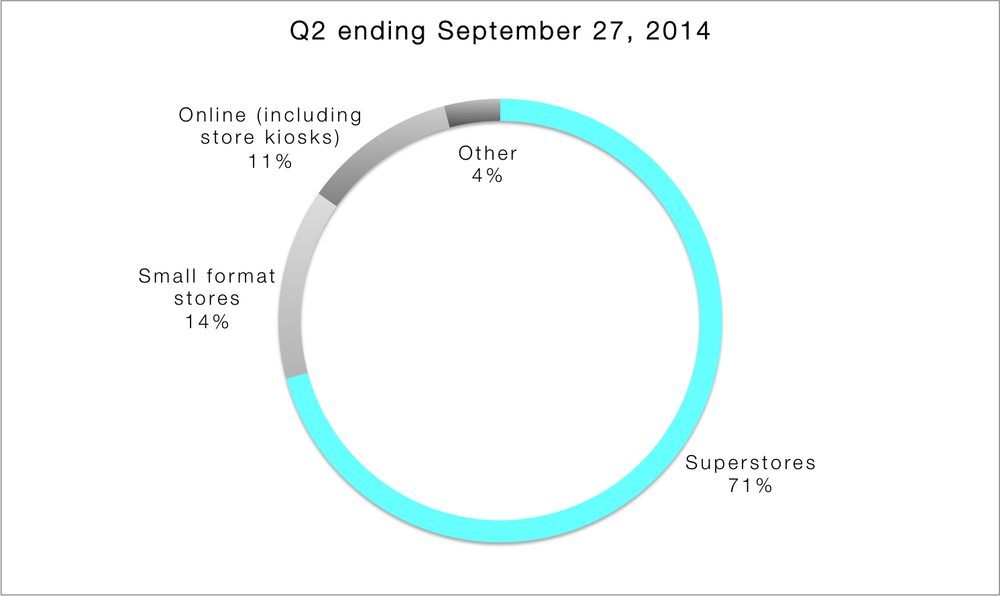
Indigo Books and Music achieved Q2 sales of $189 million and comp store growth of 8.4 percent – higher than any one else on the list. Comp store sales are a key performance indicator as this measure excludes sales fluctuations due to store closings, permanent relocation, and chain expansion. In Indigo’s case, operating 6 fewer stores helped to increase its revenues in existing stores. The company’s 90 superstores generated a total 6.0 percent increase (9.6 percent comp increase), while the smaller format locations attributed 2.3 percent revenue growth.
IMAGE VIA RETAIL ASSEMBLY INC.
Heather Reisman, CEO, indicated in a conference call November 5 that there are no plans to further decrease the number of Superstores that are driving the company’s business – but there is a possibility of expansion.
Small stores growth is driven by individual opportunity (i.e. expanding paper category where successful, adding toys where there isn’t competition in the mall, etc.) they aren’t yet part of a larger transformation strategy. With 2.3 percent revenue growth, it isn’t something to be worried about yet.
There are two indicators – beyond the strong comp store growth – that are promising for the retailer.
The transformational strategy is working. The cornerstone is transitioning itself into Canada’s cultural department store, and growing the general merchandise category is key to achieving this. Now at 27 percent and expanding, general merchandise is picking up some of the slack books left behind.
Core books showed great growth, despite the industry’s declining results! Anytime a retailer can continue to grow their core, it means positive results. Teen and children’s books are current driving forces.
The cautious approach Reisman takes, despite recent success in a difficult transformation is working. “As I say in every one of my meetings, we still have a long way to have to go to fully achieve what we think the potential is of the business“ she commented on the call.
The team at Indigo has been diligently working over the last few years to execute. The design studio in New York brings proprietary accessories and lifestyle home products to the stores each season. The retailer has sought and invested in the best talent. Indigo remains alert, and are beginning to see success while the rest of the industry sees only modest growth. Keep your eye on them in the third quarter.
Wishing everyone strong holiday sales.
A merchant first, now Managing Director of RETAIL ASSEMBLY Inc., Jennifer continues to work with the globe’s best brands and retailers. Always a champion of excellent creative and meaningful commerce, she works to build businesses and train/develop teams. retail-assembly.org | @RetailAssembly