Home Blog Page 1248

Why Retailers Such as Aritzia, Canadian Tire & Sport Chek Will Succeed in 2015: Interview With Expert Antony Karabus

Although a number of Canadian retailers have recently folded or are downsizing, some are succeeding and growing substantially. We interviewed retail expert Antony Karabus on what some retailers are doing right, and why investing in physical stores and omni-channel will be crucial to retailers seeking success in 2015.

Online retail in Canada is growing 15% this year and expected to grow by 11-13% over the next three years (Source: Forrester), versus bricks-and-mortar’s anticipated current year to date sales growth of under 4% (Source: Retail Council of Canada Fast Facts).
 
As a result of the minimal brick and mortar growth, the majority of store sales growth for retailers will have to come from capturing market share. Therefore retailers will need to invest in creating compelling reasons for shoppers to come into their physical stores. Mr. Karabus says that a number of Canadian retailers are doing it the right way — that is, they’re creating engagement in-store, as well as creating a differentiated digital presence. As a result, retailers investing in stores will see customers willing to pay full-price, as opposed to retailers who rely on discounts for foot traffic. Some of the more innovative retailers include (and are not limited to) Indigo Books (with the creation of the first “cultural department store” and the partnership with American Girl to offset the secular decline in physical books), Aritzia, Sport Chek and MEC — all which have built businesses based on positive in-store experiences, as well as investing heavily in creating a digital experience.

A number of Canadian retailers are re-invigorating their store fleet and investing tens or even hundreds of millions to create compelling reasons for customers to keep coming back. Harry Rosen, Holt Renfrew and La Maison Simons, for example, are spending hundreds of millions on store upgrades and new stores, as well as revamping e-commerce sites. Harry Rosen’s new Ottawa shoe store, for example, is “a brilliant move” according to Mr. Karabus, as it speaks to an innovative in-store experience in a segment that is poised for significant growth, namely better men’s shoes.

Mr. Karabus predicts that ‘click-and-collect’ will be a trend for 2015, where shoppers buy online and pick up purchases in-store. There’s a convenience factor involved — rather than wait for (and possibly miss) a delivery at home from an online purchase, shoppers may pick up items at their local store at their convenience. Retailers will have to make modifications to their fulfillment and backroom processes and infrastructure to facilitate these omni-channel capabilities. The retailer may ultimately benefit from this arrangement according to Mr. Karabus – the possibility to up-sell products to the purchaser is easier face-to-face in the store, not to mention human interaction which personalizes the purchase experience. Mr. Karabus says that shopping centres may be able to facilitate the ‘click-and-collect’ trend by modifying real estate to include drive-through centres, for example. As a result, retailers must develop and implement omni-channel capabilities to capture the growing number of consumers who research before buying and want to ‘reserve’ or order the items in store for pickup or return.

Mr. Karabus notes that the retailer’s existing cost structure that supports the legacy bricks-and-mortar business will need to be meaningfully re-invented to fund the massive additional investments which are required to fund the creation of new omni-channel, fulfillment and online capabilities and the re-invigoration of store fleets to create more compelling store experiences. Those who ignore this could be doomed to fail.

Consumers are ultimately looking for positive experiences, be it a trip to an exotic destination, or a new jacket in a store. In order to compete for limited shopping dollars, retailers must create an engaging experience. Retailers that can engage shoppers and increase loyalty and shopping frequency will succeed and on the flipside, those who fail to engage risk losing out to better retailers, not to mention the proliferation of e-commerce possibilities.

In Summary, the entry into Canada of world-class retailers such as Nordstrom as well as incumbent retailers that are “ raising the bar” on their existing operations, will be excellent for Canadian consumers as it both provides much increased choice and availability of places to visit and shop, as well as more interesting shopping experiences.

About Our Expert: 

Antony Karabus became CEO of HRC Advisory in January of 2013. He has been a trusted and passionate advisor to retailers on strategic and financial performance issues for over 25 years. He has assisted numerous North American retailers to create significant shareholder value during this time. He has worked with numerous well known retail chains in key sectors such as department store, specialty apparel and hard lines, big box chains and food and convenience.

Antony began his career at Arthur Andersen in Cape Town, South Africa and moved with the firm to Toronto, where he founded Karabus Management as a Canadian retail advisory firm in 1990. In 2001, Karabus Management expanded into the United States, where the firm became a leading North American specialist retail consulting firm. In 2008 he sold the firm to an International Accounting/Consulting firm where he served as the leader of that firm’s Retail Consulting Services practice until he left the firm in December 2011.

Antony conducts annual surveys of Retail CFO and CEOs to determine key priorities in assisting their business to enable substantive value creation.

Antony is a recognized speaker and a published author providing thought leadership at industry forums, including the National Retail Federation, Retail Council of Canada, World Retail Congress and the Fashion Institute of Technology and providing content to The Wall Street Journal, The New York Times, Stores Magazine, The Globe & Mail, Chain Store Age, National Post, Toronto Star and Women’s Wear Daily, among others.

About HRC: HRC Advisory is a specialist boutique retail advisory firm. Together with its predecessor firms, it has been assisting Canadian and US Retail Chains to improve their profitability and strategic positioning for more than 25 years. Many of HRC’s senior advisors were previously at Senn Delaney Retail Consultants and Karabus Management following retail leadership roles. Other senior advisors at HRC have a mix of retail leadership and retail consulting experience gained with other leading firms
 
HRC has significant retail depth in strategic planning, buying, merchandise planning and inventory management, indirect procurement, store operations and omni-channel processes, supply chain/logistics and fulfillment, and comprehensive cost optimization services. HRC has worked extensively with both healthy top performing chains as well as developing and executing turnaround mandates at a number of retailers in difficult situations. For more information, please visit www.HRCadvisory.com.

 

Testing Loblaws’ Click-And-Collect Service

Loblaws' click-and-collect

By Vicky Applebaum

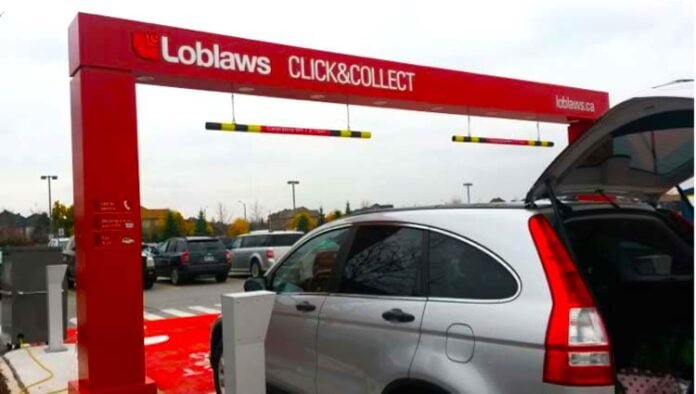
Retail Category Consultants tested Loblaws‘ click-and-collect pilot program, which gives shoppers the ability to collect, or pick up, online orders in stores. If executed properly, the click-and-collect model benefits both retailers and consumers in significant ways.

The process appears to be modelled after Tesco’s program in the UK, with a few differences:

  • There was a fee for Loblaws’ click-and-collect service. From a business standpoint, Loblaws obviously has to cover the incremental labour costs for picking, packing and processing, but as a consumer, we expected that if we were going to “do the work” and pick up our order, there would be no fee.
  • Loblaws has a minimum order requirement. Tesco does not charge a fee if the order exceeds £25 (or approximately $45CDN), while Loblaws has a minimum order requirement of $50CDN and fees range from $3 to $5, depending on the pick-up window that is selected. Loblaws refers to this as a “convenience fee” on the customer receipt.

Where Loblaws Click-And-Collect Fell Short

1. Lack of product availability.

Not all items that are in the store are available to order online (for example, we wanted to order a 1L size of 1% milk, but this was not available online). In addition, most of the milk products were higher end products: Natrel brand, organic, etc. There was not enough variety on the website to make the customer choose it over an in-store trip.

2. Lack of product customization.

Customers want to be able to order online the same way they purchase in store, particularly in categories like bakery. Freshly baked in-store items come only pre-packaged in 6’s (we wanted fresh bagels). We were not able to choose our quantity in units, which is surprising given the shopper has to pick in singles anyway. However, at least they offered the option of freshly baked goods; Canadian online grocer Grocery Gateway offers only pre-packaged, branded baked goods.

3. Missing product information.

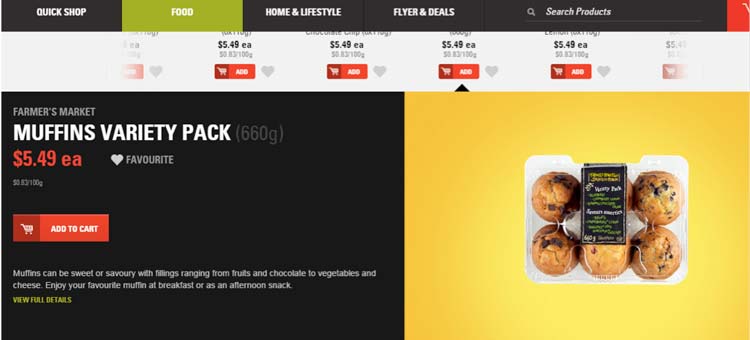
In some instances, item description did not give sufficient detail to help the customer make a purchase decision. For example, veal scallopini was listed with a price of $26.45, but with no indication of weight or quantity of cutlets in the package. A variety 6-pack of muffins did not specify the muffin flavours inside.

4. User-friendliness could improve.

The navigation menu is not as user-friendly as Grocery Gateway’s. To get out of a category, we had to go back to the menu and re-select each level of sub-category, whereas at Grocery Gateway, changing categories is one click away.

In addition, when we completed our shop, we specified that we didn’t want to allow substitutions (if required). However, when we received notice of our order being ready, we were told a substitution had been made. Upon reviewing our profile, it still showed that we would allow substitutions for any products. For foodies or those who are loyal to brands, this automatic substitution and the requirement to deal with customer service to request a credit was a hassle that detracted from the overall experience.

5. Spelling mistakes and slow page loads detract from the overall experience.

We also noted several spelling errors throughout the site. While seemingly insignificant, the devil’s in the details and a typo can easily take away from a polished experience. The pages were also slow to load which made the ordering process longer than it should be and could have potentially turned off customers who are in a hurry.

Where Loblaws Click-And-Collect Succeeded

1. Smooth pick-up experience at store.

The store has a very clearly marked pick-up location in the parking lot. Our order was ready, staff were quick to bring it out from the store, and seemed very educated about the process (and friendlier than the in-store checkout experience!). All the cold and frozen foods were still cold when we brought them home.

2. PC Plus integration was solid.

Your online profile can be linked to your PC Plus account (Loblaws’ loyalty program), so you can view your personalized offers as you shop. Weekly flyer specials can be shopped separately, and are also flagged within categories, as are other deals. Notification of order being ready for pick-up was prompt and clear.

Key Takeaways

The click-and-collect experience, as is the case for the home delivery experience, is definitely a customer convenience, but it is not for every customer. For many, grocery shopping remains a sensory experience: touching an avocado, smelling a fish, and seeing the colour of bananas is the only way to select your food. However, every consumer will at some point need to make a quick shop or a stock-up shop.

In some cases, grocers can even combine click-and-collect with home delivery to truly satisfy customer needs. The question will be whether this will be sufficient volume to make the model profitable over time. For Loblaws, the holiday season will prove to be the true test of capacity.

Vicky Applebaum is a consultant with Retail Category Consultants Inc. and helps clients develop and implement retail strategy, marketing and innovation projects.  Vicky has over 15 years of progressive retail experience in Canada in multiple disciplines.

Her experience includes advertising and merchandising at Loblaw Companies, and marketing, merchandising and category management with Shoppers Drug Mart.  Her love for all things marketing also led her to work on the agency side and in independent consulting in advertising, event marketing, direct marketing, new product launches and loyalty. Born in Montreal, Quebec, Vicky holds a Bachelor of Commerce (Marketing) from Concordia University.  She and her husband live with their daughter in Richmond Hill, Ontario where they operate a rental moving box business, CityBoxes.ca.

To learn more about how Retail Category Consultants can help your retail business achieve success, visit their retail services page or contact them for further information.

Luxury Jeweller BVLGARI Opens First Canadian Location

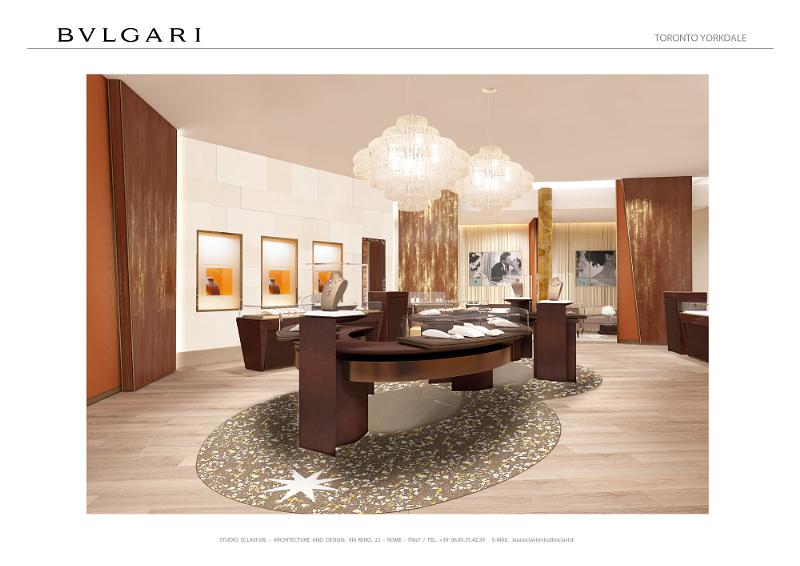
Luxury Italian jeweller Bulgari has opened its first Canadian location at Toronto’s Yorkdale Shopping Centre. It could be the first of several Canadian locations for Bulgari, we’re told, though the retailer is being cautious with any potential expansion plans. 

Bulgari Flagship Boutique at Toronto & Yorkdale Mall

Bulgari’s Toronto store carries the brand’s pricey jewellery collections for women and men, as well as handbags and accessories, timepieces, and fragrances. The store’s exterior facade features oversized windows and soaring marble columns, with the BVLGARI logo backlighted on the cream coloured stone. One of the brand’s key design elements, the Condotti eight point star, lies on the store entrance. The store features bridal, male, accessories, and VIP areas, where pieces can be viewed in privacy.

“Bulgari represents the ultimate in craftsmanship, creativity and innovation,” said Jean-Christophe Babin, CEO of Bulgari. “We are thrilled to open this store and to bring that extraordinary combination to Canada in a manner that perfectly represents the modern Bulgari brand while still paying tribute to our rich Roman heritage.”

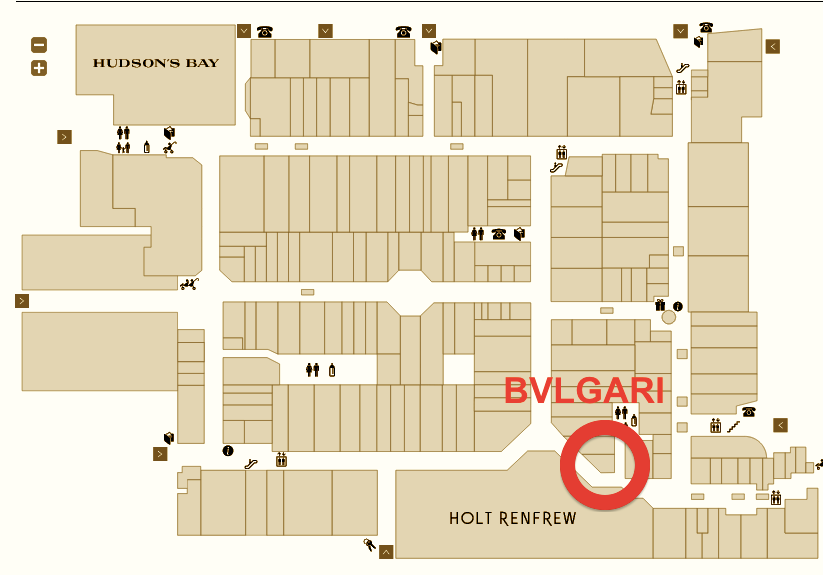
The 1,815 square foot Yorkdale boutique is located across from Holt Renfrew in the mall’s ‘luxury wing’, alongside brands such as Mulberry, Salvatore Ferragamo, Cartier, Versace, Tiffany & Co, Jimmy Choo, and others. Yorkdale, itself, has created a world-class cluster of luxury retailers in a concentration unrivalled anywhere in Canada. The neighbouring Holt Renfrew houses luxury concessions such as Louis Vuitton, Chanel, Gucci, Prada, Dior and Giorgio Armani, as well as a vast assortment of upscale brands across various product categories. 

Founded in 1884 in Rome, Bulgari is now part of French luxury goods conglomerate LVMH. Bulgari operates over 300 stores worldwide, including 15 free-standing American locations. Bulgari shops-in-stores are also located in various upscale jewellers, as well as luxury department stores such as Saks Fifth Avenue and Neiman Marcus. No word yet if Bulgari shops will be featured in any Canadian Saks Fifth Avenue locations. 

Besides its new Yorkdale store, Bulgari products are carried at Maison Birks in Calgary, Montecristo Jewellers in Vancouver, Chateau D’Ivoire in Montreal, and at Bandiera Jewellers in Toronto. 

Youtube video

Youtube video

Bulgari representatives won’t formally comment on the retailer’s Canadian expansion plans, except to say that future locations are a possibility. A business analyst, speaking on the condition of anonymity, says that the brand’s Canadian expansion plans will be cautious and be partly based on the success of its Yorkdale store. Retail analysts speculate that Bulgari could eventually operate three or more Canadian locations. Vancouver is an obvious choice for Bulgari, given its rapidly growing luxury market fuelled by affluent Chinese shoppers. A second Toronto location is also speculated, likely in the city’s posh Yorkville shopping area either on or close to Bloor Street West. One source speculates that a Calgary location could also follow. 

In the early to-mid 2000’s, a 700 square foot Bulgari shop-in-store operated with a 101 Bloor Street West entrance at Royal de Versailles jewellers in Toronto. The store closed due to lack of sales, and the space is now occupied by watch brand Rolex

Inside MUJI’S 1st Canadian Store

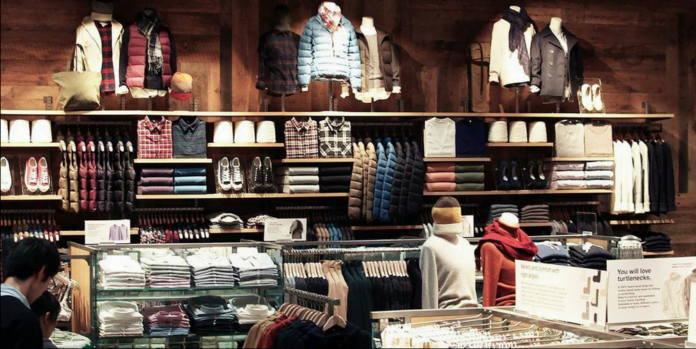
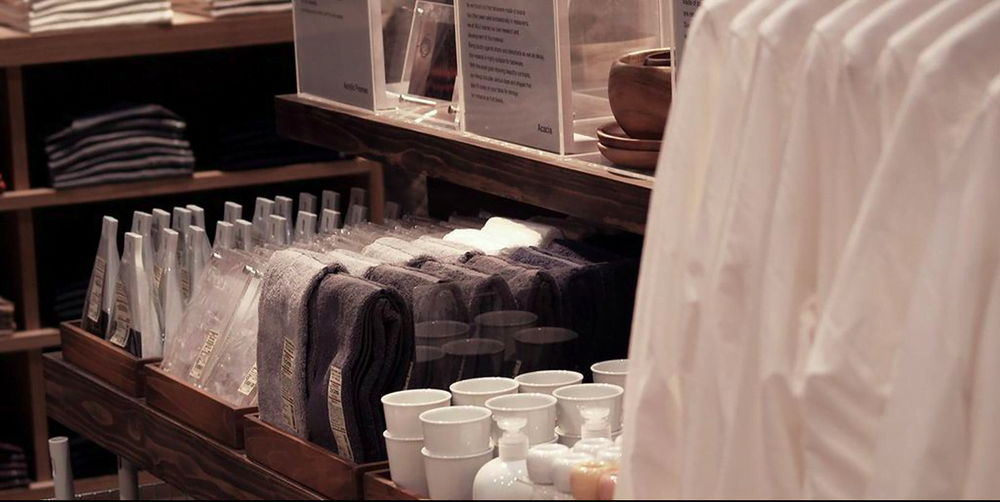
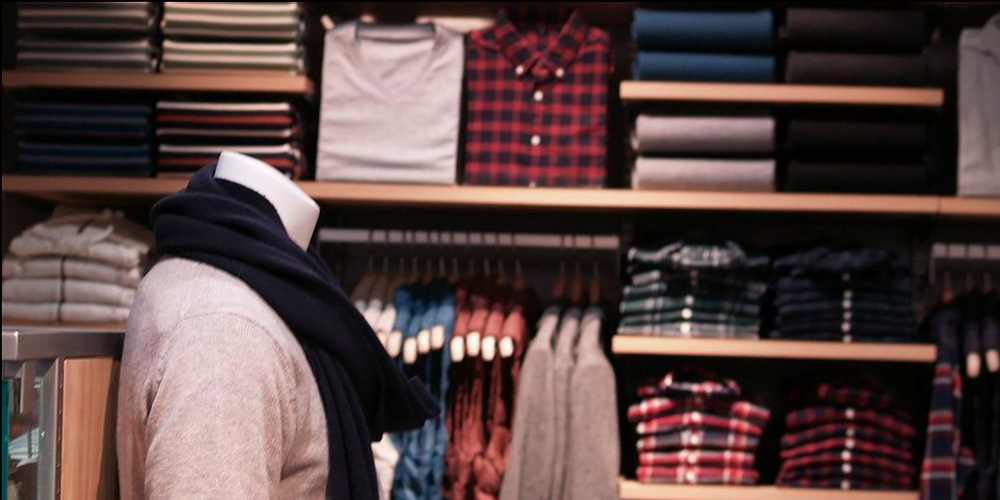
MUJI’S WOMENS APPAREL DEPARTMENT AT THE COMPANY’S FIRST STORE AT THE ATRIUM IN TORONTO. PHOTO: RETAIL ASSEMBLY

By Jennifer Pilkington

MUJI Atrium opened in Toronto this Saturday with long line-ups for it’s country launch. The retailer faces the same challenges as any new retailer to Canada, and methodically selected a smart location, determined a strong product mix, and ensured good inventory levels. 

The Atrium in downtown Toronto is directly across from the foot-traffic heavy Toronto Eaton Centre and Dundas Square. With a Dundas Street-facing entrance next to Forever 21, the retailer avoids high rent while benefiting from the block’s significant foot traffic. 

The store at 4400 square feet is half the size of MUJI’s Hollywood location, the largest North American offering. Launching downtown often means smaller spaces. In Japan, where the retailer has 385 stores, 7000 different products are offered, including widely popular grocery, snacks, confectionary and even prefab (ready made) houses for small city spaces.

PHOTO: RETAIL ASSEMBLY

Toronto launches without the houses and food, although the latter can be expected in Canada eventually.  

The 2800 products that are on offer are some of MUJI’s best: a mellow tonal cuckoo clock, the aroma diffuser that waves pure plant-based fragrant oils, simple, well-designed functional products and stationery. 

Each product is made with the care and consideration of the MUJI merchandising team. Ensuring each item is pleasant to use, and made with sustainable practices is important for the retailer. Minerals are used to colour, patterns are not used because of their excessive production requirements, items are designed simply and timelessly of natural materials.

MUJI’S FAMOUS AROMA DIFFUSER. PHOTO: RETAIL ASSEMBLY

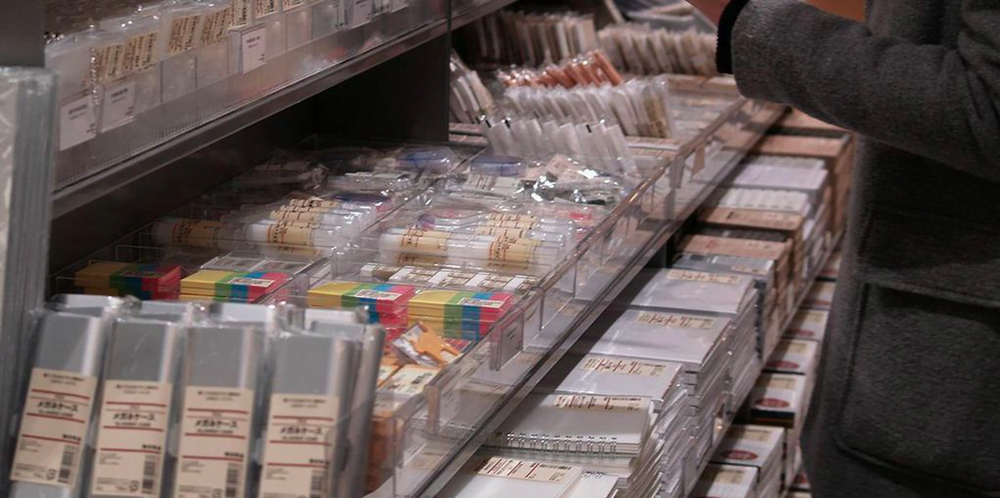
MUJI’s much-loved stationery department is located at the mall entrance, next to mens basics. The home department includes kitchen utensils, dishes, textiles, and travel. This area typically generates 54 percent of the company’s sales, but Canadian president, Mr. Toru Tsunoda sees significant opportunity in womens apparel, and beauty in Toronto. 

“Its looks like womens apparel is the most prospective category including shirts and knit products. Another big category is health and beauty,” said Mr Tsunoda in a Japanese-language interview. The women’s apparel department opens the store to the right, gift and basics at the entrance, flowing into travel and beauty at the cash. 
 
The retailer is known to spend little on market research and advertising. However it is clear from conversations with Mr. Tsunoda and his team that they are, nonetheless, very well researched. Shopping the local market was a key component to developing the launch assortment strategy. 

PHOTO: RETAIL ASSEMBLY

The product available in Canada is the same product available at the almost 650 MUJI stores across the world. “We are trying to harmonize and sell products that are available [everywhere]. The only difference is the sizes”, Mr. Tsunoda emphasizes. Food and safety regulations require some adjustments, but otherwise the products that are successful in one area will be offered in other geographic regions. 

‘Creating MUJI fans’ is the retailer’s number one priority. Their unbranded, quality items – the definition of Mujirushi Ryohin, the phrase which the retailer generates its name from – have a global cult following. While MUJI does not have the brand recognition of say Target or Nordstrom, it does have a smart launch strategy. Fans first, more stores second. 

It’s a quieter approach than we’ve seen from both Target’s mass launch, and Nordstrom’s PR based entrance. Each country / region has to operate profitably as it’s own company within the Japanese holding organization Ryohin Keikaku Co. Ltd. This is perhaps what drives the fans-first approach, and ultimately line-ups out the door on launch day. “My dream is to open a space as large as [in] the United States”, Mr. Tsunoda says with a smile. 

Visit MUJI Atrium on Bay is located at 20 Dundas St. W., Toronto ON | Monday-Friday 10:00am-8:00pm, Saturday, 10:00am-7:00pm, Sunday, 11:00am-5:00pm. 

A merchant first, now Managing Director of RETAIL ASSEMBLY Inc., Jennifer continues to work with the globe’s best brands and retailers. Always a champion of excellent creative and meaningful commerce, she works to build businesses and train/develop teams. retail-assembly.org | @RetailAssembly 

Efashion Canada has Launched

Image: Efashion Canada

By Jeanie Borremans 

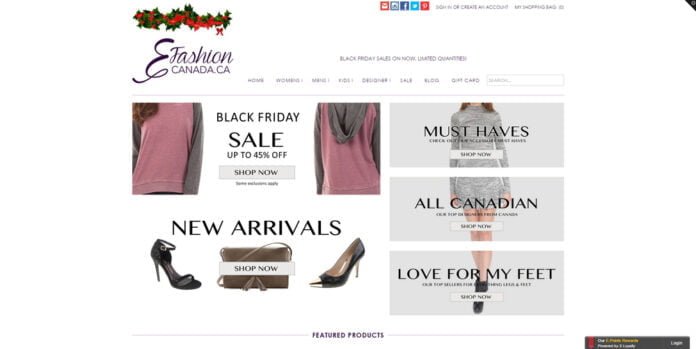
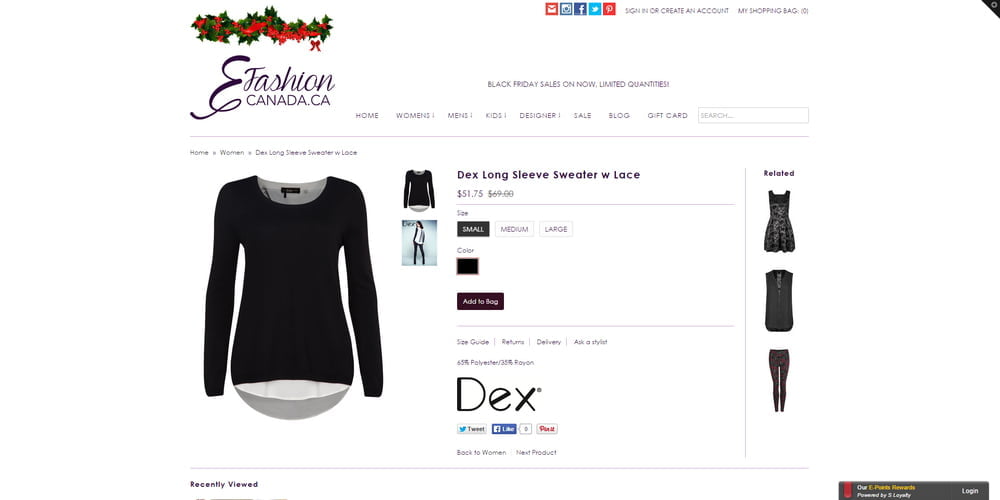
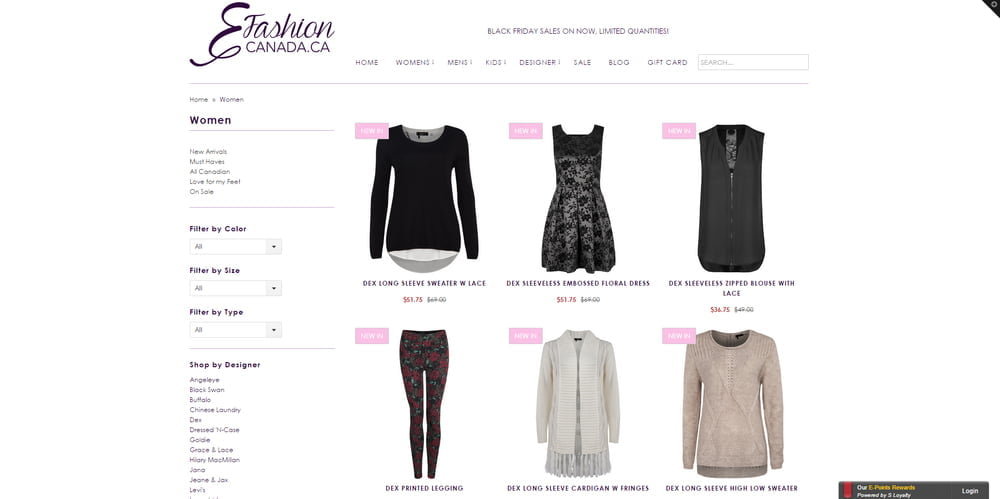
Formerly known as Emart Canada, Efashion Canada is a more clothing-focused website versus its predecessor. Aimed at a contemporary market, it features easier to shop widgets and fun details like “ask a stylist” and a “shopping bag” instead of your standard cart. 

There is also still a big push for Canadian Designers and items on the site, with their “Featured Canadians” series. Featuring fashion designers like Hilary MacMillan (Toronto) and brands like Puffin Gear (Winnipeg), Olvia Solie (Vancouver) and Dressed’n-Case (Edmonton), they want to bring attention to brands that may not have the “big” retailer push they need.

The main page is easy to navigate and gives an over-all high end feel to the products. Also featured on the homepage are Social Media links and easy access to their frequently updated blog space.

Image: Efashion Canada

Products and Designers are easier to navigate with quick click access to categories, colours, sizes and price. Individual product pages now show sizes available up front and size guides are a pop-up (which is great for many of the European and designer brands they carry), as is the “Ask a Stylist” feature which allows you to ask questions about the fit, how to wear an item and more. 

The focus is primarily on Women’s clothing & accessories but they still have men’s and children’s as well. Brands include Grace & Lace, Buffalo David Bitton, BlackSwan and Jana, and new brands to the site such as ALO Yoga & Olivia Solie Jewellery (out of Vancouver). 

Some things remain the same – if you’d already signed up for their E Rewards program, that hasn’t gone anywhere (and neither have the points you may have accumulated) and it still is one of the most quickly accumulating points programs out there right now (10 points for every $1 spent). Free shipping is still available over $75 and because they deliver using Canada Post, they can literally ship anywhere. They are now shipping to the U.S. via UPS, as well.

They also continue to be very active on Social Media, with things like Freebie Fridays on their Facebook Page; Instagram, Twitter and Pinterest feeds, and insider blogging. Part of their growth strategy includes bi-weekly E-Newsletters and exclusive offers to their subscribers.

Image: Efashion Canada

We talked to Marc Parent, President and CEO of Efashion Canada about the changes:

Retail Insider (RI): What made you decide to do the re-brand and name change?

Marc Parent: We decided tore-brand due to the direction we decided to go and that is fashion.We felt it was important for the consumer to relate and understand what we do, and efashion in some ways says it all. Emart was intended to sell other non-fashion products along side of fashion, but when we decided to go strictly fashion, it only made sense for us to have the consumer connect with our purpose.

RI: Why did you want to get into E Retail?

MP: We felt that Canada lacks in the variety of options available in fashion to the consumer online,and not all consumers have all the options in traditional brick and mortar because of their location or their busy family lives. EFashion addresses this lack by providing a variety of brands at a competitive price and delivery to any corner of this vast country of ours. 

RI: Why do you think Canadians are still behind on embracing E Retail in comparison to the US?

MP: Canadians traditionally are more reserved when it comes to sharing personal information and spending money online is the main reason, and also Canada in general has lacked in the past of the available options online or not wanting to spend the extra money to have something come from across the border. In stating that though, I am pleased to say though that research numbers in the last two years show we are increasing our spending and online presence higher now then the US based on per capita which is great for Canadians.

RI: Where else do you see the website expanding?

MP: Over the next six months we will be concentrating our efforts on offering more and more brands, products, and categories. We want our customers to have the best shopping experience in fashion with many options and price points for all consumers. Other exciting announcements will be shipping to the USA, faster shipping options and other options to satisfy all needs.

www.efashioncanada.ca

Why Canadian Retailers Shouldn’t Use Secret Shoppers to Solve Problems

The secret shopper is a charismatic creature. Slinky and crafty, it presents a pair of faulty socks like a gauntlet, just willing your employees to mess up.

OK, secret shoppers are people, too. But there are some big downsides to outsourcing your quality care that shouldn’t be ignored. For a start, secret shoppers can hurt your employees’ morale, undermining the trust they have in you and in themselves.

What’s more, they offer short-term, inconsistent solutions, and they can only report on a random business day that may not represent your company’s true problem area. Finally, secret shoppers have limited scopes. So while they can pick out mistakes, they’re not positioned to actually fix the problems, which is the real goal.

There is a better way to diagnose and fix issues in your company before they become long-term problem areas. The answer is simple: Mobilize your existing workforce. These are the people who work with your brand every day. They know each other, they know your product, and they can catch problems quicker than any secret shopper could. Here’s how to get started:

  1. Make your employees ambassadors. Empower your team members to take the company’s success into their own hands. By eliminating the need for secret shoppers and trusting your employees to take control of their own progress, you make them ambassadors for your brand. Let’s face it — nobody knows your brand better than your employees, so treat them like the experts they are.

  2. Support peer-to-peer reflection. Send your employees to work with other teams at scheduled times, then ask them to reflect on what they’ve found. Feedback from peer-to-peer reflections will be much more effective because it’s immediate and relevant. Have a set process for how the scheduled visit will happen, provide an outline of what’s expected of each visit, and offer guidelines that everybody can follow for giving and receiving feedback.

  3. Reflect little and often. One of the downsides of employing secret shoppers is that they’re usually a once-a-year tactic or a short-term solution for ongoing needs. To get a real sense of your business’s pain points, reflect on issues and achievements little and often within your team. This will create a company culture of honesty and self-improvement, which will solve problems better than an annual check-up.
  4. Use feedback tools. You don’t have to rely on anecdotes and gossip from your team to solve problems. Instead, set up a network of tools to automate and regulate how you collect feedback. For example, use remote monitoring tools to help you record activities in other locations, and use a survey schedule to make your employees feel comfortable about reporting problems, suggesting improvements, and receiving feedback.

  5. Utilize the daily huddle. You don’t actually have to huddle, but setting aside time every day to get together as a team and briefly discuss problem areas, as well as recent achievements, will empower your employees. And make sure you end with a motivating statement that will give everybody energy.

Quality control isn’t something that should be championed externally. When you mobilize your workforce to manage its own performance, you’ll boost morale, increase unity and loyalty among your team, and create a pattern for catching and resolving issues before they grow. It’s a win-win for you and your employees.

Sam Bahreini, a seasoned operations officer and agile entrepreneur, is co-founder and COO of VoloForce, a company that helps enterprise retail brands understand organization implementation through automation and simplification.

Longchamp to Open in Canada

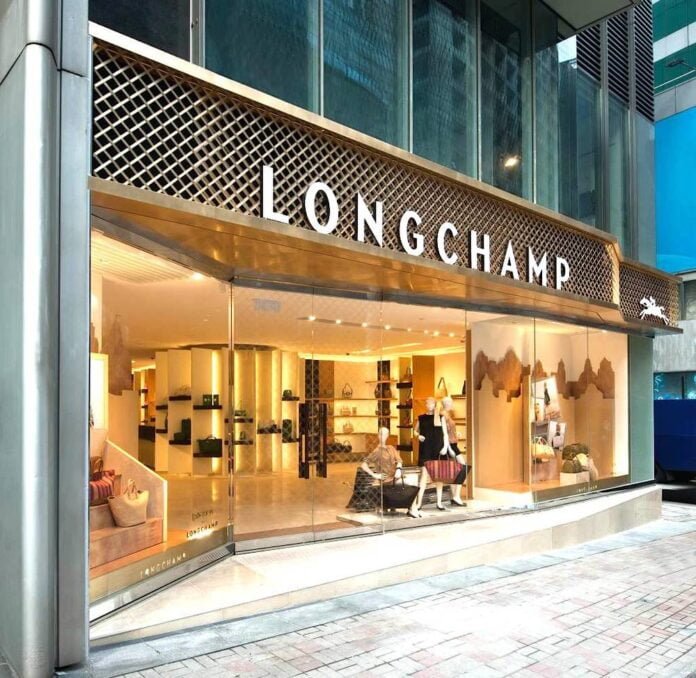
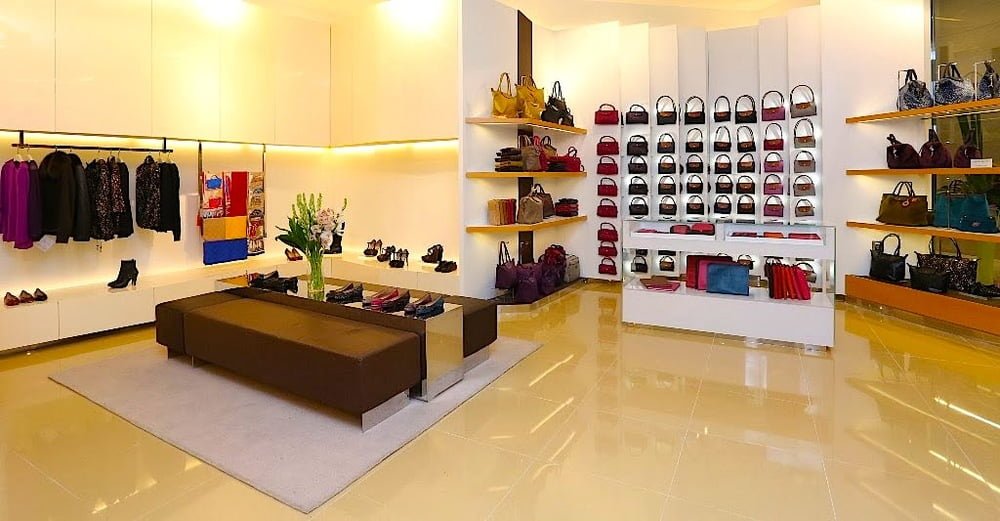
French luxury brand Longchamp will open its first free-standing Canadian location this spring at Toronto’s Yorkdale Shopping Centre. We spoke with the company’s New York City-based President and CEO about the brand’s Canadian success, as well as plans for more free-standing Longchamp stores. 

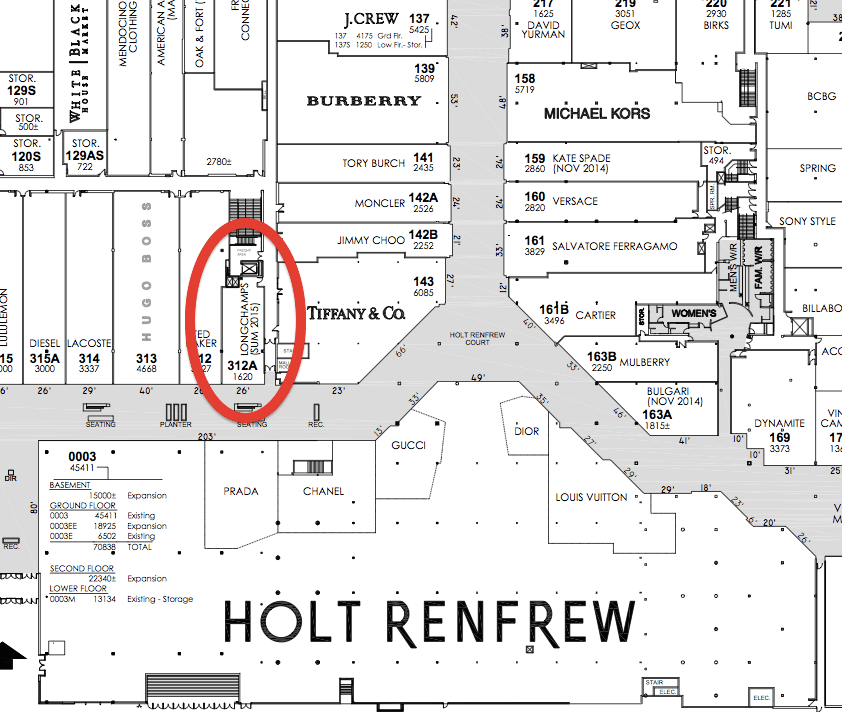
American President and CEO Stephanie Disegni tells us that Longchamp’s Canadian sales are strong and in order to present the brand’s entire collection (including ready-to-wear and footwear), it will open free-standing flagships to provide the ‘full Longchamp experience’. The Yorkdale store will measure just over 1,600 square feet, replacing Kate Spade which moved to a larger space. The reason Longchamp chose Yorkdale was because the opportunity arose, not to mention Yorkdale has built a strong mix of luxury tenants including the likes of Tiffany & Co., Jimmy Choo, Bulgari, Moncler, Ferragamo, Cartier and others. Longchamp’s Yorkdale location is ideally located across from Holt Renfrew‘s mall-front concessions for Chanel, Prada and Gucci, and is up the hall from the mall’s busy Tesla and Apple stores. 

Ms. Disegni says that Longchamp will evaluate the success of its Yorkdale boutique before announcing future Canadian locations. She says that several Canadian cities are on the brand’s radar and that Longchamp generally seeks space in the 1,500 square foot range, though stores can range from as small as 1,000 square feet to as large as 2,500 square feet. Longchamp will evaluate a variety of potential real estate opportunities, including upscale shopping centres and streetfronts. 

Longchamp accessories are currently carried in several upscale Canadian retailers including, Andrews in Toronto, Blu’s in Edmonton, Edward Chapman in Vancouver, and in several Holt Renfrew locations. Ms. Disegni says that strong sales at these and other wholesalers prompted Longchamp to launch free-standing stores with a wider product assortment. 

Youtube video

Longchamp currently operates 14 free-standing American locations and two outlets. Stores are located in metropolitan New York City (5 locations), Miami (2 locations), and in San Francisco, Las Vegas, Boston, Los Angeles (Costa Mesa), Philadelphia (King of Prussia), and Washington DC. Outlets are at Woodbury Common and Fashion Outlets of Chicago. The brand also retails in selected Bloomingdale’s, Nordstrom, Saks Fifth Avenue, and Von Maur locations, as well as various other upscale stores. 

Lowe’s Plans Aggressive Canadian Store Expansion

American home improvement and appliance retailer Lowe’s plans to substantially expand its Canadian store base. The company just announced three new locations, adding to its current 37 Canadian stores. We interviewed Lowe’s Canadian president, who tells us that the retailer could as much as triple its current Canadian store count. 

Last week Lowe’s announced that it was opening three new Canadian locations, each offering more than 40,000 in-stock products. Locations include: 

Lethbridge, Alberta – 3849 Mayor Magrath Drive South: In the spring of 2015 a 94,500 square foot location will feature an adjacent 19,500 square foot garden centre. The store will cost over $24 million to build. 

Saskatoon, Saskatchewan – 125 Betts Avenue: In the summer of 2015 an 86,000 square foot location will feature an adjacent 15,500 square foot garden centre. The store will cost over $20 million to build. 

Sault Ste. Marie, Ontario – 248 Northern Avenue: In the summer of 2015, a 75,000 square foot location will feature an adjacent 4,400 square foot permanent garden centre and a 6,300 square foot seasonal pop-up garden centre. The store will cost over $7 million to build. 

Each of these three stores will create between 120 and 140 jobs, as well as an additional 40 to 50 seasonal positions. 

“We are thrilled to be growing our presence in Canada and are always evaluating new opportunities to bring Lowe’s closer to our customers,” said Sylvain Prud‘homme, President, Lowe’s Canada. “These three new stores support our ongoing strategy to be the home improvement choice for Canadians and we see tremendous opportunity in these new markets for us.”

We interviewed Mr. Prud‘homme, asking him specifically about Lowe’s future plans for Canada. He tells us that the retailer’s goal is to ultimately operate between 100 and 120 Canadian locations, up from its current 37 stores. More new store locations will be announced shortly. Desired store sizes are generally in the 84,000-110,000 square foot range and while some of its stores are free-standing newly-built locations, some will replace other large-format retailers in a variety of locations. Its Sault Ste. Marie location, for example, is a ‘brownfield store’ replacing a former Zellers location in a local strip mall. Although Lowe’s typically locates in the suburbs, it is in the process of opening two Manhattan locations. At the moment there are no plans to open downtown Canadian locations, though this could change if the right opportunities become available. 

Youtube video

Last week, the retalier launched Lowe’s Holoroom in its North Etobicoke and Burlington stores — a first of its kind, home improvement simulator that applies 3-D and augmented reality technologies to provide home owners with an intuitive, immersive experience of their room renovation projects. The video above explains the concept. 

Lowe’s was founded in 1946 in North Wilkesboro, North Carolina. It has over 1,835 stores in the United States, Canada and Mexico. It serves about 15 million customers a week and its fiscal 2013 sales were U.S. $53.4 billion and it employs about 260,000. Lowe’s is the world’s second-largest hardware chain, behind Atlanta-based The Home Depot

Lowe’s first Canadian locations opened in southern Ontario in December of 2007. All of the retailer’s Canadian stores are currently located in Ontario, Alberta, Saskatchewan and British Columbia, employing over 6,000. 

We’ll update you when Lowe’s announces more details on its substantial Canadian store expansion. 

Omni Channel: A Necessity in Today’s Canadian Retail Landscape

By Todd Trombley

The Good Old Days: The emergence of the internet and the worldwide web changed everything about consumers and the retailers who serve them.  Before this change retailing was pretty simple. You were either a brick and mortar retailer or you were one of a few mail order catalogue based retailers.  If you were a brick and mortar store you offered service to your consumer that ranged from full service to very little service to no service. From about 1962 until about 2005 the idea of service level and how service level impacted the merchandise you carried along with the number and the nature of staff were major preoccupations of retailers.

And Then Retailing Went Boom: At some point; and it is impossible to precisely determine this exact point in time, the realities of the internet and worldwide web changed consumers’ behaviours.  People became addicted to the information that could be found through the internet. People began to realize that they could stay connected to others; friends and complete strangers, via the web.  We’ve all pretty much always been sponges for information and creatures that thrive on social connections, it is how we attempt to navigate and live in our little worlds.  It’s just that pre-internet this acquisition of knowledge, the pursuit of information and maintenance our social networks took a lot of time and effort. So, now we as consumers had these really easy to use tools that provided us information; pretty much at our finger tips and we had a means of maintaining our social networks without even having to directly connect with the people in the networks. Do you still wonder why people seem so hooked on the devices that enable them to stay connected to this gusher of information and connectedness?  You can’t walk down a sidewalk, drive a street, ride an elevator or stand in line today without seeing someone head down, fingers and thumbs pecking at keys getting this seemingly insatiable addiction satisfied.

Build It and They Will Come: So now given this reality, you better have a robust and deep presence on the web so that this hooked on info consumer can jones out on what you carry (website: CHECK).  Since you have to build this web presence anyway, to provide information to the information junkies, you might as well go all the way and allow them to actually buy product through this online avenue (online store: CHECK). While you’re making that happen you might as well build your online site and store so that they are used and seen optimally on the device most frequently used by today’s consumer, the ubiquitous smart phone, (handheld optimized online site: CHECK).  Just to complete your purchasing relationship with your consumers why not build a special app and give it your best customers so that they can be forever connected to you via an invisible electronic tether (digital app: CHECK).

Now that you’ve done all this to address the “information” and “transaction control” desires of your customers you need to address their ever expanding needs pertaining to their social networks. You see consumers now seem to have a greater than ever need to feel they belong to some group. In fact the groups they belong to; or “follow”, seem to define them and give them some sort of virtual yet very tangible identity.  This need is so great and so identity affirming that an ever expanding number of consumer want to “share” and announce to the world; or at least their network of people connected to them, exactly who it is that they find of interest.  Hello social media sites where your customers can connect to and follow you and stay updated on all the really cool stuff that you are doing to make their relationship with you all that it possibly can be and where they can then announce their affiliation with you and push your communication directed to them out to their own social connection network (Facebook: check; Twitter: CHECK; Instagram: CHECK; LinkedIn:CHECK).

Stick to Your Knitting: But hey, while you’re doing all of these super important things that are required of you in today’s retail cosmos don’t neglect the things that have traditionally meant winning or losing in retail.  Great merchandise, compelling displays of that merchandise, the best service offering regardless of your service level type, personnel that can engage with and establish a relationship with your customers and a strategy that causes consumers to beat a path directly to your door. These realities; along with a few more that are just beginning to gain traction, are the realities that make Omni Channel a vital necessity today and in the future.

Todd Trombley is a principal at Performance Improvement International (PII), a training, coaching and consulting company that works across a variety of industries developing executive and senior leadership’s ability to gain greater productivity from the teams and functional areas they lead. PII is based in Oakville Ontario and Detroit Michigan and works withclients throughout North America. The firm was founded in 1997.

Todd has worked with a number ofCanada’s leading retail organizations. This work usually finds him working within the Store Operations function improving revenue production by enhancing the skill-sets of sellers and managers and by bringing the resources of other functional areas of these firms more forcefully to bear within Operations.

When not at his clients Todd can often be found golfing; poorly, or riding one of his motorcycles; happily.

It’s ‘Crazy Friday’ in Quebec

By Eric Blais

Everybody loves a deal no matter what it’s called.

Black Friday, the retailer-created shopping event following Thanksgiving in the U.S., is increasingly popular in Canada.

survey by New York-based IPG Mediabrands found a staggering one million Canadian workers plan on phoning in sick on Nov. 28 (Black Friday) and/or Dec. 1 (Cyber Monday), the dates of this year’s retail blitz.

According to findings from a survey conducted last year for BMO, 47% of Quebeckers were planning to make purchases on Black Friday in 2013, up from 41% in 2012.

Wikipedia offers this explanation for the name’s origins:

“The day’s name originated in Philadelphia, where it originally was used to describe the heavy and disruptive pedestrian and vehicle traffic which would occur on the day after Thanksgiving. Use of the term started before 1961 and began to see broader use outside Philadelphia around 1975. Later an alternative explanation was made: that retailers traditionally operated at a financial loss (“in the red”) from January through November, and “Black Friday” indicates the point at which retailers begin to turn a profit, or “in the black”.”

Whatever the origins, the name is meaningless, if not depressing, in French Québec.

Retailers have been using different French names to give meaning to their sales events. Some call it Vendredi Noir. Others like Banana Republic call it Super vendredi. Some simply call it Méga Vente Black Friday (it should be “solde”, not “vente”). To be safe, Centre HiFi calls it Vendredi noir and Black Friday.

L’office québécois de la langue française has tackled the problem and is recommending Vendredi fou (Crazy Friday).


Eric Blais is President of Toronto-based Headspace Marketing Inc., which also authors the website: www.WhatQuebecWants.com