Purdys Chocolatier, is expanding into the Maritimes, bringing its rich Canadian heritage, which began in 1907, from the West Coast to the East Coast, and marking a new chapter in its Canadian history.
In September, the Canadian chocolatier will open four locations in shopping malls across Nova Scotia and New Brunswick, adding two more provinces to the brand’s growing national footprint.
The company said the expansion is a direct response to “vocal enthusiasm from Maritimers who have been asking for a local shop for years.”
“Purdys Chocolatier has already been a part of the community for some time through local fundraising programs alongside strong online support. Across the Maritimes, parents, coaches, and school volunteers have regularly partnered with Purdys Chocolatier to support important community projects – from school field trips and classroom supplies to travel costs for sports teams, bands, and clubs,” it said.
“As a family-owned Canadian business committed to intentional growth within the country, expanding to the Maritimes was the natural choice for the brand. Both Purdys Chocolatier and the Maritimes share a deep love for quality, local pride, and Canadian craftsmanship.”
“This expansion has been a long time in the making, and we are so deeply grateful for the support that got us here. After years of requests for local shops, we knew it was time to give Maritimers a physical shop to enjoy our beloved chocolates,” she said.
The store openings in September:
● Regent Mall (Fredericton, NB)
● Champlain Place (Dieppe, NB)
● Mic Mac Mall (Dartmouth, NS) – Pop-up location
● Halifax Shopping Centre (Halifax, NS) – Pop-up location, permanent storefront in early 2027
Dean said Purdys has 84 permanent stores and it just closed eight seasonal pop-ups.
“It’s the first time going east of Ontario. So we’re very excited. It’s been a long time coming, quite frankly. Our customers out there have been very loud. And obviously, being Canada’s chocolatier, we want to be coast to coast. This is the first time we’re opening physical stores in the Maritimes,” said Dean.
“We’re going into market with four locations right out of the gate and we’ve already scouted and anticipate more openings there after this initial four.
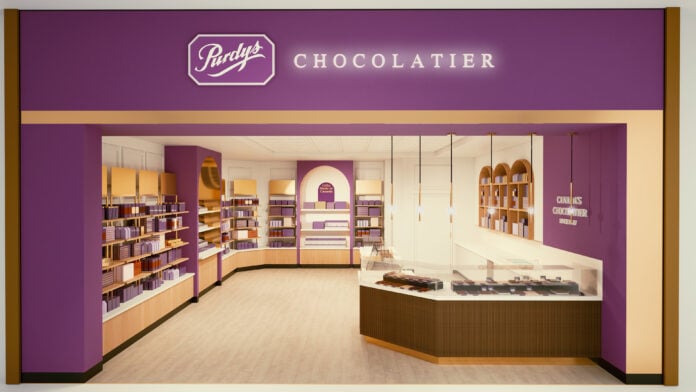
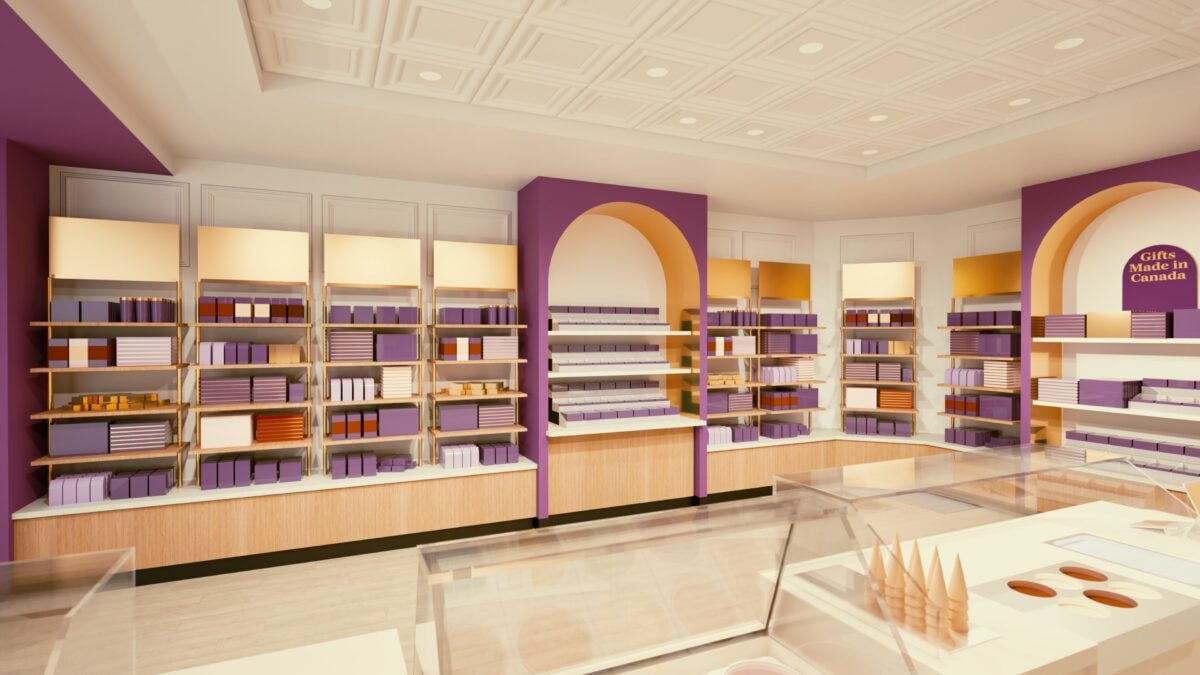
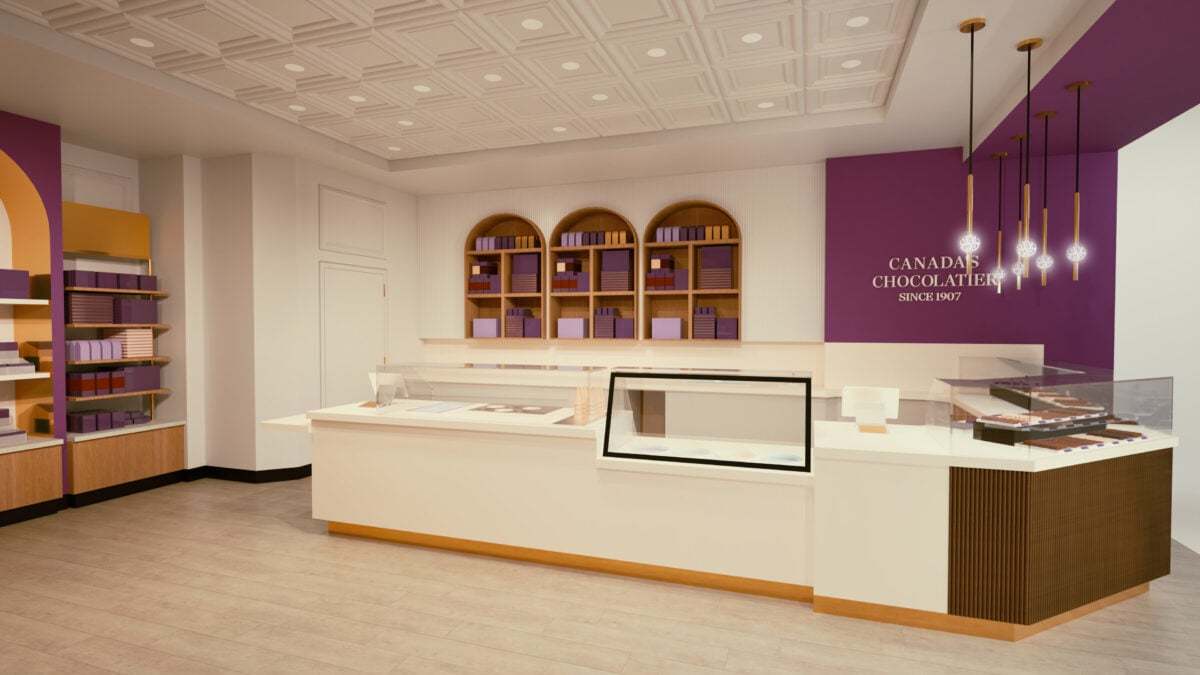
Purdys rendering Champlain Place shop location
“We already have a very established loyal following. We can see that from our other channel sales. But we also see a lot of similarities in habits of chocolate consumption and gifting, really. And we see the feeling from the Maritimes, from all of our customers there, is that they are looking for premium chocolate gifts. So we want to be able to provide that for them.
“We think the market is really a good fit to who our core customers are in other provinces, and so we’re very hopeful. And from all the excitement we’ve heard so far, we think these are going to be really successful openings. And that’s the reason to go in with four. We’re so confident we’re not starting with one; we’re going in with four.”
Purdys rendering Champlain Place shop location
Dean said the pop-up model is used to test markets before they go into permanent stores.
Dean said Purdys is actively building right now in Fairview Park, Kitchener, Masonville in London, Ontario. It just opened in Oakridge Park in Vancouver.
Vancouver-based Before, a leader in clean oral care and award-winning toothpaste, has launched Before Brilliant Breath MouthWash, a next-generation rinse designed to elevate breath freshness while supporting a balanced and healthy oral microbiome.
Marking a major innovation milestone, it is the first mouthwash in North America packaged in fully home compostable, plastic-free Vivomer, made entirely from plants, said the company.
Formulated with Before’s signature SuperMint flavor, Brilliant Breath delivers an instant cooling boost and long-lasting freshness you can feel immediately. Unlike conventional mouthwashes that rely on alcohol and harsh ingredients that can strip the oral microbiome, Before Brilliant Breath MouthWash is formulated without alcohol, peroxide, SLS, parabens, or dyes, offering a clean, gentle, and super fresh rinse.
“We’ve always believed fresh breath shouldn’t come at the expense of your oral health,” said Steve Thorp, CEO and Co-Founder of Before. “Traditional mouthwash can feel like a fire drill for your mouth. Brilliant Breath brings the cool, long-lasting freshness people love, but in a microbiome-friendly formula that actually supports your teeth and overall mouth health.”
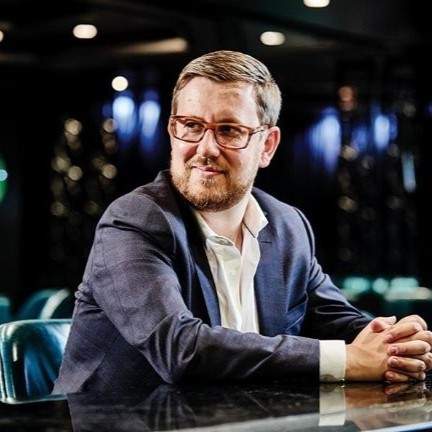
Steve Thorp
Sea salt helps sweep away debris for cleaner teeth and gums, while hyaluronic acid, aloe, zinc, and vitamin C work together to nourish oral tissues and promote microbiome balance, said the company.
Key Benefits
Kills harmful bacteria and combats bad breath
Sea salt removes particles for cleaner teeth and gums
Hyaluronic acid and vitamin C help restore moisture and microbiome balance
Before’s SuperMint flavor delivers incredible taste and long-lasting freshness, elevating your daily oral care routine
Leaping Bunny certified and vegan friendly
World’s first mouthwash in fully home compostable, zero-plastic Vivomer packaging
1% of sales fund environmental initiatives through BeforeCares™
The bottle is made from Vivomer, an advanced plant-based natural material developed by Shellworks. Fully home compostable and plastic-free, Vivomer helps reduce reliance on traditional petroleum-based plastics that pollute landfills and oceans.
“Vivomer represents a new generation of materials designed to work in harmony with nature,” said Amir Afshar, Co-Founder, Shellworks. “We’re proud to collaborate with Before to bring this innovation to oral care, proving that high-performance packaging can be made entirely from plants, be entirely stable in use and yet safely return to the earth at end of life.”
Amir Afshar
Before Brilliant Breath Mouthwash is available at beforecompany.com across the U.S. and Canada, on Amazon, and exclusively at Sprouts Farmers Market locations nationwide within the retailer’s Forager Innovation Set.
Thorp said it will be available in Whole Foods in mid-June.
The company was incorporated in 2021 and spent about two years in formulation and brand development, launching in 2023 with a toothpaste.
“We specifically launched really soft online, D2C, just to get our wings underneath us and get production supply chain really dialed in.
And then in the first couple of months, I started, literally myself, just knocking on doors,” said Thorp.
“We really wanted to have kind of a ground-up groundswell of influential individual accounts, boutiques, that would really drive some good brand awareness. I literally hit the streets for the first few months, knocking on doors, and opened up some really great boutique accounts. I spent about four to six months doing that, mostly in Canada and then a little bit into the US, just to get the brand started.
“Past that, I started to knock on some bigger retail doors after about six months.”
Thorp said the reason behind starting the company was that he always found toothpaste specifically to be a little bit of a boring category, and anybody that he talked to didn’t really have a brand that they loved or something that sat on their counter that was really important to them.
It was just kind of a product everybody had to use.
“I always found that so fascinating that, for a product that everybody uses twice a day, there just wasn’t really a lot of love or brand loyalty for the category. It was just this thing that you had to do,” he said.
“And for something that’s so important for our overall health and for a product that you use so often, I always found that so fascinating.
“In our first focus groups, I remember back when we were really starting to get serious talking about the category and the product, I would ask all of my friends and peers, friends in the industry that either own brands, are really in tune with the industry, or are in the wellness category, and I would ask them, “Hey, what toothpaste do you use?”
Before photo
“And they would always be kind of stumped. They’d always be like, “I don’t know. I think I use Colgate,” or, “I think my wife bought something.”
Better-for-you oral care was still a very, very small overall percentage of the category in terms of dollars and volume, he noted.
“It’s growing at a rapid rate and was five years ago and is today even more, but still a very small representation compared to the rest of wellness or personal care beauty, which have been disrupted quite a bit with better-for-you products,” he said.
“Now that we’ve really started to establish our retail presence and our supply chain and distribution, we’re definitely starting to scale up.
“We’ve got some other really great mid-tier retail partners. Choices has been a great partner for us on the West Coast. On the East Coast, Healthy Planet has been a really great partner for us as well. And I think the next stage is we’d really like to step up into conventional grocery and look at some national partners.”
A Toronto-based office catering startup is positioning itself at the intersection of workplace culture and the return-to-office push, arguing that companies are underestimating the role food plays in employee engagement and collaboration.
Nüu Catering, launched last October, operates a platform that connects offices with more than 50 local restaurant brands across Toronto, focusing on recurring meal programs for workplaces with between 20 and 200 employees.
Co-founder Fahim Ahmadi said the company was developed in response to changing office dynamics as more employers increase in-person attendance requirements.
“Returning employees to the office is only part of the equation,” Ahmadi said in an interview. “What actually shapes culture and performance is the everyday experience once they’re there.”
The startup enters a market where employers are increasingly trying to improve the in-office experience while balancing hybrid work expectations. Ahmadi said food has become an overlooked part of that equation, particularly when companies rely on what he described as uninspired or repetitive catering options.
“When they order from boring places — cold sandwiches or cheese platters — people don’t gather or engage,” he said. “We want to make office culture fun, and food is the fun part.”
Ahmadi said the business model differs from consumer-focused delivery platforms because office catering orders are typically placed in advance and outside peak restaurant hours, helping restaurants generate more predictable daytime sales.
Drawing on nearly two decades in the restaurant industry, including 16 years operating his own restaurant, Ahmadi said he saw catering as a segment many independent restaurants struggled to fully capitalize on.
Fahim Ahmadi
“Office catering is different from platforms like Uber Eats or DoorDash, where orders come during peak hours,” he said. “Catering orders are usually placed before lunch, which helps build momentum for restaurants.”
The company acts as an intermediary between offices and restaurants, handling ordering logistics, scheduling and customer service. Ahmadi described the platform as an “operating system for office catering,” aimed at reducing administrative work for executive assistants and office managers who often coordinate food orders alongside their regular duties.
The company’s recurring business programs allow offices to automate weekly meal scheduling and invoicing while rotating cuisines and restaurant partners.
“Our sweet spot is for 20 to 200 staff, especially recurring orders,” Ahmadi said. “Our business is built on recurring programs where companies order weekly, with different cuisines each time.”
Ahmadi said Nüu selectively partners with smaller independent restaurants rather than large chains, using criteria that include food quality, packaging, customer reviews and delivery reliability.
“We partner only with top restaurants in the city based on reviews and ratings,” he said. “We’re selective about who we onboard.”
The company also removes restaurant partners that fail to meet operational standards, including repeated delivery delays, packaging issues or customer complaints.
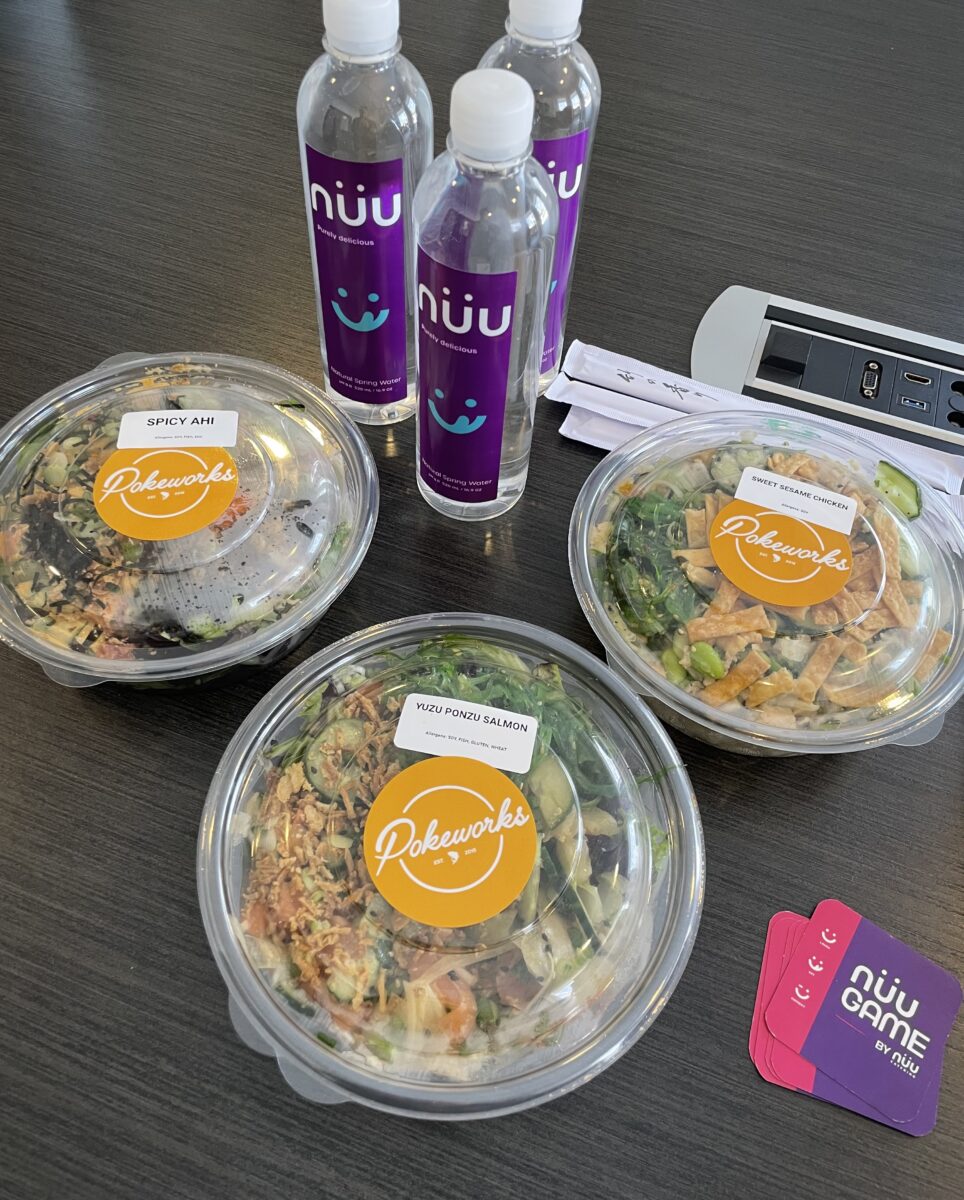
Beyond food delivery, Ahmadi said the company is attempting to differentiate itself through workplace engagement features. Orders can include conversation-based card games, designed to encourage interaction among employees during team lunches.
The company also emphasizes dietary accommodations and healthier menu options, including Mediterranean bowls and salads, alongside complimentary bottled water with orders.
“We believe in technology backed by humans,” Ahmadi said. “Even with AI, human interaction is key, especially with food.”
Each catering order includes what the company describes as a concierge-style service, with direct communication around dietary restrictions, allergies and order customization.
Nüu Catering photo
Although the company remains in its early stages, Ahmadi said it has already secured recurring corporate clients.
He declined to disclose specific order volumes but described growth as steady since launch.
“We’re still a startup, so not massive numbers yet, but strong volume,” he said.
The business currently operates across Toronto using a network of drivers and teams focused on sales, software development and marketing.
Ahmadi said the company spent roughly two years developing the concept before launching publicly in October, timing the rollout to coincide with broader return-to-office trends.
Nüu Catering photo
He believes employers are increasingly looking for practical ways to encourage workers to spend more time in the office without relying solely on mandates.
“Food can be a reason for people to come back together,” he said. “Like offering bi-weekly lunches.”
The company is also exploring expansion opportunities in the United States, particularly among technology startups in California, where Ahmadi said workplace culture initiatives tend to be more established.
“We’ve been working with tech startups in California, where office culture is very strong,” he said. “People stay in the office because they enjoy the environment — food, games, social interaction.”
King Living has opened its first Québec showroom at Quartier DIX30 in Brossard, located on Montréal’s South Shore and accessible via the REM rapid transit network.
The new showroom marks the Australian-founded, family-owned company’s fourth Canadian location and introduces its modular furniture collections to the Québec market.
Founded in Sydney in 1977, the retailer said it designs, manufactures and retails its own furniture, with collections engineered for long-term use through modular design, replaceable components and customizable configurations.
Known for its “Future of Furniture” philosophy, the company said it operates 40 showrooms globally across eight countries and has seen growing demand from Québec customers through its Toronto showroom and online channels.
“When I built my first sofa in 1977, I wanted to create furniture that families could keep, adapt and enjoy for decades,” said David King, Founder of King Living. “That philosophy still guides every collection we design today. Montréal has a strong appreciation for thoughtful design and craftsmanship, making it a natural fit for King Living.”
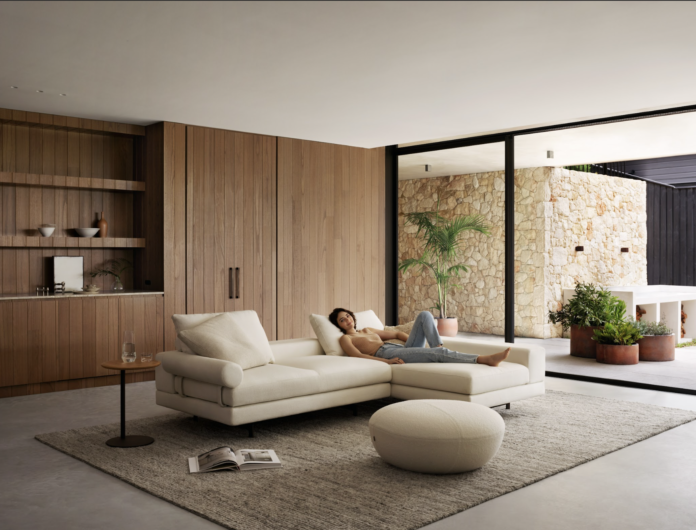
King Living photo
Located within Quartier DIX30 in Brossard, the showroom places the retailer within one of Canada’s leading open-air lifestyle precincts. Situated on Montréal’s South Shore, Quartier DIX30 is one of Canada’s largest open-air lifestyle destinations, home to more than 270 retailers, 65 restaurants and a major entertainment precinct serving the Greater Montréal Area. The Brossard location offers ample free parking and convenient access via the REM rapid transit network for customers travelling from Montréal and surrounding suburbs across Québec, explained the retailer.
“Québec customers value quality, functionality and long-term value in the home,” said David Woollcott, CEO of King Living.“Our furniture is designed to evolve with people’s lives, whether through modular configurations, replaceable covers or adaptable layouts, and we’re excited to introduce Montréal customers to that approach.”
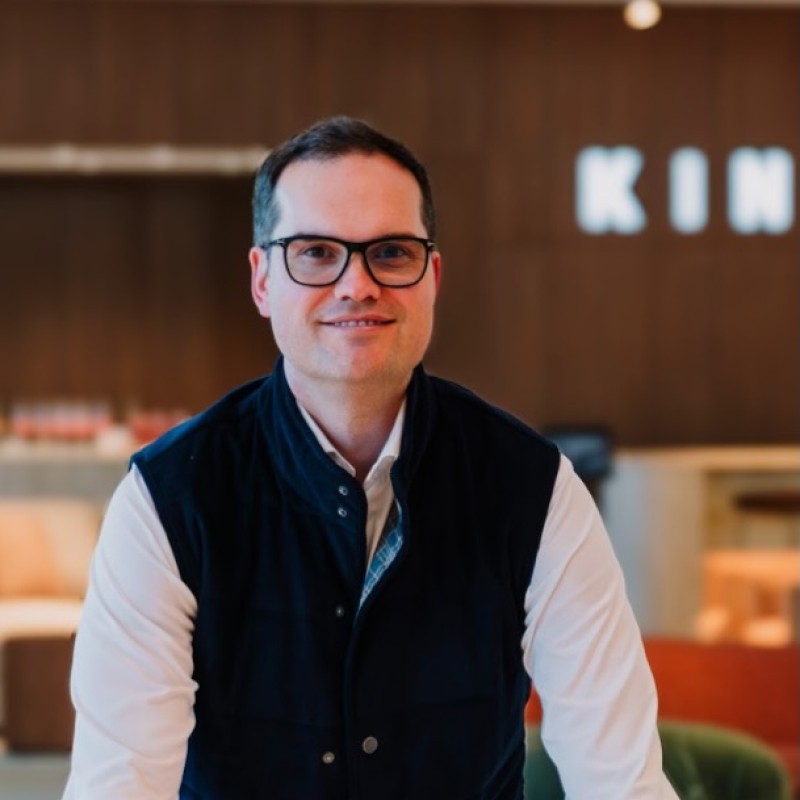
David Woollcott
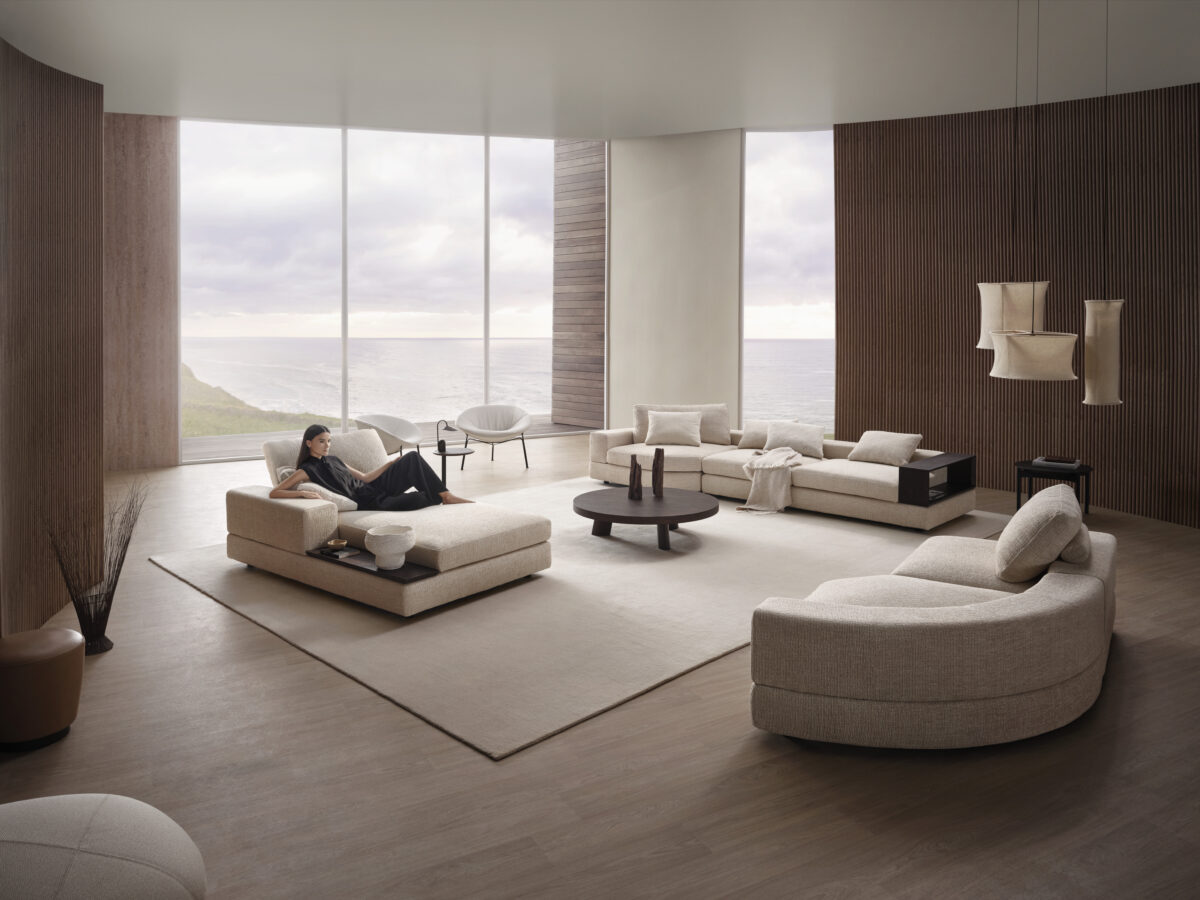
The retailer said the Brossard showroom features the full King Living collection across living, dining, bedroom and outdoor categories, including award-winning designs such as the Jasper, Delta and 1977 Sofa with prices starting from CA$1990 for a three-seater sofa. Every piece is made to order through King Living’s vertically integrated business model, with customers able to customize configurations, seating arrangements and finishes across more than 200 exclusive fabrics and premium leathers.
King Living opened its first North American showroom in Vancouver in 2019, followed by Calgary and Toronto. The Brossard showroom marks the brand’s fourth Canadian location and expands its North American footprint alongside U.S. showrooms in Chicago, Portland and Orange County.
The company operates 40 showrooms across Australia, New Zealand, Canada, the United States, the United Kingdom, Singapore, Malaysia and China.
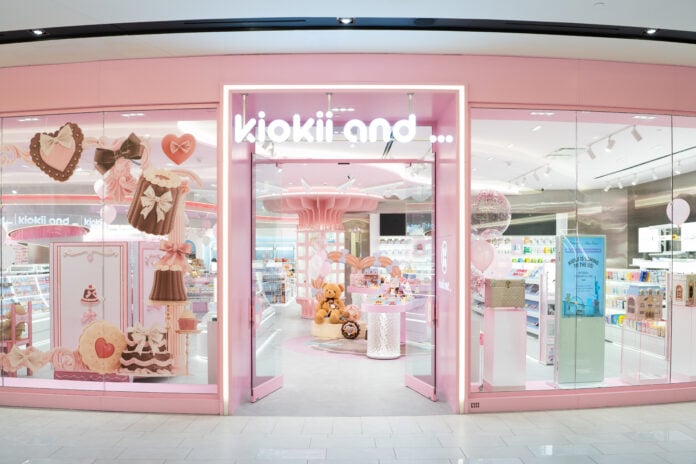
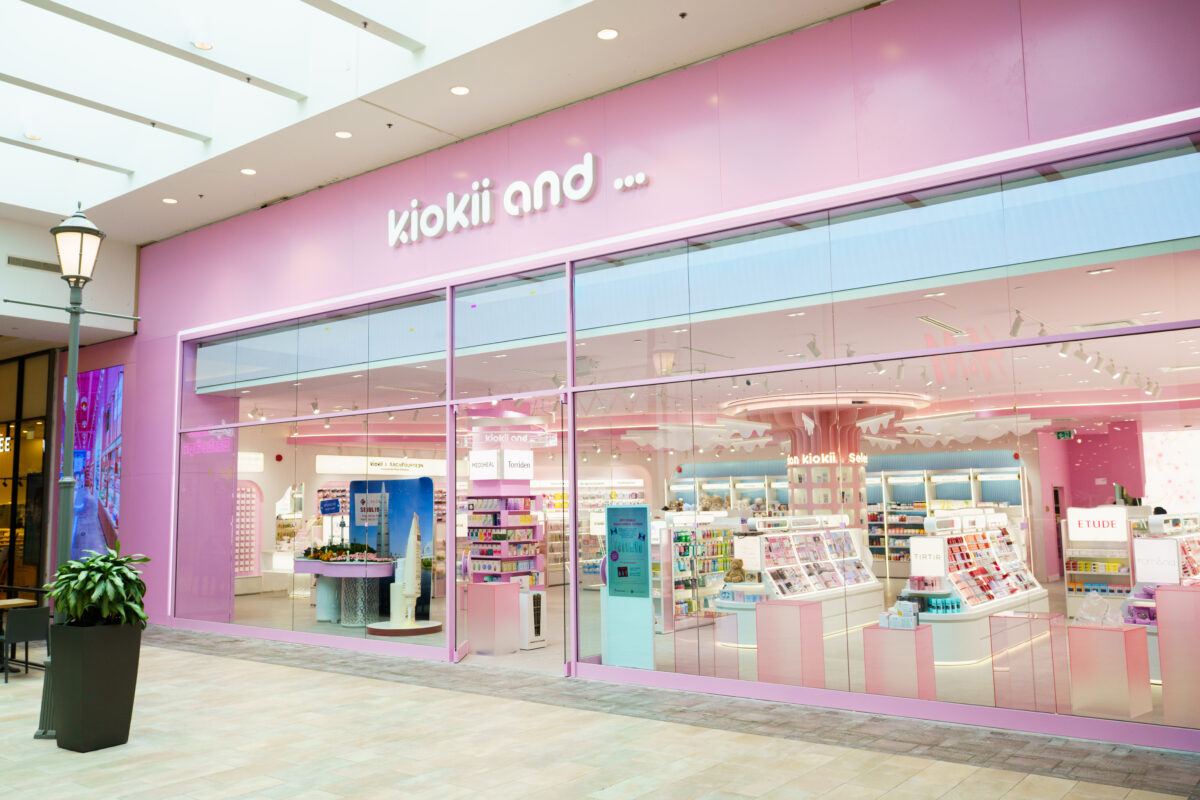
From fewer than a dozen stores just two years ago to an expected 42 locations across North America by the end of 2026, Canadian-founded retailer Kiokii and… is rapidly becoming one of the country’s most closely watched shopping centre success stories.
The Toronto-based Asian beauty and lifestyle retailer has expanded aggressively across many of Canada’s top enclosed malls while simultaneously preparing for broader growth in the United States. Along the way, the company has emerged as part of a new generation of highly visual, discovery-driven retail brands helping reshape how shopping centres attract younger consumers and generate repeat visits.
What makes Kiokii and… particularly notable is not simply the pace of its growth, but where the company is opening stores. The retailer has steadily secured space within some of Canada’s highest-performing enclosed malls, working with landlords including Cadillac Fairview, Oxford Properties, Primaris REIT, and Triple Five Group.
“We work really well with all the landlords,” said Echo Peng during an interview with Retail Insider. “We’re in every single CF property except Shops at Don Mills.”
That level of penetration across Canada’s premier enclosed shopping centres is unusual for a relatively young specialty retail concept. As mall owners continue refining tenant mixes to emphasize entertainment, immersion, and repeat visitation, retailers capable of generating excitement and emotional engagement have become increasingly valuable within the modern shopping centre ecosystem.
Kiokii and… appears to be benefiting directly from those broader industry shifts.
Echo Peng
From Emerging Concept to National Expansion Story
The company’s growth trajectory has accelerated rapidly over the past two years.
In early 2024, Kiokii and… operated fewer than a dozen stores nationally. By spring 2025, the retailer had grown to 28 locations while announcing plans for its first major U.S. flagship. Less than a year later, the chain expects to operate approximately 42 stores across Canada and the United States combined.
The expansion has largely focused on high-productivity enclosed malls in major urban centres, though the retailer has increasingly entered mid-sized Canadian markets as well.
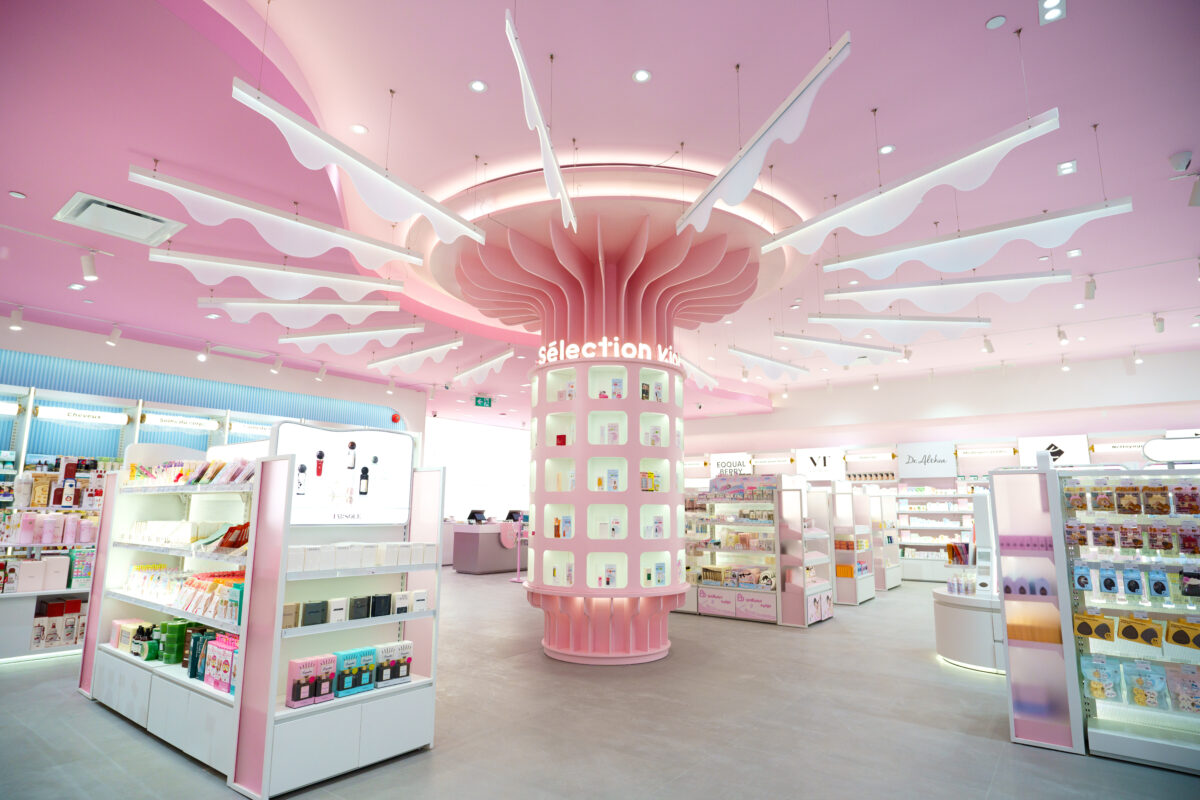
Inside the stores, customers encounter colourful displays of skincare, cosmetics, beauty tools, accessories, hair products, and lifestyle merchandise sourced from across Korea, Japan, and China. Viral beauty products sit alongside curated assortments, imported exclusives, and proprietary merchandise, creating an environment designed as much for exploration and impulse discovery as for planned purchasing.
Executives repeatedly emphasized that the physical shopping experience sits at the centre of the company’s strategy.
“We’re not trying to sell product,” Peng said. “We really want the customer come in, have that experience to enjoy.”
That philosophy increasingly aligns with broader shifts occurring throughout physical retail. As e-commerce continues handling more routine transactional purchases, many successful bricks-and-mortar concepts have evolved toward sensory retail environments that encourage browsing, experimentation, and social interaction.
For younger consumers especially, shopping has increasingly become tied to discovery, self-expression, and participation in fast-moving trend culture rather than simply completing a transaction.
Kiokii and… location, Image: Kiokii and…
Eaton Centre Flagship Reflects the Brand’s Evolution
One of the company’s most significant upcoming openings will be a new flagship store at CF Toronto Eaton Centre expected to open this fall.
The approximately 3,500-square-foot location will relocate Kiokii and… into a much more prominent centre-court position near the James and Albert entrance within one of Canada’s busiest shopping centres. The new flagship will occupy a former Aritzia space, representing a major visibility upgrade for the brand.
“It’s gonna be amazing exposure for us in terms of the brand,” said a company representative during the interview.
Within the shopping centre industry, centre-court positioning inside Eaton Centre carries particular significance. The relocation reflects how quickly Kiokii and… has evolved from an emerging niche retailer into a strategically important tenant capable of driving traffic, energy, and younger demographic engagement within major urban malls.
The move also highlights how shopping centres themselves continue evolving. Landlords increasingly appear willing to allocate premium retail real estate toward concepts that create activity, excitement, and repeat visitation rather than relying exclusively on traditional apparel anchors.
Asian Beauty Retail Continues Moving Into the Mainstream
While Asian beauty products once occupied a relatively niche segment within the Canadian retail landscape, the category has expanded rapidly over the past several years as younger consumers embrace skincare routines, beauty rituals, and trend discovery originating across Asia.
Executives emphasized that Kiokii and… positions itself as a broader “Asian beauty” retailer rather than focusing exclusively on Korean beauty products.
“We carry lots of C-beauty and J-beauty plus lifestyle products,” Peng said. “Kiokii is more about experience for discovering.”
The company also emphasized that its customer base extends well beyond Asian consumers.
Its core demographic generally ranges from ages 16 to 35, though management said the stores increasingly attract a broad mix of customers drawn to skincare trends, curated merchandise assortments, and the immersive retail atmosphere.
Much of that momentum has been fueled by social media, influencer culture, and the growing popularity of skincare-focused routines among younger consumers. Physical retail environments increasingly serve as places where shoppers can test products, discover trends, and engage with fast-moving beauty culture in person.
Retailers such as MINISO, Pop Mart, and other highly visual retail concepts have similarly benefited from discovery-oriented merchandising strategies that encourage repeat visits and customer engagement, though Kiokii and… has increasingly carved out its own position within the growing Asian beauty and lifestyle category.
Kiokii and… location, Image: Kiokii and…
Expansion Beyond Canada’s Largest Cities
One of the more significant indicators of Kiokii and…’s broader appeal may be how successfully the concept has expanded beyond Canada’s largest urban markets.
Recent openings in Saskatoon and Winnipeg reportedly generated lineups and strong opening traffic despite operating in smaller markets with less established Asian beauty retail ecosystems.
“I think we’re doing pretty good. It’s higher than my expectation,” Peng said when discussing Saskatchewan performance.
The strong reception in those markets suggests Asian beauty and discovery-driven retail concepts may now be entering the Canadian mainstream more broadly rather than remaining concentrated primarily within Toronto or Vancouver.
Executives also described enthusiastic customer reactions during new store openings, including shoppers arriving with existing memberships and local consumers expressing excitement about finally having access to the brand in their market.
Exclusive Merchandise and Private Label Drive Differentiation
As the company scales nationally, Kiokii and… is also increasing its focus on exclusive merchandise and proprietary product development.
The retailer said it serves as the Canadian-exclusive distributor for several brands, including Flower Knows, a Chinese beauty label that has developed a significant international following.
“We’re the exclusive distributor for them in Canada only,” Peng said.
Approximately 20 per cent of the retailer’s assortment now consists of internally developed OEM and private-label products sourced through teams based in Asia.
That strategy may become increasingly important as competition within the beauty category intensifies. Proprietary merchandise can help retailers strengthen margins while also offering differentiated assortments unavailable through competing channels.
“We don’t want to follow,” Peng said. “We want to set up the trend.”
U.S. Expansion Underway as Retailer Eyes Global Growth
Alongside its Canadian expansion, Kiokii and… has now entered the United States with a store at American Dream in New Jersey that opened earlier this year.
The company indicated its American growth strategy will initially focus on northeastern markets due to operational proximity to Toronto while leveraging relationships with landlords already familiar with the brand through its Canadian expansion.
Potential future markets discussed during the interview included Boston, Washington, D.C., Florida, and Minnesota, including opportunities connected to Triple Five Group, owner of both West Edmonton Mall and Mall of America.
The retailer also indicated it is pursuing additional tier-one American shopping centres as expansion accelerates.
“I want it to become like a global brand,” Peng said. “Our focus next year will be U.S.”
Many Canadian small businesses expect little financial benefit from the 2026 FIFA World Cup despite signs that consumers plan to spend money at local establishments while watching matches, according to a study commissioned by Merchant Growth.
The study found that 22 per cent of Canadians plan to watch World Cup matches at a locally or independently owned business, while 58 per cent of small business owners expect the tournament to have no impact on their revenue compared with a typical summer.
The findings point to a disconnect between consumer interest in supporting local businesses during the tournament and business owners’ expectations about their ability to capitalize on that demand.
The results come from Merchant Growth’s 2026 Small Business Pulse, which surveyed 130 small business owners and incorporated a national Angus Reid survey of 1,504 Canadians commissioned by the company.
“Businesses with the right location, staffing and cash flow may be able to turn increased consumer activity into revenue. But for many owners, rising operating costs and tight margins mean they are being cautious about investing ahead of the opportunity. Too often, small businesses do not realize there are flexible financing options beyond traditional banks that can help them prepare for moments of increased demand.”
The consumer survey found Canadians who plan to watch matches outside their homes are far more likely to choose local businesses than larger operators. Twenty-two per cent said they intend to watch at a locally or independently owned business, compared with two per cent who said they would watch at a national chain or large venue.
Those planning to watch matches away from home said they expect to spend an average of $52 per visit on food and drinks.
Average expected spending varied by age group, with Gen Z respondents reporting an average of $41 per visit, millennials $51, Gen X $60 and boomers $56.
Despite those spending intentions, many business owners reported taking few steps to prepare for an increase in customers during the tournament.
According to the survey, 27 per cent of small businesses said they do not expect increased foot traffic from World Cup matches. Only 37 per cent expect a revenue increase tied to the event.
FIFA website photo
Among the businesses surveyed, 14 per cent said they had increased inventory or product stock, while another 14 per cent said they had promoted their business on social media in connection with the World Cup. Twelve per cent reported extending operating hours, 10 per cent had hired additional staff, nine per cent had created World Cup-related promotions or themed offerings and five per cent had applied for or accessed financing to support preparations.
Business owners cited financial constraints as a key reason for limited preparation. Twenty-two per cent said they lacked the cash or access to financing needed to invest ahead of the tournament, while 21 per cent said rising operating costs left no room in their budgets for additional spending.
The study also examined broader consumer spending plans for the summer.
Sixty-nine per cent of Canadians surveyed said price and deals would be an important factor in their summer dining decisions, while 56 per cent said supporting local or independent businesses would influence where they spend.
Three in five respondents said they would choose locally or independently owned businesses when dining out this summer, although price would remain a significant consideration. Forty per cent said they would prioritize local businesses even if doing so cost more.
FIFA website photo
The survey suggests that cost-conscious consumer behaviour could add pressure on businesses already facing higher expenses.
Many business owners reported concerns about the broader economy. Seventy-one per cent said they believe Canada is already in an economic downturn or is likely heading toward one within the next year. That figure was down from 83 per cent in 2025 but remained elevated.
Respondents identified fuel costs linked to global trade disruptions as their top summer cost concern, cited by 42 per cent of businesses. Rising utility bills and weaker consumer demand were each cited by 37 per cent, while 30 per cent pointed to labour costs or minimum wage increases and 26 per cent cited commercial rent or lease increases.
In response to those pressures, 55 per cent of businesses said they had cut spending this year. Twenty-five per cent reported delaying hiring, while the same proportion said they had raised prices. Twenty-two per cent said they had paused expansion plans and 20 per cent reported reducing staff.
The report said many owners are focusing on protecting margins rather than increasing investment as they navigate rising costs and uncertain economic conditions heading into the summer season.
Welcome to the Daily Synopsis by Retail Insider. We hope you enjoy the 8 articles we published today covering key developments in Canadian retail.
METRO Inc. named Marc Giroux as its next President and CEO, with the leadership transition effective September 27, 2026, focusing on growth and operational continuity in Québec and Ontario. Millennials are trading down yet splurging selectively amid affordability pressures, shaping shifting consumer behaviours. Canadian shoppers are losing faith in influencer marketing, with only 5% trusting influencers most for purchase decisions, instead favouring personal contacts and authentic online reviews as shown in a recent Canadian study.
Retail decision-making has always relied on a balance between data, experience, and intuition. However, as consumer behaviour becomes more complex and market conditions shift rapidly, the traditional pace of research is increasingly at odds with the speed required to compete. This tension is now driving the adoption of new tools that can deliver insights faster while still maintaining a foundation in data.
Among the most notable developments is the emergence of AI-powered personas, including platforms such as Smart Persona introduced through a partnership between Leger and Plus Company. These tools are beginning to reshape how retailers test ideas, evaluate risk, and refine strategy by turning static audience profiles into interactive, data-driven simulations that enable a more dynamic approach to understanding consumers.
From Static Personas to Interactive Insight
For years, retailers have relied on personas as a way to represent target customers. These profiles, typically developed through segmentation studies, have provided useful guidance but often remained underutilized once created. In many cases, they existed as static documents that were referenced occasionally but rarely integrated into daily decision-making.
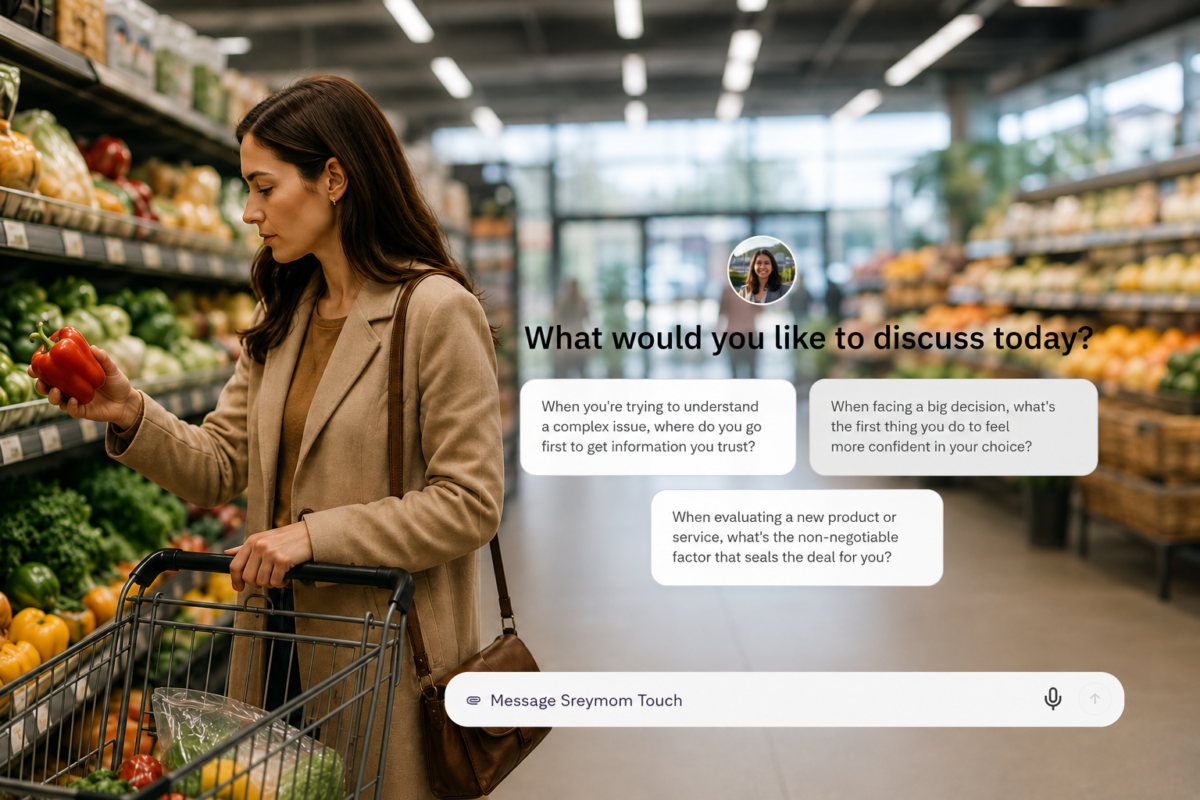
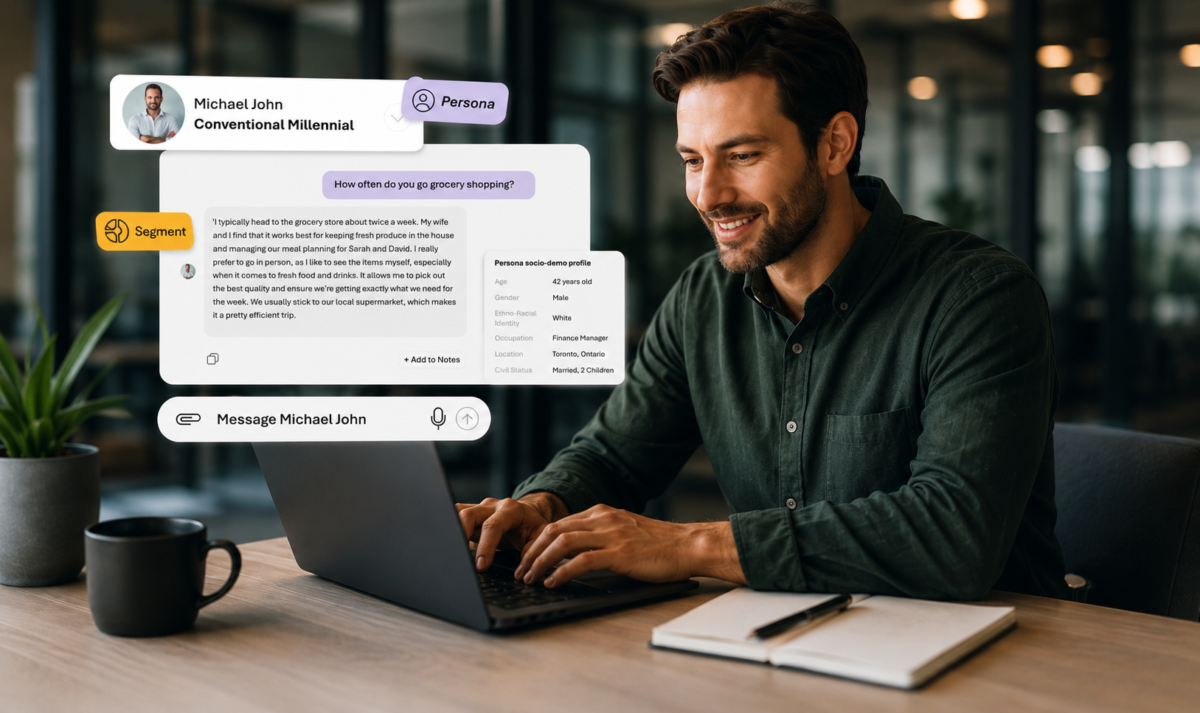
AI personas are changing that paradigm. Instead of reading about a customer segment, teams can now interact with it. By asking questions and testing scenarios in real time, retailers gain access to a more fluid and responsive form of insight.
This shift transforms personas from passive assets into active tools. It allows marketing teams to explore how a target customer might respond to a campaign, while merchandising teams can evaluate potential product offerings before committing to production. The result is a more continuous and accessible connection to the consumer perspective.
Grocery shopping with augmented reality insights
Accelerating Decisions Across the Organization
One of the most immediate impacts of AI personas is speed. Traditional research processes can take weeks to complete, from designing a study to recruiting participants and analyzing results.
While these methods remain essential for validation, they are not always suited to situations where decisions must be made quickly.
AI personas provide a way to generate directional insights in minutes. This capability is particularly valuable in retail environments, where teams often need to react to changing trends, competitive pressures, or internal timelines.
For example, a marketing team preparing a digital campaign can test multiple creative executions and identify which message resonates most strongly with a target audience. Similarly, a product team can narrow down a list of potential innovations by quickly gauging consumer interest and identifying which concepts warrant further investment.
These applications do not eliminate the need for traditional research. Instead, they allow organizations to prioritize more effectively, focusing time and resources on the most promising opportunities.
Enhancing Creativity While Reducing Risk
Beyond speed, AI personas are also influencing how teams approach creativity and innovation. By providing immediate feedback on ideas, these tools create a safer environment for experimentation.
Retailers can explore a wider range of concepts, including those that might have been considered too risky or uncertain to test through conventional methods. Early-stage ideas can be refined or discarded based on simulated consumer reactions, reducing the likelihood of costly missteps later in the process.
This iterative approach aligns well with the realities of modern retail, where success often depends on the ability to adapt quickly and respond to evolving consumer expectations. AI personas support this by offering a way to continuously test and learn, rather than relying on a single point-in-time study.
Grounding AI in Data and Methodology
As artificial intelligence becomes more prevalent in research, questions around accuracy, bias, and reliability remain top of mind. The effectiveness of AI personas depends heavily on the quality and structure of the data that underpins them.
Leading solutions in this space are built on a combination of primary research, segmentation data, and large-scale datasets that reflect real-world behaviours. Synthetic populations, which model individuals based on statistical relationships rather than personal information, are often used to create detailed and privacy-compliant representations of target audiences.
In the case of Smart Persona, developed through the partnership between Leger and Plus Company, personas are informed by more than 25 data sources and can include thousands of attributes, enabling nuanced and context-aware responses. The system is designed to ground outputs in structured data, helping to limit the types of inconsistencies that can occur with more generic AI tools.
At the same time, industry experts emphasize that these tools should be viewed as complementary to traditional methodologies. AI-generated insights are most valuable when used to guide direction and inform early-stage thinking, with critical decisions validated through established research techniques.
Democratizing Access to Consumer Insight
Another important implication of AI personas is their potential to broaden access to research within organizations. Historically, consumer insight has often been concentrated within specialized teams, with other departments relying on periodic reports or presentations.
By making insights interactive and available on demand, AI personas allow more stakeholders to engage directly with the data. This can lead to a more consistent application of consumer understanding across functions, from marketing and merchandising to operations and executive leadership.
In practical terms, this means that a wider range of decisions can be informed by consumer perspective, rather than relying solely on intuition or limited inputs. Over time, this shift could contribute to more aligned and customer-centric strategies across the organization.
Modern office with message overlays
A New Layer in the Research Ecosystem
The rise of AI personas does not signal the end of traditional research. Instead, it represents the addition of a new layer within the broader insight ecosystem.
Surveys, focus groups, and in-depth interviews will continue to play a critical role in providing validated, statistically robust findings. AI personas, by contrast, offer a way to explore ideas quickly, test assumptions, and identify areas that merit deeper investigation.
This complementary relationship reflects a broader trend in how organizations are integrating artificial intelligence into their workflows. Rather than replacing existing processes, AI is being used to enhance them, improving efficiency and expanding what is possible.
Looking Ahead
As adoption increases, AI personas are likely to become a more standard part of the retail decision-making toolkit. Their ability to combine speed, accessibility, and data-driven insight positions them as a valuable resource in an increasingly competitive landscape.
For retailers, the opportunity lies in using these tools thoughtfully, leveraging their strengths while maintaining a commitment to methodological rigor. Those that succeed in striking this balance will be better equipped to navigate uncertainty, respond to change, and deliver experiences that resonate with today’s consumers. Leger has described this approach as a form of “augmented intelligence,” positioning AI as a complement to traditional research rather than a replacement for it.
In that sense, AI personas are not simply a technological innovation. They represent a shift in how organizations think about research itself, moving from a periodic activity to an ongoing, integrated part of decision-making.
METRO Inc. announced Tuesday that Eric La Flèche will retire as President and Chief Executive Officer at the end of the 2026 fiscal year after more than 18 years at the helm of the company and the Board of Directors will appoint Marc Giroux, currently Chief Operating Officer, to succeed him as President and CEO effective September 27.
In order to support a smooth and orderly transition, the Board will appoint La Flèche as Chairman of the Board of Directors and Pierre Boivin, currently Chairman of the Board, will be appointed Vice Chairman and Lead Director, also effective on September 27, said the company.
The appointments are the culmination of a robust, multi-year succession planning process led by the Board, reflecting METRO’s commitment to strong governance and long-term value creation. Giroux is a proven leader with deep knowledge of METRO’s operations, culture and strategic priorities as well as a clear vision for the future, and his appointment underscores the strength of METRO’s internal talent pipeline. He will join the Board upon his appointment as President and CEO, explained the company.
“The Board is extremely pleased to appoint Marc Giroux to the position of President and CEO. We are convinced that he is the right leader for METRO’s next chapter. Marc’s deep understanding of our industry, focus on operational excellence, financial discipline and customer satisfaction make him the best candidate to continue delivering long-term value for our customers, employees and shareholders in an ever-changing environment”, said Pierre Boivin, Chair of the Board of Directors of METRO.
Eric La Flèche
“On behalf of the Board, I want to thank Eric La Flèche for his remarkable contribution to METRO and to the communities we serve. Eric has been an exceptional leader for METRO for nearly two decades, creating substantial value for our shareholders by delivering consistent growth, reinforcing our customer-first and purpose-driven culture, and guiding the Company through significant strategic milestones, notably the acquisition of Groupe Jean Coutu in 2018.”
The company said it will benefit from La Flèche’s experience and perspective as Chair and will ensure strong independent oversight through its committees and the role of the Lead Director.
“It has been a privilege to lead METRO and to work alongside such talented and dedicated teams across our stores, distribution centres and offices,” said La Flèche. “METRO is well-positioned for continued success, with a clear growth plan, a disciplined approach to execution, a great team and a very solid balance sheet. I am proud of what we have accomplished together. Alongside my colleagues on the Board, I look forward to METRO’s continued success under Marc’s leadership.”
Marc Giroux
“I am honoured to be appointed President and Chief Executive Officer of METRO,” said Giroux. “Eric has built a strong foundation and a culture of performance and customer focus, and I’m pleased to continue collaborating with him going forward. My priority will be to build on that foundation–continuing to execute our strategy, supporting our people and partners, and keeping our customers at the centre of every decision as we move forward. I look forward to continuing to work with the best team in the industry.”
Executive biographies
La Flèche joined METRO in 1991 and has served as President and Chief Executive Officer since April 2008. Prior to becoming CEO, he held a number of roles of increasing responsibility, including Executive Vice-President and Chief Operating Officer from 2005 to 2008. In addition to industry recognitions, he was named Canada’s Outstanding CEO of the Year (2020). He is also a long-time volunteer with Centraide of Greater Montreal.
Giroux joined METRO in 2009 and currently serves as Chief Operating Officer, leading the Québec and Ontario food divisions as well as supply chain, marketing, loyalty and digital strategy. Over the course of his career with the Company, he has held progressively senior roles spanning marketing, merchandising and operations as well as digital and eCommerce. He holds a Bachelor’s degree in Finance and International Commerce as well as an MBA, both from HEC Montréal.
With annual sales of more than $22 billion, METRO Inc. is a food and pharmacy leader in Québec and Ontario, providing employment to more than 97,000 people. As a retailer, franchisor, distributor, manufacturer, and provider of eCommerce services, the company operates or services a network of some 1,000 food stores under several banners including Metro, Metro Plus, Super C, Food Basics, Adonis and Première Moisson, and some 640 pharmacies primarily under the Jean Coutu, Brunet, Metro Pharmacy and Food Basics Pharmacy banners.
Canadian Millennials are increasingly trading down in some categories while continuing to spend selectively in others, reshaping spending patterns across grocery, discount retail, foodservice, and consumer goods.
A new study from Calgary-based Cashew Research suggests the same consumer may purchase private label groceries, warehouse club staples, premium meat, specialty coffee, and skincare products within the same week depending on where they perceive value.
The findings point to a significant shift in shopping behaviour as affordability pressures continue to influence household budgets across Canada. Rather than reducing spending evenly, many Millennials appear to be reallocating spending more carefully while becoming less loyal to traditional brands and retailers.
The study surveyed 783 Millennials about grocery shopping habits, spending patterns, and lifestyle adjustments over the past year.
Millennials Are Becoming More Flexible Shoppers
The research indicates many Millennials are making purchasing decisions category by category instead of maintaining broad loyalty to national brands or retailers.
Among respondents, 59% said they strategically save in some categories while spending more in others, while only 18% described themselves as loyal to the same brands regardless of price.
Meanwhile, 41% identified as “price-sensitive switchers,” regularly changing brands to secure lower prices, while another 27% described themselves as “value optimizers” focused on balancing quality, price, and features.
Consumers are also increasingly shopping across multiple retail formats. Sixty-four percent of respondents said they visit different stores to find better deals, while 56% reported shopping at multiple retailers depending on the products or ingredients they need.
The trend reflects broader changes across retail as consumers move fluidly between discount retailers, warehouse clubs, ethnic grocers, specialty food stores, premium brands, and private label products depending on the purchase.
That shift may create additional pressure for middle-market retailers and national brands that lack either a strong value position or clear premium positioning. Consumers increasingly appear willing to aggressively trade down in some categories while reserving discretionary spending for products they believe offer noticeably better quality, convenience, or enjoyment.
The shift also helps explain why discount retailers, warehouse clubs, specialty grocers, and premium niche brands can all attract the same consumer at different moments throughout the week.
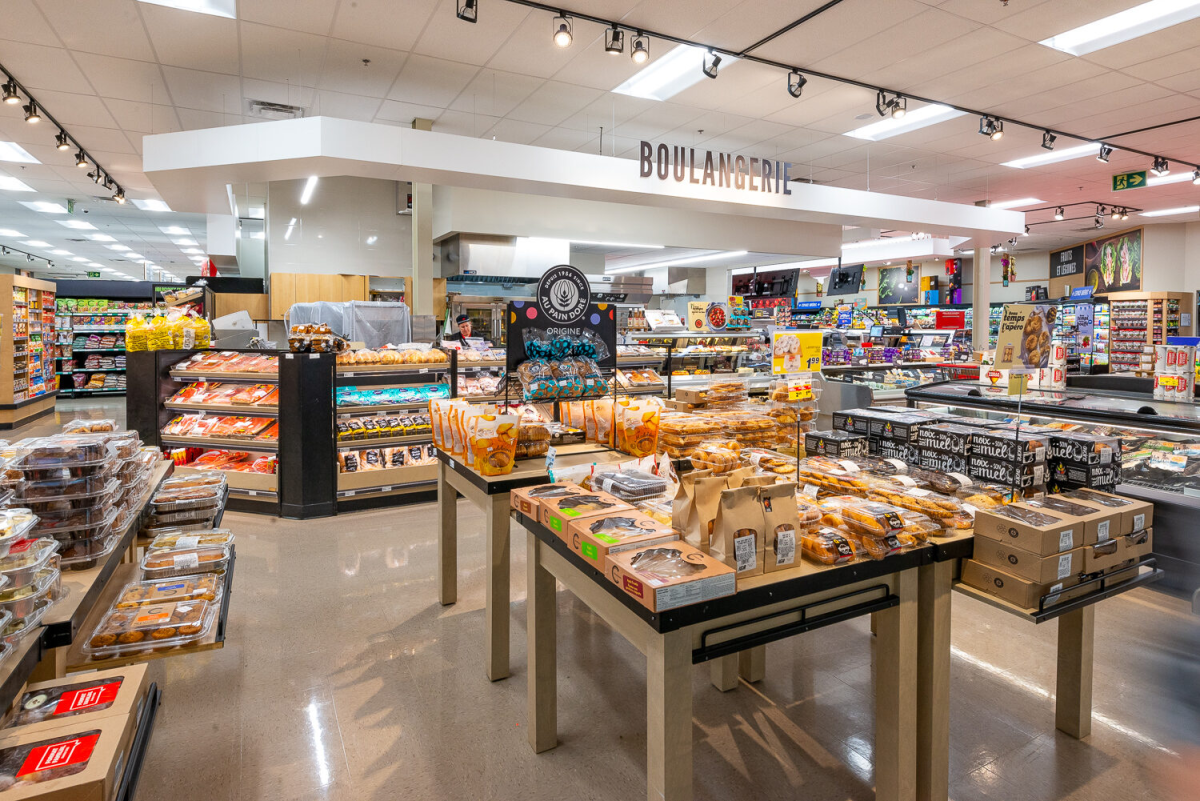
A grocery store in Quebec. Photo: Vergo Construction
Grocery Inflation Continues To Shape Spending Habits
Affordability concerns remain a major factor shaping shopping behaviour.
According to the 2026 Canada Food Price Report, grocery prices are expected to rise between 4% and 6% this year, with the average Canadian family of four projected to spend as much as $17,571 annually on food.
The Bank of Canada has also noted that grocery prices have climbed sharply since 2022, continuing to pressure household budgets.
Against that backdrop, many Millennials reported making substantial changes not only to shopping habits, but also to broader lifestyle spending.
Thirty-two percent of respondents said they are shifting toward more value-oriented retailers, while 28% reported replacing national brands with lower-priced alternatives and private label products.
Millennials are also reducing restaurant visits, canceling subscription services, consolidating errands to lower transportation costs, and relying more heavily on coupon apps, digital flyers, and sale-driven shopping habits.
Those patterns continue to benefit discount-oriented retailers and grocers across Canada.
Loblaw Companies Limited has continued investing in discount banners including No Frills and Maxi as consumers increasingly seek lower-priced grocery options. Discount retailers such as Dollarama have also benefited from shoppers searching for lower-cost household goods and everyday essentials.
The findings also point to growing acceptance of private label products, an area that major grocers and mass merchants have aggressively expanded in recent years as shoppers search for lower-cost alternatives without fully sacrificing quality.
Cooking At Home Is Becoming A Budget Strategy
The report found that Millennials are spending more time cooking at home as households look for ways to manage rising living costs.
Sixty-eight percent of respondents said they are preparing meals at home more frequently than they were a year ago, while 56% identified saving money as the primary reason.
Family priorities and health considerations also ranked highly among motivations for home cooking, with respondents citing meal planning, nutrition control, and reducing restaurant spending as major drivers behind changing routines.
The shift could benefit grocers, warehouse clubs, cookware retailers, meal planning services, and specialty food retailers while adding pressure to discretionary restaurant visits and takeout spending.
At the same time, the research suggests consumers are still allowing room in household budgets for smaller indulgences and products tied to comfort or enjoyment.
When asked why they purchase premium grocery products, 33% cited better quality or taste as the primary reason, while another 16% described premium purchases as small personal treats.
That behaviour helps explain why premium spending continues to persist in selective categories even as households become more cautious overall.
TikTok And Social Media Are Influencing Grocery Purchases
Digital platforms are also playing a growing role in shaping food and grocery purchases.
The study found that 78% of Millennial respondents had purchased a food product after seeing it featured in recipes, videos, or social media content.
Social media influencers ranked ahead of traditional digital advertising as a source of product discovery, reflecting how consumers increasingly move between online inspiration and physical shopping experiences.
Consumers also reported discovering products through in-store browsing, word of mouth, entertainment content, retailer apps, and digital media.
The findings reinforce how product discovery is increasingly shifting away from traditional advertising and toward algorithms, creators, TikTok trends, and social content that directly influence purchasing behaviour.
For retailers and consumer brands, maintaining visibility across multiple channels is becoming increasingly important as shoppers blend digital discovery with in-store purchasing decisions.
Retailers Are Facing A More Unpredictable Consumer
The study suggests Millennials no longer fit neatly into traditional categories such as discount shopper, premium shopper, or loyal brand customer.
Instead, consumers are increasingly blending discount, premium, private label, warehouse club, and specialty purchases depending on the category and perceived value of a product.
For retailers, that evolution is creating a more fragmented and less predictable consumer environment where shoppers are constantly reassessing priorities and retailers must increasingly compete purchase by purchase rather than relying on long-term loyalty or traditional assumptions about consumer behaviour.