Home Blog Page 131

Canadians plan to drink less alcohol and power up protein in 2026: Square

Photo: Andrea Piacquadio

As Canadians reset after the holidays, many are aiming to build a healthier relationship with alcohol. New consumer survey and transaction insights from tech company Square show that while cutting back remains a popular New Year’s resolution, fully giving up alcohol is far less common. 

According to a national online survey, 1 in 4 Canadians (28%) plan to reduce their alcohol consumption in 2026. And Square data suggests moderation, not abstinence, is the prevailing trend.

At bars and breweries that use Square’s tools and services in Canada, this was evidenced by the fact that while sales of non-alcoholic drinks rose by 4.3% in the first three weeks of January (compared with December), alcoholic beverage sales also climbed 8.6%, suggesting that curiosity about sobriety may be cooling, said the company. 

“Whether those aiming to cut back are successful or not with their resolution, the intention is there for two main reasons: 80% of Canadians said they are making the change to maintain their health while almost half said they are doing so in order to save money,” it said.

Protein Fuels Canadians’ Coffee Shop Orders

Health is a motivation when it comes to café orders as well. While only 16% of respondents plan to cut back on coffee, many are upgrading what they consume, particularly when it comes to their protein intake, said the survey.

According to Square data in Canada, sales of protein-related items at coffee shops rose 35% in the first three weeks of January compared with the same period last year, continuing a multi-year streak of year-over-year growth. This points to a growing appetite for functional, “better-for-you” choices, and gives café operators an opportunity to boost transaction amounts with simple menu switches and add-ons.

Karisa Marra
Karisa Marra

“Canadians are clearly in reset mode, but coffee remains a daily essential,” said Karisa Marra, Head of Sales at Square Canada. “As affordability continues to be top of mind, neighbourhood cafés have an opportunity to add value through functional and wellness-driven offerings to meet a growing shift in customer preferences.”

Pay-to-Work Cafés Face Consumer Resistance

As cafés increasingly double as workspaces, operators face a familiar dilemma: customers nursing a single coffee while occupying tables for hours. This has led some operators to start experimenting with the idea of charging for tables by the hour, said Square.

“But customers aren’t quite on board yet. The survey finds only 12% of Canadians would be willing to pay a café or bakery an hourly fee to work or study there. Among those who would pay, nearly half (47%) would pay $2–$5 per hour, and 66% would pay up to $5 per hour,” it said.

Vancouver Leads Café Wages Nationwide

While operators explore new revenue streams, labour costs remain relatively stable. The average café employee in Canada earns $18.48 per hour, up just $0.23 (1.26%) from last year. Vancouver leads the country with average café wages of $19.37 per hour, followed by Toronto at $18.99. Regina reports the lowest average hourly wage at $15.85, according to the report, adding that regionally, Saskatoon café workers saw the largest year-over-year increase, with wages rising 4%, while Montréal was the only city to see a decline, with wages falling 1% in 2026.

What this means for café owners

“From protein-boosted offerings and evolving pricing strategies to regional wage pressures, café operators are navigating a more complex and competitive landscape in 2026. Cafés are well positioned to meet changing consumer expectations by offering healthier menu options, exploring new income streams, and keeping operations efficient,” said the report.

More from Retail Insider:

Return policies deterring nearly half of shoppers before checkout: Cashew Research

Photo: Gustavo Fring

New research from Cashew Research suggests return policies are influencing purchasing decisions earlier in the buying process, with nearly half of consumers hesitating to complete transactions when return shipping is not free.

The Calgary-based firm said its latest report, Data Drop: The Returns Revolt, is based on a survey of 2,000 consumers across Canada and the United States. The findings indicate that return policies are affecting conversion rates and repeat purchasing behaviour before customers reach checkout.

The report characterizes returns as a factor shaping demand and customer trust, rather than solely a post-purchase operational cost.

“CMOs are optimizing ads and checkout flows while ignoring one of the biggest trust signals in commerce,” said Addy Graves, CEO of Cashew. “Returns don’t just impact margins after the sale. They determine whether the sale happens at all.”

Addy Graves
Addy Graves

According to the survey, 47 per cent of consumers say they hesitate to purchase when return shipping is not free. The report states that this hesitation can reduce repeat purchases and long-term loyalty.

Cashew’s findings suggest return policies can influence whether a customer proceeds with a transaction, regardless of product category or price.

The survey also found that one in four purchases fails because products do not meet expectations. In apparel specifically, 74 per cent of returns are attributed to fit.

The report indicates that static size charts and generic product visuals may no longer meet shopper expectations, with consumers seeking more detailed sizing guidance before completing purchases. More than half of respondents said they would not complete a purchase without detailed sizing visuals or guidance.

In addition, 35 per cent of shoppers reported adding items to their cart with the expectation that they would return them.

The data challenges assumptions about which demographic groups drive return rates. Cashew found that shoppers over the age of 45 account for more than half of all returns, with consumers aged 65 and older representing the largest segment.

“High return rates aren’t about bad customers,” Graves says. “They’re signals that experiences weren’t designed for the people driving the most revenue.”

The report suggests that return-related friction and product fit concerns may disproportionately affect older consumers.

Cashew’s report frames returns strategy as directly connected to revenue growth and customer retention. It states that brands that reduce friction in the returns process, invest in improved sizing guidance and design experiences for multi-generational shoppers can influence conversion and long-term loyalty.

Cashew Research describes itself as a market research solution that delivers real-time data collected from consumers to help brands understand purchasing behaviour and inform product and strategy decisions.

Returns can drive conversions and revenue

Graves said retailers are underestimating the role returns play in driving conversions and revenue.

“In our study, 47% of shoppers said return policies directly influence whether they complete a purchase at all. We don’t see this as a post- purchase operational issue, we see this as a conversion driver,” she said.

“What this tells us is that returns aren’t just a cost centre. They function as a trust signal as well. When policies are clear, flexible, and low- friction, shoppers feel more confident about clicking “buy.”

“Retailers who frame returns purely as a margin problem may be overlooking the revenue impact on the front end of the funnel.”

Some comments from consumers:

“Spent 40 minutes on chat only to be told I needed to call instead – then waited another 30 minutes on hold.”

“Had to dig through fine print to find out electronics have different return rules – not mentioned during checkout.”

Photo: Tom Tillhub
Photo: Tom Tillhub

Retailers need to make returns efficient but not punitive

When shoppers can’t try before they buy, they hedge their bets. Over a third reported adding items to their cart with the expectation that they may return at least one item. They are doing this to reduce risks, said Graves.

The implication, she explained, for retailers is:

● First, invest in tools that reduce uncertainty upfront (better sizing guidance, reviews, fit visualization, AR, etc.).

● Second, make returns efficient but not punitive.

“The brands that win aren’t eliminating returns altogether, they’re reducing unnecessary returns while maintaining trust.

“In our data, shoppers 45+ accounted for half of total returns, with 65+ over-indexing relative to their share of purchases,” said Graves.

“There are a few likely drivers:

● Greater purchasing power and frequency

● Lower tolerance for product mismatch

● Less comfort with ambiguous sizing or product descriptions

● A stronger expectation of customer service

“This demographic also tends to value clarity and fairness. For retailers, that means policies must be extremely transparent and easy to navigate, especially offline or via assisted channels.

“Ironically, tightening return policies in a way that feels restrictive could disproportionately alienate a high-value customer segment.”

With retailers under margin pressure, many are tightening return policies. Could that strategy backfire?

“It depends how it’s done, but yes, there’s real risk,” said Graves. “When we asked shoppers how they would respond to stricter return policies (e.g., shorter windows, restocking fees, paid returns), 69% said they avoid brands with restrictive return policies. Returns may be expensive, but lost customers are more expensive.

“The data suggests the smarter strategy here is segmentation:

● Identify serial returners vs. occasional returners

● Personalize policies based on behaviour

● Improve product accuracy to prevent returns in the first place

“Cutting flexibility across the board may protect short-term margins but it could erode lifetime value.”

What outdated return policies look like

She outlined what an outdated return policy looks lie in 2026:

● Hidden fees or unclear conditions

● Short return windows without justification

● Store credit only without clear communication

● Friction-heavy processes that require printing, forms, or long wait times

Leading brands, added Graves, are doing the opposite:

● Offering transparent, easy-to-understand policies

● Integrating digital tracking and seamless return portals

● Using data to proactively reduce return risk (fit tools, AI sizing, better product content)

● Viewing returns as part of the overall customer experience, not just a logistics headache

“The shift we’re seeing is that returns are becoming a strategic lever to stand out, build trust and keep customers over time.”

More from Retail Insider:

Canadian small business owners lose 31 working days a year to stress: Xero report

Photo: Amina Filkins

Canadian small business owners are losing the equivalent of 31 working days a year to stress, according to a new report released by Xero.

The company’s Emotional Tax Return report found owners spend an average of nine hours a week feeling stressed, concerned or worried about their business, with financial management cited as a key pressure point.

The findings point to what the company describes as an “Emotional Tax” — the personal and business toll associated with running a small enterprise. More than three-quarters of respondents, or 77 per cent, said financial management causes stress, and 39 per cent said they have considered giving up their businesses entirely.

Personal toll of the “Emotional Tax”

The report outlines several personal impacts tied to business-related stress.

More than half of small business owners, 52 per cent, said they get less sleep since starting their business, with 23 per cent reporting they lose five or more hours of sleep a night.

Stress has also led owners to scale back personal activities. About 32 per cent reported giving up exercise, 30 per cent reduced travel and 26 per cent spent less quality time with their partners. Some respondents said they miss family dinners (15 per cent), birthday parties (12 per cent) and weddings (7 per cent).

Forty per cent said they have kept business stress from their family or partner, while 36 per cent reported being more short-tempered with others when stressed.

Business consequences

Beyond the personal impact, the report links stress to operational challenges.

One-third of respondents, 33 per cent, reported slower decision-making as a result of stress. Others cited missed opportunities (29 per cent), slower business growth (22 per cent) and avoidable mistakes (21 per cent), including financial errors.

Ashalee Mohamed
Ashalee Mohamed

“The Emotional Tax small business owners pay clearly takes a heavy personal toll, and when it consumes nearly a month of productivity, it also becomes a bottom-line crisis. Unfortunately, too many owners are trying to navigate this pressure in isolation,” said Ashalee Mohamed, Head of Canada GTM at Xero.

“Leaning into digital tools and trusted advisors is the key to closing this gap, protecting business health and reclaiming their quality of life. By reducing business admin, enabling accounting automation and streamlining collaboration with advisors, Xero can help small business owners improve confidence in financial accuracy and reclaim the emotional tax.”

The advisor gap

The report suggests external factors such as rising costs, unpredictable demand and geopolitical uncertainty have added to pressures on business owners. Ninety per cent of respondents said they are concerned about the upcoming fiscal year.

While 77 per cent identified financial management as a source of stress, only 10 per cent said they seek advice from an advisor when they feel pressure.

The data also indicates that 53 per cent of owners have been surprised by a tax outcome. At the same time, stress appears to contribute to delays in financial management tasks. Eleven per cent of respondents said they would prefer to go to the dentist for a root canal than tackle their taxes.

Chasing paperwork was cited as a source of stress by 34 per cent of respondents, while 28 per cent pointed to fear of making a mistake. Nearly 29 per cent reported procrastinating on financial management tasks due to stress.

Despite the findings, 92 per cent of small business owners said they are taking steps to manage stress. More than half, 52 per cent, turn to self-care, while 44 per cent exercise and 41 per cent spend time with friends and family.

Xero is a global small business platform providing accounting, payroll and payments tools to small businesses and their advisors.

More from Retail Insider:

Adonis rolls out Ramadan promotions and catering menu in Quebec and Ontario stores

Photo: Adonis
Photo: Adonis

Adonis Mediterranean Market says it is introducing special offers and a dedicated catering menu across its Quebec and Ontario stores ahead of Ramadan, a period the company describes as its busiest time of year.

The specialty grocer says the initiative includes a catering menu, an expanded selection of imported products and a range of in-store prepared foods tied to Mediterranean and Middle Eastern culinary traditions.

Ramadan accounts for a significant share of seasonal sales for the retailer. The company says 33 per cent of its annual dates sales occur during the six weeks of Ramadan, with dates considered a staple during the holy month.

“Ramadan is important for many Canadians, a time of sharing, family and solidarity,” said Layla-Vanessa Fadous, Marketing Director at Adonis. “We are pleased to offer quality products for people to enjoy with their loved ones and celebrate the rich culinary traditions of this special time.”

Layla-Vanessa Fadous

Seasonal demand drives expanded offering

The Montreal-based chain says it sees a strong increase in demand for traditional meals and specialty products during Ramadan, prompting it to expand its assortment and prepared food offerings during the period.

According to the company, stores will feature a specially designed catering menu that includes traditional dishes, grilled items, side dishes and desserts available in store. It is also expanding its range of imported products and in-house prepared foods, including pita breads, hummus, basturma meat, fresh salads and marinades prepared daily.

The company positions its in-store prepared items as central to its operations, with recipes developed internally and products made on site.

Photo: Adonis
Photo: Adonis

Focus on in-house production

Éric Provost, Vice President and General Manager of Adonis, said the retailer’s in-store preparation model is key to its relationship with customers.

“Our teams take special care to reproduce the flavours that are an integral part of these culinary traditions,” said Provost. “Developed over many years, this knowledge is central to the relationship we maintain with our customers. Among our most popular products is basturma, a specialty meat typically consumed during Ramadan, which we produce entirely in-house. Each year, more than 10 kilograms are prepared locally by our teams, which illustrates our commitment to craftsmanship, freshness and local production.”

Adonis says its homemade products are prepared in store using established methods and recipes developed by the company, with an emphasis on ingredient selection and freshness.

Company background

Established in 1979, Adonis operates as a specialty grocery chain offering products inspired by Middle Eastern and Mediterranean cuisines. The company has stores in Quebec and Ontario and has been part of the METRO Group since 2017.

More from Retail Insider:

eBay launches livestream shopping platform in Canada with auctions tied to fan conventions

eBay Canada has launched its eBay Live platform in Canada, introducing a livestream shopping format aimed at collectors and enthusiasts and debuting the service alongside two major fan conventions this week.

The company said the interactive platform combines real-time video streaming with buying and bidding tools, allowing shoppers to connect with sellers and participate in auctions during live broadcasts.

The Canadian rollout coincides with Fan Expo Vancouver and the Collectors Supershow, where eBay Live programming will run from Feb. 13 to 16. The streams will include appearances by athletes Doug Gilmour and Joseph Woll.

Real-time auctions for collectors

To mark the Canadian debut, eBay said it will auction two trading cards on the platform starting at $1, with 30-second extended bidding during the livestream events.

The items are:

The company said searches for Macklin Celebrini on eBay.ca in 2025 rose more than 800 per cent compared with 2024. It also said searches for Pokémon increased more than 70 per cent over the same period, with Charizard identified as the most-searched Pokémon on the site in 2025.

Collectors will be able to participate in the auctions exclusively through eBay Live.

Strategy focused on community commerce

Caroline Pougnier, director of eBay Live, North America, said the platform is designed to blend entertainment and commerce within the company’s existing marketplace.

Caroline Pougnier
Caroline Pougnier

“eBay Live brings the energy and fun of live discovery together with the trust eBay is known for,” said Caroline Pougnier, Director of eBay Live, North America. “It gives Canadian buyers a more interactive way to discover great inventory, connect with knowledgeable sellers, and engage with the collecting community – all within eBay’s trusted marketplace.”

Shoppers can preview the programming schedule and sign up for reminders through the company’s website.

Global expansion of livestream model

The company said eBay Live first launched in the United States in 2022 and has since expanded to Australia, France, Germany, Italy and the United Kingdom.

The livestream format allows buyers to ask questions in real time, view items up close and complete purchases through mobile devices, desktop computers or the app.

According to the company, celebrity guests who have appeared on eBay Live in other markets include Elton John, The Backstreet Boys, Giannis Antetokounmpo, Rob Gronkowski, Sophie Cunningham, Logan Paul, Pete Davidson and Ken Goldin.

Company profile

eBay Inc. said it operates in more than 190 markets globally. The company was founded in 1995 in San Jose, Calif.

In 2024, it enabled US$75 billion of gross merchandise volume, according to the company.

The Canadian launch of eBay Live extends the company’s livestream commerce offering to another market as it targets collectors and fan communities through event-based programming and exclusive auctions.

More from Retail Insider:

Leyad Acquires St. Vital Centre for $160.5 Million

St. Vital Centre in Winnipeg. Photo: Leyad

Montreal-based real estate firm Leyad has acquired St. Vital Centre in Winnipeg for $160.5 million from the Ontario Pension Board, adding one of Manitoba’s top-performing shopping centres to its growing national portfolio. The two-level enclosed mall spans about 1 million square feet of gross leasable area, attracts roughly eight million visitors annually, and houses about 160 retailers.

Located in south Winnipeg, St. Vital Centre serves as the dominant enclosed mall for the city’s south and southeast trade areas. The property offers a broad mix of fashion, services, electronics, and food-and-beverage tenants, positioning it as a key regional shopping destination.

Leyad’s purchase continues a rapid expansion strategy across Canada, particularly in the Prairie provinces, where the firm has been acquiring dominant regional malls and necessity-based retail centres.

New Ownership Signals Long-Term Strategy

“This acquisition embodies everything we look for in a community shopping centre,” said Henry Zavriyev, President of Leyad. “St. Vital Centre is dominant in its market, anchored by essential retail, deeply embedded in the daily lives of the community, and positioned for many decades of continued success. We are proud to become its long-term steward.”

Henry Zavriyev
Henry Zavriyev

The transaction was financed through a syndicated loan provided by six Canadian credit unions. The financing structure reflects institutional confidence in the asset and in Leyad’s operating platform.

“This syndication highlights the ability of Canadian credit unions to collaborate on large, institutional-quality transactions while supporting assets that matter to their communities,” Zavriyev said.

The St. Vital Centre acquisition represents another milestone for the privately held real estate firm, which has grown quickly since its founding in 2016. The company positions itself as a long-term investor focused on transforming and actively managing retail properties rather than pursuing short-term flips.

Uniqlo to Join Tenant Lineup

Leyad has confirmed that Uniqlo will open a store at St. Vital Centre after the acquisition closes. The Japanese apparel retailer’s arrival will further strengthen the centre’s tenant mix and is likely to draw additional regional traffic.

The store will mark the second Uniqlo location in Winnipeg. The company recently announced plans to open another store at CF Polo Park in spring 2026, signalling growing confidence in the city as it expands its Canadian footprint.

Uniqlo has been increasing its presence in Canada in recent years, particularly in major urban markets. Its entry into two of Winnipeg’s dominant regional malls underscores the continued relevance of strong enclosed centres in key trade areas. Aurora Retail Group’s Jeff Berkowitz is handling the retailer’s Canadian leasing mandate. 

St. Vital Centre in Winnipeg. Photo: Leyad

Centre Profile and Tenant Mix

St. Vital Centre is a fully enclosed, one-level regional mall surrounded by extensive surface parking. The centre hosts more than 160 retail, service, and food-and-beverage tenants, with a mix that skews toward national chains and everyday services.

Fashion tenants include mid-market apparel and accessories brands such as Ardene, American Eagle, Bikini Village, Bluenotes, and Blackwell Supply Co. Beauty and personal-care retailers include Bath & Body Works, while electronics and wireless offerings include operators such as BellMTS and Best Buy Express. Jewellery retailers, including Ben Moss, add to the centre’s mid-market positioning.

The food component includes a typical enclosed-mall food court lineup, with brands such as A&W, Dairy Queen and Orange Julius, Thai Express, and Taco Time. This everyday-convenience orientation supports steady traffic alongside discretionary retail spending.

Amenities at the centre include climate-controlled common areas, accessible washrooms, and extensive parking, reinforcing its role as a primary enclosed retail destination for the surrounding suburban trade area.

St. Vital Centre in Winnipeg. Photo: Mehak, Kelly & Associates

Position in Winnipeg’s Retail Landscape

Within Winnipeg’s retail hierarchy, St. Vital Centre functions as the dominant enclosed mall for the south and southeast quadrants of the city. It complements the broader regional draw of CF Polo Park on the west side while outperforming older community malls in tenant mix and traffic.

The centre also places emphasis on community-oriented programming. Recent initiatives have included cultural markets, seasonal promotions, and specialty events designed to increase foot traffic and maintain relevance beyond traditional retail offerings.

This combination of mid-market fashion, services, and experiential programming has supported the mall’s strong traffic levels and stable positioning within Winnipeg’s retail landscape.

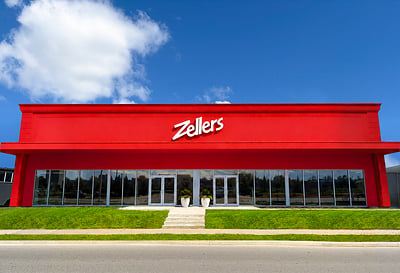
Exterior entrance to Zellers at Londonderry Mall in Edmonton. Photo: Christa Patterson

Part of a Broader National Expansion

The St. Vital Centre acquisition aligns with Leyad’s strategy of building scale around dominant regional retail assets across Canada. The company’s portfolio includes a mix of enclosed malls, power centres, and necessity-based retail properties.

Key holdings include Niagara’s Pen Centre in St. Catharines, Londonderry Mall and St. Albert Centre in the Edmonton area, and several power centres in Quebec, Alberta, and Atlantic Canada. The firm has also expanded into Winnipeg through multiple acquisitions, including retail, industrial, and mixed-use assets.

Leyad reports owning and operating millions of square feet of retail space across Western Canada alone, underscoring its focus on regional centres with strong everyday-needs tenant mixes.

The company has also demonstrated a willingness to reposition large anchor spaces. At Londonderry Mall in Edmonton, for example, Leyad has re-leased most of a former Hudson’s Bay box and introduced a new Zellers anchor as part of a rapid redevelopment strategy.

More from Retail Insider:  

Tim Hortons Upgrades Muffins, Espresso and Drinks

Photo: Tim Hortons

Restaurant Brands International reported a series of operational changes across the Tim Hortons system, highlighting improvements to core menu items and beverage equipment. The Tim Hortons operations update, announced February 12 by president Axel Schwan, centres on English muffins, espresso machines and new fountain drink equipment.

The changes reflect the company’s ongoing “back to basics” strategy as it navigates a competitive and price-sensitive quick-service restaurant environment. The initiative combines refinements to long-standing menu staples with investments in equipment intended to improve speed, quality and beverage variety.

English muffin refinement targets breakfast experience

Tim Hortons is rolling out an upgraded English muffin designed to be fluffier and more enjoyable. The bread forms the base for many of the chain’s breakfast sandwiches, making it a critical component of the morning menu.

Schwan said the existing muffin was already strong but required further refinement based on customer feedback. “It illustrates our deep commitment to guest feedback and our ongoing enhancements to core offerings while also innovating,” he said.

The new muffin was scheduled to reach Western Canada by mid-February, with a nationwide rollout expected by the end of the first quarter of 2026. The change is part of a broader effort to improve foundational products rather than rely solely on limited-time menu items.

Tim Hortons, image via Reddit

New espresso machines aim to improve speed and quality

A second major component of the Tim Hortons operations update involves new espresso equipment developed over several years. The machines are designed to deliver higher-quality beverages while significantly reducing preparation times.

The new units are currently installed in a minority of restaurants and will gradually become standard as stores undergo renovations and older machines are replaced. The rollout is tied to the brand’s existing renovation cycles rather than a single national conversion.

Schwan described the equipment as “a superior quality product that tastes better and is delivered more quickly,” positioning the chain to compete more directly with premium coffee concepts.

Coca-Cola fountain drink partnership supports daypart growth

Tim Hortons is also rolling out new fountain drink machines through a partnership with Coca-Cola. The equipment is still being installed across the system and is not yet available in every location.

The machines are intended to support combo meal sales and a broader range of cold beverage offerings. The company has been expanding into afternoon and evening dayparts with wraps, bowls and other savoury options, and fountain drinks are expected to support those efforts.

Cold beverage sales continued to grow during the fourth quarter, even amid unusually cold weather, reflecting rising consumer interest in iced and specialty drinks.

Back-to-basics approach builds on earlier menu refinements

The Tim Hortons operations update follows several product changes introduced in 2025. The company enlarged its chocolate chunk cookies and added more chocolate, increased fruit content in apple fritters, and boosted filling levels in Boston Cream doughnuts.

At the same time, Tim Hortons has broadened its menu to compete across more dayparts. The chain introduced wraps, bowls and other savoury options to capture afternoon and evening traffic. It also expanded its beverage lineup with energy drinks, protein-enhanced beverages, carbonated offerings and cold foam drinks.

The dual strategy combines improvements to traditional products with new menu items aimed at younger and more trend-driven consumers.

Financial context and industry challenges

Restaurant Brands International released its fourth-quarter 2025 results on the same day as the operational announcement. The parent company reported profit attributable to common shareholders of US$113 million, or 34 cents per diluted share, compared with US$259 million, or 77 cents per diluted share, a year earlier.

Despite the profit decline, revenue increased and Tim Hortons Canada recorded comparable sales growth of 2.8 percent in the quarter. The brand outperformed the overall Canadian quick-service restaurant industry by nearly two percentage points.

The company also faced cost pressures in 2025, including higher coffee prices driven by extreme weather in producing regions. Tim Hortons raised coffee prices by about three to five cents per cup in 2025, marking the first adjustment in nearly three years. Schwan said coffee costs have decreased substantially in recent months, offering some relief.

Restaurant Brands International executive chairman Patrick Doyle described 2025 as “challenging” for restaurant operators, noting that rising costs and cautious consumers tested fundamentals across the industry. He said the company’s performance showed that its core brands remain resilient.

Equipment upgrades expected to support long-term growth

The espresso machines and fountain drink equipment represent longer-term investments in beverage categories that often carry higher margins. Faster preparation times are expected to improve throughput during peak periods, while new equipment enables additional menu innovation.

The English muffin refinement, meanwhile, reinforces the chain’s traditional breakfast positioning. By focusing on core items alongside new offerings, Tim Hortons is attempting to defend its base business while expanding into other dayparts.

In the short term, the company expects the nationwide muffin rollout to conclude by the end of the first quarter. Espresso machine installations will continue as restaurants renovate, and fountain drink equipment will gradually expand across the network.

PHOTO: TROY MEDIA MARKETPLACE

Background: Tim Hortons’ Canadian roots and growth

Tim Hortons was founded in 1964 when NHL defenceman Tim Horton opened a doughnut shop in Hamilton, Ontario. The concept gained traction after police constable Ron Joyce joined the business and later became a full partner. Following Horton’s death in 1974, Joyce bought out the Horton family’s interest and expanded the company through franchising.

The chain grew rapidly during the 1980s and early 1990s, eventually reaching hundreds of locations across Canada. Its menu of coffee, doughnuts and simple baked goods became a daily ritual for many Canadians, and products such as Timbits and the “double-double” coffee order entered popular culture.

Tim Hortons was acquired by Wendy’s in 1995, later becoming an independent public company before joining the multinational restaurant holding group now known as Restaurant Brands International. The company has since expanded beyond Canada into the United States and several international markets while maintaining its core identity as a coffee-and-baked-goods chain.

Today, Tim Hortons continues to evolve its menu and operations, balancing traditional products with new beverage and food offerings aimed at broader dayparts and international growth.

More from Retail Insider:

From Pandemic Layoff to Building Businesses in Alberta

Darcy Skarsen and team at Pita Pit. Photo supplied

When Darcy Skarsen reflects on how his business journey began, he does not point to a long-term master plan. Instead, he traces it back to early 2020, when a sudden layoff forced him and his wife Elaine to rethink their future.

“It really all started around March 2020,” Skarsen said. “I was working a nine-to-five sales job in Bonnyville and ended up getting laid off. I had no prospects, no job, nothing. I wasn’t sure what the next step was going to be.”

Rather than waiting for the job market to recover, the couple decided to move forward with a business idea they had discussed in earlier years. That decision marked the beginning of a new chapter for the Skarsen family, one that would grow into a portfolio of foodservice and entertainment businesses across Alberta’s Lakeland region.

What began with a single restaurant has since expanded to include multiple Pita Pit locations, a Booster Juice, and a bowling alley that filled a long-standing gap in the community. The projects were built through a hands-on, family-driven approach, with Darcy and Elaine working closely together from the outset.

Booster Juice marks the first step into ownership

Darcy and Elaine Skarsen in their Booster Juice location in Bonnyville, AB.

The Skarsens’ first step into business ownership came with the opening of a Booster Juice in Bonnyville in February 2021. At the time, the move was less about expansion and more about creating stability and taking control of their future.

“Out of that situation, I ended up opening a Booster Juice,” he said. “We opened in February 2021, and that was really my introduction to franchising and running my own business.”

The experience gave Darcy and Elaine a practical education in operations, staffing, and working within a national franchise system. He said the store remains an important part of both the business and their personal journey.

“It was my first one, so it will always be near and dear to me,” Skarsen said. “It taught me a lot about how franchising works and what it really takes to run a business day to day.”

Acquiring Pita Pit and building local scale

Not long after opening Booster Juice, Skarsen was approached by the owners of the local Pita Pit in Bonnyville. The opportunity aligned with conversations he and Elaine had already been having about growth.

“Not long after that, the owners of the Pita Pit here in town approached me and asked if I’d be interested in buying it,” he said. “Long story short, we took it over in June 2022.”

Founded in Kingston, Ontario in 1995, Pita Pit has grown into one of Canada’s most recognizable fast-casual brands, with approximately 240 locations nationwide under Foodtastic’s ownership. Its customizable menu and strong catering business have helped it perform well in a range of markets, including smaller communities.

For the Skarsens, the brand’s flexibility and local relevance made it a natural fit for expansion.

Darcy and Elaine Skarsen shake hands at their Pita Pit location in Bonnyville, AB.

Different franchise models, different strengths

Having now operated more than one franchise concept, Skarsen is careful to frame differences between systems as structural rather than good or bad. He said those lessons were learned through the couple’s early experiences together in the business.

“Every franchise has a different model,” he said. “Some are more turnkey, some give you more involvement in the build and operations. You really only understand that once you’ve lived it.”

He said both Booster Juice and Pita Pit have strengths, but Pita Pit aligns more closely with how he and Elaine prefer to operate in smaller markets.

“With Pita Pit, there’s more opportunity to be hands-on,” Skarsen said. “I like being involved in the build, understanding where costs are going, and adapting to the local market where it makes sense.”

That alignment has influenced where the couple is focusing future growth, without diminishing the role Booster Juice played in getting them started.

New Pita Pit in Cold Lake, AB. Photo: C SM via Google Maps

Reopening Pita Pit in Cold Lake with a new approach

The Skarsens’ second Pita Pit location opened in Cold Lake in late 2025, bringing the brand back to the community after a previous location had closed years earlier.

“The earlier store struggled because of where it was located,” he said. “It was upstairs in a multiplex with limited visibility and foot traffic.”

The new location, positioned near Walmart with strong parking and visibility, has performed well out of the gate.

“We’ve been open just over a month now, and the response has been really encouraging,” Skarsen said.

He emphasized that location fundamentals are especially critical in smaller markets.

“When you’re visible and convenient, people respond,” he said. “That’s even more important outside major urban centres.”

Kingpins Bowling & Games Room in Bonnyville, AB.

Filling a community gap with a bowling alley

Beyond foodservice, the Skarsens also identified an opportunity to bring back a bowling alley to Bonnyville, which had been without one for roughly a decade.

“Bonnyville used to have a bowling alley that closed around 2013,” he said. “It had been there for decades, and the town really felt the loss.”

Since opening in 2023, the bowling alley has become a steady destination for leagues, families, and corporate events.

“Bowling has been incredibly popular,” Skarsen said. “We have leagues five nights a week, weekends are busy, and we’re booked solid with Christmas parties.”

The business has also reinforced his appreciation for locally owned concepts alongside franchises.

“With the bowling alley, we decide everything,” he said. “We decide the menu, the hours, what we’re going to offer. You don’t have that flexibility with franchises.”

Kingpins Bowling & Games Room in Bonnyville, AB.

Labour and food costs remain the biggest challenges

Like many restaurant operators, Skarsen said staffing and food inflation are the most pressing challenges he and Elaine face.

“Staffing is probably the toughest part of the business,” he said. “In rural communities, it’s hard to find full-time employees.”

He noted that temporary foreign workers have played a vital role in keeping operations running.

“Temporary foreign workers have been critical for us,” Skarsen said. “Most of them are here to build a better life for themselves and their families, and they work incredibly hard.”

Food costs, meanwhile, have reshaped customer perceptions.

“Food costs are the biggest challenge right now,” he said. “People come in and say, ‘I just paid $20 for a pita, chips, and a pop.’ And I tell them, ‘I paid almost that much just to make it.’”

“It’s not that restaurants are getting rich,” Skarsen added. “It’s simply what it costs to operate today.”

Low rents and why small markets still make sense

One advantage the Skarsens continue to benefit from is manageable occupancy costs, particularly in Bonnyville.

“If I told you what I pay for rent here, you’d probably fall off your chair,” he said. “I pay about $1,200 a month for roughly 1,200 square feet.”

That cost structure allows for resilience when food and labour costs rise, and helps explain why secondary and tertiary markets remain attractive for franchise expansion when paired with strong local demand.

“Our customer base isn’t high school kids,” Skarsen said. “It’s workers. We deliver platters to job sites regularly, and there’s a lot of disposable income in this region.”

Looking ahead to Costco-driven growth

The Skarsens are currently exploring another Pita Pit location in Lloydminster, tied to a new Costco development expected to draw traffic from across the region.

“We’re looking at a site near the Costco that’s being built,” he said. “Those developments create a lot of consistent traffic, especially from surrounding communities.”

At the same time, he remains cautious about scaling too quickly.

“I like to be able to visit my stores regularly,” Skarsen said. “Once they’re farther away, you have to be very thoughtful about how you manage that.”

Practical advice for future franchisees

After several years in business, Skarsen offers straightforward advice to others considering franchising.

“Do your homework,” he said. “Talk to other franchisees and understand what you’re getting into.”

Above all, he stressed that ownership requires ongoing involvement.

“You can’t expect the franchise to do everything for you while you sit back,” Skarsen said. “You still have to put in the work.”

More from Retail Insider:

Pattison Food Group Switches to Equifruit Bananas

Equifruit team at Pattison Food Group HQ launch event

Pattison Food Group has transitioned its organic banana program supplier to Equifruit, a Canadian and female-owned company that specializes in Fairtrade-certified bananas. The move, announced February 12, reflects a strategic sourcing decision that aligns the grocery operator with a supplier focused on fair trade practices and sustainability. The Pattison Food Group Equifruit partnership brings Fairtrade organic bananas to multiple grocery banners across Western Canada.

Equifruit is North America’s leading Fairtrade-certified banana importer, working exclusively with farmers approved by Fairtrade International. The organization is widely recognized for its sustainability standards and its efforts to improve the livelihoods of agricultural producers.

Executives at Pattison Food Group say the decision reflects shared values between the two organizations.

“Switching to Equifruit organic bananas is a natural fit for Pattison Food Group,” said Justin McGregor, general manager, produce & bulk at Pattison Food Group. “They share our values of fairness, transparency and collaboration that benefits everyone, from growers to shoppers.”


Through the Pattison Food Group Equifruit partnership, the companies say they will help support sustainable incomes and improved working conditions for banana growers in Latin America. Fairtrade standards set requirements for wages, workplace safety, and environmental practices.

The program also includes a Fairtrade Premium that is paid directly to growers. These funds support community projects such as education programs, clean water infrastructure, and housing improvements.

Equifruit Fairtrade organic bananas display 2

Stability in a Volatile Banana Market

Equifruit leadership says the partnership reflects broader challenges within the global banana supply chain, where price volatility and cost pressures can affect farmers.

“In a highly volatile global banana market, Fairtrade provides a level of stability for banana farmers,” said Jennie Coleman, president and co-owner of Equifruit. “That stability allows them to invest in a better future for themselves and their communities, and a more sustainable future for the banana industry.”


Fairtrade standards also prohibit child labour and provide support for farmers to reduce environmental impacts, including initiatives related to soil health, water use, and pesticide management.

Equifruit Fairtrade organic bananas are now available across several Pattison Food Group grocery banners. The rollout includes Save-On-Foods, PriceSmart Foods, Urban Fare, Buy-Low Foods, Quality Foods, and Nesters Market.

The Pattison Food Group Equifruit partnership gives the grocery operator a unified organic banana program across its network. The company operates more than 300 food and drug retail locations and employs nearly 30,000 team members across its various businesses.

About the Companies

Established in 2021, Pattison Food Group is a Canadian-owned and operated division of the Jim Pattison Group. It is Western Canada’s leading provider of food and drug retail, with nine grocery banners and additional specialty and wholesale operations. These include Everything Wine, Pure Integrative Pharmacy, and Imperial Distributors Canada Inc.

Equifruit was established in 2006 and has grown to become North America’s leading Fairtrade-certified banana importer and marketer. The company is Canadian-owned, women-owned, and certified as a B Corp, reflecting its focus on social and environmental performance.

More from Retail Insider: