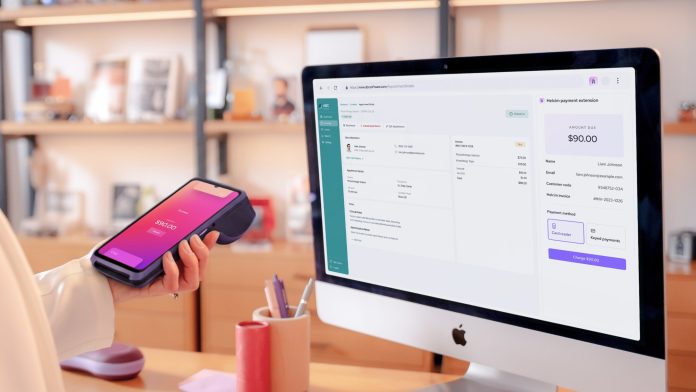
Helcim Payment Extension in use at healthcare clinic (CNW Group/Helcim)
Helcim says it has launched a new payment extension that allows merchants to integrate its payment processing directly into the web-based business software they already use, a move the Calgary-based company says is aimed at giving businesses more control over how they accept payments.
The company said the Helcim Payment Extension lets merchants connect their existing operational software to Helcim through a browser extension, allowing payment data to move between systems without requiring separate workflows or manual reconciliation.
Addressing integration and cost constraints
In announcing the launch, Helcim said many growing businesses face trade-offs between using specialized software for operations such as scheduling, inventory management or accounting and accepting payment options that are bundled with that software.
The company said those bundled options are often limited to a single processor and may involve higher flat-rate pricing, which can reduce margins as transaction volumes increase. Businesses that choose to manage payments separately, Helcim said, can face fragmented records and added administrative work.
Helcim said the new extension is designed to address those issues by allowing merchants to integrate Helcim’s payment processing into browser-based software they already rely on, without replacing existing systems.
How the extension works
According to the company, merchants install the Helcim Payment Extension as a browser add-on, which then connects their existing software workflows to Helcim’s payment interface. Helcim said this setup allows transaction information to flow between the software and Helcim, so invoices are automatically marked as paid and accounting records remain up to date without manual data entry.
Jedd Ylagan
“Finally, we don’t have to choose between our favorite clinic software and fair payment rates,” said Jedd Ylagan, owner of Kinetically Whole Therapies and a Helcim beta user. “The workflow is seamless–our staff operates exactly as they always have–but now we are saving significantly on every transaction without compromising the client experience.”
Helcim did not disclose specific savings figures but positioned the extension as a way for merchants to continue using established workflows while changing how payments are processed.
Platform support and expansion plans
At launch, Helcim said the payment extension supports more than 20 software platforms. The company said it plans to expand that number to more than 100 integrations by the end of the year.
Helcim said the expansion is intended to make the extension relevant to a wide range of industries, including healthcare, automotive and professional services. The company said the extension allows those businesses to access Helcim’s interchange-plus pricing model through their existing software environments.
Nic Beique
“We believe merchants deserve to be in control of their financial partnerships,” said Nic Beique, CEO and founder of Helcim. “Business owners shouldn’t be forced to overpay for payments just to use the operational software they love. This extension restores the power of choice, allowing merchants to pair the best tools for their business with the transparent, affordable payments they deserve.”
Business model and availability
Helcim said merchants can download the payment extension immediately and begin using it without setup or monthly fees. The company said its platform does not require long-term contracts and uses a volume-based interchange-plus pricing structure.
The company positioned the extension as part of its broader strategy to serve growing businesses by offering payment tools that integrate with existing systems while maintaining what it describes as transparent pricing.
Helcim did not provide financial projections related to the launch but said the extension is intended to help businesses reduce administrative friction and manage payment costs as they scale.
Company background
Helcim describes itself as a payment platform focused on serving scaling business owners. The company said it provides payment services to tens of thousands of merchants across North America and processes billions of dollars in payments annually across hundreds of industries.
The company said additional information about the Helcim Payment Extension, including download details, is available on its website.
Retail Insider is streamlining its Canadian retail news from around the web to include a handful of top news stories that can be viewed quickly during the day. Here are the top stories from the past 24 hours.
Cutting down on costs for a business means that the company must find the most effective shipping routes. Route optimization can be a competitive advantage in whatever capacity you use delivery vehicles, ranging from a single delivery truck to a fleet or an online shop or acting as a logistics provider to a large company. This blog details why route optimization is significant and reveals how to improve efficiency and minimize costs.
Why Route Optimization Is Important
Shipping routes are impactful because they determine a business’s productivity and revenue status. Optimized routes decrease time and, therefore, fuel consumption, as well as enhance customer satisfaction. Besides, they reduce vehicle usage. Hence, they have less wear and tear, thus reducing maintenance frequency. For businesses oriented towards sustainability, the efficient routes also contribute to minimizing carbon footprint, which is a key point.
Many retailers also improve operational efficiency by streamlining packing and preparation before shipments even leave their facilities. Using tools such as the trending Rollo wireless label printer helps teams label packages quickly and accurately, reducing bottlenecks and ensuring that optimized routes can function at their highest efficiency.
Main Factors That Affect the Selection of the Shipping Channels
Delivery Destinations
To do this, it is important to understand the geography of delivery points. Assigning nearby locations in a cluster minimizes travel distances between the customer and the delivery.
Traffic Patterns
One of the major problems in transport logistics is traffic jams. Real-time traffic information helps the driver minimize time spent on the road, ensuring that time is spent wisely.
Vehicle Capacity
Thus, optimizing vehicle loading will enhance capacity to the maximum level, minimizing the number of trips. This is economical in terms of fuel and labor costs.
Delivery Deadlines
Time-sensitive deliveries must be prioritized. One technique for route optimization involves developing a timetable for delivering products based on urgency.
Road Conditions and Weather
Unexpected events, such as bad road networks and unfavorable weather conditions, may hinder even the most careful route planning. Such elements are considered when optimizing the route: they minimize potential risks.
Measures to Improve Shipping Channels
Analyze Existing Routes
The process should start by assessing your existing shipping routes. Locate waste areas, including doubled-up runs, long hauls or other avoidable time-consuming issues. Information from GPS tracking devices, delivery records, survey feedback, and driver reviews are also included.
Implement a Route Optimization Software
The use of technology is very critical in the current logistics industry. Route optimization software computes improved schedules depending on the delivery timeslots, traffic realities and vehicle carrying capacity. Popular tools include:
Google Maps API provides the simplest routing form and updates limited traffic information.
Route4Me: It is intended for companies that require the delivery of various products and/or services to multiple destinations.
OptimoRoute: They assist in timetable planning and variations of the shifts as they occur.
These tools help make planning easier and guarantee that resources are well utilized.
Prioritize Deliveries
There are different types of deliveries, and not all require the same speed. Organize shipments into categories:
Time-Sensitive Deliveries: These must be addressed first to meet the customer’s expectations.
Clustered Deliveries: Deliveries in the same group to reduce the distances to be traveled.
This way, essential delivery services are accomplished on time while minimizing overall delivery cycle time.
Use Real-Time Data
Real-time data enables a one-time change in the routes. For instance, drivers can be redirected almost instantaneously if a congestion or road closure happens. Real-time traffic information and GPS tracking devices are assets for keeping operations on track.
Optimize Vehicle Loading
It is another important factor that can affect the overall route, and the loading of vehicles on the same greatly influences one another. Tips for optimizing vehicle capacity include:
Storing heavier items at the bottom to avoid the vehicle tipping over.
Grouping items enables the products with similar delivery orders to be offloaded in the shortest time possible.
Besides, through the help of software, one can identify the most appropriate loading configurations.
In the meantime, there will be fewer trips and fuel savings, as efficient loading is done at one location and transported simultaneously.
Train Drivers Effectively
Drivers, therefore, play crucial roles in the implementation of route optimization. Provide training on:
By applying route optimization applications.
Basic driving behavior elements include inadequate acceleration and refrainment from stalling the car.
Managing conditions beyond the rider’s control, such as route diversion or poor weather conditions.
The drivers can also change and ensure delivery is done in the best way possible.
Modify Routes Often
Route optimization is a continuous process that cannot be completed once and for all. Similar indicators may include delivery times, fuel consumption rates, customer satisfaction, etc. Ensure that this data helps you update your strategies and identify recurring problems.
The Use of Technology in Route Optimization
Artificial Intelligence (AI)
Computer programs use large amounts of data to develop the best routes. They consider issues such as traffic flow, delivery time, size and vehicle capacity, making route planning more accurate.
Internet of Things (IoT)
GPS tracking and telematics systems are part of the IoT and help drivers and managers receive details about the vehicles’ location, fuel level, and engine status. Such information will facilitate dynamic control of the route and perform anticipatory maintenance.
Machine Learning (ML)
ML algorithms can help plan future routes by using past delivery data. For example, they can distinguish traffic congestion patterns or peak seasons for some kinds of businesses and thus prepare for problems in advance.
Advantages of Ship Management & Optimization
Cost Savings
They cut the amount of fuel used by vehicles, the maintenance costs of vehicles, and the human resources used. The gains made in this area improve customer satisfaction. Reduced delivery times and the increased ability to track orders improve customer satisfaction and, thus, loyalty.
Future trends in route optimization.
Autonomous Vehicles
Autonomous delivery trucks and drones will probably change how the logistics business is conducted, as they reduce the chances of human mistakes.
Sustainable Practices
E-mobility vehicles, such as electric vehicles (EVs) and renewable energy, are set to become more significant in logistics sustainability.
Advanced Analytics
It will be even possible to predict when and where the demand will be even higher and what tendencies to expect in the future regarding traffic, thanks to big data and predictive analytics.
Conclusion
One important area that requires efficiency today is determining optimal shipping routes. This can be done by adopting technology, focusing on delivery and constantly reviewing organizational strategy to achieve significant cost reductions and better customer experiences. Thus, only further development of trends, such as AI, IoT, sustainability, etc., will guarantee an industry’s long-term prosperity. Route optimization is an essential aspect of logistics management, and it matters regardless of whether you operate locally or have a large network of supply chains.
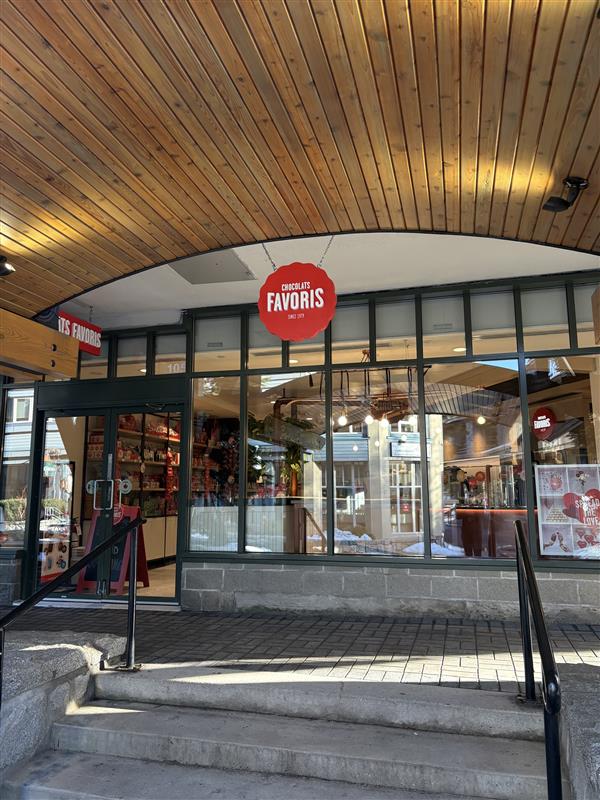
Chocolats Favoris, a Quebec-born chocolatier adored across Canada, is set to open its newest location in Whistler Village on January 17, 2026. This opening highlights the brand’s continued expansion in Western Canada and represents its third location in British Columbia.
Perfectly positioned in one of Canada’s most iconic mountain resorts, the new chocolaterie aims to serve as an after-ski, after-bike, and after-adventure destination. Guests, whether returning from the slopes or simply enjoying a stroll through the village, will find a warm, indulgent environment to conclude their day.
The Whistler shop will feature Chocolats Favoris’ signature real chocolate dipping station, offering soft serve dipped into one of 12 decadent flavours, including Salted Caramel, Dulce de Leche, Cookies and Cream, and Cotton Candy. The location will also provide Kooky Cones, rotating surprise dips, take-home fondue tins, and various premium chocolate bars.
Family-Owned Operation
This location will be owned and operated by Karen and Steve Desmeules, who initially fell in love with Chocolats Favoris during visits to Steve’s family in Quebec. Their son, Nick, will co-manage the Whistler store, ensuring it remains a family-driven enterprise.
“For years, stopping at Chocolats Favoris was part of our tradition when visiting family in Quebec,” says Steve Desmeules. “Bringing that experience to Whistler, where our family has built its life, is incredibly meaningful for us.”
Commitment to Sustainability
Chocolats Favoris is dedicated to responsible chocolate production via its Sustainable Cocoa Mission, which ensures all cocoa is ethically sourced. This initiative aims to support fair wages, environmental sustainability, and community development. Additionally, the brand offers a variety of vegan-friendly options and adheres to strict protocols for guests with allergies and dietary restrictions.
“Whistler is a natural fit for Chocolats Favoris,” says Dominique Brown, CEO of Chocolats Favoris. “It is a place where people come together, locals and visitors alike, echoing our passion for creating chocolate experiences that are meant to be shared with family and friends.”
The new Whistler location is at 4295 Blackcomb Way, Unit 105, and will employ between 20 and 25 local team members, dependent on the season. The shop will operate from 11 a.m. to 10 p.m., offering visitors a taste of indulgence in a whimsical atmosphere.
As Whistler Village welcomes Chocolats Favoris, it is poised to become a destination for sweet treats starting January 17.
Hudson's Bay downtown Calgary. Photo by Mario Toneguzzi
The mass closure of Hudson’s Bay stores across Canada left a daunting amount of retail space without a purpose. While there is healthy interest in most locations from a range of businesses, finding permanent tenants will take time.
“Landlords have a once in a lifetime opportunity, and I think that they will approach that opportunity appropriately,” says CBRE Vice President Kate Camenzuli.
Kate Camenzuli
In the meantime pop-up stores like Spirit Halloween have occupied several former Hudson’s Bay locations, a convenient short-term solution for landlords who can generate revenue from spaces that would have otherwise sat empty.
But what about the longer-term fate of empty Hudson’s Bay stores and the future of big box brick-and-mortar retail more broadly? What can consumers expect to see in major shopping districts in the years to come? Camenzuli breaks it all down.
A Short Time in Prime Time
Landlords turn to short-term tenants for two main reasons, according to Camenzuli. “To activate vacant spaces and to test the market.”
Seasonal stores and pop-ups like Spirit Halloween, Calendar Club and Cozy have always existed to fill up swing spaces in malls. Rarely, however, have they occupied huge spaces in some of the country’s most desirable malls and shopping districts.
“The difference we’re seeing now is that we have more vacancy in our shopping centres because of big box availability than we’ve seen in a very long time,” says Camenzuli. “They’re good pieces of real estate but they’re huge.”
An empty Hudson’s Bay location in CF Toronto Eaton Centre
Department Stores Have Departed
Replacing Hudson’s Bay with a Costco or Walmart might at first seem like a practical solution to take up large amounts of empty space.
But Camenzuli says backfilling department stores with other department stores is a thing of the past. “200,000 sq. ft. to 300,000 sq. ft. department stores are not a vibe anymore.”
“Understanding your appropriate size and format is more crucial than it’s ever been, and that’s due to the pricing of real estate. Retailers have evolved into figuring out what they’re best at.”
The average retail project or phase is 35,000 sq. ft., nearly 50% smaller than three years ago, according to CBRE’s 2025 Real Estate Market Outlook. Domestically, an increasing number of brands are modifying the scale of their typical store, and smaller-format offerings are redefining what the typical store looks like.
“It’s harder than ever for stores to be everything to everyone,” says Camenzuli, adding that while longstanding players like Walmart and Costco aren’t leaving anytime soon, she believes empty Hudson’s Bay locations are better left for businesses that can introduce new and exciting concepts.
Right Mix, Right Partners
While it’s going to take a while for landlords to find long-term tenants that match their vision, there are seemingly endless possibilities for what’s to come.
“I think you’ll see landlords invest a lot of money into these former big box spaces in order to get the right mix with the right partners,” says Camenzuli.
Health and wellness hubs, pickleball courts, educational facilities and residential developments are just a few ideas for what might succeed in former Hudson’s Bay locations.
There are also opportunities for community hubs that can further activate the space. Look no further than Fairgrounds, a free-to-join public racquet club that boasts its own restaurant and bar, as an example.
“Take the risk, figure out a cool concept and try to roll it out as fast as you can,” says Camenzuli. “The loss of Hudson’s Bay has created so much opportunity for Canadian retailers.
“It’s time to build cool things to fill up these spaces and be part of making our country better and stronger than ever before.”
(Content provide by commercial real estate firm CBRE)
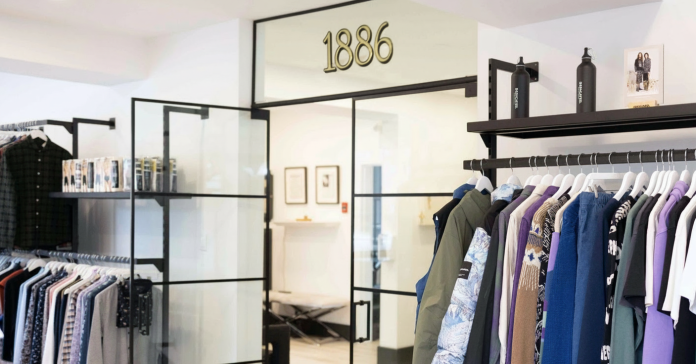
Caulfeild Apparel showroom in Oakville, ON. Photo supplied
Canada’s premium menswear landscape is entering a new phase, and a long-established wholesale player is stepping directly onto the retail floor to help shape it. Caulfeild Apparel Group, the fourth-generation Canadian apparel company founded in 1886, has announced the launch of HANK, a multi-brand menswear retail concept that will open destinations across the Greater Toronto Area in 2026.
The move comes after a period of upheaval that removed major distribution and discovery platforms for men’s apparel in Canada. Nordstrom exited the country in June 2023. Then, Hudson’s Bay Company’s department store operations concluded in June 2025, ending a centuries-long chapter in Canadian commerce. Saks Fifth Avenue’s Canadian stores also closed at the same time, further reducing premium menswear options in several major markets.
Against that backdrop, HANK is being positioned as a curated, service-forward specialty concept that sits in the “premium better” zone, targeted at men who still want selection, fit support, and an elevated in-store experience, but who now face fewer national options than they did even a few years ago.
Mike Purkis
In an interview, Michael Purkis, CEO of Caulfeild Apparel Group, framed the opportunity in blunt terms, linking HANK’s timing directly to the disruption that followed major department store exits and closures.
“Really, there is a black hole in the Canadian market with the departure of Nordstrom, Saks, and Hudson’s Bay,” Purkis said. “There is about a half a billion dollar menswear business that existed three years ago that isn’t there today.” He added that Hudson’s Bay alone, in 2023, “was close to four hundred million dollars in sales for men’s.”
While the broader department store conversation continues to evolve, the immediate retail reality is straightforward. Many premium and contemporary menswear brands relied on a small number of national platforms to reach Canadian customers at scale. When those doors disappear, the replacement is rarely one-for-one. The demand does not vanish, but the pathways to serve it fragment.
Purkis argued that Canadian men now face a narrower set of choices that often push spend either upward into luxury specialty or downward into casual, athletic, or off-price channels. “Canadian men don’t have many alternatives to shop today,” he said, adding that Caulfeild believes it can help fill the void with “a high level of service and great product.”
Why a Wholesaler Is Moving Into Retail
HANK is being introduced as Caulfeild’s retail return, but it is also a strategic response to a supplier shock that hit much of the wholesale ecosystem after Hudson’s Bay’s collapse.
“It was about two days after the Bay went bankrupt,” Purkis said, describing the moment the concept started to take shape. “We were a large supplier to Hudson’s Bay. That was quite a blow to everybody in the Canadian wholesale industry.”
He described a fork in the road that will resonate with many suppliers and distributors that lost a major customer, whether directly or indirectly. “Suppliers had a choice, they could either sit in the corner and feel sorry for themselves, or they could get up and do something about it,” he said.
Caulfeild’s public positioning suggests HANK is designed to combine the feel of an independent boutique with the operational advantages of a mature distributor. The company described HANK as “Canada’s newest multi-brand menswear destination,” built around curated premium brands, expertise-led service, and an environment designed around how men “actually live and dress.”
For Canadian retail watchers, the significance is partly in what it signals about where new retail supply may come from. In categories where department store footprints have thinned, brand owners, distributors, and multi-brand specialists can become the next wave of physical retail operators, especially if they already understand merchandising, replenishment, and vendor coordination at scale.
Modern English brand, developed in-house. Photo Caulfeild Apparel Group
Store Format, Price Positioning, and the Target Customer
The initial HANK stores are expected to be relatively compact by mall standards, but large enough to deliver a meaningful assortment and an experience layer. Purkis said locations will run “between 1,800 and 2,700 square feet depending on location.”
On price, he positioned HANK as premium, but below the upper end of Canada’s specialty menswear market such as Harry Rosen. “We want to be in a premium marketplace, which will be just below Rosen’s,” he said, adding that it will be “twenty percent below their opening, most likely.”
That positioning is important, because the rebuild of premium menswear cannot only serve the top of the pyramid. Purkis also spoke about how pricing quickly becomes “luxury” for many shoppers once key multi-brand floors disappear. He said HANK aims to land in a range where customers still feel they are buying quality, but without the sticker shock that can narrow traffic.
The target customer, as described in the interview, is a mid-30s to 55 shopper with good income and a practical relationship with style. “Not a classic guy,” Purkis said, “fashion forward but not aggressive fashion. He’s looking for wearable fashion.”
In terms of category mix, he said suiting will be part of the offer, but not dominant out of the gate. “Product mix will include suit separates,” Purkis said, with “probably twenty to twenty five percent suits and sport coats,” and a heavier tilt toward sportswear to start.
A Store Experience Built for Time, Not Transactions
If HANK succeeds, it will likely be because it marries product with comfort and service in a way that makes men want to stay in the store longer than they planned.
The concept, as described in the interview and press materials, leans into a lived-in, lifestyle-driven environment. Purkis described an early design direction as “very clean,” “minimalist,” with “dark metal” and “bleached wood,” and he suggested the goal is to feel more like a space you want to be in, rather than a rack-driven selling floor.
He also emphasized physical comfort as part of the format. “Every store will have a couch and a couple chairs and a table where people can sit and enjoy the experience,” he said, calling it “an elevated shopping experience for the premium price point.”
The company similarly described HANK as offering elevated style in a warm, lived-in environment built for comfort, confidence, and ease, while reflecting “modern masculinity through thoughtful service and refined design.”
This is where HANK menswear stores in Canada could differentiate in a market where convenience has pulled many apparel purchases online, but where fit, fabric, and styling still benefit from in-person guidance.
Why the First Locations Will Be in Malls
Purkis confirmed that the first wave will open in mall locations, with high foot traffic and the right customer profile, and with a clear intention to test, learn, and iterate quickly.
“The first three will be mall locations,” he said. “A little bit of this will be test and test and retest.”
He also pushed back on the idea that malls have lost relevance for this customer, pointing instead to a return of interest in shopping in person. “The data we’re looking at shows a return to mall,” he said. “People are missing the in-store experience.”
That view aligns with the historic role that mall-based department stores played as anchors for premium men’s apparel. If the customer was still shopping in those environments 18 months ago, as Purkis put it, then replacing the offer inside a mall channel is not a nostalgic bet. It is a practical one.
From Three Stores to a National Rollout
While the near-term focus is the GTA, the long-term ambition is far larger.
“The goal isn’t to stop at three,” Purkis said. “Ultimately, 35 to 45 doors is probably the target.”
That scale is meaningful, because it implies HANK is being built as a repeatable specialty chain, with the potential to expand into multiple Canadian markets if the early stores prove the model, economics, and merchandising strategy.
He also acknowledged the financial reality of opening stores in today’s environment, and the need to get the first wave right before accelerating. “They’re not inexpensive to open,” he said, adding that the plan is to make the initial group work, then evaluate “scale and timing.”
Caulfeild’s Platform Behind the Concept
Caulfeild is headquartered in Oakville, Ontario, with a distribution footprint in the Greater Toronto Area, and it describes itself as licensing and distributing brands for the better-end apparel market, with a long history in Canadian menswear.
In its announcement, Caulfeild said it serves more than 1,500 independent accounts across Canada and the U.S., supported by a sales network and a 36,000-square-foot distribution centre in Toronto.
Those capabilities matter. If the premium menswear gap is partly a product availability and assortment problem, then the ability to plan inventory, manage replenishment, and maintain vendor relationships is not a side detail. It is central to whether a new multi-brand chain can scale.
It is also a reminder that HANK menswear stores in Canada are being built by a company that has spent decades understanding what sells, where it sells, and how product moves through the market. The retail expression is new, but the underlying infrastructure is not.
For now, Caulfeild is keeping key details close, especially brand partnerships and store locations. Those announcements will come later, after communications strategy and rollout sequencing are finalized.
The Canadian Taxpayers Federation is calling on Prime Minister Mark Carney to scrap the hidden carbon tax embedded in federal fuel regulations that increases the price of gasoline by up to seven cents per litre.
“Carbon taxes make life more expensive, hurt Canada’s economy and don’t work,” said Franco Terrazzano, CTF Federal Director. “Ottawa’s hidden carbon tax will cost families hundreds of dollars and blow a multi-billion-dollar hole in Canada’s economy.”
Franco Terrazzano
The hidden carbon tax is embedded within federal fuel regulations that took effect on July 1, 2023. The regulations require producers to reduce the carbon content of their fuels. If they can’t meet the requirements, they must purchase credits, increasing costs that are passed onto Canadians purchasing gasoline or diesel. There are no rebates with this carbon tax, said the Federation.
The hidden carbon tax will cost up to seven cents per litre of gasoline in 2026, according to analysis from the Parliamentary Budget Officer. It will cost up to 17 cents per litre of gasoline when the regulations are fully implemented in 2030, it said.
The hidden carbon tax will cost the average household between $384 and $1,157 in 2030 depending on the province, according to the PBO. It will cost Canada’s economy up to $9 billion by 2030, according to government records, added the Federation.
The hidden carbon tax is “regressive for households” because “lower income households generally spend a larger share of their income on transportation and other energy-intensive goods and services compared to higher income households,” according to the PBO.
“Carney should make life more affordable and get our economy firing on all cylinders by ending all carbon taxes,” Terrazzano said.
The PBO also said that, “Canada’s own emissions are not large enough to materially impact climate change.”
“Despite a turbulent 2025, Canada’s economy remains relatively resilient. Total inflation is close to Bank of Canada’s target, but inflation dynamics ultimately depend on the ongoing geopolitical tensions and global trade uncertainty,” said CFIB’s chief economist and vice-president of research, Simon Gaudreault.
Key highlights of the Q4 2025 edition of the Main Street Quarterly report
CFIB’s estimates and forecasts in partnership with AppEco suggest the Canadian economy grew by 0.6% in the fourth quarter of 2025 and is expected to grow by 3.4% in Q1 2026. The Consumer Price Index (CPI) inflation rose to 2.2 in Q4 2025 and is expected to edge up slightly (2.3) in the first quarter of 2026.
After posting moderate growth of 0.7% in Q4, private investment is expected to recover by 3.5% in Q1 which is still very modest for this indicator.
The Q4 2025 private sector job vacancy rate remained unchanged at 2.8%, representing 387,600 unfilled positions.
A special analysis this quarter focusing on B2B and B2C businesses found that while all firms have become much less optimistic since Q1 2025, B2C businesses have recovered faster. Weak demand, shortages of skilled labour and distribution constraints affect B2B firms more, while limited physical space is impacting more the B2C firms.
The sectoral profile on business dynamics reveals that business exits have outnumbered entries for more than one year now. Most sectors are seeing more exits than entries, with the ratio being worse in transportation, wholesale, and finance and insurance. Few sectors have ratios consistently positive except these past quarters (e.g. hospitality, professional services), and only the health and education sector is bucking the current negative trend.
Simon Gaudreault
“Private investment declined by 1.2% year on year, and it’s encouraging to see it slightly rebounding. Small businesses are adapting to the new trade reality. If uncertainty eases, private investment would recover even further, but we need bold policy changes. That includes reducing taxes and red tape and removing internal trade barriers,” said Gaudreault.
“Our analysis on business dynamics paints a troubling picture. Canada’s economic pulse depends on a healthy private sector. We can’t keep losing businesses without new ones entering the market. This is a wake-up call for policymakers to create a stronger and more competitive economic environment.”
The CFIB is Canada’s largest association of small and medium-sized businesses with 100,000 members across every industry and region.
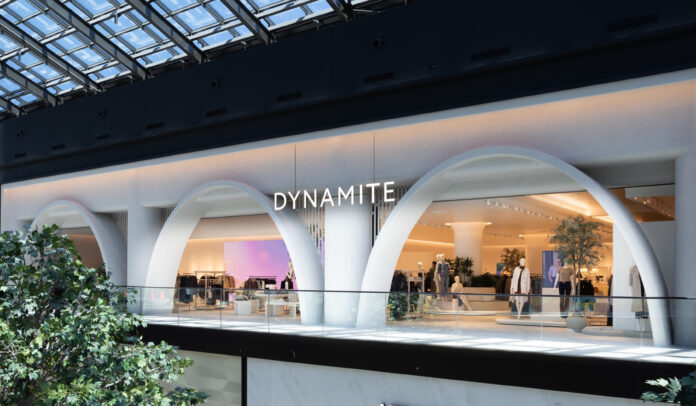
Dynamite at Royalmount in Montreal. Photo courtesy of Dynamite
Groupe Dynamite Inc. has emerged from the 2026 ICR Conference with renewed investor confidence, stronger financial guidance, and growing recognition as one of Canada’s most disciplined apparel retailers.
In a research note published following the conference, Stifel Managing Director Martin Landry highlighted accelerating brand momentum, operational strength, and improving profitability as key factors underpinning a more optimistic view of the company’s near- and medium-term trajectory.
The Montréal-based retailer, which operates the Garage and Dynamite banners, raised its full-year outlook ahead of the conference and reported that comparable sales for the first nine weeks of the fourth quarter of fiscal 2025 were up 30.8 percent year over year. That performance exceeded both internal expectations and broader market consensus, reinforcing the company’s positioning as a standout performer in North American fashion retail.
Upward Revisions Reflect Momentum Into 2026
Stifel increased its target price for Groupe Dynamite to $102 from $96, citing improved visibility into earnings growth and sustained demand across core markets. Revenue forecasts were also revised higher, with fiscal 2026 revenue now projected at $1.54 billion and fiscal 2027 revenue at $1.81 billion. Adjusted earnings per share expectations rose to $2.74 for fiscal 2026 and $3.39 for fiscal 2027.
Martin Landry
The improved outlook reflects a combination of strong comparable store sales, operating leverage, and disciplined cost management. Management reiterated its expectation for high single-digit comparable sales growth in fiscal 2026, supported by a pricing strategy that targets increases at roughly twice the rate of inflation. Approximately half of that growth is expected to come from pricing, with the balance driven by traffic and volume tied to continued brand momentum.
Brand Strength Extends Beyond Sales Metrics
Beyond financial performance, the report pointed to qualitative indicators that underscore the strength of the Garage brand, particularly in international markets. Management noted exceptionally high levels of interest in new store openings, including more than 1,000 applications for each of two store manager roles recently posted in the United Kingdom. Similar trends have been observed in the United States, where application volumes for new stores are significantly higher than they were five or ten years ago.
This level of engagement suggests rising brand awareness and employer appeal, both of which are increasingly important in a tight labour market. According to the report, these trends provide early signals that Garage’s international expansion strategy may gain traction more quickly than previously anticipated.
Employee Ownership Supports Retention and Culture
One of the more distinctive elements of Groupe Dynamite’s operating model is its approach to employee ownership. Following the company’s initial public offering, deferred share units were granted to employees below the director level, including store-level staff. These grants, valued between $500 and $2,000 at the time of issuance and subject to a two-year vesting period, have grown substantially in value alongside the company’s share price.
Stifel noted that employee retention has improved meaningfully since the introduction of the program, positioning Groupe Dynamite differently from many peers in the apparel sector. The alignment between employee incentives and shareholder outcomes is viewed as a structural advantage that supports execution consistency and long-term performance.
Image: Garage
Technology Investments Target Personalization
Groupe Dynamite has also been investing in its digital and information technology infrastructure, with a focus on enhancing personalization and improving the customer experience. The company began rolling out upgrades through its mobile app in late 2025 and plans to extend the platform enhancements to its North American and international websites.
The upgraded systems are designed to tailor product recommendations based on customer location and preferences, an area management has identified as one of the largest growth opportunities for 2026. These investments aim to strengthen conversion rates and deepen customer engagement, particularly as e-commerce continues to represent a meaningful share of total sales.
Margin Expansion Expected as Cost Pressures Ease
Margin performance is another area where the outlook has improved. Groupe Dynamite faced unusually high tariff costs in fiscal 2025, with rates reaching as high as 145 percent at their peak. Those pressures have since eased, and the combination of lower tariffs, supplier concessions, internal cost controls, and price increases is expected to support gross margin expansion in fiscal 2026.
Stifel forecasts a 50 basis point year-over-year increase in gross margin for fiscal 2026, alongside a similar improvement in selling, general, and administrative expense leverage. Strong sales growth is expected to further enhance fixed cost absorption, contributing to improved profitability across the income statement.
Store Relocations Add Long-Term Upside
The report also highlighted the continued opportunity tied to store relocations and upgrades. Management has indicated that relocating stores from lower-tier malls into higher-quality retail centres can result in sales increases of up to four times, even when store size remains unchanged. Approximately 40 percent of Groupe Dynamite’s store base is still located in lower-tier malls, providing a multi-year runway for revenue and productivity gains as the portfolio is optimized.
This strategy aligns with broader shifts in North American retail real estate, where high-performing centres continue to consolidate traffic and spending.
A Growing Story for Global Investors
While Groupe Dynamite is well known within Canada, Stifel noted that the company remains a relatively new story for many international investors. As awareness increases, particularly in the United States and Europe, the firm believes the stock could benefit from a broader investor base that recognizes the company’s operational discipline and growth profile.
With strong comparable sales, improving margins, and a clear strategic roadmap, the Groupe Dynamite 2026 outlook reflects a retailer that is navigating a volatile apparel landscape with confidence and precision. As the company enters the new fiscal year, its combination of brand relevance, operational execution, and financial strength continues to set it apart within the Canadian retail sector, according to the report.
Rendering of the future four-level 41,800 sq ft Aritzia store at Robson and Howe in Vancouver. Rendering: Aritzia
Aritzia Inc. reinforced its position as one of North America’s fastest-growing apparel retailers during the 2026 ICR Conference, according to a research update published by Stifel‘s Martin Landry following management’s presentation and investor meetings. The Vancouver-based retailer drew strong interest from the investment community, presenting to a full ballroom and fielding questions focused on the sustainability of its recent performance and the drivers behind its acceleration.
Management pointed to a combination of operational execution, disciplined inventory management, digital initiatives, and U.S. store expansion as the foundation of its current momentum. Stifel reiterated its Buy rating on Aritzia shares and maintained a target price of $150, citing a long growth runway and the company’s ability to reinvest cash flows at returns exceeding 20 percent.
Inventory Discipline and Margin Expansion
One of the central themes of Aritzia’s presentation was the improvement in inventory availability and markdown discipline. Investments in information technology and data analytics have enhanced management’s visibility into store-level inventory, reducing out-of-stock situations that previously limited the company’s ability to capture demand.
Martin Landry
According to the report, improved inventory positioning has allowed Aritzia to sell through product at full price more consistently, while a reduction in clearance activity has supported margin expansion. The result has been a meaningful uplift in profitability, particularly as demand remained strong across key categories.
This focus on inventory discipline represents a structural shift rather than a short-term adjustment. Management emphasized that better data-driven decision-making has improved both availability and efficiency, positioning the company to support higher sales volumes without a proportional increase in markdown risk.
Mobile App Exceeds Early Expectations
Aritzia’s mobile app launch emerged as another significant contributor to recent performance. Within the first two months following launch, the app reached approximately 1.4 million downloads, a level management had initially expected to achieve after a full year.
The app allows Aritzia to personalize product recommendations and tailor the customer experience more effectively, strengthening engagement and increasing purchase frequency. Management estimates that over the longer term, the mobile app could contribute mid- to high-single-digit incremental growth to overall sales.
Beyond direct revenue impact, the app has become a strategic tool for deepening customer relationships and reinforcing brand loyalty, particularly as the company continues to expand its digital ecosystem alongside its physical store network.
U.S. Store Expansion Drives Brand Awareness
Aritzia’s expanding U.S. footprint was highlighted as a critical growth engine. Over the past four years, the company has doubled its store count in the United States, significantly increasing brand awareness in key markets.
Management described store openings as the company’s most effective customer acquisition strategy. The in-store experience, designed to deliver a boutique feel within a larger retail format, remains central to Aritzia’s differentiation. Personalized stylists play a key role by building relationships with high-value customers, booking appointments, and customizing the shopping experience.
With sales per square foot reaching approximately $1,500, Aritzia’s store network is among the most productive in the sector. This productivity supports higher profitability and reinforces the economics of continued physical expansion as part of the broader Aritzia growth strategy.
Aritzia Yorkdale (Image: Aritzia)
Shift Toward Digital Marketing Investment
Another notable change discussed at the conference was Aritzia’s evolving approach to marketing. Historically, the company invested little in digital marketing to drive sales. That strategy shifted in March 2024, when management began allocating a low single-digit percentage of sales toward digital channels.
These investments have focused primarily on social media and influencer marketing, with early results described as strong. According to the report, digital marketing has supported both traffic and conversion, complementing the company’s store expansion and mobile app initiatives.
Management positioned digital marketing as a scalable lever that can be adjusted as the company grows, providing flexibility while supporting continued brand visibility in increasingly competitive apparel markets.
Everyday Luxury Positioning Resonates Across Demographics
Aritzia’s positioning as an everyday luxury brand continues to resonate with consumers, combining premium quality with accessible price points. This positioning has allowed the company to carve out a niche between traditional mass-market retailers and higher-end luxury brands.
The brand’s multi-generational appeal was also emphasized. Aritzia serves a broad customer base ranging from teenagers to women in their forties and beyond, offering product suited to a wide range of occasions. This diversity reduces reliance on any single demographic and supports more stable long-term demand.
Management described this positioning as a key differentiator that has contributed to sustained growth and resilience through varying economic conditions.
Technology and Workforce Initiatives Ahead
Looking forward, Aritzia outlined several operational initiatives aimed at further enhancing performance. The company is in the process of rolling out RFID tagging across its store network, which is expected to provide more precise real-time inventory visibility.
In parallel, Aritzia has begun work on a multi-year merchandise planning software initiative designed to improve forecasting and allocation. A workforce planning tool is also being implemented to ensure appropriate staffing levels by location and time of day.
Management indicated that these initiatives have the potential to lift sales and efficiency over time, reinforcing the company’s operational foundation as it continues to scale.
Aritzia Yorkdale (Image: Aritzia)
Financial Outlook and Balance Sheet Strength
Stifel’s report highlighted Aritzia’s strong financial position, noting the absence of bank debt and a growing cash balance exceeding $600 million. This balance sheet strength provides management with flexibility to invest in growth initiatives while maintaining optionality.
Revenue is projected to reach approximately $4.18 billion in fiscal 2027 and $4.88 billion in fiscal 2028, with adjusted earnings per share expected to grow to $4.10 and $5.20 respectively. The firm’s valuation reflects confidence in Aritzia’s ability to sustain above-average growth while expanding margins.
The company’s rising market capitalization and liquidity have also broadened its appeal among global investors, according to the report.
A Compounding Growth Story
In its conclusion, Stifel described Aritzia as a strong compounder with a long runway for reinvestment. With returns on invested capital exceeding 20 percent, cash deployed back into the business is expected to generate accelerating value over time.
While acknowledging risks related to tariffs, inflation, currency exposure, and shifting consumer demand, the report framed these challenges as manageable within the context of Aritzia’s operational discipline and brand strength.
As outlined at the ICR Conference, Aritzia’s growth strategy is increasingly defined by a blend of disciplined execution, selective investment, and a clear understanding of its customer. For Canadian retail watchers, the company’s trajectory offers a case study in how scale, technology, and brand positioning can work together to drive sustained performance.