

With roots dating back to 1886, Caulfeild Apparel Group has weathered more than a century of fashion trends, retail transformations, and market disruptions. Headquartered in Oakville, Ontario, the family-owned business is today one of Canada’s oldest apparel companies. CEO Mike Purkis, who acquired the company in 2003, is now steering Caulfeild into its next era, guided by a blend of heritage and innovation.
“We’ve been Toronto-based for 140 years,” said Purkis in a recent interview. “Started as a retailer, ended up importing British goods. In the seventies and eighties, we actually had one of the largest sewing machine plants in Toronto. We manufactured Caulfeild robes. Then we got into licensing—Gant, Izod, Calvin Klein, Cutter & Buck.”
Today, Caulfeild focuses on both licensing and brand ownership. “We own Joe Boxer for Canada entirely, Modern English, Benson, and we license Robert Graham for loungewear and Stacey Adams for multiple categories including dress shirts, sportswear, and underwear.”
Filling the Void Left by Hudson’s Bay
For decades, Hudson’s Bay was a critical retail partner. Caulfeild Apparel Group’s brands held significant floor space within the department store chain. The recent collapse of Hudson’s Bay as a multi-brand department store in Canada, however, has forced a significant industry reckoning.
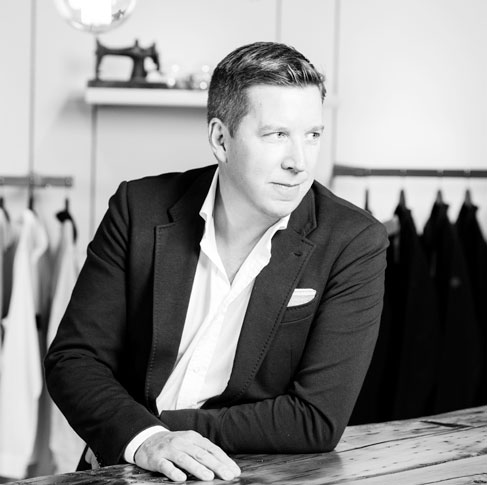
“Hudson’s Bay at peak was doing $550 million in men’s sportswear alone,” said Purkis. “In their last year, that number dropped to around $300 to $350 million. That’s a huge hole in the market right now.”
Purkis expressed skepticism about recent attempts to revive the Hudson’s Bay footprint. “Canadian Tire bought the rights to the name, and I don’t know if that’s a great story. I don’t think they’re going to open multi-brand stores. Then you have Ruby Liu in Vancouver talking about opening over 25 doors—but she can’t even use the Hudson’s Bay name.”
The exit of Hudson’s Bay from the department store space has had widespread consequences. “You’ve got a billion-dollar gap in the market, and frankly, I don’t know who’s going to fill it.”
Strategic Brand Shifts and Distribution Expansion
In anticipation of industry shifts, Caulfeild had already begun pivoting. The company’s partnership with Costco has become increasingly central.
“They’ve been a great partner to us,” said Purkis. “They don’t hurt your market elsewhere, and they prove you can sell a hundred thousand of an item in six weeks.”
The company is also expanding into the U.S. market, launching Robert Graham underwear and Benson in select U.S. locations. “We’re focusing on North American distribution. Canada’s 40 million people—it’s a great market, but to grow you need to think more globally.”
Supply Chain Disruptions and Tariff Pressures
Caulfeild, like many other Canadian distributors, has had to navigate an increasingly complex trade environment. In particular, shifting U.S.-China tariff policies disrupted business in early 2025.
“The way the tariffs were launched, they came in so fast and unpredictably that even lawyers didn’t know how they’d be applied to goods in a bonded warehouse,” said Purkis. “At one point, the tariffs were 152%. It froze our shipping for 8 to 10 weeks.”
Purkis said the company has since diversified sourcing away from China to mitigate future risk. “The China-U.S. trade war isn’t going away anytime soon. We’re looking at other countries and sustainable production models.”
A Meaningful Commitment to Sustainability
Caulfeild’s approach to sustainability is more than a marketing message—it’s built into the business model. The company’s investment in Outland Denim, a socially responsible brand manufacturing in Cambodia, exemplifies that ethos.
“We built a factory in Cambodia that employs women rescued from human trafficking, trains them, and gives them healthcare,” said Purkis. “We buy only organic cotton, use renewable vegetable dyes, and ensure no child or slave labour.”
But for Purkis, sustainability is holistic. “If you buy organic cotton but don’t pay your employees a living wage, are you really sustainable? Sustainability means repeatable cycles—people, planet, resources.”
He also warns that meaningful sustainability comes at a cost. “To make things properly is going to cost more, and the consumer has to pay more. Otherwise, sustainability will suffer.”
The Future of Canadian Apparel Retail
With traditional department stores gone or weakened, Canadian apparel brands and distributors must rethink their retail strategies. Purkis believes this shake-up could create new opportunities.
“Outlets are doing great, and luxury seems to be okay, but there’s a big gap for moderate-priced multi-brand retail,” he said. “Moores and Tip Top are still around, but they don’t offer the experience today’s consumers want.”
He sees potential in independent boutiques, particularly those with curated assortments and strong service. “In towns like Oakville and Halifax, stores like Burrows and Dugger’s are doing well, but they’re selling $250+ shirts. That’s not accessible for most Canadians.”
He also noted that retailers like Simons, while strong, can’t absorb the full market share left by Hudson’s Bay. “Simons does an awesome job, but they’re 70% private label, and they have only 13 doors. They’ll pick up some of the business, but not all.”

Considering Standalone Retail and Brand Acquisition
Purkis isn’t ruling out a shift into standalone retail for Caulfeild’s brands.
“We’ve never done retail ourselves, but I think going direct-to-consumer is important,” he said. “Online isn’t the only way to do that. Vertical brand stores are possibly on the map.”
The company is also actively exploring acquisitions. “We’ve built three brands and we’re looking to buy more. Sadly, there are going to be some companies that don’t make it. That might open the door for us.”
While he’s not planning to take on dozens of leases like others in the market, he’s watching closely. “If someone else opens a new department store model, we’ll be ready to engage—but I don’t believe anyone can open by Q4 2025.”
A Challenging Transition Ahead
With brands once heavily reliant on Hudson’s Bay now left scrambling, the short-term reality is stark.
“We’ve had calls from people who had container loads of product they can’t land,” said Purkis. “They’re calling Costco and TJ Maxx. But TJ Maxx knows there’s a glut, and they’re offering lower prices.”
Others, he said, may simply sit on product until Spring 2026 and repackage it. “Next spring, the theme will be retro 2025—because that’s what’s sitting in storage.”
While Caulfeild saw the writing on the wall early and reduced spring orders, many others weren’t so lucky. “I had partners in the U.S. with goods parked in Shanghai they didn’t want to bring in,” said Purkis. “The ripple effects will last for several seasons.”
A Resilient Legacy and a Watchful Eye on What’s Next
Despite the industry chaos, Purkis remains optimistic.
“Fashion’s about trends. You lose some, you win some. We’ve lasted 140 years by adapting,” he said. “We’ll continue doing that.”
Still, he’s acutely aware of the magnitude of change. “Some brands lost 80–100% of their Canadian distribution overnight when Hudson’s Bay closed. For many, there’s nowhere else to go.”
For now, Caulfeild Apparel Group will continue to lead with strategy, values, and adaptability—principles that have carried it through decades of disruption, and that will no doubt guide its next chapter.





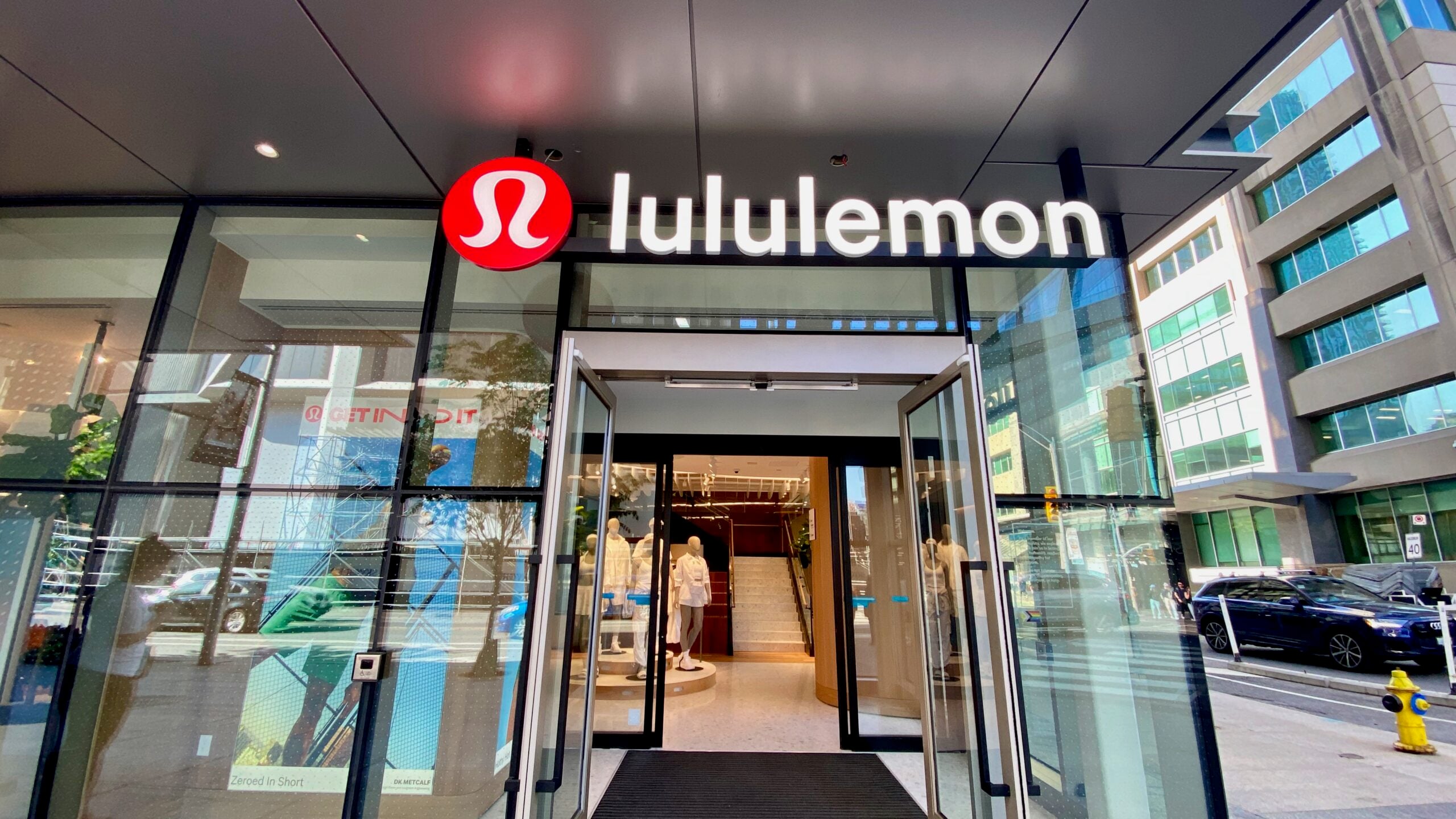








We need some moderate/moderate better brands to open pop up stores for Q3 and Q4, 2025.