

Canada’s premium menswear landscape is entering a new phase, and a long-established wholesale player is stepping directly onto the retail floor to help shape it. Caulfeild Apparel Group, the fourth-generation Canadian apparel company founded in 1886, has announced the launch of HANK, a multi-brand menswear retail concept that will open destinations across the Greater Toronto Area in 2026.
The move comes after a period of upheaval that removed major distribution and discovery platforms for men’s apparel in Canada. Nordstrom exited the country in June 2023. Then, Hudson’s Bay Company’s department store operations concluded in June 2025, ending a centuries-long chapter in Canadian commerce. Saks Fifth Avenue’s Canadian stores also closed at the same time, further reducing premium menswear options in several major markets.
Against that backdrop, HANK is being positioned as a curated, service-forward specialty concept that sits in the “premium better” zone, targeted at men who still want selection, fit support, and an elevated in-store experience, but who now face fewer national options than they did even a few years ago.
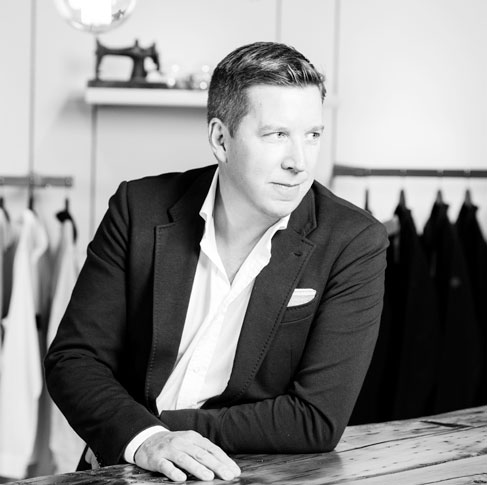
In an interview, Michael Purkis, CEO of Caulfeild Apparel Group, framed the opportunity in blunt terms, linking HANK’s timing directly to the disruption that followed major department store exits and closures.
“Really, there is a black hole in the Canadian market with the departure of Nordstrom, Saks, and Hudson’s Bay,” Purkis said. “There is about a half a billion dollar menswear business that existed three years ago that isn’t there today.” He added that Hudson’s Bay alone, in 2023, “was close to four hundred million dollars in sales for men’s.”
While the broader department store conversation continues to evolve, the immediate retail reality is straightforward. Many premium and contemporary menswear brands relied on a small number of national platforms to reach Canadian customers at scale. When those doors disappear, the replacement is rarely one-for-one. The demand does not vanish, but the pathways to serve it fragment.
Purkis argued that Canadian men now face a narrower set of choices that often push spend either upward into luxury specialty or downward into casual, athletic, or off-price channels. “Canadian men don’t have many alternatives to shop today,” he said, adding that Caulfeild believes it can help fill the void with “a high level of service and great product.”
Why a Wholesaler Is Moving Into Retail
HANK is being introduced as Caulfeild’s retail return, but it is also a strategic response to a supplier shock that hit much of the wholesale ecosystem after Hudson’s Bay’s collapse.
“It was about two days after the Bay went bankrupt,” Purkis said, describing the moment the concept started to take shape. “We were a large supplier to Hudson’s Bay. That was quite a blow to everybody in the Canadian wholesale industry.”
He described a fork in the road that will resonate with many suppliers and distributors that lost a major customer, whether directly or indirectly. “Suppliers had a choice, they could either sit in the corner and feel sorry for themselves, or they could get up and do something about it,” he said.
Caulfeild’s public positioning suggests HANK is designed to combine the feel of an independent boutique with the operational advantages of a mature distributor. The company described HANK as “Canada’s newest multi-brand menswear destination,” built around curated premium brands, expertise-led service, and an environment designed around how men “actually live and dress.”
For Canadian retail watchers, the significance is partly in what it signals about where new retail supply may come from. In categories where department store footprints have thinned, brand owners, distributors, and multi-brand specialists can become the next wave of physical retail operators, especially if they already understand merchandising, replenishment, and vendor coordination at scale.
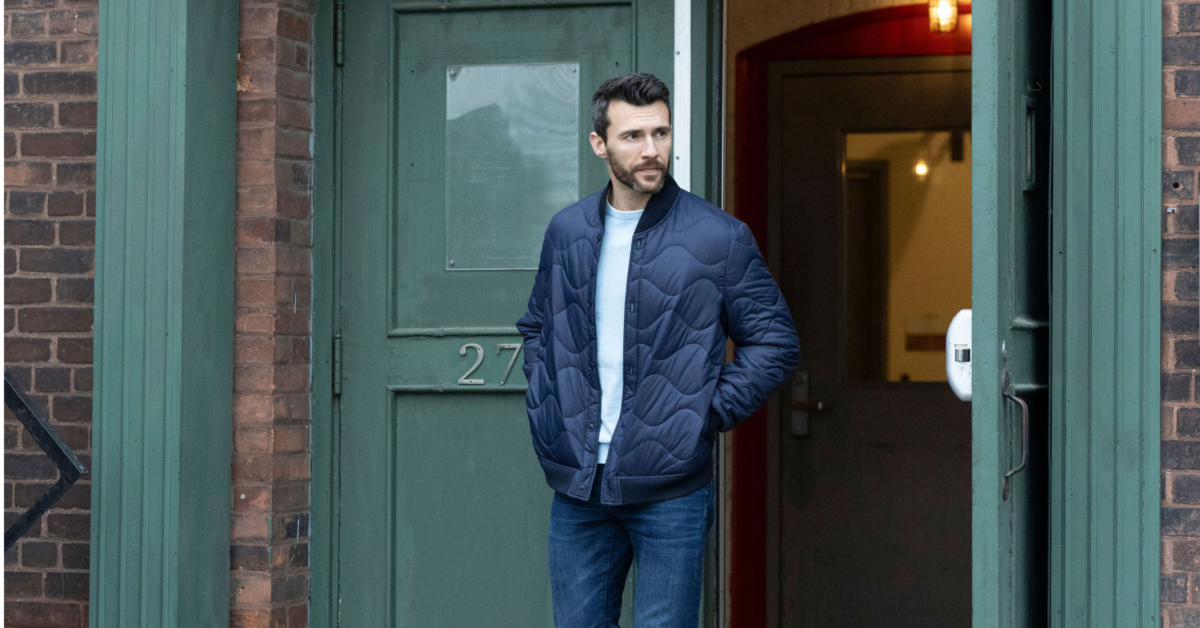
Store Format, Price Positioning, and the Target Customer
The initial HANK stores are expected to be relatively compact by mall standards, but large enough to deliver a meaningful assortment and an experience layer. Purkis said locations will run “between 1,800 and 2,700 square feet depending on location.”
On price, he positioned HANK as premium, but below the upper end of Canada’s specialty menswear market such as Harry Rosen. “We want to be in a premium marketplace, which will be just below Rosen’s,” he said, adding that it will be “twenty percent below their opening, most likely.”
That positioning is important, because the rebuild of premium menswear cannot only serve the top of the pyramid. Purkis also spoke about how pricing quickly becomes “luxury” for many shoppers once key multi-brand floors disappear. He said HANK aims to land in a range where customers still feel they are buying quality, but without the sticker shock that can narrow traffic.
The target customer, as described in the interview, is a mid-30s to 55 shopper with good income and a practical relationship with style. “Not a classic guy,” Purkis said, “fashion forward but not aggressive fashion. He’s looking for wearable fashion.”
In terms of category mix, he said suiting will be part of the offer, but not dominant out of the gate. “Product mix will include suit separates,” Purkis said, with “probably twenty to twenty five percent suits and sport coats,” and a heavier tilt toward sportswear to start.
A Store Experience Built for Time, Not Transactions
If HANK succeeds, it will likely be because it marries product with comfort and service in a way that makes men want to stay in the store longer than they planned.
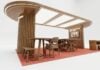
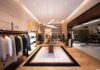
The concept, as described in the interview and press materials, leans into a lived-in, lifestyle-driven environment. Purkis described an early design direction as “very clean,” “minimalist,” with “dark metal” and “bleached wood,” and he suggested the goal is to feel more like a space you want to be in, rather than a rack-driven selling floor.
He also emphasized physical comfort as part of the format. “Every store will have a couch and a couple chairs and a table where people can sit and enjoy the experience,” he said, calling it “an elevated shopping experience for the premium price point.”
The company similarly described HANK as offering elevated style in a warm, lived-in environment built for comfort, confidence, and ease, while reflecting “modern masculinity through thoughtful service and refined design.”
This is where HANK menswear stores in Canada could differentiate in a market where convenience has pulled many apparel purchases online, but where fit, fabric, and styling still benefit from in-person guidance.
Why the First Locations Will Be in Malls
Purkis confirmed that the first wave will open in mall locations, with high foot traffic and the right customer profile, and with a clear intention to test, learn, and iterate quickly.
“The first three will be mall locations,” he said. “A little bit of this will be test and test and retest.”
He also pushed back on the idea that malls have lost relevance for this customer, pointing instead to a return of interest in shopping in person. “The data we’re looking at shows a return to mall,” he said. “People are missing the in-store experience.”
That view aligns with the historic role that mall-based department stores played as anchors for premium men’s apparel. If the customer was still shopping in those environments 18 months ago, as Purkis put it, then replacing the offer inside a mall channel is not a nostalgic bet. It is a practical one.
From Three Stores to a National Rollout
While the near-term focus is the GTA, the long-term ambition is far larger.
“The goal isn’t to stop at three,” Purkis said. “Ultimately, 35 to 45 doors is probably the target.”
That scale is meaningful, because it implies HANK is being built as a repeatable specialty chain, with the potential to expand into multiple Canadian markets if the early stores prove the model, economics, and merchandising strategy.
He also acknowledged the financial reality of opening stores in today’s environment, and the need to get the first wave right before accelerating. “They’re not inexpensive to open,” he said, adding that the plan is to make the initial group work, then evaluate “scale and timing.”
Caulfeild’s Platform Behind the Concept
Caulfeild is headquartered in Oakville, Ontario, with a distribution footprint in the Greater Toronto Area, and it describes itself as licensing and distributing brands for the better-end apparel market, with a long history in Canadian menswear.
In its announcement, Caulfeild said it serves more than 1,500 independent accounts across Canada and the U.S., supported by a sales network and a 36,000-square-foot distribution centre in Toronto.
Those capabilities matter. If the premium menswear gap is partly a product availability and assortment problem, then the ability to plan inventory, manage replenishment, and maintain vendor relationships is not a side detail. It is central to whether a new multi-brand chain can scale.
It is also a reminder that HANK menswear stores in Canada are being built by a company that has spent decades understanding what sells, where it sells, and how product moves through the market. The retail expression is new, but the underlying infrastructure is not.
For now, Caulfeild is keeping key details close, especially brand partnerships and store locations. Those announcements will come later, after communications strategy and rollout sequencing are finalized.







Mike good luck in your new venture. I’m sure it will be a huge success. Anybody standing still is a dead duck in our industry. Good luck and stay in touch.
Hershey gold
Saskatoon is seriously in need of new menswear stores. Right now your choices are Marks work warehouse or Banana Republic Factory. I need clothes for work that are appropriate for someone who is 50. Not suits! I have to drive to Calgary to shop and that does not happen often due to the 8 hour drive. Used to travel to the U.S on holidays and buy clothing but due to the current situation and exchange rate that is off the table. Buying clothing online is ridiculous for anything but underwear or shoes.