Black Friday was the busiest shopping day of the 2025 holiday season, according to new retail transaction data from Moneris, as consumer spending clustered around a small number of peak periods amid otherwise restrained activity.
Data released by the payment processor shows Black Friday generated the highest transaction volume between Nov. 1 and Dec. 31, with several late-December days also recording elevated levels as shoppers made last-minute purchases.
Concentrated demand shapes holiday season
Moneris said Dec. 23 reached 95 per cent of Black Friday’s transaction volume, driven largely by last-minute holiday shopping. Dec. 22 followed closely at 94 per cent of Black Friday’s volume.
Cyber Monday ranked 11th overall during the period, generating nearly 79 per cent of Black Friday’s volume. Boxing Day, by contrast, captured less than half of Black Friday’s volume, continuing what Moneris described as a downward trend.
The data suggests holiday spending in 2025 was anchored by early promotional events and predictable late-December purchasing patterns, pointing to multiple demand surges rather than a single sustained peak.
Sean McCormick
“Moneris data shows that holiday spending in 2025 was concentrated around a small number of high-impact moments, with Black Friday once again leading the season. This was followed by a strong pre-holiday surge, as December 22 and 23 ranked among the busiest shopping days, reflecting how consumers continue to rely on a mix of early promotions and last-minute purchasing to complete their holiday shopping,” said Sean McCormick, vice-president of business development, data services at Moneris.
National spending remains largely flat
Despite the strong performance of specific shopping days, Moneris said overall retail spending across Canada was relatively unchanged compared with the previous year. Total retail spend declined by one per cent year over year, while the total number of transactions increased by one per cent.
The transaction data aligns with consumer sentiment measured earlier in the season. According to an Angus Reid survey commissioned by Moneris, 43 per cent of Canadians said they intended to spend less during the 2025 holiday shopping season than the year before, while seven per cent said they planned to spend more.
Moneris said the combination of flat spending and a slight increase in transaction count suggests consumers remained engaged in holiday shopping but adjusted how they spent.
“Moneris data shows that while overall holiday spending remained relatively flat in 2025 compared to 2024, transaction activity increased modestly, pointing to a more cautious and selective approach to holiday shopping. Canadians continued to participate in the season but spread their spending across smaller, more deliberate purchases, reflecting a heightened focus on value and affordability,” McCormick said.
Regional differences emerge
While national results showed limited growth, Moneris said its data revealed notable regional variation in consumer activity.
Manitoba stood out with more than a two per cent increase in spending volume and a three per cent rise in transaction count during the holiday period, according to Moneris.
“While holiday spending in 2025 was more restrained nationally, Moneris data shows clear pockets of regional strength, with Manitoba standing out with a more than two per cent increase in spend volume and a three per cent rise in transaction count. These results highlight that, even in a slower year overall, strong consumer activity persisted in key regions across the country,” McCormick said.
Photo: A. C.
Implications for retailers
Moneris said the 2025 holiday season underscores the importance for retailers of planning for multiple spikes in demand rather than relying on a single marquee shopping day. The data points to a combination of early promotional periods, sustained pre-holiday activity and last-minute purchasing driving overall results.
The company said the continued prominence of Black Friday, alongside the resilience of Cyber Monday and the relative decline of Boxing Day, reflects evolving consumer behaviour during the holiday shopping season.
Moneris is one of Canada’s largest providers of payment processing and commerce data, tracking transaction activity across a wide range of merchants nationwide.
Maripier Morin and WeCook executive chef Gabriel Drapeau
WeCook says it is adding a new ready-to-eat meal to its menu through a collaboration with brand ambassador Maripier Morin, expanding its family-size offerings for late January.
The Montréal-based meal delivery company announced the launch of Maripier’s perfect chicken pasta, which will be available during the weeks of Jan. 18 and Jan. 25. The dish will be offered in a family-size format, a move the company says reflects its focus on shared meals.
New product tied to brand partnership
The new pasta dish is the result of several development meetings between Morin and WeCook executive chef Gabriel Drapeau, according to the company. WeCook said the collaboration focused on flavours linked to Morin’s childhood and meals she associated with family gatherings.
The company said the dish features roasted chicken breast with Herbes de Provence served on radiatori pasta in a creamy mushroom sauce, with green peas, asparagus and mozzarella.
Maripier Morin
“We eat with our memories, and we eat with our hearts. For me, the most important part of this collaboration was creating a meal that allows people to reconnect with their own memories while connecting with each other,” said Morin. “To achieve that, we decided to go with one of my family’s favourites, revisited with a WeCook twist.”
WeCook said Morin’s role as family ambassador made a family-size format a natural extension of the partnership.
Menu timing and operational focus
The company said the meal will appear on its rotating menu for two specific weeks in January, rather than as a permanent addition. WeCook regularly updates its offerings, releasing weekly menus that include a set number of recipes.
WeCook said the collaboration aligns with its stated objective of simplifying daily meal planning for customers while encouraging shared eating experiences. The company also said it aims to introduce customers to new flavours while drawing on familiar food traditions.
Maripier Morin and WeCook executive chef Gabriel Drapeau
Company background and growth
Founded in 2013, WeCook operates in the ready-to-eat meal delivery segment, offering prepared meals, snacks and beverages. The company says it delivers fresh meals directly to customers.
WeCook said it has recorded growth of 1,000 per cent since 2020 and has created more than 400 jobs. The company is based in Montréal and operates two production centres.
According to the company, it delivers more than 4.5 million meals annually across Ontario, Quebec, New Brunswick and Nova Scotia. WeCook said its weekly menus consist of 15 recipes.
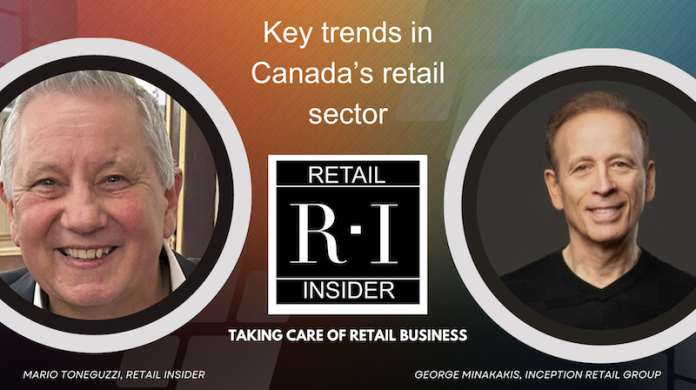
Minakakis said 2025 was a largely flat year for retail, with performance varying widely by segment. Consumer demand fluctuated and results lacked consistency, leaving many retailers focused on simply weathering the year without major setbacks. He noted that retailers who avoided aggressive discounting and protected their value proposition were often better positioned, as excessive promotions can weaken brand equity.
George Minakakis
Looking ahead, Minakakis said many of the same pressures remain in place. Affordability continues to weigh on consumers as food prices stay high and a significant portion of Canadian mortgages come up for renewal, potentially at much higher interest rates than five years ago. Trade uncertainty and geopolitical tensions are also contributing to a cautious economic outlook.
Minakakis highlighted artificial intelligence as one of the most significant forces reshaping retail. AI is being adopted quickly by both retailers and consumers, fundamentally changing how products are discovered and purchased. As AI-driven tools increasingly guide consumer choices, retailers face growing challenges around visibility and relevance in digital and AI-powered marketplaces.
According to Minakakis, retailers that are thriving are those that have embraced transformation rather than becoming immobilized by uncertainty. He pointed to major retailers that have consistently adapted their operations and technology strategies over time as examples of how ongoing evolution supports long-term resilience.
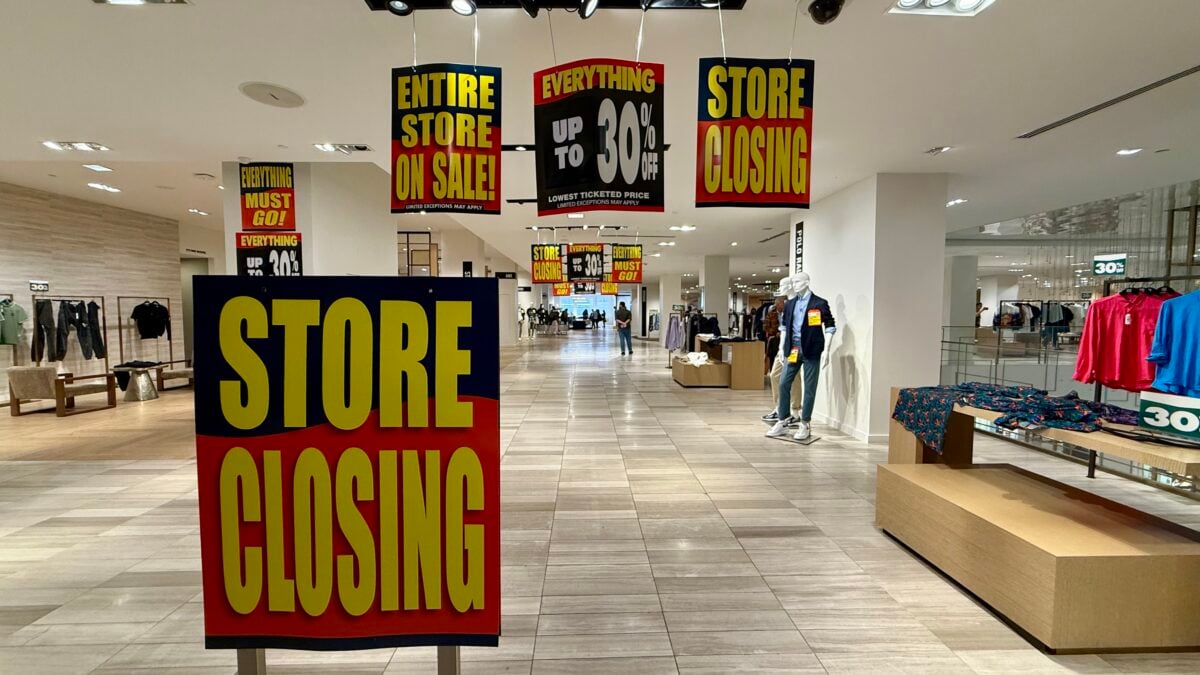
On the real estate front, Minakakis said the collapse of Hudson’s Bay has left a large amount of oversized retail space across Canada. He expects landlords to subdivide many of these locations, as finding single tenants for such large footprints will be difficult, while malls will need to focus more heavily on driving traffic.
For mid-sized retailers, Minakakis said the most critical near-term decision is clearly defining how AI will be integrated into their business, with speed and responsiveness emerging as key competitive advantages.
MAITREYI RAMAKRISHNAN TO BE THE FACE OF FABLE & MANE 2026 GLOBAL CAMPAIGN (CNW Group/Fable & Mane)
Toronto-based haircare brand Fable & Mane has named Canadian actress and activist Maitreyi Ramakrishnan as the face of its 2026 global campaign, a move that positions the company to anchor its next phase of brand storytelling around heritage, ritual and international reach.
The campaign, titled Where All Rituals Begin: From Ancient Lands to Modern Hands, will be filmed entirely in India and centres on the origins of Fable & Mane’s HoliRoots Hair Oil, according to the company. The announcement signals a strategic alignment between the brand and a globally recognized Canadian actor with strong cultural and social visibility.
Campaign focus and production
Fable & Mane said the campaign film will follow Ramakrishnan as she gathers herbs central to the brand’s products, presenting what the company describes as its origin story rooted in tradition and nature. The film will be narrated by Ramakrishnan and is designed as a visual journey connecting ancient practices to modern haircare routines.
Maitreyi Ramakrishnan
“I grew up with my great-grandmother, grandmother, and mother caring for my hair, a weekly tradition of hair oil carefully made with herbs and a lot of love. Today, in my busy life, Fable & Mane is a part of that personal care in my life. It also deeply matters to me that Akash shares my commitment to showcasing the power of Ayurveda in beauty and self-care. This campaign is a love song to nature’s gifts to human wellbeing,” Ramakrishnan said in the release.
The company said the campaign video invites viewers to experience where “ancient lands meet modern hands,” framing haircare rituals as part of contemporary personal care practices.
“It’s an honour to welcome Maitreyi as part of the Fable & Mane family. What started as an organic friendship grew into her becoming our first Fablemaker with The Fable Fund, and now this moment feels truly full circle. Maitreyi embodies the spirit and purpose behind everything we do at Fable & Mane, and there’s no one better to help us lead this next chapter,” Mehta said.
The company described Ramakrishnan’s role as extending beyond campaign talent, tying her involvement to prior initiatives connected to the brand.
Positioning and values
Fable & Mane said the campaign reinforces its focus on mindful beauty and personal care framed as wellness. The company positions its products as inspired by Ayurvedic traditions and passed-down rituals, which it aims to reinterpret for modern consumers.
The brand stated that the campaign emphasizes the rituals and natural ingredients behind HoliRoots Hair Oil and highlights storytelling as a central component of its business approach.
About the campaign figure
Ramakrishnan has been recognized for her work in film and television as well as for her advocacy. She was named to the TIME100 Next list in 2021 and appeared on the New York Times’ 2020 list of best actors. She is best known for her lead role in Netflix’s series Never Have I Ever and has appeared in films described by the company as globally acclaimed.
The release also notes that Ramakrishnan was named to the Forbes 30 Under 30 list in 2024 and is active in advocating for public education, gender rights and inclusion.
Company background
Fable & Mane describes itself as a modern haircare brand rooted in Ayurvedic tradition, producing haircare products that combine natural ingredients, ritual-based practices and contemporary formulation. The company frames its offerings around storytelling and multi-generational hair rituals.
Fable & Mane products are available at Sephora Canada, according to the release.
The company said the 2026 global campaign represents the next chapter in its brand development, with Ramakrishnan serving as the central figure connecting its cultural origins to its global ambitions.
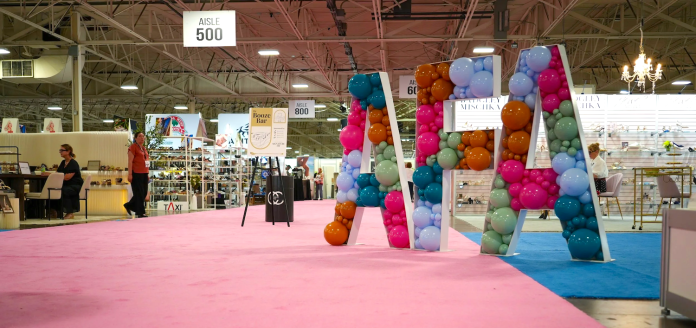
AFA United in Style has always represented more than a traditional trade show. It serves as a national meeting point for Canada’s footwear, apparel and accessories communities, and the 2026 event in Toronto from February 8 to 10 reinforces that role in a more connected way than ever before. This year, AFA United in Style will run alongside the Thredz Show, Canada’s long-standing apparel-focused event, with both shows taking place on the same dates in neighbouring halls at the Toronto Congress Centre. Retailers will be able to move seamlessly between AFA United in Style and the Thredz Show with either show badge, creating an integrated experience across categories.
This shared format reflects how the industry operates today. Footwear, apparel and accessories are deeply interconnected, both at the buying level and on the selling floor. Retailers build assortments across categories, while brands increasingly collaborate beyond traditional product lines. By aligning AFA United in Style with the Thredz Show, the two events together create a broader marketplace that mirrors real-world retail decision-making. Attendees can move easily between footwear, accessories and apparel, meeting with suppliers across categories in one continuous visit.
The combined environment also strengthens the sense of community that has long defined AFA events. Business owners, buyers, designers, sales teams and senior executives attend not only to place orders, but to reconnect with peers and exchange insight. The proximity of the two shows encourages crossover between communities that work closely throughout the year but do not always gather in the same space. Conversations that begin on one show floor can naturally continue in the other, opening the door to new relationships, collaborations and commercial opportunities.
AFA United in Style 2026 reflects a growing recognition that the Canadian fashion industry is strongest when its sectors come together. By bringing footwear, apparel and accessories into one connected experience, and by running side by side with the Thredz Show, the event delivers a more complete and efficient platform for engagement. For companies that value connection, collaboration and category-spanning access, the Toronto event offers a rare opportunity to engage with the industry as a whole.
The event takes place at the Toronto Congress Centre, 650 Dixon Road, from February 8-10, 2026.
Retail Insider is working with AFA on a promotional campaign ahead of the event. To work with Retail Insider, contact Craig Patterson at craig@retail-insider.com
Retail Insider is working with AFA on a promotional campaign ahead of the event. To work with Retail Insider, contact Craig Patterson at craig@retail-insider.com
Retail Insider is streamlining its Canadian retail news from around the web to include a handful of top news stories that can be viewed quickly during the day. Here are the top stories from the past 24 hours.
Former Langley Toys "R" Us store. Photo: Willowbrook Shopping Centre
Toys R Us has closed its final remaining store in British Columbia, bringing an end to the iconic toy retailer’s physical presence in the province. The last location, situated at Willowbrook Shopping Centre in Langley, was abruptly shut on Tuesday, January 13.
The closure of the Langley store leaves British Columbia without a single full-line Toys R Us location, a dramatic shift for a province that once supported multiple large-format stores across Metro Vancouver and the Interior. The shutdown also underscores the pace and scale of change underway at Toys R Us Canada, which has reduced its store network sharply over the past two years as part of a broad restructuring effort.
Abrupt Closure Tied to Lease Default
The Langley shutdown was accompanied by a notice posted on the store’s entrance by Willowbrook Shopping Centre owner Quadreal Property Group. The notice stated that the tenant was in default of its lease for failure to pay rent, operating costs, property taxes, GST, and other amounts, totaling $98,337.59.
According to the notice, Toys R Us was required to turn over possession of the premises immediately, including keys and security cards. The retailer was also instructed to remove all merchandise and fixtures from the store by Friday, January 16. Contact information for a bailiff company was included, and the notice warned that any items left behind would be deemed abandoned and disposed of by the landlord.
End of an Era for Toys R Us in British Columbia
The closure of the Willowbrook location represents the final step in a rapid withdrawal from British Columbia that has unfolded over roughly 24 months. During that period, Toys R Us steadily eliminated its presence in major urban and suburban markets across the province, culminating in the loss of its last remaining store.
Over the course of 2025, Toys R Us closed its three primary urban Metro Vancouver locations. The Vancouver West Broadway freestanding flagship store shut in mid-2025, ending decades of operation at one of the brand’s most recognizable Canadian sites. In Burnaby, the Station Square store, which had previously relocated from Metropolis at Metrotown, closed later that year after underperforming following its move. Richmond’s Lansdowne Centre mall location also closed in 2025, further eroding the company’s footprint in the Lower Mainland.
These closures followed earlier exits from Coquitlam and Surrey Central in prior years, with neither location replaced. By the time the Willowbrook store shut its doors, Metro Vancouver had already been without a core urban Toys R Us presence for the first time in decades.
After the wave of Metro Vancouver closures, the Langley store stood as the only remaining full-line Toys R Us in the region. Located on the eastern edge of Greater Vancouver, the Willowbrook Shopping Centre site increasingly served customers who were forced to travel significant distances to shop in person.
The reliance on a single suburban location highlighted the extent of the retailer’s retrenchment in British Columbia. With the Langley closure, shoppers across the province are now limited to online purchasing or must travel out of province to visit a physical Toys R Us store.
Screen shot of a message on the Toys “R” Us Canada website
British Columbia Part of a Wider National Pattern
The shutdown in Langley is part of a sweeping national downsizing that has reshaped Toys R Us Canada’s retail footprint. According to industry and labour reporting, British Columbia has been among several provinces affected by a wave of confirmed closures throughout 2025, with additional locations listed for sale across the country.
Nationally, Toys R Us Canada has declined from 103 stores in early 2024 to approximately 40 operating locations as of January 2026. This represents a reduction of roughly 61 percent in just two years, one of the most significant contractions by a specialty retailer in recent Canadian retail history.
At least 38 store closures were confirmed during 2025 alone, with another 12 locations listed for sale, many at asking prices exceeding $15 million. The pace of closures accelerated sharply in late 2024 and throughout 2025, suggesting mounting financial and operational pressures across the business.
Store Closures Often Unannounced
In several markets, Toys R Us closures occurred with little advance notice to employees or the public. In British Columbia, earlier shutdowns in Kelowna and Kamloops were reported to have taken place with minimal warning, mirroring a pattern seen in Ontario and Quebec during the same period.
The lack of formal public communication has been a consistent feature of the company’s retrenchment. Toys R Us Canada has not released a comprehensive restructuring plan or provided detailed explanations for the scale and speed of the closures, leaving landlords, employees, and shoppers to piece together developments location by location.
Ownership and Corporate Context
Toys R Us Canada is the remnant of what was once a much larger international toy retail empire. In 2017, the original U.S.-based Toys R Us filed for bankruptcy protection, leading to the sale of its Canadian division. The Canadian business was later acquired by businessman Doug Putman through his firm Putman Investments.
At the time of acquisition, Putman expressed confidence in the brand’s future and outlined plans for expansion. However, those ambitions have since given way to extensive consolidation. Putman Investments also operates Sunrise Records, which expanded aggressively by taking over many former HMV locations following that chain’s bankruptcy.
Industry observers have noted that the simultaneous management of multiple retail banners, combined with structural challenges facing specialty retail, may have added pressure to Toys R Us Canada’s operations. The bankruptcy of Everest Toys, another business linked to the Putman family, has further drawn attention to the broader financial environment surrounding the group.
Putman Investments and a Mixed Retail Track Record
Toys R Us Canada operates within a broader portfolio controlled by Doug Putman through his family’s private holding company, Putman Investments, which is based in Ancaster, Ontario. The firm owns a collection of primarily brick-and-mortar retail businesses and related assets across Canada, the United States, and the United Kingdom, spanning music, toys, apparel, home goods, and specialty retail.
Putman Investments gained prominence in Canadian retail circles following the acquisition and expansion of Sunrise Records, which Putman acquired in 2014. Sunrise became the platform through which many former HMV Canada locations were absorbed after HMV exited the Canadian market in 2017. That strategy later extended internationally when Putman acquired HMV UK, including the Fopp banner, out of administration in early 2019, a deal that encompassed roughly 100 stores.
In the United States, Putman Investments expanded further into entertainment retail with the January 2020 acquisition of the distressed FYE chain, which at the time operated approximately 200 locations and included legacy banners such as Sam Goody and Suncoast Motion Picture Company. FYE briefly operated two Canadian stores, one in Ottawa and one in Toronto, though both have since closed.
The group’s most visible Canadian investment remains Toys R Us Canada and Babies R Us Canada, which Putman Investments acquired in 2021 through a deal involving 81 locations previously owned by Fairfax Financial. Alongside the retail network, the portfolio also includes toy distribution and product businesses such as Everest Toys, Alex Brands, Crazy Forts!, and Famous Toys. These assets were intended to support both internal supply for Toys R Us and external wholesale channels, though industry sources indicate that portions of the toy distribution business are now being prepared for liquidation.
Other specialty retail ventures have delivered more uneven outcomes. Early in the pandemic, Putman Investments took over approximately 45 former DavidsTea locations and relaunched them under the T. Kettle banner. The chain contracted rapidly, and today only a single location remains in operation.
In apparel, the company has continued to expand its footprint. Putman Investments acquired Northern Reflections, an established Canadian women’s apparel and lifestyle retailer with roughly 100 stores, in late 2024 or early 2025, marking the brand’s 40th anniversary shortly thereafter. In February 2025, the firm also acquired Ricki’s and Cleo from Comark as part of a restructuring process, adding two more national women’s apparel banners to its portfolio.
One of the most ambitious and ultimately unsuccessful ventures was Rooms + Spaces, a home goods concept announced in spring 2023. The chain was designed to take over more than 20 former Bed Bath and Beyond and buybuy BABY locations across multiple provinces, with initial openings beginning in mid-2023. Operated as a subsidiary of Putman Investments, Rooms + Spaces struggled to gain traction and ceased operations in 2025. The closure occurred amid reports of unpaid vendors, outstanding rent obligations to landlords, and portions of unsold merchandise being redirected into Toys R Us locations.
Two-thirds of Canadians plan to rein in their spending in 2026, according to a new TD Bank Group survey that suggests households are preparing for tighter budgets while maintaining a strong preference for buying Canadian products and services.
The survey found 67 per cent of Canadians expect to cut back on spending this year, up sharply from 51 per cent in 2025. Nearly six in 10 respondents said they plan to reduce their monthly budgets by as much as $1,000, signalling a significant shift in household financial behaviour as the new year begins.
Widespread spending pullback
TD said younger Canadians are more likely to be planning deep spending cuts. The survey found 86 per cent of Generation Z respondents and 77 per cent of millennials intend to reduce their budgets, compared with 65 per cent of Generation X and 43 per cent of baby boomers.
When asked where they plan to cut back, respondents identified several common areas of sacrifice:
Eating out less often (55 per cent)
Making fewer retail purchases (53 per cent)
Spending less on entertainment such as concerts, sporting events and movies (44 per cent)
Shopping around more to save on purchases (41 per cent)
Switching from name-brand to store-brand products (39 per cent)
Cancelling some or all subscriptions (31 per cent)
Beyond reducing discretionary spending, TD said many Canadians are adopting alternative strategies to manage their finances. Thirty per cent reported using coupons, while the same proportion said they are participating in so-called “no spend” challenges. Thrifting was cited by 27 per cent of respondents, and one in four said they are taking on a side hustle or part-time job to help cover expenses.
Financial goals without formal plans
Despite widespread efforts to cut costs, the survey suggests many Canadians lack a structured approach to achieving their financial goals in 2026.
TD found respondents’ top priorities for the year include saving and investing, cited by 47 per cent, managing day-to-day expenses at 46 per cent, paying down debt at 32 per cent, supporting family or children at 29 per cent, and covering housing costs at 26 per cent.
However, only 36 per cent of Canadians surveyed said they have a formal financial plan in place for 2026, pointing to what TD described as a gap between financial intentions and execution.
Joe Moghaizel
“Intentions are a great first step but turning them into action is what truly makes the difference. One of the most empowering things Canadians can do is create a practical and achievable budget with clear savings goals. Something that not only guides you but also builds your confidence along the way,” said Joe Moghaizel, vice-president of everyday advice journey at TD.
“Simple habits, like pausing to understand your needs versus your wants, can strengthen your financial resilience and help you feel prepared to reach your goals in the year ahead,” he added.
Commitment to buying Canadian remains strong
The survey also suggests that tighter household budgets are not dampening interest in supporting the domestic economy.
Nearly two-thirds of respondents, or 63 per cent, said their desire to buy Canadian is stronger in 2026 than it was a year earlier. When asked how they prioritize supporting Canada’s economy, 38 per cent said buying Canadian-made products is most important, followed by buying from local small businesses at 27 per cent.
Those priorities ranked ahead of buying from a Canadian brand, cited by 18 per cent, and buying from a brand that employs Canadians, at 16 per cent.
Saks Fifth Avenue in the Hudson's Bay Queen Street building, May 2025. Photo: Craig Patterson
The Chapter 11 filing by Saks Global marks one of the most consequential moments for luxury department store retail in more than a decade. While the filing is a U.S. restructuring, its implications extend beyond American borders, particularly for Canadian brands, landlords, and suppliers that remain intertwined with the Saks ecosystem.
Saks Global, which owns Saks Fifth Avenue, Saks OFF 5TH, Neiman Marcus, and Bergdorf Goodman, entered bankruptcy protection under the weight of billions of dollars in debt, deteriorating vendor relationships, and weakening sales momentum. The filing comes a bit over a year after Saks orchestrated a $2.65 billion acquisition of Neiman Marcus Group, a deal that was intended to consolidate power in U.S. luxury retail but instead accelerated financial strain.
For Canadian retail watchers, the filing carries a familiar echo. Until June of last year, Saks operated three Saks Fifth Avenue stores in Canada, two in Toronto and one in Calgary, alongside 13 Saks OFF 5TH locations. Those stores closed during the liquidation of Hudson’s Bay Company’s Canadian business, leaving Saks Global as a U.S.-only luxury platform with lingering Canadian exposure through brands, leases, and unresolved legal disputes.
How Saks Global Came to Be
Saks Global was created shortly before Hudson’s Bay Company’s Canadian collapse, as part of a broader restructuring that carved out the luxury banners into a U.S.-centric entity. The structure deliberately separated Saks Fifth Avenue, Saks OFF 5TH, Neiman Marcus, and Bergdorf Goodman from Hudson’s Bay’s Canadian department store operations.
At the time, the move was positioned as a strategic reset that would allow the luxury business to attract investment, modernize its operations, and escape the drag of Hudson’s Bay’s deteriorating balance sheet. Instead, the separation left two fragile entities on divergent paths. Hudson’s Bay’s Canadian business entered creditor protection and liquidated. Saks Global continued operating but carried forward a debt load that ultimately proved unsustainable.
Carl Boutet
Retail analyst Carl Boutet said the timing alone raises questions. “This is happening roughly a year after the Hudson’s Bay filing in Canada,” he said. “We were already predicting this would happen because the Saks Global deal never made that much sense in the first place.”
Leadership Reset as Bankruptcy Begins
As part of the Chapter 11 process, Geoffroy van Raemdonck, former chief executive of Neiman Marcus, has returned as chief executive of Saks Global. He replaces Richard Baker, who had served as chief executive and executive chairman and was the architect of the Neiman Marcus acquisition.
“This is a defining moment for Saks Global, and the path ahead presents a meaningful opportunity to strengthen the foundation of our business and position it for the future,” van Raemdonck said in a statement released alongside the filing.
Saks Global has also appointed Darcy Penick, former president of Bergdorf Goodman, as president and chief commercial officer. According to Boutet, the leadership shift is one of the few encouraging signals to emerge from the filing.
“I have more faith in what we’re seeing right now just because Richard Baker’s no longer there,” Boutet said. “We actually have retail people running this. That matters.”
The Debt That Sank the Deal
At the heart of the Saks Global bankruptcy is debt. The company secured approximately $1.75 billion in debtor-in-possession financing to support operations through restructuring, but that funding does not erase the underlying financial challenge. Saks Global entered Chapter 11 carrying roughly $2.65 billion in obligations tied to the Neiman Marcus transaction and subsequent restructurings.
“The business equation is still very simple,” Boutet said. “They’ve got to spend less than they make. Until they get there, this doesn’t change.”
The $1.75 billion financing gives the company breathing room, but it also reshuffles creditor priorities. Debtor-in-possession lenders now sit at the top of the repayment hierarchy, pushing unsecured suppliers and legacy creditors further down the line.
“This money is to steady the ship,” Boutet said. “It is not there to make whole the suppliers who are already owed.”
Former Saks Fifth Avenue at CF Chinook Centre in Calgary, 2023. Photo: Saks Fifth Avenue
What This Means for Canadian Brands
Canadian brands remain exposed through their U.S. wholesale relationships with Saks Global. Brands such as Canada Goose, Moose Knuckles, Sorel, Smythe, and TKEES continue to sell through Saks Fifth Avenue, Neiman Marcus, and Bergdorf Goodman locations in the United States.
Boutet said these brands sit in a precarious position. “For the five or six Canadian brands you can easily identify, there are probably dozens more that are owed money,” he said. “Most of them will never go on the record.”
Suppliers deemed essential to the business are likely to receive preferential treatment, while smaller or more niche brands face delayed payments or negotiated settlements at pennies on the dollar.
“We’ve seen this movie before,” Boutet said. “The suppliers they cannot live without will get priority. Everyone else lines up and hopes.”
Vendor Relationships Under Strain
Vendor confidence in Saks had already deteriorated before the bankruptcy filing. Some major luxury brands halted shipments after payment delays, while others reduced exposure. The filing formalizes what many suppliers had already assumed, that payment timelines would stretch further and recovery would be uncertain.
“The checks that are trickling in are going to the brands they absolutely need,” Boutet said. “That doesn’t mean everyone else gets paid.”
For Canadian designers and outerwear brands that rely on U.S. department stores for scale and visibility, the Saks Global bankruptcy underscores the risks of overdependence on multi-brand retailers.
Saks Fifth Avenue in the Hudson’s Bay building in downtown Toronto on Saturday, April 26, 2025. Photo: Craig Patterson
The Shadow of Hudson’s Bay
The collapse of Hudson’s Bay’s Canadian business continues to cast a long shadow over the Saks Global story. While legally distinct, the two are structurally linked through shared leadership, financing arrangements, and real estate entanglements.
Saks Global has argued in court that lender actions tied to Hudson’s Bay contributed to the Canadian collapse, even as it seeks to ring-fence its U.S. luxury platform from Canadian liabilities. That separation is now being tested by litigation, particularly lawsuits from major landlords.
Cadillac Fairview, one of Canada’s largest mall owners, is suing Hudson’s Bay’s U.S. arm for more than $75 million related to former Saks Fifth Avenue leases at CF Toronto Eaton Centre, CF Sherway Gardens, and CF Chinook Centre. Those claims include unpaid rent, maintenance costs, and alleged breaches of indemnity agreements.
“Once you’re in debtor-in-possession financing, everything else moves down the priority ladder,” Boutet said. “That changes the leverage completely.”
Store Closures and the Question of Scale
While Saks Global has not announced widespread store closures, right-sizing is widely expected as part of the restructuring. The challenge is finding a balance between scale and profitability.
“When you’re dealing with a $2.65 billion capital structure, there has to be a certain size to make the numbers work,” Boutet said. “But if half the locations are bleeding money, you cannot justify keeping them.”
The risk, he added, is that aggressive cost-cutting further erodes what made Saks, Neiman Marcus, and Bergdorf Goodman distinct in the first place.
“They all risk becoming a kind of beige luxury soup,” Boutet said. “You lose the Saks-ness, the Neiman-ness, the Bergdorf-ness.”
A Changing Luxury Landscape
Even without the debt burden, Saks Global would still be operating in a dramatically altered luxury retail environment. E-commerce, brand-owned stores, resale platforms, and social commerce have permanently weakened the department store’s role as gatekeeper.
“Many of Saks and Neiman’s biggest suppliers are now their biggest competitors,” Boutet said. “That structural shift does not go away because of a bankruptcy filing.”
Luxury demand has also softened as consumers contend with inflation, slower job growth, and rising household costs. These pressures have reduced discretionary spending, even among affluent shoppers.
What Comes Next
Saks Global has said it expects to emerge from Chapter 11 later this year, but success will depend on more than balance sheet engineering. The company must rebuild trust with vendors, clarify its merchandising identity, and restore consistent profitability.
“I actually think van Raemdonck is probably the right person for the job,” Boutet said. “He understands clienteling, digital tools, and the modern luxury consumer. But leadership alone does not fix market fundamentals.”
For Canadian retailers and brands, the Saks Global bankruptcy serves as both a warning and a case study. The era of treating luxury department stores as stable, low-risk partners is over.
“This is another reminder that scale does not equal safety,” Boutet said. “If you are a Canadian brand, you have to think very carefully about concentration risk.”
Canada’s mergers and acquisitions market is showing signs of renewed stability after several subdued years, with steadier deal flow in 2025 expected to carry into the first half of 2026, according to a new outlook from PwC Canada.
The firm’s 2026 Canadian M&A Outlook points to sustained transaction activity driven by a focus on value creation, deeper due diligence and strategic acquisitions, even as broader economic growth remains constrained.
PwC said 642 deals with an announced value of $138.8 billion were recorded between July 1 and Sept. 30, 2025, reflecting what it described as a more consistent level of activity following a downturn that extended through 2023 and 2024. The firm expects that level of consistency to continue into 2026.
“The consistency of transactions reflects a market that is not only resilient but also strategically focused on value creation. As we look ahead, the scale of deals and the momentum in local transactions signal a strong foundation for growth and innovation across key sectors in 2026.”
Economic backdrop shapes dealmaking
PwC’s outlook places the M&A rebound against a challenging economic backdrop. The firm noted that Canada’s economic growth is expected to remain below one per cent through 2026, while inflation is holding at about two per cent and unemployment is around seven per cent.
Despite those conditions, PwC said dealmaking has proven resilient as companies look to mergers and acquisitions as a way to secure future growth, strengthen capabilities and support innovation.
Michael Dobner
“In a period of slower economic growth and persistent high financing costs, Canadian businesses are making strategic M&A a priority,” said Michael Dobner, national leader of economics and policy practice at PwC Canada. “We’re seeing dealmakers sharply focused on acquiring new capabilities that not only tackle today’s challenges but also build lasting value, especially in key sectors such as defence, mining and AI, which are being supported by government initiatives.”
The report describes 2025 as a year of pragmatic optimism, with buyers and sellers adjusting expectations and pursuing transactions that align closely with long-term strategic goals rather than short-term expansion.
Local transactions anchor the market
A significant share of current and expected deal activity is coming from transactions involving Canadian buyers and Canadian targets, PwC said. Local deals account for roughly half of all M&A activity in the country and are expected to continue anchoring the market through 2026.
PwC said this trend is emerging despite ongoing uncertainty related to tariffs and broader geopolitical dynamics.
“The activity in local deals suggests that the Federal Government initiatives are resonating and investors are following the government’s call to invest in our domestic market,” Dobner said. “Canadian buyers investing in Canada highlight a significant trend: leveraging our relative economic advantages and fulfilling commitments to our allies by adopting state-of-the-art technology. This trajectory sets the stage for stronger economic growth–barring any major negative global events–towards the end of 2026 and beyond, which in turn will fuel M&A activity in other sectors.”
The firm’s outlook suggests domestic transactions are providing a measure of stability for the market, as companies prioritize familiarity with regulatory environments, supply chains and customer bases.
Government priorities influence sector focus
PwC said federal government priorities outlined in the November 2025 budget are shaping where dealmakers are focusing their attention. The budget identified defence, energy, critical minerals, artificial intelligence and housing as key strategic areas.
According to the report, these policy signals are expected to spur M&A activity as businesses seek to align with areas targeted for public investment and long-term growth.
One of the most significant areas highlighted is defence. PwC said more than $1 trillion is projected to flow into Canada’s defence sector over the next decade, including $81 billion allocated in the 2025 federal budget. The firm said this level of investment is expected to encourage acquisitions as Canadian companies look to expand capabilities and enhance defence readiness.
The outlook also points to increasing interest in European markets with comparable NATO capabilities as part of that defence-related deal activity.
Sovereign AI and wealth management drive transactions
Artificial intelligence is another sector PwC identified as a growing source of M&A activity. The firm said Canada’s push toward sovereign AI is contributing to a rise in acquisitions and joint ventures across the AI technology stack.
PwC noted that more than $2.9 billion in federal investments announced between 2024 and 2025 are supporting efforts to strengthen domestic digital capabilities and independence, which in turn is influencing dealmaking strategies.
Wealth management is also expected to see continued consolidation. PwC said the anticipated transfer of about $3 trillion in wealth and business assets from older Canadians to the next generation is driving firms to pursue acquisitions aimed at expanding scale and offering broader services.
The firm said this generational shift is prompting wealth managers to reposition their businesses through M&A to capture new growth opportunities and adapt to changing client needs.
Transition year ahead
PwC’s report characterizes 2026 as a transitional period for the Canadian M&A market, marked by selective but purposeful dealmaking. The firm said creative and opportunistic buyers are likely to find opportunities in emerging and government-supported sectors, particularly where collaboration between the public and private sectors plays a role.
As dealmakers continue to adjust to economic constraints and shifting policy priorities, PwC said mergers and acquisitions remain a key tool for shaping business strategies rather than simply reacting to market conditions.
The firm said this approach is expected to keep the Canadian M&A market active and adaptable as companies pursue growth, innovation and long-term value creation heading into 2026.