

It has been a week since the last of the Hudson’s Bay Company’s stores in Canada closed their doors, bringing with it the end of an era for the country’s oldest retailer. Quietly included in the wider liquidation process was the complete shutdown of Saks Fifth Avenue’s Canadian operations. The three Saks Fifth Avenue stores, all operating under license agreements with Hudson’s Bay Company, ceased operations alongside their parent company’s demise.
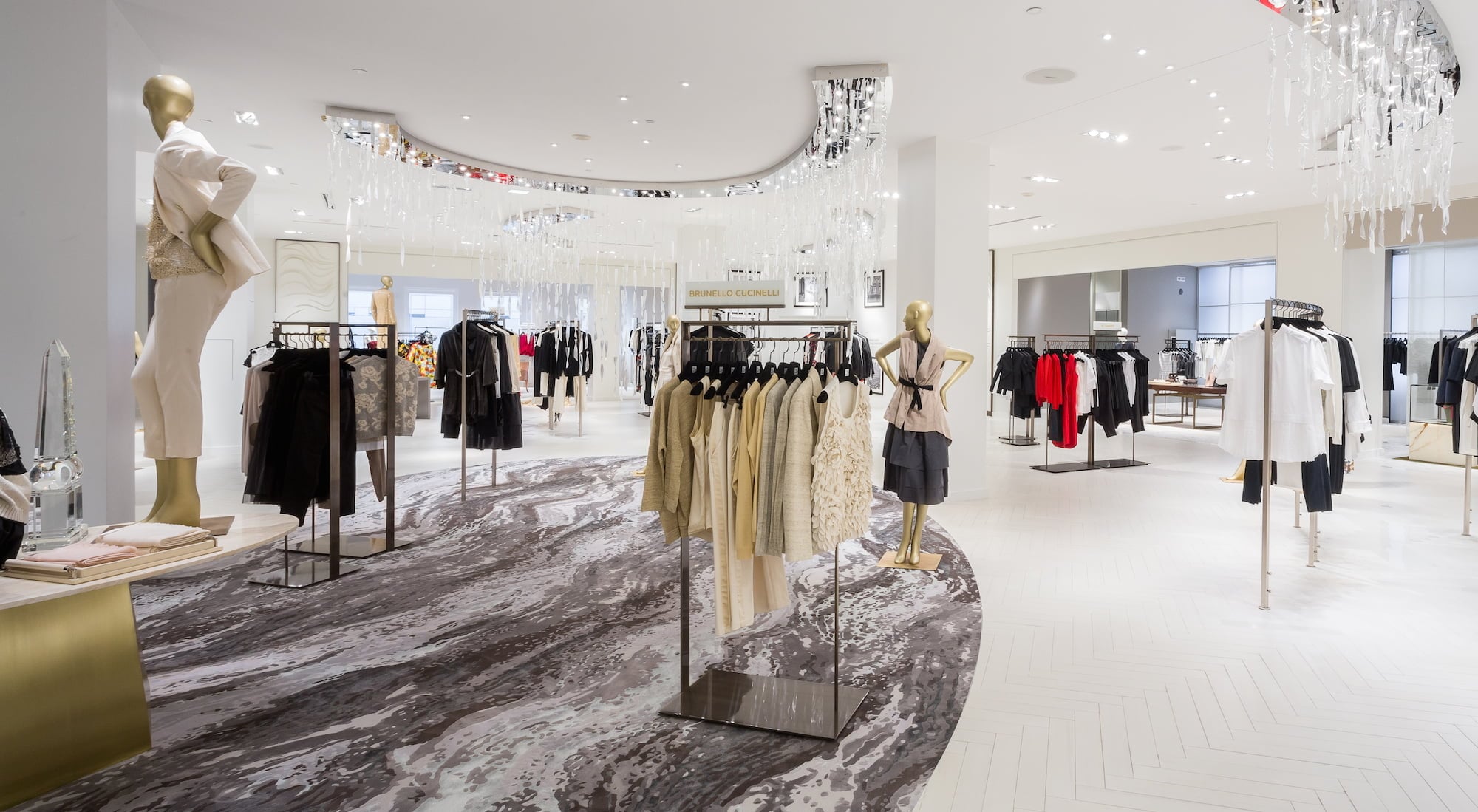
Saks Fifth Avenue first entered the Canadian market in 2016 with ambitions of bringing its luxury department store model north of the border. The flagship store, located in downtown Toronto, opened on February 18, 2016. The store occupied approximately 150,000 square feet within the eastern portion of Hudson’s Bay’s historic Queen Street building, facing Yonge Street. Initially designed as a luxury destination, the store also featured a Pusateri’s-operated food hall, which opened later that year in November. However, the food hall struggled financially, ultimately closing permanently in November of 2024.
The downtown Toronto Saks store faced increasing challenges in the years following its launch. Several high-profile luxury brands that once anchored the store’s main floor, including Louis Vuitton, Dior, Prada, Piaget, and Saint Laurent, shuttered their concessions during the COVID-19 pandemic. These closures significantly diminished the store’s high-end offering and foreshadowed the difficulties that would soon engulf the entire chain.
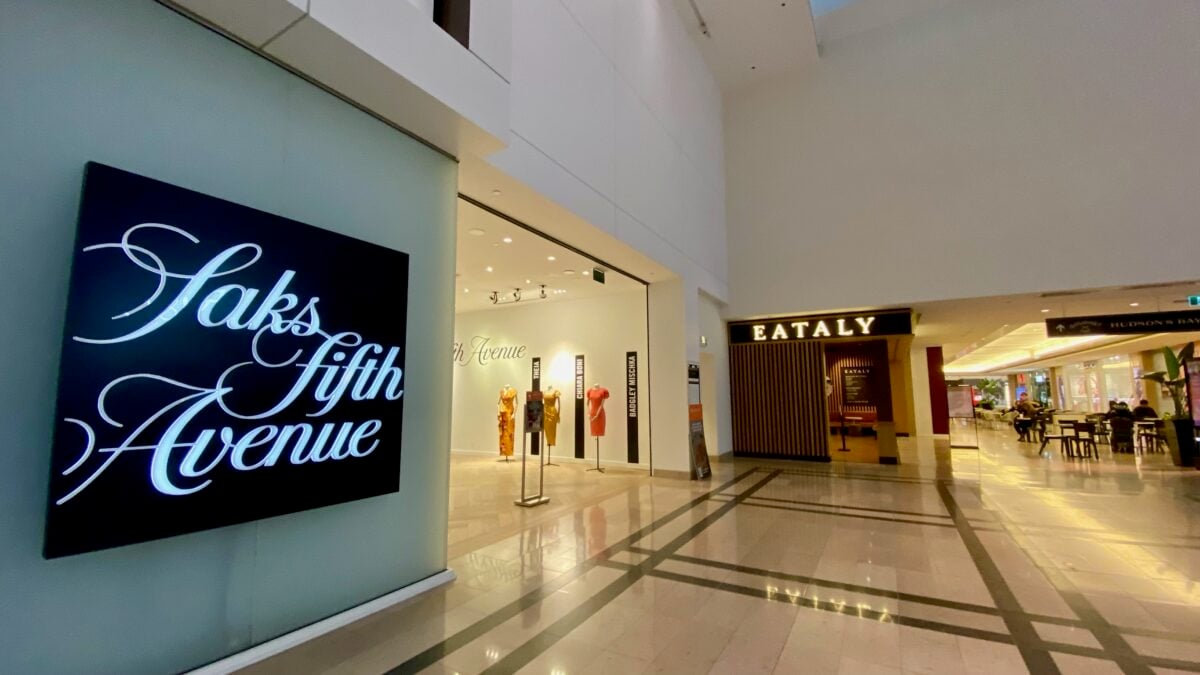
Expansion Efforts and Struggles at CF Sherway Gardens
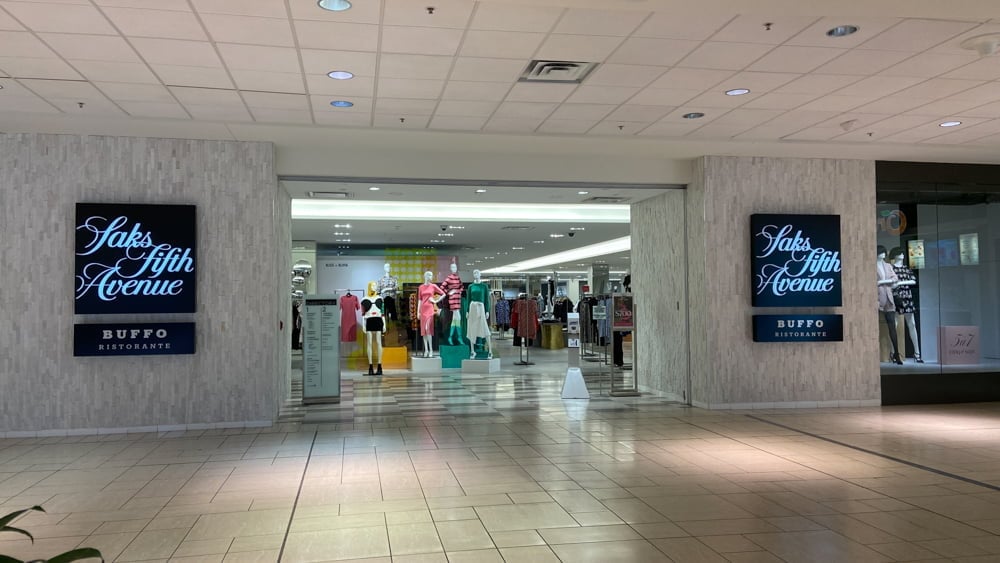
Shortly after opening its Queen Street flagship, Saks launched a second store in March 2016 at CF Sherway Gardens, another premier retail destination in Toronto. Spanning approximately 143,000 square feet, the store initially included a Pusateri’s food market and a separate men’s department located on a lower level. However, the pandemic triggered multiple rounds of downsizing.
The Sherway Gardens location saw its lower level shuttered during the pandemic, and the menswear department relocated upstairs. In January 2023, the Pusateri’s market closed permanently, further reducing the store’s footprint. Additionally, the once-vibrant women’s designer department, which had previously featured boutiques for brands like Chloé and Max Mara, was eliminated. Handbag departments that previously hosted Ferragamo, Dolce & Gabbana, Nancy Gonzalez, and Alexander McQueen boutiques were also removed. By its final months, the Sherway Gardens Saks offered a significantly reduced assortment of mid and upper-contemporary fashion for both women and men. Beauty, a women’s footwear department, and the Beaumont Kitchen restaurant remained until operations ceased.
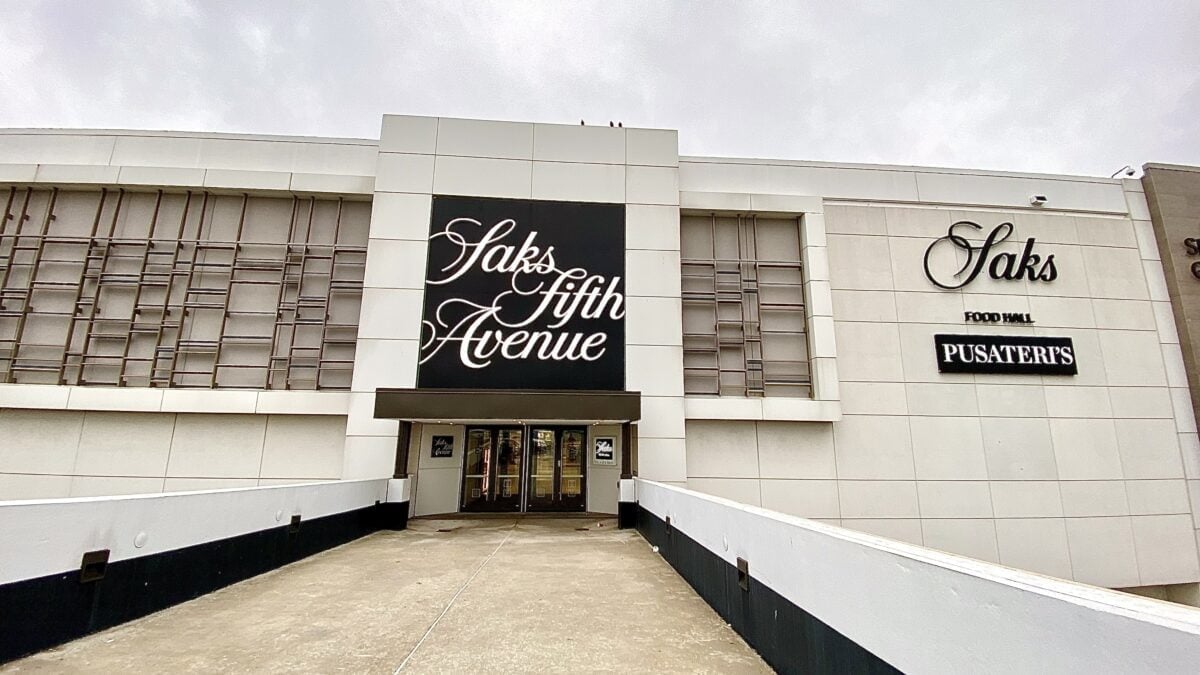
Saks Fifth Avenue Calgary: A Modest Footprint
In February 2018, Saks opened its third and final Canadian store at CF Chinook Centre in Calgary. At 115,000 square feet, the Calgary location was smaller than its Toronto counterparts and notably did not include a grocery component. The store was situated in a former Zellers space, repurposed to accommodate Saks’ luxury format. Like its sister locations, the Calgary store struggled to gain long-term traction, suffering from limited foot traffic and lower-than-expected sales performance. The store also lacked many of the luxury brands found in the Toronto stores, with offerings paling in comparison to brands offered at Holt Renfrew in downtown Calgary.
Abandoned Expansion Plans and Unrealized Ambitions
When Saks Fifth Avenue initially announced its expansion into Canada, its ambitions were substantial. Executives publicly projected the opening of up to 10 full-priced stores across the country. In September 2016, Saks announced plans to open a 220,000 square foot store in Montreal, situated behind Hudson’s Bay’s flagship location on Saint Catherine Street. Despite the publicized plans, the Montreal project was ultimately abandoned, joining a list of other unrealized openings in markets such as Vancouver, Edmonton, and Ottawa.
At one point, Cadillac Fairview, which had acquired the downtown Toronto Hudson’s Bay property for $650 million in 2014, was reportedly working closely with Saks on potential expansion opportunities across Canada.
The real estate strategy involved integrating Saks stores into major Cadillac Fairview shopping centres, including CF Pacific Centre in Vancouver, CF Rideau Centre in Ottawa, CF Fairview Mall in Toronto, and CF Carrefour Laval near Montreal. These discussions never resulted in additional stores.
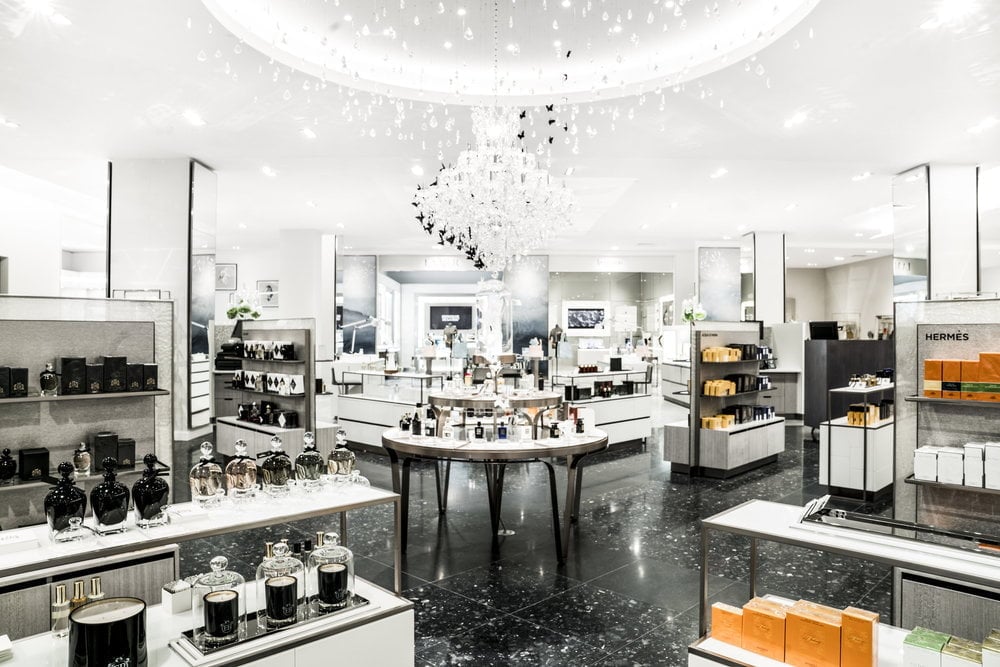
An Industry Shift: Holt Renfrew Emerges as the Luxury Leader
With Saks Fifth Avenue’s departure from the Canadian market, homegrown luxury retailer Holt Renfrew emerges as the dominant force in high-end retail across the country. Holt Renfrew holds exclusive concessions for leading luxury brands such as Chanel, Gucci, Hermès and others—many of which were absent from Saks locations. In addition, Holt Renfrew’s stores are widely reported to generate significantly higher sales volumes than Saks’ Canadian locations achieved. Holt Renfrew’s strong brand partnerships, carefully curated store environments, and resilient consumer base have positioned it as the winner in Canada’s competitive luxury department store segment.
The closure of Saks Fifth Avenue leaves major real estate vacancies, particularly at CF Sherway Gardens and CF Chinook Centre. At Sherway Gardens, Cadillac Fairview now faces the challenge of backfilling approximately 143,000 square feet of prime retail space. The recent opening of a 25,000 square foot Eataly next door has improved traffic flow, but Saks’ departure leaves one of the centre’s largest anchor spaces vacant, joining a pattern of tenant turnover following Nordstrom’s exit from CF Sherway Gardens in 2023.
The End of Saks OFF 5TH in Canada
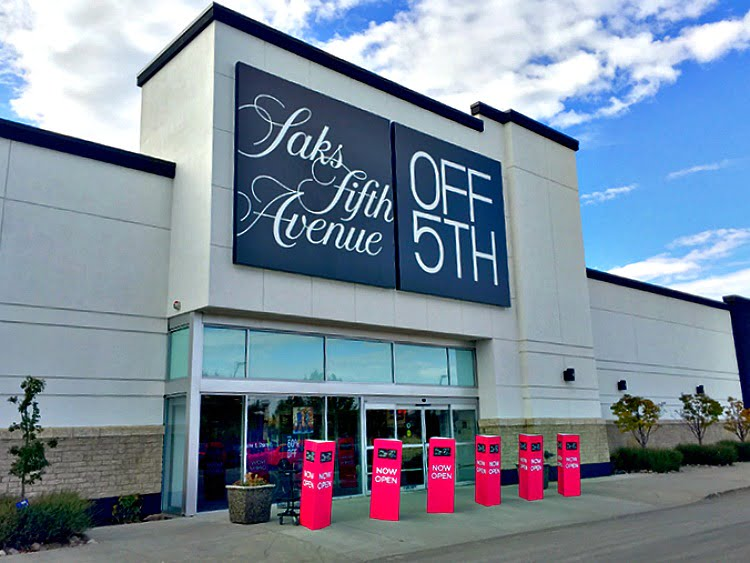
While the full-line Saks Fifth Avenue stores struggled in Canada, the company also launched its off-price division, Saks OFF 5TH, in 2016, aiming to capture a share of Canada’s growing value-oriented luxury market. The off-price format debuted with openings at Vaughan Mills, Toronto Premium Outlets in Halton Hills, and the Outlets at Niagara-on-the-Lake in Ontario. Initially, the strategy appeared promising, as the brand sought to replicate its rapid U.S. growth.
Saks OFF 5TH intended to open up to 25 stores across Canada. By late 2016, nine stores were operational in major cities including Toronto, Ottawa, Edmonton, Calgary, and Vancouver. Further locations opened in 2017 and 2018, bringing the chain to 18 stores across five provinces. Saks OFF 5TH opened locations in Winnipeg, Quebec City (Place Ste-Foy), Montreal (Galeries d’Anjou), and Tsawwassen Mills in British Columbia.
Despite its ambitious growth, Saks OFF 5TH faced persistent performance challenges in Canada. While stores carried an assortment of over 800 designer brands at discounts of up to 65%, sales consistently fell below expectations. The Canadian discount luxury market proved smaller and more competitive than anticipated, facing competition from Winners, Marshalls, and Nordstrom Rack.
Saks OFF 5TH stores were designed with open layouts, flexible displays, and frequent merchandise turnover to entice repeat visits. Locations were often strategically placed in outlet malls or high-traffic shopping centres, occasionally sharing real estate synergies with Hudson’s Bay. However, even prime locations failed to generate sustained customer demand.
By 2020, the chain began to quietly close underperforming stores, reducing its store count to 13 before the broader Hudson’s Bay liquidation process commenced. The closure of Saks OFF 5TH’s remaining Canadian stores was finalized in spring 2025, as part of Hudson’s Bay’s court-supervised wind-down.
Hudson’s Bay Company CCAA and Store Closures: The Broader Collapse
The end of Saks Fifth Avenue and Saks OFF 5TH in Canada was directly tied to the financial collapse of Hudson’s Bay Company. On March 7, 2025, HBC filed for protection under the Companies’ Creditors Arrangement Act (CCAA) in Ontario Superior Court. The move followed years of mounting financial strain, driven by declining consumer spending, the rise of e-commerce competitors, and weakened foot traffic at downtown flagship locations exacerbated by the COVID-19 pandemic.
Alvarez & Marsal Canada Inc. was appointed as the court-supervised monitor to oversee the CCAA proceedings. Initially, HBC expressed its intention to restructure operations and maintain a scaled-down retail presence. The company secured $16 million in interim financing to support its short-term liquidity needs. However, efforts to attract additional financing proved unsuccessful.
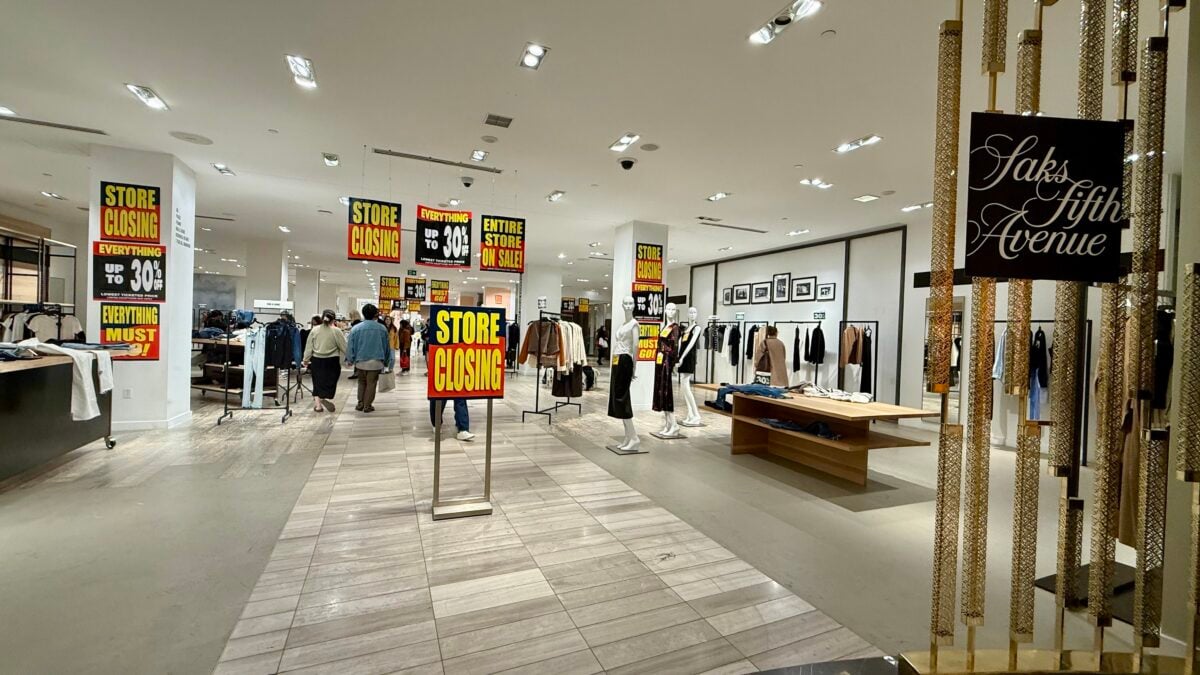
Within days of receiving creditor protection, Hudson’s Bay abandoned its restructuring ambitions and pivoted toward full liquidation. Liquidation sales began nationwide in March 2025, encompassing all Hudson’s Bay, Saks Fifth Avenue, Saks OFF 5TH locations, and distribution centres.
By April 25, 2025, liquidation activities expanded to include all 80 Hudson’s Bay stores across Canada, as well as the remaining Saks stores. The scale of closures was unprecedented in Canadian retail history. Over 8,300 employees—approximately 89% of HBC’s workforce—were laid off as stores wound down operations. Remaining staff were tasked with completing final inventory sell-offs, store dismantling, and customer order pickups.
The store closures concluded by June 1, 2025, with Hudson’s Bay permanently ceasing retail operations. Distribution centres were expected to finish final shutdown procedures by mid-June. A skeleton corporate team remains temporarily to oversee asset sales and administrative obligations tied to the CCAA proceedings.
Asset Sales and the Aftermath of Hudson’s Bay’s Liquidation
Following its wind-down, Hudson’s Bay sold off major corporate assets to satisfy creditor obligations. In a key transaction, Canadian Tire Corporation acquired HBC’s intellectual property, including trademarks and brand assets, for over $30 million. Meanwhile, real estate leases for 28 former store locations were conditionally assigned to Ruby Liu Commercial Investment Corp., which has expressed interest in launching a new department store concept in Canada pending court and landlord approvals. The store will be called Ruby Liu and will occupy a network of suburban Hudson’s Bay stores in Ontario, Alberta and BC.
By the end of June 2025, Hudson’s Bay Company is expected to have fully vacated all properties, concluding dismantling and liquidation efforts of fixtures that mark the formal end of its retail footprint in Canada.
The End of a 355-Year Retail Legacy
The closure of Hudson’s Bay Company and the corresponding exit of Saks Fifth Avenue and Saks OFF 5TH from Canada represent the final chapter for a retail institution that traced its origins back to 1670. As North America’s oldest company, Hudson’s Bay once stood as a symbol of Canadian commerce, history, and national identity.
The abrupt collapse of HBC leaves a lasting void in Canada’s retail landscape. It also brings an end to the last remaining full-scale department store chain operating in the country, marking a pivotal moment in Canadian retail history. While new ventures and retail concepts may eventually fill the physical spaces left behind, the legacy of Hudson’s Bay, Saks Fifth Avenue, and Saks OFF 5TH will remain as a cautionary tale of shifting consumer trends, changing retail economics, and the fragile future of traditional department store retailing.






In hindsight, and with history unfolding differently, perhaps Nordstrom (had their launch not been so botched and their home market issues not been so acute) did have a place in this market…it’s amazing how a mix of forces — internal and external have all but hollowed-out large-format retail in this country — uniquely so…no other similar market in the world has seen it happen on this scale (and with this speed).
Greedy owners are responsible for HB’s collapse. They were only in it for personal financial gain and ran it into the ground on their way out the door. For a company to exist for so long and suddenly collapse can only be attributed to selfish motives on the owners part. Why would they care? At the end it was owned by Americans!
I’m wondering if there was some kind of quiet celebration in the corporate suites of Holt Renfrew. In 2016 when HBC opened the first Canadian location of its Saks Fifth Avenue stores, Holt’s must have felt an existential threat. Especially considering that only two years earlier, Nordstrom opened its first Canadian store marking a challenge to Holt’s long time dominance coast to coast of luxury apparel and accessories. Canada’s leading high-end retailer correctly assessed its situation and initiated a strategy to put itself in a position to meet its competitors head on. It refined its upscale identity, shutting down its HR2 aspirational brand as well as closing the smaller branches to focus on just six stores in primary markets. It followed up with significant investment in those remaining locations to make them all dazzling flagships.
Nordstrom collapsed in Canada as the result of overestimating its opportunities and errors in execution. Now, with the end of Saks Fifth Avenue in Canada and the implosion of its parent Hudson’s Bay Company, the success of Holt Renfrew’s strategy is vindicated and complete. There is no larger multi-brand retailer in its niche. Its remaining competition comes mostly from the brands it sells opening their own shops.
HBC should have focused just on Hudson’s Bay in the Canadian market. Why they wasted so much money trying to make Saks work when Hudson’s Bay was already needing capital investments and fresh new thinking to invent the business. Have a feeling it was Richard Bakers ego that wanted to make Saks work, he has no understand how much history and what a powerful brand he owned with Hudson’s Bay, he instead stripped HBC of all the assets to fund his ego.
I do wonder if any insight is available on just how bad Saks sales were in Canada vs. Nordstrom or American stores ? It seems like the stores, excluding Queen St., never got much traction in the market. They were all nicely designed but perhaps too high end at launch so many customers got turned off from visiting again.