Advertisement
Home Blog Page 170

Retail Leads Canadian Job Gains as Sector Rebounds from Layoffs

Now Hiring sign in a store window. Photo: Unsplash/free use

Canada’s retail industry is once again leading the nation’s employment recovery, adding more jobs in October 2025 than any other sector. According to Statistics Canada, the wholesale and retail trade sector expanded by approximately 41,000 positions, a 1.4 percent increase month-over-month, marking a significant rebound after months of volatility.

While economists were caught off guard by the country’s 67,000 new jobs overall, Suzanne Sears, CEO of Best Retail Careers International Canada and Luxury Careers Canada, says that retail recruiters and insiders saw it coming.

“The results for October astounded everyone in the financial markets, except people in retail and recruiters,” Sears told Retail Insider. “We knew what the groundswell had been since the massive HBC layoff of 8,000-plus people. We saw not a retraction in hiring, but a slow and steady increase in the hiring rate.”

Suzanne Sears.

The October jobs report revealed that nearly two-thirds of Canada’s new jobs came from retail and related service industries. “This most recent labour report, 41,000 of the new 67,000 jobs, were retail jobs,” Sears explained. “That’s followed by transport and warehousing at around 30,000, which is closely tied to e-commerce activity.”

Sears said transportation and warehousing data can often serve as an early indicator of retail’s performance. “If you watch those numbers, you can predict reliably what retail hiring will look like two or three months later, because it all lands in the warehouse,” she said. “When warehouses fill up, it means retail orders are strong.”

The correlation highlights the ongoing integration between traditional retail and online shopping infrastructure, where logistics capacity directly mirrors consumer demand.

Retail Hiring No Longer Driven by the Holidays

While October’s surge coincides with the pre-holiday season, Sears emphasized that the gains are not primarily seasonal.

“The old concept of hiring thousands of people for the holidays pretty much vanished when the major department stores did,” she said. “There isn’t a huge surge of temporary bodies in stores anymore. Instead, what we’re seeing is that part-time work has become the job people actually want.”

Sears noted that part-time employment, which accounted for most of October’s job growth, is no longer viewed as a fallback. “These are desirable jobs,” she explained. “They offer flexibility, they pay comparably to full-time work in many cases, and they fit the lifestyle that many Canadians are looking for right now.”

That shift, she said, is also helping retailers fill roles that might otherwise remain vacant amid ongoing labour shortages and changing work expectations.

Local Spending, Global Shifts

Sears attributes part of the hiring momentum to a “stay-at-home, shop-at-home” mindset that’s strengthening local economies. “Every time you add a ten or twenty dollar charge to anything outside the home, whether it’s parking, event tickets, or travel , the multiplier effect catches up,” she said. “People are spending locally instead.”

She pointed to smaller markets as clear examples of this trend. “You have little shops in Niagara-on-the-Lake that always did relatively well, but they’re now exploding,” Sears observed. “They’re turning around and hiring one or two more people each.”

The U.S. added only 44,000 jobs in October, a stark contrast to Canada’s 67,000. “That’s a big story,” Sears added. “A lot of the reason for Canadian job growth is that Canadians are choosing to stay local and spend local.”

The Amazon Effect: Local Advantage Grows

Another key driver, Sears said, is that major online platforms are losing their price advantage. “Prices on Amazon have skyrocketed because tariffs are now built into nearly every product,” she noted. “A small steam cleaner that used to sell for $89 is now $139.”

“Fast and cheap might still be fast, but it’s no longer cheap,” she said. “There’s not a lot of incentive to shop that way anymore when local retailers are offering competitive prices and better service.”

As a result, Canadian retailers are benefiting from renewed consumer loyalty and improved digital capabilities. “They’re getting much better at e-commerce,” she said. “They can’t match the sheer scale of Amazon, but they’re competitive, and that’s a major shift.”

Retailer putting a hiring sign in a store window. Retail hiring. Photo: Retail Customer Experience

Retailers Regaining Confidence Amid Global Uncertainty

Sears also believes that international trade instability, including renewed U.S. tariffs, initially froze Canadian retailers’ hiring and investment decisions. “When the Trump tariffs came down, everyone was terrified to make a move,” she said. “If there was a decision to hire, lay off, or do nothing, most chose to do nothing.”

Now, she said, that hesitation is fading. “Executives are realizing this could last two or three more years. They’re saying, ‘We either go forward or we die.’”

Improved access to capital and more stable financing conditions are also encouraging retailers to reinvest in staff and operations. “I saw it starting in the summer,” Sears said. “Retailers were asking, ‘If you find anybody, let us know.’ By September they were actively interviewing. So there’s no question in my mind that they’d be hiring in October.”

Sears expects the upward trend to continue through the end of the year, adding that the proportion of Canadians seeking work is dropping as well. “We’ve gone from 7.1 percent to 6.9 percent unemployment,” she said. “There’s a high probability we’ll see that fall even further.”

Post-HBC Retirements Reshape the Retail Workforce

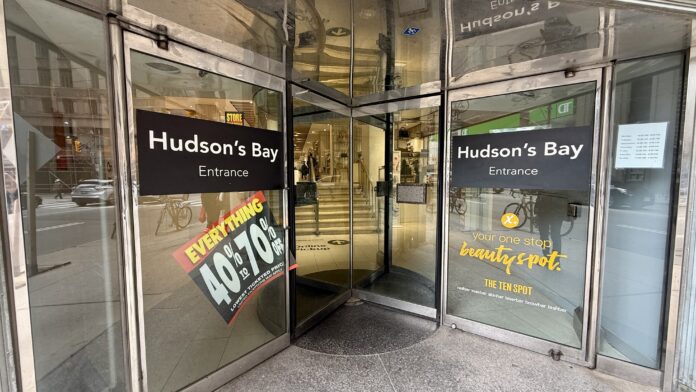
Sears also reflected on the lasting consequences of Hudson’s Bay Company’s mass layoffs earlier this year, noting that many experienced retail professionals simply walked away from the industry.

“People who were on the cusp of retiring just retired flat out,” she said. “Anyone over 50 said, ‘I’ve had enough of retail.’ The core staffing group from about 25 to 55 has been turned off by it.”

The loss of mid-career professionals, she explained, has deepened a generational divide. “Younger people are still studying retail. They’re going to university for it, and they still believe in it,” Sears said. “They see a better way forward, often combining store management with social media skills, but upper management hasn’t fully caught up yet.”

Sears said the industry now faces a critical question: how to restore trust among workers burned by corporate closures and instability. “There’s a bad taste,” she said. “People say, ‘I’ll do anything but not retail.’ If COVID didn’t burn them, HBC did. Many of them lost their benefits, and that left a scar.”

Balancing Optimism with Caution

Even with strong October numbers, Sears acknowledged that some may question whether this growth is sustainable. “That’s the first thing people will say,” she noted. “Yes, it’s good news, but is it sustainable?”

Retail remains Canada’s largest employer, representing about 15 percent of the national workforce. “When retail’s leading, it has a trickle-down effect that’s enormous,” Sears said. “It won’t offset the loss of factories or lumber mills, but it can stabilize communities.”

That stabilization, she argued, is already visible in provinces such as Ontario and British Columbia. “Retail is leading hiring even in Ontario, which has been beaten up badly,” she said. “That’s impressive.”

More from Retail Insider:

Ontario’s biggest T&T Supermarkets coming to Empress Walk, North York


T&T Supermarkets, the largest Asian supermarket chain in Canada, says its will be opening its largest store in Ontario this Fall at 5090 Yonge Street, Empress Walk Shopping Mall, in Toronto.

The grocery store retailer said the store will be 66,000 square feet.

T&T currently operates 38 stores across North America (37 in Canada and 1 in the U.S.)

Upcoming stores in Canada in 2026 include: Erin Mills, Mississauga, ON; Empress Walk, North York, ON; and Gilmore, Burnaby, BC

“Customers can enjoy a self-serve hot food bar featuring authentic Asian dishes. T&T Kitchen is known for its specialties, including Peking Duck, Papa Chicken, a BBQ station, and a sushi counter. It will also offer popular street-food favourites such as freshly made Chinese crepes and Taiwanese-style sticky rice rolls,” said T&T.

It said the store will have the largest bakery section in Ontario with over 150 varieties of baked goods such as Portuguese egg tarts, mango pomelo Swiss rolls, and freshly baked Hong Kong–style buns.

It will also have the largest Asian beauty section in Ontario with thousands of Asian beauty products including skincare, makeup, and wellness items from all over Asia.

“This store will feature a full assortment of more than 500 T&T Private Label items, including pantry staples, dim sum, and trendy snacks. Customer favourites such as juicy pork soup dumplings (Xiao Long Bao), Korean kalbi marinade, green onion pancakes, and seaweed snacks will all be available, plus much more,” added T&T.

“Fresh groceries, prepared meals, bakery, and seafood are now available for same-day delivery through the T&T App. Service is available in select areas.”:

T&T Supermarkets was founded in Vancouver in 1993 and is now led by second generation successor and CEO, Tina Lee. T&T Supermarkets is headquartered in Richmond, BC, with offices in Toronto and Los Angeles.

Tina Lee, CEO of T&T Supermarkets (CNW Group/T&T Supermarkets)

More from Retail Insider:

Kit and Ace Expands to West Vancouver with Park Royal Store

Kit and Ace at Park Royal in West Vancouver. Image: Kit and Ace

Canadian apparel retailer Kit and Ace continues its national retail resurgence with the opening of a new 3,500-square-foot location at Park Royal Shopping Centre in West Vancouver. The store, situated in a high-visibility corner unit within The Village section of the mall formerly occupied by Peloton, showcases the brand’s refined design aesthetic and marks another milestone in its growing Western Canadian presence.

The new Kit and Ace Park Royal store embodies the brand’s contemporary and approachable aesthetic. The space features deep blue walls and ceilings, extensive glass frontage, and abundant natural light, creating an inviting, elevated retail environment. The location enjoys strong pedestrian visibility and aligns with the brand’s focus on community connection and lifestyle integration.

In a statement, David Lui, CEO of Kit and Ace, shared his enthusiasm for the brand’s latest opening:

“We’re thrilled to announce the opening of our newest KIT + ACE in Park Royal Shopping Centre in The Village — a community that celebrates connection, creativity, and modern living. This new space reflects our belief that when you feel your best, you live your best — with technical fashion designed for comfort, confidence, and versatility from day to night.”

David Lui

Lui expressed gratitude toward the team behind the new store, adding, “A heartfelt thank you to our incredible team for bringing this vision to life, and to our new neighbours — we can’t wait to welcome you in.”

Expansion Momentum Across Canada

The Park Royal opening follows a year of rapid growth for the brand, which has been steadily rebuilding its retail network under the ownership of Unity Brands Inc. Since being acquired in July 2023, Kit and Ace has undergone a transformation that blends strategic expansion, product innovation, and renewed consumer engagement.

Throughout 2025, Kit and Ace has opened new stores and pop-ups in several key markets across Canada. These include a long-term pop-up at The Well in downtown Toronto, the brand’s largest store to date at CF Toronto Eaton Centre, and new storefronts at Bayview Village in Toronto, CF Market Mall in Calgary, and Metropolis at Metrotown in Burnaby. Each location has been strategically chosen to strengthen the brand’s connection with urban professionals seeking comfort, quality, and functionality.

The Kit and Ace Park Royal location builds on that momentum, extending the brand’s reach within the Greater Vancouver Area while reinforcing its commitment to bricks-and-mortar retail as an experiential anchor for its direct-to-consumer strategy.

Kit and Ace at Park Royal in West Vancouver. Image: Kit and Ace

Expanding into the Home Space

Beyond apparel, Kit and Ace is broadening its lifestyle reach with the introduction of a new home goods line, launched in partnership with TJX Canada, the parent company of Winners, Marshalls, and HomeSense. The collection, now available in over 300 stores across Canada, marks the brand’s official entry into the home category.

Announcing the initiative, David Lui said, “KIT + ACE has officially expanded into the home space in collaboration with TJX Canada – Winners, Marshalls, HomeSense, now available in over 300 stores across Canada.” Explaining the rationale behind the move, Lui added, “Why home? Because comfort doesn’t stop at what you wear. Our goal has always been to help people feel the difference — through softness, function, and thoughtful design. 

Extending that same sensibility into the spaces where we rest and recharge was a natural next step.”

The new range features tactile, comfort-driven products including Cable Knit Throws and Bouclé Knit Throws, with more home innovations expected in future collections.

Lui described the collaboration with TJX as “a natural brand extension” that allows Kit and Ace to reach more Canadians in a new setting.

“Launching Home with TJX is a natural brand extension and allows us to share the KIT + ACE experience with even more Canadians — at home, in every season.”

Kit and Ace products in the HomeSense section of the Winners store at 110 Bloor St. W. in Toronto. Photo: David Lui

Leadership and Strategic Direction

Under the leadership of David Lui and Unity Brands founders Joe Mimran (Club Monaco, Joe Fresh) and Frank Rocchetti (Tilley, Loblaws), Kit and Ace has embraced a renewed focus on design excellence, customer experience, and sustainable growth. 

The brand’s design and development functions have been centralized in Toronto, leveraging Mimran’s long-standing design expertise and infrastructure. This shift has helped modernize Kit and Ace’s product assortment while reinforcing its Canadian identity.

Lui’s leadership has also prioritized operational agility, allowing Kit and Ace to experiment with flexible retail formats such as short-term pop-ups that evolve into permanent spaces. This approach reflects a broader industry trend toward adaptive retail models that respond quickly to changing consumer habits and market conditions.

Kit and Ace at Park Royal in West Vancouver. Image: Kit and Ace

Founded in Vancouver in 2014 by Shannon Wilson, former lead designer at Lululemon Athletica, and her stepson J.J. Wilson, Kit and Ace initially gained attention for its proprietary “Technical Cashmere.” This machine-washable innovation married luxury with practicality and set the tone for the brand’s future direction.

After an ambitious global rollout that saw the company expand to over 60 stores worldwide, Kit and Ace faced challenges that led to a major restructuring. By 2017, the brand had refocused on its Canadian roots, closing international locations to concentrate on core markets and online growth.

Under new ownership since 2023, Kit and Ace has redefined its identity while preserving its foundational mission: to create smart, easy-to-love, and made-to-last clothing. The current product lineup emphasizes breathable, stretchable fabrics and clean silhouettes designed to transition seamlessly from work to leisure.

Kit and Ace at Park Royal in West Vancouver. Image: Kit and Ace

More from Retail Insider:

RBI names new leaders for Popeyes and Burger King in North America

Popeyes Louisiana Kitchen on Front Street in Toronto - Photo by Dustin Fuhs

Restaurants Brands International (RBI) has announced two leadership changes for its North American operations.

Peter Perdue
Peter Perdue

Peter Perdue has been appointed president of Popeyes, U.S. and Canada, succeeding Jeff Klein, who will be leaving the company. Perdue, a 12-year RBI veteran, previously served as chief operating officer of Burger King U.S. and Canada, where he played a key role in the brand’s Reclaim the Flame operations turnaround. His experience also includes roles in operations, franchising, and finance, including serving as regional vice president for Burger King in the Asia Pacific region.

Nicolas Henrich has been named chief operating officer of Burger King U.S. and Canada, succeeding Perdue. Henrich has held senior positions at RBI across franchising, development, finance, strategy, and supply chain.

Josh Kobza
Josh Kobza

“Popeyes has the best chicken in QSR, and Peter’s mandate is to unlock the share gains we know we are capable of,” said Josh Kobza, CEO of RBI. “Peter has led an impressive turnaround in the operations of our Burger King system, and I look forward to bringing his leadership to Popeyes. We also want to offer our thanks to Jeff Klein for his hard work over the last four years.”

“Nico’s proven leadership in our brand has earned the trust of our franchisees,” said Tom Curtis, president of Burger King U.S. and Canada. “He has been instrumental in strengthening our system and improving franchisee profitability. As COO, he will continue driving operational excellence as a lead contributor to our long-term growth.”

Restaurant Brands International Inc. is one of the world’s largest quick service restaurant companies, with more than $45 billion in annual system-wide sales and over 32,000 restaurants in more than 120 countries and territories. The company owns Tim Hortons, Burger King, Popeyes and Firehouse Subs.

More from Retail Insider:

Panda Pilates opens in Mississauga with wellness café

Photo Panda Pilates
Photo Panda Pilates

Panda Pilates has opened a new studio in Mississauga, combining Reformer and Mat Pilates classes with an in-house wellness café designed to promote mindful movement, core strength, and overall well-being.

The studio features soft finishes, thoughtful lighting, and a signature floral feature wall, creating a calm environment for guests of all levels, including beginners. Classes focus on alignment, breath, and core activation to help participants move confidently and feel supported.

The studio is located at Mississauga Rd & Dundas St W.

Richa Bhushan
Richa Bhushan

Founder Richa Bhushan said the studio was created to make movement “feel good, welcoming, and inspiring for everyone.” She added, “This is a space to build strength, reset, and take care of yourself in a way that feels beautiful and real.”

It also offers signature fusion classes that combine 30 minutes on the Reformer and 30 minutes on the Mat, providing a balanced session that strengthens, lengthens, and restores. After classes, guests can enjoy specialty coffee, matcha, protein shakes, ginger shots, and seasonal drinks at the studio’s café.

Photo: Panda Pilates

The studio has received support from community and wellness leaders, including Dr. Ruby Dhalla. 

She said, “Panda Pilates welcomes every woman with compassion, encourages confidence, and creates a space where mind and body can heal and grow together. Having trained at different Pilates studios, it is refreshing to train at Panda Pilates where you are not just a number, but part of a family committed to your wellness, mental health, physical strength, and health care goals.”

Panda Pilates said it is offering 20 per cent off the first three months for new members through the Panda Pilates app with code WELCOME20.

More from Retail Insider:

Photo: Panda Pilates

No Frills launches pcogo pilot in Toronto

Photo: No Frills

Shoppers at three downtown Toronto No Frills stores can now use a new technology to make grocery shopping faster. 

The pcogo pilot, introduced by Loblaw Companies Limited, allows customers to scan items as they shop through the PC Optimum app, see an estimated total in real time, and streamline the checkout process.

The pilot is available at Jordan’s No Frills (King & Shaw), Bo’s No Frills (Richmond & John), and Jesse’s No Frills (Mount Pleasant & Eglinton). 

PC Optimum members with at least 30,000 lifetime points can log in to the app to track their purchases and loyalty points while shopping. The experience ends with a dedicated self-checkout lane, designed to reduce wait times.

Melanie Singh
Melanie Singh

“Our customers consistently tell us they value simplicity, efficiency, and a shopping experience that respects their time,” said Melanie Singh, president of Loblaw’s Hard Discount Division. 

“Our pcogo pilot is a direct response to that feedback, focusing on making checkout faster and giving customers more control over their purchases. It’s about delivering on our promise of a great store experience, from clean aisles to quick exits.”

Eligible members can access the pilot by checking into participating stores using a QR code or enabling location sharing on their phones, which ensures accurate product pricing and promotions.

More from Retail Insider:

Sensei Farms produce launches at Fortinos stores

Sensei Farms Baby Spinach (CNW Group/Sensei Farms)

Sensei Farms has launched its locally grown greenhouse produce across all 24 Fortinos supermarket locations in the Greater Toronto Area, marking the company’s official entry into the Canadian retail market.

The announcement was made recently by Sensei Farms in partnership with Loblaw Companies Ltd., Canada’s largest grocery retailer.

Kevin Climie
Kevin Climie

“At Fortinos, we take great pride in offering our customers the freshest, highest-quality produce — and partnering with Sensei Farms allows us to do just that,” said Kevin Climie, senior director, produce, floral and bulk foods at Fortinos Supermarkets. “Sensei’s innovative approach to greenhouse growing and their commitment to sustainability align perfectly with our focus on supporting local growers and delivering exceptional freshness year-round.”

Sensei Farms operates a large greenhouse in Leamington, Ont., where it uses advanced agricultural practices to grow produce for local communities.

Jessica Vasisht
Jessica Vasisht

“We are thrilled to bring our products to Canadian shoppers,” said Jessica Vasisht, senior vice-president of sales and marketing at Sensei Farms. “Our shared commitment to provide locally sourced produce, preserve the environment, and promote human nutrition makes Fortinos a great fit for our brand.”

Fortinos stores are carrying four Sensei Farms products: Baby Spinach (4 oz), Green Butter Lettuce (5 oz), Green Lettuce Blend (5 oz), and Romaine Lettuce (5 oz).

“We’re excited to introduce Sensei Farms’ lineup to our customers,” said Paul Scavone, senior merchandising manager, produce at Fortinos Supermarkets. “These four fresh, locally grown greens are a great fit for Fortinos shoppers who value quality, freshness, and Ontario-grown produce.”

All Sensei Farms items are packaged in recyclable paperboard trays designed for 360-degree product visibility and feature a peel-and-reseal closure to preserve freshness and extend shelf life.

Sensei Farms operates farms in Ontario and on the Hawaiian Island of Lāna‘i, with a combined capacity to grow more than 15.5 million pounds of produce annually.

More from Retail Insider:

‘Buy Canadian’ Food Sales Surge as Shoppers Shift Habits

Shop Canadian/Made in Canada/shop local at a grocery store. Photo: Dustin Fuhs

Countless surveys have told us that Canadians want to buy Canadian. They say they want to support local farmers and processors, keep dollars at home, and protect jobs. But when standing in front of the grocery shelf, good intentions often gave way to convenience and price.

That contradiction, however, seems to be fading. And geopolitics has a lot to do with it.

According to the latest NIQ retail data, sales of “Made in Canada” food products are up more than 10 per cent year-over-year as of September 2025, while U.S.-made products are down nearly 9 per cent. For more than six months, this trend has persisted. In the world of consumer data, that’s not a blip — it’s a shift. Canadians aren’t just saying they want to buy Canadian; they’re actually doing it.

Turn on the television any night and there’s one recurring face — Donald Trump. Canadians, whether they follow U.S. politics closely or not, are constantly reminded of that message: America First.

And consciously or not, they’re responding. Every fiery clip about tariffs, immigration, or foreign competition reinforces the sense that Canada needs to rely on itself. Buying Canadian food has become a quiet, patriotic act — a statement of self-reliance in an uncertain world. When cross-border relations feel tense, the grocery store becomes a symbolic space of control. Each jar of Canadian jam, each bag of local flour, feels like a vote for stability and identity.

The “Buy Canadian” idea isn’t new. But for years, it lived mostly in our rhetoric. The North American market blurred origins, and few shoppers bothered to read the fine print. Since early 2025, though, both “Made in Canada” and “Product of Canada” categories have shown consistent growth, while U.S. imports have posted negative sales for seven straight months. In consumer economics, half a year of steady behaviour signals more than a mood swing — it’s habit formation. Canadians are showing signs of permanently incorporating “origin awareness” into their grocery choices.

This new grocery patriotism, however, also raises a difficult question: at what cost? When consumers focus narrowly on national origin, market competition can narrow too. If buying Canadian becomes more about sentiment than value, we risk paying more — sometimes for products that aren’t necessarily better or more sustainable. It’s worth asking whether this wave of food nationalism, however well-intentioned, has contributed to higher prices. The more insulated our food market becomes, the greater the risk of inefficiency and complacency.

Canada’s agri-food sector is remarkably diverse and resilient, but we can’t grow or process everything efficiently. Pretending otherwise is economically naïve. Self-reliance must not become self-restriction. If this patriotic shift is to benefit Canadians, it needs to be guided by our comparative advantages — not emotional reflexes. Our grain, seafood, livestock and pulse sectors are world-class. Our innovation in food safety, traceability, and clean processing is globally admired. That’s where national energy should go: doubling down on what we do best, not trying to replace what others already do well.

Instead of equating “Canadian” with “expensive,” our food economy should aim to make “Canadian” synonymous with quality, efficiency, and innovation. That’s the formula that will keep domestic production competitive while allowing consumers real choice at the shelf.

This is not a call to abandon local pride — far from it. A strong domestic food base is vital for resilience. But the challenge for Canada is to balance patriotic consumption with global pragmatism. We should buy Canadian when it makes sense, trade when it benefits us, and stay open to the world.

The surge in “Made in Canada” sales reflects more than emotion; it’s a response to uncertainty. The world is volatile. Supply chains are political. And consumers, consciously or not, are adapting. But if we let fear rather than strategy shape our choices, we risk turning a healthy preference into a costly habit.

After years of saying they wanted to buy Canadian, Canadians finally are. The question now is whether we can channel that patriotism into productive competitiveness — not protectionism.

More from Retail Insider:

Canadian Retail News From Around The Web For November 10, 2025

Canadian Retail News From Around The Web

News at a Glance

Retail Insider is streamlining its Canadian retail news from around the web to include a handful of top news stories that can be viewed quickly during the day. Here are the top stories from the past 48 hours.

Holiday hiring is set to get tighter as small firms say no to staffing up (Global)

Investor Outlook: RioCan reports solid quarter as occupancy and leasing spreads rise (BNN)

What’s going on with the Canada Post strikes? (CBC)

Legal cannabis market drove over $6 billion in Canadian household spending in 2024 (StratCann)

Canada Goose sets up shop on Champs Élysée, aspires to become global luxury brand (Fashion Network)

Canadians skipping bills to afford groceries: Nanos (CTV)

Healthy Planet’s 42nd location to open with signature on-the-go meals kitchen concept (Grocery Business)

This will officially be Toronto’s first Christmas without the iconic Hudson’s Bay holiday windows (Streets of Toronto)

Owners of Upper Canada, Hillcrest and Markville malls must ‘think creatively’ to fill empty Hudson’s Bay spaces, expert says (York Region)

Starbucks apologizes for its bear cup drama. What’s behind the ‘Bearista’ frenzy? (CBC)

Discount grocery stores gaining momentum in Quebec (CBC)

Made-in-Montreal hair care brand Alcôve builds on 40-year family legacy (Vancouver Sun)

‘We’re proud of our diversity’: Used furniture store in Moncton provides second chances (CTV)

Man facing charges after crashing into Salvation Army storefront in Toronto: police (CBC)

Clothing store in Portage la Prairie is closing its doors due to theft and violence (MSN)

8 Ways To Create The Best E-commerce Experience

The days when online shopping was simply about clicking “add to cart” are long gone. Today’s shoppers expect more: an experience that feels personal, effortless, and rewarding from start to finish. Consumers, in particular, are redefining what great e-commerce looks like: they want convenience, but not at the expense of connection; speed, but with trust; technology, but with a human touch.

In a market where every second and every scroll matters, the most successful retailers are the ones who turn digital storefronts into experiences worth remembering. From intuitive design to mobile-first innovation and virtual try-on tools that bring products to life, here are the key strategies shaping exceptional e-commerce in 2025.

User-Friendly Website Design

Your website is your storefront. And just like a physical shop, it should invite people in, make them comfortable, and guide them effortlessly toward what they need. That starts with intuitive navigation, clean design, and fast load times. A cluttered homepage or confusing menu can drive potential buyers away before they even see your products.

Retailers set the bar high, using minimalist layouts and consistent branding that feel distinct yet globally relevant. Every button, image, and category has a purpose. Accessibility features, such as alt text for images and scalable fonts, also play a big role, ensuring inclusivity for all shoppers.

In short, a user-friendly website should feel invisible. The less a customer has to think about how to shop, the better their experience will be.

Personalized Shopping Experience

The age of one-size-fits-all shopping is long gone. Modern consumers expect personalization; from product recommendations based on browsing history to curated style edits that match their taste. When executed well, it creates a sense of being understood rather than targeted.

Artificial intelligence is making personalization more precise. Shopify’s built-in tools, for example, allow retailers to segment audiences and tailor content to their preferences, all without feeling intrusive. For smaller brands, even something as simple as “recommended for you” sections or personalized follow-up emails can make a difference. For example, an eyeglasses store might suggest frames that perfectly suit a shopper’s face shape, a skincare brand could recommend products tailored to their skin type, and a fashion retailer might curate outfits based on past purchases and individual style preferences, creating a truly personalized experience

Shoppers appreciate feeling recognized, especially in an increasingly digital world. A personalized touch can transform a single purchase into a lasting relationship.

Virtual Try-On: Revolutionizing Shopping

Few innovations have redefined online retail quite like virtual try-on tools. Once a novelty, they are now essential for categories like clothing, footwear, and eyewear, and even make-up. Consumers can visualize how a jacket fits, how lipstick complements their skin tone, or how a frame suits their face before buying.

For example, when browsing new eyeglasses collections, shoppers can try on frames virtually in real time using their webcam or smartphone camera. The experience bridges the gap between digital browsing and physical shopping, offering confidence before checkout.

Virtual try-on technology also reduces returns, since customers have a clearer sense of what they’re getting. As AR and AI continue to merge, expect these tools to become even more accurate and indispensable.

Optimized for Mobile

A growing share of e-commerce traffic comes from smartphones. If your website doesn’t perform flawlessly on mobile, you’re losing business.

An optimized mobile site goes beyond responsive design. It includes lightning-fast load speeds, thumb-friendly buttons, and one-click payment options like Apple Pay or Google Pay. The checkout process should be frictionless, no endless forms or hidden shipping fees.

Retailers that think “mobile-first” rather than “mobile-friendly” tend to see higher conversions. After all, people now browse, compare, and buy on the go. A strong mobile experience means being where your customers already are.

High-Quality Product Images and Descriptions

Visuals sell. In e-commerce, product photography is often your only chance to make an impression. Shoppers rely on high-resolution images that show products from every angle and in real-life settings. To keep up with current trends and ensure consistency across platforms, retailers can quickly and easily learn how to upscale images using AI, enhancing resolution and detail without time-consuming reshoots—perfect for mobile shopping, marketplaces, and product zoom. A clean white background shot is helpful, but lifestyle imagery brings context,  how a coat looks in winter streets, how a sofa fits in a cozy living room, how a watch complements an outfit.

Equally important are product descriptions. They should go beyond listing materials and dimensions to explain benefits, usage, and care. Use language that informs and inspires rather than overwhelms. Retailers like Indigo and MEC excel at this balance, offering details that help shoppers make informed, confident decisions.

Fast and Flexible Shipping Options

In areas where geography can make logistics challenging, shipping speed and flexibility are crucial. Consumers now expect quick delivery, but they also value transparency. Offering a range of options lets customers choose based on their priorities.

Equally vital is clear communication. Automated email updates and real-time tracking build trust, while sustainable packaging initiatives can appeal to eco-conscious buyers. Some brands even partner with local couriers to shorten delivery times and reduce their carbon footprint.

The faster and smoother the delivery experience, the more likely customers will return.

Customer Support and Chatbots

Even the best-designed website can’t replace human reassurance. That’s where customer support comes in. Live chat features and AI-powered chatbots provide instant assistance without the need for long phone queues or email delays.

The key is balance. Automation should handle simple queries — like tracking orders or product availability, while real humans step in for more complex issues. This combination creates a 24/7 support system that feels efficient yet personal.

Retailers investing in conversational AI are already seeing results, with higher satisfaction scores and fewer abandoned carts. When customers feel heard, they stay loyal.

Social Proof and Influencer Marketing

Consumers trust people more than they trust ads. That’s why social proof, through reviews, testimonials, or influencer collaborations, remains one of the strongest conversion tools in e-commerce.

Encourage customers to leave honest feedback and showcase it prominently. Authentic, unfiltered reviews carry weight, especially when paired with high-quality visuals or real customer stories.

Influencer partnerships also shape perception, particularly among younger audiences. Brands that align with micro-influencers often see stronger engagement than those chasing celebrity endorsements. The key is authenticity: the partnership should feel like a genuine fit, not a transaction.

Conclusion

Creating the best e-commerce experience is about understanding that shopping is no longer a simple exchange of goods. It’s an interaction built on trust, design, and personalization. From mobile optimization to meaningful customer support, every detail influences how people perceive your brand.

Today’s market continues to evolve rapidly, with technology enabling a richer, more human online experience. Whether you’re a growing retailer or an established brand, investing in thoughtful design and innovative tools will keep you ahead of the curve and keep your customers coming back.