Walmart Canada customers and associates raised 3.8 million to help kids start their mornings with a nutritious breakfast.
From August 29 to October 31, in Walmart Canada’s stores and sites across the country and through Walmart.ca, Canadians came together to raise an incredible $3.8 million for Breakfast Club of Canada, including a $1 million corporate donation from Walmart Canada. These funds will help provide nutritious breakfasts to children across the country so they can head to class fed, focused and ready to learn, said the retailer.
“This year’s campaign builds on a collaboration that’s been changing lives for more than two decades. Since 2003, Walmart Canada and its customers and associates have contributed more than $75 million to Breakfast Club of Canada, helping countless children start their day with a nutritious breakfast in a caring and inclusive environment,” explained Walmart.
“For 30 years, the Club has worked tirelessly to give every student from coast to coast to coast an equal opportunity to succeed through providing access to nutritious breakfasts. With the support of partners like Walmart Canada, the Club now reaches over 890,000 children in more than 5,000 breakfast programs across the country.”
Tommy Kulczyk
“This campaign perfectly illustrates what we can accomplish when communities and businesses join forces to support children,” said Tommy Kulczyk, President and Chief Executive Officer, Breakfast Club of Canada. “We’re proud to count on partners like Walmart, whose commitment makes a real difference in the well-being of children across the country.”
Rob Nicol
“We’re incredibly proud of what our associates and customers have achieved together during this year’s Breakfast Club of Canada campaign,” said Rob Nicol, Vice President, Corporate Affairs and Communications, Walmart Canada. “Their support means even more children can start their school day fueled to learn, grow and thrive.”
For 30 years, Breakfast Club of Canada has been working with partners from all sectors to help children access a nutritious breakfast and reach their full potential. Accredited by Imagine Canada for its effective governance and recognized for its promotion of local food products, the Club helps reach children in every province and territory across the country.
Walmart Canada operates a chain of more than 400 stores nationwide serving 1.5 million customers each day.
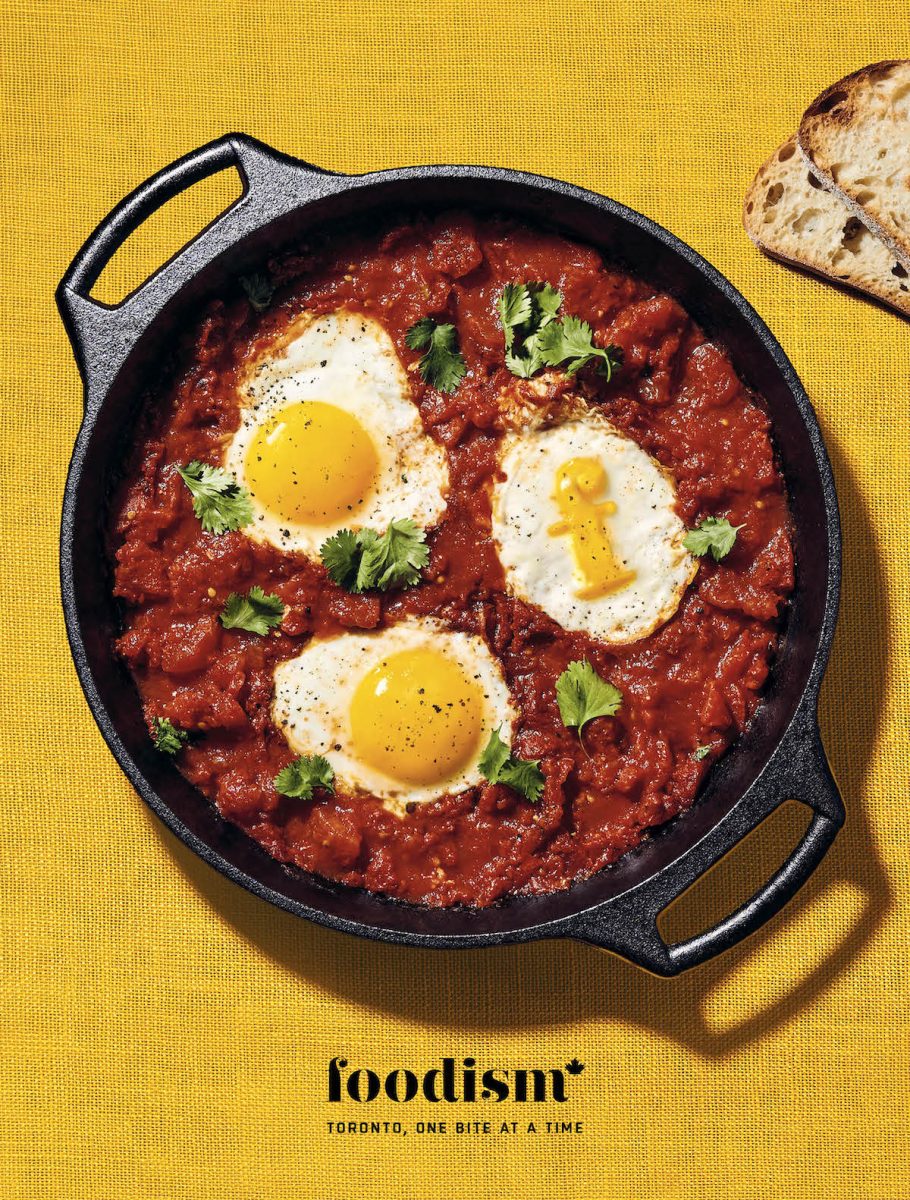
Foodism magazine front cover (cropped for editorial/hero image). Image: Foodism
When Krista Faist looks back on her path into publishing, she laughs at the twist of fate that brought her home to Toronto to launch a premium print magazine in an era that was supposed to be everything but. “As soon as I started I realized, this is what I am meant to do,” she said. “I am meant to lead something like this rather than go work for somebody else.” A decade on, her flagship titles Foodism and Escapism have carved out influential positions in the city’s food and travel culture, pairing a high-touch quarterly print product with a responsive digital and social engine that brands want to be part of.
Faist trained as a journalist at Ryerson, now Toronto Metropolitan University, then took detours through marketing and public relations before a leap of faith to the United Kingdom. There, she joined an independent publisher and helped concept and launch consumer titles focused on food, drink, and travel. “We developed Foodism and Escapism around 2014,” she recalled. After four years, she saw a gap in Toronto for premium free media with hand-to-hand distribution and ad funding. Over a pub handshake, she received the blessing to bring the brand to Canada in 2015, adding her own spin and operating independently. The bet has outlasted the industry’s most tumultuous decade.
The inheritance from London was a mindset. The Canadian market, Faist learned quickly, behaves differently from the UK and the United States in how budgets flow. “In Canada we tend to not get our own individual budgets, we tend to have to share with the US,” she said. “So they are smaller, less about population, more about the fact that we have such a beast underneath us that we are usually getting the leftovers of the budget.” Her answer has been to double down on Toronto’s value for advertisers that need precise reach.
The focus on hyperlocal shows up in everything from editorial to sales packaging. Alcohol and consumer packaged goods remain core revenue drivers, and Ontario’s listings, price promotions, and retail rules make the province a natural centre of gravity. “In Ontario we are able to work with brands when they get new LCBO listings and LTOs. That is so specific to Ontario that we get those dollars, versus a national play.” Expansion to other Canadian markets, or across the border, remains a question of opportunity and math. “I would love to expand to the States,” she said. “I would want to know we are going somewhere where the gap is there. You have fabulous food publications down there. I am not about to go in and be another one.”
How the business actually works
Faist has worn every hat. She wrote, edited, sold, and balanced the books in the early years. The only part that felt unfamiliar was sales, until she found language that fit. “As soon as I figured out that it is just marketing partnerships, but asking for money instead, I was like, I have got this,” she said. The commercial engine is built around integrated programs that stitch together print, digital, social, and real-world activations.
Advertorial remains a familiar term, though Faist prefers to describe what brands truly buy. “They are paying for control,” she said. “In editorial, you give my team one hundred percent free rein. In advertorial, you get control from start to finish to a degree. The best clients give us creative freedom to make it look, feel, and sound like us, and those are the best campaigns we do.” The result, she added, should feel seamless to the reader. “We get feedback like, I went through the magazine and I really did not feel like I was being pushed a ton of product.”
Print as the flagship, digital as the accelerator
If there is a surprise in 2025, it is how resilient print has been for Faist’s model. Foodism is approaching its 48th issue and never missed a print cycle, even in April 2020. “We stayed in print,” she said. The magazine is the flagship, a tangible object that asks readers to slow down. Yet digital was intentional from day one. “Our website launched a year before the first print magazine ever came out,” she said. “We started to build momentum online first, and then we were able to convert them to print.”
The editorial operation runs in two distinct tracks. A quarterly cycle prioritizes depth, design, and evergreen storytelling. The digital team, led by a dedicated editor, moves quickly on events, openings, news, and service content, anchored by a weekly newsletter. “We plan our digital content tracker three months in advance now,” Faist said. “Press week is always press week, you are selling last minute, proofreading, fact checking, all of it. The balance is making sure we are not silent on digital or social when print peaks.”
The system depends on a core team that has grown together. “My editor, art director, digital editor, sales director, they have been with me for six, seven, eight years,” Faist said. “We will always get it done. Forty-seven times now we have gotten it to press and we are happy with it.”
Foodism magazine front cover. Image: Foodism
Social reach, and a close call with the algorithms
The social audience behaves differently from print and web, and Faist treats it that way. “It almost has its own audience really,” she said. Instagram is the strongest channel, unsurprising in a food city where photography drives discovery and inspiration. Conversion from social to site traffic remains a challenge many publishers share, but the commercial opportunity is clear. Advertisers want their messages distributed under a trusted halo. “We do a lot of Meta social campaigns under the Foodism payload,” she said. “If I put these under a Foodism halo, it is getting that authority, it is feeling like it resonates more with the audience.”
There was a moment in 2024 when that reach was threatened. “We were accidentally [blocked] for a while,” Faist said. “We were somehow looped into the news category and it took me three weeks of appealing and getting to the head person at Meta to say, look at this, we are not news. They reversed it and we have been in the clear ever since.”
Events as a high-impact touchpoint
The editorial calendar now includes a signature gathering that serves readers, partners, and the broader hospitality community. The Foodism ICON Awards return for their third year on November 25 at the Fairmont Royal York. “Our tagline is ten industry titans, ten awards, one incredible night,” Faist said. Categories include sustainability, DEI, mentorship, mixology, and a legendary honour, with winners kept secret until the show.
Sponsors activate on site behind the bar, at stations, on stage, and through experience moments, including a tourism prize. “Brands want to be on the ground sampling their products, talking to the right people and to our readers and industry VIPs,” she said. “We deliver all of that on one big night, and we include Foodism media as part of it so you get longevity over Q4.”
Faist draws on an earlier career in marketing to shape the evening, supported by an event management firm that handles permits, logistics, and the long list of operational details. “This is the stuff you pay for,” she said, describing a morning when the team produced a Fairmont special-occasion permit within minutes. “Overall direction still comes from me, but if we do not need to outsource it, we absorb it.”
Distribution, costs, and the print reality today
If the product and community are clear strengths, the economics of print remain a moving target. Paper and printing costs climbed during the pandemic and have not returned to old levels. “They increased by one hundred percent during COVID,” Faist said. “Now I would say we have come back to paying probably forty percent more.” The company switched printers a couple of years ago after running an RFP to manage cost pressures.
Distribution is led by Canada Post, blending targeted direct mail with a curated VIP list of roughly three thousand recipients. Labour disruptions have been manageable so far. “One strike delayed us by a week or two, but that was it,” she said. Quarterly timing has helped avoid the worst of it. The model, hungry as it is, still makes strategic sense in a crowded digital market. Physical placement is a competitive moat and a tangible proof of value for partners.
Foodism magazine front cover. Image: Foodism
AI’s promise, and the line the brand will not cross
Artificial intelligence has entered nearly every publishing conversation, and Faist is blunt about what it will and will not be allowed to do inside her shop. “We do not write anything using AI that goes into the magazine,” she said. “We do not write anything with AI that goes into the website or our newsletter.” The team has experimented with fact checking and found the double-checking erased the gain. Where AI has stuck is in research, process, work-backs, and creative mock-ups that help win pitches. “Once we sell people in on the mood boards, we then go and shoot everything authentically ourselves,” she said. “It will never replace my team. Our editorial voice has to be trusted.”
Like many publishers, she is monitoring the other side of the AI debate, the one that reshapes traffic by answering readers’ questions directly. “We are seeing our traffic numbers massively impacted,” she said. “The most authoritative sites are suffering the most because people do not need to go to our site to confirm anything now. We are watching what happens with Google and with the larger lawsuits.”
Why it matters to Canadian retail and hospitality
The mechanics of Faist’s model matter to more than media observers. For retailers and brands, the approach maps to how consumers discover and decide where to spend. A Toronto-led, hospitality-heavy audience is a high-intent cohort for dining, drink, travel, and lifestyle categories, and it is often the same audience that shops urban high streets and mixed-use centres. The omnichannel packaging, which brings together a quarterly magazine, a fast digital cadence, targeted social distribution, and a moment to meet in person, gives marketers multiple ways to move the needle.
The nuance is hyperlocal relevance. A national campaign has its place, Faist said, but so does a district-level activation that points people to specific neighbourhood events and businesses. That is what Foodism can deliver at scale in Toronto. It is also why a single-city focus can be more powerful than spreading thin across many markets without matching budget increases.
The next ten years, with eyes wide open
Independent publishing is rarely a straight line. The last decade brought a pandemic, supply shocks, labour disruptions, and platform pivots that would have undone many operators. Faist describes the present as both challenging and energizing, with a steady team and a clear rhythm to how issues and campaigns get made. Predicting the future is hard. “It is impossible right now to predict,” she said. “We would not have predicted the pandemic, Canada Post strikes, or anything else. There is a lot to look around and be aware of.”
That awareness has not cooled her conviction. She has built an organization that treats print as a signal of quality, digital as a daily service, social as reach, and events as community. She hires people she can trust, and she keeps creative standards tight, even when advertisers pay for control. She is unambiguous about the line on AI, and she is patient about expansion, moving when a real gap appears.
Twenty Two Media is a decade old because it is stubborn about the things that matter and flexible about the things that do not. “We wear a lot of hats,” Faist said. “If we do not need to outsource it, we absorb it. That is how we are where we are.” For readers who still love the feel of a well-made magazine, for brands that need a credible voice to carry their message, and for a city that knows how to eat and travel well, that stubbornness looks like a strategy.
woman hand hold supermarket shopping cart with abstract blur organic fresh fruits and vegetable on shelves in grocery store defocused bokeh light background
Canada’s relationship with food is shifting in ways that should concern all of us. The latest Canadian Food Sentiment Index: Fall 2025, produced by the Agri-Food Analytics Lab at Dalhousie University in partnership with Caddle, reveals a population still grappling with affordability pressures, changing habits, and diminishing trust in the food system. Even as inflation cools on paper, Canadians simply aren’t feeling relief at the checkout.
Food remains the dominant financial stressor in Canadian households. More than four in five respondents say food is the expense that has increased the most for them over the past year—more than utilities, housing, transportation, or any other category. Nearly one in three Canadians believes food prices have risen by more than 10% over the past twelve months, a perception that speaks to the disconnect between official inflation data and everyday experience.
Canadians are responding by adopting deeply frugal habits that increasingly define daily life. Nearly half actively seek out more sales and discounts. Store-brand products are surging. Consumers are switching to cheaper brands, visiting discount stores, and cutting back on non-essential items such as premium meats and ice cream. Coupon use remains widespread. Dining out has become a luxury: almost one-third of Canadians spend less than $50 a month on restaurants or takeout. For many households, the pursuit of savings is now constant and exhausting.
Food insecurity remains one of the most troubling trends. PROOF’s latest research shows that 25.5% of Canadian households are food insecure—the highest level ever recorded. Although fewer Canadians say they dipped into savings or borrowed money to pay for groceries compared with last fall, the levels remain troublingly high, especially in Alberta, Saskatchewan, and Manitoba, where up to 44% of households needed financial support just to buy food. New Brunswick stands out for an opposite reason: conditions worsened there, even as other provinces saw small improvements. For a G7 country, this level of food vulnerability should be a wake-up call.
Changing food values are also reshaping what Canadians put on their plates. Omnivorous diets, while still dominant, have declined by nearly seven percentage points in a year. Rising meat prices are clearly influencing dietary patterns. Flexitarian and paleo diets are growing modestly, while vegetarianism has decreased. The report shows that the burden of rising prices falls heaviest on families: among those who had to dip into savings to buy food, more than half follow an omnivorous diet. Among households with three or more children, that figure climbs to 65%. Protein inflation is hitting large families hardest.
Despite these pressures, Canadians continue to express strong values around sustainability and transparency. More than half now “always” or “often” choose local foods—a dramatic rise from 33% a year ago. Occasional supporters of local products are becoming consistent ones. Consumers are paying more attention to where their food comes from, checking labels more carefully, reducing food waste, and composting more than ever. These behaviours show that even under pressure, Canadians remain committed to evidence-based and environmentally conscious choices.
Trust in the food system, however, is eroding. Farmers remain the most trusted actors, but even their scores declined slightly. Trust in Health Canada, Agriculture and Agri-Food Canada, the Canadian Food Inspection Agency, food manufacturers, and grocery retailers has also softened. When institutional trust weakens, it creates space for misinformation—something the food sector is uniquely vulnerable to.
One area of overwhelming clarity is taxation. Canadians overwhelmingly believe food should remain tax-free. More than 86% support eliminating retail taxes on all food items. Support spans every generation and every region. At a time when few issues unite Canadians, the belief that food should not be taxed is as close to consensus as policy gets.
What emerges from the Fall 2025 Sentiment Index is a portrait of a country adapting, but not thriving. Canadians are resilient and resourceful, but they are also strained. They are changing where they shop, how they eat, and how they think about food. These behaviours may reflect survival, but they also signal deeper shifts in nutrition, well-being, and equity.
Food is not just another retail category. It is a basic right, a social determinant of health, and a measure of national stability. When affordability declines, when insecurity rises, and when trust weakens, the foundation of the food system becomes fragile.
Canadians are doing everything they can. Policymakers now need to meet them where they are—with bold, structural reforms that address affordability, strengthen local supply chains, reinvigorate competition, and ensure that every household, regardless of income, can reliably access nutritious food. The data is clear. The pressure on Canadians is real. And the time for action is now.
Retail Insider is streamlining its Canadian retail news from around the web to include a handful of top news stories that can be viewed quickly during the day. Here are the top stories from the past 48 hours.
LED displays are usually the first thing customers see when passing by or entering retail stores, whether consciously or unconsciously. The displays should catch consumers’ attention and highlight your company’s best features, including any sales, specialty items and brand guarantees.
Knowing what features to look for in an LED display and the best companies to purchase them from will help your business choose the right setup for your storefront.
8 Most Important Features for Retail LED Displays
Beyond deciding you want a display, you must decide what features matter most. Below are the top eight specifications to consider.
1. Pixel Pitch
Pixel pitch is the space between two pixels and affects the sharpness of an image. If a display has a lower pixel pitch, there will be less space between each pixel, and the display appears clearer close-up. If the display is far away, then this might not matter.
Depending on how close your customers may stand to the display, consider its pixel pitch for an optimized experience. Your provider can help you determine the optimal pixel pitch for your needs.
2. Refresh Rate
The refresh rate is how often the screen updates the image. This refers to the smoothness of the picture throughout its display, rather than when it changes images. If the rate is higher, the video will be less choppy and flicker less. A glitchy sign might distract customers from your products.
3. Resolution
The resolution is determined by the number of pixels visible on a screen. A 4K resolution is the most common, but 8K resolutions are gaining increasing popularity. For a retail store, a 4K resolution should be sufficient to capture customers’ attention.
4. Bit Depth
Bit depth affects the colors on a display. If the screen has more bit depth, then the colors are more intense. This is worth considering, especially in retail, because people care about the colors of their clothes, so advertising them on a bright screen might increase sales.
5. Hardware
While lower prices might catch your eye, LED displays need to be chosen based on quality. LED displays may be costly investments, but cheaper products might not be as durable or long-lasting. Focus on the display’s hardware more than the cost — a stronger system can mean a more reliable product.
6. Space and Weight
Consider the space and weight of the display. If it is against a wall, ensure the plugs are not located in a hard-to-reach area. If you plan to hang the screen, the weight must be low enough to hang comfortably without too much additional maintenance.
7. Regulations
Because LED displays are bright and may be distracting, there are certain regulations stores must follow when showcasing them. Check any local rules to ensure your screens comply.
8. Location
Where you set up the display can determine many things, including size, pixel pitch, brightness and durability. Also, think about whether the display will be outdoors or indoors. Weatherproofing could be a factor.
The 5 Top LED Display Companies for Retailers
Now that you know what to look for in a specific LED display, below are the top companies to consider for your purchase. These businesses were selected based on thorough research of their features and offerings, focusing on the key features mentioned above.
1. Refresh LED
Refresh LED provides some of the best value LED display options for retail spaces. Its signs help highlight new launches, play branded animations, run promotions, and display menus and product specifications with clear visuals. Refresh LED screens are bright and require minimal maintenance. They are easy to set up, update remotely and last for 10-15 years. The Refresh LED team also provides planning and training.
Key Features
Clear visuals and branded animations
Offers remote updates
Lasts for 10-15 years
2. SNA Displays
SNA Displays promise a dynamic experience. The videos are high-end and the content management technology is cutting-edge. It promises a significant ROI with its custom displays. SNA Displays boasts a high rate of returning customers due to the impact of its screens.
Key Features
High-end videos
Cutting-edge technology
Significant ROI
3. PixelFLEX
PixelFLEX also creates custom LED displays for retail businesses. Its customer service is available every step of the way, from choosing the display to setting it up and performing maintenance. Each PixelFLEX product goes through a rigorous quality control process to ensure maximum quality.
Key Features
U.S.-based
Customer service during every step
Rigorous quality control process
4. Daktronics
Founded in 1968 in the United States, Daktronics provides innovative, customizable solutions for each LED display. It offers expert service from trained technicians worldwide. It manufactures signs for every space and location. Daktronics promises long-term integrity and reliability thanks to its testing facility, which assesses quality, brightness and durability.
Key Features
Service from trained technicians
Long-term integrity and reliability
Testing facility
5. Vanguard LED Displays
Vanguard is TAA-approved and promises integrity, responsiveness and good service to its customers. Each product has a five-year warranty. Its displays are reliable with high definition clarity and tailored to every store’s needs. It updates its manufacturing process regularly to incorporate the latest innovations in the field.
Key Features
TAA-approved
5-year warranty
Incorporate the latest technology advancements
Choosing the Best LED Display
Because the display is the first impression your store gives to a customer, finding the ideal features and choosing the best provider are crucial to ensuring successful marketing for your business. Consider the most important factors and best companies in your search to make your store stand out.
Imagine a small business owner from Toledo receiving an email that can change the direction of his business. This sounds grand, but it has happened.
A company that won a Global Recognition Award is suddenly fielding calls from Forbes contributors, seeing their story distributed through Apple News, and watching their credibility soar. Welcome to the new world where merit meets media.
Jethro Sparks, CEO of Global Recognition Awards, is the man behind this disruption of the business credibility game. He has observed that customer reviews matter more than glossy brochures. His organization has simplified the process that stumped countless entrepreneurs, asking how to transform genuine business achievement into measurable market advantage.
Recognition That Pays
Companies receiving Global Recognition Awards report income increases of 48% for large enterprises and a staggering 63% for smaller businesses. These aren’t vanity metrics or feel-good surveys, as they’re documented financial outcomes.
The secret lies in the awards program, which delivers what PR agencies promise but rarely achieve: actual placement in premium publications. Winners gain direct access to Forbes, Apple News, Associated Press, Yahoo Finance, and CEO Weekly, reaching over 5 million engaged business leaders. Compare that to traditional PR retainers that demand monthly fees, and suddenly, the math makes sense even to accountants who hate spending money on marketing.
The selectivity factor adds genuine gravitas to the recognition. With only a 4% acceptance rate, Global Recognition Awards maintains standards that would make Harvard admissions officers nod approvingly. This rigorous vetting process spans 26 industries across 50+ countries, creating a global seal of approval that translates into real business value, proof that getting an award with true merit behind it can be a game-changer for growth-minded companies.
Media Access Revolution Meets Market Reality
The traditional media landscape has always been like an exclusive country club where membership requires either deep pockets or insider connections. Sparks has essentially built a meritocratic bridge into this rarefied world, where business excellence becomes the currency for media access. “We’ve transformed traditional awards from ceremonial trophies into powerful business growth tools,” explains Sparks.
The timing couldn’t be more perfect. Research indicates that 95% of business leaders report awards significantly boost company morale and public perception. Yet only 36% of organizations currently maintain recognition programs, revealing a massive untapped market ripe for disruption.
The international scope adds another layer of competitive advantage. While regional awards programs offer local recognition and industry-specific honors provide sector credibility, Global Recognition Awards delivers cross-border validation that opens doors in international markets.
For companies eyeing global expansion, this recognition serves as a passport to credibility in foreign territories where local reputation means everything. In an industry that includes some of the world’s famous awards, this program’s rigorous criteria and documented ROI set it apart as a recognition with substance, not just status.
Traditional PR agencies remain the primary competitive threat, but they’re fighting with yesterday’s weapons against tomorrow’s battlefield. While agencies offer broader service scopes, they can’t match the third-party validation that comes from merit-based recognition. The credibility gap between self-promotion and independent verification has never been wider, and businesses are choosing authentic recognition over expensive publicity campaigns.
Sectors experiencing rapid growth, particularly in emerging markets where entrepreneurship is booming, benefit from standardized excellence criteria that transcend geographic boundaries. This global standardization creates a common language of business achievement that investors, partners, and customers can understand regardless of their location.
Perhaps most tellingly, the program addresses a fundamental shift in how businesses build credibility. The post-pandemic business environment has amplified demand for trust-building solutions, while growing emphasis on sustainable and ethical business practices aligns perfectly with rigorous evaluation criteria. Companies can no longer rely solely on marketing messages; they need independent validation from respected third parties.
Sparks has essentially created a new category that sits at the intersection of business validation and media access, offering a unique value proposition that combines recognition with guaranteed publicity. This positioning challenges the traditional separation between awards programs and media relations, creating a more efficient path from achievement to audience.
The revolution Sparks has orchestrated isn’t just about awards or media access; it’s about democratizing credibility. While PR agencies continue charging premium prices for uncertain outcomes, his organization offers merit-based recognition that opens real doors and opportunities.
A new Canadian wellness player is emerging from an unlikely place, the world of elite hockey. Little Acre Farms, co-founded by former Division 1 hockey captain and professional player Chase Stevenson, is positioning itself as a natural health brand that sits at the intersection of performance, science and community.
Stevenson, who grew up in British Columbia and later worked in investment banking in New York City, says the business is rooted in a deeply personal shift.
“I was always really into health and wellness, like how can I optimize my health,” he explained in an interview. “I was always fit, but I was not truly healthy, and I really dove into the human body and how to maximize your health.”
Concussion issues ended his hockey career, and long hours in finance left him searching for more purposeful work. The result is Little Acre Farms, a Canadian wellness company that launched its first Health Canada approved supplement, The Feel Good, in 2025 and is now starting to build an ecosystem around it.
“Our mission is to build Little Acre Farms into an all-encompassing health and wellness community and platform,” Stevenson said. “That is why the name is Little Acre Farms and not Chase’s supplements or whatever you might want to call it.”
Photo: Little Acre Farms
Building The Feel Good: From Juicing Ritual to Shelf-Ready Product
The story of Little Acre Farms began with a blender, a juicer and a lot of trial and error. Stevenson connected with Kelowna based entrepreneur and investor Matt Crowell, founder and CEO of mobile marketing platform GetintheLoop, at a time when Crowell was going through his own health reset.
“My wife had some health issues and we made a commitment that we were just going to get a lot healthier,” Crowell said. “I naturally, as I started juicing, wanted to research what are the best things to juice to help with the things I was having problems with, which was bad inflammation, a really bad gut, all of that sort of stuff.”
The pair landed on a simple but potent combination.
“The formulation that we ended up with was based off juicing,” Crowell explained. “I was juicing a lot of beets, a ton of ginger and broccoli, a lot of lemon and turmeric. After doing that for two months, I noticed extensive benefits in terms of how I started to feel.”
The problem was sustainability. Juicing was expensive, time-consuming and easy to abandon once travel and work intervened. That led Crowell and Stevenson to explore encapsulation, working with consultants in Toronto to ensure the product would meet Health Canada’s standards and secure a Natural Product Number.
“You can go to market in Canada pretty easily by just saying you have a supplement in two weeks,” Crowell said. “Or you can do it our way, which took closer to a year to actually get approved with a natural product number and Health Canada approved sort of stuff.”
For Stevenson, it was critical that the first product, The Feel Good, stayed grounded in whole foods rather than relying on synthetic or poorly absorbed ingredients.
“The number one diet you can do is whole foods,” he said. “A lot of the supplements that are on the market are not easily absorbed through your gut. So what I wanted to create was a whole food supplement that is going to be absorbed into your body, that had a lot of the benefits of these other supplements.”
The result is an all-organic blend targeted at gut health, energy and inflammation, designed for a broad demographic.
“It can be taken by anyone from children to seniors,” Stevenson noted. “We have a lot of seventy year olds who are on it and they are absolutely loving it because it helps a lot with their gut health and regularity and joint pain, which is a big thing for everyone.”
Chase Stevens. Photo: Little Acre Farms
A Direct-to-Consumer Model with Non-Traditional Retail Partners
From launch, the Little Acre Farms business model has leaned heavily into direct to consumer sales, reflecting broader shifts in Canadian retail and wellness.
“We are mainly doing DTC direct to consumer,” Stevenson said. “We wanted to make it so easy for everyone to be able to get our product.”
That does not mean avoiding retail entirely. Instead, the brand is choosing non-traditional outlets that align closely with its values and target customer.
“In terms of retail, we are going retail, but really with smaller local partners,” Stevenson explained. “Local farmers’ markets, smaller gyms that we believe in, things like that in the local community. As we expand across Canada, we are going to be very careful with who we partner with.”
Crowell added that the team sees opportunity in settings where wellness is already top of mind, but retail shelves are not overcrowded with packaged products.
“We are partnering with non-traditional retailers,” he said. “We do not want to just get into all the big supplement stores and be like that. We are partnering with a lot of businesses that would have adjacent customers to us, like yoga studios and farm markets.”
For those partners, the intention is to build recurring revenue rather than a one-time sale.
“A yoga studio does not sell a lot of retail, so we would be unique in that,” Crowell said. “We are trying to create a subscription model for them where they actually get recurring revenue naturally.”
That strategy fits within a broader trend of experiential and community-based retail, where service businesses from fitness studios to clinics are looking for differentiated product stories that support their brand positioning.
Health Canada, Supply Chain and Scaling in Uncertain Times
Launching a supplement in Canada involves both regulatory and operational hurdles. Health Canada’s natural health product framework requires documented evidence for safety and efficacy, in addition to labelling standards.
“For us, there were no issues because our product is a really high-end product,” Stevenson said. “It is all organic, it is simple ingredients. It was not an easy process in terms of dealing with Health Canada, but we had no bumps in the road. It was really just going through that process with them.”
On the operations side, the company believes it is ready to meet growing demand.
“We are early on, and we are learning, and it is going to be about really trying to reach as many people as we can,” Stevenson said. “We have the capacity to really pump this out, which is our plan. We are in interesting times for sure. A lot of opportunity, but very interesting times.”
That capacity, along with Health Canada approval, positions Little Acre Farms to scale domestically and eventually look beyond Canada if the model gains traction. For now, the focus is on Canadian consumers who are increasingly attentive to ingredient lists, sourcing and the long-term impact of daily habits.
Photo: Little Acre Farms
Beyond Product: A Trusted Platform in a Noisy Wellness Market
From the outset, Stevenson has been clear that Little Acre Farms is not only about selling capsules. His goal is to build a platform that helps people navigate a crowded and often confusing wellness landscape.
“There is so much noise right now in the health and wellness industry,” he said. “So many people are getting their health advice online, which I think is amazing, but you need to be very careful where you are getting your information, and that is a big piece of our message.”
The company is positioning itself as a kind of research and curation partner for consumers.
“We want to be a trusted platform where we have done the research for people,” Stevenson explained. “Yes, we are going to come out with other supplements, but we also want to provide, hey, try this. Do not take our word for it, do your own research, but also this is another company that you should try.”
He points to magnesium as an example of how the brand intends to operate.
“Ninety five percent of people are low in magnesium, for example, the way we eat, especially in North America,” he said. “On our socials, I am coming out a lot with, hey, try this company for magnesium. We do not have magnesium. That is a big piece of the platform we are building, developing this trusted platform.”
In practical terms, that means the Little Acre Farms wellness brand is as much a media and education play as it is a product business, through social content, community events and, longer term, physical spaces where people can connect.
“I want to build out these health and wellness spaces where you are bringing communities together,” Stevenson said. “Little Acre Farms is a place where you do community events. We do yoga, sauna, ice bath, gym events.”
Leadership, Authenticity and Retail Potential
Behind the scenes, the company is co-founded by Stevenson and Kirsten Crowell, with Matt and his wife invested as partners. The leadership team draws on high performance sport, finance, technology and entrepreneurship, but the central theme is lived experience.
“Chase has a real desire to change people’s health,” Crowell said. “He is doing it for our family, and it has been really neat to see. The health movement is one that is really easy for people to feel attached to. That is what I have seen. It has kind of blown me away.”
Stevenson’s own path, from NCAA captain and pro hockey player to Wall Street and then to founding a wellness company, informs both the products and the brand story. He leans on concepts like discipline, discomfort and long term thinking, adapted from sport and applied to everyday health habits.
For Canadian retailers and service operators, the story matters. Consumers shopping for supplements and functional products are increasingly looking for authenticity, clean labels and social proof rather than celebrity endorsements or quick-fix promises. A founder who openly describes his own health transformation and is willing to point customers to other companies where appropriate fits that changing expectation.
What Comes Next for Little Acre Farms
The Feel Good is only the starting point. Stevenson confirmed that a broader product pipeline is already in development, though the team is resisting any rush to flood the market.
“We took a long time to make sure we were going to launch this the right way,” he said. “It definitely was not something where we launched a supplement and said, see how it goes. We do have plans. I am working on a lot right now to add more supplements.”
Future products are expected to stay rooted in whole food ingredients and to target common pain points such as sleep, recovery and stress, areas where Canadian consumers have shown strong interest across retail categories.
For now, the Little Acre Farms wellness brand is focused on building momentum through direct channels and carefully chosen partners. For retailers, particularly those in fitness, wellness, hospitality and local food, the model offers a glimpse of where health driven retail may be heading, with subscription models, community integration and storytelling all playing central roles.
“The goal for me, that is why I got into this, is to have a positive impact on people’s lives,” Stevenson said. “We are not looking to just be a product on a shelf. We want to have the highest quality product, but we also want to be a trusted platform.”
Retail sales decreased 0.7% to $69.8 billion in September. Sales were down in six of nine subsectors, led by decreases at motor vehicle and parts dealers. Core retail sales—which exclude gasoline stations and fuel vendors and motor vehicle and parts dealers—were relatively unchanged in September, according to a report by Statistics Canada which was released on Friday.
In volume terms, retail sales decreased 0.8% in September. Retail sales were up 0.2% in the third quarter. In volume terms, quarterly retail sales were down 0.3%, said the federal agency.
“The largest decrease in retail sales in September was observed at motor vehicle and parts dealers (-2.9%), which fell for the first time in three months. Lower sales at new car dealers (-3.6%) led the decrease in this subsector after rising 1.8% in August,” explained Statistics Canada.
“Sales at gasoline stations and fuel vendors rose 1.9% in September, posting their first increase in three months. In volume terms, sales at gasoline stations and fuel vendors fell 1.0%.”
Following a gain of 1.1% in August, core retail sales were relatively unchanged in September. The largest decrease to core retail sales in September came from building material and garden equipment and supplies dealers (-2.0%), which fell for the third month in a row. Lower sales were also recorded at general merchandise retailers (-0.5%), added the federal agency.
“The largest increase to core retail sales in September came from food and beverage retailers (+0.8%). Higher receipts in this subsector were led by increases at beer, wine and liquor retailers (+3.4%), followed by supermarkets and other grocery retailers (+0.3%).”
Photo: Sam Lion
Retail sales decreased in six provinces in September. The largest provincial decrease in dollar terms was observed in Ontario (-1.2%) on lower sales at motor vehicle and parts dealers. In the census metropolitan area (CMA) of Toronto, retail sales were down 2.3% in the month. In British Columbia, retail sales decreased 0.9% in September on lower sales at building material and garden equipment and supplies dealers. In the CMA of Vancouver, retail sales were down 1.0%. The largest provincial increase in retail sales in September was observed in Nova Scotia (+1.5%). This increase was led by higher sales at motor vehicle and parts dealers, according to Statistics Canada.
“On a seasonally adjusted basis, retail e-commerce sales decreased 3.5% to $4.1 billion in September, accounting for 5.9% of total retail trade, compared with 6.1% in August,” it said.
“Statistics Canada is providing an advance estimate of retail sales, which suggests that sales were relatively unchanged in October. Owing to its early nature, this figure will be revised. This unofficial estimate was calculated based on responses received from 54.2% of companies surveyed. The average final response rate for the survey over the previous 12 months was 88.8%.”
Andrew Grantham
Andrew Grantham, Senior Economist, CIBC Capital Markets, said Canadian retail spending appears to be softening following a stronger-than-expected second quarter, but it isn’t yet slumping and as a result likely won’t worry the Bank of Canada at this stage.
“We continue to forecast that the Bank will move to the sidelines and hold rates steady in December, with that pause potentially lasting throughout 2026 as well . . . Overall, Canadian consumer spending doesn’t appear to be particularly strong, but also isn’t as weak as we would likely have expected given an unemployment rate close to 7%. As a result today’s data doesn’t change the view that the Bank of Canada will move to the sidelines and hold interest rates steady at its December meeting.”
Maria Solovieva
Maria Solovieva, Economist, TD Economics, said: “Retail sales are heading into the holiday season on shaky footing. September recorded a renewed decline, and early signals point to a flat reading in October. Despite recent volatility, the underlying trend is weaker real spending with major categories now in outright contraction. Some good news comes from our internal credit and debit card data, which continues to point to relatively healthy gains in services spending, especially travel and recreation.
“We expect real personal spending growth to drift to a below-trend pace in the second half of 2025, with Q3 consumption tracking in a flat to 0.5% range. At this stage, the Bank of Canada has largely priced in this softer demand profile, giving policymakers sufficient justification to remain on hold.”
Business, sporting and cultural events supported by Destination Vancouver delivered significant economic and social value to the city in 2024, according to a new independent report from MNP that highlights the scale and impact of Vancouver’s event sector. These events represented $338 million in direct spending alone, said the organization.
Royce Chwin
“Events are essential to Vancouver’s visitor economy and to the vibrancy of our city, especially outside the peak summer season,” said Royce Chwin, President & CEO of Destination Vancouver.“They keep people working, support small and medium-sized businesses, and strengthen the year-round appeal of Vancouver as a place to meet, celebrate, and connect.”
$87 million in tax revenue across all levels of government
198,000 overnight visitors
82% of these impacts were generated by visitor spending.
High Return on Investment
The report shows that every $1 invested in events generated:
$36 in visitor spending
$38 in GDP
$12 in government revenues
Returns were even higher for business events, which produced $59 in visitor spending, $68 in GDP and $20 in government revenue for every $1 invested.
Photo: James Wheeler
Chwin noted that, “while many nation-building projects could take years before communities see the benefits, investments in sport, cultural, and business events deliver impact almost immediately. These are smart, high-return investments that translate into visitor spending, jobs, and tax revenues within months, not decades, while also strengthening Vancouver’s cultural vitality and global competitiveness.”
In addition to economic gains, the report highlights the broader community contributions of events. Supported events provided funding for social initiatives, activated public spaces and city streets, showcased local artists and entrepreneurs, and strengthened social cohesion.
“Events build community pride and reflect who we are as a welcoming, diverse, and innovative city,” Chwin added. “They bring people together, animate our public spaces, and contribute to the cultural fabric that makes Vancouver so special.”
Huha designs thoughtful skin-layer garments for bodies that breathe, sweat, move, and live. (CNW Group/District Ventures Capital)
District Ventures Capital, a venture capital fund focused on investing in innovative CPG brands announced Friday it has led a $20 million investment in women’s intimate-apparel brand, Huha Wear Inc. The investment, District’s largest to date, had co-investors including Export Development Canada.
The Vancouver-based brand, founded in 2019 by Alexa Suter is rapidly redefining health, comfort, and performance in the underwear category. Known for its popular Mineral Undies line, which uses breathable, tree-derived fibres combined with antimicrobial zinc-oxide liners, Huha will be using the investment for continued product innovation, building category leadership, and expansion into new markets, said District Ventures Capital in a news release.
Arlene Dickinson
“Alexa has developed a brand that resonates with consumers by creating underwear for modern health and comfort,” said Arlene Dickinson, Founder and General Partner of District Ventures Capital. “We see tremendous potential in Alexa’s vision and impressive momentum, and we are thrilled to partner and support the next chapter of this rapidly growing brand.”
Originally pitched on Season 18 of the hit TV series, Dragons’ Den, where a deal was struck by Arlene and Alexa, this now marks the largest investment in the show’s 20-year history and is District’s largest investment to date, according to the release.
Alexa Suter
“When founding Huha, my vision was to support, rather than compromise, women’s comfort and wellness,” said Alexa Suter, Founder of Huha. “With District Ventures’ resources behind us, we’re now ready to amplify that vision and bring Huha to more markets and consumers. This is an exciting milestone for the brand and the investment validates the demand for products that are made with innovative fibres that are healthy for our skin.”
District Ventures said its investment in Huha further underscores the venture capital fund’s strategy of backing innovative Canadian consumer packaged goods brands that merge strong visions with scalable business models.