A new Canadian wellness player is emerging from an unlikely place, the world of elite hockey. Little Acre Farms, co-founded by former Division 1 hockey captain and professional player Chase Stevenson, is positioning itself as a natural health brand that sits at the intersection of performance, science and community.
Stevenson, who grew up in British Columbia and later worked in investment banking in New York City, says the business is rooted in a deeply personal shift.
“I was always really into health and wellness, like how can I optimize my health,” he explained in an interview. “I was always fit, but I was not truly healthy, and I really dove into the human body and how to maximize your health.”
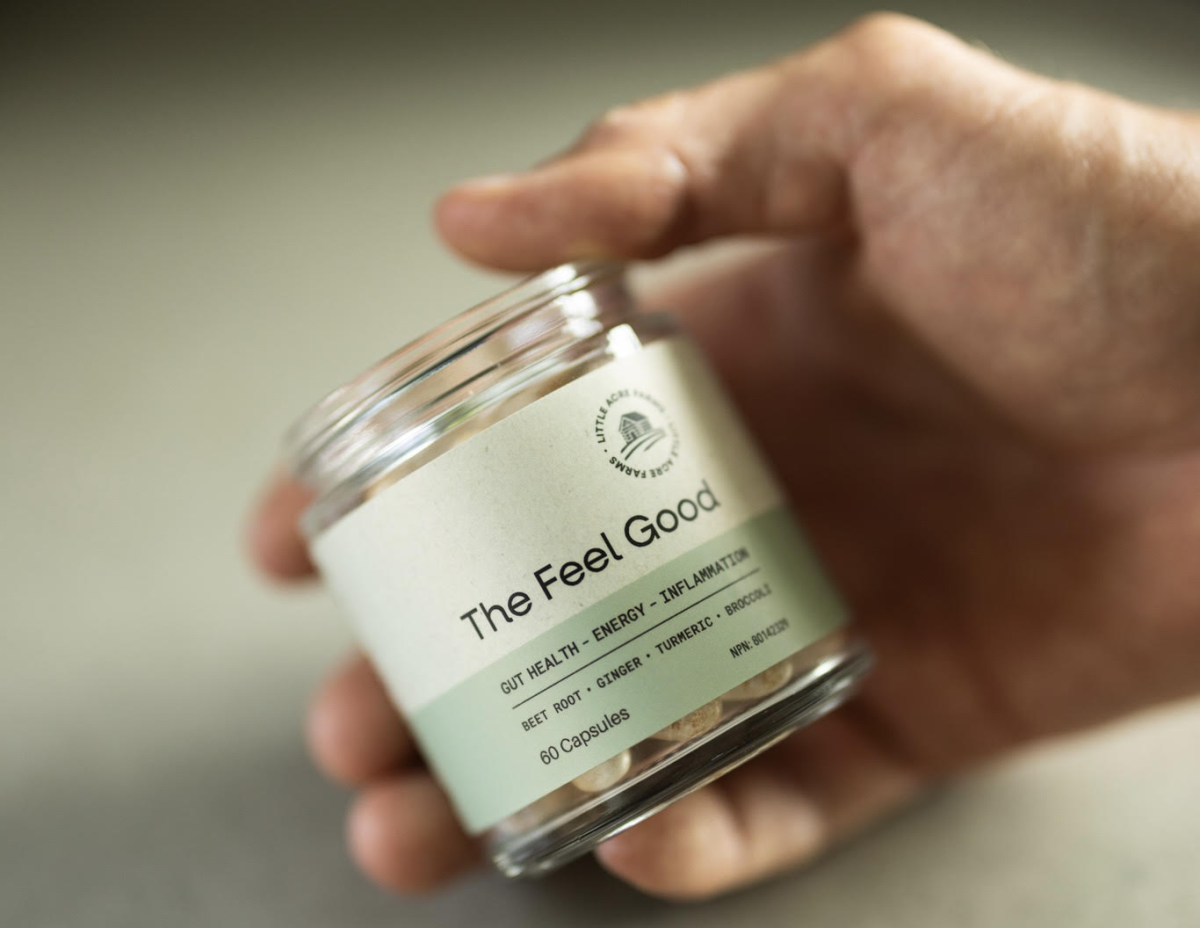
Concussion issues ended his hockey career, and long hours in finance left him searching for more purposeful work. The result is Little Acre Farms, a Canadian wellness company that launched its first Health Canada approved supplement, The Feel Good, in 2025 and is now starting to build an ecosystem around it.
“Our mission is to build Little Acre Farms into an all-encompassing health and wellness community and platform,” Stevenson said. “That is why the name is Little Acre Farms and not Chase’s supplements or whatever you might want to call it.”
Building The Feel Good: From Juicing Ritual to Shelf-Ready Product
The story of Little Acre Farms began with a blender, a juicer and a lot of trial and error. Stevenson connected with Kelowna based entrepreneur and investor Matt Crowell, founder and CEO of mobile marketing platform GetintheLoop, at a time when Crowell was going through his own health reset.
“My wife had some health issues and we made a commitment that we were just going to get a lot healthier,” Crowell said. “I naturally, as I started juicing, wanted to research what are the best things to juice to help with the things I was having problems with, which was bad inflammation, a really bad gut, all of that sort of stuff.”
The pair landed on a simple but potent combination.
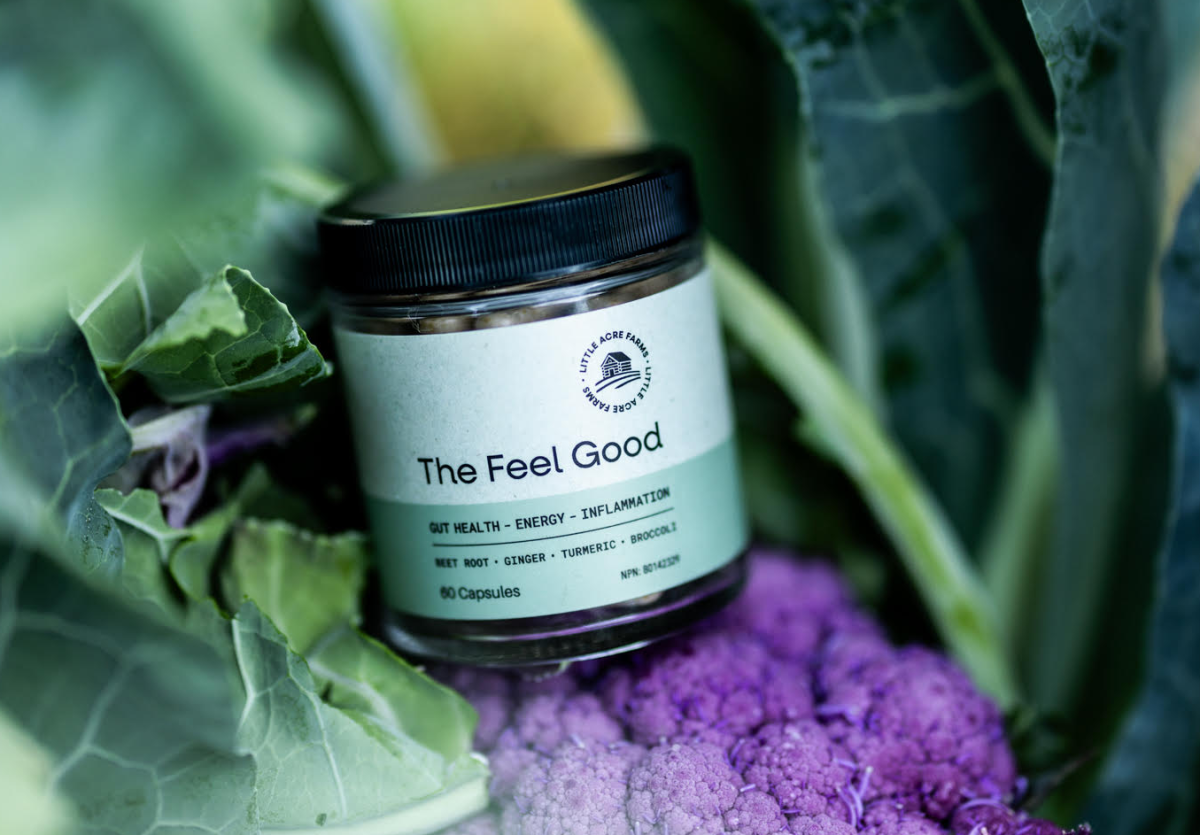
“The formulation that we ended up with was based off juicing,” Crowell explained. “I was juicing a lot of beets, a ton of ginger and broccoli, a lot of lemon and turmeric. After doing that for two months, I noticed extensive benefits in terms of how I started to feel.”
The problem was sustainability. Juicing was expensive, time-consuming and easy to abandon once travel and work intervened. That led Crowell and Stevenson to explore encapsulation, working with consultants in Toronto to ensure the product would meet Health Canada’s standards and secure a Natural Product Number.
“You can go to market in Canada pretty easily by just saying you have a supplement in two weeks,” Crowell said. “Or you can do it our way, which took closer to a year to actually get approved with a natural product number and Health Canada approved sort of stuff.”
For Stevenson, it was critical that the first product, The Feel Good, stayed grounded in whole foods rather than relying on synthetic or poorly absorbed ingredients.
“The number one diet you can do is whole foods,” he said. “A lot of the supplements that are on the market are not easily absorbed through your gut. So what I wanted to create was a whole food supplement that is going to be absorbed into your body, that had a lot of the benefits of these other supplements.”
The result is an all-organic blend targeted at gut health, energy and inflammation, designed for a broad demographic.
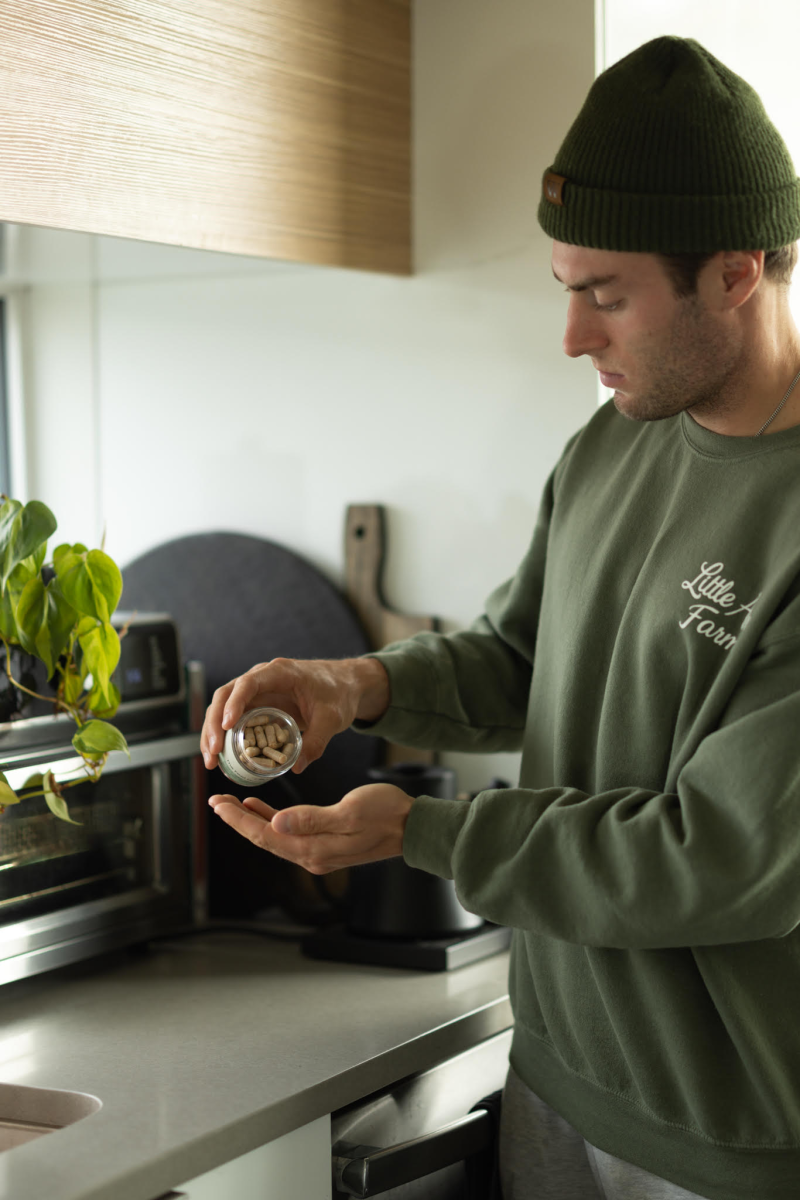
“It can be taken by anyone from children to seniors,” Stevenson noted. “We have a lot of seventy year olds who are on it and they are absolutely loving it because it helps a lot with their gut health and regularity and joint pain, which is a big thing for everyone.”
A Direct-to-Consumer Model with Non-Traditional Retail Partners
From launch, the Little Acre Farms business model has leaned heavily into direct to consumer sales, reflecting broader shifts in Canadian retail and wellness.
“We are mainly doing DTC direct to consumer,” Stevenson said. “We wanted to make it so easy for everyone to be able to get our product.”
That does not mean avoiding retail entirely. Instead, the brand is choosing non-traditional outlets that align closely with its values and target customer.
“In terms of retail, we are going retail, but really with smaller local partners,” Stevenson explained. “Local farmers’ markets, smaller gyms that we believe in, things like that in the local community. As we expand across Canada, we are going to be very careful with who we partner with.”
Crowell added that the team sees opportunity in settings where wellness is already top of mind, but retail shelves are not overcrowded with packaged products.
“We are partnering with non-traditional retailers,” he said. “We do not want to just get into all the big supplement stores and be like that. We are partnering with a lot of businesses that would have adjacent customers to us, like yoga studios and farm markets.”
For those partners, the intention is to build recurring revenue rather than a one-time sale.
“A yoga studio does not sell a lot of retail, so we would be unique in that,” Crowell said. “We are trying to create a subscription model for them where they actually get recurring revenue naturally.”
That strategy fits within a broader trend of experiential and community-based retail, where service businesses from fitness studios to clinics are looking for differentiated product stories that support their brand positioning.
Health Canada, Supply Chain and Scaling in Uncertain Times
Launching a supplement in Canada involves both regulatory and operational hurdles. Health Canada’s natural health product framework requires documented evidence for safety and efficacy, in addition to labelling standards.
“For us, there were no issues because our product is a really high-end product,” Stevenson said. “It is all organic, it is simple ingredients. It was not an easy process in terms of dealing with Health Canada, but we had no bumps in the road. It was really just going through that process with them.”
On the operations side, the company believes it is ready to meet growing demand.
“We are early on, and we are learning, and it is going to be about really trying to reach as many people as we can,” Stevenson said. “We have the capacity to really pump this out, which is our plan. We are in interesting times for sure. A lot of opportunity, but very interesting times.”
That capacity, along with Health Canada approval, positions Little Acre Farms to scale domestically and eventually look beyond Canada if the model gains traction. For now, the focus is on Canadian consumers who are increasingly attentive to ingredient lists, sourcing and the long-term impact of daily habits.
Beyond Product: A Trusted Platform in a Noisy Wellness Market
From the outset, Stevenson has been clear that Little Acre Farms is not only about selling capsules. His goal is to build a platform that helps people navigate a crowded and often confusing wellness landscape.
“There is so much noise right now in the health and wellness industry,” he said. “So many people are getting their health advice online, which I think is amazing, but you need to be very careful where you are getting your information, and that is a big piece of our message.”
The company is positioning itself as a kind of research and curation partner for consumers.
“We want to be a trusted platform where we have done the research for people,” Stevenson explained. “Yes, we are going to come out with other supplements, but we also want to provide, hey, try this. Do not take our word for it, do your own research, but also this is another company that you should try.”
He points to magnesium as an example of how the brand intends to operate.
“Ninety five percent of people are low in magnesium, for example, the way we eat, especially in North America,” he said. “On our socials, I am coming out a lot with, hey, try this company for magnesium. We do not have magnesium. That is a big piece of the platform we are building, developing this trusted platform.”
In practical terms, that means the Little Acre Farms wellness brand is as much a media and education play as it is a product business, through social content, community events and, longer term, physical spaces where people can connect.
“I want to build out these health and wellness spaces where you are bringing communities together,” Stevenson said. “Little Acre Farms is a place where you do community events. We do yoga, sauna, ice bath, gym events.”
Leadership, Authenticity and Retail Potential
Behind the scenes, the company is co-founded by Stevenson and Kirsten Crowell, with Matt and his wife invested as partners. The leadership team draws on high performance sport, finance, technology and entrepreneurship, but the central theme is lived experience.
“Chase has a real desire to change people’s health,” Crowell said. “He is doing it for our family, and it has been really neat to see. The health movement is one that is really easy for people to feel attached to. That is what I have seen. It has kind of blown me away.”
Stevenson’s own path, from NCAA captain and pro hockey player to Wall Street and then to founding a wellness company, informs both the products and the brand story. He leans on concepts like discipline, discomfort and long term thinking, adapted from sport and applied to everyday health habits.
For Canadian retailers and service operators, the story matters. Consumers shopping for supplements and functional products are increasingly looking for authenticity, clean labels and social proof rather than celebrity endorsements or quick-fix promises. A founder who openly describes his own health transformation and is willing to point customers to other companies where appropriate fits that changing expectation.
What Comes Next for Little Acre Farms
The Feel Good is only the starting point. Stevenson confirmed that a broader product pipeline is already in development, though the team is resisting any rush to flood the market.
“We took a long time to make sure we were going to launch this the right way,” he said. “It definitely was not something where we launched a supplement and said, see how it goes. We do have plans. I am working on a lot right now to add more supplements.”
Future products are expected to stay rooted in whole food ingredients and to target common pain points such as sleep, recovery and stress, areas where Canadian consumers have shown strong interest across retail categories.
For now, the Little Acre Farms wellness brand is focused on building momentum through direct channels and carefully chosen partners. For retailers, particularly those in fitness, wellness, hospitality and local food, the model offers a glimpse of where health driven retail may be heading, with subscription models, community integration and storytelling all playing central roles.
“The goal for me, that is why I got into this, is to have a positive impact on people’s lives,” Stevenson said. “We are not looking to just be a product on a shelf. We want to have the highest quality product, but we also want to be a trusted platform.”