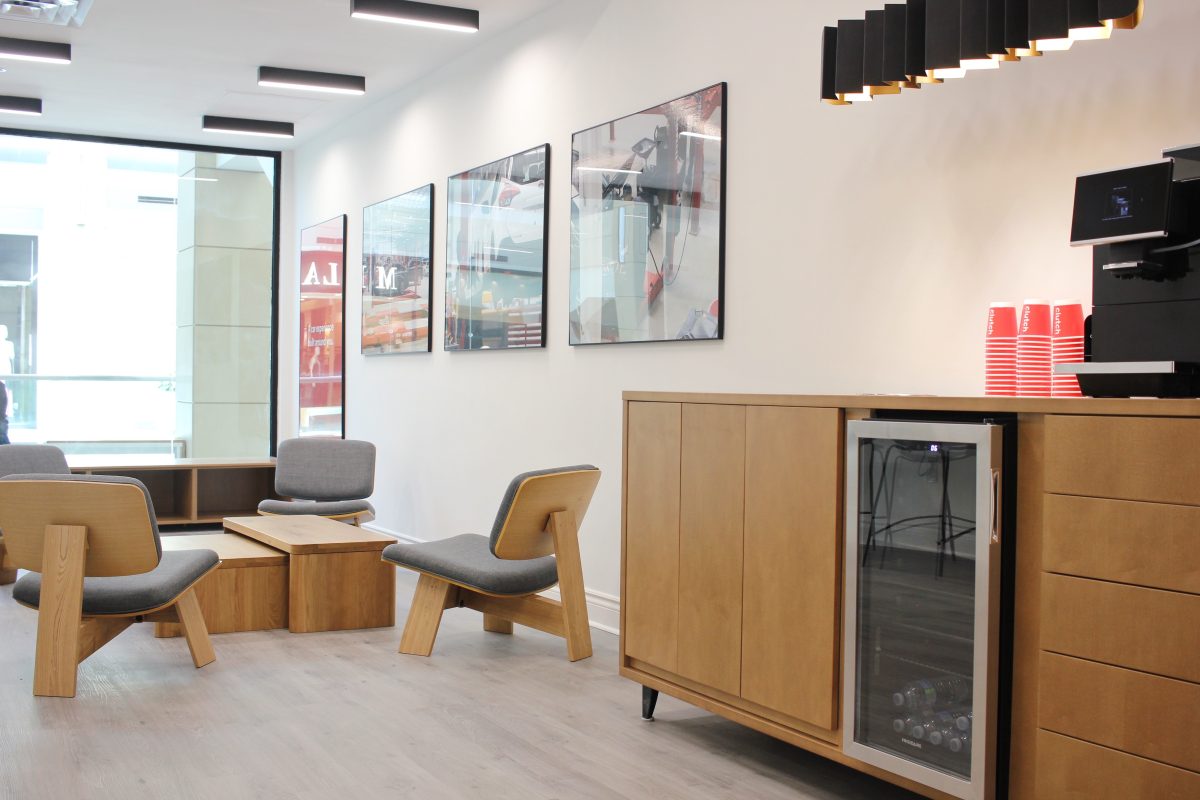
Clutch at Bayshore Shopping Centre in Ottawa. Photo supplied
Toronto-based Clutch is expanding its physical footprint with the launch of a new Customer Hub at Bayshore Shopping Centre, marking its first location in Ottawa and second Customer Hub nationally. The opening reflects a broader strategy to complement its digital-first model with selective in-person touchpoints as the company continues to grow across Canada.
The new Ottawa location, situated at 100 Bayshore Drive, will officially open to the public with a grand opening event on April 11, where visitors can stop by for refreshments and learn more about the company’s services.
Blending E-Commerce with In-Person Experience
The Clutch Ottawa Customer Hub is designed to function as a centralized pickup and drop-off point for customers buying or selling vehicles through the company’s online platform. As the company scales, these physical hubs are intended to enhance accessibility while maintaining the efficiency of a fully digital transaction process.
“We’ve seen how impactful a physical space can be in connecting with our customers,” said Dan Park. “Transparency and convenience are core to our business, and giving Canadians the flexibility to engage with us how they want, whether fully online or with in-person support, is important as we continue to grow across Canada.”
At the Bayshore location, customers will be able to complete vehicle handoffs, access support from on-site staff, and receive guidance through the digital buying or selling process. The space also includes dedicated stations where customers can browse inventory and compare vehicles with assistance from Clutch representatives.
Supporting Growth of Canada’s Online Car Retail Market
Founded in 2016, Clutch has positioned itself as a full-service online retailer for pre-owned vehicles, differentiating itself from traditional marketplaces by owning and reconditioning its inventory. Each vehicle undergoes a 210-point inspection process, and purchases are backed by a 10-day money-back guarantee, allowing customers to “test-own” their vehicle after delivery.
The company has experienced significant growth in recent years, driven in part by shifting consumer preferences toward e-commerce and convenience. Clutch reached profitability in 2024 and has raised more than $160 million in funding, reflecting strong investor confidence in its model.
While the platform enables end-to-end online transactions including financing and delivery, the introduction of physical hubs signals a hybrid approach that combines digital efficiency with human interaction. The Clutch Ottawa Customer Hub represents a continuation of this strategy, offering customers optional in-person support without altering the core online experience.
Strategic Location in a Major Ottawa Retail Destination
The choice of Bayshore Shopping Centre underscores the importance of accessibility and visibility in Clutch’s expansion strategy. Located in Ottawa’s west end, the centre is one of the region’s largest retail destinations, drawing millions of visitors annually and serving as a key transit hub.
With more than 180 retailers and a long history dating back to its opening in 1973, Bayshore has evolved into a super-regional shopping centre following a major redevelopment completed in 2016. Its location at the junction of Highways 417 and 416 provides convenient access for residents across Ottawa’s western suburbs, including Nepean and Kanata.
By situating its Customer Hub within a high-traffic retail environment, Clutch is positioning itself to reach a broad audience while reinforcing its brand presence in the market.
Toronto-based entrepreneur Jay Klein has built one of Canada’s most notable consumer packaged goods success stories with PÜR Gum, a brand that has grown from a grassroots startup into a globally distributed leader in the better-for-you confectionery space.
Founded in 2010, the company has scaled to more than 50 countries and over 50,000 points of distribution worldwide, reflecting a sustained period of rapid expansion and strong consumer adoption. Klein’s journey, which began with a simple idea and a single sale, now includes a return to Dragons’ Den as a guest Dragon in 2026, marking a full-circle moment more than a decade after first pitching the business on the show.
Building a Brand One Customer at a Time
Klein described his early entrepreneurial mindset as rooted in curiosity and persistence. “I wanted to build something where I could create a recurring relationship with the consumer,” he said, reflecting on his transition from running a marketing agency into launching a product brand.
Jay Klein
The idea for PÜR emerged from observing grocery trends and identifying a gap in everyday products. At the time, better-for-you alternatives were beginning to gain traction, yet chewing gum remained dominated by traditional formulations. Klein saw an opportunity to remove artificial ingredients and offer a cleaner alternative without sacrificing taste.
“I remember putting a tray of gum into a health food store and waiting for someone to pick it up,” he said. “Selling that first pack to a stranger was the moment I realized there was something bigger here.”
From that initial breakthrough, the company scaled rapidly. Within its first year, PÜR expanded from a handful of locations to hundreds of retail accounts, driven by a direct, relationship-focused sales strategy targeting independent health retailers.
Product Differentiation Drives PÜR Gum Growth
At the core of PÜR’s success is its positioning around ingredient transparency and health-conscious consumption. The brand’s gum is free from aspartame and artificial additives, instead using xylitol as a natural sweetener. This approach aligned with a broader shift in consumer preferences toward cleaner-label products.
Klein emphasized that the strategy was never about rapid expansion at any cost, but rather about building credibility with both retailers and consumers. “You have to earn your place on the shelf,” he said. “Retailers need to trust that you’ll deliver, and consumers need a reason to come back.”
Today, PÜR products are widely available across major retailers including Amazon, Whole Foods Market, Walmart, and Canadian chains such as Loblaw Companies Limited and Sobeys. The brand has also achieved strong performance in e-commerce, ranking as the top-selling gum on Amazon in multiple markets.
Navigating Industry Shifts and Market Challenges
The chewing gum category itself has undergone significant change in recent years. Klein noted that traditional sugared gum has declined, while demand for sugar-free and better-for-you options has grown steadily.
At the same time, external pressures such as tariffs and currency fluctuations have created operational challenges. PÜR manufactures its products in Switzerland, and a 39 percent tariff into the United States at one point placed pressure on margins.
“We chose to absorb those costs and focus on long-term relationships,” Klein said. “It forced us to become more efficient and disciplined as a business.”
Despite these headwinds, the company continues to grow at a rate of more than 35 percent annually, with global retail revenue expected to exceed $250 million.
Innovation and Expansion Across Categories
Looking ahead, innovation remains a key driver of PÜR Gum growth. The company has expanded beyond its core gum offering into mints and other breath-freshening products, while also introducing new flavour profiles such as sour varieties aimed at tapping into consumer nostalgia.
Klein sees significant runway for continued expansion, both geographically and within adjacent product categories. “We’re still connecting with new consumers every day,” he said. “There are many people who don’t yet know there’s an alternative.”
Canada remains a critical market for the company, representing its highest level of market penetration, even as the United States leads in total revenue.
Jay Klein on the set of Dragons’ Den
A Full Circle Moment on Dragons’ Den
Klein’s recent appearance as a guest Dragon on Dragons’ Den underscores the brand’s evolution and his growing role within Canada’s entrepreneurial ecosystem.
Reflecting on the experience, he described it as an opportunity to support emerging founders navigating the same challenges he once faced. “I know exactly how it feels to stand there and pitch your idea,” he said. “Sometimes the best advice is just helping someone take the next step, not ten steps ahead.”
His approach emphasizes calculated risk-taking and resilience, drawing on lessons learned over years of scaling a business in a competitive global market.
A Canadian Success Story with Global Reach
As PÜR continues to expand, Klein remains focused on long-term brand building rather than short-term gains. He positions the company alongside legacy consumer brands that have maintained relevance across generations, while adapting to evolving consumer expectations.
“We’re building for the long term,” he said. “We want to create something that lasts and continues to connect with consumers around the world.”
Canadian delivery platform Skip has significantly expanded its grocery offering through a new nationwide partnership with Loblaw Companies Limited, bringing a wide range of grocery banners onto its platform.
The collaboration enables Canadians to order from 13 Loblaw banners, including No Frills, Loblaws, Real Canadian Superstore, Maxi, and Your Independent Grocer, directly through Skip. The move strengthens Skip’s position in the increasingly competitive on-demand grocery delivery market and reflects a broader shift toward convenience-driven retail.
“This partnership with Loblaw brings together two homegrown brands to redefine convenience and bring the best of Canadian grocery directly to customers’ doors,” said Paul Sudarsan, SVP, Partnerships at Skip. “From the weekly top-up shop to the last minute dinner save, we’re meeting Canadians exactly where they are, at every price point and in every postal code.”
A Strategic Push Into Grocery and Everyday Essentials
The Skip Loblaw grocery delivery initiative is part of a larger strategy to position Skip as a comprehensive retail delivery platform rather than a restaurant-only service. As consumer habits shift toward immediacy and flexibility, the company is targeting “top-up” grocery trips, midweek refills, and last-minute meal solutions.
“With Skip we are excited to provide a new way to get groceries delivered with a great Canadian partner,” said Avery Ironside, Senior Director of Marketing & Growth at Loblaw. “It’s now even easier for Canadians to get the products they know and love when and where they need them, including their favourite PC® foods.”
This partnership connects Canadians across more than 450 cities and towns to Loblaw’s extensive grocery network, which spans over 2,800 locations nationwide. It also reinforces Loblaw’s continued investment in digital channels and last-mile fulfillment.
Intensifying Competition in On-Demand Retail
The expansion comes as competition intensifies among delivery platforms. Skip’s move follows similar partnerships by rivals, including Instacart and Uber Eats, both of which have been building out grocery and retail offerings in Canada.
In late 2025, Uber Eats added Loblaw to its platform, highlighting the strategic importance of grocery partnerships in driving user frequency and basket size. Skip’s response has been to rapidly scale its own retail ecosystem, leveraging its Canadian roots as a differentiator.
A Broader Retail Expansion Strategy
The Loblaw agreement is the latest in a series of partnerships that underscore Skip’s evolution into a broader “everything delivery” network. Over the past year, the company has added major partners across multiple retail categories, including Walmart Canada, Shoppers Drug Mart, Dollarama, and PetSmart.
These moves reflect a deliberate effort to capture a larger share of everyday consumer spending, extending beyond food delivery into grocery, pharmacy, and general merchandise. Skip has also introduced loyalty initiatives and partnerships, including integrations with WestJet, to deepen engagement and build a more comprehensive ecosystem.
According to company data, Skip’s retail category has seen rapid growth, with triple-digit increases driven by these partnerships and evolving consumer behaviour.
Meeting Growing Demand for Convenience
The expansion aligns with broader trends in Canadian retail, where time-constrained consumers are increasingly turning to on-demand services for everyday needs. Grocery delivery, once considered a niche offering, has become a core component of omnichannel retail strategies.
By positioning itself as a platform for quick “top-up” grocery trips, Skip is targeting high-frequency use cases that can drive repeat engagement and customer loyalty.
To support adoption, the company is offering promotional incentives, including 30 percent off the first three Loblaw orders of $45 or more, capped at $15 per order, through May 31, 2026.
Strengthening a Homegrown Competitive Narrative
A notable aspect of the Skip Loblaw grocery delivery strategy is its emphasis on Canadian identity. Both companies have positioned the partnership as a collaboration between two homegrown brands, a message that resonates amid growing competition from global players.
Founded in the Prairies in 2012, Skip has grown into a national technology platform with more than 50,000 partners. As a subsidiary of Just Eat Takeaway.com, it combines local market knowledge with international scale.
For Loblaw, the partnership adds another layer to its omnichannel capabilities while reinforcing its presence in digital grocery.
Outlook for On-Demand Grocery in Canada
As delivery platforms continue to expand their retail partnerships, the competitive landscape is expected to intensify further. Grocery, in particular, remains a key battleground due to its frequency and importance in household spending.
The Skip Loblaw grocery delivery partnership signals a continued shift toward integrated, convenience-driven retail ecosystems, where consumers expect fast, flexible access to a wide range of products.
With major players investing heavily in this space, the race to define Canada’s leading on-demand retail platform is accelerating.
Militarized surveillance systems are becoming the new normal in many Canadian grocery stores, marking a disturbing symptom of an already fraught food retail system.
Surveillance systems in commercial retail are nothing new; cameras, mirrors and store design have long been used to deter shoplifting. But these newer, more militarized approaches seem both heavy-handed and misguided.
Despite the growing costs for employees and consumers, retailers say they are facing significant losses from retail crime, which the Retail Council of Canada has called a “national crisis.”
Retailers reported an average profit shrink of 1.5 per cent in 2024, which is almost double what it was in 2019. Grocers and retailers have both cited self-checkouts as a top contributor to this shrink.
In response, retailers are spending millions on police, security and other forms of surveillance. Superstore, for example, has spent more than $12 million in the last five years on special duty police officers to patrol checkouts. Walmart started using special duty officers in their Winnipeg stores in 2022, costing the U.S. conglomerate $1.4 million.
Retailers have turned to a number of alternatives to deter retail theft, including locking products behind barriers. Photo: RI/Google
Persistent food insecurity
These developments cannot be separated from the fact that food insecurity in Canada is widespread and growing. About one-quarter of all Canadians find themselves food insecure, with disproportionately higher rates among Indigenous, Black, disabled, newcomer and senior populations.
The problem is not a lack of food but a lack of affordable, equitable access to food. Food insecurity has been growing for decades, even as corporate food retailers report high profits.
For many workers, an hour’s wages barely covers the cost of a 10-ounce steak or its vegan equivalent. According to the Canada Food Price Report, Canadians are spending between three and five per cent more on groceries, with the highest increases seen in meat.
Commercial food retail in Canada, and elsewhere around the world, is big business.
A handful of companies dominate the market. Loblaw Companies Ltd., whose parent company is led by CEO Galen Weston Jr., operates chains including Loblaws, Real Canadian Superstore, No Frills, Zehrs, T&T Supermarket and Shoppers Drug Mart. He was the third-wealthiest Canadian in 2025, with a net worth of $20.6 billion.
The other “Big Five” food companies in Canada include Sobeys (that owns Safeway, IGA, FreshCo and Farm Boy), Metro (that owns Super C, Food Basics and Jean Coutu), Costco and Walmart. Together, the Big Five control roughly 80 per cent of the grocery market.
Food is spoiled in transit or held up at borders. Grocery stores purposefully over-buy to give the sense of abundance in store aisles all while throwing a lot of it out.
The problem lies not in people ringing in organic bananas for the non-organic ones, but in the way we buy and sell food more broadly. Canadians are already fed up with the business-as-usual of large commercial retail grocery stores — perhaps the recent militarized surveillance might serve as a collective breaking point.
There are better alternatives: farmers’ markets, community supported agriculture and the mounting support for public grocery stores are all more sustainable on several social, ecological and economic markers.
Food should be a human right, not one protected by pricey surveillance systems to protect corporate profits. Our collective purchasing power can exercise the kinds of food systems we want, and the ones we can no longer tolerate.
About the Author: Alissa Overend is Associate Professor, Department of Sociology, MacEwan University
From the beginning, the T. LINE brand has been rooted in thoughtful, intentional design—”and as we’ve grown, we’ve refined how we bring that to life,” says founders Britt Barkwell and Alia Bissett.
“In 2026, we’re moving beyond traditional seasonal deliveries in favor of a more fluid rhythm: limited-edition drops released alongside our core shirting. It allows us to introduce considered newness throughout the year while continuing to build on the silhouettes women return to season after season,” say the two business owners in a letter to customers.
Its first two editions set the tone for the year ahead. In January they introduced The Shirting Wardrobe, a refined edit of its foundational silhouettes, alongside a new “find your shirt” tool designed to make discovering the right fit and style effortless. In February they launched The New Blue, a transition-ready palette that also marks the debut of chambray at T. LINE, offered in three classic shades—indigo, navy, and blue.
“For spring, we turn toward colour—introducing a bold colour-blocked capsule that plays with contrast, saturation, and unexpected combinations, bringing a fresh energy to our core silhouettes. As we move into summer, La Dolce Vita follows, defined by bold stripes in primary hues—an expressive, sun-soaked take on warm-weather shirting,” they say.
Britt Barkwell and Alia Bissett
“As we enter our fourth year, we’re excited to continue expanding our retail presence through strategic partnerships. This spring, we build on our U.S. presence with ongoing collaborations with Kirna Zabête in New York and Palm Beach, and Teller in Los Angeles and Montecito.
“Alongside these releases, we are introducing T. CLUB—a new editorial series rooted in conversation and community. The series begins with an editorial moment, showcasing a curated group of women in our shirts—an iconic celebration of shirting and the way it’s worn in real life. This is followed by T. CLUB In Conversation, an in-store series where we sit down with these women to explore their perspectives, practices, and what informs the way they live and work.”
Founded in 2022, T. LINE is a contemporary womenswear brand built on the iconic staying power of shirt dressing. Purveying always-classic closet essentials that complement their core shirting, T. LINE believes in crafting thoughtfully edited collections that transcend trends and outlast a single season.
T. LINE founders Barkwell, a creative and marketing lead who launched editorial platforms at notable brands like Club Monaco and Canadian retailer Holt Renfrew, and Bissett, the former Director of Strategy at Holt Renfrew, each bring over a decade of fashion acumen. After seeing a gap in the market for shirting-first brands that were both classically cool and accessible, the pair were keen on carving out their own viewpoint.
“There are always interesting things happening in the retail industry. From more of a global perspective, there are a lot of great new brands coming into the market, “ said Bissett in an interview.
“I think generally a lot of these brands are doing a great job being fantastic direct-to-consumer businesses, similar to us, where we’re really focused on what we’re doing from a direct-to-consumer business perspective, and then also being super selective and strategic about who they’re partnering with from a retail perspective.
“I mean, obviously, particularly in the U.S., we’re seeing some sad stories in a way, with Saks filing for bankruptcy . . . It’s a tough time for a lot of wholesale accounts, and that business is changing. But I think what’s really cool is we’re seeing so many new brands still launching in spite of that and just shifting models. I think the reliance on wholesale is maybe not as deep as it was at one time, at least for those big retailers.
“I think what’s also really cool is that boutiques have really risen. There are so many— even in Toronto—so many wonderful boutiques with amazing buyers who know their customers intimately. I think that is where brands are partnering now. It’s really cool how a lot of brands are now really owning their story, owning the relationships with their customers, and then being super strategic about where they’re locating and who they’re partnering with, and continuing to grow. So I think everyone’s being smart. I think everyone’s doing the best they can in the environment, and obviously there’s still a ton of opportunity given the number of entrants coming into the market. I think it’s still a really inspiring place to be.”
T. LINE
“With the volatility that we see in the market and in the economy in general, that’s something we’ve definitely focused on—what can we actually control in our business? I think placing emphasis on our direct-to-consumer business, where we really own that customer relationship—we can control our margins. We just have more control over our business. I think that’s somewhere we are definitely placing more emphasis,” added Barkwell.
Barkwell said the brand has shifted its model from being primarily focused on huge seasonal collections to more of a drop model, where it focuses on tightly edited assortments.
Bissett said the brand had a few insights.
“Because we have so much great information from our direct-to-consumer business, we’re really able to adjust and pivot our business based on what our customers are telling us, both through the data and through anecdotal feedback we get from the women,” she said.
“We’re really finding that, for us, it’s best to be nimble and able to give these women what they need when they need it, which has directed us into more of a monthly drop cadence, as opposed to dropping a big collection and then waiting and dropping another big collection.
“Our customers are very much “buy now, want to wear immediately.” Because we’re able to produce in Canada—we’re producing in the GTA—it’s nice that we can be nimble. We can design, produce, and get stuff out relatively quickly.
T. LINE
“So we thought, why not take advantage of that opportunity, as opposed to planning at least a year out for the next collection? It’s fun for us, and it’s more newness. People see things online and want them immediately.
“For us, it’s an opportunity to have more newness more often. Whereas if we were dropping a single collection that had to live throughout the whole season, people tend to get a bit bored, and it’s not as exciting.”
Barkwell said the brand still has its store in Rosedale, Toronto which is doing really well and it’s looking at strategic partnerships with various retailers in the U.S.
“It’s really about looking at who those strategic partners are that we can work with. It’s more of a branding exercise, because they share the same customer and are in markets we’re interested in. It’s about being more strategic about the wholesale accounts we’re pursuing,” she explained.
Barkwell said the two have thought about another physical location for the brand.
“That’s something we’re always looking at—spaces and opportunities. Eventually, that’s something we absolutely would like to do,” she said.
“Having our own store and space is something we can really control, and it’s a real reflection of our brand. It’s been such an incredible way to connect with our customers, get feedback, and evolve the space on our own terms.
“We originally launched something called T. CLUB which is an editorial series where we feature women wearing our shirts—women we admire who are doing interesting things in their careers and elsewhere. We’re evolving that into an in-store series called T. CLUB in Conversation. That will be a nice extension where we can bring women into the store.”
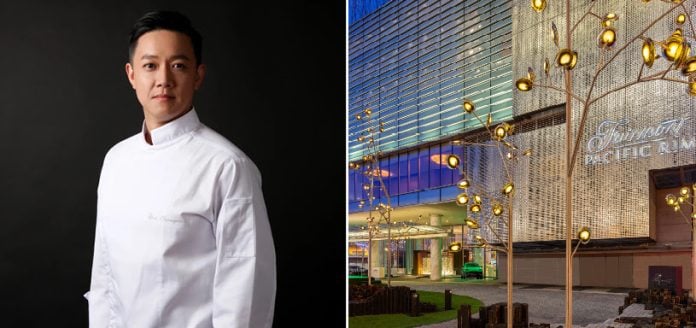
Fairmont Pacific Rim in Vancouver has appointed Chad Yamagata as its new executive pastry chef, bringing more than two decades of international experience leading pastry programs at some of the world’s most renowned luxury hotels.
He will oversee all pastry operations across the hotel’s culinary venues, as well as lead the pastry program at the hotel’s award-winning restaurant, Botanist, said the luxury hotel.
Yamagata joins the Forbes Travel Guide Five-Star property with a career spanning South Korea, Dubai, and Canada. Known for his refined and elegant approach to dessert, he has built a reputation for delivering elevated guest experiences while creating and mentoring pastry teams, it added.
Jens Moesker
“We are thrilled to have Chad join our culinary team,” said Jens Moesker, regional vice president and general manager, Fairmont Pacific Rim. “He introduces a new level of artistry and global perspective to our dessert and pastry program, and we look forward to the creativity and leadership he will bring to Fairmont Pacific Rim.”
Most recently, Yamagata was the owner and pastry chef of SEE WHY Patisserie & Dessert Studio in Seoul, Korea, where he led a program of bespoke dessert collaborations with leading global luxury brands, such as Louis Vuitton, Bottega Veneta, Van Cleef & Arpels, Balenciaga, Gucci, and Thom Browne.
His resume also includes the role of executive pastry chef at five-star hotels such as St. Regis Hong Kong and JW Marriott Dongdaemun in Seoul. He was also the corporate executive pastry chef of South Korean celebrity chef Edward Kwon’s restaurant group, EK Foods.
“I’m honoured to be returning home to Vancouver and joining the talented team at Fairmont Pacific Rim,” said Yamagata. “This is an incredible opportunity to lead the pastry program across such a dynamic property, including the Michelin Guide-recommended Botanist. I look forward to creating memorable dessert experiences for our guests.”
Fairmont Pacific Rim – Vancouver’s definitive luxury hotel – was rated the World’s Best Business Hotel by Condé Nast Traveler readers and awarded the coveted Forbes Travel Guide Five-Star and AAA Five Diamond Ratings. The ultramodern downtown hotel offers unobstructed mountain and harbour views, combining the best of the Pacific Rim in its architecture and décor. The hotel features three award-winning dining destinations, resort-style Forbes Five Star Willow Stream Spa, rooftop and pool sundeck, lavish guestrooms, and a variety of the city’s most luxurious suites.
Canadians are exhausted and public transit has become the most honest place you can see it. Eyes close, heads lean, bodies slow… then a jolt awake and a quick look around, as if being “caught” napping is something to be embarrassed about.
That moment is at the heart of sleep shaming and it’s exactly what Sleep Country set out to normalize during Sleep Awareness Month in March.
Building on their Stop Sleep Shaming movement, Sleep Country reinforced a simple message: there’s no shame in prioritizing your sleep and, by extension, your health and day-to-day performance.
A new national survey commissioned by Sleep Country found that seven in 10 Canadians feel exhausted at least a few days per week and it shows up most clearly on public transit, where 82% of riders have felt the urge to fall asleep during their commute however more than half feel self-conscious about dozing off in public.
To bring that reality to life during Sleep Awareness Month, and help normalize rest without shame, Sleep Country transformed a TTC streetcar into a calm “Permission to Snooze” zone with live musical performances featuring popular lullabies, travel pillows, and sleep masks.
The message: if you can find a quiet 10 minutes of rest between stops, take them. Permission to snooze: granted.
“This topic was super interesting. Basically, the idea here is that there’s this taboo, mini cultural tension that we have where a lot of people inadvertently—and it’s actually half of Canadians—shame other people about getting rest and sleep,” he explained.
“So it’s about one in two Canadians who shame somebody for sleeping. Whether it’s, “Hey, why are you going to bed at nine o’clock? Why are you leaving the party early? Why are you sleeping in?”—all those things. And more than one in two Canadians have been shamed.
“So it’s this very interesting topic that hits at this cultural tension: we have such a hustle culture, it’s all about glorifying burnout, it’s all about the grind, and it’s leading people to neglect their sleep, but then also shame others when they do get good sleep.
“As Sleep Country, we’re all about wanting to awaken Canadians to the power of sleep. We want to champion sleep for the industry, for Canadians across the country. We loved this topic because it hit on this cultural truth—that this behaviour is happening and people don’t even realize it.
“It was actually really interesting when we developed this. When we first landed on it with our agency, Mechanism, once they brought this forward, we all were like, “Oh my God.” In the room, you could see the light bulbs go off. I was like, “Oh my God, I’ve been shaming my wife for going to bed at nine o’clock at night.” Everyone was like, “Oh my God, I just got shamed earlier.” So it was just such a unique, great thing. We’ve done a bunch of research since then to support that.”
The campaign was launched last year and brought this taboo topic to life. For this year, Sleep Country wanted to take it a step further. In January and February, there were a lot of return-to-work orders happening across the country. This push to go back to offices was, for Sleep Country, another signal of hustle culture and burnout.
“One of the most common places where this was physically manifesting was on transit. You were seeing hugely packed—especially in Toronto—Union Station was packed, GO Train, TTC, completely full of people being ushered back into work. Again, this idea of hustle culture,” noted Myhal.
Sleep Country photo
“We did further research on the fact that for people who commute into work, a vast majority want to sleep. More than half of people — 82% of riders — feel an urge to rest on transit, but more than half of them are self-conscious about it. So they choose not to give themselves permission to rest.
“So the idea here was — inside the campaign, with what was happening culturally and this self-conscious feeling — it led us to an activation where we could literally have a musician come into a TTC streetcar. We took over a TTC streetcar, had them play lullabies, and the idea was to give permission to riders on transit to get some rest anytime they could.”
Sleep Country photo
Sleep Country gave away some items like travel pillows, sleep masks, and a coupon they could take to their local Sleep Country and redeem.
In Montreal, a similar campaign was held for Dormez-vous, which is under the Sleep Country umbrella, on the REM (Réseau express métropolitain) with a violinist from Cirque du Soleil.”
Today’s Retail Insider articles are listed below, followed by Canadian Retail News From Around the Web. Coverage focuses on how food and experiential retail are shaping Toronto leasing trends, with small spaces attracting dynamic tenants in food and fitness. We also delve into growing concerns over food fraud in Canada and Walmart Canada’s launch of enhanced e-commerce shopper insights. Together, these and other stories highlight evolving consumer demands and the critical role of data and trust in retail’s future.
Rural restaurants are waiting to hear from provincial governments on whether they will receive a temporary reprieve for their labour force challenges through the Temporary Foreign Worker (TFW) cap increase, says Restaurants Canada.
On March 13, the federal government announced it would temporarily increase the cap on TFWs in rural regions experiencing severe labour shortages, but only if the province officially requests it. While April 1 was the first day employers could potentially participate in this change, most have yet to hear from their provincial governments, said the national organization.
Kelly Higginson
“Restaurants Canada is asking provincial governments across the country to support rural restaurants and communities by opting into this temporary TFW cap increase,” said Kelly Higginson, President and CEO of Restaurants Canada. “We need long-term workforce solutions that include investments in youth training, technology and immigration with a path to permanent residency, but in the meantime, restaurants need workers now.”
TFWs represent just 3% of the foodservice workforce and are a last resort for employers, filling critical gaps in communities with aging populations, shrinking workforces and declining youth participation rates. Hiring a TFW is expensive and employers must prove they have been unable to hire locally at the prevailing market wage. They often fill skilled positions, like chefs or cooks, or hard-to-fill shifts, like overnights. When these roles go unfilled, restaurants have to drop shifts, cut hours of operation or possibly close their businesses, explained Restaurants Canada.
“In some rural communities, restaurants may be the only source of local employment for youth,” added Higginson. “They are community gathering spaces, places for travelers and locals to have a meal. Losing a restaurant in these communities is devastating.”
Restaurants Canada said its Many Hands Make Restaurants Work campaign highlights the systemic labour force challenges facing the foodservice industry that employs more than 1.2 million people, 39% of whom are youth, and serves more than 23 million visitors every day. Despite having the second highest wage growth of any industry since 2021, there are 70,000 foodservice jobs vacant across the country.
Restaurants Canada is a national, not-for-profit association advancing Canada’s diverse and dynamic foodservice industry. Restaurants are a $125 billion industry employing 1.2 million Canadians and the number one source of first-time jobs in Canada.
Toronto retail leasing trends are increasingly being shaped by a shift toward food, fitness, and experience-driven concepts, as tenants compete for limited space across the city’s urban corridors.
New data from JLL shows that food and beverage operators led all leasing activity in the fourth quarter of 2025, accounting for eight transactions totaling more than 12,000 square feet. The continued dominance of the category reflects both strong consumer demand and the adaptability of food-based concepts in high-traffic, streetfront environments.
At the same time, a growing number of experiential and service-oriented tenants are reshaping the mix of retailers on Toronto’s key streets.
Experiential Retail Gains Momentum
Beyond traditional retail categories, entertainment and activity-based concepts are emerging as a notable force in the market.
JLL’s report highlights recent leases by tenants such as Hyve and Cardify on Queen Street West, signaling increased demand for spaces that offer interactive or experience-driven formats . These concepts are designed to draw customers through engagement rather than purely transactional shopping.
This shift reflects broader changes in consumer behaviour, where physical retail spaces are expected to provide social, recreational, or immersive experiences in addition to products.
For landlords, experiential tenants can also help drive traffic and extend dwell time, making them an increasingly attractive component of tenant mix strategies.
Looking towards the intersection of Yonge and Bloor — Future Shake Shack in an historic building at 765 Yonge Street in Toronto. Image: Craig Patterson
Smaller Spaces, Stronger Demand
One of the defining characteristics of current Toronto retail leasing trends is the strong demand for smaller-format spaces.
Brandon Gorman
Brandon Gorman, Executive Vice President at JLL Canada, noted that much of the activity is concentrated in units under 2,000 square feet. These spaces are particularly well suited for food and beverage operators, boutique retailers, and service-based businesses.
“We’re seeing a lot of activity in the sub-2,000 square foot range,” he said. “If it’s smaller format space with guaranteed term, that’s where there’s a lot of demand.”
In many cases, these spaces are attracting multiple offers, particularly when landlords are able to provide longer lease terms. This has created a competitive environment where well-positioned units can lease quickly.
Leasing Quality Improves Along Yonge Street
Toronto’s busiest retail corridors are also seeing a shift in tenant quality as leasing conditions evolve.
On Yonge Street, particularly between Gerrard and Bloor, the ability for landlords to offer longer lease terms has allowed for a transition toward stronger, more established tenants. In previous years, uncertainty around redevelopment timelines often limited lease durations, resulting in a higher proportion of short-term or lower-tier operators.
As those constraints ease, landlords are increasingly able to attract higher-quality tenants, which in turn supports higher rents and more stable long-term occupancy.
Food Anchors and Fitness Concepts Expand
Food and beverage continues to serve as a primary anchor for both streetfront retail and mixed-use developments.
Recent openings across Toronto, including major food hall concepts and quick-service expansions, reflect the category’s ability to generate consistent traffic. At the same time, fitness operators remain active in the market, particularly in dense urban areas where demand for wellness-oriented services remains strong.
These categories are often less dependent on traditional retail cycles and can perform well even during periods of economic uncertainty, making them attractive to both landlords and investors.
Market Conditions Support Continued Evolution
While Toronto retail leasing trends remain strong, the market is also entering a period of adjustment.
JLL notes that retail sales growth is expected to moderate in 2026 as consumer confidence softens and spending becomes more value-driven. However, the structural demand for well-located retail space is expected to remain intact.
The continued recovery of tourism, strong midweek office attendance, and population growth are all supporting long-term demand for physical retail environments.
A More Curated Retail Landscape
The result is a retail landscape that is becoming more curated and intentional. Rather than relying on traditional merchandising alone, landlords and tenants are increasingly focused on creating environments that blend food, service, and experience. This shift is particularly evident in Toronto’s urban corridors, where space is limited and competition is high.
As the market continues to evolve, Toronto retail leasing trends will likely be defined by flexibility, creativity, and a continued emphasis on experience-driven concepts that resonate with modern consumers.