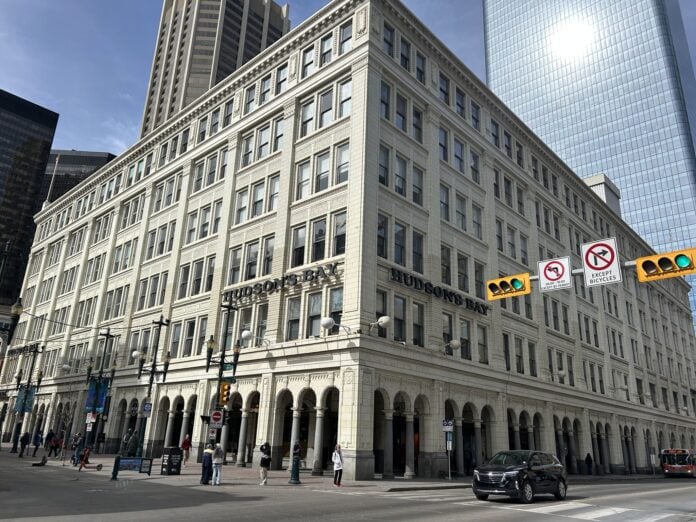
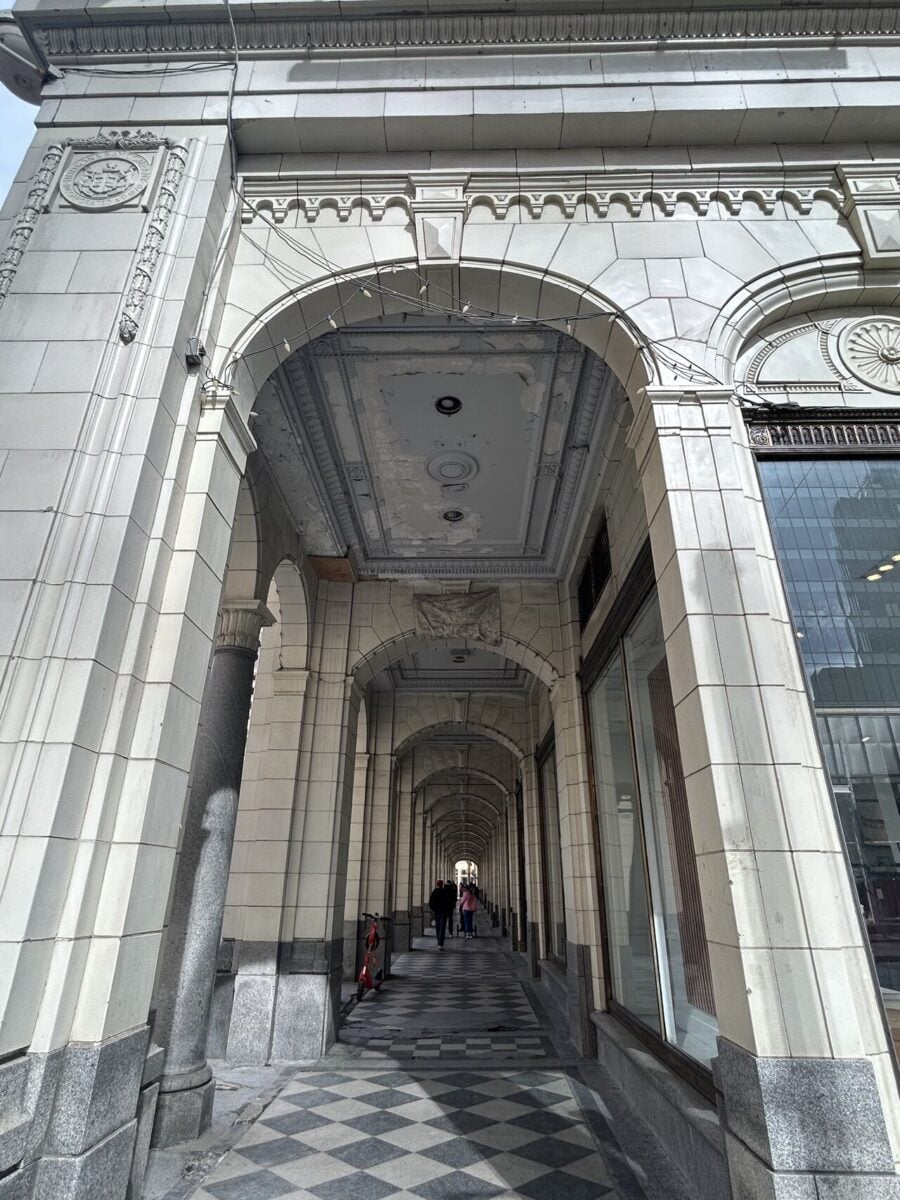
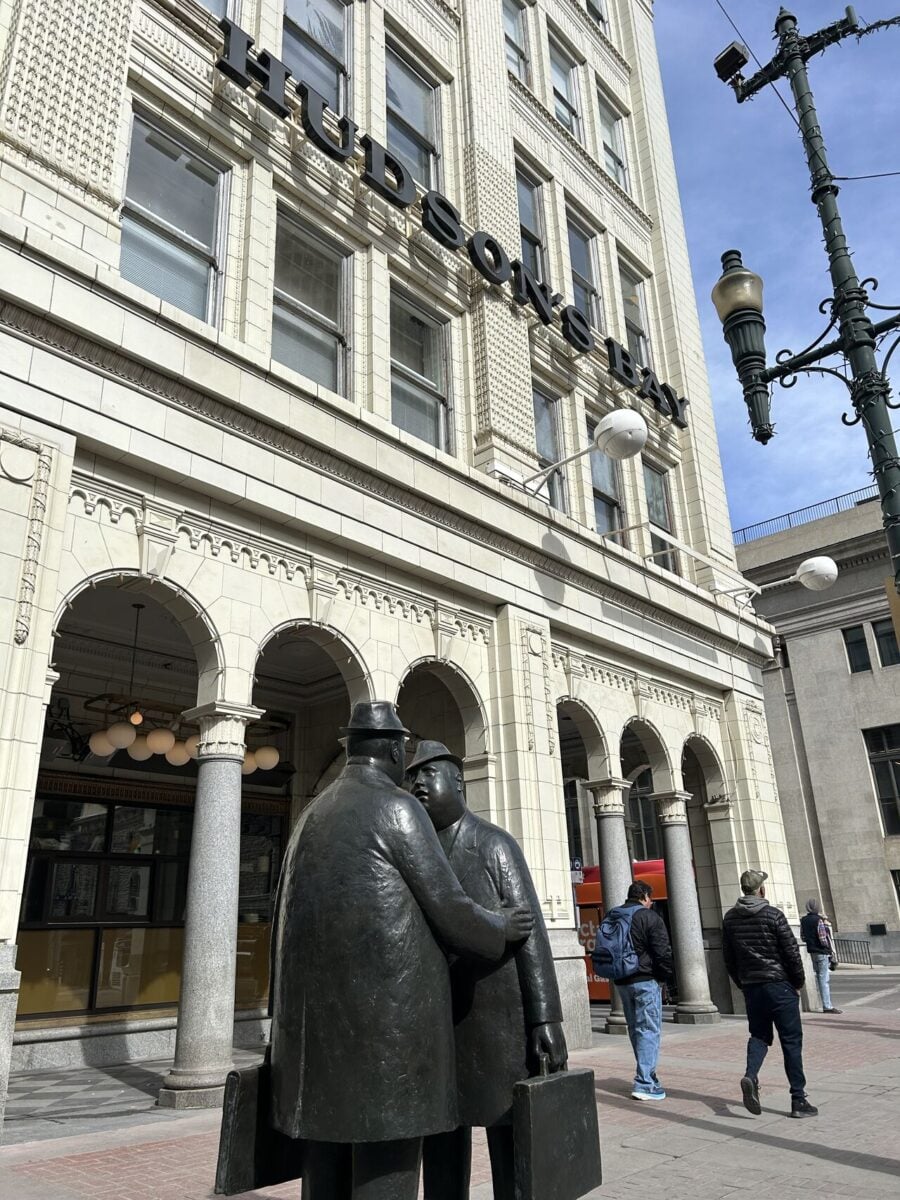
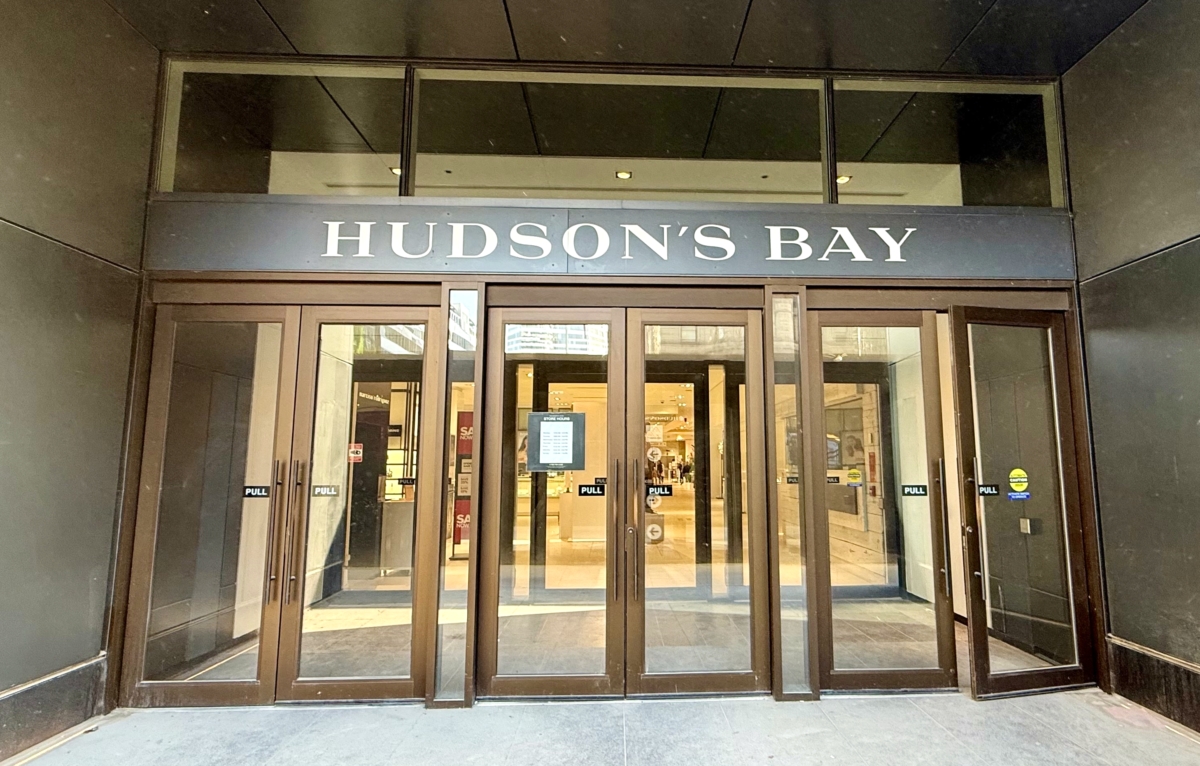
Hudson's Bay downtown Calgary. Photo by Mario Toneguzzi
The iconic downtown Calgary Hudson’s Bay Company building has been placed on the National Trust for Canada’s Endangered Places List, which shines a national spotlight on heritage places at risk, from places of faith to Indigenous cultural landscapes, historic homes and schools to traditional main streets.
The organization described its current status as “Immediate Threat.”
“Despite its architectural merit and deep social legacy the Calgary Bay building lacks formal heritage designation, leaving it vulnerable to demolition and redevelopment,” said the organization.
Hudson’s Bay downtown Calgary. Photo by Mario Toneguzzi
“Prominently located on historic Stephen Avenue, the Calgary Hudson’s Bay Company Building is one of the most architecturally and historically significant commercial buildings in Western Canada. Completed in 1913 and expanded in 1930 and 1958, the six-storey Edwardian Classical landmark was designed by renowned Toronto firm Burke, Horwood and White. It features Chicago Commercial-style massing, rare cream-glazed terracotta cladding, granite columns, and a sweeping colonnade — making it a showpiece of early 20th-century department store design and Calgary’s first large-scale commercial concrete structure. As a national prototype, Calgary’s Bay building would go on to inspire similar flagships in Vancouver, Victoria, and Winnipeg — setting the tone for a retail empire across the West.
“The collapse of the Hudson’s Bay Company has put this and other landmark Bay buildings at risk. Now vacant, the future of the Calgary Bay Building is uncertain. The Hudson’s Bay Company has announced the closure of nearly all its remaining stores across Canada. Earlier this year, the Calgary building’s financial caretaker stated it will no longer inject capital into the site. Former historic Bay stores in other cities, including Winnipeg, are finding new life as housing and cultural hubs.”
Hudson’s Bay downtown Calgary. Photo by Mario Toneguzzi
In September, the James Bay Eeyou Corporation and JHD Immobilier announced their intention to bid on the acquisition of the former Hudson’s Bay building in downtown Montreal, located at 585 Sainte-Catherine Street West. With a $400 million investment, the developers plan to transform this iconic building into a museum and cultural hub, celebrating the heritage and contemporary vitality of the Cree Nation.
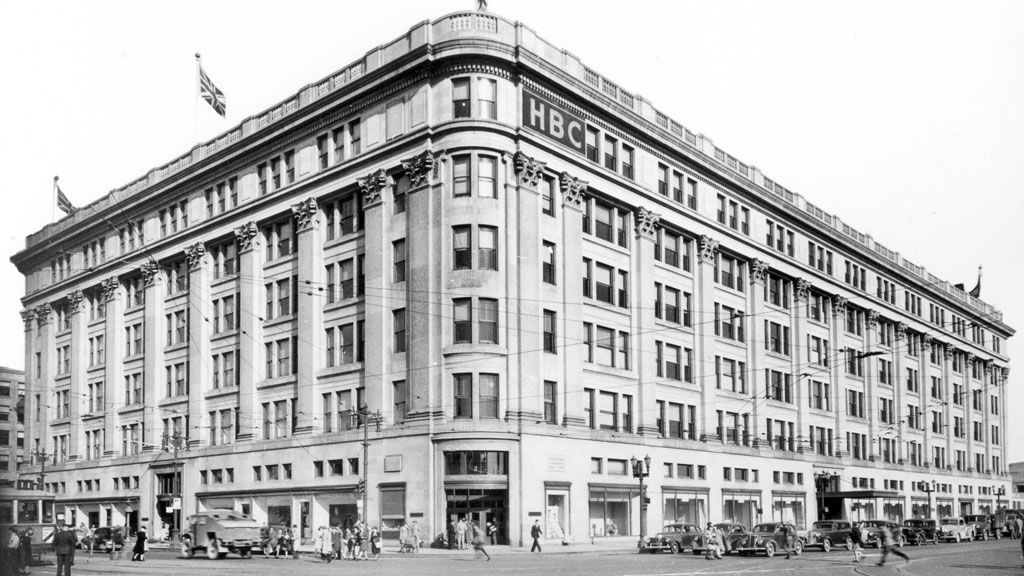
“The Hudson’s Bay Company (HBC) opened the downtown Winnipeg department store in 1926 as its Canadian flagship, prominently situated on Portage Avenue with sightlines to the nearby Manitoba Legislative Building. It was a monumental retail emporium with 600,000 square feet of retail space spread over eight storeys (six above ground and two below), including a grocery store, the iconic Paddlewheel restaurant, and a museum reflecting the company’s key role in the colonization of Western and Northern Canada. A symbol of local construction prowess, it was the largest poured reinforced concrete building in Canada when built – offering tremendous load-bearing strength – and its Classical Revival style exterior clad in 125,000 cubic feet of Manitoba Tyndall limestone. One of the city’s most prominent buildings and a beloved civic landmark, it received a municipal heritage designation from Winnipeg City Council in 2019,” it said.
“Beginning about 2000, HBC’s retail footprint in the building began to progressively shrink to just two floors, and on November 30, 2020 the store was permanently closed. This has increased civic concern that the Bay building will eventually be demolished like the massive nearby Eaton’s department store in 2002, just three years after that chain’s bankruptcy. Over the past decade, the Bay building has seen multiple reuse proposals explored – from Manitoba Hydro, to the Winnipeg Art Gallery, and the University of Winnipeg – but all have floundered on adaptation and funding issues. Recently there have been calls for the adaptive reuse of the building to leverage HBC’s history and help support Reconciliation efforts. Heritage Winnipeg has been working with the community, and Winnipeg’s Mayor created an advisory committee to advance solutions, given that the funding challenges are daunting. The Bay building’s predicament underscores the need for catalytic tripartite financial support (municipal, provincial-territorial, and federal government) for heritage rehabilitation projects to entice and strengthen public/private partnerships.”
Historic photo of the former Hudson’s Bay store in Winnipeg. Image: Manitoba Archives
Once a year, the National Trust releases the Endangered Places List to bring media attention and support to local groups involved in challenging campaigns to save heritage places. Nominations are reviewed by National Trust staff and additions to the list are chosen in consultation with local community stakeholders and subject matter experts.
“The National Trust is an independent national charity that empowers communities to save and renew heritage places. Heritage places are the backbone of resilient, diverse and sustainable communities: think of historic lighthouses and schools, rural landscapes, Indigenous heritage sites, places of faith, older homes and neighbourhoods, and the buildings and vibe on Main Street,” it says.
“We work with partners, donors and funders to see heritage places play their part as cornerstones of climate action and social cohesion, and we spark important conversations about Canada at the places our members visit and discover.
“We empower local heritage sites with game-changing coaching and expertise, we inspire travellers with beautiful historic places to visit and discover, and we challenge the status quo to keep useful older and heritage buildings out of landfill.”
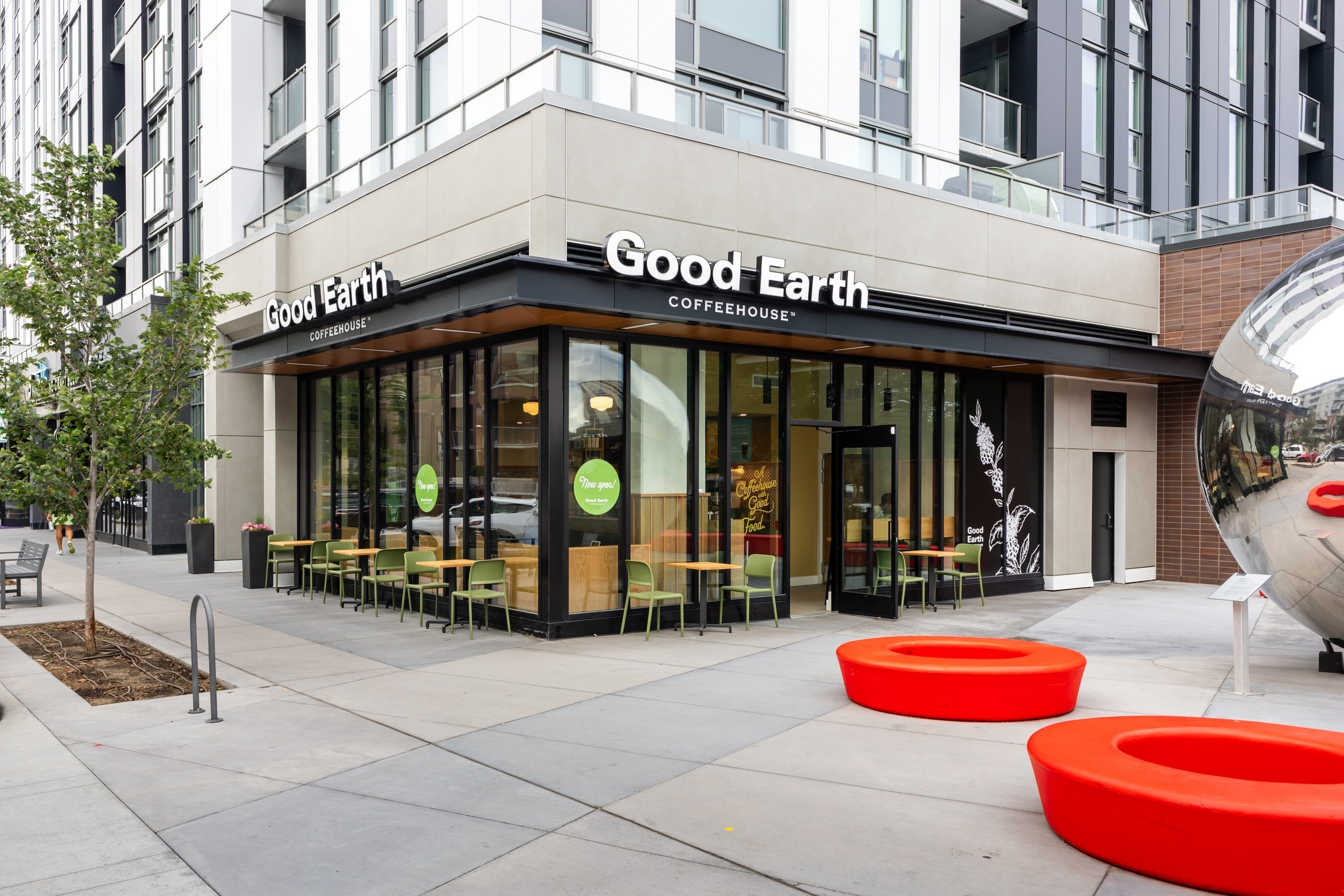
Good Earth Coffeehouse, Calgary AB (CNW Group/Good Earth Coffeehouse)
Calgary-based Good Earth Cafes Ltd. plans to expand its presence across Canada by acquiring former Starbucks locations left vacant after recent closures by the international coffee chain.
The company says the move presents an opportunity to bring its community-oriented coffeehouses to more neighbourhoods that may be left without a local café option.
Michael Going
“While some brands are shrinking and others are consolidating, we are stepping up to serve communities,” said Michael Going, founder and CEO of Good Earth Cafes Ltd. “We believe the human interaction that takes place in our coffeehouses is valuable – as valuable as the ethically sourced coffee and fresh food we serve.”
To support the expansion, Good Earth has enlisted Doug Basarovich of Greenwood Realty, Stan Boniferro and Michael Kehoe of Fairfield Commercial Real Estate, and Warren Smagaren of Warren E Smagaren Consulting. The team will work with landlords and developers to identify suitable sites for conversion to Good Earth Coffeehouses.
The company said it will focus on potential locations in Toronto, southwestern Ontario, the Lower Mainland of British Columbia and Halifax. These sites, according to Good Earth, will create new growth opportunities for the company and its franchise partners.
Gerry Docherty
“This unique opportunity in a competitive landscape offers excellent partnership possibilities for investors looking for multi-unit franchises and for single-unit owner operators alike,” said Gerry Docherty, president and COO of Good Earth Cafes Ltd.
Good Earth Coffeehouse emphasizes ethically sourced coffee, fresh food, and an inviting café environment. The company states it is committed to fostering community interaction and environmental responsibility, and aims to attract customers, landlords and franchisees who share those values.
Good Earth was founded in 1991 and currently operates more than 50 locations nationwide.
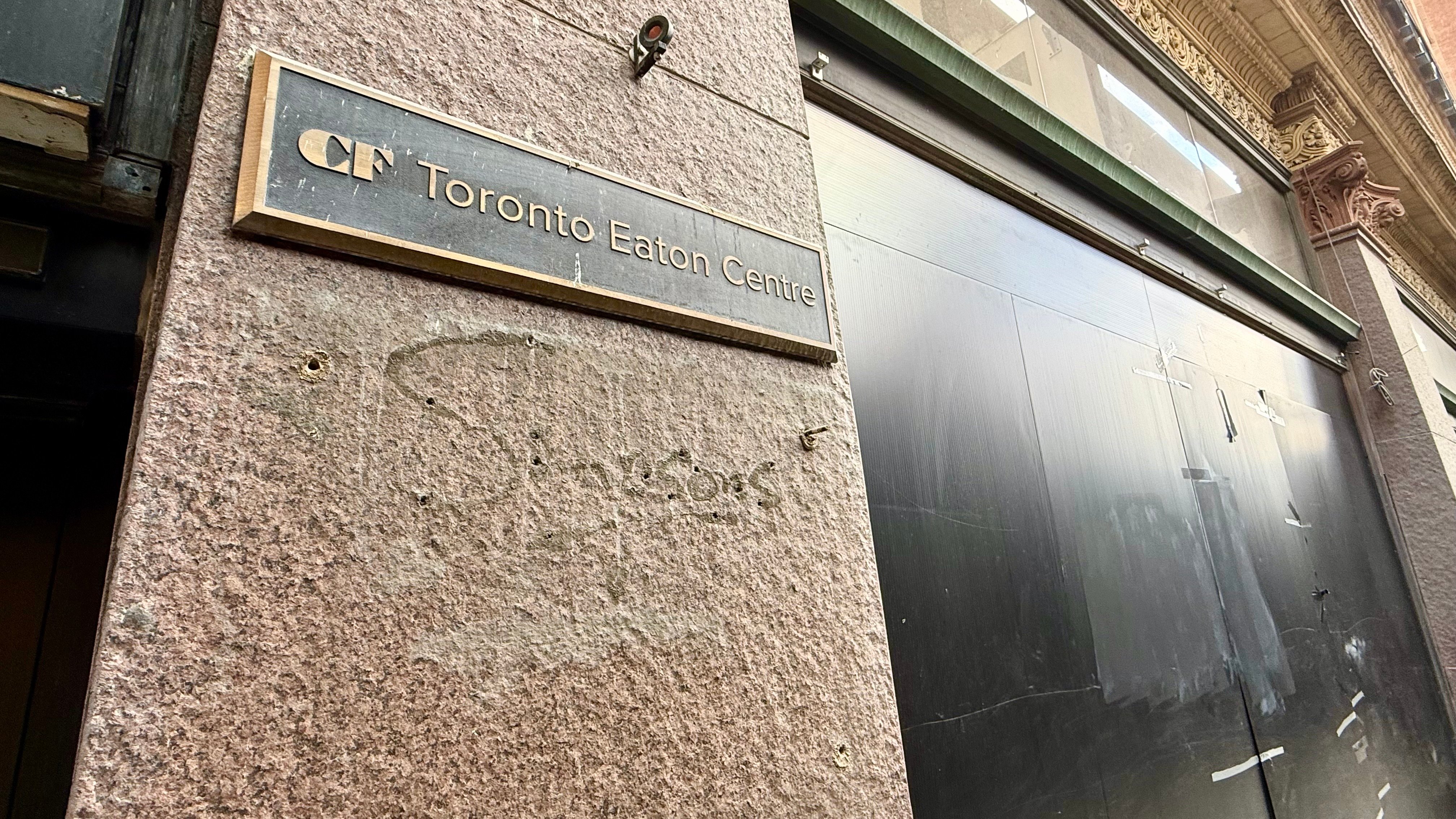
Historical Simpsons branding revealed on the former Hudson's Bay building at 176 Yonge Street, October 12, 2025. The building was occupied by Simpsons from the late 1800s to 1991. Photo: Craig Patterson
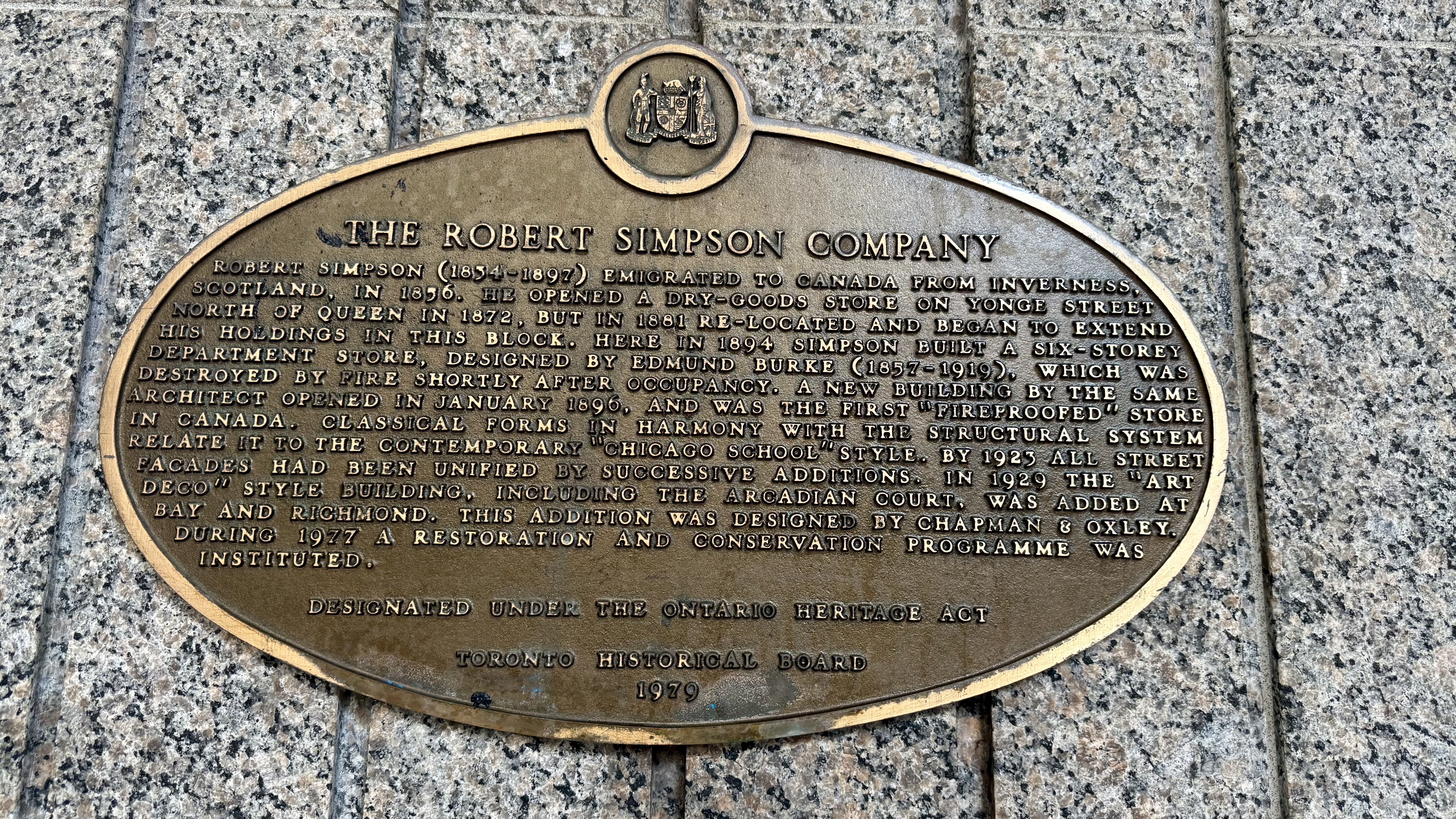
Landlord Cadillac Fairview has begun removing signage from the former Hudson’s Bay store at 176 Yonge Street, revealing a striking piece of Toronto’s retail history. On the Queen Street façade, the word “Simpsons” is once again visible. It’s a reminder of the building’s past as the flagship of the Robert Simpson Company, one of Canada’s most storied department store chains.
The massive retail complex, spanning nearly one million square feet, has remained dark since the Hudson’s Bay Company shuttered its stores nationwide on June 1. While Cadillac Fairview has not announced future plans for the site, the re-emergence of the Simpsons name has reignited public nostalgia and speculation about the building’s next chapter.
According to one source, the Ontario Legislature had briefly considered using the site as a temporary home during the decade-long Queen’s Park renovation period, but the idea has since been ruled out. For now, the property remains empty, its legacy resting in the layers of history behind its walls.
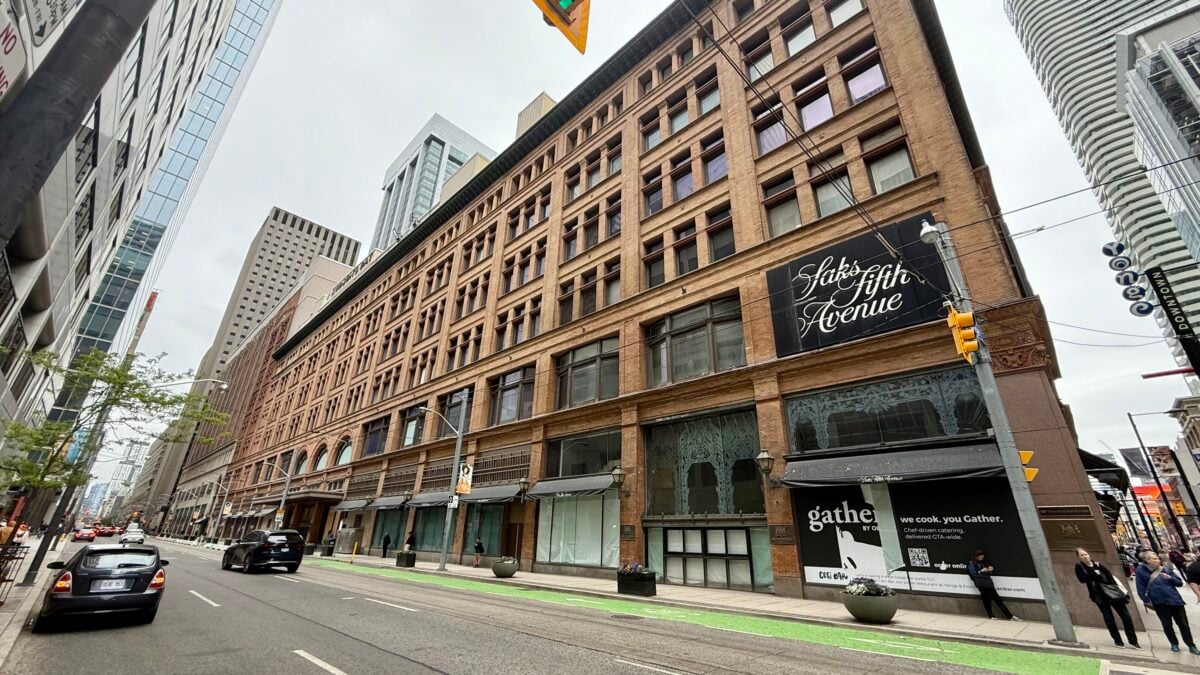
Saks Fifth Avenue in the Hudson’s Bay Queen Street building, May 2025. Photo: Craig Patterson
From Dry Goods to Department Store Giant
The Simpsons Queen Street store traces its roots to 1858, when Scottish immigrant Robert Simpson opened a small dry goods shop in Newmarket, Ontario. In 1872, he moved the business to Toronto, setting the stage for what would become one of Canada’s most important retail institutions.
By 1881, Simpsons had settled at the southwest corner of Queen and Yonge Streets, a location that would grow to occupy an entire city block. The company became a direct rival to Eaton’s, located just across Queen Street, as both department store empires vied for the attention of Toronto’s growing urban population.
Simpsons introduced many innovations that defined early Canadian retail, including the “one-price-only” policy and seasonal sales events that attracted shoppers from across Ontario.
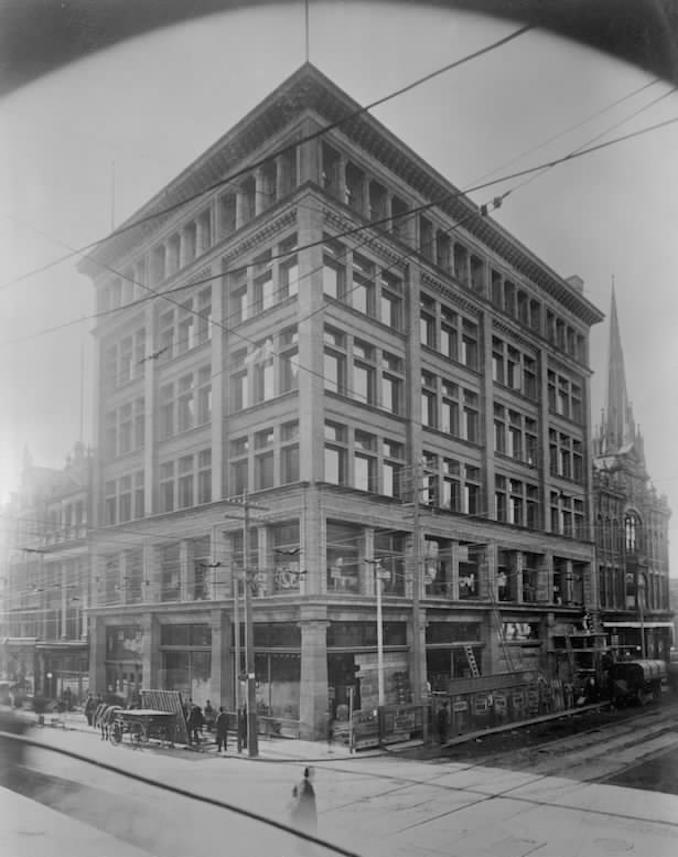
Robert Simpson Company Building at Yonge and Queen streets, 1895. photo credit Toronto Public Library
Architectural Innovation and Fire Recovery
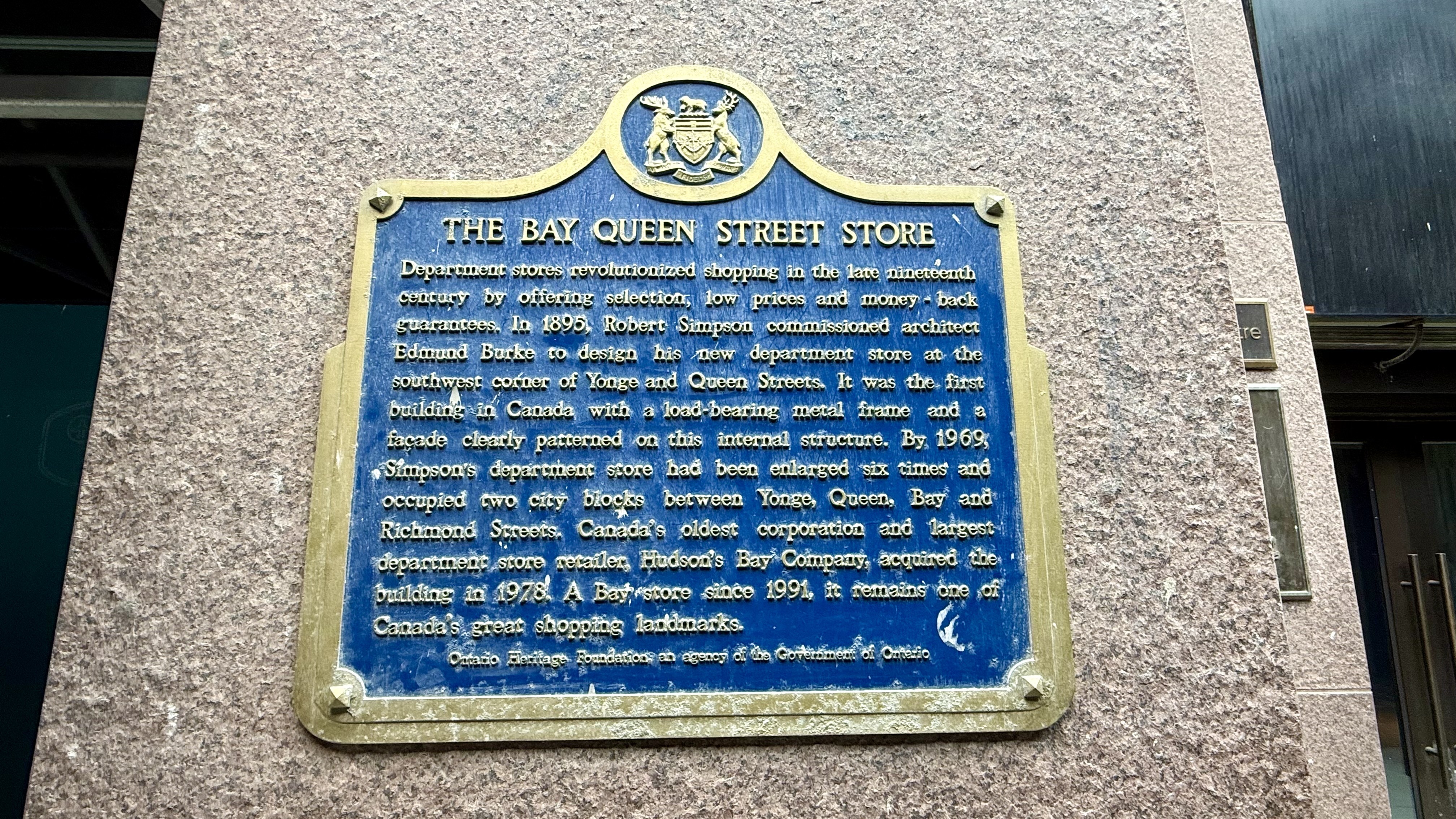
In 1894, Robert Simpson commissioned architect Edmund Burke to design a new six-storey steel-frame department store at the Queen Street site, the first of its kind in Canada. However, a devastating fire in March 1895 destroyed the building only months after its completion.
Undeterred, Simpsons rebuilt almost immediately. By 1896, a grand new structure rose on the site, complete with fireproof construction and ornate architectural details. The building soon became a Toronto landmark and a symbol of modern retailing.
Further expansions through the early 20th century saw the store stretch west to Bay Street, culminating in the 1929 art deco addition that introduced the iconic Arcadian Court, a ballroom and restaurant that would become synonymous with Toronto’s social life.
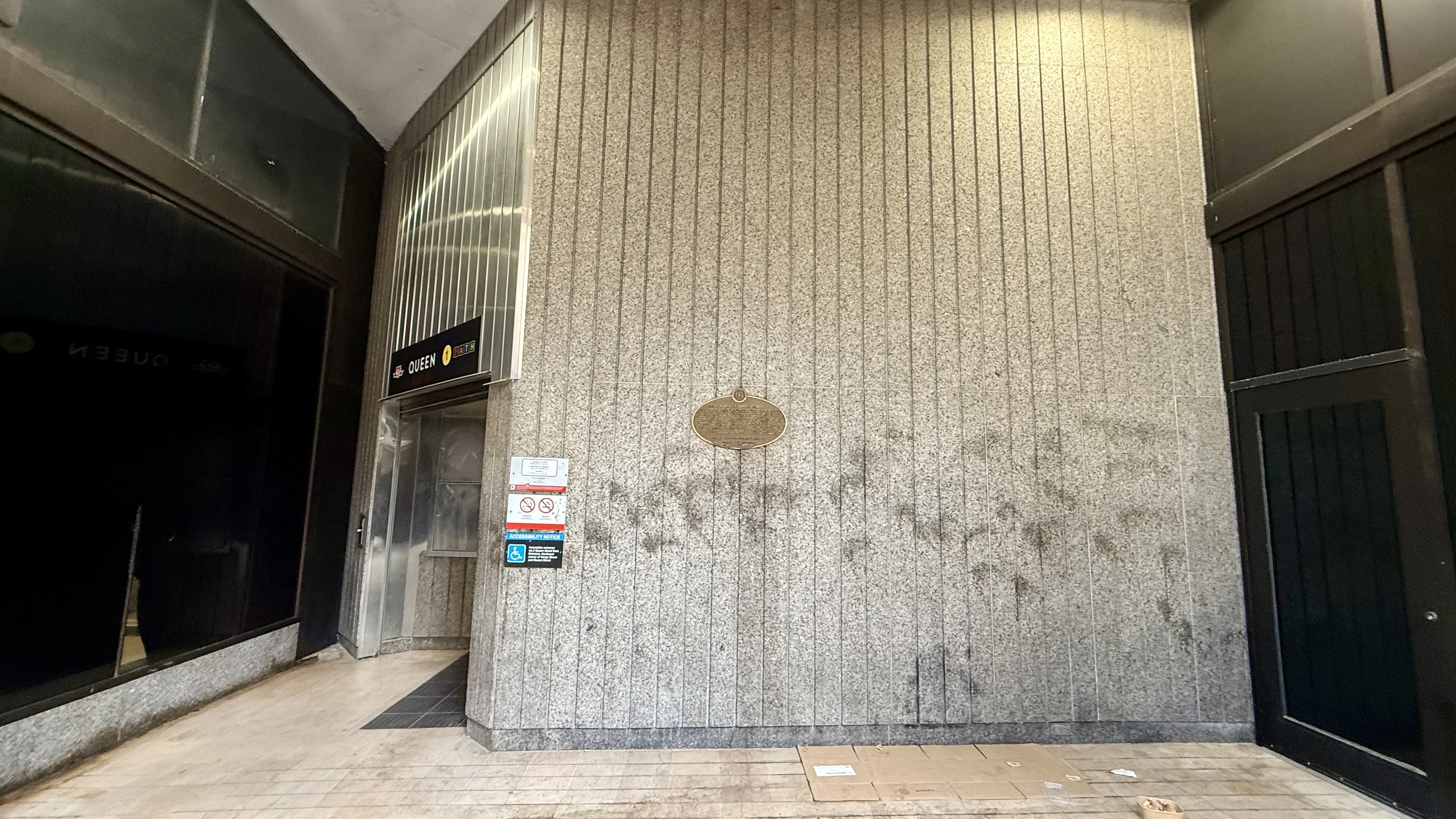
Historical plaque on the former Hudson’s Bay building at 176 Yonge Street, October 12, 2025. The building was occupied by Simpsons from the late 1800s to 1991. Photo: Craig Patterson Subway entrance with historical plaque on the former Hudson’s Bay building at 176 Yonge Street, October 12, 2025. The building was occupied by Simpsons from the late 1800s to 1991. Photo: Craig Patterson
The Simpsons Legacy and “Miracle on Queen Street”
By the mid-20th century, Simpsons Queen Street Toronto was one of the largest and most prestigious department stores in Canada, and also among its top-selling. Its marble floors, brass fittings, and lavish window displays reflected an era when department stores were temples of urban sophistication.
In 1968, Simpsons constructed the adjoining 33-storey Simpson Tower, cementing its status as a business and retail hub. The store’s reputation for excellence continued through the 1970s, even as consumer habits began to shift.
Facing increased competition, Simpsons launched the “Miracle on Queen Street” renovation in 1989, a $30 million modernization project aimed at revitalizing the flagship. The redevelopment expanded the store to nearly one million square feet across ten levels and introduced the world’s largest cosmetics department, along with a gourmet food hall in the basement.
While the transformation was ambitious, the merger of Simpsons and Hudson’s Bay Company in 1989 soon overshadowed it. By 1991, the Simpsons name was officially retired as the building was rebranded Hudson’s Bay, ending more than a century of continuous operation under the Simpsons banner.
Hudson’s Bay, Queen Street, Toronto, 2017 – Photo by Hudson’s Bay
Transition to Hudson’s Bay and Modern Revitalization
The rebranding in 1991 marked a new era for the building. Hudson’s Bay transformed the space into its national flagship, continuing the store’s tradition of elaborate holiday windows and major retail events.
In 2014, Hudson’s Bay sold the Queen Street property to Cadillac Fairview through a sale-leaseback arrangement, formally linking it to the CF Toronto Eaton Centre. Two years later, the eastern portion of the building was converted into a Saks Fifth Avenue, while Hudson’s Bay continued to operate on the western side.
The basement became home to the Saks Food Hall by Pusateri’s, followed by the introduction of a Zellers pop-up in 2023 as part of HBC’s discount brand revival. These moves reflected the company’s ongoing attempts to modernize its retail offerings and adapt to changing shopping habits.
Historical plaque on the former Hudson’s Bay building at 176 Yonge Street, October 12, 2025. The building was occupied by Simpsons from the late 1800s to 1991. Photo: Craig Patterson
Bonnie Brooks and The Room Revival
One of the most celebrated chapters of the Queen Street store came under the leadership of Bonnie Brooks, who became President and CEO of Hudson’s Bay in 2008. Brooks spearheaded a multi-year revitalization of the flagship, blending its historical charm with contemporary design.
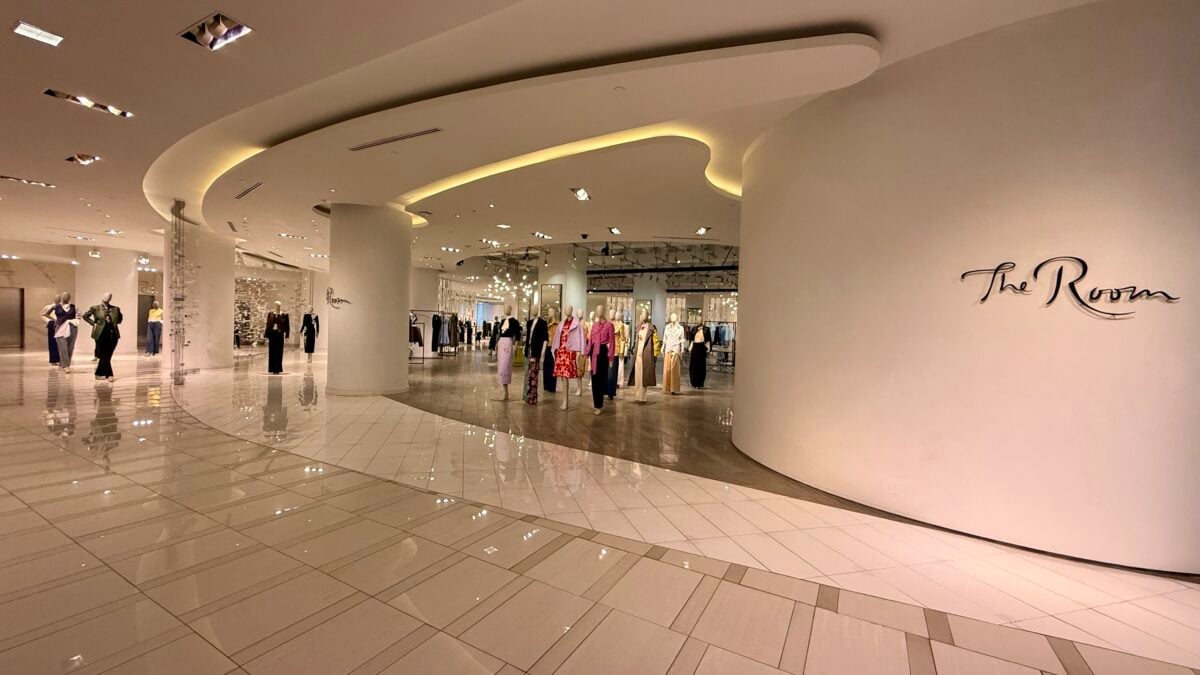
Under her direction, the Arcadian Court was restored to its 1929 grandeur and reopened as an event and dining venue in partnership with Oliver & Bonacini. She also worked with acclaimed design firm Yabu Pushelberg to reimagine key retail spaces, notably The Room, a luxury fashion department featuring designers such as Balmain, Erdem, and Thom Browne.
Brooks’ modernization strategy brought new life to Hudson’s Bay, drawing international attention and positioning the Queen Street store as a hub for high fashion. Her initiatives included the launch of Kleinfeld Bridal, collaborations with Topshop, and high-profile promotional events that reinvigorated the brand.
The Room women’s luxury department at Hudson’s Bay Queen Street in Toronto. Photo taken April 23, 2025 by Craig Patterson
Nicholas Mellamphy and the Expansion of The Room
Creative Director Nicholas Mellamphy played a defining role in elevating The Room into one of Canada’s most distinguished luxury fashion destinations. Between 2009 and 2016, working closely with Bonnie Brooks, Mellamphy transformed The Room at Hudson’s Bay Queen Street into a space recognized internationally for its curation and style.
Under Mellamphy’s leadership, the 21,500-square-foot space became synonymous with exclusive designer labels and creative vision. Through his extensive fashion industry connections, The Room introduced Toronto clients to international luxury brands such as Balmain, Proenza Schouler, Erdem, Giambattista Valli, and Thom Browne. High-profile events, designer appearances, and intimate fashion previews helped position The Room as a cultural hub for fashion insiders and enthusiasts alike.
In 2011, Hudson’s Bay expanded The Room concept to its Vancouver flagship, cementing the Queen Street location’s influence in shaping national retail trends.
In February 2024, HBC brought Mellamphy back as Creative Director at Large for The Room, marking a celebrated return that revitalized the storied department. He oversaw a renovation of the space, commissioning artist Peter Triantos to create striking contemporary artworks that redefined the atmosphere of the luxury floor. Mellamphy also introduced a new wave of designer brands, blending established names with emerging international talent to reassert The Room’s place in the global fashion conversation.
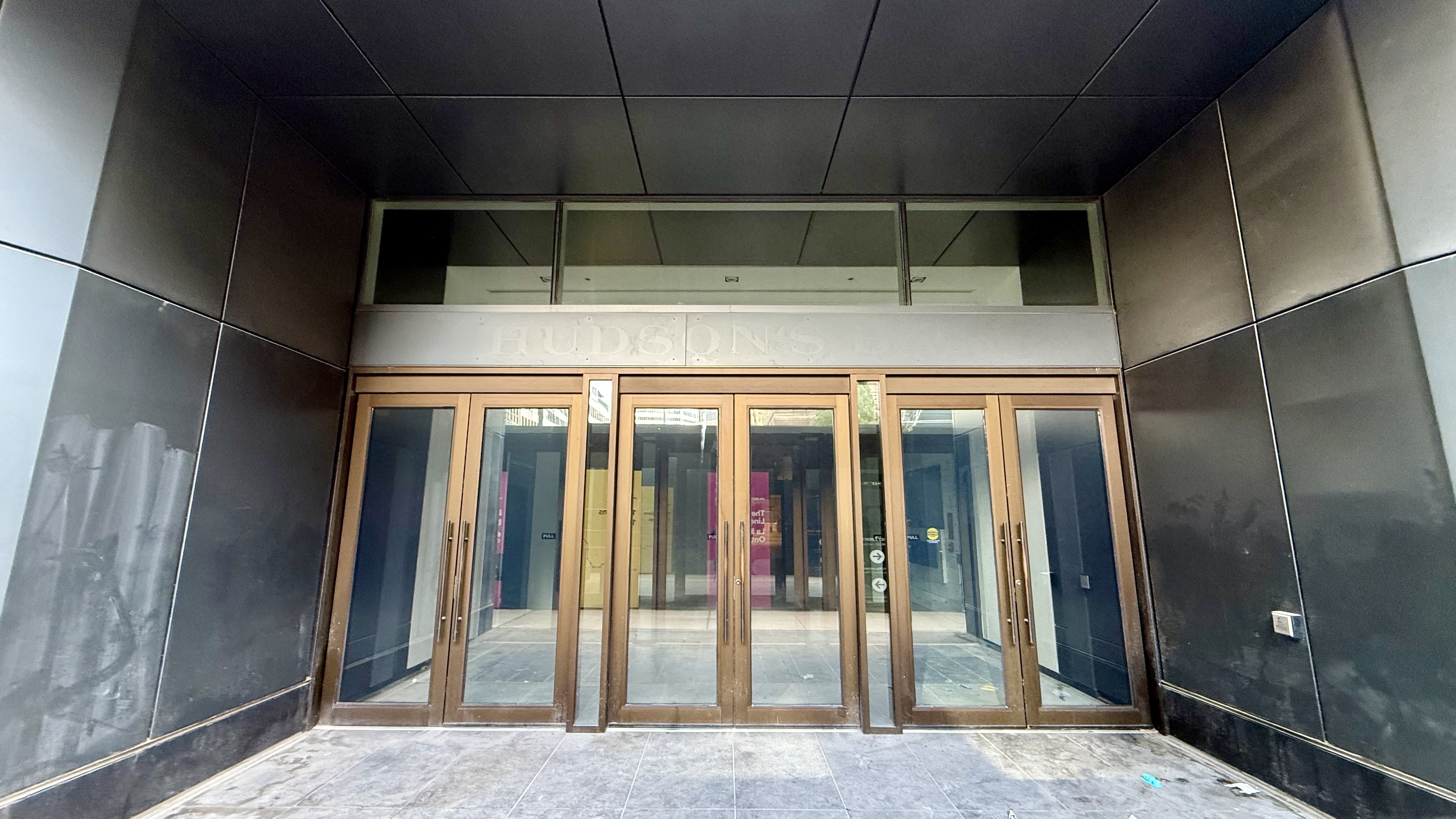
Doors leading from Queen Street into the Hudson’s Bay store in downtown Toronto, May 2025. Photo: Craig PattersonThe same Queen Street entrance to the building, without branding, October 12, 2025. Photo: Craig Patterson
A Cinematic Landmark: From Today’s Special to Short Circuit 2
The Simpsons Queen Street Toronto building also holds a special place in popular culture. For years, its distinctive interiors and iconic façades served as backdrops for television and film productions that captured the imagination of audiences in Canada and beyond.
One of the most beloved examples is the children’s television series Today’s Special, which aired on TVOntario from 1981 to 1987. The show was filmed largely on location within the former Simpsons department store, using its displays, staircases, and window sets as the basis for a magical world that came alive each night after closing time. The series, which starred Jeff the mannequin, Jodie the display designer, and Sam the night watchman, became a touchstone for a generation of Canadian children. Its whimsical portrayal of a department store after dark added to the building’s mythic aura, blending the magic of retail with the wonder of storytelling.
A 1983 episode of Today’s Special, the plot being the closure of the Queen Street Simpsons flagship store.
In 1988, the store once again stepped into the spotlight when it appeared in the Hollywood film Short Circuit 2, starring Fisher Stevens and the robot character Johnny 5. The production made extensive use of the store’s interiors, including escalators, display areas, and architectural details, showcasing the grandeur and scale of the Queen Street flagship. The film’s lively chase sequences through the aisles introduced the building’s art deco features to an international audience, immortalizing it as one of Toronto’s recognizable landmarks on screen.
Over the years, other productions have drawn inspiration from the building’s historic character and cinematic charm. Its combination of retail vibrancy and architectural drama made it a natural fit for both fictional storytelling and documentary exploration. As such, the Simpsons Queen Street Toronto store became not only a commercial institution but also a stage for cultural memory where shopping, imagination, and entertainment converged.
Johnny 5 the robot takes a tour of the main floor of Simpsons Queen Street in the 1988 opening of the movie ‘Short Circuit 2’. Included is a scene in the former Browns Shoes men’s concession that was on the second floor at the time.
The end of Simpsons: Hudson’s Bay Co. rebrands all Simpsons stores, ending the historic department store chain. Video from June 5, 1991
The Store’s Final Years and Closure
Despite its storied history and numerous revitalizations, Hudson’s Bay faced mounting financial pressures in the 2020s. The rise of online retail, coupled with declining department store traffic and neglect by owner Richard Baker, placed immense strain on its operations.
In March 2025, Hudson’s Bay filed for creditor protection under the Companies’ Creditors Arrangement Act, citing debt obligations exceeding $950 million. Plans to keep select flagship stores open ultimately proved unviable, and liquidation sales began on March 24, 2025.
By June 1, 2025, the Queen Street store, along with the rest of the chain, had permanently closed. The event marked the end of Hudson’s Bay’s 355-year run as a retailer, the longest in North America, and a significant loss for Canada’s retail heritage. Over 8,000 employees were affected nationwide, with hundreds tied to the Queen Street flagship.
Circle K will hold its first-ever Hero Day on Oct. 16 with all gross proceeds from specific product sales at its Ontario locations going to children’s hospitals across the province.
Participating products include 500 ml Circle K Water, 460 ml Bfit, 225 g GCMC 4 Mini Pepperoni Sticks, and 46 g Reese’s Singles.
Steve Pitts
“Hero Day is a fantastic opportunity for our customers to join us in supporting the incredible work of Ontario’s children’s hospitals,” said Steve Pitts, Vice-President of Operations for Central Canada Division at Circle K Canada. “By simply purchasing a participating item, customers become heroes for children, helping to fund critical research, compassionate care, and innovative treatments that shape the future of pediatric health.”
Pitts added that community involvement is a key part of the company’s mission.
“At Circle K, we believe in being a good neighbour and making a positive impact in the communities we serve,” he said.
Hero Day signage will be displayed in participating stores, and customers can locate their nearest participating location by visiting www.circlek.com/ca/ontario/store-locator.
The convenience store chain is a subsidiary of Alimentation Couche-Tard Inc., which operates nearly 17,300 stores across 29 countries and territories, including approximately 13,200 locations offering road transportation fuel.
Circle K Launches “Hero Day” on October 16th to Support Ontario Children’s Hospitals (CNW Group/Circle K Canada)
There has been a modest improvement in household finances in Canada, with 32% of Canadians reporting their household is worse off this year, compared to 36% last year. Despite this progress, economic concerns remain high. Reflecting this cautious outlook, holiday spending is projected to rise by a modest 3%, according to a report by Deloitte.
The report Holiday Retail Outlook: Wrapped in resilience: a season of smart spending found:
Canadians are shopping smart and spending wisely
Despite economic uncertainty, holiday spending is projected to rise by 3%. While spending on gifts and experiences will increase by 2% (+$18), consumers are cutting back in other discretionary categories (-8%, -$21).
However, economic concerns remain high: nearly half (46%) expect the economy to worsen next year, up from 36% last year. Concerns about a potential recession have also increased (70% vs. 63% last year), and 80% are worried about the impact of tariffs on the Canadian economy.
Value and brand loyalty are driving gift choices
Consumers are shopping earlier and across multiple channels to maximize value, with 20% starting holiday shopping in October (up from 15% last year) and 1 in 2 planning to shop October promotions and Black Friday.
Although most (73%) prefer to support local and Canadian businesses this holiday season, many still choose to shop their favourite retailers and brands for gifts, including Amazon (70%), other mass merchants (68%), and warehouse clubs (49%).
Deal-seeking behaviours may be driven by inflation concerns: 70% of consumers expecting higher prices this year (up from 65% last year), making it a leading factor influencing spending behaviour. This could be contributing to why 8 in 10 shoppers are actively seeking the best deals, and nearly half (52%) choose private label products whenever possible.
Photo: Max Fischer
More shoppers are turning to AI for holiday inspiration
Interest and engagement with AI is increasing: 63% of Canadians are familiar with AI, 27% are excited about its potential, and 50% have used AI in the past three months (up from 33% last year).
Gen Z Canadians are almost three times more likely to have used it recently than Baby Boomers (64% vs. 24%). 1 in 3 (33%) Gen Z Canadians use AI for product research compared to only 9% of Baby Boomers.
Overall, 1 in 4 believe retailers should use AI to assist with customer service or provide personalized product information.
Despite this growing adoption, 63% still express concerns and only 17% trust the technology—largely consistent year-over-year. The rise of AI may bring data privacy and security concerns to the forefront: 7 in 10 are worried about sharing their personal information with retailers
Shaunna Conway
“As the 2025 holiday season approaches, Canadian consumers are demonstrating a careful balance between economic caution and a slight improvement in personal financial confidence. While economic uncertainty remains a significant concern, many households are managing their budgets more strategically, spreading holiday spending over several months and capitalizing on early promotions,” said Shaunna Conway, Partner and National Retail Leader at Deloitte Canada.
“Notably, half of Canadians plan to shop during retailer October Promotions and Black Friday, reflecting a shift toward earlier and more deliberate holiday purchasing. Despite a projected 3% increase in overall holiday spending, this growth is concentrated in gifts and experiences, which are up 2% from last year. At the same time, Canadians are pulling back on non-essential and discretionary purchases, which have declined by 8%.
“This selective approach underscores a continued focus on value, with consumers actively seeking deals, leveraging loyalty programs, and opting for private label products to stretch their holiday budgets.”
Compared to last year, several significant shifts are shaping the Canadian holiday shopping landscape, said Conway.
Rising Use of AI and Digital Tools: Younger shoppers, in particular, are embracing AI-powered platforms and social media for product research and inspiration. Familiarity with AI has grown to 63%, and half of Canadians have used AI in the past three months, up from 33% last year.
Earlier Shopping: The trend toward earlier holiday shopping continues, with 20% of Canadians starting in October, up from 15% last year.
Focus on Experiences and Self-Indulgence: There is a growing preference for experiential gifts and self-care, especially among Gen Z and Millennials. Over half of Gen Z shoppers plan to treat themselves this season, compared to a third of Baby Boomers.
“Value remains the dominant factor influencing holiday purchases. While 73% of Canadians express a preference for supporting local and Canadian businesses, many still gravitate toward major retailers and brands such as Amazon (70%), mass merchants (68%), and warehouse clubs (49%). Inflation may be a key driver, with 70% of consumers expecting higher prices this year. This has led to 8 in 10 shoppers actively seeking the best deals and nearly half (52%) choosing private label products whenever possible,” explained Conway.
She said AI and technology are playing an increasingly prominent role in shaping both the shopping journey and retailer strategies: Nearly half of consumers find holiday shopping stressful, and 60% believe it is easier online. Gen Z and Millennials are expected to spend nearly half of their holiday budgets online, while the overall online share remains steady at 42%.
“Even with the rise of AI and digital tools, physical stores continue to play a vital role. By creating engaging in-store experiences or offering exclusive deals available only in-store, retailers can draw customers into their physical locations during the holiday season,” said Conway.
Photo: Tim Douglas
Younger generations are leading the way in AI adoption, with 64% of Gen Z and 69% of Millennials having used AI in the past three months. Gen Z is three times more likely than Baby Boomers to use AI for product research (33% of Gen Z plan to use AI to research products and gifts this holiday season, compared to 9% of Baby Boomers).
“As consumers shift toward AI-powered discovery and social media, retailers should optimize their digital strategies, invest in AI-driven search and chatbots, and maintain a strong online presence. However, real value will come from focusing on high-impact use cases aligned with business needs—not just adopting AI for its own sake,” added Conway.
She said regional trends reveal notable differences in holiday spending and attitudes across the country. The projected holiday spending by region:
National $1,521, +3%
West $1,700, +9%
Ontario $1,613, +1%
Quebec $1,179, -5%
Atlantic $1,313, +9%
Conway said Quebec stands out for its lower planned spending.Residents are more concerned about the economic outlook (52% expect the economy to weaken vs. 46% average) but report less financial stress and lower digital adoption, with only 46% having used AI tools recently (vs. 50% average). Atlantic Canada is the most financially strained, with 43% indicating their household financial situation is worse this year (vs. 32% average). This may drive why Atlantic Canadians are also the most deal-focused, with 75% seeking sale items (vs. 66% average).
Ontario and the West lead in holiday spending, with Ontario showing heightened concern about a potential recession (74% vs. 70% average). The West is at the forefront of AI awareness and usage, with 69% understanding AI (vs. 63% average) and 53% having used it in the past three months (vs. 50% average), noted Conway.
MTY Food Group Inc., one of the largest franchisors and operators of multiple restaurant concepts worldwide, has reported third-quarter financial results for fiscal 2025, ended August 31, showing a decline in net income despite growth in normalized adjusted EBITDA and net store openings.
At the end of the third quarter of 2025, MTY’s network had 7,061 locations in operation, of which 6,805 were franchised or under operator agreements and 256 were corporate-owned. The geographical split among MTY’s locations remained stable year-over-year at 58% in the US, 35% in Canada and 7% International.
During the third quarter of 2025, MTY’s network opened 96 locations (Q3 2024 – 67 locations) and closed 81 others (Q3 2024 – 108 locations) for a net positive store growth of 15 locations.
Company revenue increased by 1% to reach $297.0 million in the third quarter, driven by growth in the processing, distribution and retail segment, partially offset by a decline in the franchise and corporate segments, MTY explained.
“Net income attributable to owners totaled $27.9 million, or $1.22 per share ($1.22 per diluted share), in the third quarter compared to $34.9 million, or $1.46 per share ($1.46 per diluted share), for the same period in 2024. The year-over-year decrease can mainly be attributed to impairment losses of $6.2 million on its intangible assets related to the franchise rights and trademarks for one brand in the US & International geographical segment and 3 brands in the Canadian segment,” said the company.
“Normalized adjusted EBITDA, which excludes acquisition-related expenses and SAP project implementation costs, increased by $2.1 million year-over-year to reach $74.0 million in the third quarter of 2025 primarily due primarily to the recognition of a $5.8 million Employee Retention Credit received (ERC) from the U.S. government during the quarter. Excluding the ERC, normalized adjusted EBITDA would have reflected a modest year-over-year decline.”
System sales reached $1.46 billion in the third quarter of 2025, representing a modest year-over-year decrease. The US segment experienced an overall sales decrease of 2%, due to a decline in same store sales, slightly offset by the positive impact of foreign exchange rates while Canada was largely flat compared to prior year, said the company.
Same-store sales decreased 1.6% year-over-year in the third quarter. By region, Canada fell by 0.3%, the US dropped 2.5%, while International saw an increase of 0.8%, it said.
Digital sales increased by 1% for the quarter to reach $273.4 million compared to $270.7 million in Q3-24 mainly due to an improvement of 8% in the Canadian segment, it added.
Normalized adjusted EBITDA increased 3 per cent year-over-year to $74.0 million, which includes a $5.8 million Employee Retention Credit from the U.S. government. Excluding the credit, the metric would have reflected a slight decline.
Eric Lefebvre
“While Q3 reflected ongoing macroeconomic volatility, we are encouraged by the sequential improvement at some of our larger banners, including Cold Stone Creamery and Wetzel’s Pretzels,” said Eric Lefebvre, CEO of MTY. “These results support our confidence in the resilience of our brands, and we remain focused on executing initiatives that will strengthen our position as conditions improve.”
“Positive net store openings this quarter demonstrate the demand for our leading concepts and the outstanding execution of our teams. These new locations reinforce our brand strength and position us for continued financial growth.
“I also want to acknowledge our teams’ dedication in successfully implementing the ERP system across Canada, with the U.S. rollout underway and well on track. These results support our confidence in the resilience of our brands, and we remain focused on executing initiatives that will strengthen our position as conditions improve.”
MTY said it continues to navigate a dynamic operating environment.
“Third-quarter performance showed a sequential improvement at MTY’s larger banners. That said, macro-economic conditions continue to create short-term headwinds and the Company continues actively implementing a range of strategic initiatives to position the business for growth once the environment improves. These include, and are not limited to, driving menu innovation, maintaining product quality and consistency, enhancing both online and in-store customer experiences, and reinforcing a strong value proposition across its banners,” it said.
“The pipeline of future locations remains strong. This quarter’s positive net openings was in line with expectations. MTY continues to anticipate an improvement in the pace of openings in the coming quarters and continues to see strong demand for its brands, especially the larger ones.”
MTY said it has only seen modest direct impacts from tariffs. In both Canada and the US, the company primarily sources products domestically, which helps limit the potential exposure. Management remains confident in its ability to navigate potential impacts through its strong supply chain and procurement capabilities, strategic menu adjustments, and, when necessary, pricing actions, it said.
MTY Group franchises and operates quick-service, fast casual and casual dining restaurants over 80 different banners in Canada, the US and Internationally. Based in Montreal, MTY has 7,061 locations.
Richelieu Hardware Ltd. reported consolidated sales of $499.2 million for the third quarter ended Aug. 31, a 6.7 per cent increase over the same period last year, driven by internal growth and recent acquisitions.
The company said internal growth accounted for 4.1 per cent of the increase, while acquisitions contributed 2.6 per cent. Net earnings attributable to shareholders were $23.9 million, or $0.43 per diluted share, up 4.9 per cent from the third quarter of 2024.
“The solid performance of all of our market segments in the United States and in all regions of Canada, with the exception of Ontario, resulted in sales growth of 6.7 per cent in the third quarter,” said Richard Lord, president and chief executive officer of Richelieu.
“Our sales increased by 6.5 per cent in the manufacturers’ market to reach $442.5 million and they rose by 8.6 per cent in the retailers’ market to $56.7 million.”
Following the end of the quarter, Richelieu completed two acquisitions — Ideal Security and Finmac Lumber — adding $22 million in projected annual sales.
“The acquisition of Ideal Security, a Canadian distributor of door and window products mainly for the retailers’ market, enables us to increase our sales and broaden our offering in Canada and in the United States,” said Lord. “As for the acquisition of Finmac Lumber, it strengthens our presence in Manitoba and allows us to complete our product lines in this market.”
Lord added the company continues to execute on its disciplined growth strategy and expects to close out the fiscal year with strong results.
For the quarter, EBITDA reached $57 million, an increase of $4.1 million or 7.7 per cent year-over-year. The EBITDA margin was 11.4 per cent, compared to 11.3 per cent for the same period in 2024. Net earnings were $25.6 million, up 6.7 per cent year-over-year.
“I am also proud to highlight that our operations generated $82.7 million in cash flow during the quarter, including a $16 million reduction in inventories, generating a positive cash position,” said Lord. “This reflects the strength of our financial position and an exceptional balance sheet.”
He added: “Despite uncertainties related to tariffs, our business model remains strong: it enables us to protect our margins, stay competitive, and respond with agility to our customers’ needs.”
In the first nine months of fiscal 2025, Richelieu posted sales of $1.45 billion, up 7.2 per cent compared to the same period in 2024. EBITDA for the nine months totalled $154.7 million, while net earnings attributable to shareholders were $60.3 million, or $1.08 per diluted share.
Cash flows from operating activities reached $133.6 million in the first nine months, compared to $106.4 million in the same period of 2024.
Since the beginning of 2025, Richelieu has completed eight acquisitions — six in the first half of the year and two after the third quarter — representing more than $75 million in additional annual sales.
The company’s board of directors approved a quarterly dividend of $0.1533 per share, payable Nov. 6, 2025, to shareholders of record as of Oct. 23, 2025. The dividend is designated as an eligible dividend under the Income Tax Act of Canada.
Richelieu, a TSX-listed company, operates 117 centres across North America and serves more than 120,000 customers in the specialty hardware market.
China rarely telegraphs its diplomatic intentions so openly. Yet, in recent days, Beijing has done just that — signalling that if Canada were to lift its tariffs on Chinese electric vehicles, China would, in turn, remove the punitive tariffs it has placed on Canadian agricultural exports such as canola. In the often-opaque world of trade diplomacy, such clarity is unusual. And in this case, it’s an unmistakable invitation to de-escalate.
So far, Ottawa seems unwilling to take it.
This trade conflict began not in the fields of Saskatchewan or the ports of Vancouver, but in the politics of the global auto industry. In July, Canada joined the United States and the European Union in imposing 100 percent tariffs on Chinese electric vehicles, citing concerns over industrial overcapacity, state subsidies, and unfair competition. It was, in essence, an act of solidarity — a symbolic gesture to align with Western allies rather than a measure grounded in Canada’s domestic economic reality.
After all, Chinese-made EVs make up less than 2 percent of vehicle sales in Canada. There was no surge threatening Canadian automakers. The tariff served a diplomatic purpose, not an industrial one.
Beijing’s response, however, has been deeply economic — and devastating. In March, China retaliated by imposing 100 percent tariffs on canola oil, canola meal, and peas, along with 25 percent tariffs on pork and seafood. Then, in August, it escalated further by slapping a 75.8 percent anti-dumping duty on Canadian canola seed — effectively closing the door on one of Canada’s most important export markets.
The financial fallout has been severe. Within two weeks of the August announcement, Canadian farmers were estimated to have lost $140 million. Canola futures dropped roughly $40 per tonne, and the Canola Council of Canada projects total damages could reach $1.5 billion this year alone.
Before this dispute, China purchased over $5 billion worth of Canadian canola products annually, accounting for nearly 40 percent of our total exports in that category. That trade has now all but vanished. Prairie producers are scrambling to redirect shipments to Japan, Mexico, and the United Arab Emirates — but at heavily discounted prices.
Meanwhile, the sector’s broader economics are already strained. In 2024, net cash income for Canadian farms fell by 15 percent, to $19.7 billion, while interest expenses surged almost 29 percent. Add tariffs that block billions in exports, and the math simply doesn’t work.
Ottawa has responded with limited support: higher AgriStability coverage (from 80 to 90 percent), expanded interest-free cash advances, and loan deferrals through Farm Credit Canada. These programs offer temporary liquidity but do not restore lost markets. They keep farmers afloat but don’t help them sell their crops.
Canada’s stance makes little sense. The country is defending a fledgling EV policy that protects virtually no domestic manufacturing base while undermining one of its most globally competitive sectors — agriculture. It is, frankly, a case of policy misalignment: protecting an industry that barely exists while punishing one that feeds the world.
And now, the way out is staring us in the face. China’s message, through its ambassador, is clear: remove your EV tariffs, and we will remove ours. For Beijing to make such a conditional offer publicly is extraordinary. In diplomatic language, that’s as close as one gets to a negotiated exit without a formal agreement.
By refusing to engage, Ottawa is not defending Canadian sovereignty — it is sacrificing Canadian prosperity. Every day this dispute drags on, farmers lose income, communities lose stability, and Canada loses credibility as a reliable trade partner.
The potential upside of a policy shift is enormous. Dropping the EV tariffs would cost Canada virtually nothing — the affected imports represent a rounding error in national trade data — but it could immediately reopen up to $5 billion in annual canola exports and relieve pressure on the broader agri-food sector.
Canada’s role in global trade has always been built on pragmatism, not ideology. Our competitive advantage lies in feeding the world, not in fighting symbolic battles over industries we don’t have.
Farmers don’t need political theatre. They need access to markets. Ottawa’s duty is not to make gestures, but to make sense.
China has made its position clear. Now it’s Canada’s turn to act — with reason, not rhetoric.
Retail Insider is streamlining its Canadian retail news from around the web to include a handful of top news stories that can be viewed quickly during the day. Here are the top stories from the past several days.
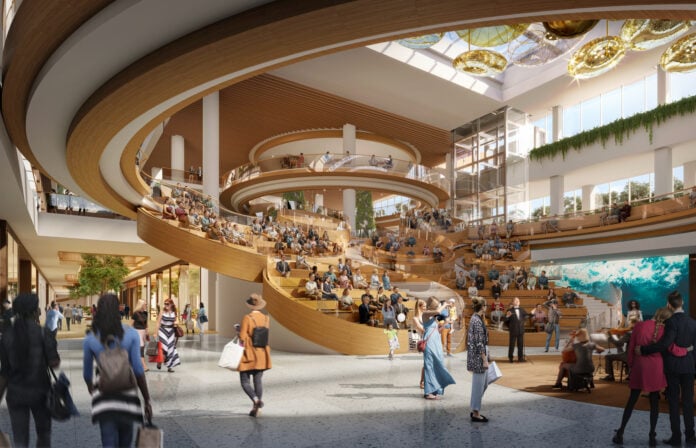
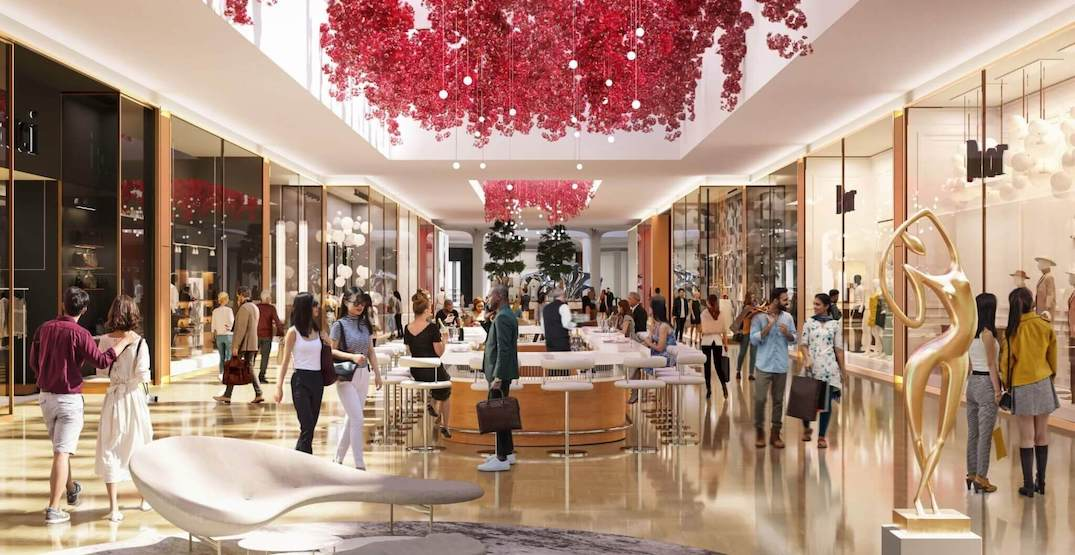
Oakridge Park north Atrium -- several luxury brands will operate flagships nearby. Rendering via QuadReal
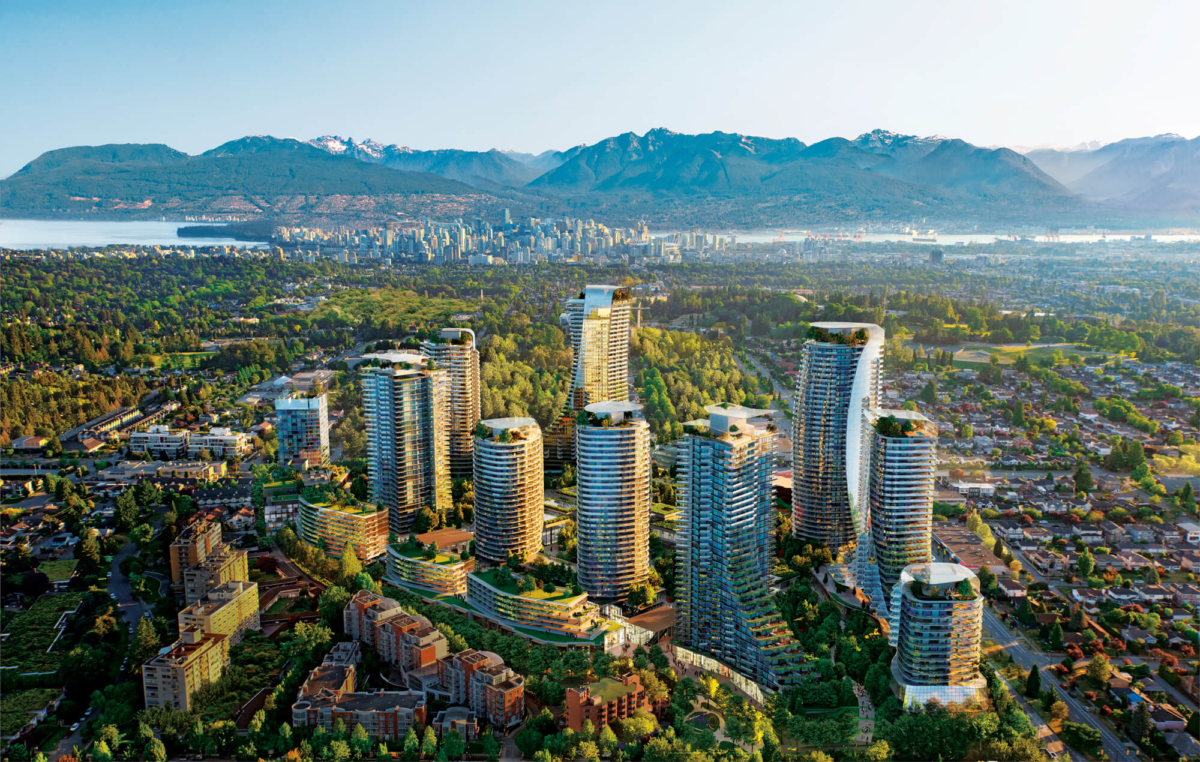
Oakridge Park is closing in on a milestone moment for Vancouver. The 28-acre redevelopment by QuadReal Property Group and Westbank is preparing to open its retail heart in spring 2026, introducing a concentration of global luxury, fashion, beauty, and lifestyle brands alongside a nine-acre park, civic amenities, public art, and the Time Out Market food hall. QuadReal’s Executive Vice President of Canadian Retail Experience, Chrystal Burns, and Oakridge Park Vice President of Marketing, Irene Quan, say the project is tracking to plan and built around a simple mandate: create a destination that feels as lived-in as a neighbourhood and as compelling as a global flagship district.
“It is a very busy place,” said Burns. “Construction is underway on about 70 of the hundred or so retailers.” She added that on the landlord side “we’ve finished all our flooring and our lighting and the public art is going up and we’re on schedule,” while noting the reality of large projects. “Development, you never know what can happen next, but we are absolutely tracking on schedule, making it happen no matter what.”
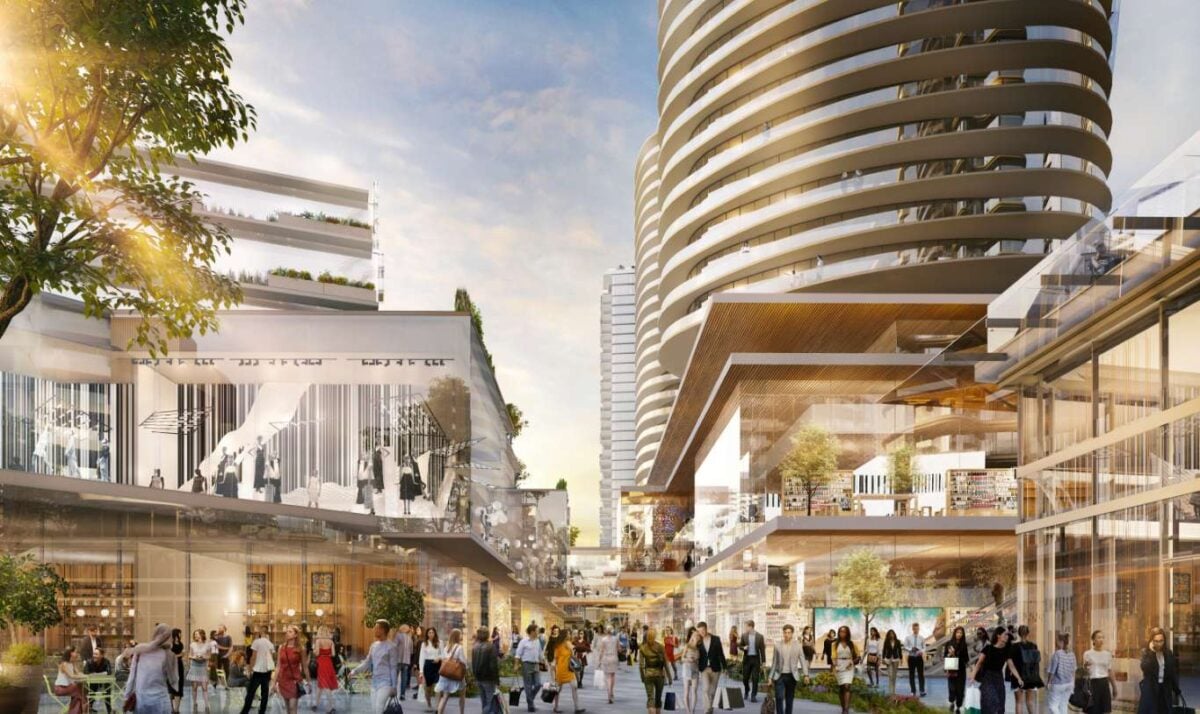
In a market already renowned for high-spending locals and a steady stream of Pacific Rim visitors, Oakridge Park Vancouver luxury retail is set to become a new anchor for the city’s premium shopping scene. The 650,000-square-foot retail centre will feature 100-plus brands, including a cluster of European fashion houses, watch and jewellery flagships, contemporary labels, and essential retailers that support a full-day experience.
Oakridge Park in Vancouver. Rendering: QuadReal
A Curated Luxury Lineup Arrives
QuadReal has confirmed a slate of high-profile additions for the opening season, including Loewe, Loro Piana, Valentino, Ferragamo, Dolce & Gabbana, Thom Browne, and Acne Studios. The mix is designed to balance the established with the new, and to introduce firsts to the city. “Oakridge Park is poised to redefine Vancouver’s luxury retail landscape with the arrival of these additional world-renowned brands,” said Burns. “As the city continues to attract global attention, this new development offers an unparalleled shopping experience that perfectly complements Vancouver’s vibrant culture.”
Burns elaborated on how specific houses fit the plan. “Valentino is an Italian luxury fashion house that blends timeless elegance with modern twists,” she said, noting the brand’s strong pull among trend-aware customers and long-time clients. “D&G is also an Italian luxury brand, unique for its designs that fuse modern luxury with Sicilian and Italian heritage.” Together, they help bookend dedicated luxury gallerias that will be layered with additional flagships already announced for the site.
Critically, curation at Oakridge has not been left to chance. “Curation is deliberate, but a bit like a 3D matrix puzzle that stretches over years and keeps adapting to real-time events,” said Burns. Leasing has involved direct engagement with global groups and careful staging of news to maintain community momentum. “The result is a tightly curated mix where space is limited so we can focus on best-in-class retailers.”
Rendering of Oakridge Park in Vancouver. Image: QuadReal
Contemporary, Beauty and Wellness Build Daily Relevance
A pure luxury node does not live on couture alone. Oakridge rounds out the day-to-day shopping journey with labels designed to drive frequency and dwell time. ALO, Sephora and Diptyque have been confirmed, along with Sporting Life, Veronica Beard, Sandro, Maje, Sisley Paris, and additional beauty and wellness concepts. “We’re creating a layered, full-service retail ecosystem,” said Burns. “Luxury anchors and first-to-market boutiques sit alongside contemporary lifestyle, beauty and wellness brands so Oakridge serves multiple daily needs and occasions.”
Several brands with deep roots at the former Oakridge Centre are returning as well. “The previous Oakridge Hugo Boss store was highly successful and unique in the marketplace,” Burns noted. Coach and Swarovski are also among the names slated to come back, a sign that the centre’s historic West Side audience remains engaged and ready to spend. As Burns put it in conversation, the former centre was “storied and established in terms of its demand,” with some of the country’s top jewellery sales and best-performing stores. The redevelopment aims to harness that built-in customer base while expanding the catchment with tourism and experiential programming.
Experiences That Teach, Delight and Convert
Ahead of opening, Oakridge Park has been seeding the market with activations that connect beauty, fashion and technology. The six-week Autumn Palette program, running October 16 to November 20 inside the Oakridge Park Gallery, draws together colour analysis, personalized styling, and an AI-enabled virtual fashion try-on that lets guests preview looks from announced brands, then walk into the centre’s boutiques to purchase.
Quan described the thinking: “The Autumn Palette activation was inspired by our core aim to celebrate culture in everyday life — beauty, art, and fashion. We wanted to empower our guests with practical tools, like colour analysis that helps people understand which colours flatter them, and an innovative, AI-enabled virtual fashion try-on that showcases our latest brands.” Guests receive a Dior lip product matched to their tone, a custom initial charm, and a fall lookbook curated by a Vancouver stylist. “We spark conversations about personal expression and fashion,” Quan said. “The programs welcome everyone, creating an inclusive platform for learning, storytelling, and cross-cultural exchange within the community, enhanced by the latest technology and trend-leading fashion and beauty.”
At an Autumn Palette event for residential buyers, the AI mirror drew a crowd. “It is an AI mirror that dresses you,” said Burns. “It takes a photograph of you, puts the clothes on you, and people are loving it.” Quan added that Oakridge’s team scouted the technology globally. “We research around the world,” she said. “You stand in front of the mirror and then they will try different kinds of clothes on you. We gather full collections of the brands we announced, put it in the AI mirror and people can try it on, and then they can go buy it.”
Oakridge Park. Image: Westbank
The Making of a Mixed-Use Cultural District
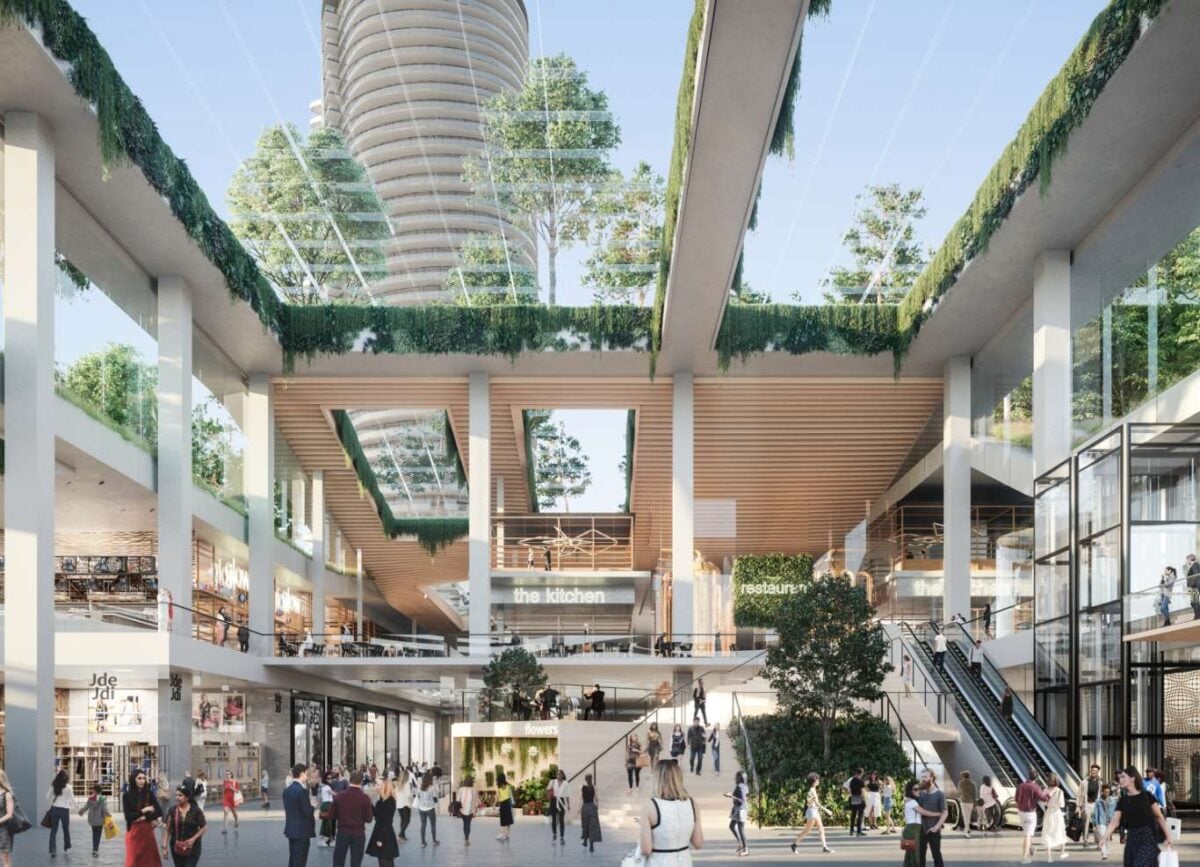
The scale of Oakridge Park is difficult to convey without touring the site. The retail precinct sits within a larger 28-acre plan that includes more than 3,000 residences, about 700,000 square feet of office space, one of Vancouver’s most significant community centres and the largest library on the city’s West Side, all stitched together by a nine-acre public park and a one-kilometre running loop. “It is like a city down there,” said Burns of the construction choreography. “With a loading loop and the arrival of millwork and different contractors and subcontractors under our prime contractor.” She described three levels of underground work spanning nearly the entire site and a complete rebuild “from scratch.”
Beyond the architecture, the program puts culture at the centre. “We have invested significantly in large pieces of public art in the park and in our north atrium,” Burns said. “They are beautiful pieces,” and the team is considering how to integrate art into opening plans and ongoing programming. It is part of a wider effort to make the place feel animated at all hours. “We want to do something cool and engaging,” she said. “That is what Irene’s job is, to create a whole experience that is deep and authentic to what Oakridge Park is.”
What might a typical day look like once the doors open next year? Burns paints a picture that begins with bike facilities, coffee and morning classes in the park, continues with Time Out Market lunches, wellness sessions and casual shopping, then shifts into live performances, gallery moments and dining. The intent is that Oakridge Park Vancouver luxury retail is one chapter in an all-day story, not a stand-alone trip.
Re-Merchandising and the Tenant Puzzle
One of the notable shifts since the redevelopment was announced is the re-merchandising of the large department store footprint that had been planned for the project. Burns acknowledged that the former box is being subdivided for multiple retailers, with news to come. “We are re-merchandising the former HBC space with a number of retailers,” she said, adding that announcements are expected in the new year.
The approach reflects Oakridge’s broader strategy: size stores thoughtfully, cluster categories for discovery, and emphasize new-format designs. “Our stores are unique and special,” Burns said. “We anticipate having the newest templates for our design stores. Some of them are the largest ones in Canada and North America.”
Oakridge Park in Vancouver. Rendering: QuadReal
Vancouver’s Global Moment
The opening arrives as Vancouver consolidates its position as one of Canada’s top two luxury markets, with an affluent local base and pent-up demand for new experiences. “By attracting international flagships and first-to-market standalone boutiques, and combining retail with major cultural and civic amenities, Oakridge raises Vancouver’s profile as a destination for luxury retail and experiential tourism,” said Burns. Proximity to the airport, the city’s Pacific Rim profile, and events such as next year’s FIFA matches amplify the reach. “We have a global, very ambitious PR plan,” said Quan. “When we open, that is one of our initiatives to reach globally, North America and Asia as well. We want to build a global culture and shopping destination.”
Importantly, the luxury cluster at Oakridge does not replace the downtown district. Rather, it gives Vancouver a second node that complements the city core, similar to patterns seen in other global markets where multiple high-end precincts coexist and cross-pollinate. The result should be deeper market coverage for fashion houses and watch and jewellery brands, plus broader assortment for local shoppers. That is part of why Oakridge Park Vancouver luxury retail matters nationally: it adds capacity to a market that has been under-stored at the very top end.
A Retail Program with Breadth and Depth
The confirmed roster spans European houses and contemporary labels as well as Canadian names that are synonymous with performance and design. Alongside the newly announced brands, the broader mix includes Alexander Wang, Arc’teryx, Aritzia, Brunello Cucinelli, Bvlgari, Canada Goose, Christian Louboutin, Harry Rosen, Jacob & Co., Louis Vuitton, Lululemon, Maison Margiela, Max Mara, Miu Miu, Moncler, Prada, Rolex, TAG Heuer, Tudor and Tiffany & Co., plus essential anchors such as Safeway and the BC Liquor Store. Time Out Market will bring together leading culinary talents under one roof, extending the visit into the evening.
Burns summed up the ambition simply. “We want to create an ecosystem for our community that is something special, unique, but also meets every need and want,” she said. The objective is a balance of haute couture, accessible luxury and everyday lifestyle, wrapped inside a cultural program that makes Oakridge a place to meet, linger and return to.