

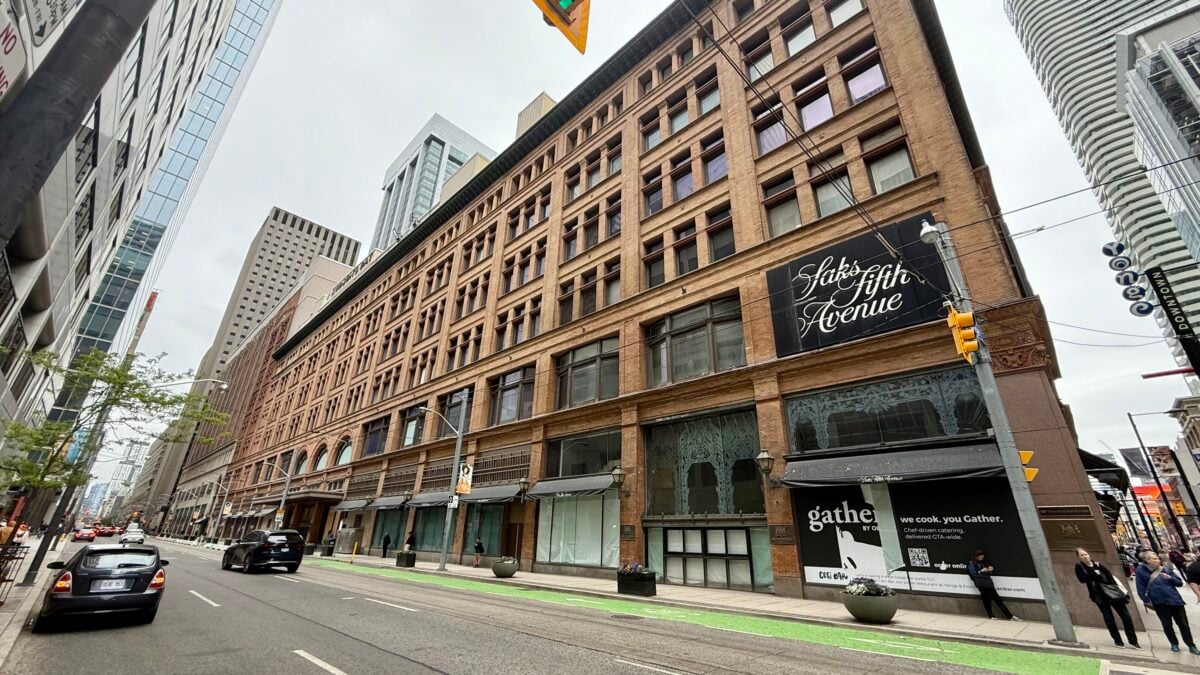
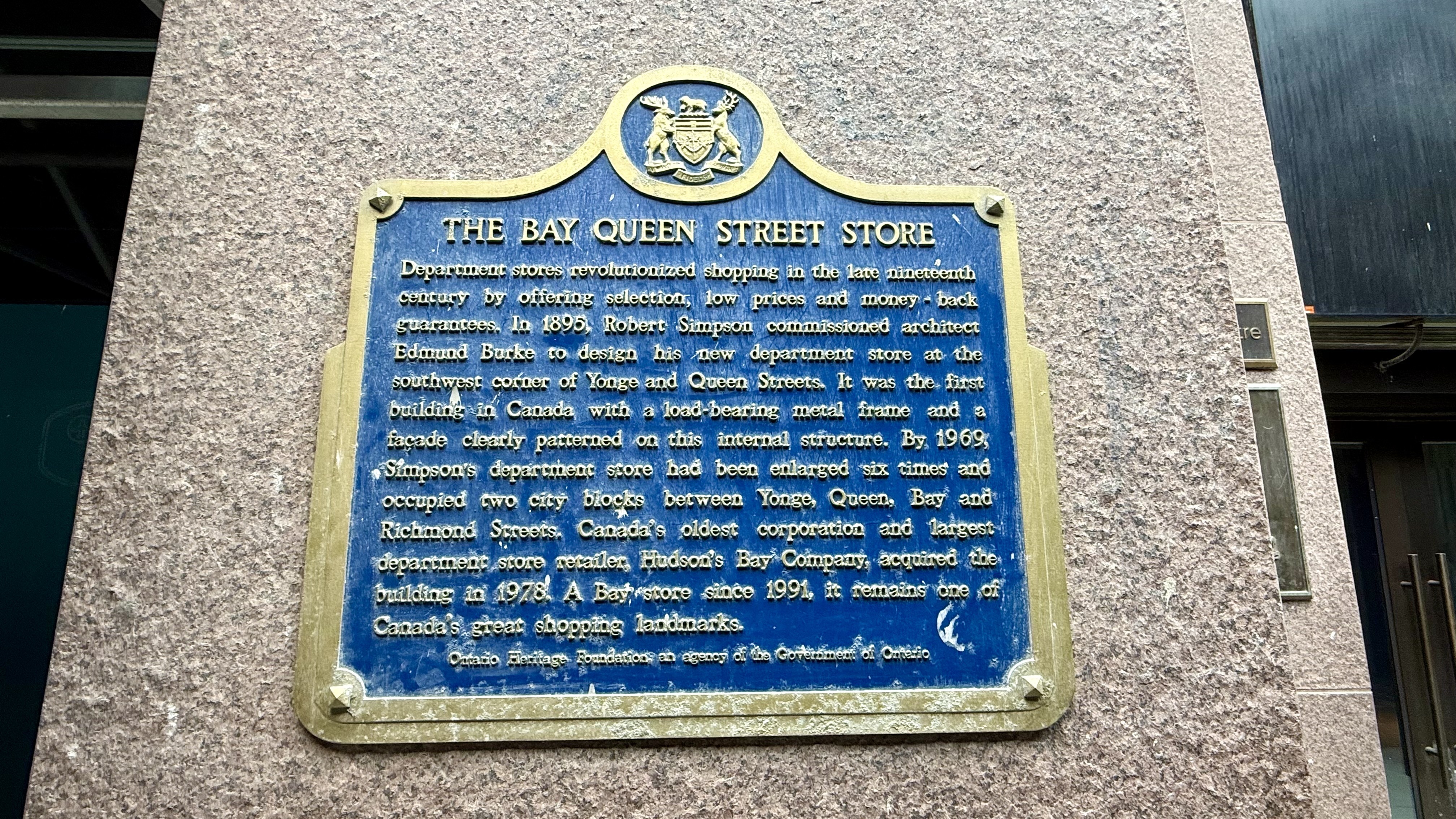
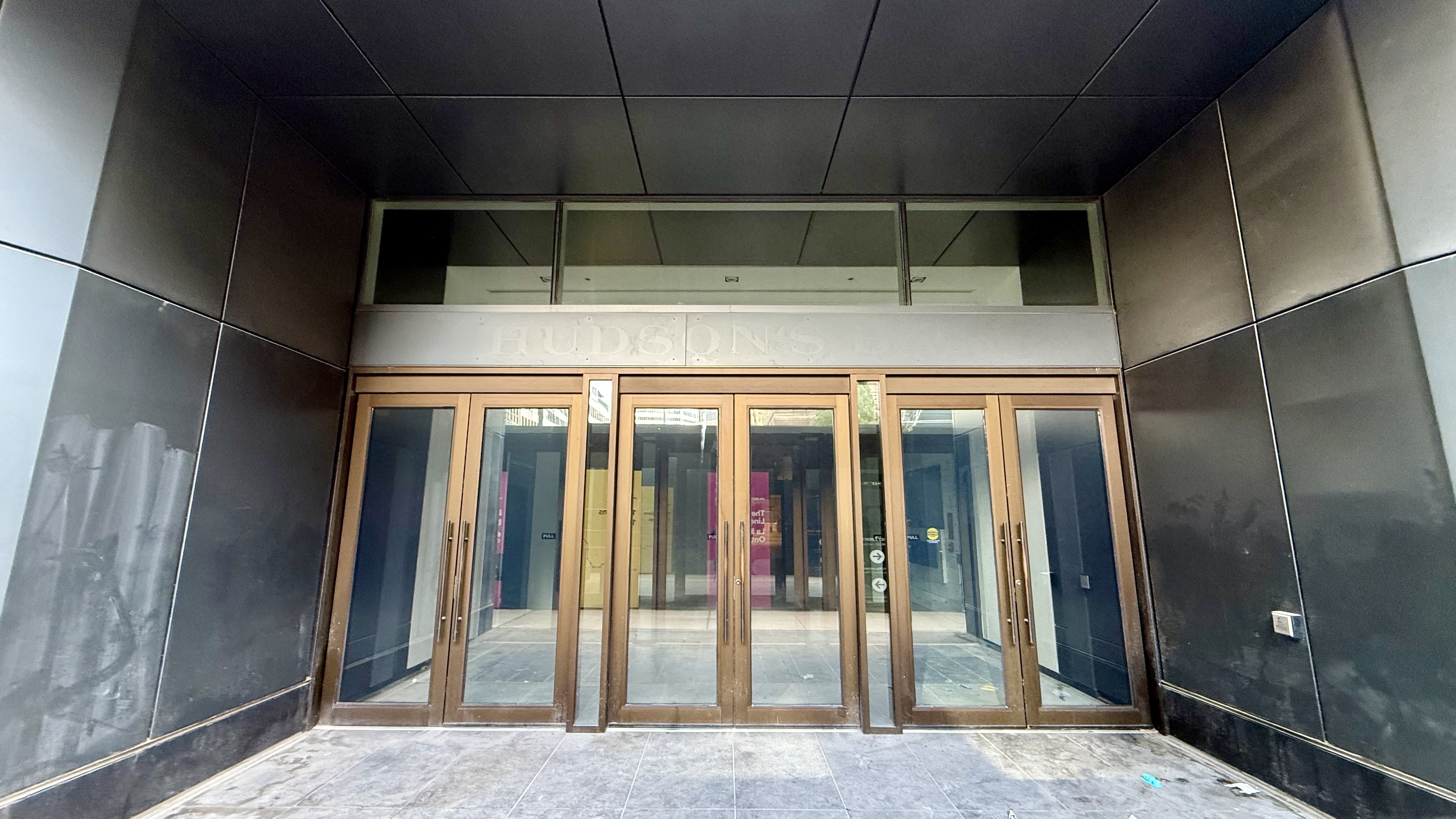
Landlord Cadillac Fairview has begun removing signage from the former Hudson’s Bay store at 176 Yonge Street, revealing a striking piece of Toronto’s retail history. On the Queen Street façade, the word “Simpsons” is once again visible. It’s a reminder of the building’s past as the flagship of the Robert Simpson Company, one of Canada’s most storied department store chains.
The massive retail complex, spanning nearly one million square feet, has remained dark since the Hudson’s Bay Company shuttered its stores nationwide on June 1. While Cadillac Fairview has not announced future plans for the site, the re-emergence of the Simpsons name has reignited public nostalgia and speculation about the building’s next chapter.
According to one source, the Ontario Legislature had briefly considered using the site as a temporary home during the decade-long Queen’s Park renovation period, but the idea has since been ruled out. For now, the property remains empty, its legacy resting in the layers of history behind its walls.
From Dry Goods to Department Store Giant
The Simpsons Queen Street store traces its roots to 1858, when Scottish immigrant Robert Simpson opened a small dry goods shop in Newmarket, Ontario. In 1872, he moved the business to Toronto, setting the stage for what would become one of Canada’s most important retail institutions.
By 1881, Simpsons had settled at the southwest corner of Queen and Yonge Streets, a location that would grow to occupy an entire city block. The company became a direct rival to Eaton’s, located just across Queen Street, as both department store empires vied for the attention of Toronto’s growing urban population.
Simpsons introduced many innovations that defined early Canadian retail, including the “one-price-only” policy and seasonal sales events that attracted shoppers from across Ontario.
Architectural Innovation and Fire Recovery
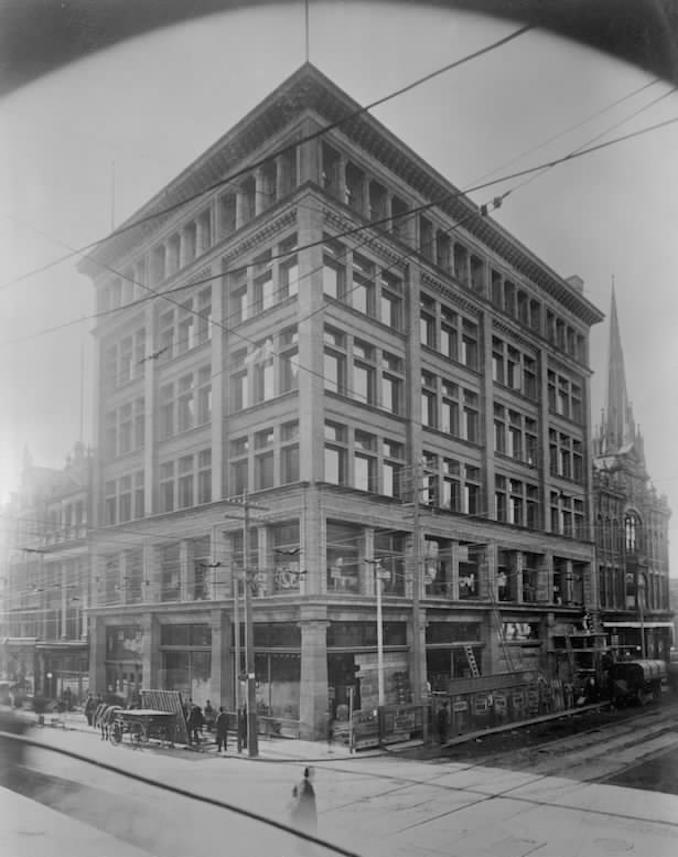
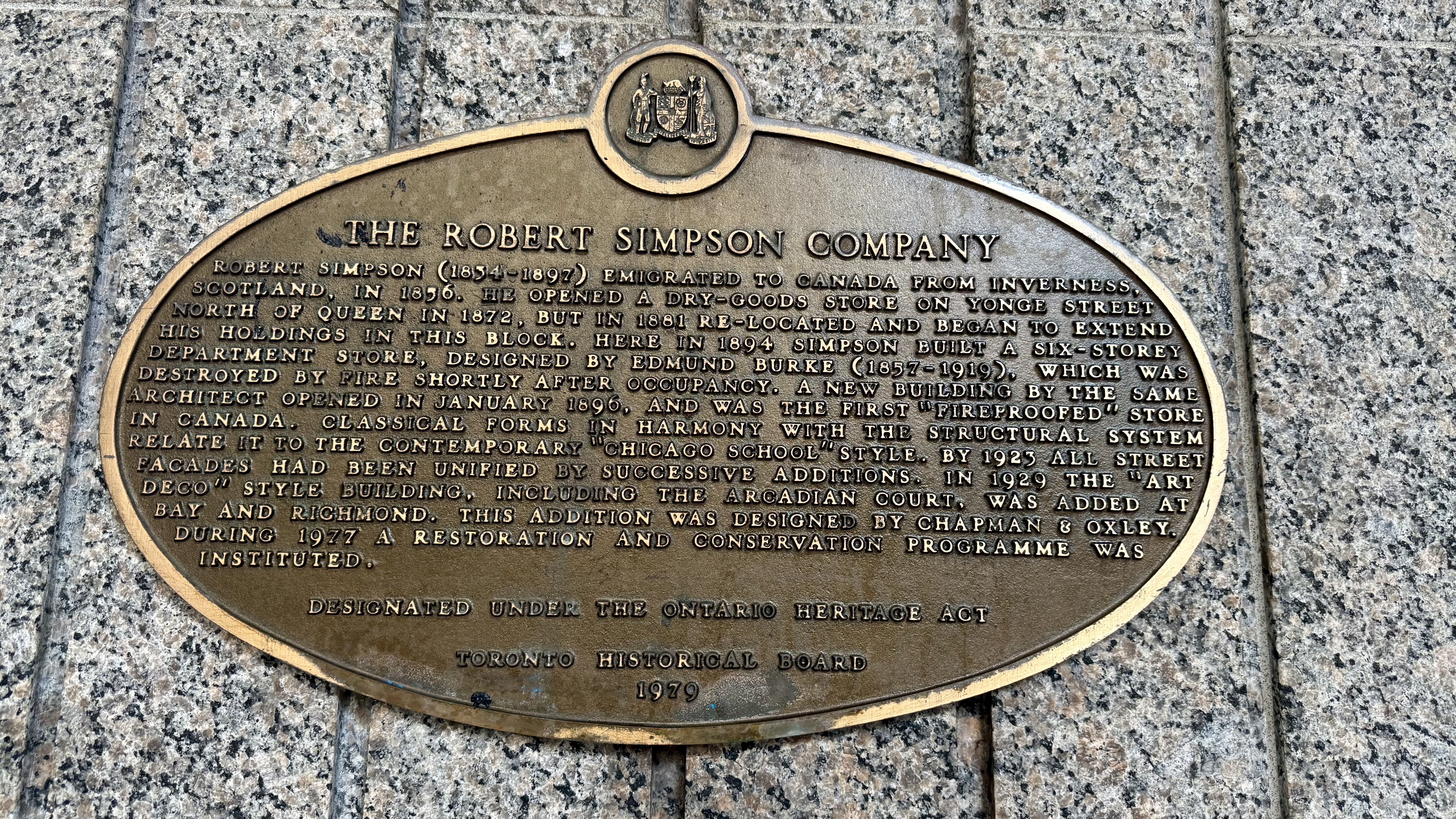
In 1894, Robert Simpson commissioned architect Edmund Burke to design a new six-storey steel-frame department store at the Queen Street site, the first of its kind in Canada. However, a devastating fire in March 1895 destroyed the building only months after its completion.
Undeterred, Simpsons rebuilt almost immediately. By 1896, a grand new structure rose on the site, complete with fireproof construction and ornate architectural details. The building soon became a Toronto landmark and a symbol of modern retailing.
Further expansions through the early 20th century saw the store stretch west to Bay Street, culminating in the 1929 art deco addition that introduced the iconic Arcadian Court, a ballroom and restaurant that would become synonymous with Toronto’s social life.
The Simpsons Legacy and “Miracle on Queen Street”
By the mid-20th century, Simpsons Queen Street Toronto was one of the largest and most prestigious department stores in Canada, and also among its top-selling. Its marble floors, brass fittings, and lavish window displays reflected an era when department stores were temples of urban sophistication.
In 1968, Simpsons constructed the adjoining 33-storey Simpson Tower, cementing its status as a business and retail hub. The store’s reputation for excellence continued through the 1970s, even as consumer habits began to shift.
Facing increased competition, Simpsons launched the “Miracle on Queen Street” renovation in 1989, a $30 million modernization project aimed at revitalizing the flagship. The redevelopment expanded the store to nearly one million square feet across ten levels and introduced the world’s largest cosmetics department, along with a gourmet food hall in the basement.
While the transformation was ambitious, the merger of Simpsons and Hudson’s Bay Company in 1989 soon overshadowed it. By 1991, the Simpsons name was officially retired as the building was rebranded Hudson’s Bay, ending more than a century of continuous operation under the Simpsons banner.

Transition to Hudson’s Bay and Modern Revitalization
The rebranding in 1991 marked a new era for the building. Hudson’s Bay transformed the space into its national flagship, continuing the store’s tradition of elaborate holiday windows and major retail events.
In 2014, Hudson’s Bay sold the Queen Street property to Cadillac Fairview through a sale-leaseback arrangement, formally linking it to the CF Toronto Eaton Centre. Two years later, the eastern portion of the building was converted into a Saks Fifth Avenue, while Hudson’s Bay continued to operate on the western side.
The basement became home to the Saks Food Hall by Pusateri’s, followed by the introduction of a Zellers pop-up in 2023 as part of HBC’s discount brand revival. These moves reflected the company’s ongoing attempts to modernize its retail offerings and adapt to changing shopping habits.
Bonnie Brooks and The Room Revival
One of the most celebrated chapters of the Queen Street store came under the leadership of Bonnie Brooks, who became President and CEO of Hudson’s Bay in 2008. Brooks spearheaded a multi-year revitalization of the flagship, blending its historical charm with contemporary design.
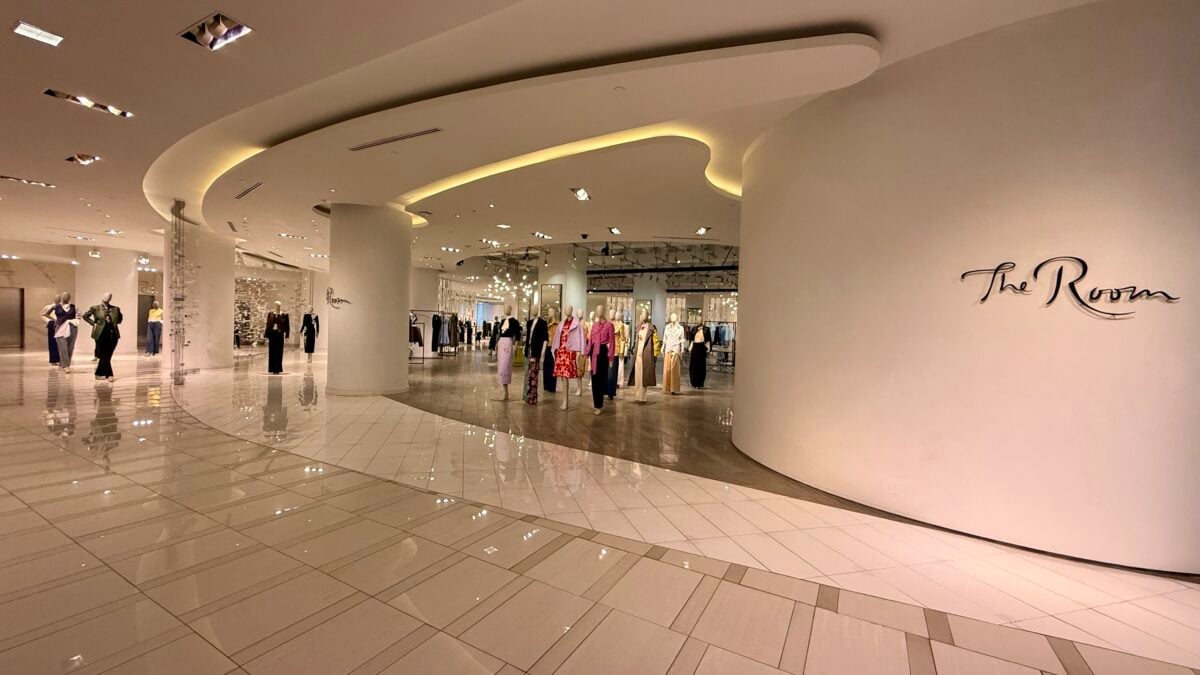
Under her direction, the Arcadian Court was restored to its 1929 grandeur and reopened as an event and dining venue in partnership with Oliver & Bonacini. She also worked with acclaimed design firm Yabu Pushelberg to reimagine key retail spaces, notably The Room, a luxury fashion department featuring designers such as Balmain, Erdem, and Thom Browne.
Brooks’ modernization strategy brought new life to Hudson’s Bay, drawing international attention and positioning the Queen Street store as a hub for high fashion. Her initiatives included the launch of Kleinfeld Bridal, collaborations with Topshop, and high-profile promotional events that reinvigorated the brand.
Nicholas Mellamphy and the Expansion of The Room
Creative Director Nicholas Mellamphy played a defining role in elevating The Room into one of Canada’s most distinguished luxury fashion destinations. Between 2009 and 2016, working closely with Bonnie Brooks, Mellamphy transformed The Room at Hudson’s Bay Queen Street into a space recognized internationally for its curation and style.
Under Mellamphy’s leadership, the 21,500-square-foot space became synonymous with exclusive designer labels and creative vision. Through his extensive fashion industry connections, The Room introduced Toronto clients to international luxury brands such as Balmain, Proenza Schouler, Erdem, Giambattista Valli, and Thom Browne. High-profile events, designer appearances, and intimate fashion previews helped position The Room as a cultural hub for fashion insiders and enthusiasts alike.
In 2011, Hudson’s Bay expanded The Room concept to its Vancouver flagship, cementing the Queen Street location’s influence in shaping national retail trends.
In February 2024, HBC brought Mellamphy back as Creative Director at Large for The Room, marking a celebrated return that revitalized the storied department. He oversaw a renovation of the space, commissioning artist Peter Triantos to create striking contemporary artworks that redefined the atmosphere of the luxury floor. Mellamphy also introduced a new wave of designer brands, blending established names with emerging international talent to reassert The Room’s place in the global fashion conversation.
A Cinematic Landmark: From Today’s Special to Short Circuit 2
The Simpsons Queen Street Toronto building also holds a special place in popular culture. For years, its distinctive interiors and iconic façades served as backdrops for television and film productions that captured the imagination of audiences in Canada and beyond.
One of the most beloved examples is the children’s television series Today’s Special, which aired on TVOntario from 1981 to 1987. The show was filmed largely on location within the former Simpsons department store, using its displays, staircases, and window sets as the basis for a magical world that came alive each night after closing time. The series, which starred Jeff the mannequin, Jodie the display designer, and Sam the night watchman, became a touchstone for a generation of Canadian children. Its whimsical portrayal of a department store after dark added to the building’s mythic aura, blending the magic of retail with the wonder of storytelling.
In 1988, the store once again stepped into the spotlight when it appeared in the Hollywood film Short Circuit 2, starring Fisher Stevens and the robot character Johnny 5. The production made extensive use of the store’s interiors, including escalators, display areas, and architectural details, showcasing the grandeur and scale of the Queen Street flagship. The film’s lively chase sequences through the aisles introduced the building’s art deco features to an international audience, immortalizing it as one of Toronto’s recognizable landmarks on screen.
Over the years, other productions have drawn inspiration from the building’s historic character and cinematic charm. Its combination of retail vibrancy and architectural drama made it a natural fit for both fictional storytelling and documentary exploration. As such, the Simpsons Queen Street Toronto store became not only a commercial institution but also a stage for cultural memory where shopping, imagination, and entertainment converged.
The Store’s Final Years and Closure
Despite its storied history and numerous revitalizations, Hudson’s Bay faced mounting financial pressures in the 2020s. The rise of online retail, coupled with declining department store traffic and neglect by owner Richard Baker, placed immense strain on its operations.
In March 2025, Hudson’s Bay filed for creditor protection under the Companies’ Creditors Arrangement Act, citing debt obligations exceeding $950 million. Plans to keep select flagship stores open ultimately proved unviable, and liquidation sales began on March 24, 2025.
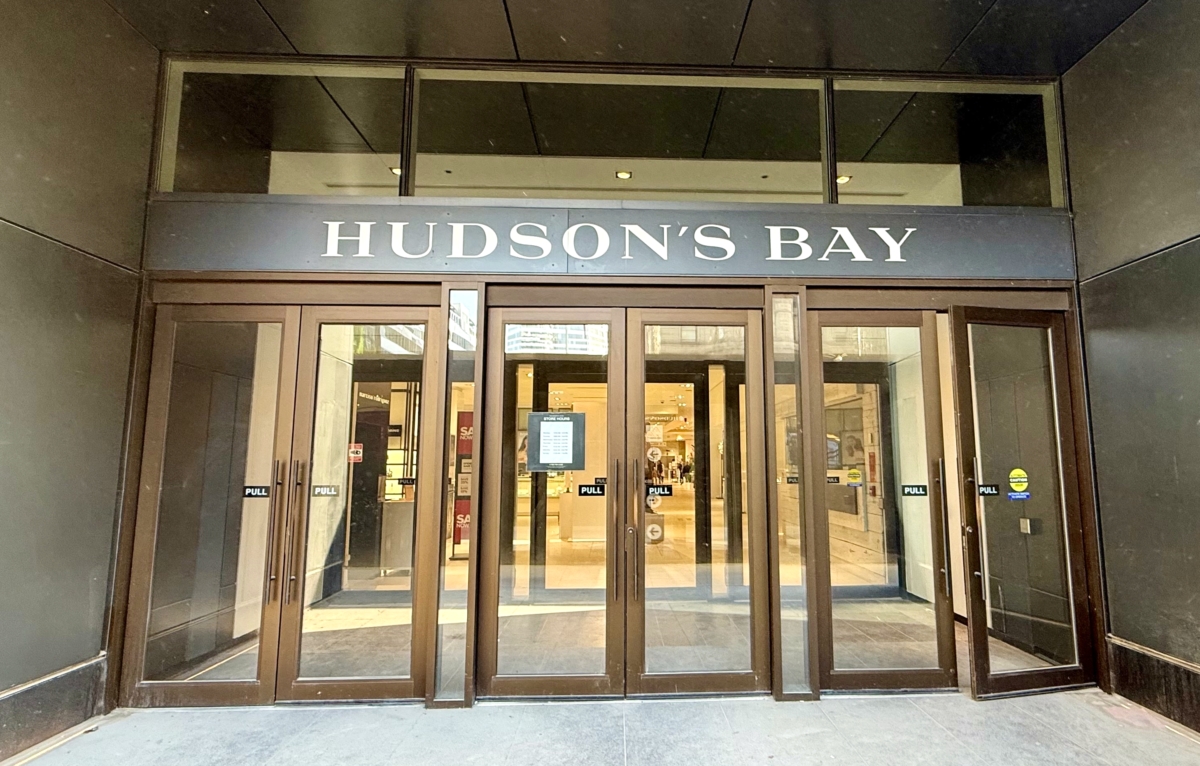
By June 1, 2025, the Queen Street store, along with the rest of the chain, had permanently closed. The event marked the end of Hudson’s Bay’s 355-year run as a retailer, the longest in North America, and a significant loss for Canada’s retail heritage. Over 8,000 employees were affected nationwide, with hundreds tied to the Queen Street flagship.















Bonnie Brooks destroyed the Bay. Her eyes was the beginning of the end. Trying to be high end so hard they lost a lot of middle income people. She should be prominently mentioned in the history the killed a company that was over 300 years old.
Is this actually Richard Baker commenting here, using a fake email? haha
All of our retail stores will now face permanent closure due to the online shopping and the high
prices in the supermarket stores. The only way to stop these closures is to lower these high food costs. In doing so, this will lead to the consumer having extra cash to spend in the department stores and keep them operatonal and keep them from closing.
Sadly, I think it’s a little too late for the Canadian department store…