Canada’s labour market added 60,000 jobs in September, pushing the national employment rate up by 0.1 percentage points to 60.6 per cent, according to new data released by Statistics Canada.
The increase comes after two months of declines totalling 106,000 jobs, and leaves overall employment just 22,000 higher than in January, a net change of 0.1 per cent.
The unemployment rate remained steady at 7.1 per cent in September.
Gains were concentrated among core-aged workers aged 25 to 54, where employment rose by 76,000 (+1.2 per cent) for women and 33,000 (+0.5 per cent) for men. Statistics Canada noted, “This was associated with a rebound in the employment rate of core-aged women (+0.9 percentage points to 80.4%) and core-aged men (+0.3 percentage points to 86.1%).”
Employment fell among people aged 55 and older by 44,000 (-1.0 per cent), with their employment rate decreasing by 0.4 percentage points to 33.6 per cent. Youth employment saw little change, holding steady at 53.8 per cent.
Photo: Andrea Piacquadio
Full-time positions drove the increase, with 106,000 jobs added (+0.6 per cent), while part-time employment dropped by 46,000 (-1.2 per cent). Public sector employment rose by 31,000 (+0.7 per cent), compared to smaller increases in the private sector (+22,000; +0.2 per cent) and self-employment (+7,900; +0.3 per cent).
Among industries, manufacturing led the way with 28,000 new jobs (+1.5 per cent), marking its first increase since January. Gains were largely seen in Ontario (+12,000) and Alberta (+7,900). Employment also increased in health care and social assistance (+14,000; +0.5 per cent) and agriculture (+13,000; +6.1 per cent).
Wholesale and retail trade saw the largest industry decline, down 21,000 jobs (-0.7 per cent), though employment in that sector remains up year-over-year by 61,000 jobs (+2.1 per cent).
Regionally, Alberta posted the biggest gain in employment with 43,000 new jobs (+1.7 per cent), more than offsetting declines in July and August. The province’s unemployment rate fell by 0.6 percentage points to 7.8 per cent.
New Brunswick added 4,700 jobs (+1.2 per cent) and Manitoba added 3,900 (+0.5 per cent), although unemployment rates in both provinces increased as more people entered the labour force.
In contrast, employment declined by 2,200 in Newfoundland and Labrador (-0.9 per cent). Employment levels remained largely unchanged in Ontario and Quebec.
The average hourly wage increased by 3.3 per cent year-over-year to $36.78, up $1.17 from September 2024.
Among youth, the unemployment rate rose to 14.7 per cent, the highest since September 2010, excluding the pandemic years. “The increase in the youth unemployment rate over the 12 months to September was primarily due to rising unemployment among students,” Statistics Canada reported. The unemployment rate for students reached 17.1 per cent, up 3.1 percentage points from one year earlier.
Douglas Porter
Douglas Porter, Chief Economist, BMO Capital Markets, said: “Today’s strong report is certainly welcome after the big declines in the prior two months. Canada’s economy continues to hang in there, treading water as it awaits more certainty on trade.”
Andrew Hencic | Director & Senior Economist, TD, said: “Well, that’s quite the surprise. Canada’s job market looks like it recovered all of August’s losses in September. Importantly, even for a noisy data series, this is a strong result. That said, it’s important to note that the unemployment rate remained unchanged as the labour force jumped by an even greater amount. Considering population growth slowed to 28k people, the biggest surprise was a large influx of new workers despite a weak job market.
“The Bank of Canada’s next decision is due at the end of the month and this surprise from the labour market could change the calculus on the decision. However, underlying inflation continues to hover within the target range and the unemployment rate suggest that the labour market still has excess slack. The next inflation report is due on the 21st and the bar will be even higher for inflation to underperform and bring the BoC onside for another rate cut. Markets seems to agree as the pricing for a rate cut materially deteriorated this morning.”
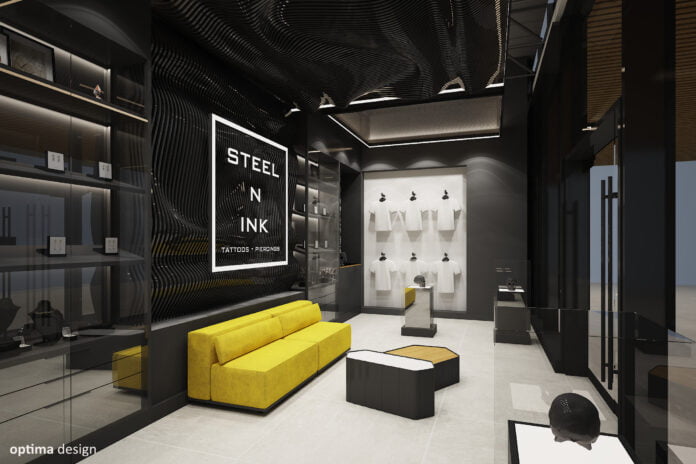
Steel N Ink at The Well (Rendering: Optima design)
Progress Retail, now operating under Worksmith following its June 2025 acquisition, has announced new partnerships that expand its presence in the Canadian retail market. The store management platform has secured Hillberg & Berk, the Regina-based jewellery retailer, and Steel N Ink, a fast-growing tattoo and piercing studio brand, as clients. Both companies are experiencing accelerated expansion, making them natural partners for Progress Retail’s operational platform.
The addition of Hillberg & Berk and Steel N Ink highlights the increasing relevance of retail technology providers in Canada’s competitive retail landscape. Each represents a very different retail sector, with one focused on fine jewellery and the other on body art, yet both share an aggressive growth trajectory that requires scalable operational support.
“As Canadian retailers expand coast to coast and into the United States, they need tools that are both easy to implement and powerful enough to support today’s complex retail workforce management needs,” said Ray Riley, Vice President of Retail at Worksmith. “We’re thrilled to partner with innovative brands like Hillberg & Berk and Steel N Ink, and to continue strengthening our investment in Canada.”
Ray Riley
Progress Retail’s platform provides streamlined workforce management, training, and communication solutions, all designed to make scaling easier for retailers. For Canadian brands moving into national and even international markets, operational alignment is critical to maintaining consistency in both brand identity and customer experience.
Steel N Ink’s Rapid Growth
Steel N Ink has built a strong reputation in Canada as one of the country’s largest tattoo and piercing studio chains. With locations spanning Ontario and other provinces, the brand has positioned itself as a mainstream lifestyle retailer within the personal services space.
“Our growth requires a scalable platform that doesn’t slow us down,” said Jamie Randolph, CEO of Steel N Ink. “Progress Retail’s ease of use and support for multi-location operations make it the perfect partner as we continue to expand across Canada.”
By adopting Progress Retail’s platform, Steel N Ink is reinforcing its operational backbone at a time when consumer demand for body art continues to rise. The company has already established itself as a household name, and its future expansion depends on workforce systems that can handle scale without complexity.
Jamie Randolph and the team at Steel N Ink at CF Carrefour Laval. Image supplied
Hillberg & Berk’s Jewellery Expansion
Founded in Saskatchewan, Hillberg & Berk has become a widely recognized Canadian jewellery brand. Known for its signature sparkle ball earrings and a commitment to celebrating women’s stories, the company has built a loyal following across Canada. The brand’s growing retail footprint, combined with wholesale partnerships and online strength, has necessitated a more unified operational platform.
“At Hillberg & Berk, we’re scaling faster than ever,” said Brett Halliday, Vice President of Retail & Wholesale at Hillberg & Berk. “Progress Retail will enable us to keep operations smooth and teams empowered, which is vital as we build out our retail presence nationwide.”
The jewellery brand’s ability to pair design excellence with empowerment-driven marketing has been central to its success. By aligning with Progress Retail, Hillberg & Berk is equipping itself to manage accelerated expansion while maintaining high levels of employee engagement.
Hillberg & Berk Orchard Park in Kelowna (Image: Hillberg & Berk)
Progress Retail’s Industry Recognition
The company’s recent industry recognition reinforces its momentum in the retail technology sector. In Fall 2025, Progress Retail received multiple G2 Badges, including Easiest to Do Business With, Easiest Setup, High Performer, and Momentum Leader. It was also named Store Management Platform of the Year 2025 by Retail Tech Insights, a reflection of its growing influence among multi-location retailers.
This recognition reflects the increasing demand for unified retail management systems. As retailers face challenges including labour shortages, high turnover, and complex supply chain dynamics, platforms like Progress Retail have become critical to ensuring business continuity and growth.
The Worksmith Acquisition
Progress Retail’s trajectory has been accelerated by its acquisition by Worksmith earlier in 2025. Austin-based Worksmith is a facilities maintenance and store experience management software company. By bringing Progress Retail under its umbrella, Worksmith has created a vertically integrated operations platform that unites facilities management, vendor oversight, workforce training, and in-store execution.
Progress Retail’s learning management and workforce engagement capabilities are expected to integrate with Worksmith’s vendor management and facilities solutions. Together, the platforms create a unified system that supports both the backend and the frontline.
Worksmith’s global retail clientele already includes brands such as Burberry, Louis Vuitton, Tiffany & Co., and Nespresso. Adding Progress Retail’s expertise in workforce training and retail execution extends this reach and positions the platform to support a broader range of brands.
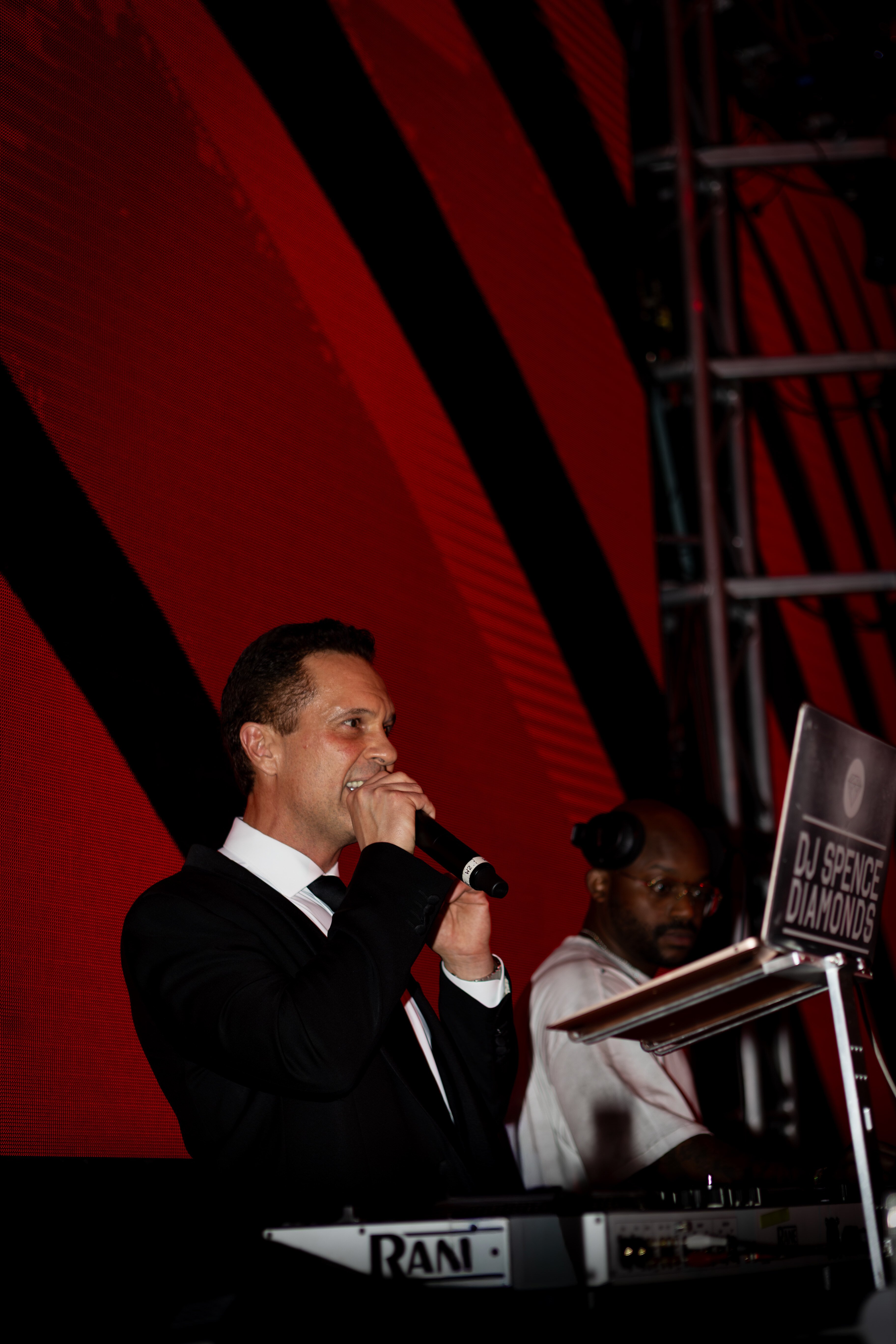
A new addition to Toronto’s nightlife scene was launched recently with the opening of FYE Ultraclub, a venue described as Canada’s first burlesque-inspired ultraclub.
Located at 7 Saskatchewan Rd., the club combines burlesque, aerial acts and live DJ sets to create what organizers call a high-energy, luxury nightlife experience.
“Bringing FYE to this city isn’t just about opening another club; it’s about redefining what a night out should be. Miami set the global standard for nightlife — and now we’re bringing that same heat to Toronto. The burlesque-inspired performances, the world-class DJs, the unmatched VIP experience — it’s a party that doesn’t sleep.”
The venue features hourly burlesque performances alongside aerialists who perform above the crowd. Organizers describe each evening as “a living, breathing performance, immersive, unpredictable, and never the same twice.”
FYE occupies a heritage building in the city, with a capacity of 400 and 60-foot ceilings. According to organizers, the space has been designed to transition between lounge and performance venue, with features such as layered lighting, uninterrupted sightlines and a state-of-the-art sound system.
“Every corner is built to amplify the energy of the night, ensuring guests are immersed in the performance from the moment they step inside,” the company stated.
Culinary offerings at the club are led by celebrity chef Robert Rainford, with a late-night menu of globally inspired small plates. Items include tuna tartare, shrimp cocktail, taco platters and prime beef sliders.
Chef Rainford’s menu is “designed to complement the music and performances,” and aims to “keep the energy flowing and the evening unforgettable,” according to the release.
FYE Ultraclub will be open Fridays and Saturdays from 9 p.m. until late.
FYE Ultraclub
“The inspiration came from wanting to reimagine Toronto’s nightlife on a scale that matches the world’s top destinations. We looked at places like E11EVEN in Miami and saw how powerful it can be when entertainment, performance, and nightlife all come together under one roof. Burlesque, with its glamour, artistry, and bold theatricality, felt like the perfect starting point,” said Starkovski.
“But FYE Ultraclub isn’t just about burlesque – it’s about creating an experience where performance, music, design, and hospitality work in sync. Unlike traditional clubs that might focus only on DJs or bottle service, FYE is a fully immersive experience where every element, from aerial acts to cocktails, has been designed to keep guests engaged from the moment they arrive to the moment they leave.
“Every detail has been considered, from the world-class sound and lighting to the roster of performers and DJs to the menu and cocktail program, all crafted to transport guests into an atmosphere where nightlife becomes an art form. The goal is to offer something truly unforgettable and set a new standard for Toronto, positioning the city alongside cultural nightlife capitals like Miami, Las Vegas, and Ibiza.”
FYE Ultraclub
Starkovski said burlesque has always been about more than sensuality, but a celebration of artistry, confidence, and self-expression.
“At FYE, we’ve been intentional in building a space that honours those traditions while also embracing modern values of inclusivity and diversity that reflect Toronto itself. Our performances respect the legacy of burlesque, but they also push it forward by weaving in contemporary music, choreography, and production that make the experience feel fresh, relevant, and distinctly ours. The result is a show that’s glamorous and bold, but also welcoming and empowering,” he said.
“We wanted to create a night that doesn’t pause and where every detail works together to keep guests engaged. Food and drink aren’t an afterthought at FYE; they’re part of the energy. Chef Robert Rainford has built a menu of refined, shareable small plates, including tuna tartare, sliders, and tacos. They’re dishes that fuel the night without slowing it down.
“On the cocktail side, we’ve reimagined the classics like the Manhattans, Old Fashioneds, Negronis, martinis, spritzes, and introduced signature twists like a Peach Cosmo, a Cassis Sloe Gin Sour, and our own spin on the Espresso Martini. Each one is created to align with Toronto’s evolving cocktail culture while adding to the sense of theatre and indulgence.
“Together, food, drink, and performance create an experience that keeps guests engaged from start to finish.”
FYE Ultraclub
Starkovski said the goal was to create a venue of global calibre in Toronto but attract visitors from everywhere.
“Just as people travel to Miami or Las Vegas for nightlife, we want FYE to be a reason visitors choose Toronto. With world-class DJs, a heritage space transformed by cutting-edge production, and an atmosphere unlike anything else in the city, FYE is positioned to be both a local favourite and a global draw,” he explained.
“I hope guests leave feeling like they’ve experienced something unforgettable — a night that exceeded their expectations and made them proud it exists in Toronto. Success in year one isn’t just about full rooms, it’s about building a reputation: that FYE is where you go for world-class nightlife, where every night feels like an event. If people walk out saying, “I can’t believe this is in Toronto,” then we’ve achieved what we set out to do.“
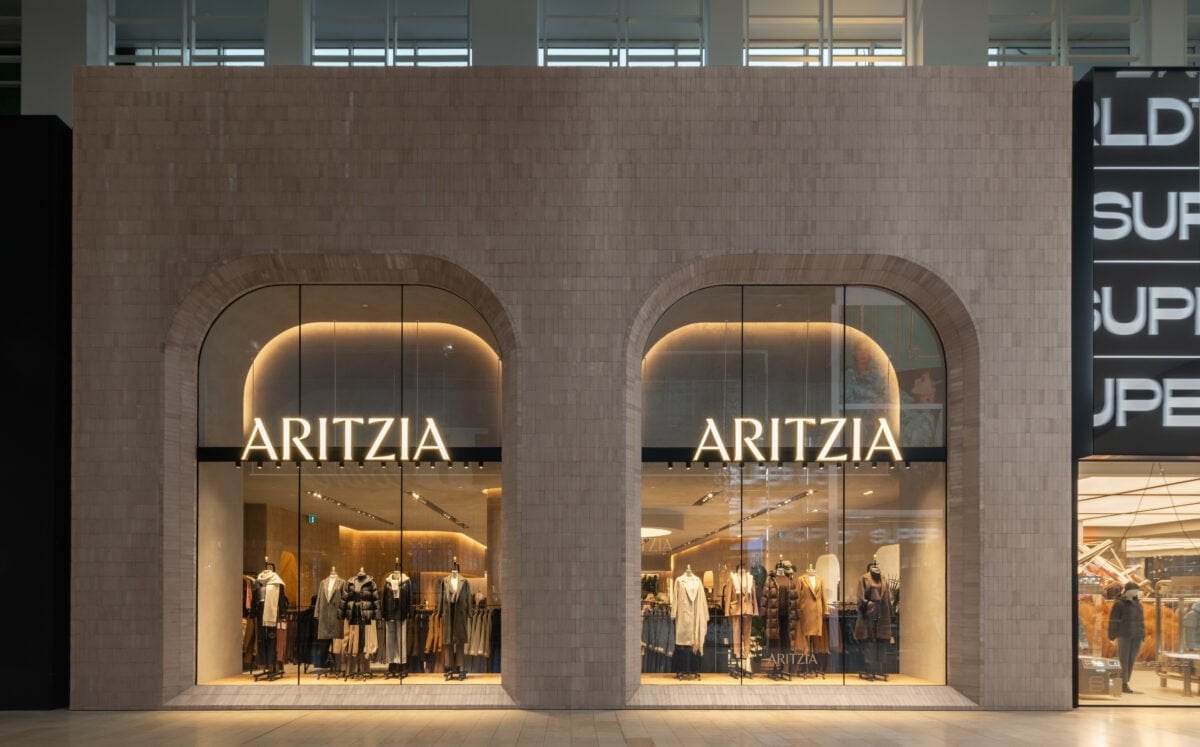
Vancouver-based fashion retailer Aritzia has reported another stellar performance, marking its ninth consecutive earnings beat, according to a new report from Stifel Nicolaus Canada Inc. prepared by Managing Director Martin Landry. The Stifel analysis highlights a significant acceleration in both revenue and profitability, underscoring Aritzia’s strength as one of Canada’s most successful global retail brands.
The Aritzia earnings report revealed that earnings per share surged to $0.59, well above Stifel’s forecast of $0.41 and the consensus estimate of $0.39. This figure represents a dramatic 178% increase from the same quarter last year. Total revenue climbed 32% year-over-year to $812 million, exceeding expectations and continuing a streak of strong double-digit growth.
Martin Landry
Comparable sales rose 21.6% year-over-year, the second-best performance in three years. “Results were strong all around, with comparable sales up 21.6% year-over-year,” Stifel wrote in its report, crediting the company’s loyal customer base and continued product resonance.
Canadian and U.S. Markets Fuel Record Growth
Aritzia’s growth story continues to play out across both its home market and south of the border. Sales in Canada rose 20.6%, an impressive figure for what Stifel characterized as a “mature market,” demonstrating that the brand continues to expand even in well-established regions.
Meanwhile, the company’s U.S. operations remain a major driver of growth. The Aritzia earnings report notes that management now sees the potential to grow its U.S. store network beyond 150 locations — a significant increase from the initial expansion target announced at its 2022 Investor Day. Aritzia executives hinted at the potential for as many as 200 U.S. stores, reflecting the brand’s growing awareness and momentum among American consumers.
The company’s U.S. presence continues to broaden into new markets, including Cincinnati, Pittsburgh, Raleigh, Salt Lake City, and Scottsdale, which will open this year. These new locations are expected to build on the brand’s already strong foothold in urban retail environments and affluent suburban centres.
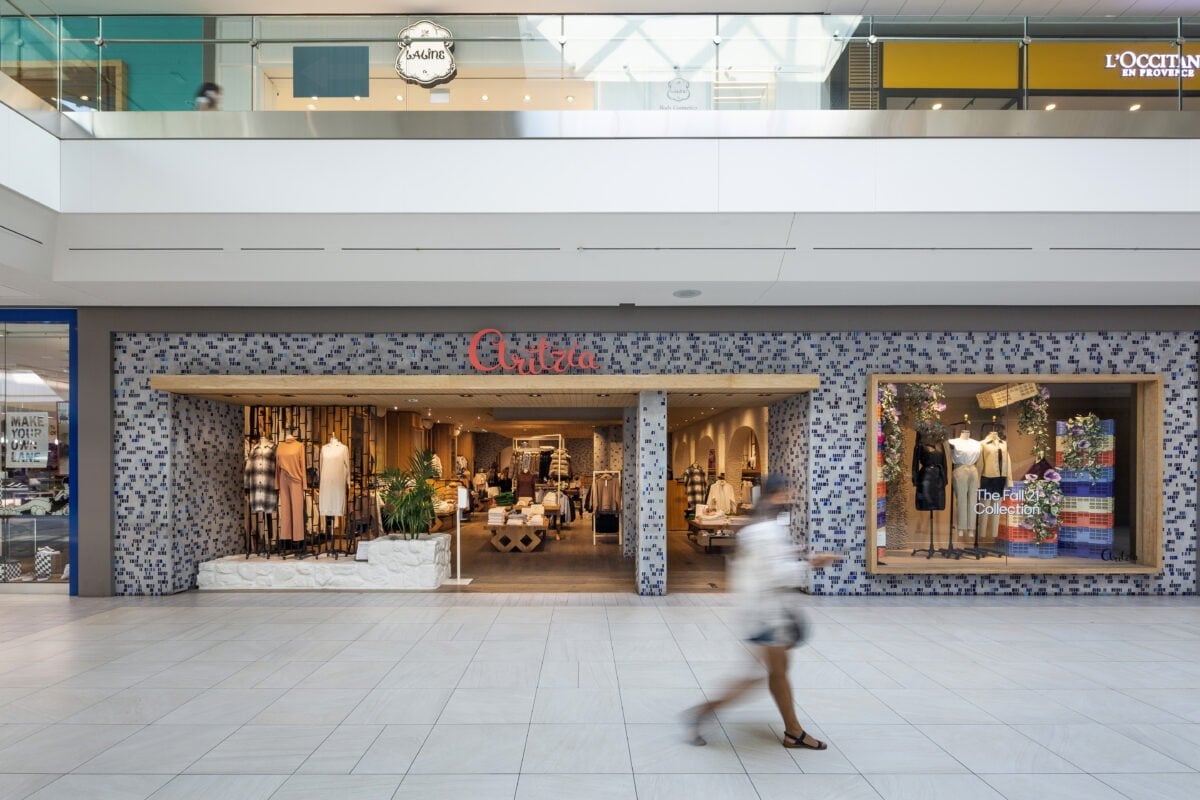
Aritzia Yorkdale (Image: Aritzia)
Profitability Surges as Margins Expand
Aritzia’s second quarter results also demonstrate impressive profitability gains. The retailer’s gross margin rose 360 basis points year-over-year to 43.8%, surpassing both company guidance and Stifel’s estimate of 41.8%.
This expansion, the report explains, was supported by operational efficiencies, including the relocation of all U.S. fulfillment operations to Aritzia’s distribution centre in Ohio. This move effectively mitigated cost pressures associated with the de minimis exemption, which had previously affected Canadian exporters to the United States.
At the same time, SG&A expenses as a percentage of net revenue declined 150 basis points to 30.8%, helping lift the adjusted EBITDA margin to 15.1%, up more than 600 basis points year-over-year.
Adjusted EBITDA more than doubled, reaching $122.7 million, while net income rose 185% to $69.8 million. According to Stifel’s analysis, these results show strong execution and cost discipline, with the company maintaining healthy margins despite rising tariff pressures.
Guidance and Outlook: Aritzia Raises the Bar
Following these strong results, Aritzia increased its guidance for the next quarter. The company now expects Q3 FY26 revenue between $875 million and $900 million, surpassing both Stifel’s estimate of $850 million and the market consensus of $855 million.
Even as tariff headwinds have grown, now representing a 280-basis-point impact this fiscal year compared with 150 basis points previously, Aritzia maintained its EBITDA margin guidance. Stifel attributed this confidence to “management’s mitigation strategies and strong sales trajectory.”
The firm also expects the company’s momentum to continue post-quarter, noting that the upcoming launch of Aritzia’s mobile application could further strengthen customer engagement and digital sales.
Aritzia at CF Markville (Image: Aritzia)
Stifel Raises Target Price to $100
Reflecting Aritzia’s strong performance, Stifel Nicolaus Canada Inc. raised its target price from $96 to $100, maintaining its Buy rating on the stock.
In the Aritzia earnings report, Martin Landry wrote that the new target price reflects “higher forecasts combined with higher valuation multiples.” Stifel’s valuation approach includes three methods: applying a 28-times multiple to its FY27 EPS estimate, a 17.5-times multiple to the FY27 EBITDA estimate, and a discounted cash flow (DCF) calculation.
The analysts raised their FY26 revenue forecast to $3.36 billion (from $3.28 billion) and FY27 revenue forecast to $3.85 billion (from $3.69 billion). Adjusted EPS estimates were increased to $2.69 for FY26 and $3.60 for FY27, representing 5% and 3% upgrades, respectively.
The Stifel report also highlighted Aritzia’s robust financial position. The company holds no bank debt and has more than $350 million in cash, providing flexibility for expansion, investment, and potential share repurchases.
With its market capitalization now exceeding $10 billion, Aritzia is attracting more global investors and gaining visibility as a high-performing retail stock. Stifel noted that this liquidity and scale could make Aritzia increasingly appealing to large institutional funds seeking exposure to the Canadian consumer sector.
Product Strategy and Brand Appeal
Central to Aritzia’s success is its disciplined approach to product strategy and brand positioning. The retailer operates a portfolio of approximately 10 exclusive in-house brands, many of which have become staples for Canadian and American shoppers alike.
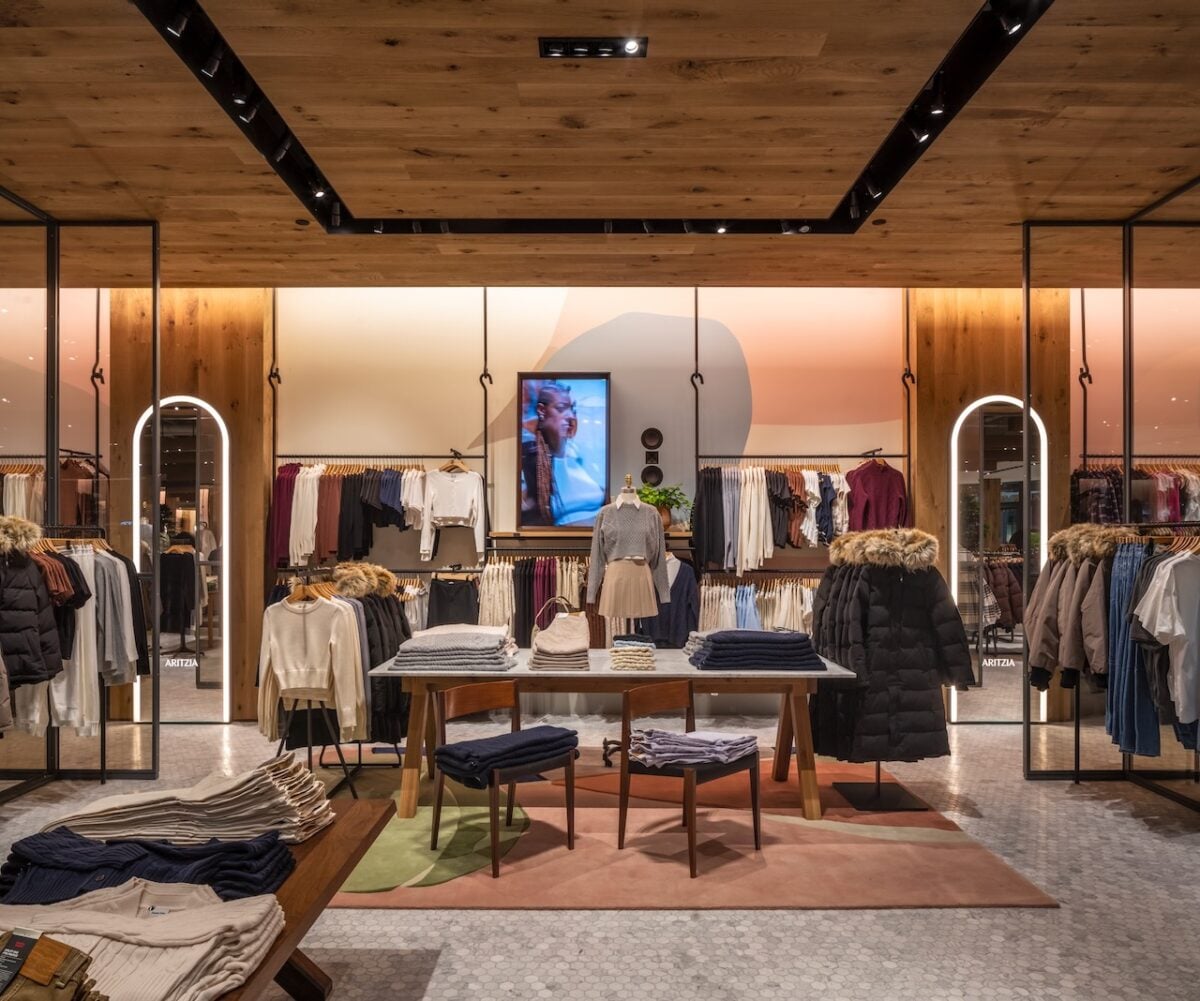
The Aritzia earnings report attributes part of the company’s recent sales growth to the strong performance of its summer and fall collections, which were well received by consumers. Aritzia’s concept of “everyday luxury,” offering high-quality apparel at attainable prices, continues to resonate with its core audience of women aged 15 to 45.
The company’s product catalogue now exceeds 3,000 styles across over 100,000 SKUs, offering a wide range of apparel that balances trend-driven items with proven classics. This mix has helped Aritzia sustain strong demand while reducing fashion risk.
Aritzia at CF Masonville Place (Image: Cadillac Fairview)
E-Commerce and Omnichannel Strength
Aritzia’s e-commerce revenue grew 26.5% year-over-year, reaching $240.3 million, while retail revenue jumped 34.3% to $571.7 million. The combination of online and brick-and-mortar performance underscores the brand’s strength in omnichannel retailing.
The company’s ability to deliver a consistent and engaging experience across platforms remains a key differentiator. Stifel analysts noted that Aritzia’s ongoing digital investments are paying off, particularly in expanding its customer reach and engagement.
As Aritzia prepares to launch its mobile app, the retailer is expected to deepen its direct-to-consumer relationships, further enhancing its already loyal customer base.
FY27 Targets Regain Credibility
At its 2022 Investor Day, Aritzia outlined an ambitious four-year plan targeting $3.5 to $3.9 billion in revenue and a 19% EBITDA margin by FY27. While investors were skeptical following challenges in FY24, Stifel now believes these targets are realistic and attainable.
“Given the recent sales performance and margin recovery, these targets now appear more achievable,” the report said. “As visibility improves, we expect earnings estimates to rise further.”
Comparable sales growth above 18% for three consecutive quarters demonstrates the company’s ability to sustain strong momentum even as competitors struggle with softer demand.
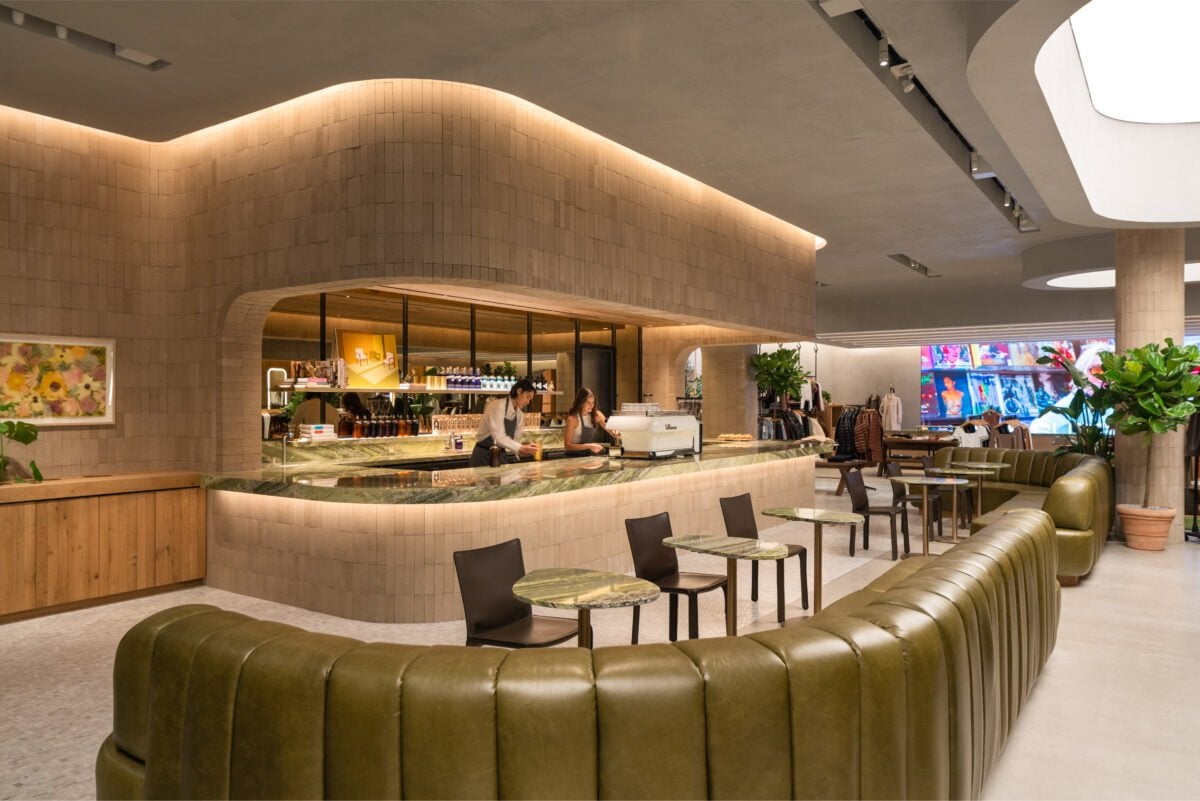
A-OK Cafe at Aritzia Yorkdale (Image: Aritzia)
Risk Factors: Tariffs and Macro Headwinds
Stifel’s report also outlined several potential risks that could affect Aritzia’s future performance. Chief among these are U.S. tariffs on Canadian imports, which could increase product costs and impact consumer pricing in the U.S. market.
The report also pointed to the risk of slowing brand momentum, currency fluctuations, and economic uncertainty stemming from inflation and interest rate pressures.
Nevertheless, Stifel believes Aritzia’s strong balance sheet and loyal customer base give it a cushion against these challenges. “Aritzia has significant momentum currently as its products are well received, and digital marketing investments are paying off,” the analysts wrote.
Aritzia’s stock closed at $79.54 on October 9, 2025, following a 52-week range of $37 to $90. With Stifel’s raised target of $100, the firm projects meaningful upside as investor confidence grows.
The Aritzia earnings report reinforces the retailer’s position as one of Canada’s most dynamic public companies. Stifel’s sustained Buy rating reflects expectations for continued share price appreciation as the company maintains strong revenue growth, margin expansion, and operational excellence.
Aritzia’s Expanding International Story
Founded in Vancouver in 1984, Aritzia has grown into a major North American fashion force, operating 134 corporate stores and an increasingly dominant online business. Approximately 65% of total revenue comes from retail stores, with the remainder generated through digital channels.
The company’s measured approach to expansion, combined with an emphasis on premium experiences and design-led spaces, has set it apart from fast fashion peers. Its store network, now spanning both top-tier malls and lifestyle centres, is central to its long-term strategy.
As Stifel’s Martin Landry and his team emphasized, Aritzia’s “significant momentum” is being driven by loyal customers, strong product execution, and disciplined financial management. With comparable sales growth, margin expansion, and new U.S. market opportunities, Aritzia is well positioned to sustain its upward trajectory.
STOTT PILATES, a Merrithew brand and global provider of Pilates education, is set to open a new flagship studio and global academy in Toronto’s Yorkville neighbourhood in January 2026.
The new STOTT PILATES Studio & Academy, located at Yonge and Bloor, will serve both as a local Pilates studio and an international hub for Pilates training and innovation. A waitlist for prospective clients is now live at stottpilatesstudio.com.
Jim Heidenreich
“With our new flagship studio and STOTT PILATES Academy in Toronto, we’re building Merrithew’s global hub for innovation in movement,” said Jim Heidenreich, CEO of Merrithew.
“It’s where we’ll test and refine new programming, train the best instructors, and define how Pilates supports performance, recovery, and lifelong health before sharing those insights to our community worldwide.”
The studio will introduce a unique membership model that combines unlimited access to both mat and Reformer classes under one plan—a departure from industry norms where these services are typically offered separately. The membership will also include options for postural assessments and private sessions tailored to individual goals, as well as perks such as advanced booking, guest passes, freezes, and discounts on courses and workshops.
STOTT PILATES said the studio is designed to foster a strong sense of community, aiming for most clients to become members and build consistent Pilates practices supported by expert instruction.
Photo: STOTT Pilates
The Academy will also be home to curriculum development, workshops, and new program testing, in collaboration with physiotherapists, exercise scientists, and Master Instructor Trainers.
The organization describes the flagship as “a place where people feel part of something larger: a local community connected to a global one.” The space will host member socials, visiting instructor workshops, and partnerships with local wellness brands to strengthen community connections.
A speaker series is planned for early 2026, featuring international and in-house experts on topics such as athletic performance, rehabilitation, and mental well-being.
Toronto, as the birthplace of the STOTT PILATES method, is being positioned as the anchor for a growing global network in an industry that continues to expand. According to the company, Reformer-based class participation in the U.S. has grown by nearly 40 per cent in the last five years. The global Pilates and yoga studio market was valued at US$181.6 billion in 2024 and is projected to grow at a compound annual growth rate of 8.38 per cent through 2033, according to the IMARC Group.
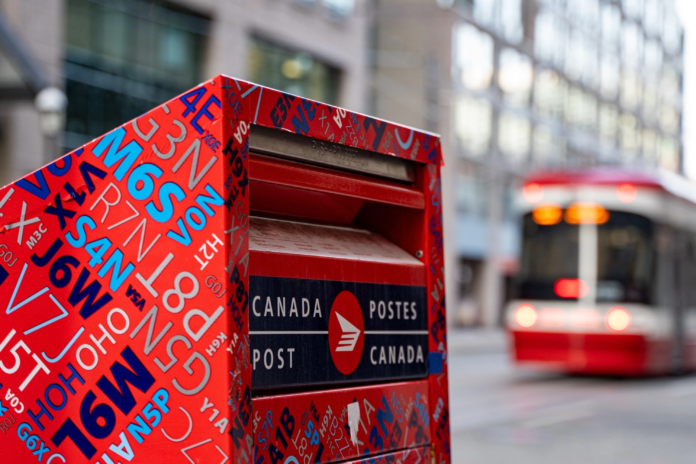
Half of businesses support reduced residential mail delivery (52%) and replacing door-to-door delivery with community mailboxes (51%), while over two in five support limiting or freezing employee compensation packages over the next few years (45%), and replacing corporate postal outlets with franchised locations (42%), said the CFIB.
Corinne Pohlmann
“Canada needs a national postal service, but not in its current form. We’re glad to see the federal government taking steps to modernize Canada Post services,” said Corinne Pohlmann, CFIB’s executive vice-president of advocacy. “It’s already losing customers and millions of dollars every day. Doing nothing would just sentence Canada Post to extinction.”
After the 2024 strike, four in five surveyed businesses said they still use Canada Post. Nearly three-quarters (73%) of those businesses use it for sending cheques, 61% to send other letter mail, 58% like to use Canada Post for its low cost and 50% for its convenience, added the CFIB, Canada’s largest association of small and medium-sized businesses with 100,000 members across every industry and region.
CFIB said it recommends government:
Immediately end the Canada Post strike and quickly move forward with the announced changes.
Freeze Canada Post’s compensation expenses and support the implementation of more flexible work schedules.
Consider Canada Post an essential service provider to limit the possibility and impacts of work stoppages in the future and enhance reliability.
Introduce financial constraints to limit repeated yearly deficit.
Jasmin Guenette
“Canada Post needs major reforms to make sure it becomes financially viable. But in the short term, the government must end the strike and ensure that all postal services are fully available while the reforms are being implemented,” said Jasmin Guénette, CFIB’s vice-president of national affairs.
Reality TV isn’t just entertainment — it’s shaping how Canadians stream. Roku’s latest data shows that 85% of Canadian TV streamers are now reachable via in‑stream ads, with weekly viewing of ad-supported content jumping from 7.3 hours in 2024 to 10.2 hours in 2025. Nearly 9 in 10 streamers use ad-supported streaming at least part of the time, while traditional subscription VOD (Video on Demand) usage has slightly declined.
This shift presents a timely opportunity: reality TV—whether dating shows, competitions, or docuseries—is increasingly driving engagement and subscriptions in ad-supported environments. Lean-back formats like these keep viewers engaged, fuel social conversation, and create natural advertiser touchpoints, especially as Roku’s footprint grows (30% of Canadians now use a Roku device or Smart TV).
Reality TV is more than a genre—it’s a driver of streaming trends, ad revenue, and subscriber retention.
Ivan Pehar
Ivan Pehar, Director of Ad Sales at Roku Canada, said the company is seeing the strongest performance from socially sharable, appointment-style unscripted formats: dating/competition shows, short-form reality docu-series, and eventized competition (think talent, obstacle-course, renovation).
“Those formats drive tune-in behaviours and discussion — people want to watch episodes as they drop and talk about them right away, which makes them ideal for FAST channel lineups and ad-supported VOD (Video on Demand)windows. The behaviour matters: ad-supported viewing has surged (time spent jumped to 10.2 hours/week in 2025), so formats that encourage repeat tune-ins and social conversation naturally build bigger audiences on our platform.”
Pehar said what the company is seeing in its VOD Evolution Study is that Canadians are open to ads when they feel useful and relevant — in fact, 64% of TV streamers say they find interactive ads helpful, and that jumps to over 80% with younger audiences.
“That’s why brands are leaning into features like QR codes, clickable prompts, and mobile offers that let viewers act in the moment. On the content side, FAST channels and reality programming are creating these lean-back, appointment-style viewing habits again, with big spikes around premieres, finales, or eliminations. Advertisers are adapting by placing their campaigns around those high-engagement moments, which really maximizes attention. The bottom line is, ad-supported viewers expect ads — they just want them to be quality and tailored to their interests.”
He said Canadians are ad-tolerant when the content is valued and the ad experience is respectful.
“With 9 in 10 streamers using ad-supported content at least sometimes, viewers are demonstrating they’ll accept ads if the programming is compelling and the ad load feels fair. Reality formats—because they’re emotionally engaging and conversation-driving—often produce higher ad recall and incremental attention versus passive viewing. In short: if you pair the right creative to the right reality moment, you’ll get engagement rather than avoidance,” explained Pehar.
“FAST channels are a discovery engine for reality: themed linear blocks (e.g., “dating marathons,” “competition afternoons”) surface older seasons and bingeable moments to new viewers, extending a show’s lifespan beyond its initial SVOD (Subscription Vide on Demand) run. Hybrid models (free + ads with optional premium tiers) let viewers sample content with low friction, then convert the most engaged fans to paid experiences or companion products. That flywheel — discovery on FAST, repeat viewing in AVOD (Advertising Video on Demand), premium upsell for exclusives — is why we’ve invested in expanding FAST offerings in Canada (The Roku Channel surpassed 200+ FAST channels in Canada), which increases findability for unscripted formats.”
Photo: Roku
Pehar said Roku focuses on three levers: packaging, measurement, and activation.
“First, packaging: curated FAST blocks and promotional carousels on the home screen make it easy to binge and share. Second, measurement: we give advertisers timely signals on episode peaks and retention so they can place complementary creative (and measure social lift). Third, activation: we work with partners on social extensions (clips, recaps, highlight reels) and encourage creators to seed second-screen conversation — driving social discussion that sends viewers back to the platform. The result is a loop where social buzz creates discovery, discovery drives ad reach and attention, and attention fuels more social content,” he explained.
“SVOD isn’t dead — it remains critical for prestige scripted content — but the economics and viewing habits are changing. We’re seeing a hybrid landscape: audiences pick and choose premium scripted through SVOD, while adopting ad-supported lanes (FAST/AVOD) for appointment viewing, nostalgia, and shareable reality. For premium content creators, the implication is that value will be judged on a combination of direct subscribers and discoverability in ad-supported ecosystems. That means studios and streamers will increasingly adopt windowing strategies and creative ad partnerships to maximize lifetime value across both AVOD and SVOD. For brands, it creates more entry points to engage consumers across the customer journey.”
Reality TV isn’t just entertainment — it’s shaping how Canadians stream. Roku’s latest data shows that 85% of Canadian TV streamers are now reachable via in‑stream ads, with weekly viewing of ad-supported content jumping from 7.3 hours in 2024 to 10.2 hours in 2025. Nearly 9 in 10 streamers use ad-supported streaming at least part of the time, while traditional subscription VOD usage has slightly declined.
This shift presents a timely opportunity: reality TV—whether dating shows, competitions, or docuseries—is increasingly driving engagement and subscriptions in ad-supported environments. Lean-back formats like these keep viewers engaged, fuel social conversation, and create natural advertiser touchpoints, especially as Roku’s footprint grows (30% of Canadians now use a Roku device or Smart TV).
Retail Insider is streamlining its Canadian retail news from around the web to include a handful of top news stories that can be viewed quickly during the day. Here are the top stories from the past 24 hours.
Artificial intelligence is now touching every industry, including retail, and retailers of all sizes are tapping into the technology to improve their operations. While AI can give all aspects of a retail business a boost, there’s one particular area that’s capturing the limelight right now, which is inventory management.
By improving inventory management, retailers can hold the right number of products in the right colors and sizes at the right locations, enabling them to better meet customer demand while minimizing warehouse costs and maximizing profitability due to reduced stockouts.
Using AI to better forecast demand leads to improved accuracy and customer satisfaction, making this technology a critical part of today’s inventory management systems.
How AI Gives Inventory Management a Boost
Demand forecasting is an essential component of inventory management, as is real-time visibility into where products are located. Other use cases for AI within inventory management include developing what-if scenarios, managing warehouse operations and suppliers, detecting anomalies, and automating replenishment.
In the area of demand forecasting, AI enables retailers to respond dynamically to the changing market. The technology grants them deeper insights into how customers are behaving and what demand is looking like. As a result, demand forecasting becomes more precise, enabling retailers to adjust their inventory levels in real time.
“AI enhances demand forecasting and inventory management by rapidly analyzing large data sets from various sources in real time to deliver accurate forecasts and data-driven inventory recommendations,” explained 7thonline CEO Max Ma. “… With faster insights — down to style, color, size — brands and retailers are able to make agile inventory decisions that align with demand in real-time and optimize stock levels across channels by predicting what products are needed, where and when.”
Real Results from AI in Demand Forecasting
Retailers have already been reaping the benefits of using AI in inventory management. In fact, some are reporting actual numbers demonstrating the improvements they’ve seen.
For example, earlier this year, Walmartannounced it was reengineering its global supply chain using real-time AI and automation. Early deployments in markets like Costa Rica were a success, so the big-box retailer began rolling the technologies out to other locations.
Walmart’s Self-Healing Inventory system has been in place in Mexico City for some time. Shelf space is scarce there, so timing is critical. Self-Healing Inventory watches for overstocks and then automatically reroutes supply to other stores before that excess inventory turns into waste. According to the retailer, this system alone has already saved over $55 million.
Merchants selling on Amazon have also benefited from AI technologies for demand forecasting. For example, India’s More Retailreported that Amazon Forecast enabled it to improve its forecasting accuracy from 27% to 76% and reduce wastage in fresh produce by 20%.
According to 7thonline, one retailer managing over 8,000 stores was able to boost its inventory accuracy from 60% to 90% using 7thonline’s AI-powered forecasting. The retailer reported that they were better able to analyze regional demand and predict what products will sell, down to style, color, size per store, to reduce costly reallocation/ transfer efforts.
The Future of AI in Inventory Management
Going forward, we can expect AI to improve more and more over time, both in general and for each individual retailer. The more a retailer uses AI for things like demand forecasting, the better it will get at predicting customer flows and demand. AI models improve as they gain more data, so we expect dramatic improvements in accuracy, decision making, and real-time capabilities.
Ma also predicts a widening gap between the haves and have-nots — retailers that use AI and those that don’t.
“AI for demand forecasting and inventory management will further the divide between large enterprises and smaller retailers,” he explained. “But clean data and early adoption can serve as a saving grace.”
Ma also believes that AI personalization for shopping will rapidly evolve until it doesn’t feel like AI.
“Chatbots may be gone, but personalization efforts that people don’t associate with AI (such as FYPs) will take off,” he added.
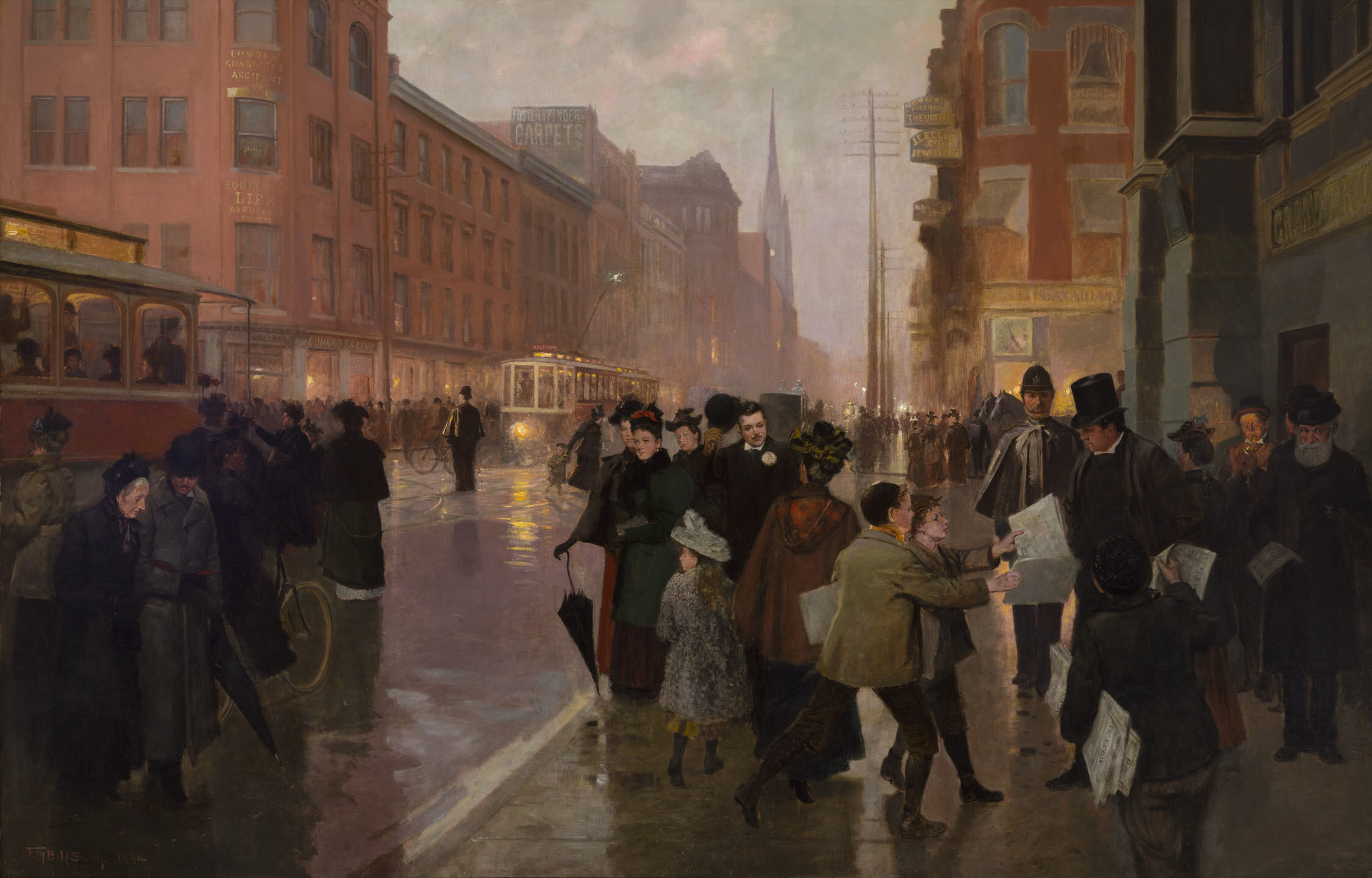
Frederic Marlett Bell-Smith’s celebrated 1894 masterpiece, Lights of a City Street, will be a highlight of the Hudson’s Bay Company Collection, offered by Heffel on November 19, 2025. (CNW Group/Heffel Fine Art Auction House)
Heffel Fine Art Auction House will present a once-in-a-generation sale this fall featuring the Hudson’s Bay Company Collection auction, marking the public’s first opportunity to view and bid on some of the most treasured artworks and artifacts from Canada’s oldest commercial institution. The sale includes rare paintings, historical artifacts, and retail-era memorabilia that span more than three centuries of Canadian history.
The auction follows the collapse of Hudson’s Bay Company’s retail operations earlier this year and comes under court authorization to help satisfy outstanding debts to the company’s creditors. While the auction represents a loss of cultural legacy for the defunct retailer, it also offers collectors and institutions a chance to acquire pieces deeply woven into Canada’s national story.
Among the Highlights
Among the most notable pieces in the Hudson’s Bay Company Collection auction is Marrakech, an oil on canvas painting by former British prime minister Sir Winston Churchill. Created during a painting holiday in Morocco, the piece captures a tranquil, sunlit scene of women standing beneath palm trees. Churchill, an avid painter, gifted the work to Hudson’s Bay Company around 1935.
Heffel Fine Art estimates the painting’s value between $400,000 and $600,000, making it the most valuable item in the auction. “For the first time, collectors can now take part in this historic moment, carrying forward a piece of Canada’s legacy,” said David Heffel, President of Heffel Fine Art Auction House, in a statement accompanying the announcement.
Another centrepiece of the sale is Lights of a City Street by Frederic Marlett Bell-Smith, painted in 1894. The atmospheric work depicts pedestrians navigating Yonge and King Streets in Toronto on a rainy evening, illuminated by streetlamps and shopfronts.
Heffel describes the painting as “the most significant work by the artist ever to come to auction,” noting its extensive exhibition history, including displays at the National Gallery of Canada, the Art Gallery of Ontario, and the Montreal Museum of Fine Arts. The piece carries an estimated value between $100,000 and $150,000.
Two monumental early 19th-century works by William von Moll Berczy, one of Toronto’s founding figures, are also featured. Measuring nearly seven feet tall, the canvases titled Battle of Trafalgar and Rear Admiral Lord Horatio Nelson depict key naval moments in British history.
Heffel values each between $70,000 and $90,000. Battle of Trafalgar portrays a fiery seascape with warships amid smoke and blaze, while Rear Admiral Lord Horatio Nelson honours the admiral who perished during the pivotal 1805 battle.
A rare and important canvas by Sir Winston Churchill, Marrakech, will be offered in Heffel’s November 19, 2025 live auction, A Legacy Through Art: The Hudson’s Bay Company Collection. (CNW Group/Heffel Fine Art Auction House)
HBC Calendar Paintings: Art from Retail History
Beyond these high-profile artworks, the Hudson’s Bay Company Collection auction includes more than a dozen paintings commissioned for the company’s famed historical calendars, produced annually between 1913 and 1970.
These calendar commissions feature artists such as W.J. Phillips, George Franklin Arbuckle, and Frank Johnston, and depict moments from Hudson’s Bay Company’s storied past. For decades, these calendars adorned offices, stores, and trading posts across the country, celebrating Canadian identity and exploration.
Contemporary Works and Pop Art Influence
The collection’s most contemporary inclusion is Bay Watch, a 2011 oil on canvas by Charles Pachter, one of Canada’s best-known modern artists. The pop art-style painting features the company’s iconic multicoloured stripes alongside a moose — both recurring motifs in Pachter’s art.
Pachter, celebrated for his depictions of Canadian symbols, also created the hockey-themed murals found at Toronto’s College subway station. Bay Watch carries an estimated value between $15,000 and $25,000, offering a vibrant modern contrast to the historical works in the sale.
Auction and Exhibition Schedule
Heffel Gallery at 13 Hazelton Avenue in Toronto. Photo: Heffel Gallery
Heffel will exhibit highlights from the Hudson’s Bay Company Collection auction in Toronto from November 11 to 18, 2025, at its gallery located at 13 Hazelton Avenue. The live auction will follow on November 19, 2025, marking Heffel’s 30th anniversary since its first auction in 1995.
The live sale, titled A Legacy Through Art: The Hudson’s Bay Company Collection, will include 27 high-value works and will be followed by additional sessions featuring the Lillian Mayland McKimm Collection, Canadian, Impressionist & Modern Art, and Post-War & Contemporary Art.
Most of the remaining HBC artifacts, about 4,400 items in total including 1,700 artworks and 2,700 historical objects, will be sold through a series of online auctions running from November 12 to December 4, 2025. These sales will include “retail-era” memorabilia such as HBC point blankets, rare coins, and collectible toys, all considered valuable pieces of Canadian retail heritage.
Exclusions and Historical Safeguards
Notably absent from the Heffel auctions is Hudson’s Bay Company’s royal charter of 1670, which established the corporation and granted it vast trading rights over much of what would become Canada.
The retailer is expected to seek court permission later this month to allow its financial adviser to auction the document separately. Hudson’s Bay Company is reportedly urging that any successful bidder donate the charter to a public institution to ensure continued public access.
Prominent Canadian families, including the Westons of Loblaw Companies Ltd. and the Thomsons of Thomson Reuters Corp., are said to have expressed interest in the charter’s fate. The court has adjourned discussion of the matter twice, with a new hearing scheduled for October 20.
Also excluded from the upcoming sales are 24 artifacts believed to be of Indigenous origin, which the retailer plans to donate. In addition, thousands of artifacts previously gifted to the Archives of Manitoba and the Manitoba Museum in 1994 remain preserved as part of the company’s cultural legacy.
The 1670 royal charter signed by King Charles II establishing Hudson’s Bay, is shown on display at the Manitoba Museum where it was loaned to be displayed alongside its permanent collection of Hudson’s Bay artifacts in 2020. Photo: Manitoba Museum
Heffel’s Milestone
The Hudson’s Bay Company Collection auction also coincides with a significant milestone for Heffel Fine Art Auction House, celebrating three decades since its inaugural sale in 1995. Founded in 1978, the firm has facilitated more than $1 billion in art sales, connecting collectors and institutions worldwide with historic and contemporary works.
Heffel is widely regarded as Canada’s leading fine art auctioneer, with galleries in Toronto, Vancouver, Montreal, and Calgary. Its reputation for handling major estate collections and heritage artworks positions it as an ideal custodian for this unprecedented event.
In his statement, David Heffel emphasized the cultural importance of the sale. “This is more than an auction — it’s a moment to honour over three centuries of Canadian enterprise, exploration, and creativity,” he said.