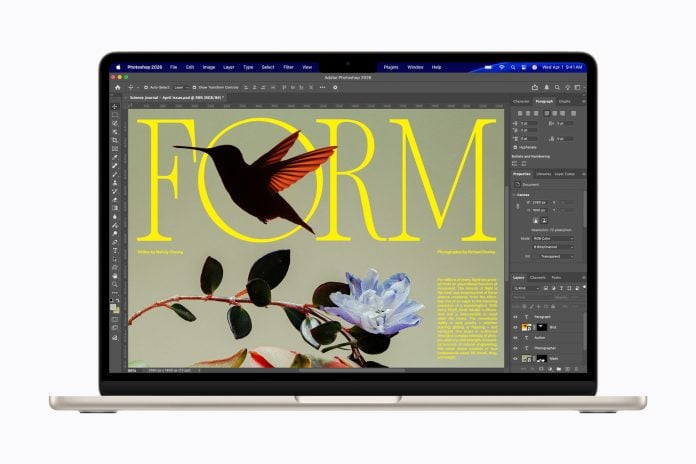
Apple is unveiling the new MacBook Air with M5 chip, enhancing the world’s most popular laptop with improved performance and expanded storage. The M5 chip is set to deliver significant advancements in computing power, making it ideal for a range of tasks from everyday use to complex AI applications.
The new MacBook Air now features a 10-core CPU and an up-to-10-core GPU, both equipped with a Neural Accelerator. This upgrade enables the laptop to achieve up to 4x faster performance for AI tasks compared to its predecessor, the M4, and up to 9.5x faster than the M1 model. Additionally, the MacBook Air comes standard with 512GB of storage, double that of earlier versions, and offers configurations up to 4TB, catering to users with extensive data requirements.
Available in 13- and 15-inch models with a variety of colour options including sky blue, midnight, starlight, and silver, the MacBook Air promises a sleek aesthetic along with a sturdy aluminum design. The new model boasts an impressive battery life of up to 18 hours, with enhanced connectivity thanks to Apple’s N1 wireless chip, which supports Wi-Fi 7 and Bluetooth 6. This makes it easier for users to stay connected and productive anywhere.
Key Features
The MacBook Air with M5 includes several other noteworthy features:
A stunning 13.6- or 15.3-inch Liquid Retina display with 500 nits brightness.
Advanced camera technology and immersive sound systems for enhanced video calls and media consumption.
Two Thunderbolt 4 ports for expanded connectivity and dual external display support.
Environmental Considerations
In alignment with Apple’s commitment to sustainability, the new MacBook Air is built with 55 percent recycled content and aims to meet ambitious carbon neutrality goals by 2030. The device utilizes 100 percent recycled aluminum and cobalt, further illustrating Apple’s dedication to reducing its environmental impact.
Availability and Pricing
The MacBook Air with M5 is available for pre-order starting March 4, with official availability from March 11. Pricing begins at CAD $1,499 for the 13-inch model and CAD $1,799 for the 15-inch model, with discounts available for education.
Customers can visit apple.com/ca/store for additional information or to place their order. With this latest offering, Apple continues to set the standard for high-performance laptops suitable for a wide range of users.
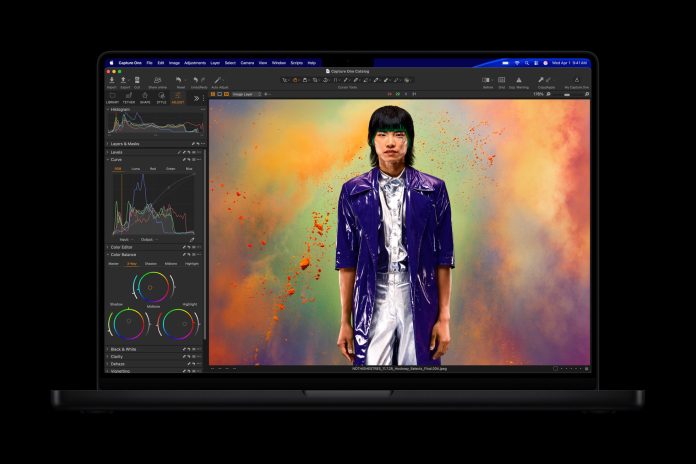
Apple is set to enhance its MacBook Pro lineup with the introduction of the new 14- and 16-inch models featuring the M5 Pro and M5 Max chips. These new offerings promise substantial advances in processing speed and AI capabilities, positioning them as leaders in the professional laptop market.
The latest MacBook Pro models boast improved CPU and GPU performance, including up to 2x faster SSD speeds and a starting storage option of 1TB. The enhancements are particularly significant for developers, researchers, business professionals, and creatives, aiming to leverage AI directly on the device.
According to John Ternus, Apple’s senior vice president of Hardware Engineering, the M5 Pro and M5 Max redefine what is possible in a pro laptop, achieving remarkable battery life and groundbreaking AI performance. The inclusion of Neural Accelerators in the GPU allows users to execute advanced models locally, a feature that no competing laptop currently offers.
Key Features and Performance Improvements
The M5 Pro and M5 Max chips, designed using the new Apple Fusion Architecture, deliver substantial performance improvements. The CPU includes a new up-to-18-core configuration with optimally designed cores for power efficiency and high performance, delivering up to 30% faster performance compared to the preceding models.
MacBook Pro users will benefit from faster AI capabilities, with up to 7.8x faster AI image generation performance and up to 6.9x faster LLM prompt processing compared to previous versions. Such improvements are invaluable for professionals involved in 3D rendering or video effects.
Storage Capacity and Connectivity
The new MacBook Pro models also offer impressive storage capacities, starting at 1TB for M5 Pro and 2TB for M5 Max. Users can expect up to 2x faster storage performance, with read/write speeds reaching up to 14.5GB/s, significantly enhancing productivity for users handling high-resolution video projects and large datasets.
Connectivity options have been expanded as well, with support for Thunderbolt 5, HDMI, and an SDXC card slot, catering to the needs of professionals requiring high-speed data transfers and seamless media importing.
Pricing and Availability
Customers can pre-order the 14- and 16-inch MacBook Pro models starting March 4, with shipments beginning March 11. The 14-inch MacBook Pro with M5 Pro starts at $2,999 CAD, while the 16-inch variant begins at $3,599 CAD. Additionally, the MacBook Pro with M5 Max has a starting price of $4,999 CAD for the 14-inch model.
The new MacBook Pro range is available in space black and silver, with additional educational pricing options available. As sustainability remains a priority for Apple, the MacBook Pro is constructed using 45% recycled materials, supporting Apple’s goal for carbon neutrality by 2030.
This launch not only emphasizes Apple’s commitment to innovation in technology but also highlights the growing demand for high-performance devices in professional settings.
Apple is launching the M5 Pro and M5 Max, the most advanced chips for its pro laptops, optimizing the new MacBook Pro for demanding users. These chips are built on a revolutionary Apple-designed Fusion Architecture that combines multiple powerful components into a single system on a chip (SoC).
The M5 Pro and M5 Max feature an 18-core CPU architecture with six super cores, providing a dramatic performance boost of up to 30 percent for professional workloads. The integration of a next-generation GPU, scalable up to 40 cores, alongside a robust Neural Engine makes these chips particularly suitable for graphics-intensive applications and AI computing.
“M5 Pro and M5 Max are a monumental leap forward for Apple silicon,” stated Johny Srouji, Apple’s senior vice president of Hardware Technologies. This new architecture aims to maintain performance while enhancing efficiency and memory capacity, addressing the needs of professionals in data modelling, sound design, and AI development.
M5 Pro: Tailored for Professionals
The M5 Pro is specifically designed for pro users who require substantial processing capabilities and graphics performance to manage complex tasks. This chip features a CPU with up to 18 cores paired with a powerful 20-core GPU, significantly improving multithreaded performance over its predecessor, the M4 Pro.
Notably, M5 Pro enhances its GPU capabilities, offering a 35 percent uplift in graphics performance when using ray tracing. This is beneficial for users involved in serious graphic design and rendering tasks.
M5 Max: Maximum Performance
The M5 Max caters to users whose work demands the utmost in GPU compute capabilities, featuring a CPU with 18 cores and a GPU that scales up to 40 cores. This configuration allows M5 Max to deliver impressive performance for heavy-duty applications such as 3D animation and complex data analysis.
Additionally, the M5 Max supports up to 128GB of unified memory, enabling professionals to handle massive datasets efficiently.
Advanced Features for Enhanced Efficiency
Both M5 Pro and M5 Max incorporate several advanced technologies, including a 16-core Neural Engine that enhances on-device AI functionalities. They also feature Thunderbolt 5 support, providing the most capable implementation in the industry, designed specifically to optimize performance.
These chips not only enhance MacBook Pro’s performance but also align with Apple’s commitment to being carbon neutral by 2030, promoting energy efficiency in their operations and products.
With pre-orders beginning soon, the new MacBook Pro is set to hit the market on March 11, marking a significant advancement in the capabilities offered to pro users.
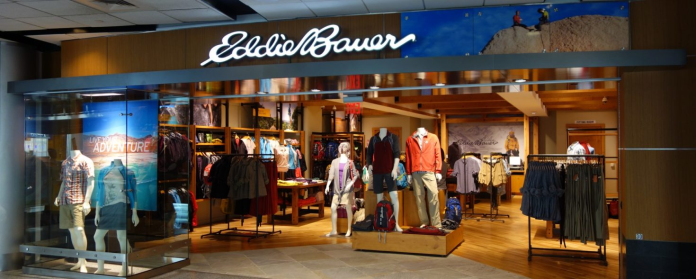
RCS Real Estate Advisors has been retained to market a substantial portfolio of store leases operated by Eddie Bauer across the United States and Canada, as part of the retailer’s ongoing Chapter 11 bankruptcy proceedings.
The advisory firm, which previously announced its role as exclusive real estate consultant to Eddie Bauer, is now actively marketing approximately 174 store leases totaling more than 1.08 million square feet. The portfolio includes 150 locations in 40 U.S. states and 24 locations across six Canadian provinces.
For Canada’s retail real estate sector, the marketing of these locations introduces a significant block of space to the market at a time when vacancy remains uneven across regional malls and lifestyle centres.
Canadian Footprint Faces Court-Supervised Wind-Down
In February 2026, Eddie Bauer LLC, the operator of the brand’s physical stores in North America, filed for Chapter 11 bankruptcy protection in the United States and sought legal recognition in Canada. On February 19, 2026, the Ontario Superior Court recognized the U.S. filing, allowing liquidation and potential sale efforts to proceed under court supervision.
The Canadian fleet has been reduced significantly from historical levels. As of February 2026 24 stores remained open across the country, primarily in Ontario, with additional locations in British Columbia, Alberta, Quebec and other provinces.
Liquidation and going-out-of-business sales began in early February at nearly all Canadian locations, with many stores offering discounts of 60 percent or more. March 12, 2026 has been set as a critical deadline for customers to redeem gift cards and Adventure Points in physical stores. After that date, those benefits are expected to become void in-store.
While the retail store network is undergoing a wind-down process, a sale of some or all locations remains possible, depending on buyer interest and court approval.
A Rare Opportunity for Retailers and Landlords
According to RCS, the portfolio of Eddie Bauer store leases in Canada and the United States offers a range of footprints in established malls, lifestyle centres and high-traffic retail corridors. The stores average approximately 6,300 square feet and are often positioned alongside national anchors and strong co-tenants.
“As part of the Chapter 11 process, we are focused on maximizing value and identifying opportunities for landlords, retailers and other uses seeking quality retail space in proven trade areas,” said Ivan Friedman, President and CEO of RCS Real Estate Advisors. “This portfolio represents a rare opportunity to secure legacy retail locations in established centers nationwide. Our team is actively engaging the market to drive competitive interest and efficient lease dispositions.”
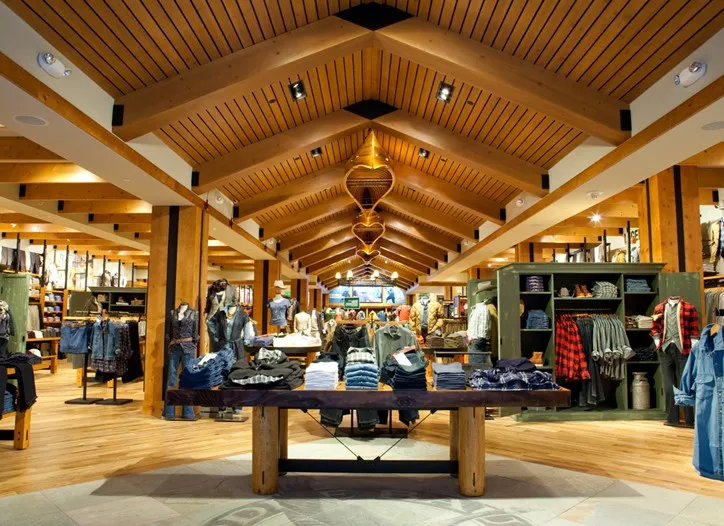
New concept Eddie Bauer store in Bellevue, Washington. Photo: Eddie Bauer
Third Bankruptcy in Two Decades
The current filing marks the third time in just over 20 years that the 106-year-old brand has faced insolvency proceedings, following earlier restructurings in 2003 and 2009. However, it is important to distinguish between the retail store operator and the intellectual property behind the brand.
The bankruptcy was filed by Eddie Bauer LLC, the entity operating the physical store fleet in North America, under its parent holding company Catalyst Brands. Catalyst Brands is a joint venture formed in 2025 by JCPenney and SPARC Group.
Total reported debt stands at approximately $1.7 billion. The filing cites inflation, tariff uncertainty, supply chain pressures and declining demand for outdoor apparel compared to pandemic-era highs as primary contributing factors.
Authentic Brands Group owns the Eddie Bauer intellectual property and brand name. It is not part of the bankruptcy filing.
What Remains Operational
Although the brick-and-mortar store network is under restructuring, other parts of the business remain operational.
The Eddie Bauer e-commerce platform is operated by Outdoor 5, LLC, a separate entity that did not file for bankruptcy protection. Online sales are expected to continue without interruption. In addition, wholesale distribution through third-party retailers such as Costco and Kohl’s is managed under the Outdoor 5 license and remains unaffected.
International locations, including stores in Japan and other markets outside North America, are operated by separate licensees and continue to trade.
This distinction is critical for Canadian consumers and landlords alike. While physical stores may close if a buyer is not secured by mid-March 2026, the brand itself is not disappearing from the market.
Implications for Canadian Retail Real Estate
The marketing of Eddie Bauer store leases in Canada comes at a time when the retail sector is experiencing mixed performance. In many top-tier malls, vacancy remains tight and replacement tenants are waiting in the wings. In secondary markets, however, large-format apparel vacancies can linger.
The average 6,300-square-foot footprint aligns with demand from value-oriented fashion chains, specialty outdoor brands, health and wellness concepts, and even select food and beverage operators looking to backfill apparel space.
For landlords, the Chapter 11 process also allows for lease assignments subject to court approval, which can facilitate faster transitions than traditional vacancy cycles. RCS will oversee marketing efforts, lease assignments and related negotiations with Eddie Bauer and its advisor.
Retailers, landlords and brokers seeking more information have been directed to contact Ivan L. Friedman, President and CEO; Spence Mehl, Partner; Ed Coury, Senior Managing Director; and Moe Puri, Managing Director at RCS Real Estate Advisors.
A Turning Point for a Legacy Brand
Founded more than a century ago, Eddie Bauer built its reputation as an outdoor apparel and equipment specialist. Over time, the brand evolved into a mall-based lifestyle retailer, expanding aggressively across North America.
The current restructuring reflects broader shifts in consumer behaviour and category demand. During the pandemic, outdoor and active apparel experienced a surge in interest. As normal travel, office work and discretionary spending patterns resumed, demand moderated.
In Canada, the outcome of this process will determine whether any Eddie Bauer physical stores survive under new ownership. If a buyer emerges, some locations could continue operating. If not, the country’s remaining fleet will close, adding another legacy apparel name to the list of recent retail exits.
For now, the focus remains on the orderly marketing and disposition of Eddie Bauer store leases in Canada and across the United States. The coming weeks will be pivotal in shaping the next chapter for both the retailer’s physical footprint and the landlords that house it.
Applications are now open for the Mastercard Small Business Fund, giving women small business owners in Canada the opportunity to receive a $10,000 CAD grant and resources to equip their business for future growth.
Along with funding, grant recipients will receive tailored mentorship, support for growing their business digitally, and a Priceless Experience in Toronto, said Mastercard.
Beginning today until March 24, Canadian women small business owners can apply for the Mastercard Small Business Fund here.
Nishant Raina
“Small businesses fuel our economy and inspire innovation across the country, and we’re dedicated to providing them the tangible support they need to help them grow to their fullest potential,” said Nishant Raina, Vice President, Small and Medium Enterprises, Mastercard, Canada. “Through the Mastercard Small Business Fund, we’re empowering entrepreneurs with community, mentorship and skills so they can transform obstacles into opportunities and build the future they’ve imagined.”
“Receiving funding from Mastercard was a game-changer for us. It gave us the momentum we needed to scale our operations and reach new audiences,” said Sheba Zaidi, Co-Founder of Mahara Mindfulness and a previous fund recipient. “As a small business owner, every day can feel like a new journey, but having access to new resources and networks has allowed us to uncover opportunities and feel more prepared for what’s ahead.”
According to Statistics Canada, women-owned businesses represent almost one-fifth of private sector businesses in Canada. However, they continue to face heightened challenges in securing financing and scaling their companies, said Mastercard. At the same time, women are a critical driver of Canada’s innovation engine; 30.5% of women-majority-owned small and medium-sized enterprises (SMEs) are classified as innovative enterprises, outpacing the innovation rate among male-majority-owned SMEs, explained the company.
Mastercard Small Business Fund (CNW Group/Mastercard Canada)
Sheba Zaidi
For Canadian women entrepreneurs navigating economic and market uncertainty, the Mastercard Small Business Fund offers a platform that provides resources for innovation including access to funding, community and networks, said Mastercard.
“The Fund’s impact can be seen through the success stories of past recipients who have overcome challenges, expanded their operations, and achieved milestones that were once beyond reach,” it said.
In 2025, the company said it further expanded its support for business owners by launching the Small Business Navigator, a suite of resources designed to address key areas of need for entrepreneurs. It offers access to free economic trend reports, educational cybersecurity resources and exclusive offers from Mastercard partners to help drive cost savings.
In addition, it said the Mastercard Small Business Community continues to empower small business owners by fostering connections within the sector and offering resources to drive business growth and digital enablement. To join the Mastercard Small Business Community, click here.
Xero, the global small business platform, released on Tuesday its quarterly Xero Small Business Insights (XSBI) report, a snapshot of the health of the Canadian small business (SMB) sector, revealing a significant decline in sales growth in the last quarter of the year.
The report said the data indicates the “uncertain macroeconomic environment and an increasingly volatile Canadian small business landscape.”
“Heightened macroeconomic uncertainty, heavily disrupted supply chains, and shifting trade policy have significantly impacted the Canadian small business economy. We’re now seeing the true cost of a fractured global economy show up at the SMB level,” said Louise Southall, Economist at Xero.
Louise Southall
“The small business sector started last year in a solid position, following earlier policy interest rate cuts by the Bank of Canada. But throughout the year, the general trend in Canada’s small business sales growth slowed, culminating in a decline in sales in the final quarter.”
According to the report, from October to December 2025, Canadian small business sales growth dropped 4.1% year-over-year (y/y), the largest quarterly decline in sales since the September quarter 2020, falling well below the long-term series average of 4.5% y/y.
Despite a solid start to 2025, sales growth slowed each quarter before experiencing a notable decline in the quarter to December. Over the same period, the length of time small businesses waited to be paid remained steady at approximately 27 days (26.8 days in the quarter to December), and late payments improved marginally, with late payments averaging 9.7 days in the December quarter, added Xero.
Regionally, Alberta maintained sales growth results well above the national average over the course of the year, experiencing significant growth in the March, June, and September quarters (+11.0%, +2.9%, and +3.8%, respectively). Meanwhile, British Columbia experienced the weakest result, with sales dropping 8.2% y/y in the quarter to December. Time to be paid metrics showed considerable volatility between provinces from quarter to quarter, but Alberta generally outperformed British Columbia and Ontario, dropping to 26.6 days in Alberta in the quarter to December, explained the report.
Ashalee Mohamed
“In an operating environment that is increasingly irregular and unpredictable, it’s incredibly challenging for small business owners to anticipate demand or make strategic plans right now,” said Ashalee Mohamed, Head of GTM for Canada at Xero.
“While the road ahead is uncertain, Canadian small businesses have proved time and again that they can be agile and resilient in the face of uncertainty. Small business owners should prioritize decisions that are within their control and look for ways to insulate themselves against market uncertainty wherever possible.”
In a market where consumers continue to weigh every purchase, experience-led spending keeps finding room in the budget. Into the Kitchen, a Toronto-based culinary experience business founded by Louise Borins, is leaning into that shift by offering something most diners never see: real, hands-on time inside the working kitchens of some of the city’s best-known restaurants.
Borins describes the concept as an immersive, pre-service experience that places guests shoulder to shoulder with executive chefs and their teams. “It’s a three hour afternoon experience,” she said, adding that it is designed to feel authentic rather than staged. “It’s a three hour organic experience, so I do not tell the route, it’s not staged.”
Louise Borins
While the format has a luxury feel, the business model also taps into a broader retail and hospitality reality. In recent years, many operators have looked for new revenue streams that align with brand identity, protect integrity, and drive repeat visits. Borins believes her concept does all three, while also giving guests a clearer understanding of what goes into a high-ticket meal.
An idea born in 2001, then revived for a different era
Into the Kitchen, as it exists today, is what Borins calls an “iteration two” of a business she first ran in the early 2000s. She traces the origin back to 2001, when she was invited into the kitchen at Centro, then located near Yonge Street, after an experience was raffled at a charity auction.
“I was shoulder to shoulder with the crew,” she recalled. “It was just something that I had never done before.” The experience stayed with her, and she followed up with chef David Lee, eventually building a small business around the concept.
She ran that first version for about 11 years, then paused it while pursuing an executive MBA. After a long gap, she brought it back in 2023, arguing the timing is stronger now than it was the first time. “We felt like it was even more significant today,” she said.
Part of that confidence comes from how consumers have evolved. People still buy premium goods, but a growing slice of discretionary spend has shifted toward access, story, and memory making. Borins sees that every time a guest walks through the door.
The restaurant roster, and why Borins is growing it carefully
Into the Kitchen’s partner network reads like a cross-section of Toronto’s modern restaurant identity, including Bar Prima, Bymark, Capra’s Kitchen, DaiLo, La Palma, Liliana, Lucie, and Mamakas.
Borins said she built the roster deliberately, focusing on culinary credibility, strong leadership, and a range of cuisines. “I was very intentional when I recruited,” she said, noting that the mix spans Greek, Asian-influenced concepts, classic Italian, and French cuisine, among others.
Her approach to growth is also restrained, which is unusual in a market that often celebrates rapid expansion. “I am careful to grow slow and sure,” she said, explaining that she wants to avoid overwhelming partners and ensure the program delivers meaningful business back to the restaurants.
That slow-build strategy is reflected on the consumer side too. She describes much of the business as referral-driven, including introductions through professional circles. “A crew of VC capital guys keep referring me,” she said, adding that momentum has been steady without a heavy marketing push.
A profile in Toronto Life’s holiday gift coverage, which positioned the concept as a standout experience for food lovers, also helped validate the demand for premium, kitchen-level access.
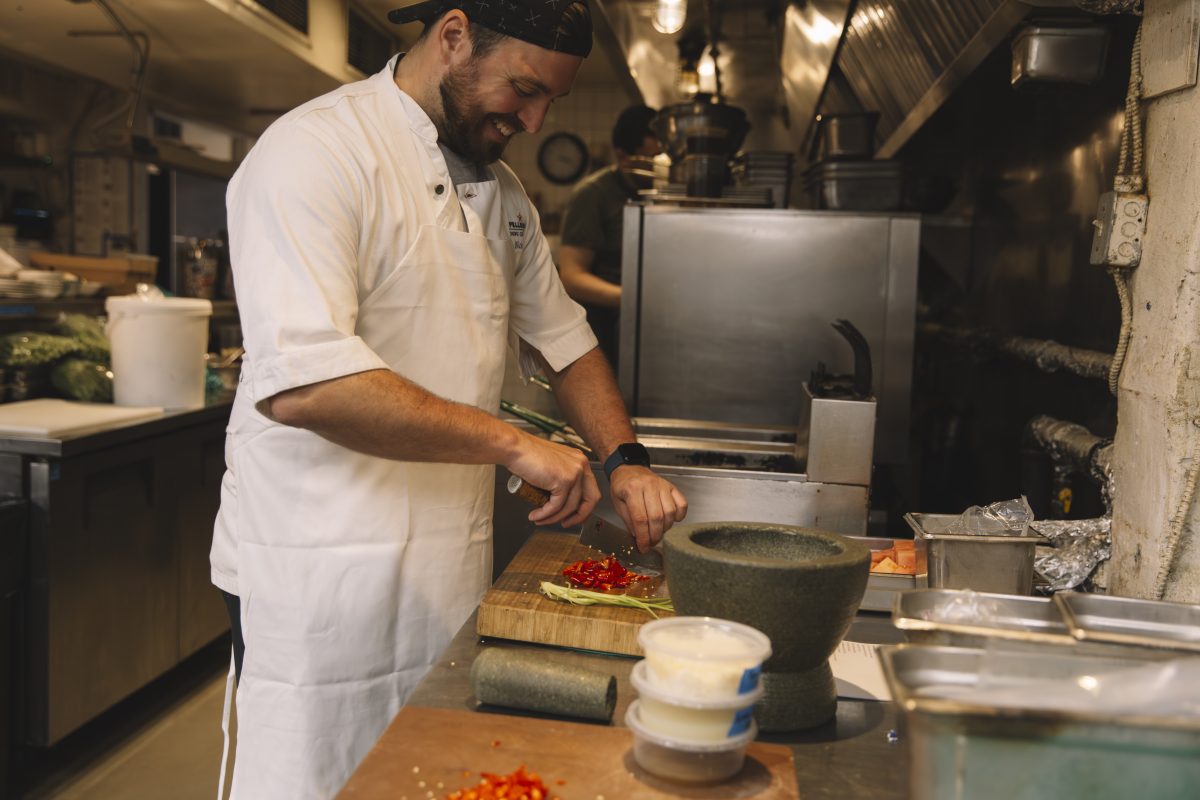
A chef in a kitchen in a restaurant in Toronto
What guests actually do inside a working kitchen
For readers who hear “culinary experience” and picture a classroom-style cooking lesson, Borins is quick to draw the line. She positions the product as immersion, not instruction, and insists it must stay unscripted.
Guests typically arrive in the afternoon and spend three hours in the kitchen ahead of dinner service. Into the Kitchen describes the format as moving “between observer and participant” while engaging in the restaurant’s real operations.
Borins says the experience is tailored to the moment, and also to the guest. “They’re mindful of the client’s interest, dietary preference,” she said, adding that chefs plan the flow in their own way, within allergy and dietary guardrails. The result can range from plating and prep to deeper behind-the-scenes exposure.
She also emphasizes the human element. “There is a relationship that is forged between chef and client,” she said, describing unexpected friendships that sometimes continue after the session. She has seen chefs and guests stay in touch, and in some cases socialize later, which she did not anticipate when she revived the concept.
That relational angle matters because it turns one transaction into an ongoing connection, which is the heart of loyalty, whether in retail, hospitality, or services. A meal can be a one-off. A relationship often drives repeat visits, gifting, and advocacy.
Pricing, packages, and the economics of premium experience retail
Toronto restaurant. Photo: Into the Kitchen
Into the Kitchen lists its base experience at $600 for one participant, with an option to add a second person for an additional $600.
From there, the offering steps up through add-ons that turn the day into a full dining occasion. One package includes a chef’s menu for two served after the kitchen immersion, and another adds wine pairings on top, with pricing and structure outlined on the company’s site.
In conversation, Borins framed the entry price as intentionally accessible for the segment, given the intensity of the access. “To spend three hours with a chef, I’ve come at it truly with an initial price offering,” she said, describing it as a way to build volume and awareness.
She also said she has baked gratuities into the structure and aimed to be transparent with restaurant partners about how revenue is split. “I think it’s really important that the staff is really remunerated,” she said, adding that she wants the experience to feel motivating for the kitchen team rather than intrusive.
That matters because the product is effectively a new retail layer sold inside a restaurant brand. It relies on staff buy-in, operational coordination, and a clear sense that the experience strengthens the restaurant, not distracts from it.
Photo: Into the Kitchen
Pulling back the curtain on food costs, labor, and value
Borins believes one of the most powerful outcomes is education, even when guests arrive simply seeking excitement. In her view, stepping into the back of house helps people understand why restaurant pricing has moved higher, and why margins remain tight.
“When clients go behind the scene and see the work and the expensive ingredients, top notch food ingredients prep, they really are, they have a new awareness,” she said.
That perspective aligns with broader conversations across the industry, where operators have tried to communicate the realities of labor, ingredient inflation, and the true cost of hospitality. Instead of explaining it through signage or social posts, Into the Kitchen makes the point through lived experience, then closes the loop by serving dinner afterward.
It is a reminder that “experiential” is not just a marketing theme. In some cases, it is a practical bridge between a brand’s value proposition and the consumer’s understanding of what they are paying for.
Partnerships and the next stage of growth
Although Into the Kitchen is currently Toronto-centric, Borins says interest from outside the city is real. Vancouver and Calgary have come up in her planning, and she describes expansion as part of a longer-term vision. Still, she is candid about the constraint: her presence is a big part of the product.
“To be quite transparent, I am the ‘into the kitchen’ lady,” she said. “I am the one that meets the clients firsthand. So I cannot replicate myself in that way.”
Instead, she is widening distribution through partnerships that put the experience in front of travelers and high-intent consumers. Into the Kitchen is listed by Destination Toronto as a three-hour immersive experience inside the kitchen of a leading Toronto restaurant.
Borins also pointed to collaborations with premium travel and hospitality players, including a partnership with the St. Regis Toronto that appears on the hotel’s experience offerings, as well as work with luxury travel company Abercrombie & Kent.
From a brand strategy perspective, those channels match the target customer, and they do it without turning the business into a mass-market product. They also reinforce Borins’ preference for controlled growth, strong partners, and reputational credibility.
Why this concept fits Toronto right now
Borins argues that Toronto’s restaurant scene is part of why the model works. “It’s outstanding,” she said, describing the city’s food as seasonal, current, and service-driven. She also believes the professionalism in kitchens, and the culture among crews, creates an environment where guests can step in without the experience feeling chaotic.
In the background, the rise of international validation, including Michelin’s presence in the region, has added to the city’s confidence. Still, Borins frames excellence as the point, not the trophy. “They want to be excellent and more so, they want to have the customer come back again,” she said.
For retail watchers, the takeaway is that hospitality is increasingly behaving like premium retail. The product is not only the meal. It is access, belonging, story, and memory. Into the Kitchen Toronto culinary experience is designed to sell all of those at once, while also feeding demand back into the restaurant brands that make it possible.
Borins summed up her approach in simple terms, rooted in long-term relationships. “When I say partnerships, it’s truly like a friendship,” she said. In a city where consumers collect experiences as readily as they once collected things, that may be the most durable value proposition of all.
“We closed out 2025 with solid operational execution in Q4 amid heightened value-seeking and competitive activity,” said Greg Ramier, Chief Executive Officer of Pet Valu. “Through our decisive actions in 2025, we continued to gain market share, drove growth led by our proprietary brands, and increased units per transaction, all while supporting our franchisees’ success.
“As we celebrate our 50th anniversary in 2026, we plan to strengthen our legacy and leadership in the Canadian pet industry through a continued focus on convenience, quality, value and expertise, while delivering benefits from recent investments,” continued Mr. Ramier. “Together, we expect these actions to support solid revenue and profit growth, enabling compelling returns to shareholders in the near and long term.”
Fourth Quarter Highlights
System-wide sales were $423.7 million, an increase of 9.2% versus Q4 2024. Same-store sales growth was 0.3%.
Revenue was $326.4 million, up 10.6% versus Q4 2024.
Adjusted EBITDA was $74.6 million, up 9.4% versus Q4 2024, representing 22.9% of revenue. Operating income was $48.1 million, up 0.5% versus Q4 2024.
Adjusted Net Income was $34.0 million or $0.49 per diluted share, compared to $32.2 million or $0.45 per diluted share, respectively, in Q4 2024. Net income was $29.4 million, up 1.6% versus Q4 2024.
Opened 14 new stores and ended the quarter with 863 stores across the network.
Free cash flow was $37.0 million, compared to $41.0 million in Q4 2024.
Subsequent to Q4 2025, the Board of Directors of the Company declared a dividend of $0.13 per common share.
Fiscal Year Highlights
System-wide sales were $1,533.5 million, an increase of 5.6% versus the prior year. Same-store sales growth was 1.6%.
Revenue was $1,175.6 million, up 7.1% versus the prior year.
Adjusted EBITDA was $257.1 million, up 4.1% versus the prior year, representing 21.9% of revenue. Operating income was $164.2 million, up 5.7% versus the prior year.
Adjusted Net Income was $113.2 million or $1.61 per diluted share, compared to $113.3 million or $1.57 per diluted share, respectively, in the prior year. Net income was $97.8 million, up 11.9% versus the prior year.
The company is headquartered in Markham, Ontario and has distribution centres in Brampton, Ontario, Surrey, British Columbia and Calgary, Alberta.
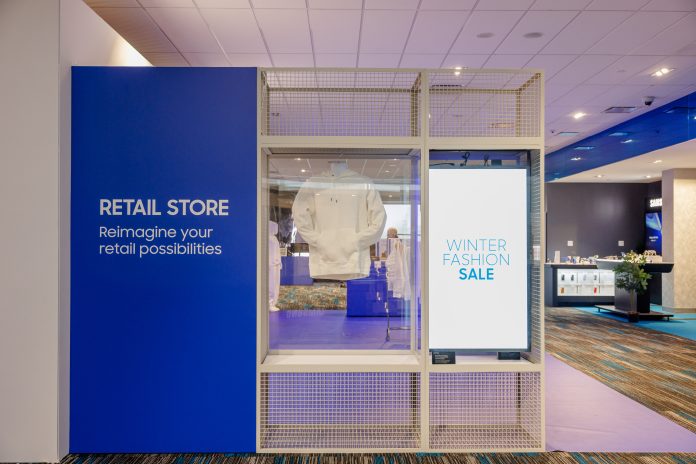
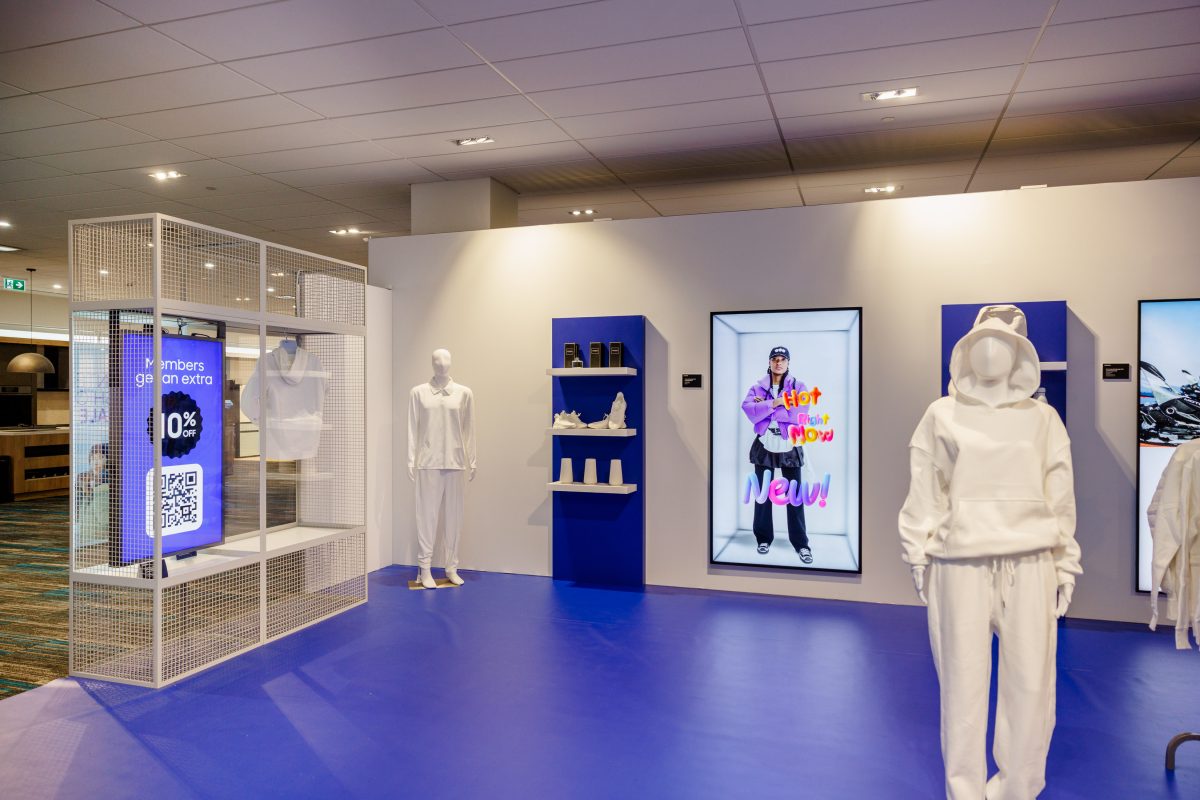
Samsung Retail showroom in its Mississauga headquarters. Photo: Samsung Canada
Samsung is giving Canadian media and retailers a hands-on look at how physical stores are evolving. Inside its Mississauga showroom, the company has constructed a fully integrated “store of the future” that demonstrates how immersive retail technology is reshaping merchandising, engagement, and store economics.
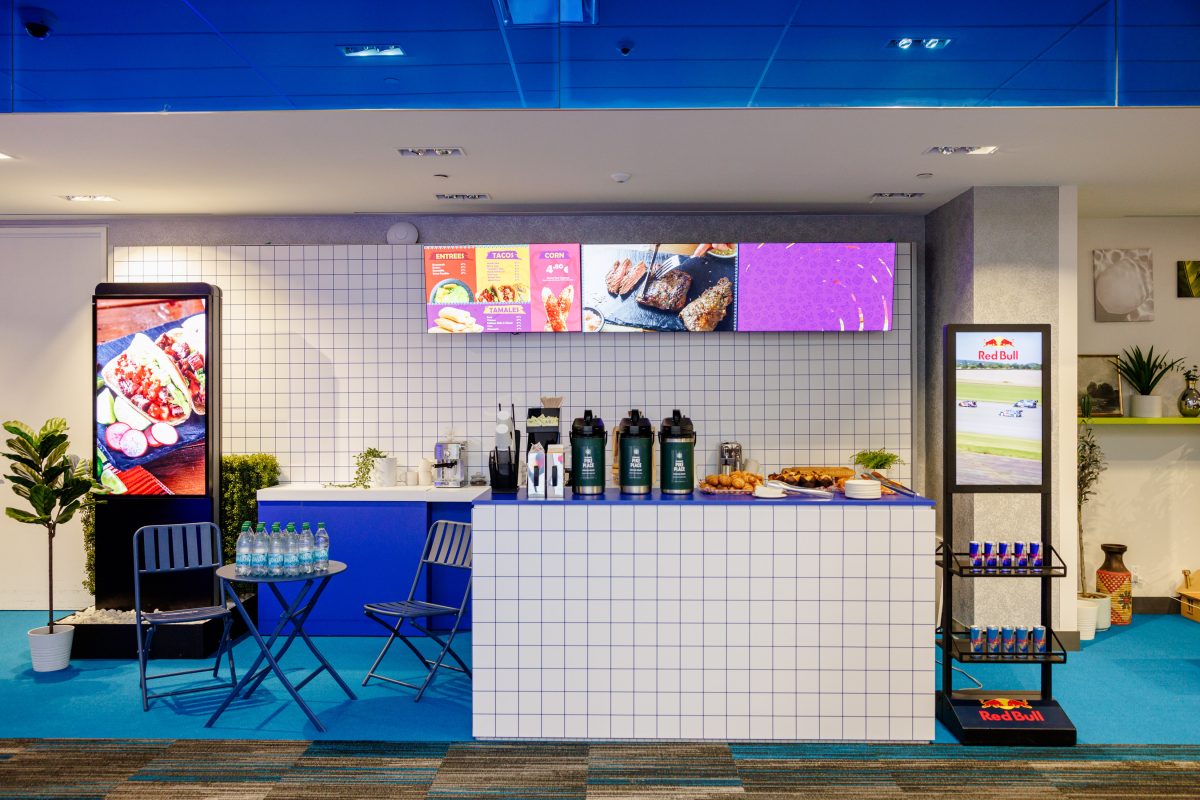
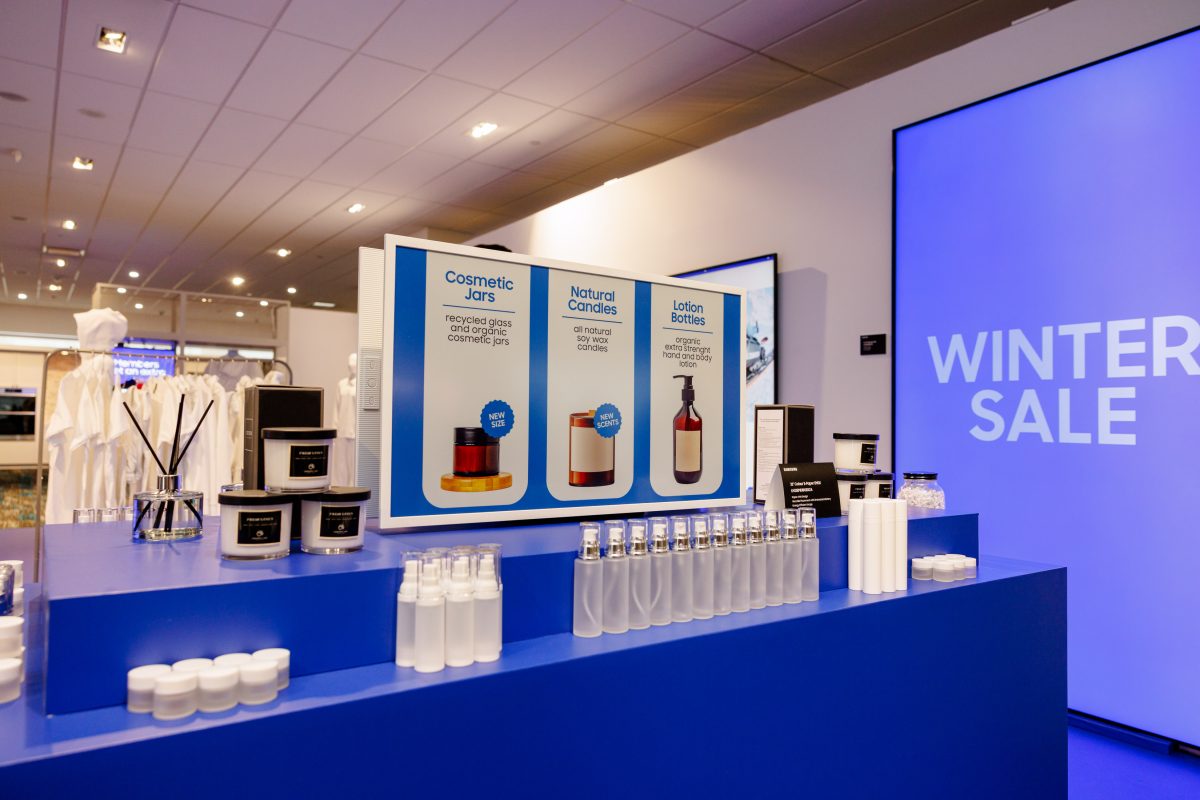
Rather than presenting standalone screens or hardware, Samsung has recreated multiple live retail environments within its space. Visitors can walk through scenarios inspired by grocery, big box, boutique, and quick-service formats, each powered by connected displays, interactive touchpoints, and data-driven tools.
For James Arndt, Head of the Enterprise Business Division at Samsung Canada, the decision to build a fully integrated space was intentional.
James Arndt
“Until people can actually envision our product in their environment, it’s difficult,” he said. “We’ve got product in our showroom all the time. We can show what a screen looks like. But when you integrate it into a retail setting, even if it’s not perfect, it gives people context. It lets them see what’s possible.”
From Transactional Space to Strategic Environment
Arndt said retailers are rethinking the role of physical space. Stores are no longer viewed solely as transactional environments. Instead, they are becoming strategic platforms for engagement, storytelling, and monetization.
“Retailers are looking at space differently,” he explained. “It’s not just about putting product there. They need to be strategic. How are they drawing people in? How are they guiding them through the environment?”
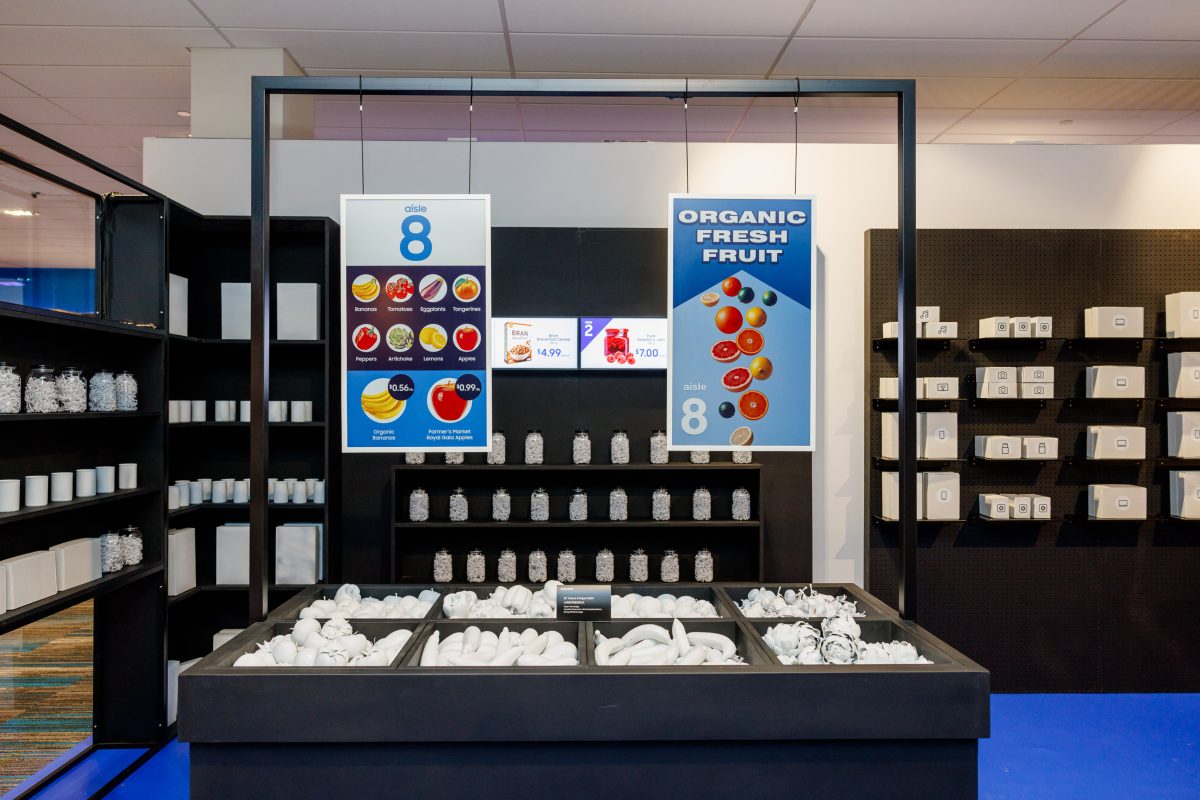
Screens, he noted, are increasingly viewed as revenue-generating assets rather than static fixtures. In grocery, for example, a digital display placed near a produce section could feature recipe ideas, sourcing information, or vendor-funded content tied to specific products.
“That allows the retailer to monetize the screen,” Arndt said. “It helps pay for the investment, because it is significant. At the same time, it gives customers more information and engagement.”
The emphasis on measurable return is central to the adoption of immersive retail technology. Retailers are tracking dwell time, engagement, and sales lift to determine impact.
“They absolutely measure it,” Arndt said. “They can look at how long someone stands in front of a display. They can look at lift on a product being advertised. We encourage that, because they need to see the ROI. If they get good ROI, they’ll invest more.”
Samsung Retail showroom in its Mississauga headquarters. Photo: Samsung Canada
Samsung Spatial Brings Glasses-Free 3D to the Floor
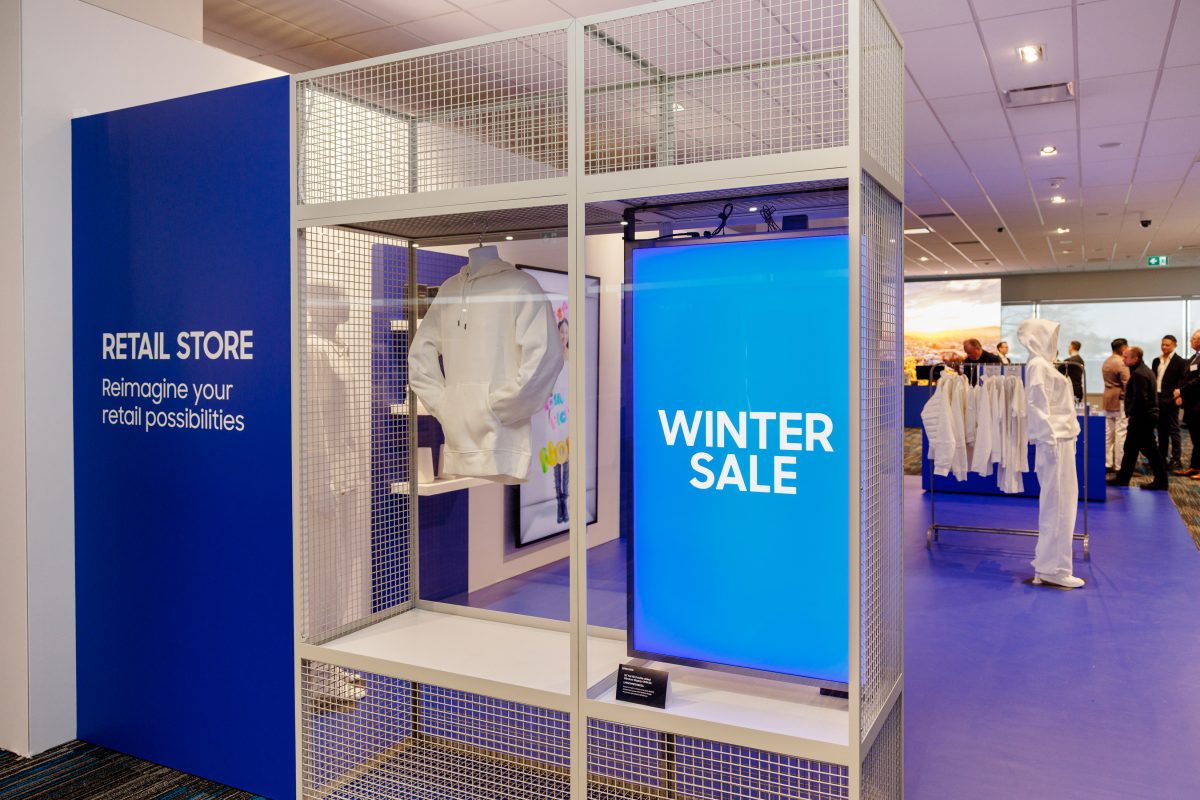
One of the most talked-about features in the Mississauga showroom is Samsung Spatial, an 85-inch glasses-free 3D display designed to create depth and motion without requiring wearable technology.
“It’s absolutely next level,” Arndt said. “When you add that third dimension, your content becomes more immersive and eye-catching. People stop and look because it’s cool.”
In the retail setting, a digital mannequin can rotate, model apparel, or demonstrate product features in a way that extends beyond traditional flat signage. The technology aims to capture attention in high-traffic environments where shoppers are often overwhelmed by visual noise.
“You can see a picture of it,” Arndt said. “But it’s nothing until you stand in front of it and go wow. That’s what we’re trying to create.”
The showroom’s popularity has exceeded expectations. What was initially planned as a two-day event has been extended by several days due to retailer interest.
“People are saying their company needs to come and see this,” Arndt noted. “We’re not tearing it down as quickly as we thought we would.”
Samsung Retail showroom in its Mississauga headquarters. Photo: Samsung Canada
E-Paper and Operational Efficiency
While Spatial focuses on visual impact, Samsung’s Colour E-Paper addresses operational efficiency. Available in 13-inch and 32-inch formats, the ultra-low-power displays operate without backlighting and can run on battery power for extended periods.
“Think of it like e-ink,” Arndt explained. “It uses tiny ink bubbles and electrodes to create images. It takes on the ambient lighting in the store.”
Because it does not require constant power, E-Paper can be installed in areas where wiring is impractical. A display suspended above a promotional table, for example, could operate for up to 200 days on a single charge if content is updated only a few times daily.
“It opens up new use cases,” Arndt said. “You can put it at the front cash with a barcode for loyalty sign-up. You can use it for end-cap promotions. It’s flexible.”
Arndt does not expect digital displays to eliminate print entirely. However, he believes the balance will shift over time.
“There’s always a place for print,” he said. “But I do think you’ll see more e-paper and digital signage replacing some of it.”
Samsung Retail showroom in its Mississauga headquarters. Photo: Samsung Canada
Endless Aisle and Inventory Expansion Without Square Footage
Interactive touchscreens are another feature of the showroom, demonstrating the increasingly mainstream concept of the “endless aisle.” These kiosks allow customers to browse and order products not physically stocked in-store.
“As retailers look at space constraints, they may not be able to carry full inventory,” Arndt said. “With endless aisle, customers can order what they want and have it shipped home, or order a size that isn’t available.”
He recently observed the model in action at a small specialty baby store equipped with multiple touchscreen kiosks.
“They might only have one of everything in the store,” he said. “But the kiosks expand the assortment without expanding the square footage.”
For retailers facing rising occupancy costs, immersive retail technology provides a way to extend assortment and increase basket size without enlarging their footprint.
Samsung Retail showroom in its Mississauga headquarters. Photo: Samsung Canada
Canadian Retailers Keeping Pace
Arndt believes Canadian retailers are keeping pace with global counterparts in adopting digital and immersive solutions.
“We’re seeing very strong adoption in grocery and QSR,” he said. “Drive-through technology, loyalty integration, digital menu boards. When I talk to colleagues in the U.S., I don’t see them doing anything better than us here.”
That competitive parity is significant, particularly as global brands continue to invest in flagship environments in Canada’s largest markets.
Samsung’s ecosystem extends beyond display hardware. Through platforms such as Samsung VXT for content management and Samsung Knox for device security, the company supports large chains managing thousands of endpoints. Its mobile ecosystem also enables mPOS solutions and associate mobility through ruggedized Galaxy devices.
The broader objective is to connect digital and physical touchpoints into a cohesive store environment.
Samsung Retail showroom in its Mississauga headquarters. Photo: Samsung Canada
The Human Element Remains Central
Despite the emphasis on technology, Arndt does not foresee a future where staff are replaced by screens.
“I don’t think we’re going to get rid of people,” he said. “When you go to a store, you want that interaction with experts.”
Instead, technology will empower associates with more information at their fingertips. Tablets and mobile devices can provide real-time inventory visibility, product specifications, and payment capabilities without requiring staff to leave a customer’s side.
“It makes people smarter in the moment,” Arndt said. “They don’t have to go check in the back. They can serve the customer better.”
He emphasized that training and support are critical to successful deployment.
“We have to ensure we’re supporting the technology with the staff,” he said. “They need to understand it and know how to use it. That’s most important.”
A Connected Future for Physical Retail
Samsung’s Mississauga showcase offers a glimpse into how immersive retail technology may become embedded across Canadian store networks in the coming years. As displays grow more responsive and data-driven, environments are likely to become more personalized and dynamic.
“You’re going to see environments become more responsive,” Arndt said. “Technology will help everyone who works there become better at servicing customers.”
For Canadian retailers navigating rising costs and heightened competition, the integration of immersive retail technology presents both an opportunity and a strategic imperative. The Mississauga showroom demonstrates that the future of brick-and-mortar is not about replacing the store. It is about reimagining it as a connected, measurable, and experience-driven platform for growth.
Retail investment in Calgary recorded a slower year relative to other asset classes, with total sales reaching $531.5 million by year end in 2025, representing a 31% decline from the prior year, according to a report by Barclay Street Real Estate.
“Transaction volume remained consistent with historical levels, with 54 deals completed and activity evenly split between the first and second halves of the year. The decline in total dollar volume reflects smaller deals across the submarket rather than reduced investor participation. Activity shifted away from the lowest price points, with roughly half of transactions occurring below $5 million and the remainder ranging between $5 million and $54.5 million,” said the report.
“Investors showed greater selectivity, focusing on mid- to higher-quality assets where scale and income stability supported deal execution. Average pricing held steady year over year at approximately $419 per square foot. The largest transaction was the $54.5 million sale of the 201,000-square-foot shopping centre at 388 Country Hills Boulevard NE.”
Calgary’s investment market delivered a year of transition in 2025, characterized by shifting momentum across asset classes and a more selective capital environment, said the Barclay report.
“While overall activity moderated from recent years, investor engagement remained broad-based, supported by strong fundamentals in industrial and multiresidential assets and improving confidence in the office sector,” it said.
“Total investment volume reached approximately $3.26 billion, reflecting a modest pullback from 2024, while transaction activity remained active across all major property types. Industrial and office sectors emerged as key contributors to dollar volume growth, offsetting slower performance in land and retail.”
Overall, the market demonstrated resilience, with sustained deal flow underscoring Calgary’s continued appeal as a diversified and liquid investment destination. Total investment activity in 2025 reached approximately $3.26 billion across 615 transactions, compared to $3.36 billion and 680 deals recorded last year. While both dollar volume and transaction count declined modestly year over year, activity remained historically active, reflecting ongoing investor interest amid a more cautious capital environment, said Barclay Street.
David Wallach
“In a year of recalibration, investors continued to place their confidence in Calgary, supported by the strength of our current fundamentals and a steady flow of capital, speaking to the enduring strength of our market,” said David Wallach, Owner/Broker Barclay Street Real Estate.