Total sales in the food services and drinking places subsector rose 0.1 per cent to $8.5 billion in July, marking the fifth consecutive monthly increase, according to new data from Statistics Canada.
The agency reported that full-service restaurants posted the largest sales growth in dollar terms, increasing by 0.4 per cent. Special food services, which include catering and mobile food services, also saw a rise of 1.4 per cent.
Meanwhile, limited-service eating places recorded the largest decline in dollar terms, falling 0.3 per cent. Sales at drinking places dropped 1.9 per cent.
Prices also continued to rise in July. Statistics Canada said non-seasonally adjusted prices for food purchased from restaurants increased 3.2 per cent compared with July 2024. Prices for alcoholic beverages served in licensed establishments rose 3.4 per cent over the same period.
Sales were up in five provinces, with Ontario leading the gains at 0.3 per cent, followed by Manitoba with a 1.0 per cent increase. British Columbia saw the largest decline in dollar terms, with sales falling 0.3 per cent.
Recently, it was reported that three in four Canadians (75%) are eating out less often due to the rising cost of living, according to Restaurants Canada’s2025 Foodservice Facts report. That share rises to 81% for those aged 18 to 34, it said.
As a result of this pullback in dining out, the 2025 outlook for foodservice businesses is mixed. An increase in domestic tourism is driving more sales, but Canadians are spending less per capita and opting to eat at home more than they were pre-pandemic, said the national organization.
Per capita, Canadians are spending $1,035 at full-service restaurants and $1,135 at quick-service restaurants. In 2019, they were spending $1,165 and $1,150 respectively.
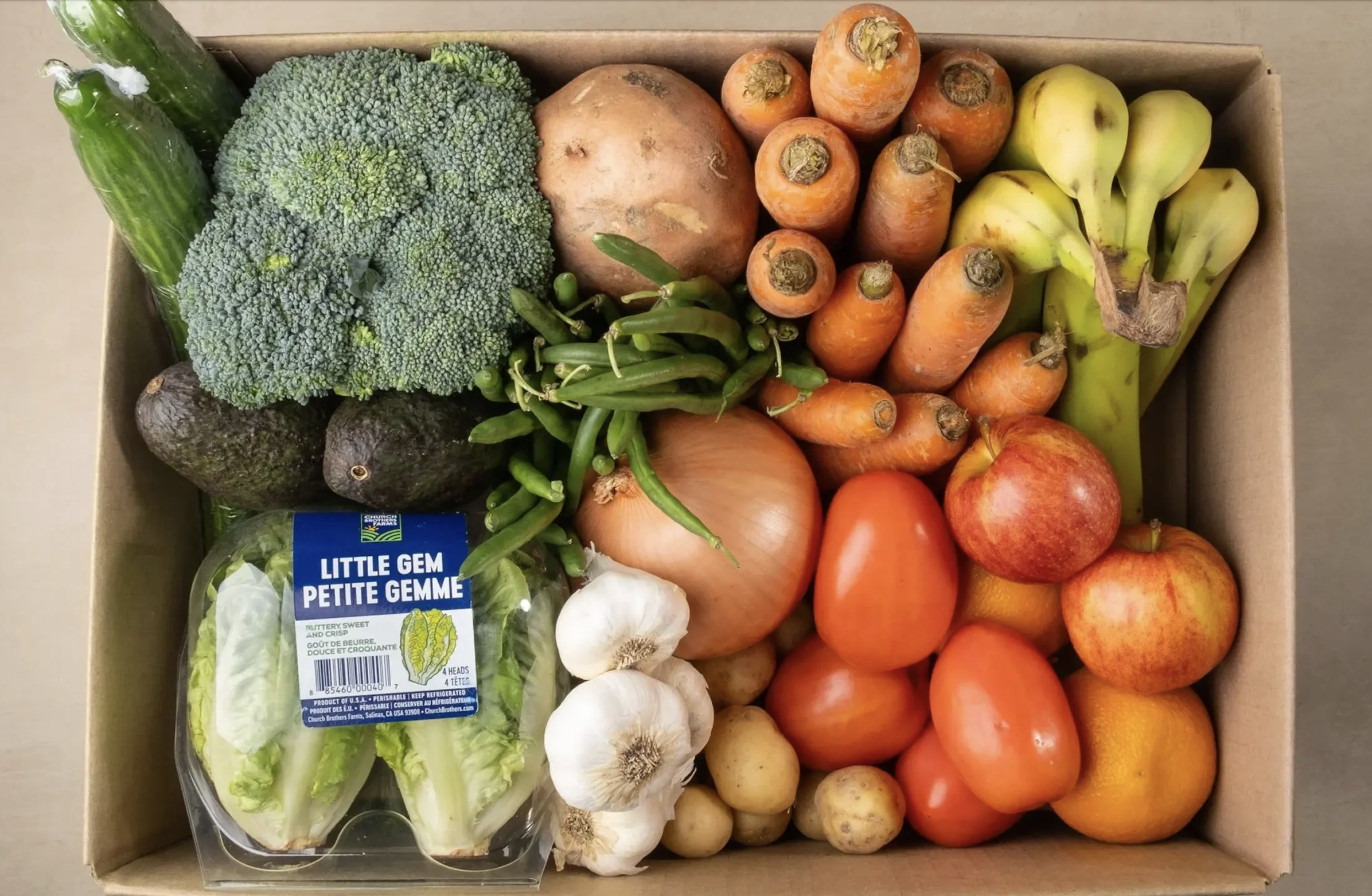
Tre’dish, a wholesale-to-consumer grocery platform based in Toronto, has launched a new app feature aimed at giving consumers more transparency in grocery pricing, while also significantly expanding its product offerings through a recent acquisition.
The company announced recently it has introduced Transparent Pricing, a tool within its app that provides real-time, geo-targeted price comparisons for individual grocery items against the three largest full-service grocery retailers in a given area. Tre’dish says the feature is designed to empower consumers with increased visibility and control over their grocery spending.
Peter Hwang
“Groceries have become one of the biggest financial stressors for Canadians,” said Peter Hwang, founder and CEO of Tre’dish. “The acquisition of Brandco Direct is a huge step forward for us. It’s about scaling up fast, giving families more value, keeping prices fair, and supporting the amazing Canadian brands we work with. We’re not waiting for traditional retail to change, we’re building something that’s new, financially disciplined, and socially impactful.”
Through the acquisition of Brandco Direct, a direct-to-consumer wholesale business, Tre’dish has expanded its product lineup from 600 to over 4,000 items, including produce, meat, dairy, household goods, and personal care essentials. The company says its pricing model—built on direct relationships with wholesalers and streamlined distribution—allows it to offer average savings of up to 25 per cent compared to traditional grocery stores and delivery aggregators.
Tre’dish says its approach eliminates conventional retail markups by working directly with suppliers and optimizing delivery routes. Unlike traditional grocers, the company claims its platform prioritizes affordability for households over profit margins.
“With Transparent Pricing, families can see exactly how much they’re saving on the same quality products they expect from top-tier grocers: not discount retail substitutes or lower-quality alternatives,” the company stated in its release. “The feature not only builds trust with consumers but also reinforces Tre’dish’s technology-first approach to grocery retail, the backbone of its competitive advantage.”
Photo: Tre’dish
The company says the data gathered through Transparent Pricing will also support future enhancements to the platform, including predictive shopping baskets, intelligent product substitutions, and personalized recommendations based on household budgets and preferences.
Households in the Greater Toronto Area can access Tre’dish’s services and pricing comparisons through the company’s website at tredish.com.
I listened to the Costco Wholesale Corporation (NASDAQ: COST) 4th quarter and full year 2025 earnings call on September 25th. The call was hosted by Ron Vachris (President & CEO) and Gary Millerchip (EVP & CFO).
Bruce Winder
GAAP Financials (all in $ USD)
4th Quarter Fiscal 2025
For Q4, net sales were $ 84.4 billion, up + 8% vs. last year.
Comp warehouse sales grew + 5.7% during the same time. By market, the US business was up +5.1%, Canada was up + 6.3%, and other international was up + 8.6%. E-commerce was up +13.6%.
Membership fees came in at $ 1.72 billion for Q4, up + 14% vs. last year. About half of the increase came from membership fee increases in September 2024 in both the US & Canadian markets. The other half of this growth number was a result of a combination of increase in number of members & upgrades from existing members from Goldstar to Executive plans. About half of new COSTCO members are less than 40 years of age.
Foreign exchange positively impacted sales by + .2% while gas price deflation negatively impacted sales by – .9%.
For Q4, traffic or shopping frequency was up + 3.7% world wide, while average transaction value or average ticket was up + 1.9% world wide.
Gasoline volume grew by low single digits in the quarter but comp sales were negative by mid-high single digits as the average price per gallon dropped vs. last year. Gas volume grew due to a combination of the addition of new gas stations, expansion of existing gas stations and longer hours of operation.
The retailer indicated inflation was up low to mid single digits in the quarter. Fresh & food and sundries categories had similar inflation to last year while non-food categories had higher inflation due to tariffs.
Both fresh and non-food categories were up high single digits in comp warehouse sales for the quarter. Food & sundries categories were up mid-to-high single digits. Ancillary businesses such as pharmacy, optical & hearing aids all had a strong quarter.
Specifically, COSTCO saw double digit growth in the following categories in Q4: gold & jewelry, toys, men’s apparel, consumer electronics, gift cards & more.
Digital traffic was up +27% in Q4. Within digital sales, the following categories grew sales double digit vs. last year: gold & jewelry, housewares, apparel, tires, sporting goods, majors, small electrics and lawn & garden.
Gross margin rate was 11.13% for Q4, up + 13 bps. If we take out gas price deflation, “core” GM rate was up + 3 bps. Fresh, food & sundries and non-food all enjoyed margin rate gains as supply chain cost efficiencies, lower shrink & higher Kirkland Signature (KS) mix helped. These gains were partially offset by a LIFO charge on more expensive inventory of $ 43 million in the quarter, which was a headwind of -.6 bps.
SG&A came in at $ 7.8 billion or up + 10%. This represents 9.21% of net sales, up +17 bps. 15bps of this increase was due to operations challenges including higher employee wages and increases in general liability costs for the quarter.
Operating income for the quarter was $ 3.34 billion, up + 9.8%. This represents 4% of sales, flat to Q4/24.
Q4 net income was $ 2.61 billion, up + 11% year/year. This represents 3.1% of net sales, +10 bps to Q4/24.
Income tax rate for Q4 was 25.6% vs. 24.4% last year where there was a one-time tax gain.
Diluted net income per common share was $ 5.87, up + 11% to last year.
CAPEX for Q4 was $1.97 billion.
Fiscal Year 2025
For fiscal year 2025 net sales was approximately $ 270 billion, up +8% year/year.
Comp warehouse sales were up + 5.9 %. By Market, the US was up + 6.2%, Canada was up + 5%, and other international was up + 4.8%. E-commerce sales were up + 15.6 %.
Membership fees for fiscal 2025 were $ 5.32 billion, up + 10.4% to fiscal 2024.
Gross margin rate for the year came in at 11.1 % which was up +10 bps to 2024.
SG&A for fiscal 2025 was $ 25 billion up + 9.5%. This represents 9.2% of net sales, up from 9.14% of net sales in 2024.
Operating income for the year was $ 10.38 billion, up + 11.8% to 2024. This represents 3.85% of net sales, up from 3.7% of net sales in 2024.
Net income was $ 8.099 billion, up + 10% over last year. This represents 3% of net sales, about flat to 2024.
Diluted net income per common share for the year was $ 18.21, up + 10% to 2024.
Cash & cash equivalents at the end of the quarter/year were $ 14.16 billion, up + 43%. Inventory is $ 18.12 billion, down – 3% to last year. Net cash generated from operating activities for the year was $ 13.3 billion, up + 17.6% over 2024. Cash dividend payments dropped significantly in 2025 from $ 2.18 billion this year vs. $ 9.04 billion in 2024.
Full year 2025 CAPEX came in at $ 5.5 billion. This represented an increase in CAPEX spend, which traditionally rises at the same rate as sales. 2025 CAPEX increased due to expanded new warehouses, remodels as well as land purchases for fiscal 2026 new warehouses. Capital was also spent on investments in COSTCO’s hot dog factory and coffee roasting facilities.
Management Commentary
Members
COSTCO has 81 million members as of the end of fiscal 2025 which has grown by + 6.3% vs. last year. The retailer has 145.2 million card holders which grew + 6.1 % year over year as well. COSTCO had a 93.2% member renewal rate in the the US & Canadian markets and a 89.8 % member renewal rate world wide. There has been a slight decrease in renewal rate as more members are signing up online and these members have a lower renewal rate than other members. To counter this decline, COSTCO is focusing on auto-renewal and member renewal communications.
Since June 30th, COSTCO Executive members have had additional hours to shop at warehouses in the US. COSTCO estimates this has added about + 1% to US warehouse sales since this change was made. The retailer has also added a $ 10 per month credit for Executive members if they spend over $ 150 from COSTCO using Instacart. Since these two Executive member benefits have been rolled out, the retailer has seen “meaningful” membership upgrades from Goldstar membership to Executive membership. COSTCO has 38.7 million Executive members, an increase of +9.3% year/year. Executive members represent 47.7% of all paid members and 74.2% of world wide sales.
E-commerce
COSTCO has grown market-share on “big and bulky” items bought online. The retailer offers a delivery service that not only installs the new item but takes away the old item for disposal. Costco.com personalizes it’s offers based on customer segment, including using messaging to upgrade members to more premium status (ie. Executive).
Warehouse Expansion
COSTCO opened 10 new warehouses in the 4th quarter. These included 1 relocation in Canada, the 20th warehouse in Korea, the 2nd warehouse in Sweden and 5 net new warehouses in the US. The retailer opened 24 net new warehouses in fiscal 2025 and now has 914 stores world wide. Costco plans on opening 35 warehouses in fiscal 2026 of which 5 are relocations. The retailer sees strong expansion opportunities in both domestic and international in the future.
Kirkland Signature
It is the 35th anniversary of the retailer’s Kirkland Signature (KS) private label. KS continues to increase it’s penetration of sales mix and helps drive value for members while mitigating the risk of increased tariffs through sourcing flexibility. KS typically offers members a 15-20% value benefit vs. national brands with equal or better quality. COSTCO introduced more than 30 KS items in the 4th quarter.
COSTCO has made an effort to source more KS products from the same country the item will be sold in. This helps eliminate tariffs and also lower carbon emissions.
Tariff Mitigation
COSTCO has used several techniques to mitigate tariff increases in costs. These include: moving the country of production for items, changing assortments, increasing mix of KS, consolidating buys globally & increasing domestic sourcing in country of sale. The retailer’s overall goal is to “increase member value compared to the market”. As a last resort, the retailer indicated they would raise prices but would be the last retailer in the market to do so on a given item.
Other Commentary
It is the 40th anniversary of the COSTCO $ 1.50 hot dog and soda special. In fiscal 2025, the retailer sold 245 million hotdog & soda combos. They also sold 157 million rotisserie chickens.
COSTCO has enhanced it’s US checkout process. Now, for small & medium sized transactions, staff will scan items while customers wait in line so that when they get to the cashier, they only have to pay and avoid taking every item out of the shopping cart.
The retailer has also invested in their technology roadmap. Data augmentation helps members with digital search effectiveness on costco.com and on the retailers app. The tech also keeps bots out to enhance speed.
COSTCO thanks its operators for managing through higher employee wages & longer hours through increases in efficiency & productivity. Their efforts have minimized the negative impact these initiatives have had to SG & A costs. COSTCO’s average US warehouse associate’s wage is now $ 31/hour.
COSTCO claims that this is the 15th consecutive quarter of increased member experience satisfaction scores.
Holiday 2025
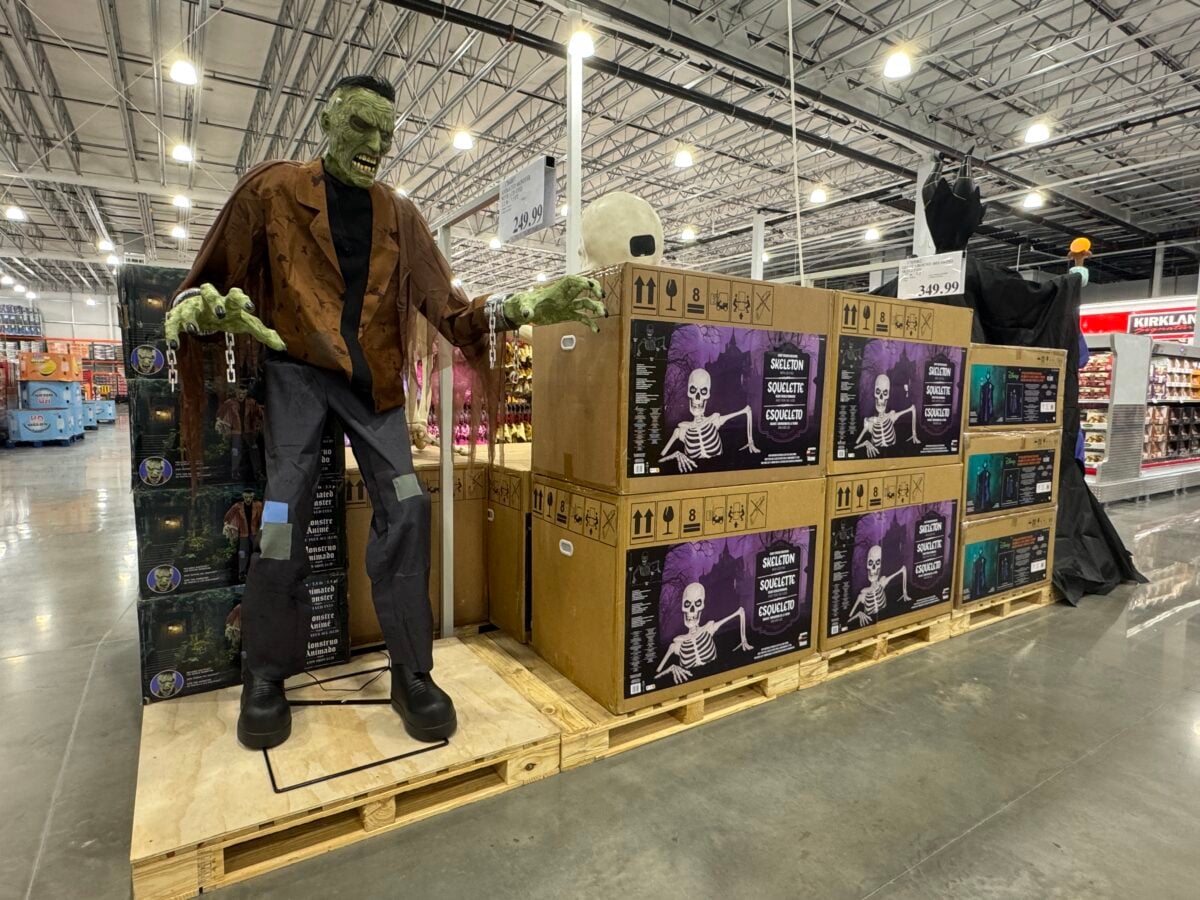
The merchant team evaluated fall buys and lowered exposure to discretionary items such as Christmas trees and decor to make more room for newer items such as back yard sheds, saunas, furniture and other high-ticket goods. These are items not sold during holiday in the past.
Costco Rimouski. Image: Costco
Management Forecast
The management team indicates that despite a challenging macro-economic environment, they plan on growing market-share by offering members exciting, high quality items at great value. They did not outline a fiscal 2026 financial forecast at this time.
Share Price Dynamics
COSTCO stock closed September 25th at $ 942.20 per share. Earnings were released after the NASDAQ was closed for the day. The stock opened on September 26th at $ 917.94, down – 2.3%. Over the last month, the stock has been down – 3.6%. Over the last year the stock is up + 3.4% and up + 167.4% over the last 5 years. One of the potential concerns for COSTCO investors is that the companies price/earning (P/E) ratio is very high at over 50x. This is significantly higher than Walmart at 39x or Target at 10.2x.
My Commentary
Costco runs a very successful business with a very unique business model. It takes low margin and “make money on volume” to the extreme. One fun fact that us retail analysts like to discuss is how COSTCO’s membership fees represent about 2/3 of the retailers net income. Costco has posted impressive numbers based on their combination of value, quality and trust. Their e-commerce business is doing well and enhancements to the Executive membership program are encouraging. When I ask AI to summarize social media comments about the retailer, the results are overwhelmingly positive. Some flack about crowds and overspending appear but these comments are in the minority. Although the stock is expensive, relative to earnings, COSTCO keeps delivering.
In the history of business, how we manage companies is a story of constant reinvention. We’ve moved from rigid hierarchies to quality-obsessed factories, with each era bringing a new philosophy. Right now, we’re standing at the edge of another big shift—one that’s pushing us past the old days of “manager’s intuition” and into something much smarter: decisions backed by real data. Sure, everyone’s talking about AI in flashy consumer gadgets, but the real action? It’s happening behind the scenes, inside the companies themselves.
And nowhere does this matter more than in the brutal world of global e-commerce, where a few milliseconds can make or break a sale. In this game, trusting a manager’s “gut feeling” is like trying to navigate a hurricane with a busted compass. The winners will be the ones who can wrangle all that data chaos and turn it into moves that actually work. This is where Voghion, a rising star in Europe’s e-commerce scene, is making a bold bet. The company is building its entire culture around a simple but powerful mantra: “data-driven, truth-seeking, and efficiency-first.” This isn’t just corporate jargon; it’s a fundamental rethinking of how to run a company today.
The Long Road from Gut Feeling to Algorithm
To grasp what Voghion is doing, it helps to remember how we got here. The mid-20th century was all about mass production—effective, but often rigid and wasteful. But then, in the 1960s, Toyota flipped the script with Lean Production. They focused on cutting waste and actually empowering workers, which set a whole new bar for efficiency worldwide.
In response, American companies developed their own systems. Motorola’s Six Sigma, popularized by GE’s Jack Welch in the 80s, became the gold standard. It was a rigorous, data-heavy framework for stamping out defects and perfecting processes.
The next leap came with the internet. Companies like Google and Meta (and more recently, ByteDance) figured out something crucial: their most valuable asset wasn’t their code, but their data. They built entire empires on endless A/B testing and smart algorithms. For them, every click was a data point, every business decision a hypothesis to be tested. This pushed operations to a whole new level.
Voghion’s Playbook: Data as the Company’s Nervous System
Voghion has studied this history, but it isn’t just copying the past. It’s blending these decades of innovation into its own forward-looking culture. Here’s what their “data-driven, truth-seeking, and efficiency-first” mantra actually looks like in practice.
An Intelligent Merchant Ecosystem (Not Just a Supply Chain)
For most e-commerce platforms, managing global suppliers is a constant headache. Voghion is swapping subjective guesswork for a dynamic, algorithmic scoring system. Picture it like a credit score, but for every merchant. They get continuously evaluated on the hard numbers: inventory levels, shipping speed, product quality, and customer reviews.
This data isn’t just for reports; it directly runs the platform:
•Smarter Traffic: High-performing merchants automatically get more visibility. It’s a simple, powerful incentive: do better, get seen more.
• Dynamic Logistics: The system keeps an eye on how things are performing and automatically figures out the fastest, cheapest way to get packages where they need to go.
•Lean Governance: This data-first approach means Voghion can manage its vast network with a lean team, spotting problems before they happen and rewarding the best performers.
2. A Culture of “Let’s Test It”
ByteDance is famous for running thousands of A/B tests a day. Voghion has embraced a similar mindset, embedding experimentation into its DNA. Instead of debating what might work in a meeting room, they test it.
These experiments cover everything:
•Marketing: Which ad headline gets more clicks? Which campaign schedule delivers the best ROI? The data decides.
•Recommendations: The personalization algorithms get constantly tweaked to make product suggestions that actually hit the mark.
•User Experience: Even something as basic as page layout or how products get sorted gets tested relentlessly to create a smoother, more intuitive experience for shoppers.
By sticking to this process, Voghion makes sure its decisions are grounded in evidence, not the personal biases that can mess up traditional management.
The Vision: From Data to True Intelligence
For Voghion, this isn’t just about optimizing what they’re doing now; it’s about building something smarter for the future. The goal is to move past simple analysis and into AI-driven prediction. Picture a company where AI isn’t just a tool sitting on the side, but the actual brain of the operation—a system that can run scenarios and figure out the best move before you’ve even spent a dime.
This is way more than just a tech upgrade; it’s a complete cultural shift. It demands a mindset where every employee feels empowered to question assumptions and dig into the data. In the cutthroat e-commerce world, Voghion is showing that real, lasting growth isn’t about jumping on every trend that comes along. It’s about building something deeper—a structural advantage through smart management.
In this age of AI, the most valuable thing isn’t just having data, but knowing what to do with it. Voghion is quietly making a powerful statement that they get this better than most.
Most scraping failures are not caused by clever defenses but by mismatched assumptions. The public web is overwhelmingly dynamic and layered with assets, redirects, and templates that shift without notice. JavaScript runs on about 98% of websites, jQuery still appears on roughly three quarters of them, and close to 43% of all sites are powered by a single CMS family. Add to that the modern reality that well over 90% of page loads use HTTPS, and you get a practical picture: scrapers must behave like real browsers, negotiate encrypted sessions cleanly, and cope with template-driven markup that moves around more than hand-coded pages.
A typical desktop page also pulls in a large bundle of resources. Expect roughly 70 network requests and about 2 MB transferred for a median page, with scripts and images dominating. That matters for capacity planning: if your collector opens thousands of pages per minute, you are effectively coordinating hundreds of thousands of downstream requests. Bandwidth, connection pooling, and retries are not afterthoughts; they are the backbone of delivery.
What the numbers imply for scraper architecture
Render strategy: With near-universal JavaScript, assume you will need headless rendering for at least a portion of targets. A hybrid model works well: attempt fast HTML-first extraction, promote domains to a headless queue only when selectors miss required data.
Selector design: CMS-heavy ecosystems produce recurring markup patterns. Using layout-agnostic selectors (data attributes, JSON-LD blocks, or stable IDs) reduces breakage compared to brittle nth-child chains tied to cosmetic structure.
Network efficiency: Page weight and request counts push you to aggressive caching. Cache static assets by content hash. Use HTTP/2 or HTTP/3 clients to multiplex requests and minimize connection overhead.
Compression and parsing: Because most traffic is compressed, ensure your fetch layer supports gzip and brotli. Parse compressed JSON and streaming HTML to start extraction before full download completes.
Protocol hygiene: With encrypted traffic dominant, align TLS settings with modern servers, reuse connections, and respect HTTP cache headers to avoid unnecessary fetches.
Measure scraper quality with three simple metrics
Coverage: the share of intended pages successfully fetched and parsed. Track coverage by domain and by template. When coverage dips, check whether a template changed, a script-gated section appeared, or a login expired.
Freshness: the lag between a source change and your stored copy. On dynamic catalogs, aim for hours, not days. You can approximate change probability by monitoring ETag or Last-Modified headers and focusing crawls where deltas are highest.
Fidelity: the percentage of required fields captured without manual correction. Validate fields against type and range rules, and flag spikes in nulls or defaults as a signal that a selector needs attention.
Practical workflow that holds up under change
Start discovery with a lightweight pass to map pagination, detail pages, and any in-page JSON. Schema markup often carries clean fields; harvesting JSON-LD shortens post-processing. For fast prototyping of selectors, a browser helper like instant data scrapper can accelerate the first mile before you codify a production spider.
Promote promising patterns into a modular extractor: one fetcher, multiple parsers keyed by URL rules, and a validator that enforces required fields. Keep render decisions policy-driven rather than hardcoded per site. For example, if a page returns empty on a static fetch but includes script tags and no critical content, escalate to headless automatically and record the reason.
Resilience tactics that pay for themselves
Change detection: Store compact hashes of the DOM regions you rely on. If a region’s hash shifts while the rest is stable, you likely have a cosmetic change; if everything shifts, expect a template revamp or A/B test.
Retry budgets: Separate network retries from parser retries. Network errors tend to be bursty; parser errors cluster around template changes. Throttle network retries quickly; send parser errors to a canary queue for human review.
Robots and rate limits: Read and respect robots.txt and crawl-delay directives. Even modest pacing often improves reliability by avoiding auto-mitigation triggers.
Data sanity checks: Validate IDs, prices, dates, and currencies at the edge. Reject impossible values early rather than letting them poison downstream analytics.
Observability: Capture per-domain latency, bytes, request counts, and status codes. Alert on shifts in median or p95 latency, not just hard failures.
Turning raw HTML into dependable data
After extraction, standardize fields and deduplicate with stable keys. Normalize units, currencies, and encodings immediately. Maintain a simple lineage record: source URL, fetch timestamp, parser version, and transform version. This thin layer makes rollbacks and audits trivial when a site changes or a mapper ships a bad rule.
Finally, keep humans in the loop where they add leverage. A short daily review of low-fidelity samples uncovers silent failures fast. Pair that with automatic backfills when a parser is fixed, and your pipeline recovers without scrambling.
Scraping at scale is less about brute force and more about engineering to the web you actually face: dynamic, encrypted, template-driven, and chatty. If your design reflects those realities, reliability stops being a guessing game and becomes a set of measurable, repeatable practices.
In the heart of the Okanagan, Kelowna has quickly become one of Canada’s most sought-after places to live. With its blend of lakeside beauty, vineyard-lined hills, and a vibrant city core, it’s no wonder so many families are choosing to call this region home. But with older homes in need of updating and new homeowners eager to personalize their spaces, the demand for thoughtful, reliable Kelowna renovation experts has never been higher. That’s where Nailed It Developments has stepped in to raise the bar for what a true renovation experience should feel like.
A Company Built on Trust
Founded over a decade ago with a simple mission — to make home transformations stress-free, inspiring, and built to last — Nailed It has grown into one of Kelowna’s most trusted renovation companies. Their reputation has been built not just on what they deliver, but how they deliver it. From the first consultation to the final walkthrough, clients know they’re in the hands of a team that values honesty, craftsmanship, and care in every detail.
Turning Vision Into Reality
What truly sets Nailed It apart is their ability to take a homeowner’s vision and guide it seamlessly into reality. Many contractors focus solely on the build, but Nailed It understands that the renovation journey is as important as the final product. They take time to listen, to understand lifestyle needs, to offer design suggestions that elevate both beauty and functionality. Their projects reflect this commitment: kitchens that invite gathering and connection, bathrooms that rival luxury spas, and living spaces that feel both fresh and timeless.
An Approach That Puts Clients First
Clients across Kelowna often speak of the ease that comes with working with Nailed It. Renovations can be stressful — timelines, budgets, and disruptions to daily life can quickly overwhelm. But this company’s approach brings peace of mind. Homeowners highlight how clean and organized job sites remain, how communication is always clear and upfront, and how even when challenges arise, solutions are presented with honesty and professionalism. That transparency has earned them lasting trust, reinforced by their full licensing, insurance, and Better Business Bureau accreditation with an A+ rating.
Beyond Kitchens and Bathrooms
Beyond kitchens and bathrooms, Nailed It has become the go-to for homeowners looking to maximize the value and comfort of their properties. Secondary suites and basement renovations are increasingly popular in Kelowna, where families are seeking additional space or rental income opportunities. Nailed It takes care of everything, from the design and permit process to coordinating skilled trades and ensuring code compliance so clients can enjoy a smooth experience without the headaches of juggling multiple contractors.
Details That Make the Difference
The results speak for themselves. Walk into a Nailed It project, and you’ll notice the attention to detail in every corner: the precision of a tile pattern, the way natural light is maximized, the seamless integration of modern conveniences with timeless finishes. Each renovation is more than just an update it’s a transformation that enhances daily living while also strengthening a home’s long-term value.
Why Now Is the Right Time
For those considering a renovation in Kelowna, there has never been a better time. The city’s real estate market continues to thrive, and thoughtful upgrades can dramatically increase both enjoyment and equity. Whether it’s refreshing a well-loved family home, modernizing a recent purchase, or creating a space that finally reflects the way you want to live, Nailed It has the expertise, creativity, and reliability to make it happen.
A Home That Reflects You
At the end of the day, a home renovation isn’t just about new floors or updated cabinets. It’s about creating a space that reflects who you are and how you live. With Nailed It leading the way, Kelowna homeowners can feel confident that their dreams are in the hands of professionals who care just as much about the journey as the destination.
Contact Them Today
Ready to take the next step in transforming your home? Phone them today and get in touch with Nailed It Developments:
Phone: Call Us Today at (250) 488-8686 Email: info@naileditdevelopments.ca
Address: 270 Campion Street, Unit A, Kelowna, BC V1X 7S8
Retail Insider is streamlining its Canadian retail news from around the web to include a handful of top news stories that can be viewed quickly during the day. Here are the top stories from the past several days.
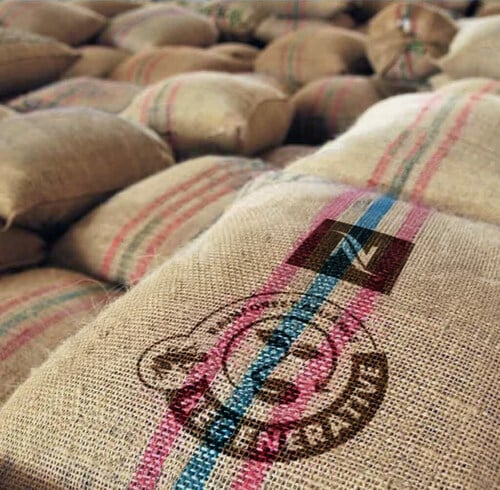
The announcement follows the Rainforest Alliance’s release of its new certification standard on Sept. 8, which outlines environmental and social requirements for farms pursuing regenerative practices. Certified regenerative coffee from farms in Costa Rica and Mexico will begin appearing under the new seal on select Nespresso products starting in 2026.
“With regenerative agriculture, you can see a change,” said Yamileth Chacón, a coffee farmer in Costa Rica whose farm is among the first certified. “By working with the trees, you see more foliage, more green, and more animals.”
According to the Rainforest Alliance, regenerative agriculture aims to restore soil health, improve biodiversity, and enhance ecosystem functions. The organization says these practices also offer farmers external validation, improved market access and resilience in the face of climate change.
Santiago Gowland
“Rooted in four decades of experience in sustainable agriculture, our new Regenerative Agriculture Standard combines scientific rigour with proven regenerative practices tailored to specific crops and regions,” said Santiago Gowland, CEO of the Rainforest Alliance. “Our goal is to accelerate the transition to a new model of agriculture — one that helps protect, restore and regenerate the ecosystems on which we all depend.”
The Rainforest Alliance plans to support 100 million farmers and workers by 2030 through regenerative practices and sustainable livelihoods.
Nespresso, which has worked with the Rainforest Alliance for over 20 years through its AAA Sustainable Quality Program, called the certification an important step toward ensuring long-term coffee quality and sustainability.
Jérôme Perez
“We’re proud to be the first brand to source Rainforest Alliance Certified Regenerative coffee,” said Jérôme Perez, Head of Sustainability at Nespresso. “It’s a symbol of our commitment to building balanced, resilient, yet productive landscapes within our supply chain, which is essential if we’re to protect the future of the world’s quality coffees and the communities which depend on them.”
“The new Rainforest Alliance Regenerative certification offers Canadian consumers a tangible way to support coffee that not only delivers exceptional taste, but also preserves the landscapes and ecosystems where it’s grown with care,” said Oyanguren. “This milestone reflects our long-standing commitment to sustainable and responsible sourcing practices, while empowering farmers to build long-term resilience.”
Nespresso supported the development of the new certification through earlier collaboration on the Rainforest Alliance Regenerative Coffee Scorecard, launched in 2022. The scorecard helped shape the standards now in use, particularly for smallholder farms.
Nestlé Nespresso SA, headquartered in Vevey, Switzerland, operates in 96 markets and employs over 14,000 people globally. In Canada, it employs more than 1,000 people and operates 36 boutiques nationwide.
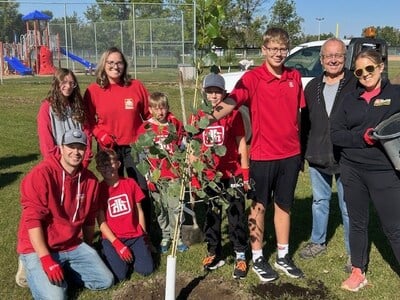
Dealer-Owner Erin Evenson and the team at Watrous Home Hardware Building Centre joined members of the Watrous Recreation Committee and families from the Watrous Minor Ball Association to plant trees in celebration of National Tree Day. The event was held on September 6 at the Watrous Sports Grounds in Watrous, Saskatchewan. (CNW Group/Home Hardware Stores Limited)
Home Hardware Stores Limited marked National Tree Day recently by partnering with Tree Canada to support tree planting initiatives in 25 communities across the country.
The events are part of National Forest Week, held Sept. 21 to 28, and involve local stores collaborating with Tree Canada, volunteers and municipal partners to plant native trees in public spaces such as parks and schoolyards.
Ian White
“For more than 30 years, our Dealers have supported environmental initiatives in the communities they call home,” said Ian White, president and CEO of Home Hardware Stores Limited. “We are honoured to continue this important partnership with Tree Canada and to help make a positive, lasting impact.”
Tree planting activities took place earlier this month, including an event on Sept. 6 at the Watrous Sports Grounds in Watrous, Sask., where Dealer-Owner Erin Evenson and the Watrous Home Hardware Building Centre team were joined by members of the Watrous Recreation Committee and families from the Watrous Minor Ball Association.
Nicole Hurtubise
The retailer began its partnership with Tree Canada in 1992. Since then, more than 30,000 trees have been planted as part of joint reforestation and sustainability efforts.
“Tree Canada is thrilled to once again join forces with Home Hardware to green our communities,” said Nicole Hurtubise, CEO of Tree Canada. “Their continued leadership and support help bring local tree planting projects to life and inspire others to take action for the environment.”
Joseph Tassoni back stage at his fashion show in Arcadia Earth at The Well on September 19, 2025. Photo: George Pimentel
Canadian designer Joseph Tassoni redefined the runway this past Friday, September 19, with his Spring/Summer and Fall/Winter 2026 collection, presented in an immersive showcase at Arcadia Earth inside The Well in Toronto. The sold-out event, followed by an official afterparty at Le Germain Mercer, blended robotics, artificial intelligence, and climate-conscious couture in what many described as one of the most ambitious Canadian fashion presentations in recent memory.
“This collection is about more than clothes. It’s about our planet, sustainability, and the ways we respond to a warming world,” said Tassoni. “Every fabric was locally sourced and designed to be worn with pride, care, and consciousness, proudly made in Canada.”
A First-of-Its-Kind Canadian Runway Experience
From the outset, it was clear that the Joseph Tassoni fashion show was designed to be unlike anything Toronto had ever seen. Guests arrived to a red carpet hosted by Rina DiRisio and were greeted by celebrity photographer George Pimentel, who captured the night’s arrivals.
The runway itself was divided between two immersive spaces within Arcadia Earth, allowing two audiences to experience the show simultaneously. “We had 55 models because the show was running in two rooms at once,” explained Tassoni. “Each room was at capacity, and models had to move between spaces through immersive environments built from recycled materials.”
The presentation included a surprise element — Bolt, a prototype robot designed for disaster-response scenarios, took to the runway. “I was not sure how the audience would react to Bolt,” said Tassoni. “But people embraced him, taking photos and asking questions. It was important to show that technology is not just novelty, but connected to real issues of climate and safety.”
The Joseph Tassoni presentation included a surprise element — Bolt, a prototype robot designed for disaster-response scenarios, took to the runway. Image: George Pimentel
Technology Meets Sustainability
While robots and AI-generated backdrops caught attention, Tassoni emphasized that the deeper narrative remained sustainability. The designer staged the show in Arcadia Earth because each room in the venue is a physical response to environmental challenges, from plastics in oceans to deforestation.
“What I loved about Arcadia Earth was how much it tied to the collection,” said Tassoni. “All my materials were locally sourced, sustainable, and designed to return to the earth. The venue and the clothing spoke the same language.”
Video projections layered AI-enhanced imagery with personal touches from the designer. “The opening remarks featured me on screen, filmed on my iPhone and then layered with AI techniques,” he recalled. “I told my team: don’t try to perfect it, embrace the technology for what it is right now.”
Opening remarks by Joseph Tassoni at his runway presentation in Arcadia Earth at The Well in Toronto, September 19, 2025. Photo: George Pimentel
The Three-Part Collection
The SS/FW 2026 collection was divided into three themes: Island, City, and Mountain. Each reflected Tassoni’s vision of how people live, move, and dress across different environments.
Island: Breezy linen suiting and flowing wrap garments designed for versatility in warm climates. “I wanted to take classic tailoring and reimagine it in lightweight linen, perfect for hot summers while still looking polished,” Tassoni explained.
City: Staple pieces for urban life, from structured blazers to evening gowns, paired with functional outerwear.
Mountain: Outerwear crafted from 100% recycled plastics, including reversible parkas in bronze and black. Tassoni also reintroduced his brand’s signature tulip parka, first launched in 2017.
“I always like to offer options,” said Tassoni. “When people invest in one of my pieces, it’s sustainable, made in Canada, and designed with multiple styling possibilities.”
Joseph Tassoni runway show in Arcadia Earth at The Well in Toronto, September 19, 2025. Video: Craig Patterson
Inclusivity on the Runway
The casting reflected a deliberate choice to showcase diversity. Alongside professional models were public figures, a drag performer, cancer survivor, and international beauty queens.
One highlight was Aliya Jasey, who survived years of chemotherapy as a child and walked in the show for her second year. “She’s beautiful inside and out, and an inspiration,” said Tassoni.
The lineup also included Miss Fiercalicious of Canada’s Drag Race, former Miss Venezuela Keysi Sayago, and several Canadian supermodels. “I wanted to show every way people identify,” said Tassoni. “It’s about giving models a platform and creating an elevated experience not typically offered in Canada.”
Looks from the Joseph Tassoni runway show in Arcadia Earth at The Well in Toronto, September 19, 2025. Photo: George Pimentel
Birks Diamonds and Aldo Footwear
The show also carried unexpected partnerships. Four Birks diamond pieces, valued in the hundreds of thousands of dollars, were quietly featured in select runway looks, representing the four seasons. “We kept it very low key for security purposes, but it was special to incorporate these Canadian jewels,” Tassoni noted.
Every model wore footwear provided by Aldo, marking the second year of collaboration between the Montreal-based global brand and the designer. “They told me they believe in my message and want to support a Canadian brand like mine.”
“I was very proud to partner with Birks and Le Germain, both heritage Canadian companies.”
Looks from the Joseph Tassoni runway show in Arcadia Earth at The Well in Toronto, September 19, 2025. Photo: George Pimentel
An Audience of Loyalists and Newcomers
The energy in the crowd underscored Tassoni’s growing influence. Half of the audience travelled from Halton, Niagara-on-the-Lake, and surrounding communities where he has built a loyal client base. Many guests wore custom Tassoni pieces, some dating back to the brand’s early years.
“I was humbled to see clients wearing pieces I made when I launched in 2017,” Tassoni said. “It reminded me that my work has longevity and meaning beyond just trends.”
Toronto’s fashion community and media also turned out in force. The show reached capacity quickly, and according to Tassoni, some individuals even attempted to impersonate press to gain entry.
Looks from the Joseph Tassoni runway show in Arcadia Earth at The Well in Toronto, September 19, 2025. Photo: George Pimentel
Afterparty at Le Germain Mercer
Following the show, guests moved to the official afterparty at Le Germain Mercer, where the hotel unveiled its new restaurant with a disco-infused celebration.
“I ran over to greet people and then started losing my voice,” Tassoni admitted with a laugh. “But the energy was incredible. People were dancing, networking, and celebrating well into the night.”
Curated drinks, hot pink décor, and DJ sets created a lively atmosphere that extended the night’s narrative of fashion meeting community.
Looks from the Joseph Tassoni runway show in Arcadia Earth at The Well in Toronto, September 19, 2025. Photo: George Pimentel
A Designer Shaping Canadian Fashion
This marks the third consecutive year that Joseph Tassoni has staged an independent large-scale fashion event in Toronto. Unlike collective fashion weeks, Tassoni’s shows are self-directed, immersive productions that emphasize his brand’s DNA: sustainability, Canadian production, and inclusivity.
“There’s no platform in Canada offering an elevated guest experience like this,” Tassoni said. “That’s why I create my own shows. Guests arrive and it’s complimentary, with food, drinks, and an atmosphere that celebrates Canadian fashion.”
For Tassoni, the Joseph Tassoni fashion show was about launching a collection while creating community, pushing technological boundaries, and showcasing how Canadian-made design can compete on a global stage.
“This was a lot of love,” he reflected. “From the music to the styling, everything was led by me and my team. Nobody has done anything like this before in Canada.”