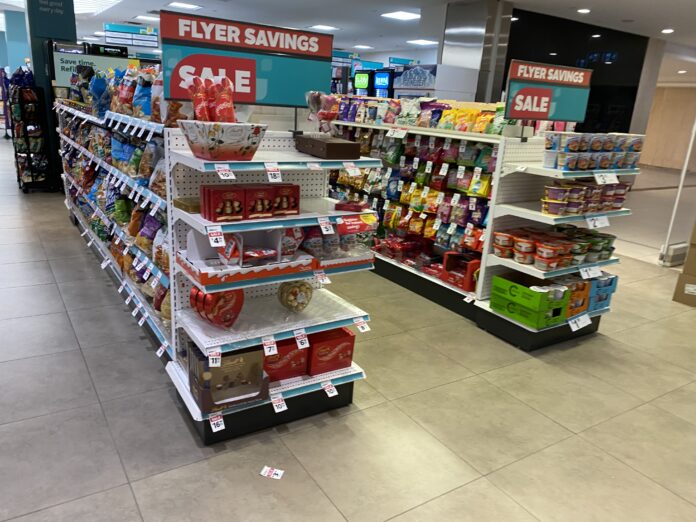
A new nationwide survey says financial pressure is now a defining reality for most Canadians, with overwhelming majorities reporting rising expenses, tighter budgets and forced changes to everyday spending.
The findings highlight how sustained cost-of-living increases are reshaping household finances across the country.
According to a Harris & Partners survey of 2,196 Canadians, the results reveal widespread financial strain:
87% say they feel financially trapped due to rising living expenses and or debt
85%report their overall monthly expenses have increased in the past 12 months
85% say their household budget has become harder to manage
97% say everyday price increases have forced them to rethink how they spend their money
88% have postponed or cancelled plans such as travel, major purchases or life goals due to higher costs
Joshua Harris
“These results show just how deeply rising living costs are affecting Canadian households. For many people, it is no longer about cutting back on extras. It is about trying to keep up with everyday expenses. When 87% of Canadians say they feel financially trapped, that is a clear signal of how little room there is left in household budgets,” said Joshua Harris, CEO of Harris & Partners and a Licensed Insolvency Trustee.
Nearly all respondents say higher prices have altered how they manage their money, with everyday spending decisions increasingly shaped by affordability rather than preference, said the report.
“Canadians are adapting because they have to. People are thinking twice about every purchase, delaying plans and constantly reworking their budgets just to stay afloat. This kind of financial pressure becomes exhausting over time,” added Harris.
Beyond day-to-day costs, the survey also found growing concern about wider economic pressures:
73% are concerned that trade tariffs on imported goods such as vehicles, electronics or produce will further limit their ability to pay down debt
60% say they are worried about job security or household income due to the potential impact of tariffs on the Canadian economy
“When households are already stretched, anything that threatens higher prices or income stability adds another layer of stress,” explained Harris.
“People are worried not just about today’s bills, but about what comes next.”
New research from KPMG International is urging banks and retailers to form strategic partnerships—or risk falling behind—as businesses attempt to keep up with the rapid pace of change in the payments space.
The report, Partnering for payment modernization by KPMG International, includes responses from 500 banks and 500 retailers to assess their progress on payment modernization. It identifies that while costs are high and modern technology continues to disrupt; a better ecosystem of partnerships between banks, retailers, technology providers and regulators can help improve operations and enhance the payments experience for customers.
The company said the survey reveals that 54% of retailers believe that payment modernization is crucial to the future of their business, including delivering major efficiency and operational gains. However, just over half (53%) of retailers believe that their banks understand their payment modernization goals, with 45% saying their banks are proactively delivering payment solutions tailored to their needs.
With the average retailer planning to increase modernization budgets by 2.5% over the next year, there is scope for more cohesion and development in the area. Banks don’t disagree, with 51% believing that the future winners in payments will be those with the best ecosystems. 60% of banks also indicate an increase in spending this year, with 21% reporting expected increases of 5 to 9% over their existing budgets, it said.
Isabelle Allen
“The quest by consumers for ever faster, lower friction and more secure payment options is relentless and fueling innovation and disruption. Banks and retailers cannot afford to work in isolation or indulge in traditional vendor-customer relationships. The future of payments will likely be defined by a broader ecosystem which extends beyond banks and retailers, to include technology providers, regulators, fintech startups and consumers themselves. Success should be measured by the way companies access new technologies, reduce costs, share expertise, fill skill gaps, accelerate time to market, and mitigate risks,” said Isabelle Allen, Global Head of Consumer, Retail and Leisure at KPMG International.
KPMG said common goals across both sectors include the replacement of legacy payment infrastructure, enhancing fraud prevention and meeting customer expectations. High implementation costs and budget constraints were noted as the top barrier for those starting out on their payment journey (66% in banking and 69% in retail), while 62% in the banking sector also noted outdated legacy infrastructure and technical debt as a major frustration. As they mature their payments modernization capabilities, each sector highlighted meeting customer demand as the main concern (41% of banking leaders and 35% of retail leaders).
“On the retail side, hypermarkets and warehouse clubs report the highest levels of investment due to their high-volume, low-margin models, which rely on fast, efficient checkout processes. Online retailers also invest heavily to support their digital business models. At the same time, more traditional segments (such as department and specialty stores) invest less, likely reflecting limited budgets and customer preferences. Some of the biggest increases over the next year will be invested by those seeking to catch up; department and discount stores will boost spending by over 3%, while supermarkets are targeting increases of nearly 4%,” it said.
Ste-Catherine St. W. in Montreal. Photo: Apple Maps
Starting March 11, 2026, the Government of Quebec will implement a province-wide retail hours pilot that significantly loosens long-standing restrictions on weekend shopping hours. The initiative effectively ends the decades-old requirement for most retailers to close at 5:00 PM on Saturdays and Sundays, allowing participating merchants to remain open until 9:00 PM.
The Quebec retail hours pilot is designed to modernize the province’s regulatory framework and provide brick-and-mortar businesses with greater flexibility in competing against e-commerce platforms that operate around the clock. The measure applies across the province and is structured as a voluntary one-year trial.
Expanded Legal Window for Retailers
Under the current standard rules, most retail establishments must close by 5:00 PM on weekends and by 9:00 PM on weekdays. Beginning March 11, participating retailers may open as early as 6:00 AM daily and close as late as 9:00 PM, including Saturdays and Sundays. Weekday closing times remain unchanged at 9:00 PM.
Importantly, participation is voluntary. The pilot grants merchants the right to extend their hours, but it does not obligate them to do so. Individual retailers, shopping centres, and commercial districts will determine their schedules based on staffing levels, customer demand, and financial viability.
The changes primarily affect clothing boutiques, hardware stores, electronics retailers, and department stores. Grocery stores and pharmacies remain governed by separate exemptions that already permit more flexible operations. In addition, a parallel pilot project allows adult and erotic product stores to remain open until 11:00 PM daily.
Shein, Temu and the Competitive Landscape
The Quebec government has positioned the reform as a strategic response to global online competition. Officials have pointed to international e-commerce platforms such as Shein and Temu as examples of digital operators that never close, creating structural disadvantages for physical retailers constrained by legislated hours.
By harmonizing weekend closing times with weekday hours, policymakers aim to align shopping availability with contemporary consumer habits, particularly weekend evening demand. The government has also framed the move as part of a broader deregulatory agenda intended to reduce administrative burdens on entrepreneurs.
Quebec has historically been viewed as one of the few North American jurisdictions maintaining strict weekend retail closing rules. The pilot signals a shift toward greater flexibility while preserving key statutory holiday protections.
Lessons from 2025 Regional Trials
The province-wide rollout follows smaller-scale pilots conducted in 2025 in Laval, Gatineau, and Saint-Georges. In those regions, stores were permitted to remain open until 8:00 PM on weekends.
Results were mixed. Large shopping centres such as Carrefour Laval reportedly experienced stronger engagement, benefiting from coordinated participation and concentrated foot traffic. Standalone boutiques and smaller retailers faced more challenges, particularly when operating in isolation during extended hours.
Industry observers described what some called a “lonely shop” dynamic, where individual retailers struggled to justify extended hours if neighbouring businesses remained closed. The expanded provincial framework seeks to create a broader critical mass, increasing the likelihood that shoppers will expect and utilize later weekend hours.
Industry Support and Labour Concerns
The Retail Council of Canada has characterized the reform as a strong step toward greater commercial freedom. Supporters argue that the change reflects modern consumer expectations and provides merchants with tools to improve competitiveness.
However, labour unions and worker advocacy groups have raised concerns about work-life balance. Critics caution that students and part-time employees may face pressure to accept late weekend shifts. At the same time, proponents suggest the new hours could create additional employment opportunities during periods when students are more available to work.
Small business owners face a separate challenge. Extending hours may increase payroll costs without guaranteeing higher revenue. Some retailers worry about sales dilution, where the same number of customers shop over a longer period, reducing productivity per labour hour.
These competing perspectives will likely form part of the government’s evaluation during the one-year duration of the Quebec retail hours pilot.
Holiday Rules Remain Intact
Despite the expanded weekend framework, statutory holiday regulations remain unchanged. The extended hours apply every day of the week except public holidays.
Most retail establishments must continue to close on New Year’s Day, Easter Sunday, National Patriots’ Day or Victoria Day, St-Jean-Baptiste Day, Canada Day, Labour Day, Thanksgiving, and Christmas Day. Existing exemptions for small grocery stores, pharmacies, service stations, convenience stores, and designated tourist zones remain in effect.
For holidays that permit limited opening, reduced-hour mandates continue to apply. For example, on Boxing Day, most stores cannot open before 1:00 PM. On Christmas Eve and New Year’s Eve, many retailers must close by 5:00 PM regardless of the new weekend allowance.
If a statutory holiday falls on a Saturday or Sunday, retailers should expect the holiday schedule to take precedence over the extended 9:00 PM closing time.
A One-Year Test with Data Collection
The pilot will run for one year, during which the government will collect data on consumer behaviour, business revenue performance, and employee satisfaction. Officials have indicated that permanent amendments to the Act respecting hours and days of admission to commercial establishments could follow if results demonstrate measurable benefits.
The voluntary structure remains central to the initiative. Merchants are not compelled to adjust their operations, and participation decisions will likely vary by region, store size, and labour availability.
The Quebec retail hours pilot represents a significant policy shift aimed at modernizing the province’s retail framework while balancing economic competitiveness with worker protections. Its long-term impact will depend on whether extended hours translate into stronger in-store sales, improved competitiveness against digital platforms, and sustainable operating models for retailers across Quebec.
Equifax Canada’s Q4 2025 Market Pulse Consumer Credit Trends and Insights data, which was released Tuesday, suggests a clear divergence in financial health across the country.
As 2025 came to a close, the pressures of a cooling labour market and persistent inflation led to a continued widening split in financial health: older consumers with higher credit scores showed resilience; while younger consumers and those in Ontario & Western provinces showed signs of financial weakening, explained Equifax.
“Total consumer debt climbed to $2.65 trillion in Q4 2025, a 3.13 per cent increase year-over-year, driven by a $50.26 billion rise in mortgage balances and a 4.50 per cent jump year-over-year in non-mortgage debt,” it said.
“Missed payments on non-mortgage debt peaked at the end of December, with 90+ day balance delinquency rising from 1.64 per cent to 1.73 per cent (a year-over-year increase of 5.43%).
“Consumers aged 26 to 35 years old showed the most acute increase in credit stress, posting the highest delinquency rate at 2.55 per cent and experiencing the most significant year-over-year decline in credit health with a rise of 8.39 per cent.”
Regional Divergence
Regionally, a picture of “two Canadas” emerged, with Ontario seeing the fastest acceleration in non-mortgage delinquency (up 10.31 per cent compared to Q4 2024) and Alberta solidifying its status as a “geo hotspot” with the highest overall non-mortgage balance missed payment rate (2.45 per cent). Regions with better housing affordability, such as Prince Edward Island Nova Scotia, New Brunswick and Quebec, posted decreases in their delinquency rates, noted Equifax.
Rebecca Oakes
“Our data continues to show a clear divergence in how consumers in certain regions and demographic groups are managing income instability and high cost of living pressures,” said Rebecca Oakes, Vice-President, Advanced Analytics at Equifax Canada. “The good news is that for the most part, Canadians seem to be responding to these challenges in a credit-responsible way, with less holiday spend placed on credit cards this year.”
Credit Cards and Holiday Spending Pullback
Credit card spend over the 2025 holiday season was subdued compared to prior years. Inflation-adjusted card spending in December fell by 0.7 per cent year-over-year to $2,297, with the sharpest pullbacks seen in Western Canada (NWT -4.1 per cent, Alberta -3.0 per cent, BC -2.2 per cent). Younger consumers (aged 26-35) led this austerity, cutting holiday spending by 2.0 per cent, whereas older consumers (46+) continued to increase their spending. Despite this caution, credit card balances swelled to a historic $131 billion (+4.04 per cent), according to the report.
“The fourth quarter is typically where we see the largest growth in credit card balance with rising missed payments emerging in January,” added Oakes, “The pullback in spending helped to curb some of the holiday effect with around 30k fewer consumers missing a payment in January compared to 12 months ago.”
A Widening Gap in Borrowing Power
With continued economic uncertainty, lenders showed signs of tightening access to credit for riskier borrowers. Non-mortgage debt levels for Subprime consumers (scores 320-580) remained stagnant in Q4, while in contrast, Super Prime consumers (scores 751-880) saw their average non-mortgage debt grow by 6.1 per cent to $20,818, said Equifax.
“Lenders are seemingly reacting to higher credit losses caused by economic difficulties and increasing fraud in Canada by adjusting their credit approval policies as a risk mitigation measure,” said Oakes, “It is a good reminder for consumers to try and maintain a healthy credit score to ensure access to credit.”
Mortgage Renewals and Payment Shocks
Mortgage renewals continued to dominate the mortgage market in the fourth quarter, with total mortgage debt reaching $1.95 trillion, a 2.6 per cent increase year-over-year, according to the report.
www.kaboompics.com photo
While the Bank of Canada’s 2.25 per cent policy rate seemed to offer some relief to homeowners, housing affordability remained strained, particularly in high-priced regions like Ontario and British Columbia. Payment shocks from mortgage renewals continued to be a concern, prompting increased lender switching as consumers sought the best rates and lowest monthly payments. High mortgage balance remained a significant barrier to entry, with average new loan amounts climbing 4.1 per cent to $363,778. This burden was even heavier on first-time homebuyers, who saw their average new loan size grow 5 per cent to reach $441,301, explained Equifax
“Interest rate stabilization is appearing to have a positive impact on homeowners and the Canadian mortgage industry, however in hotter housing markets, affordability remains a concern” concluded Oakes. “We continue to see rising missed payments on higher value mortgages in Ontario as post renewal payment levels prove too high for some consumers.”
Age Group Analysis – Debt & Overall Balance Delinquency Rates (excluding mortgages)
AverageDebt(Q4 2025)
Average Debt ChangeYear-over-Year(Q4 2025 vs. Q4 2024)
90+ Delinquency Rate ($)(Q4 2025)
Delinquency Rate ChangeYear-over-Year(Q4 2025 vs. Q4 2024)
18-25
$8.832
3.60%
2.04%
2.23%
26-35
$17,550
0.16%
2.55%
8.39%
36-45
$27,228
0.53%
2.11%
5.29%
46-55
$35,041
1.29%
1.58%
7.14%
56-65
$29,961
4.27%
1.25%
4.80%
65+
$15,182
3.61%
1.16%
1.43%
Canada
$22,377
1.97%
1.73%
5.43%
Major City Analysis – Debt & Overall Balance Delinquency Rates (excluding mortgages)
City
AverageDebt(Q4 2025)
Average Debt ChangeYear-over-Year(Q4 2025 vs. Q4 2024)
90+ Delinquency Rate ($)(Q4 2025)
Delinquency Rate ChangeYear-over-Year(Q4 2025 vs. Q4 2024)
Today’s Retail Insider articles are listed below, followed by Canadian Retail News From Around the Web. Highlights include Loblaw’s $2.4 billion investment plan to open 70 new stores and renovate nearly 200 locations, showcasing major growth in Canadian grocery. Valentine’s Day spending surged 48% nationally, driven by a 457% jump at florists and increased restaurant sales. Amazon expanded Same-Day Delivery in key provinces, while AI adoption accelerates among top Canadian retailers, signaling the industry’s pivot to technology-driven efficiency and consumer engagement. These developments underscore ongoing transformation in retail operations and customer reach.
New data from Moneris indicates that Canadians marked the occasion in a meaningful way this year, driving gains across several retail and hospitality categories. According to the commerce provider, Valentine’s Day spending rose 48% week-over-week nationwide in 2026, reflecting strong engagement across florists, restaurants, grocery stores and jewellery retailers.
The figures compare spending during the week of Valentine’s Day, February 14, 2026, to the previous week. The results point to a broad-based uplift rather than isolated gains in a single segment.
“Moneris data shows that Canadians ramped up their spending on Valentine’s Day in 2026, with total national spend rising 48 per cent week-over-week. Increases across key categories like florists, restaurants and grocery stores signal a balanced approach, as Canadians combined dining out with at-home celebrations tied closely to the occasion,” said Sean McCormick, Vice President of Business Development, Data Services at Moneris.
Florists Lead the Charge with Triple-Digit Gains
Among all categories tracked, florists recorded the most dramatic growth. Nationwide, total spend at florists surged 457% compared to the previous week, while transaction counts climbed 505%.
The spike was visible across every province. Atlantic Canada posted an 861% increase in florist spend, followed by Quebec at 711% and British Columbia at 492%. Even in Alberta and Ontario, florist spending rose 399% and 366% respectively week-over-week.
The data underscores the enduring role of flowers as a core component of Valentine’s Day spending. The sharp rise in transaction volume suggests that demand was broad-based, with more consumers participating rather than simply higher average tickets alone.
Restaurants See Strong Week-Over-Week Growth
Dining out remained central to the occasion. Moneris reports that restaurant spending increased 44% nationwide compared to the prior week, while total transaction counts rose 22%.
Regionally, Atlantic Canada led with a 51% increase in total restaurant spend. Ontario followed at 48%, and Quebec posted a 47% gain. Alberta and British Columbia also saw solid growth at 38% and 39% respectively.
The transaction increases, coupled with higher total spend, indicate that both foot traffic and ticket sizes contributed to overall performance. Broader spend trend data shows that average transaction size also rose across regions during the Valentine’s period, reinforcing the premium nature of the occasion for many operators.
Grocery Spending Signals At-Home Celebrations
While restaurants captured a meaningful share of Valentine’s Day spending, grocery stores also benefited. Nationwide, grocery spending rose 37% week-over-week, with transaction counts up 32%.
The parallel growth in grocery and restaurant categories suggests that consumers blended experiences, combining dining out with home-based celebrations. For retailers and food merchants, this dual-channel behaviour reflects a broader consumer preference for flexibility and personalization in how special occasions are marked.
Moneris notes that the combination of increased restaurant and grocery spending indicates that Valentine’s Day continues to extend beyond a single meal or gift purchase.
Jewellery Shows Year-Over-Year Resilience
In addition to week-over-week category comparisons, Moneris examined year-over-year jewellery performance for Valentine’s Day 2026 compared to 2025. Nationally, total jewellery spend rose 17% year-over-year, although transaction counts declined 9%.
The provincial breakdown reveals notable variation. Ontario recorded a 31% increase in jewellery spend year-over-year, while Atlantic Canada saw a 52% gain. Alberta rose 20%, and Manitoba increased 33%. In contrast, Quebec and Saskatchewan experienced declines in both spend and transaction counts.
“Moneris data highlights how Valentine’s Day remained a powerful moment for certain categories, even in a softer year-over-year environment. Jewellery spending grew by 31 per cent in Ontario and more than 50 per cent in Atlantic Canada, demonstrating how meaningful gifting continues to strongly resonate at the provincial level,” said McCormick.
The divergence between higher spend and lower transaction counts nationally suggests larger average purchase values in some regions, potentially reflecting trading up behaviour among consumers seeking higher-quality or premium items.
A Meaningful Retail Moment in Early 2026
Taken together, the data positions Valentine’s Day spending as an important seasonal driver for Canadian merchants. The 48% week-over-week national increase underscores the continued relevance of occasion-based retail, even amid shifting consumer priorities.
Florists experienced the most pronounced surge, while restaurants and grocery operators both recorded meaningful gains. Jewellery, meanwhile, demonstrated resilience on a year-over-year basis in several key provinces.
For landlords, retailers and hospitality operators, the results reinforce the value of targeted seasonal merchandising, inventory planning and promotional alignment. Valentine’s Day continues to serve as a concentrated demand moment that can materially lift weekly performance across multiple categories.
In December, the number of Canadian-resident return trips from the United States was down 25% year over year, while the number of trips to Canada by US residents decreased 7.5%, reported Statistics Canada on Monday.
In contrast, both the number of Canadian-resident return trips from overseas (+12.9%) and the number of trips to Canada by overseas residents (+14.1%) increased compared with the same month a year earlier, said the federal agency.
On a seasonally adjusted monthly basis, the number of Canadian-resident return trips from abroad edged up 0.3% in December. Meanwhile, both US-resident arrivals (+1.5%) and overseas-resident arrivals (+1.2%) saw increases, it said.
Trips to Canada by US residents decrease
In December 2025, US-resident trips to Canada (1.6 million) decreased 7.5% from the same month in 2024, explained Statistics Canada.
“British Columbia saw the largest year-over-year decline, partially because of a base-year effect from a higher number of visitors in December 2024 that coincided with a series of high-profile concerts in Vancouver,” it said.
“Arrivals by automobile (1.1 million) were down 7.5% year over year in December 2025, with just over half (50.7%) of these arrivals being same-day trips. Meanwhile, air arrivals (395,800) decreased 4.6% year over year.”
Trips to Canada by overseas residents continue to increase
In December, 509,500 overseas residents arrived in Canada, up 14.1% from the same month a year earlier, with the majority (90.7%) of arrivals by air, said the report.
“Increases in arrivals from Europe (+8.7%), Asia (+15.9%) and the Americas (excluding the United States) (+19.7%) were the primary contributors to the year-over-year rise in overseas-resident arrivals in December,” it said.
“The top three countries of residence for overseas visitors were the United Kingdom (59,600), France (52,700) and Mexico (47,200), accounting for 31.3% of all overseas arrivals in Canada in December.”
Loblaw Companies Limited, Canada’s food and pharmacy leader, announced Monday that it will spend $2.4 billion in 2026 to expand and renovate its store network, enhance its supply chain capabilities, and create jobs for people all across Canada.
“At a time when Canadians are struggling with affordability and access to healthcare services, in 2026 Loblaw will open 70 new stores. This will include 34 Shoppers Drug Mart / Pharmaprix pharmacies and care clinics, and 31 hard discount No Frills and Maxi stores delivering value to communities. These new locations, along with the renovation of another 191 stores, and the continued construction of its roughly 1.2 million square foot automated distribution centre in Caledon, Ontario, will create an anticipated 9,700 retail and construction jobs from coast to coast,” said the company in a news release.
This is the second investment in the company’s 5-year plan to spend $10 billion by 2030 – reinforcing Loblaw’s position as a major contributor to the growth of the Canadian economy, and to creating new avenues for customers to access value, it added.
Per Bank
“Our success depends heavily on the strength of the communities we serve,” said Per Bank, President and CEO, Loblaw Companies Limited. “We see this as a significant investment in our network and capabilities as one of Canada’s largest retailers, but it is also an investment in the people we serve and their ability to access great value and quality healthcare. By helping Canadians live life well, our business gets stronger too.”
Every part of Canada will see investment as a result of this announcement, said the company:
Eastern Canada – 4 new stores and more than 600 jobs
Quebec – 15 new stores and more than 1,985 jobs
Ontario – 27 new stores and 3,775 jobs, including roles associated with the company’s two new automated distribution centres in Southern Ontario
Western Canada – 24 new stores and more than 3,400 jobs
Loblaw Companies Limited is Canada’s food and pharmacy leader, as well as its largest retailer and private sector employer with more than 220,000 people across the country and a network of 2,500 stores and national e-commerce options. Brands: President’s Choice, No Name, Loblaws, Shoppers Drug Mart, No Frills, Real Canadian Superstore, T&T, Joe Fresh, PC Express and PC Financial. The company’s loyalty program, PC Optimum, has more than 16 million active members.
The Canadian retail sector exhibited a cautious yet optimistic momentum last week, anchored by notable expansions, strategic restructurings, and innovative market responses. Across key cities, retailers and landlords alike are adapting to evolving consumer expectations by rethinking spaces, deploying technology, and managing legacy brand transformations. Against a backdrop of moderated inflation and shifting consumer purchasing behaviour, the capacity for strategic agility remains a defining factor for success.
This optimism unfolds alongside influential legal and operational developments, including bankruptcy proceedings, innovative expansions in adjacent sectors like beauty and specialty beverages, and discussions on retail holiday policies. Retailers and real estate professionals are closely observing these dynamics as indicators of potential sector-wide recalibration rather than retreat.
Retailer News
Leasing activity at Calgary’s major shopping centres is gathering pace, demonstrated by multiple retailer expansions and high-profile entries such as Samsung’s return and new locations for Arc’teryx and Abercrombie & Fitch at CF Market Mall and CF Chinook Centre. Cadillac Fairview’s report on accelerated leasing activity in these malls underscores a growing retail demand that should bolster commercial real estate confidence in the region.
Meanwhile, the Ontario Superior Court’s recognition of Eddie Bauer’s U.S. bankruptcy filing integrates Canadian stores into a cross-border restructuring, effectively protecting assets and establishing a coordinated path forward for 24 Canadian locations. This development around Eddie Bauer’s bankruptcy presents complex implications for lease negotiations and possible consolidations, highlighting the fragility some mid-tier retailers face amid shifting consumer patterns.
In a proactive response to Hudson’s Bay’s department store exits, Walmart Canada is broadening its beauty sector footprint by targeting masstige and Gen Z-focused lines through exclusive collaborations and accelerated innovation programs. This strategic expansion of Walmart’s beauty assortment, detailed in the coverage of Walmart Canada’s beauty initiatives, signals a recalibration of category leadership in the Canadian retail beauty landscape.
Expansion into experiential retail is also underway with HEYTEA opening its inaugural Canadian Lab at CF Toronto Eaton Centre. This flagship store merges specialty beverage innovation with immersive brand experiences, a growing trend emphasized by the launch noted in HEYTEA’s Canadian debut. This move reflects how specialty concepts are leveraging high-traffic retail nodes to test new products and build customer loyalty.
Retailer Financials / Trends / Reports
Retail sales in Canada saw a modest 0.4% decline in December 2025, driven primarily by a drop in motor vehicle sales, though gasoline stations experienced gains. Despite this, the overall retail sales for 2025 ended with a healthy 4.0% growth, as noted in the Statistics Canada report. This mixed outcome suggests sector-specific challenges but also resilience in key categories that continue to support investor and operator confidence.
Canadian Tire Corporation’s robust results for Q4 and full-year 2025 highlight the impact of its True North transformation strategy, which leverages AI-driven pricing, inventory tools, and loyalty expansions. The record automotive service sales and sustained retail growth detailed in Canadian Tire’s financial disclosures signal operational efficiency and evolving customer engagement that other retailers should observe closely.
Rising costs in construction and labour continue to reshape retail development models in Canada. As explored in recent analysis on cost pressures affecting retail growth, these factors are increasing rent requirements and squeezing retailer margins, forcing a more disciplined approach to site selection and format innovation. Necessity-based retail remains comparatively resilient, supporting commercial real estate demand despite pricing challenges.
Restaurant News
The restaurant sector continues to face financial headwinds, with nearly half of Canadian eateries operating at a loss or breaking even as of late 2025, according to insights shared by the Restaurants Canada CEO. This erosion of profitability stresses retail landlords dependent on foodservice tenants and underscores the importance of supportive policies and adaptive lease structures to maintain commercial viability.
Retailer Op-Eds
New research on ethical purchasing behaviour reveals that Canadian consumers are more inclined to buy ethical products when offered smaller quantities rather than paying higher premiums, a key insight for retailers seeking to align brand values with budget-conscious shoppers. This finding, discussed in ethical shopping insights, suggests that innovative pricing and packaging strategies could bridge the gap between consumer intentions and actual sales.
Food inflation remains a significant concern for households, with Canada leading the G7 at 7.3%, propelled by complex structural factors beyond climate change. The editorial on Canada’s rising food prices highlights the urgent need for supply chain and pricing reforms within the food retail and real estate sectors to maintain affordability and margin stability in the face of sustained cost pressures.
The accelerating use of AI in Canadian grocery retail presents both operational efficiencies and consumer trust challenges. Coverage on AI integration in grocers stresses that while AI-driven personalization can enhance service, issues around data privacy and pricing transparency must be carefully managed to maintain public confidence in these essential retail channels.
Editor’s Take
Last week’s coverage collectively signals a Canadian retail landscape that is actively recalibrating amid pressures from rising costs, changing consumer behaviour, and legacy brand realignments. The vibrant leasing activity in Calgary’s malls alongside strategic expansions in beauty and specialty beverage sectors demonstrate that physical retail continues to matter when paired with innovation and nuanced consumer targeting.
Simultaneously, the Eddie Bauer bankruptcy ruling crystallizes the ongoing structural challenges facing several mid-tier retailers, forcing stakeholders to navigate the complexities of restructuring and asset preservation carefully. This situation demonstrates the necessity for landlords and operators to invest in flexible leasing terms and adaptive property management to manage tenant mix risks.
Advances in AI, exemplified by Canadian Tire’s transformation and Loblaw’s partnership with Google, highlight how technology is becoming indispensable in competitive retailing. Yet, concerns voiced around AI’s transparent role in pricing and data use remind executives that technological innovation must be balanced with ethical stewardship to build long-term customer trust and loyalty.
Major retailers in Canada are rapidly advancing artificial intelligence initiatives to gain efficiencies, reduce costs, and strengthen competitive positioning in an increasingly demanding market. What began as limited experimentation with chatbots and data tools has evolved into enterprise-wide deployments that are reshaping merchandising, supply chains, marketing, and customer engagement.
The latest wave of AI adoption in Canadian retail reflects a shift from pilot projects to full-scale execution. As of early 2026, the industry has entered what many executives describe as the era of agentic commerce, where AI systems act as digital agents capable of completing complex tasks for both consumers and businesses. This transformation extends beyond conversational interfaces and into logistics optimization, perishable forecasting, workforce management, and personalized marketing.
Grocers, general merchandise retailers, fashion brands, and electronics specialists are all moving quickly to embed AI into core operations. The result is a retail landscape increasingly defined by automation, predictive intelligence, and real-time responsiveness.
From Experimentation to Enterprise Execution
In 2023 and 2024, retailers across Canada experimented with generative AI tools, customer service bots, and limited personalization engines. However, inflationary pressures, labour shortages, and persistent supply chain disruptions exposed the limits of incremental innovation. Retailers required scalable, integrated systems capable of delivering measurable margin improvements.
By late 2025 and early 2026, leading retailers had transitioned from testing isolated applications to deploying enterprise platforms that connect front-end consumer experiences with back-end operational systems. This integrated approach defines the current phase of AI adoption in Canadian retail, where digital agents assist customers with shopping decisions while simultaneously optimizing inventory, pricing, and fulfillment.
Agentic commerce represents a step change. Instead of simply answering questions, AI systems now complete transactions, curate product bundles, predict demand surges, and allocate resources before customers even initiate a search.
Gatik autonomous delivery truck in front of a Loblaws store. Image: Loblaw
Loblaw Companies Limited has emerged as one of the most aggressive adopters of AI in the country, integrating the technology directly into the purchase journey.
In February 2026, Loblaw launched a shopping application within ChatGPT that allows users to describe dietary goals and budget constraints. For example, a customer can request a week of low-carb, family-friendly dinners within a defined price range. The system generates recipes, curates the necessary ingredients, and transfers items directly into a PC Express cart for pickup or delivery.
Loblaw also became the first Canadian grocer to enable direct shopping through Google’s AI Mode and Gemini application using the Universal Commerce Protocol. This integration positions the company inside widely used digital ecosystems, allowing consumers to shop without navigating to a traditional website.
Operationally, Loblaw has implemented a proprietary AI assistant known as Robin. Store managers use Robin to monitor inventory levels and staff scheduling in real time. The system addresses out-of-stock challenges that intensified during 2024 and supports more precise labour allocation.
At the corporate level, the company has migrated approximately 220,000 employees to ChatGPT Enterprise. The goal is to automate administrative tasks, streamline internal data queries, and accelerate reporting processes.
Canadian Tire Corporation: Predictive Context and Micro-Occasions
Canadian Tire Corporation has centered its strategy on predictive context, aiming to anticipate consumer needs based on weather, geography, and loyalty data.
In February 2026, the company introduced MOSaiC, a platform built on Microsoft Azure that identifies more than 1,000 micro-occasions. If weather models forecast a rapid thaw in Calgary, for example, the system automatically increases shipments of sump pumps and sandbags to affected stores. This preemptive inventory positioning reduces missed sales opportunities and enhances local relevance.
MOSaiC integrates longitudinal data from millions of Triangle Rewards members. By analyzing purchase histories and behavioral patterns, the system develops occasion personas that enable highly targeted promotions rather than broad national discounts. This approach supports margin preservation while maintaining customer engagement.
Internally, Canadian Tire is rolling out Microsoft 365 Copilot tools across corporate teams and partnering with Canadian business schools to promote responsible AI adoption.
Image: Walmart
Walmart Canada: Logistics Intelligence at Scale
Walmart Canada has focused its AI investments on logistics intelligence rather than solely on digital storefront enhancements.
In October 2025, the retailer opened a 550,000 square foot Ambient Distribution Centre in Vaughan, Ontario. The facility, one of the most technologically advanced in Walmart’s global network, uses AI-driven warehouse management systems and autonomous forklifts to process approximately 70 million cases annually.
The centre incorporates automated storage and retrieval systems that maximize vertical space up to 94 feet. This configuration reduces the physical footprint while increasing shipping speed by roughly 40 percent compared with traditional warehouses.
On the store level, Walmart has deployed generative AI tools that translate complex corporate manuals into conversational, task-based instructions for associates. This reduces training time for new hires and improves operational consistency.
Empire Company: Data Foundations and Margin Protection
Empire Company Limited, parent of Sobeys, Safeway, and FreshCo, has prioritized data infrastructure as the core enabler of AI deployment.
The company’s advanced analytics team refines promotional strategies by tailoring price points and deal types to specific neighbourhood demographics. Instead of uniform buy-one-get-one offers, AI determines localized promotional structures that align with consumer profiles in banners such as FreshCo and Sobeys.
In late 2025, Empire reported that AI-driven personalization within the Scene+ app contributed to record quarterly earnings. The company also applies AI-based traffic flow analysis to optimize store layouts, enhancing space productivity and customer navigation.
A multi-year migration to SAP S/4HANA supports these initiatives by serving as the operational backbone for future AI applications across more than 1,600 stores.
Metro Inc.: Reducing Shrink Through Perishable Intelligence
Metro Inc. has concentrated on the persistent challenge of grocery shrink, using AI to refine perishable forecasting.
Partnering with Moov AI, Metro employs systems that predict daily demand for more than 5,000 fresh products in Quebec stores. By aligning supply with granular forecasts, the retailer reduces food waste while improving freshness.
In 2026, Metro is launching a 230,000 square foot automated facility in Brampton that uses goods-to-person robotics for online order fulfillment. The company estimates picking efficiency could increase by as much as 500 percent compared with manual processes.
Across its Jean Coutu and Metro Pharmacy banners, AI models forecast prescription demand and optimize front-of-store health and beauty assortments.
Aritzia at Vaughan Mills, photo provided by Vaughan Mills.
Aritzia: Omni-First Fashion and Predictive Intent
Aritzia has positioned itself as an omni-first leader by integrating predictive analytics into marketing and merchandising decisions.
The retailer uses AI-powered Google Search tools and Performance Max campaigns to detect early spikes in consumer interest. When data indicated heightened attention around the Super Puff line, Aritzia adjusted its campaign mid-season, contributing to a reported 55 percent year-over-year increase in demand for that product category.
In December 2025, Aritzia launched a dedicated mobile application that functions as a closed AI ecosystem. The app delivers personalized style recommendations linked directly to local store inventory, bridging social inspiration and physical availability.
The company reported a 42 percent lift in e-commerce revenue in its most recent fiscal results, attributing part of the growth to AI-driven omni-channel integration.
Alimentation Couche-Tard: Reinventing Convenience Through AI
Alimentation Couche-Tard, operator of Circle K, unveiled its Core + More strategy in early 2026 under CEO Alex Miller.
The company is applying AI to predict optimal preparation timing for fresh food offerings such as pizzas and sandwiches. These models aim to balance speed and waste reduction in high-traffic convenience environments.
Couche-Tard also uses AI-driven geospatial modeling to select locations for approximately 100 new-build stores scheduled to open in 2026. The system analyzes traffic flows, electric vehicle charging needs, and demographic data to enhance site profitability.
Best Buy Canada: AI-Assisted Expertise
Best Buy Canada has embraced AI as both a product category and a service opportunity.
In February 2026, the retailer integrated AI-assisted writing and troubleshooting tools into its Best Buy Blog and product guides. These systems generate highly specific technical content aligned with real-time search trends.
During CES 2026, Best Buy Canada announced expanded training for Geek Squad agents in edge AI technologies embedded in devices rather than cloud platforms. The retailer aims to position itself as a primary Canadian service provider for AI-enabled appliances, laptops, and home systems entering the market this year.
The Competitive Implications
Collectively, these initiatives demonstrate that AI adoption in Canadian retail is no longer optional. Competitive advantage increasingly depends on predictive accuracy, operational speed, and the ability to personalize engagement at scale.
Retailers that successfully integrate AI across supply chains, marketing, and in-store operations can reduce waste, protect margins, and deliver tailored experiences. Meanwhile, laggards risk potential higher costs, slower response times, and diminished market share.
The industry’s competitive landscape will continue to be shaped by retailers capable of converting data into action at scale.