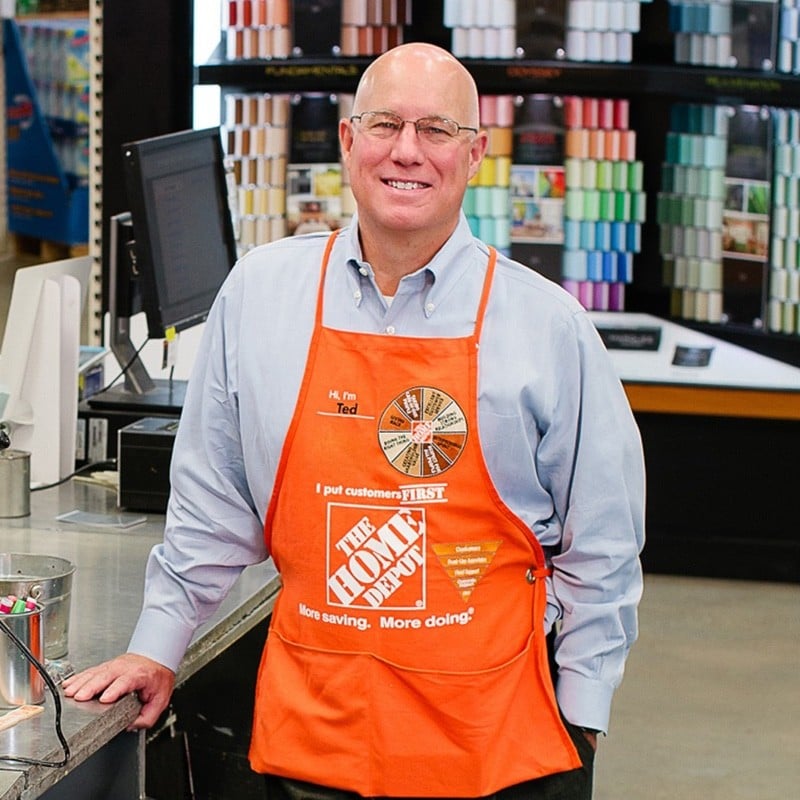
Instacart, the leading grocery technology company in North America, announced Wednesday a new partnership with The Home Depot Canada, the country’s leading home improvement retailer, to offer same-day delivery in as fast as an hour from over 175 stores across the country.
The Home Depot Canada launches on the Instacart App with in-store pricing in time for the busy holiday season as customers prepare their homes for gatherings, seasonal decorating, and end-of-year projects, said the technology company.
With this launch, The Home Depot Canada becomes the first nationwide home improvement retailer available on Instacart in Canada and joins over 100 retail banners on the platform in the country – giving customers nationwide access to thousands of home improvement essentials. This partnership includes Instacart’sBig & Bulky fulfillment solution, enabling same-day and scheduled deliveries for heavy items up to 60 pounds, such as large tool sets, home furnishing and renovation supplies, storage and more, explained the brand.
Blake Wallace
“At Instacart, we’re focused on delivering convenience and accessibility, whether it’s helping customers get their homes ready for the holiday season with décor or gathering materials for a last-minute home project over the weekend,” said Blake Wallace, Vice President of Retail Partnerships at Instacart. “We’re proud to help create a seamless shopping experience for Home Depot customers across Canada and bring more variety to the Instacart App with the addition of The Home Depot Canada.”
Doug Graham
“Our customers continue to be our top priority, and our stores are the foundation of who we are and how we meet their needs. Expanding our digital and delivery capabilities is essential to providing Canadians a seamless and convenient shopping experience,” said Doug Graham, Vice President of E-commerce and Marketing at Home Depot Canada. “Instacart’s fast and convenient shopper experience complements our existing delivery options on homedepot.ca, giving customers even more flexibility—whether they choose to shop online, through our app, in-store, or now with Instacart.”
Ottawa Carlingwood location. Photo: Fast Time Watch & Jewellery Repair
Fast Time Watch & Jewellery Repair has been part of Canada’s retail landscape for nearly half a century. Founded in 1979 by the Talsania family, the business began modestly as a small repair service specializing in LED digital watches and clocks. “My father came in with an engineering background,” said Milon Talsania, Vice President of Operations. “He didn’t start out with watches, but with electronics like cordless phones and VCRs. We struck a deal with General Electric to become their authorized repair depot for telephones and clocks. That’s really how it all began.”
Milon Talsania. Photo: Fast Time.
The company’s journey into retail started when a buyer from Consumers Distributing suggested that instead of shipping repairs back and forth, Fast Time could perform services on-site for customers. That conversation opened the door to relationships with major retailers such as Simpsons and Eaton’s, which later led to a long-standing partnership with Sears Canada.
By the 1980s, Fast Time Watch & Jewellery Repair was operating as a licensed department inside Sears stores across the country. “At our peak, we had 62 locations in Canada and several in the United States,” said Talsania. “When Sears closed, it was a big hit. But we were able to redefine ourselves and rise from the ashes by launching under our own name.”
Rebirth After Sears
The closure of Sears Canada in 2018 forced Fast Time to reinvent itself. The company had been operating under the banner Sears Watch and Jewellery Repair, but suddenly found itself without a host retailer or name recognition. “Even though we’d been in business for decades, people didn’t know the Fast Time brand,” said Talsania. “We had to reintroduce ourselves to the market, this time as Fast Time Watch & Jewellery Repair.”
The rebranding effort was both challenging and liberating. The company launched new mall kiosks and inline stores under its own name, emphasizing accessibility and expertise. Today, Fast Time operates 10 retail locations across Ontario, including in Hamilton, Kitchener, Belleville, Sarnia, London, Sudbury, and Thunder Bay, with its head office and full-service workshop in Richmond Hill.
That Richmond Hill location, which the company owns outright, has become a cornerstone for growth. It houses a full team of technicians and jewelers who handle both walk-in customers and specialized repairs for the company’s other stores. “We’re able to attract customers from Vaughan, Aurora, and Markham,” said Talsania. “It’s not just our head office; it’s also a thriving retail hub.”
Thunder Bay Intercity Shopping Centre. Photo: Fast Time Watch & Jewellery Repair
Blending Tradition and Modern Retail
Fast Time’s model is straightforward but powerful: provide watch and jewelry repair services that can’t be done online, and complement those services with a strong retail offering. The company’s signature service is “Watch Battery Replacement While You Wait”, which includes gasket resealing and bracelet cleaning. “We give a one-year warranty on our watch battery installations,” said Talsania. “It’s not just a pop-off-the-back and replace job. We make sure the seal is redone to protect against moisture and condensation.”
The company also provides full watch overhauls, crystal replacements, and link adjustments, alongside jewelry services such as ring sizing, chain soldering, and stone resetting. Increasingly, it also serves the growing market for fashion jewelry repair, an area many competitors overlook.
While repair remains a core business, retail sales have become equally important. “We don’t just repair watches anymore,” said Talsania. “We’re authorized retailers for major brands like Casio, Bulova/Citizen, Fossil & Timex and many more. About half of our business now comes from selling watches and accessories.”
Store-in-Store Growth Strategy
Fast Time Watch & Jewellery Repair’s next chapter is centred on strategic expansion through partnerships with major retailers in Canada. The company aims to revive the store-in-store model that proved so successful in the Sears era, this time with modern retail partners.
“It gives us an opportunity to get into marquee malls and leverage the foot traffic of a host store,” explained Talsania. “There’s real synergy there. Our business brings people in, and while customers wait for their repairs, they often shop elsewhere in the store or mall. Everyone benefits from that.”
This mutual advantage makes Fast Time an attractive partner for department stores or big-box retailers seeking to increase dwell time and foot traffic. “Our business is one of the few that can’t be done online,” Talsania noted. “You have to come in to get a watch battery replaced or a chain repaired. And while you’re waiting, you might shop in the host store. That’s why malls and retailers value what we bring.”
Thunder Bay Intercity Shopping Centre. Photo: Fast Time Watch & Jewellery Repair
Bringing Customers Back to the Mall
The company’s compact kiosk and boutique-style units are designed to fit easily within existing retail footprints. “We don’t need thousands of square feet,” said Talsania. “In Sears, our locations were typically around 200 to 300 square feet. That flexibility makes it easier for us to work with partners and fit within their stores.”
These aren’t ordinary kiosks, either. Fast Time’s mall units are high-end installations with glass repair areas and branded displays for retail products. “They’re boutique kiosks,” said Talsania. “Not carts on wheels. We’ve invested in creating upscale, permanent spaces that reflect the quality of the service.”
That approach appeals to landlords as much as it does to shoppers. According to Talsania, during the pandemic, many mall guest services departments told him that Fast Time was among the most asked-about service businesses while stores were closed. “People missed us,” he said. “They really wanted those in-person services back.”
Expanding Across Canada
Fast Time’s current footprint is primarily in Ontario, but the company’s ambitions extend much further. “We’d like to expand across the country,” said Talsania. “We were once in Nova Scotia, Manitoba, and Quebec through Sears, and those were very successful markets for us. We’d love to return to them.”
Within Ontario, the company is actively exploring new markets in the Greater Toronto Area, including malls such as Yorkdale, Fairview, Mapleview, and Pickering Town Centre. “The GTA is a big opportunity for us,” said Talsania. “We already have two stores in London and could easily see multiple locations within one metro area again. It’s a physical service, so convenience matters.”
The company’s long history of managing multiple stores in close proximity is a proven advantage. “In London, we used to operate three Sears locations, and all were successful,” said Talsania. “Customers often visit multiple times — dropping off a repair, then returning for pickup, so proximity actually helps us.”
London CF Masonville. Photo: Fast Time Watch & Jewellery Repair
Value, Trust, and Customer Loyalty
Fast Time’s success is rooted in its value-driven approach. “We fix everything from a Timex to a Rolex, and we treat every customer with the same care,” said Talsania. “A lot of jewelry stores have gone after high-end clientele and left the middle market behind. We fill that gap.”
Affordability remains central to the company’s identity. “Our pricing is competitive, and in many cases significantly lower than what department stores used to charge,” he explained. “When Hudson’s Bay closed its in-store jewelry services, many customers came to us because we offered better service at a fraction of the price.”
Every watch battery installation includes cleaning and resealing, ensuring longevity and quality. It’s this combination of craftsmanship and transparency that has helped the brand maintain loyalty across generations.
Watches as Fashion and Sentiment
Despite the ubiquity of smartphones, Fast Time is seeing renewed interest in watches among younger consumers. “People sometimes say nobody wears watches anymore, but that’s not true,” said Talsania. “We’re seeing a big increase in our 18-to-34 demographic. They wear watches as fashion pieces or statement items.”
The company’s assortment reflects that shift, with brands such as Michael Kors, Casio Vintage, and Citizen Eco-Drive attracting younger shoppers. “What’s old is new again,” said Talsania. “Vintage-style digital watches and retro designs are back in fashion. We’re also seeing more people change their watch bands seasonally—white in summer, black for formal occasions.”
Fast Time’s wide selection of replacement bands in leather, nylon, and metal appeals to this trend-driven audience. “We carry all sizes and colors,” he said. “And when you buy a band from us, installation is free. For customers who buy watches online, we offer sizing and adjustment services too.” Our motto is “Buy it Anywhere….Fix it at Fast Time!”
Hamilton Lime Ridge Mall. Photo: Fast Time Watch & Jewellery Repair
Jewelry Repair and Sentimental Value
While watches remain the company’s foundation, jewelry repairs have grown into a major business. “People want to maintain their gold and silver pieces, especially with the price of gold where it is,” said Talsania. “We do ring sizing, chain soldering, and stone setting, and every piece comes with a story.”
He recalled one customer who brought in a brooch said to have been blessed by the Pope. “You see the sentimental value in these items,” he said. “It might be a $50 Timex or a priceless heirloom, but people are willing to invest in repairs because of what it represents to them.”
Fast Time’s technicians don’t just fix jewelry; they often restore it to its original luster through polishing, rhodium plating, or what Talsania calls “detailing.” “We don’t just repair the issue,” he said. “We make it look like new again.”
A Modern, Scalable Business
While rooted in family tradition, Fast Time is run like a modern enterprise. “We don’t operate like a family business,” said Talsania. “Yes, it was founded by my parents, but we’ve built systems and infrastructure for growth. We use advanced inventory tracking and work order management to handle repairs efficiently.”
This operational backbone gives Fast Time an advantage as it explores partnerships and expansion opportunities. “We’re set up for scalability,” he said. “We can open new locations quickly and maintain consistent quality across every site.”
The company’s combination of heritage, adaptability, and retail know-how positions it uniquely in Canada’s service landscape. Its model blends the human touch of old-fashioned craftsmanship with the precision and efficiency of modern retail operations.
Looking Ahead
As Canadian malls continue evolving into mixed-use community hubs, service-oriented retailers like Fast Time Watch & Jewellery Repair are becoming increasingly vital. “We offer something that can’t be digitized,” said Talsania. “People want their watches and jewellery repaired properly, by someone they trust, and they want to talk to a real person while it’s done.” For Fast Time, the goal is clear: to bring that trusted service into more retail environments across Canada. “We’re proudly Canadian and extremely proud of our history,” said Talsania. “But the next chapter is about growth, collaboration, and continuing to give Canadians value they can see and feel. one watch and one repair at a time.”
Businesses continue to anticipate a variety of obstacles over the next three months. While pressures of both cost- and labour-related obstacles continued into the fourth quarter of 2025, the proportion of businesses with a positive outlook remained comparable with previous quarters, said Statistics Canada in a recent report.
“In the fourth quarter, 61.2% of businesses across Canada expect cost-related obstacles over the next three months, similar to 62.2% in the third quarter. For the Canadian Survey on Business Conditions, cost-related obstacles consist of inflation; cost of inputs; interest rates and debt costs; cost of insurance; cost of real estate, leasing or property taxes; and transportation costs. In October, prices of raw materials purchased by manufacturers operating in Canada, as measured by the Raw Materials Price Index, increased 1.6% month over month and grew 5.8% year over year. Additionally, average hourly wages among employees increased 3.5% on a year-over-year basis in October, following growth of 3.3% in September,” it noted.
“Within this environment, over two-fifths (41.1%) of businesses expect inflation to be an obstacle over the next three months. Businesses expecting inflation to be an obstacle were primarily in accommodation and food services (60.2%), transportation and warehousing (49.3%) and retail trade (45.8%).
“Recruiting skilled employees is the second most expected obstacle, anticipated by over one-quarter (26.4%) of businesses. It is most commonly expected by businesses in retail trade (35.4%), accommodation and food services (34.8%), and construction (33.2%).”
When asked to identify the most challenging expected obstacle over the next three months, 10.4% of businesses expected it to be inflation, 10.4% indicated recruiting skilled employees and 7.0% reported the cost of inputs, explained the report.
The Bank of Canada lowered its overnight lending rate to 2.25% in October 2025, down from 3.75% in October 2024. Nearly one-quarter (22.9%) of businesses indicated in the fourth quarter of 2025 that they expect interest rates and debt costs to be an obstacle over the next three months, down slightly from 24.8% in the third quarter of 2025 and 26.4% in the second quarter of 2025. When asked about the impact of interest rates on the business over the 12 months prior to the survey, 37.5% of businesses reported a medium or high impact, while 48.5% reported a low or no impact. The level of impact reported by businesses has shifted from the fourth quarter of 2024, when 48.1% of businesses reported a medium or high impact, and 39.1% reported a low or no impact, it said.
“In the fourth quarter of 2025, nearly two-fifths (39.9%) of businesses reported that they were either very likely or somewhat likely to pass cost increases due to tariffs onto their customers over the next 12 months. Meanwhile, 13.6% were either very unlikely or somewhat unlikely to do the same, and 15.2% were unsure. Nearly one-third (31.4%) businesses did not expect any cost increases due to tariffs over the next 12 months,” added Statistics Canada.
“In the fourth quarter of 2025, one-fifth (20.0%) of businesses indicated they had changed their marketing practices over the previous six months to promote Canadian products, led by those in retail trade (50.5%), accommodation and food services (33.1%) and manufacturing (27.4%).
Over the previous six months, 13.3% of businesses experienced an increase in sales of their Canadian products, with businesses in retail trade (30.3%), manufacturing (22.2%) and wholesale trade (22.1%) being most likely to see an increase in sales. Comparatively, over two-thirds (68.2%) of businesses did not experience an increase in sales of their Canadian products over the previous six months, and a further 18.5% were unsure.”
In the fourth quarter of 2025, nearly two-thirds (66.3%) of businesses are very or somewhat optimistic about their outlook over the next 12 months, similar to the levels reported in the second (70.0%) and third (66.7%) quarters of 2025, it said. Meanwhile, 16.3% of businesses expect their sales of goods or services to increase over the next three months, a slight increase from 13.8% in the third quarter of 2025. At the same time, 20.8% of businesses expect sales of their goods or services to decrease while 21.8% of businesses anticipate the selling price of their goods or services to increase. Businesses most likely to expect their selling prices to increase over the next three months are those in accommodation and food services (35.6%), manufacturing (32.6%) and wholesale trade (30.4%).
Self-checkouts were introduced as a multi-purpose solution to labour shortages, rising wage pressures, and consumers’ appetite for speed. In theory, they would modernize the grocery experience while reducing operating costs. In practice, they have become a source of irritation for many Canadians — and a growing liability for retailers.
Our recent survey shows that more than 60% of Canadians choose self-checkout when purchasing fewer than 20 items, especially Millennials and Gen X consumers. Boomers, however, remain resistant; many avoid self-checkout entirely. This behavioural split matters, because it illustrates a broader truth: technology adoption is not merely about efficiency, but about trust.
What was meant to streamline the transaction has, paradoxically, produced friction. The now-ubiquitous “wait for assistance” message has become a symbol of failure in the grocery aisle. And beyond frustration, a more worrisome trend is emerging: self-checkouts appear to be driving up theft, both accidental and intentional.
A recent LendingTree survey found that 36% of consumers admitted to unintentionally leaving with an unscanned item. Of those, 61% kept the item rather than returning to pay for it. These are not hardened shoplifters; most entered the store with every intention of paying. But embarrassment, time pressure, or the simple inability to get help turned a technological hiccup into retail loss. Fewer than 15% reported deliberately exploiting self-checkouts to steal, but the outcome is the same: shrinkage that retailers ultimately recoup through higher prices for everyone else.
The economics are now forcing a recalibration. Some grocers are scaling back their self-checkout footprint; others are reopening staffed lanes. After years of automation hype, we are witnessing a partial return to human cashiers — not out of nostalgia, but out of necessity. When shrinkage overtakes labour savings, the business case for automation collapses.
What is perhaps most striking is how little innovation grocers have introduced to improve the checkout experience. Given advances in artificial intelligence, computer vision, and sensor technology, the sector should be much closer to a truly frictionless exit process. An effective model already exists. Decathlon, the French sporting-goods retailer, tags nearly all merchandise with RFID technology. Customers simply drop their items into a black bin, and the system calculates the total instantly. No barcode hunting. No rescans. No “unexpected item in the bagging area.”
Shoppers Drug Mart Self-Checkouts (Image: Dustin Fuhs)
If a high-volume sporting-goods chain can implement such a system, one would expect food retailers — who operate on tighter margins but process exponentially more transactions — to explore similar solutions. But innovation requires capital, and grocery operates on margins that leave little room for experimentation. That financial reality partly explains why checkout technology has stagnated.
A deeper tension also exists. Over the past decade, grocers have shifted a substantial portion of labour onto consumers without offering any incentive for doing that work. The comparison with gas stations is instructive. When Canadians began pumping their own fuel, they received a clear benefit: lower prices at self-serve pumps. In grocery, no such trade-off exists. Food prices have risen more than 27% over the past five years. Consumers are expected to scan, bag, troubleshoot errors, and manage technical glitches — all while paying more.
If retailers expect consumers to perform tasks once handled by paid employees, the logical step is to reward them. Discounts, loyalty points, or dedicated “self-serve savings” lanes would acknowledge the value of the labour consumers now provide.
Self-checkouts are not going away. But the current model is unsustainable. The challenge for grocers is not merely reducing theft; it is rebuilding trust in the transaction itself. Retailers that treat checkout as a core part of the consumer experience — not just a cost-cutting device — will be better positioned in the long run.
Until then, shoppers will continue to ask a very basic economic question: If I am doing more of the work, why am I paying more for the privilege?
Pet Valu, Canada’s leading specialty retailer of pet food and pet supplies, is now available on Uber Eats.
The retailer said customers can order from over 650 Pet Valu locations, giving pet parents from coast to coast quick and easy access to food, treats, toys and other must-have items for their pets.
The Pet Valu family of stores operates under five banners nationwide, including Pet Valu (all provinces outside of Quebec), Bosley’s By Pet (BC), Tisol (BC), Paulmac’s Pets (ON) and Total Pet (BC). Canadians can now shop for their pets from their local store on Uber Eats with fast, on-demand delivery, said the company.
Klaas Knieriem
“Uber Eats helps Canadians get almost anything, and that extends to their beloved four-legged family members,” said Klaas Knieriem, Head of Retail for Uber Eats in Canada. “Welcoming Pet Valu brings more trusted brands to the app, so Canadians can get the best for their pets, from treats to toys, delivered right to their door.”
Tanbir Grover
“We’re committed to make shopping for pet essentials as effortless as possible, so devoted pet lovers can focus on what matters most, spending time with their pets,” said Tanbir Grover, Chief Marketing and Digital Officer at Pet Valu. “With Uber Eats’ same day convenience, we’re giving pet parents across Canada another easy way to access all the pet products they need and have more time to do the things they love.”
How It Works
Open the Uber Eats app and tap into the “Pet Supplies” category
Search for your preferred Pet Valu banner
Add items to your cart, select your delivery time and place your order
Track your delivery in real time
Uber said its mission is to create opportunity through movement. We started in 2010 to solve a simple problem: how do you get access to a ride at the touch of a button? More than 64 billion trips later, we’re building products to get people closer to where they want to be. By changing how people, food, and things move through cities, Uber is a platform that opens up the world to new possibilities.
Kits Eyecare Ltd. a leading vertically integrated eyecare provider, says it had record-breaking results from its Black Friday and Cyber Monday performance, delivering the strongest single week in company history.
KITS said it generated about $5.8 million in revenue during the week of November 25 to December 1st. Glasses ordered exceeded 16,800 pairs, representing 35% growth year-on-year and setting a new unit record and meaningfully surpassing the company’s previous high.
Highlights from the company’s Black Friday and Cyber Monday week include:
Total sales of over $5.8 million, 22% year-over-year increase.
Over 16,800 glasses units ordered during Black Friday week, 35% year-over-year increase.
Repeat customers contributed over 65% of total revenue.
Marketing spend accounted for approximately 14.3% of total revenue ($831.6K).
Roger Hardy
“This was a breakthrough week for KITS and for our mission to build a leading consumer eyecare brand in North America,” said Roger Hardy, Co-Founder and CEO of KITS. “More than 16,000 glasses ordered and over $5.8 million in revenue reflect a clear shift – customers want eyecare that puts them first: precise, affordable, delivered fast. Our team executed at every level, and customers across the U.S. and Canada rewarded that work. We’re closing 2025 with real momentum.”
KITS said its November revenue increased about 25% year-over-year, setting a new monthly revenue record. Glasses revenue for November grew approximately 54% year-over-year, reflecting strong customer adoption and the strength of the KITS brand.
The company recently announced plans to expand into its second retail location, expected to open in Toronto in Q1 2026. The space, located on Queen Street West, represents the company’s second retail showroom and follows the strong performance of KITS’ flagship location in Vancouver.
Located in the heart of Toronto, the showroom will feature over 2,500 square feet of blended retail and café space and will feature a full-service onsite optometrist, providing comprehensive exams alongside KITS’ acclaimed eyewear collections. The Toronto location serves as a cornerstone of KITS’ national omni-channel strategy, giving customers across the Greater Toronto Area the opportunity to try on frames in person, pick up online orders, and access same-day service on select prescriptions, said KITS.
LUXOME, the award-winning luxury comfort brand, has announced its official expansion into Canada.
Canadian customers are now able to shop LUXOME’s collection, including its bestselling weighted blankets, bamboo bedding, bath essentials, apparel, and newly launched slippers–directly through luxome.com.
The move marks a significant growth milestone for the company as the brand continues to meet rising international demand for comfort-driven products. Since its inception in 2018, LUXOME has cultivated a strong customer base in the U.S. by prioritizing extensive product testing to create an ever-evolving collection that elevates everyday living, said the retailer.
“We’ve seen incredible demand from Canada since day one, and we couldn’t be more excited to make it even easier for both new and existing Canadian customers to experience the LUXOME difference by adding our new fulfillment center in Ontario for faster & more affordable shipping,” said Hyaat Chaudhary, Founder & CEO of LUXOME. “Expanding into Canada allows us to share our signature, unparalleled comfort with a broader new audience.”
The Canadian expansion comes on the heels of major product innovation for LUXOME; the brand’s first-ever slippers launch featuring sneaker-level structure and luxury-level materials that deliver tangible comfort, durability, and elevated design, said the company.
EXTERIOR OF A DOWNTOWN TORONTO STARBUCKS COFFEE SHOP. PHOTO: STARBUCKS
Starbucks Canada is joining forces with the Breakfast Club of Canada this holiday season to fight hunger nationwide. Starbucks has pledged to donate two school meals for every Grilled Cheese on Sourdough sold in company operated coffeehouses between December 2 and January 5.
Over 23,000 coffeehouses in more than 30 Starbucks markets around the world are participating in the hunger relief campaign with a goal of donating up to 12 million meals to children facing hunger globally, said the company.
Lori Digulla
“No child in Canada should ever have to start their day hungry,” said Lori Digulla, general manager, Starbucks Canada. “Our role as a community coffeehouse is about more than what we serve – it’s about showing up for the neighbourhoods we’re part of.
“By working with organizations like Breakfast Club of Canada, we can help strengthen school nutrition programs that support children every single day. When Canadians choose a grilled cheese this season, they’re also choosing to make a meaningful difference for kids in their own communities.”
Starbucks said its partnership with Breakfast Club of Canada builds on its long-term commitment to reducing hunger and improving food security in Canadian communities. Through initiatives including Starbucks FoodShare and the Starbucks Capacity Grants, the company said it donates unsold food to local food rescue organizations nationwide and supports investments in food recovery infrastructure and community-led solutions to address long-term food insecurity.
As the community coffeehouse, Starbucks is committed to bringing partners, customers, and local organizations together across Canada to help ensure that more children start their school day nourished and ready to learn, it said.
Starbucks said it has pledged to donate the value of two school meals to support programs that feed kids around the world through the World Food Programme (WFP) – the global organization part of the United Nations that will distribute meals to international markets through their global school meals program – and in Canada through Breakfast Club of Canada.
“WFP is the world’s largest provider of school meals, reaching more than 20 million children in countries every year. In the classroom, school meals provide children with essential nutrition to stay healthy and focus on their lessons. Outside of the classroom, school meal programs lift children, families and entire communities out of extreme poverty by providing a market for farmers’ produce and creating jobs,” said the company.
Retail Insider is streamlining its Canadian retail news from around the web to include a handful of top news stories that can be viewed quickly during the day. Here are the top stories from the past 24 hours.
Canadian shoppers continued to show strength through Cyber Monday and into Cyber Week 2025, according to new Salesforce data shared with Retail Insider. Online spending increased throughout the final week of November, reflecting a value-driven consumer who remains active, responsive to promotions, and increasingly supported by AI-enabled discovery. Canada Cyber Week sales rose seven percent year over year, paired with a four percent increase in online order volumes.
Cyber Monday alone generated an estimated $668 million in Canadian online sales, which was a three percent increase over last year. Order volumes rose one percent, reinforcing that shopper demand is holding steady even as households remain cautious with discretionary spending. Canada Cyber Week sales also reflected shifting price dynamics, as the average selling price fell two percent, indicating that shoppers were deliberately targeting deeper discounts and leveraging retailers’ promotional strategies.
Consumers Focus on Value as Payment Trends Shift
Caila Schwartz, Director of Consumer Insights at Salesforce, said the numbers show a highly intentional consumer who is stretching budgets while still participating fully in the holiday season. She noted that the decrease in average selling price demonstrates the extent to which Canadians sought out promotions, using price-sensitive behaviour to maximize purchasing power. Schwartz said Canadian shoppers were “masters of the deal,” navigating the season with a high degree of discipline.
Caila Schwartz
Payment methods continued to shift toward flexibility. Buy Now, Pay Later usage doubled to five percent during Cyber Week, up from two point five percent last year. On Cyber Monday specifically, BNPL reached four point two percent of transactions, doubling from last year’s level. Mobile wallet payments also edged upward, reaching eighteen percent during Cyber Week and seventeen percent on Cyber Monday. Traditional credit and debit card transactions continued to lose share, reflecting a broader trend across the early holiday season.
Mobile remained the dominant device for browsing and purchasing, although patterns shifted slightly. Mobile traffic share dipped to seventy three percent for the week and seventy two percent on Cyber Monday. At the same time, mobile order share rose to sixty three percent for Cyber Week and fifty nine percent on Cyber Monday, indicating that shoppers remain highly comfortable completing purchases on their phones even if browsing behavior continues to fragment across channels. Social traffic held steady at twelve percent for the week.
AI and Agentic Search Become a Major Revenue Driver
The most significant shift during Cyber Week was the scale of AI’s influence on Canadian purchasing. Salesforce reported that AI and agentic search influenced twenty one percent of all online orders placed in Canada during the week of November twenty fifth to December first. On Cyber Monday alone, AI- and agent-driven discovery played a central role in shaping browsing and buying behaviour.
Schwartz described this as a turning point for retail in Canada. She said that agentic search traffic quadrupled over the weekend compared to last year, indicating a rapid acceleration in how Canadians use AI to narrow choices, compare prices, and find value. She noted that AI’s influence translated directly into commercial impact, contributing to more than one fifth of online sales during the entire Cyber Week period. The performance aligns with the Black Friday trend where AI-referred traffic surged and outperformed social channels in conversion rate.
Giving Tuesday Highlights Pressure on the Nonprofit Sector
Cyber Week concluded as Giving Tuesday campaigns launched across the country. Salesforce said nonprofits are facing increasing operational strain due to funding pressures, burnout among staff, and rising demand for services. In response to those challenges, the company introduced four new AI agents for nonprofits to support administrative efficiency, donor engagement, and service delivery. The initiative adapts AI technology that has already shown measurable impact in retail and e-commerce throughout the early holiday season.
Looking Ahead to December Spending
Canada Cyber Week sales show that shoppers remain active and discount-driven heading into December. The week’s results reinforce a holiday season shaped by heightened value sensitivity, rapid adoption of flexible payments, and increasing reliance on AI-powered search tools. Retail Insider will continue to track Canadian retail performance as early December data becomes available and as the sector shifts toward its final peak period before the holidays.